
Blog
Choosing Wooden Flooring in Dubai: Complete 2026 Guide

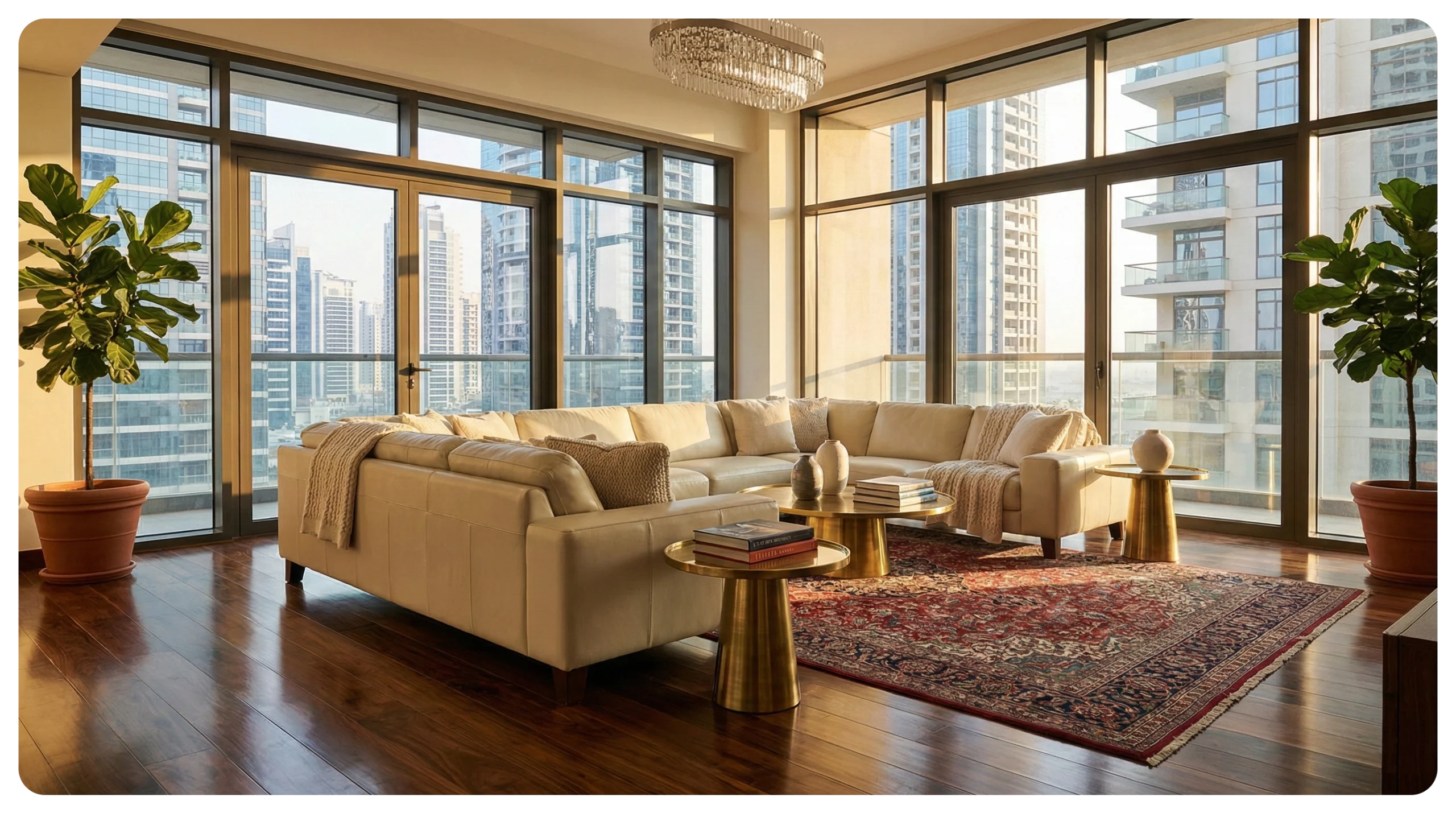
The Complete Guide to Choosing Wooden Flooring for Dubai Homes in 2026
Choosing wooden flooring for your Dubai home isn’t the same as selecting floors in London or New York. Our Gulf climate presents unique challenges that turn beautiful installations into warped disasters if you don’t understand what you’re working with. After installing wooden floors in over 3,400 UAE properties since 1988, we’ve learned exactly what works, what fails, and why. Selecting the right flooring type is one of the biggest decisions in any renovation. Keep up with UAE real estate and lifestyle developments via The Gulf News Guides.
This guide shares everything we’ve discovered across 35 years. You’ll understand the real differences between flooring types, why certain woods survive Dubai’s humidity while others fail within two years, what installation methods prevent problems, and how to maintain floors so they look pristine for decades. No sales pitch just honest expertise from craftsmen who’ve seen every possible flooring outcome in UAE conditions.
Understanding Wood Flooring Types for UAE Climate
Walk into any flooring showroom and you’ll hear terms like solid hardwood, engineered wood, laminate, and luxury vinyl. These aren’t just marketing categories. They’re fundamentally different products that perform very differently in Dubai’s environment.
Solid Hardwood Flooring
Solid hardwood means planks milled from single pieces of timber, typically 18-20mm thick. The entire plank is oak, walnut, teak, or whatever species you choose. This is traditional wood flooring that can be sanded and refinished multiple times over decades.
How it performs in Dubai: Solid wood expands and contracts with humidity changes. Dubai’s humidity swings from 30% during winter to 85% during summer, especially in coastal areas. That movement is significant. We’ve measured expansion of 3-4mm across a 3-meter span during monsoon humidity. If installation doesn’t accommodate this movement, planks buckle or gaps open between boards.
Does this mean avoid solid hardwood in Dubai? No. It means you need proper installation with correct expansion gaps, moisture barriers, and wood species selection. Teak and oak handle movement better than maple or beech. Narrower planks (90-120mm) move less than wide planks (180-220mm). Quarter-sawn boards are more stable than plain-sawn.
We install solid hardwood successfully in Dubai villas and apartments, but it requires expertise. The installer must understand UAE conditions, not just follow European or American installation guides written for different climates.
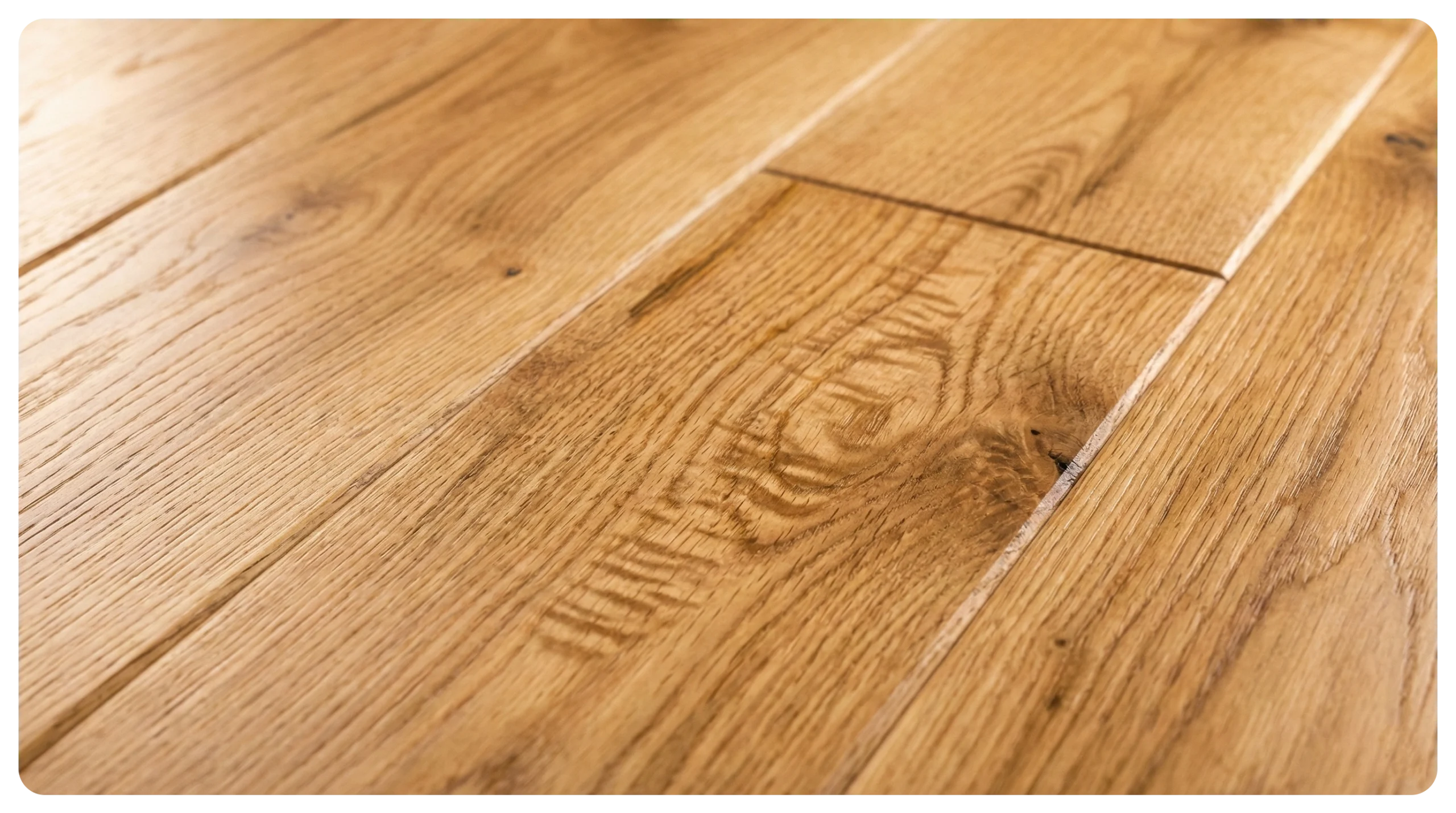
Engineered Wood Flooring
Engineered flooring uses a thin layer of real hardwood (3-6mm) bonded to a plywood or HDF core. The top layer is genuine oak, walnut, or exotic wood. The engineered core provides dimensional stability.
Why it works better in Dubai: The cross-grain construction prevents the expansion and contraction that affects solid wood. Humidity changes still occur, but the engineered structure resists movement. We’ve tracked engineered floors in Dubai Marina apartments direct Gulf exposure, 80%+ humidity performing perfectly after 8+ years while solid hardwood in neighboring units shows stress.
Quality matters enormously in engineered flooring. Cheap engineered products use thin veneers (0.6mm) over particleboard cores. These can’t be refinished and the cores swell if moisture penetrates. Premium engineered flooring uses 4-6mm hardwood layers over marine-grade plywood cores. You can sand and refinish these 2-3 times, and the cores resist moisture like boat construction.
Engineered flooring costs 60-80% of equivalent solid hardwood but performs better in UAE conditions. For most Dubai homes, it’s the smart choice. You get real wood aesthetics with engineered reliability.
Laminate Flooring
Laminate isn’t wood. It’s a photographic image of wood grain printed on paper, sealed between protective layers, and bonded to an HDF core. No real wood exists in laminate flooring it’s manufactured imagery.
Where laminate makes sense: Budget-conscious installations, rental properties expecting tenant wear, or areas with heavy traffic where replacement is planned in 5-7 years. Quality laminate looks convincing from standing height and costs 40-60% less than engineered wood.
Where laminate fails: Laminate can’t be refinished. Once the protective layer wears through or damage occurs, you’re replacing the entire floor. Water damage is catastrophic the HDF core swells and destroys surrounding planks. In Dubai apartments where AC condensation issues occur or in homes with young children and spills, we’ve replaced failed laminate floors after just 3-4 years.
We install laminate when clients understand the tradeoffs and choose it deliberately. We don’t recommend it as a long-term solution for quality homes.
Wood Species That Survive Dubai Climate
Not all hardwoods perform equally in Gulf conditions. Some species handle humidity and temperature swings beautifully. Others crack, warp, or cup within two years despite perfect installation.
Teak: The Gold Standard
Teak naturally resists moisture because it evolved in tropical monsoon climates. The wood contains natural oils that repel water. In Dubai installations, teak performs flawlessly even in coastal villas and humid bathrooms where other woods fail.
The downside is cost. Teak flooring runs 180-250 AED per square meter for quality material, roughly double oak pricing. For clients prioritizing longevity and minimum maintenance, teak justifies the investment. A properly installed teak floor should outlast the building.
Oak: Versatile and Reliable
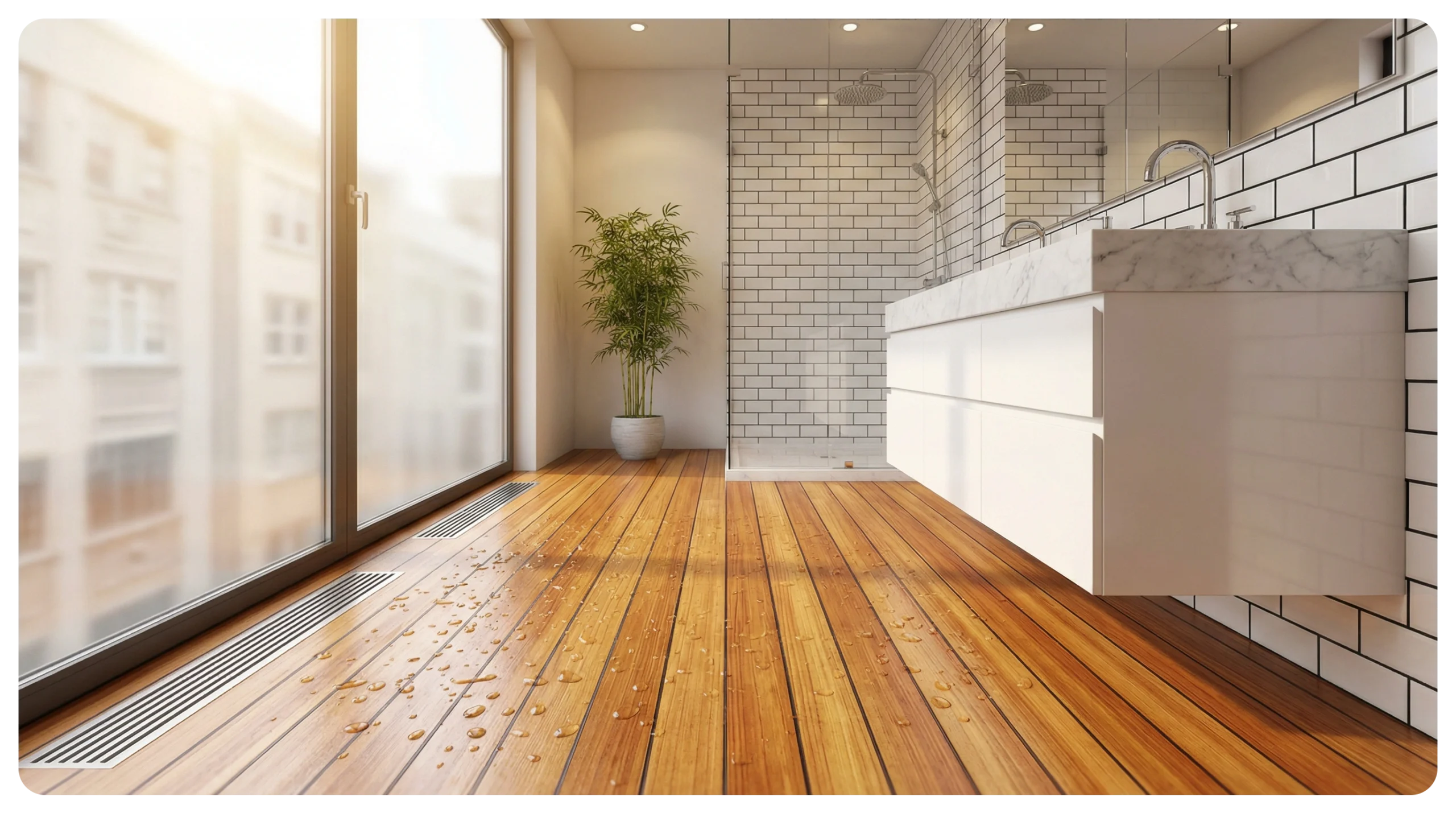
Oak offers the best balance of performance, appearance, and cost for most Dubai installations. Both European oak and American white oak handle UAE humidity acceptably when properly finished and installed. Oak’s open grain benefits from pore-filling during finishing, creating smooth surfaces that resist dirt accumulation.
Oak stains beautifully, accepting color from light natural tones through medium browns to dark espresso finishes. This versatility suits any interior design direction. Cost runs 85-140 AED per square meter for solid oak, 70-110 AED for engineered oak.
We’ve installed more oak flooring in Dubai than all other species combined. The performance record is excellent when installation follows proper UAE protocols.
Walnut: Rich Aesthetics with Considerations
Walnut’s chocolate brown color and sophisticated grain patterns create stunning floors. The wood is softer than oak or teak, showing dent marks from furniture and dropped objects more readily. This matters in family homes with active children but less in adult-only residences or low-traffic spaces like master bedrooms.
Walnut costs 120-180 AED per square meter for solid wood, 95-145 AED for engineered. The higher price reflects the wood’s desirability and slower growth rates compared to oak.
In coastal Dubai locations, walnut performs well in engineered form but can be problematic as solid wood. The species is moderately sensitive to humidity changes. We recommend walnut primarily for engineered flooring in UAE installations.
Species to Avoid in Dubai
Maple and beech look beautiful but move excessively with humidity changes common in Dubai. We’ve replaced multiple maple floors that developed unacceptable gaps during dry winter months and buckled during humid summers. These woods work fine in climate-controlled Northern Europe but struggle in the Gulf.
Bamboo, often marketed as sustainable, performs poorly in UAE humidity despite manufacturers’ claims. We’ve seen bamboo floors cup, warp, and delaminate in Dubai apartments within 18 months. The engineered bamboo products use adhesives that fail in our heat and humidity.
Exotic woods like Brazilian cherry or Australian jarrah perform unpredictably because importers don’t always acclimate material to UAE conditions before sale. If you choose exotic species, verify the supplier understands Gulf climate requirements.
Installation Methods That Prevent UAE Climate Problems
How flooring gets installed matters as much as what material you choose. Three main installation approaches exist, each with specific applications where they work best in Dubai conditions.
Floating Installation
Floating floors aren’t attached to the subfloor. Planks connect to each other through click-lock systems or glued tongue-and-groove joints. The entire floor floats as one large piece, separated from the subfloor by thin foam underlayment.
This method works excellently for engineered wood and laminate over concrete subfloors common in Dubai apartments. The underlayment provides moisture barrier protection and minor sound dampening. Installation is faster and less expensive than other methods.
The limitation is expansion gap requirements. A floating floor in a 6-meter room needs 12-15mm gaps at all walls to accommodate seasonal movement. These gaps hide under baseboards typically, but room layout sometimes makes achieving proper gaps difficult.
Glue-Down Installation
Adhesive installation bonds flooring directly to the concrete or cement subfloor using specialized wood floor adhesive. This creates permanent attachment and eliminates the hollow sound that floating floors can have.
We use glue-down installation for solid hardwood in Dubai. The adhesive must be moisture-tolerant elastic adhesive, not standard wood glue. We apply moisture barriers to concrete before adhesive because Dubai concrete holds moisture that migrates upward into flooring.
Glue-down installation costs more due to material and labor but creates the most solid feel underfoot. The floor becomes part of the structure rather than a separate layer.
Nail-Down Installation
Traditional nail-down installation works only over wood subfloors. Since Dubai construction uses concrete subfloors almost universally, nail-down application requires first installing plywood subfloor over the concrete, then nailing hardwood to that plywood.
This double-floor approach adds significant cost and raises floor height by 30-35mm total. We use it primarily in villa renovations where floor height increase is acceptable and clients want traditional solid hardwood with nail installation.
The benefit is ease of future refinishing. Nailed floors can be sanded and refinished multiple times without concern about sanding through to adhesive or engineered cores.
Proper Subfloor Preparation in Dubai Construction
Flooring success starts with the surface underneath. Dubai construction quality varies dramatically between developments. We’ve encountered concrete slabs with 15mm elevation changes across single rooms and moisture levels that would destroy any flooring installed without remediation.
Moisture Testing is Mandatory
Concrete in Dubai contains moisture that takes months or years to fully cure. Installing wood flooring over wet concrete guarantees failure. We test every concrete slab before installation using calcium chloride moisture tests that measure vapor emission rates.
Acceptable moisture levels are below 3 pounds per 1000 square feet per 24 hours. We’ve measured slabs in new Dubai towers reading 8-12 pounds—dangerously high. In these cases, we apply moisture mitigation coatings or wait for additional curing time before installing flooring.
This testing adds 3-5 days to project timelines but prevents catastrophic failures. We’ve removed and replaced floors in apartments where installers skipped moisture testing and wood cupped or buckled within months.
Leveling Corrects Construction Irregularities
Dubai concrete floors are rarely level. We check flatness using 2-meter straightedges and measure deviations. Wood flooring requires flatness within 3mm across any 2-meter span. Anything worse needs correction.
Self-leveling cement compounds correct most issues. We pour these liquids across low areas, allowing them to settle to perfect level before curing. For high spots, we grind concrete down using specialized equipment. This preparation work isn’t glamorous but it’s essential for flooring that lays flat and doesn’t develop squeaks or gaps.
Moisture Barriers Protect From Below
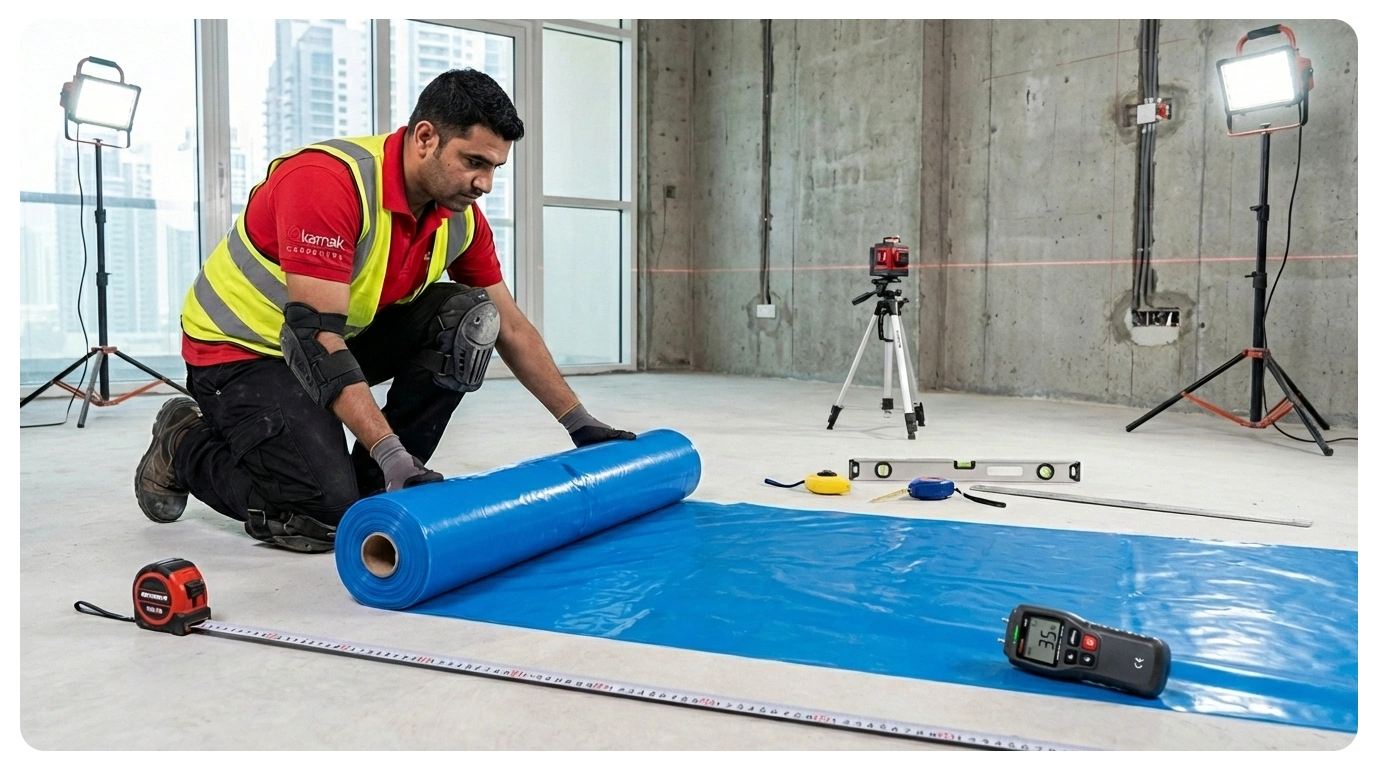
We install plastic sheet moisture barriers over all concrete before wood flooring installation. This prevents moisture migration from concrete into wood. The barrier overlaps at seams and tapes to create continuous protection.
In ground-floor installations or buildings without proper vapor barriers in the concrete slab, we use enhanced moisture barrier systems with adhesive bonding to concrete. These high-performance barriers stop moisture movement even in challenging conditions.
Finishing Options and Maintenance Requirements
How flooring gets finished determines both appearance and maintenance demands. Multiple finish types exist with different characteristics suited to various Dubai lifestyle situations.
Oil Finish
Oil finishes penetrate wood fibers, enhancing natural grain while leaving the surface feeling like wood rather than plastic coating. Oil-finished floors require periodic reapplication typically annual or biannual light maintenance oiling.
The advantage is repairable damage. Scratches and worn areas can be locally sanded and re-oiled without refinishing the entire floor. For families with children and pets in Dubai villas, this maintenance flexibility provides value.
The disadvantage is moisture sensitivity. Oil finishes don’t seal wood as completely as polyurethane. In Dubai’s humid climate, oil-finished floors need more careful cleaning and immediate spill cleanup.
Polyurethane Finish
Polyurethane creates a plastic-like film over the wood surface. Modern water-based polyurethanes are extremely durable, resisting scratches, moisture, and daily wear effectively. Oil-based polyurethane (less common now due to environmental regulations) provides even harder surfaces with warm amber tones.
For Dubai conditions, polyurethane suits most installations. The complete surface seal prevents moisture penetration. Cleaning is straightforward just damp mopping with wood floor cleaner. The finish lasts 7-12 years before requiring professional refinishing depending on traffic levels.
Damage to polyurethane is less repairable than oil finishes. Scratches through the finish require professional refinishing of affected areas or entire rooms depending on severity.
UV-Cured and Ceramic Finishes
Factory-applied UV-cured finishes and newer ceramic-enhanced finishes provide the ultimate durability. These products cure under UV light or include ceramic particles that create scratch resistance exceeding traditional polyurethane.
Premium engineered flooring often comes pre-finished with these advanced systems. The finishes are harder and longer-lasting than field-applied polyurethane. We install pre-finished engineered flooring in high-traffic commercial applications and luxury residences where maximum durability justifies the premium cost.
Real Costs: Budget Planning for Dubai Installations
Understanding complete project costs prevents surprises. Flooring pricing includes materials, installation labor, subfloor preparation, finishing (for unfinished wood), and baseboards or transitions.
Material Costs Per Square Meter
Budget ranges for common flooring types in Dubai as of 2026:
Laminate: 35-75 AED/sqm for materials Engineered Oak: 70-130 AED/sqm Solid Oak: 85-160 AED/sqm Engineered Walnut: 95-165 AED/sqm Solid Walnut: 120-200 AED/sqm Teak (engineered): 140-220 AED/sqm Teak (solid): 180-280 AED/sqm
These are quality product prices. Cheaper materials exist but often have performance issues in UAE climate. Premium exotic woods or wide planks exceed these ranges.
Installation and Preparation Costs
Professional installation runs 25-45 AED per square meter for floating installation, 35-60 AED per square meter for glue-down, and 45-75 AED per square meter for nail-down over plywood.
Subfloor preparation adds 15-35 AED per square meter depending on condition. If extensive leveling is required, costs increase. Moisture barrier installation adds 8-12 AED per square meter.
Finishing unfinished solid hardwood adds 30-50 AED per square meter including sanding, staining if desired, and multiple polyurethane coats.
Complete Project Example
A 120 square meter apartment flooring project using engineered oak:
- Materials (100 AED/sqm average): 12,000 AED
- Installation (35 AED/sqm): 4,200 AED
- Subfloor prep (20 AED/sqm): 2,400 AED
- Baseboards and transitions: 1,800 AED
- Total: 20,400 AED
Add 30-40% for solid hardwood instead of engineered. Reduce 30-40% for quality laminate instead of engineered wood.
Maintenance That Protects Your Investment
Proper maintenance extends flooring life from years to decades. Dubai’s climate and sand/dust environment require specific care approaches.
Daily and Weekly Care
Sweep or vacuum daily to remove sand and dust that scratch finishes when walked on. Use vacuum attachments designed for hard floors, not beater bar carpet attachments that can damage wood.
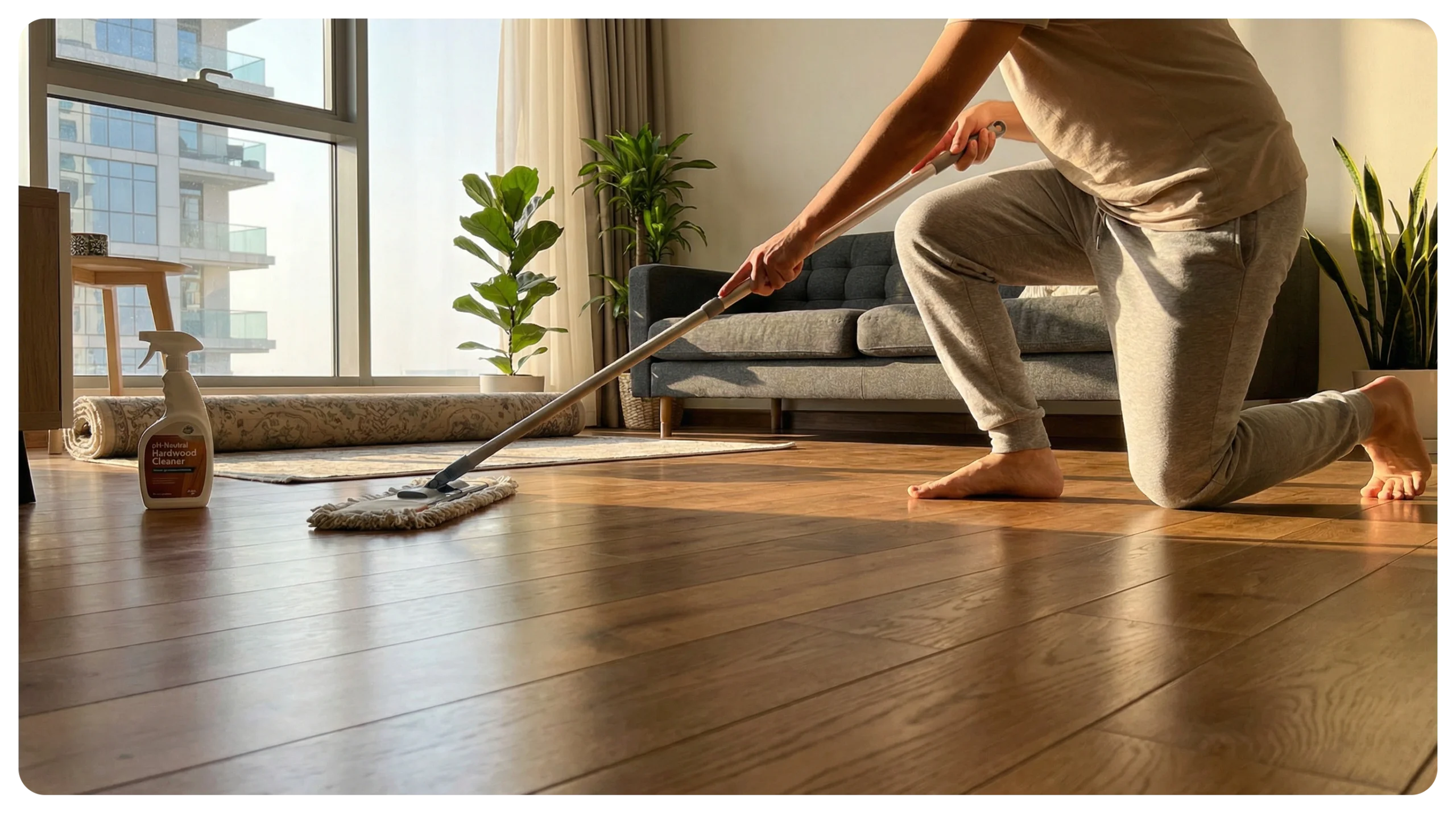
Damp mop weekly using wood floor cleaning products diluted per instructions. Never use excessive water the mop should be nearly dry, just damp enough to pick up dirt. Standing water damages all wood flooring eventually, even finished floors.
Seasonal Considerations
During Dubai’s humid summer months (June-September), consider running dehumidifiers if indoor humidity exceeds 65%. High sustained humidity can cause even well-installed floors to expand.
During dry winter months (December-February), maintaining 40-50% indoor humidity prevents excessive shrinkage. Whole-home humidification is rare in Dubai, but portable humidifiers in bedrooms with wood floors help.
Furniture Protection
Use felt pads under all furniture legs. Replace these pads annually as they compress and become less effective. Avoid rubber or plastic pads that can discolor wood finishes.
Area rugs in high-traffic zones reduce wear on flooring underneath. Ensure rugs have proper backing that won’t damage floors or trap moisture.
Refinishing Timeline
Polyurethane-finished floors need refinishing when the finish wears thin and wood shows through in traffic patterns. This typically occurs after 8-12 years in residential settings, sooner in commercial applications.
Oil-finished floors need light maintenance annually cleaning, light sanding if needed, and fresh oil application. Major refinishing happens every 5-8 years.
Engineered flooring with thin veneer layers (under 3mm) can refinish once or maybe twice. Thicker veneer engineered products (4-6mm) refinish 2-3 times like solid wood.
Common Dubai Flooring Mistakes to Avoid
After 35 years installing wood floors across the UAE, we’ve seen every possible mistake. Learning from others’ errors saves you money and frustration.
Mistake 1: Choosing Based on Showroom Appearance Alone
Flooring showrooms display products under ideal controlled conditions. That gorgeous wide-plank maple looks stunning under showroom lighting but might buckle in your humid Dubai Marina apartment within 18 months.
Choose flooring based on UAE climate suitability first, appearance second. Every wood species and product we’ve discussed performs differently in Dubai conditions. Prioritize what works over what looks best initially.
Mistake 2: Hiring Based on Lowest Price
Professional flooring installation requires expertise, proper tools, and quality materials. The lowest quote often cuts costs through inexperienced labor, skipped preparation steps, or inferior materials.
We’ve replaced dozens of failed installations where clients saved 25% on installation cost but faced complete failure within 2-3 years. The reinstallation cost them double the original savings plus the frustration of living through two projects.
Hire based on demonstrated UAE experience and proper installation procedures, not cheapest price.
Mistake 3: Installing Too Soon in New Construction
New construction concrete needs months to cure properly. We’ve measured moisture levels in newly completed towers that would destroy any wood flooring installed immediately.
Wait minimum 3-4 months after concrete pour before flooring installation. Test moisture levels before proceeding even after waiting. This patience prevents expensive early failure.
Mistake 4: Ignoring Manufacturer Acclimation Requirements
Wood flooring should acclimate to your property’s temperature and humidity before installation. This means storing unopened flooring packages in the installation space for 5-10 days before installation begins.
Installers who bring material straight from warehouse truck to installation are setting up moisture-related problems. The wood hasn’t adjusted to your home’s conditions and will move excessively after installation as it acclimates.
Mistake 5: Skipping Moisture Barriers
Some installers skip moisture barriers claiming modern concrete doesn’t need them or to save cost. This is false economy. Moisture barriers cost 8-12 AED per square meter but prevent failures costing thousands to repair.
Always install moisture barriers over concrete subfloors. Always. No exceptions.
Working with Professional Installers
Selecting qualified flooring contractors determines project success as much as material choice. Know what to look for and what questions to ask.
Experience in UAE Specifically
Installers experienced in Europe or North America need to adjust techniques for Dubai climate. Ask specifically about their UAE project experience, how long they’ve worked in Dubai, and how they adapt installation for Gulf humidity.
Request to see completed Dubai projects or contact previous clients. Reputable installers readily provide references.
Proper Licensing and Insurance
Dubai requires trade licensing for construction work. Verify your installer operates legally with proper business licensing. Request to see insurance documentation covering worker injury and property damage.
If unlicensed workers damage your property or injure themselves during installation, you might bear liability. Licensed, insured contractors protect you from these risks.
Written Quotations and Contracts
Professional installers provide detailed written quotations itemizing materials, labor, preparation work, and timeline. The quote should specify exactly what materials will be used—not just “engineered oak” but specific manufacturer and product line.
Verbal agreements create disputes. Insist on written documentation covering scope, pricing, payment terms, and warranties.
Warranty Coverage
Understand what warranty covers and for how long. Installation workmanship should warranty minimum 1-2 years. Material defects fall under manufacturer warranty, typically 10-25 years for engineered products, lifetime for some solid hardwoods.
Know what voids warranty—improper maintenance, water damage, or environmental conditions beyond normal residential use often aren’t covered.
Conclusion: Making Your Decision
Wooden flooring in Dubai succeeds when you match materials to climate, install using proper UAE techniques, and maintain appropriately. The investment ranges from moderate to substantial, but properly specified and installed wood floors deliver decades of beauty and performance.
Key Takeaways:
Choose engineered wood for best UAE performance in most applications. Select solid hardwood only if you understand and accept the additional maintenance and climate sensitivity. Prefer teak or oak species over maple, beech, or bamboo.
Verify your installer has specific UAE experience and uses climate-appropriate techniques—moisture testing, proper barriers, correct expansion gaps. Don’t select based solely on lowest price.
Budget for complete project costs including subfloor preparation, not just material pricing. Plan 150-250 AED per square meter total for quality engineered wood installation, 180-300 AED for solid hardwood.
Maintain regularly with appropriate cleaning and periodic refinishing. Wood floors aren’t maintenance-free but the effort rewards you with timeless beauty.
Need Expert Guidance?
Karnak Carpentry has installed wooden flooring in 3,400+ UAE properties since 1988. We provide free consultations to assess your space, discuss material options suited to your specific conditions, and quote complete installation including all preparation work.
Related Articles:
- Wood Finishing Options Explained: Paint, Stain, Lacquer, and Oil in the UAE
- How Long Do Carpentry Materials Actually Last in Dubai Homes?
- How to Measure Your Space for Built-In Wardrobes (The Right Way)
- Engineered vs Solid Wood Flooring in UAE: The Climate Verdict After 35 Years
The Complete Guide to Choosing Wooden Flooring for Dubai Homes in 2026
Choosing wooden flooring for your Dubai home isn’t the same as selecting floors in London or New York. Our Gulf climate presents unique challenges that turn beautiful installations into warped disasters if you don’t understand what you’re working with. After installing wooden floors in over 3,400 UAE properties since 1988, we’ve learned exactly what works, what fails, and why. Selecting the right flooring type is one of the biggest decisions in any renovation. Keep up with UAE real estate and lifestyle developments via The Gulf News Guides.
This guide shares everything we’ve discovered across 35 years. You’ll understand the real differences between flooring types, why certain woods survive Dubai’s humidity while others fail within two years, what installation methods prevent problems, and how to maintain floors so they look pristine for decades. No sales pitch just honest expertise from craftsmen who’ve seen every possible flooring outcome in UAE conditions.
Understanding Wood Flooring Types for UAE Climate
Walk into any flooring showroom and you’ll hear terms like solid hardwood, engineered wood, laminate, and luxury vinyl. These aren’t just marketing categories. They’re fundamentally different products that perform very differently in Dubai’s environment.
Solid Hardwood Flooring
Solid hardwood means planks milled from single pieces of timber, typically 18-20mm thick. The entire plank is oak, walnut, teak, or whatever species you choose. This is traditional wood flooring that can be sanded and refinished multiple times over decades.
How it performs in Dubai: Solid wood expands and contracts with humidity changes. Dubai’s humidity swings from 30% during winter to 85% during summer, especially in coastal areas. That movement is significant. We’ve measured expansion of 3-4mm across a 3-meter span during monsoon humidity. If installation doesn’t accommodate this movement, planks buckle or gaps open between boards.
Does this mean avoid solid hardwood in Dubai? No. It means you need proper installation with correct expansion gaps, moisture barriers, and wood species selection. Teak and oak handle movement better than maple or beech. Narrower planks (90-120mm) move less than wide planks (180-220mm). Quarter-sawn boards are more stable than plain-sawn.
We install solid hardwood successfully in Dubai villas and apartments, but it requires expertise. The installer must understand UAE conditions, not just follow European or American installation guides written for different climates.
Engineered Wood Flooring
Engineered flooring uses a thin layer of real hardwood (3-6mm) bonded to a plywood or HDF core. The top layer is genuine oak, walnut, or exotic wood. The engineered core provides dimensional stability.
Why it works better in Dubai: The cross-grain construction prevents the expansion and contraction that affects solid wood. Humidity changes still occur, but the engineered structure resists movement. We’ve tracked engineered floors in Dubai Marina apartments direct Gulf exposure, 80%+ humidity performing perfectly after 8+ years while solid hardwood in neighboring units shows stress.
Quality matters enormously in engineered flooring. Cheap engineered products use thin veneers (0.6mm) over particleboard cores. These can’t be refinished and the cores swell if moisture penetrates. Premium engineered flooring uses 4-6mm hardwood layers over marine-grade plywood cores. You can sand and refinish these 2-3 times, and the cores resist moisture like boat construction.
Engineered flooring costs 60-80% of equivalent solid hardwood but performs better in UAE conditions. For most Dubai homes, it’s the smart choice. You get real wood aesthetics with engineered reliability.
Laminate Flooring
Laminate isn’t wood. It’s a photographic image of wood grain printed on paper, sealed between protective layers, and bonded to an HDF core. No real wood exists in laminate flooring it’s manufactured imagery.
Where laminate makes sense: Budget-conscious installations, rental properties expecting tenant wear, or areas with heavy traffic where replacement is planned in 5-7 years. Quality laminate looks convincing from standing height and costs 40-60% less than engineered wood.
Where laminate fails: Laminate can’t be refinished. Once the protective layer wears through or damage occurs, you’re replacing the entire floor. Water damage is catastrophic the HDF core swells and destroys surrounding planks. In Dubai apartments where AC condensation issues occur or in homes with young children and spills, we’ve replaced failed laminate floors after just 3-4 years.
We install laminate when clients understand the tradeoffs and choose it deliberately. We don’t recommend it as a long-term solution for quality homes.
Wood Species That Survive Dubai Climate
Not all hardwoods perform equally in Gulf conditions. Some species handle humidity and temperature swings beautifully. Others crack, warp, or cup within two years despite perfect installation.
Teak: The Gold Standard
Teak naturally resists moisture because it evolved in tropical monsoon climates. The wood contains natural oils that repel water. In Dubai installations, teak performs flawlessly even in coastal villas and humid bathrooms where other woods fail.
The downside is cost. Teak flooring runs 180-250 AED per square meter for quality material, roughly double oak pricing. For clients prioritizing longevity and minimum maintenance, teak justifies the investment. A properly installed teak floor should outlast the building.
Oak: Versatile and Reliable
Oak offers the best balance of performance, appearance, and cost for most Dubai installations. Both European oak and American white oak handle UAE humidity acceptably when properly finished and installed. Oak’s open grain benefits from pore-filling during finishing, creating smooth surfaces that resist dirt accumulation.
Oak stains beautifully, accepting color from light natural tones through medium browns to dark espresso finishes. This versatility suits any interior design direction. Cost runs 85-140 AED per square meter for solid oak, 70-110 AED for engineered oak.
We’ve installed more oak flooring in Dubai than all other species combined. The performance record is excellent when installation follows proper UAE protocols.
Walnut: Rich Aesthetics with Considerations
Walnut’s chocolate brown color and sophisticated grain patterns create stunning floors. The wood is softer than oak or teak, showing dent marks from furniture and dropped objects more readily. This matters in family homes with active children but less in adult-only residences or low-traffic spaces like master bedrooms.
Walnut costs 120-180 AED per square meter for solid wood, 95-145 AED for engineered. The higher price reflects the wood’s desirability and slower growth rates compared to oak.
In coastal Dubai locations, walnut performs well in engineered form but can be problematic as solid wood. The species is moderately sensitive to humidity changes. We recommend walnut primarily for engineered flooring in UAE installations.
Species to Avoid in Dubai
Maple and beech look beautiful but move excessively with humidity changes common in Dubai. We’ve replaced multiple maple floors that developed unacceptable gaps during dry winter months and buckled during humid summers. These woods work fine in climate-controlled Northern Europe but struggle in the Gulf.
Bamboo, often marketed as sustainable, performs poorly in UAE humidity despite manufacturers’ claims. We’ve seen bamboo floors cup, warp, and delaminate in Dubai apartments within 18 months. The engineered bamboo products use adhesives that fail in our heat and humidity.
Exotic woods like Brazilian cherry or Australian jarrah perform unpredictably because importers don’t always acclimate material to UAE conditions before sale. If you choose exotic species, verify the supplier understands Gulf climate requirements.
Installation Methods That Prevent UAE Climate Problems
How flooring gets installed matters as much as what material you choose. Three main installation approaches exist, each with specific applications where they work best in Dubai conditions.
Floating Installation
Floating floors aren’t attached to the subfloor. Planks connect to each other through click-lock systems or glued tongue-and-groove joints. The entire floor floats as one large piece, separated from the subfloor by thin foam underlayment.
This method works excellently for engineered wood and laminate over concrete subfloors common in Dubai apartments. The underlayment provides moisture barrier protection and minor sound dampening. Installation is faster and less expensive than other methods.
The limitation is expansion gap requirements. A floating floor in a 6-meter room needs 12-15mm gaps at all walls to accommodate seasonal movement. These gaps hide under baseboards typically, but room layout sometimes makes achieving proper gaps difficult.
Glue-Down Installation
Adhesive installation bonds flooring directly to the concrete or cement subfloor using specialized wood floor adhesive. This creates permanent attachment and eliminates the hollow sound that floating floors can have.
We use glue-down installation for solid hardwood in Dubai. The adhesive must be moisture-tolerant elastic adhesive, not standard wood glue. We apply moisture barriers to concrete before adhesive because Dubai concrete holds moisture that migrates upward into flooring.
Glue-down installation costs more due to material and labor but creates the most solid feel underfoot. The floor becomes part of the structure rather than a separate layer.
Nail-Down Installation
Traditional nail-down installation works only over wood subfloors. Since Dubai construction uses concrete subfloors almost universally, nail-down application requires first installing plywood subfloor over the concrete, then nailing hardwood to that plywood.
This double-floor approach adds significant cost and raises floor height by 30-35mm total. We use it primarily in villa renovations where floor height increase is acceptable and clients want traditional solid hardwood with nail installation.
The benefit is ease of future refinishing. Nailed floors can be sanded and refinished multiple times without concern about sanding through to adhesive or engineered cores.
Proper Subfloor Preparation in Dubai Construction
Flooring success starts with the surface underneath. Dubai construction quality varies dramatically between developments. We’ve encountered concrete slabs with 15mm elevation changes across single rooms and moisture levels that would destroy any flooring installed without remediation.
Moisture Testing is Mandatory
Concrete in Dubai contains moisture that takes months or years to fully cure. Installing wood flooring over wet concrete guarantees failure. We test every concrete slab before installation using calcium chloride moisture tests that measure vapor emission rates.
Acceptable moisture levels are below 3 pounds per 1000 square feet per 24 hours. We’ve measured slabs in new Dubai towers reading 8-12 pounds—dangerously high. In these cases, we apply moisture mitigation coatings or wait for additional curing time before installing flooring.
This testing adds 3-5 days to project timelines but prevents catastrophic failures. We’ve removed and replaced floors in apartments where installers skipped moisture testing and wood cupped or buckled within months.
Leveling Corrects Construction Irregularities
Dubai concrete floors are rarely level. We check flatness using 2-meter straightedges and measure deviations. Wood flooring requires flatness within 3mm across any 2-meter span. Anything worse needs correction.
Self-leveling cement compounds correct most issues. We pour these liquids across low areas, allowing them to settle to perfect level before curing. For high spots, we grind concrete down using specialized equipment. This preparation work isn’t glamorous but it’s essential for flooring that lays flat and doesn’t develop squeaks or gaps.
Moisture Barriers Protect From Below
We install plastic sheet moisture barriers over all concrete before wood flooring installation. This prevents moisture migration from concrete into wood. The barrier overlaps at seams and tapes to create continuous protection.
In ground-floor installations or buildings without proper vapor barriers in the concrete slab, we use enhanced moisture barrier systems with adhesive bonding to concrete. These high-performance barriers stop moisture movement even in challenging conditions.
Finishing Options and Maintenance Requirements
How flooring gets finished determines both appearance and maintenance demands. Multiple finish types exist with different characteristics suited to various Dubai lifestyle situations.
Oil Finish
Oil finishes penetrate wood fibers, enhancing natural grain while leaving the surface feeling like wood rather than plastic coating. Oil-finished floors require periodic reapplication typically annual or biannual light maintenance oiling.
The advantage is repairable damage. Scratches and worn areas can be locally sanded and re-oiled without refinishing the entire floor. For families with children and pets in Dubai villas, this maintenance flexibility provides value.
The disadvantage is moisture sensitivity. Oil finishes don’t seal wood as completely as polyurethane. In Dubai’s humid climate, oil-finished floors need more careful cleaning and immediate spill cleanup.
Polyurethane Finish
Polyurethane creates a plastic-like film over the wood surface. Modern water-based polyurethanes are extremely durable, resisting scratches, moisture, and daily wear effectively. Oil-based polyurethane (less common now due to environmental regulations) provides even harder surfaces with warm amber tones.
For Dubai conditions, polyurethane suits most installations. The complete surface seal prevents moisture penetration. Cleaning is straightforward just damp mopping with wood floor cleaner. The finish lasts 7-12 years before requiring professional refinishing depending on traffic levels.
Damage to polyurethane is less repairable than oil finishes. Scratches through the finish require professional refinishing of affected areas or entire rooms depending on severity.
UV-Cured and Ceramic Finishes
Factory-applied UV-cured finishes and newer ceramic-enhanced finishes provide the ultimate durability. These products cure under UV light or include ceramic particles that create scratch resistance exceeding traditional polyurethane.
Premium engineered flooring often comes pre-finished with these advanced systems. The finishes are harder and longer-lasting than field-applied polyurethane. We install pre-finished engineered flooring in high-traffic commercial applications and luxury residences where maximum durability justifies the premium cost.
Real Costs: Budget Planning for Dubai Installations
Understanding complete project costs prevents surprises. Flooring pricing includes materials, installation labor, subfloor preparation, finishing (for unfinished wood), and baseboards or transitions.
Material Costs Per Square Meter
Budget ranges for common flooring types in Dubai as of 2026:
Laminate: 35-75 AED/sqm for materials Engineered Oak: 70-130 AED/sqm Solid Oak: 85-160 AED/sqm Engineered Walnut: 95-165 AED/sqm Solid Walnut: 120-200 AED/sqm Teak (engineered): 140-220 AED/sqm Teak (solid): 180-280 AED/sqm
These are quality product prices. Cheaper materials exist but often have performance issues in UAE climate. Premium exotic woods or wide planks exceed these ranges.
Installation and Preparation Costs
Professional installation runs 25-45 AED per square meter for floating installation, 35-60 AED per square meter for glue-down, and 45-75 AED per square meter for nail-down over plywood.
Subfloor preparation adds 15-35 AED per square meter depending on condition. If extensive leveling is required, costs increase. Moisture barrier installation adds 8-12 AED per square meter.
Finishing unfinished solid hardwood adds 30-50 AED per square meter including sanding, staining if desired, and multiple polyurethane coats.
Complete Project Example
A 120 square meter apartment flooring project using engineered oak:
- Materials (100 AED/sqm average): 12,000 AED
- Installation (35 AED/sqm): 4,200 AED
- Subfloor prep (20 AED/sqm): 2,400 AED
- Baseboards and transitions: 1,800 AED
- Total: 20,400 AED
Add 30-40% for solid hardwood instead of engineered. Reduce 30-40% for quality laminate instead of engineered wood.
Maintenance That Protects Your Investment
Proper maintenance extends flooring life from years to decades. Dubai’s climate and sand/dust environment require specific care approaches.
Daily and Weekly Care
Sweep or vacuum daily to remove sand and dust that scratch finishes when walked on. Use vacuum attachments designed for hard floors, not beater bar carpet attachments that can damage wood.
Damp mop weekly using wood floor cleaning products diluted per instructions. Never use excessive water the mop should be nearly dry, just damp enough to pick up dirt. Standing water damages all wood flooring eventually, even finished floors.
Seasonal Considerations
During Dubai’s humid summer months (June-September), consider running dehumidifiers if indoor humidity exceeds 65%. High sustained humidity can cause even well-installed floors to expand.
During dry winter months (December-February), maintaining 40-50% indoor humidity prevents excessive shrinkage. Whole-home humidification is rare in Dubai, but portable humidifiers in bedrooms with wood floors help.
Furniture Protection
Use felt pads under all furniture legs. Replace these pads annually as they compress and become less effective. Avoid rubber or plastic pads that can discolor wood finishes.
Area rugs in high-traffic zones reduce wear on flooring underneath. Ensure rugs have proper backing that won’t damage floors or trap moisture.
Refinishing Timeline
Polyurethane-finished floors need refinishing when the finish wears thin and wood shows through in traffic patterns. This typically occurs after 8-12 years in residential settings, sooner in commercial applications.
Oil-finished floors need light maintenance annually cleaning, light sanding if needed, and fresh oil application. Major refinishing happens every 5-8 years.
Engineered flooring with thin veneer layers (under 3mm) can refinish once or maybe twice. Thicker veneer engineered products (4-6mm) refinish 2-3 times like solid wood.
Common Dubai Flooring Mistakes to Avoid
After 35 years installing wood floors across the UAE, we’ve seen every possible mistake. Learning from others’ errors saves you money and frustration.
Mistake 1: Choosing Based on Showroom Appearance Alone
Flooring showrooms display products under ideal controlled conditions. That gorgeous wide-plank maple looks stunning under showroom lighting but might buckle in your humid Dubai Marina apartment within 18 months.
Choose flooring based on UAE climate suitability first, appearance second. Every wood species and product we’ve discussed performs differently in Dubai conditions. Prioritize what works over what looks best initially.
Mistake 2: Hiring Based on Lowest Price
Professional flooring installation requires expertise, proper tools, and quality materials. The lowest quote often cuts costs through inexperienced labor, skipped preparation steps, or inferior materials.
We’ve replaced dozens of failed installations where clients saved 25% on installation cost but faced complete failure within 2-3 years. The reinstallation cost them double the original savings plus the frustration of living through two projects.
Hire based on demonstrated UAE experience and proper installation procedures, not cheapest price.
Mistake 3: Installing Too Soon in New Construction
New construction concrete needs months to cure properly. We’ve measured moisture levels in newly completed towers that would destroy any wood flooring installed immediately.
Wait minimum 3-4 months after concrete pour before flooring installation. Test moisture levels before proceeding even after waiting. This patience prevents expensive early failure.
Mistake 4: Ignoring Manufacturer Acclimation Requirements
Wood flooring should acclimate to your property’s temperature and humidity before installation. This means storing unopened flooring packages in the installation space for 5-10 days before installation begins.
Installers who bring material straight from warehouse truck to installation are setting up moisture-related problems. The wood hasn’t adjusted to your home’s conditions and will move excessively after installation as it acclimates.
Mistake 5: Skipping Moisture Barriers
Some installers skip moisture barriers claiming modern concrete doesn’t need them or to save cost. This is false economy. Moisture barriers cost 8-12 AED per square meter but prevent failures costing thousands to repair.
Always install moisture barriers over concrete subfloors. Always. No exceptions.
Working with Professional Installers
Selecting qualified flooring contractors determines project success as much as material choice. Know what to look for and what questions to ask.
Experience in UAE Specifically
Installers experienced in Europe or North America need to adjust techniques for Dubai climate. Ask specifically about their UAE project experience, how long they’ve worked in Dubai, and how they adapt installation for Gulf humidity.
Request to see completed Dubai projects or contact previous clients. Reputable installers readily provide references.
Proper Licensing and Insurance
Dubai requires trade licensing for construction work. Verify your installer operates legally with proper business licensing. Request to see insurance documentation covering worker injury and property damage.
If unlicensed workers damage your property or injure themselves during installation, you might bear liability. Licensed, insured contractors protect you from these risks.
Written Quotations and Contracts
Professional installers provide detailed written quotations itemizing materials, labor, preparation work, and timeline. The quote should specify exactly what materials will be used—not just “engineered oak” but specific manufacturer and product line.
Verbal agreements create disputes. Insist on written documentation covering scope, pricing, payment terms, and warranties.
Warranty Coverage
Understand what warranty covers and for how long. Installation workmanship should warranty minimum 1-2 years. Material defects fall under manufacturer warranty, typically 10-25 years for engineered products, lifetime for some solid hardwoods.
Know what voids warranty—improper maintenance, water damage, or environmental conditions beyond normal residential use often aren’t covered.
Conclusion: Making Your Decision
Wooden flooring in Dubai succeeds when you match materials to climate, install using proper UAE techniques, and maintain appropriately. The investment ranges from moderate to substantial, but properly specified and installed wood floors deliver decades of beauty and performance.
Key Takeaways:
Choose engineered wood for best UAE performance in most applications. Select solid hardwood only if you understand and accept the additional maintenance and climate sensitivity. Prefer teak or oak species over maple, beech, or bamboo.
Verify your installer has specific UAE experience and uses climate-appropriate techniques—moisture testing, proper barriers, correct expansion gaps. Don’t select based solely on lowest price.
Budget for complete project costs including subfloor preparation, not just material pricing. Plan 150-250 AED per square meter total for quality engineered wood installation, 180-300 AED for solid hardwood.
Maintain regularly with appropriate cleaning and periodic refinishing. Wood floors aren’t maintenance-free but the effort rewards you with timeless beauty.
Need Expert Guidance?
Karnak Carpentry has installed wooden flooring in 3,400+ UAE properties since 1988. We provide free consultations to assess your space, discuss material options suited to your specific conditions, and quote complete installation including all preparation work.