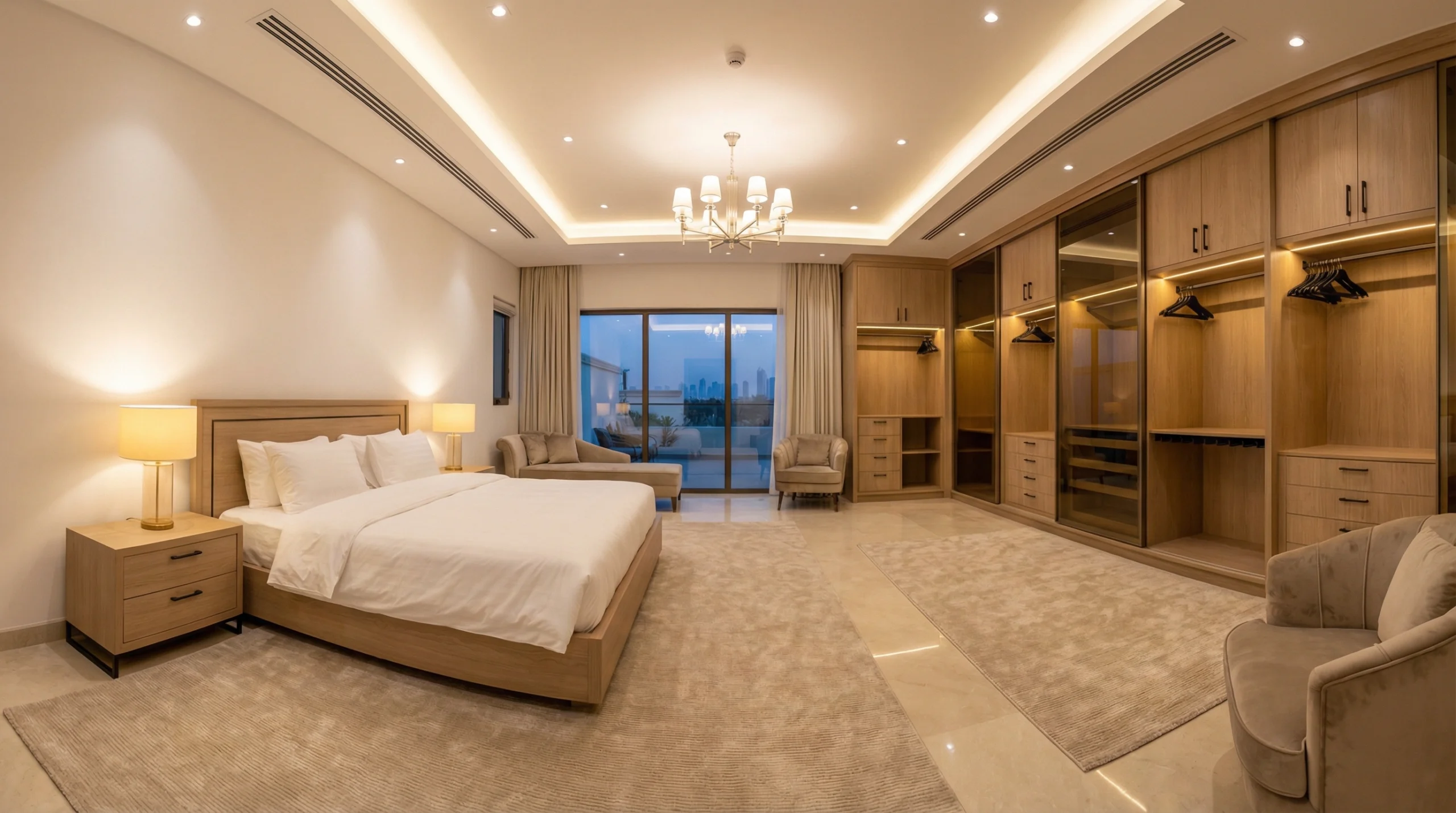
Custom Furniture Dubai: Handcrafted Excellence Since 1988
For 35 years, Karnak Carpentry has transformed Dubai homes and businesses with furniture that fits perfectly—not just in dimensions, but in vision, lifestyle, and the unique demands of UAE living.
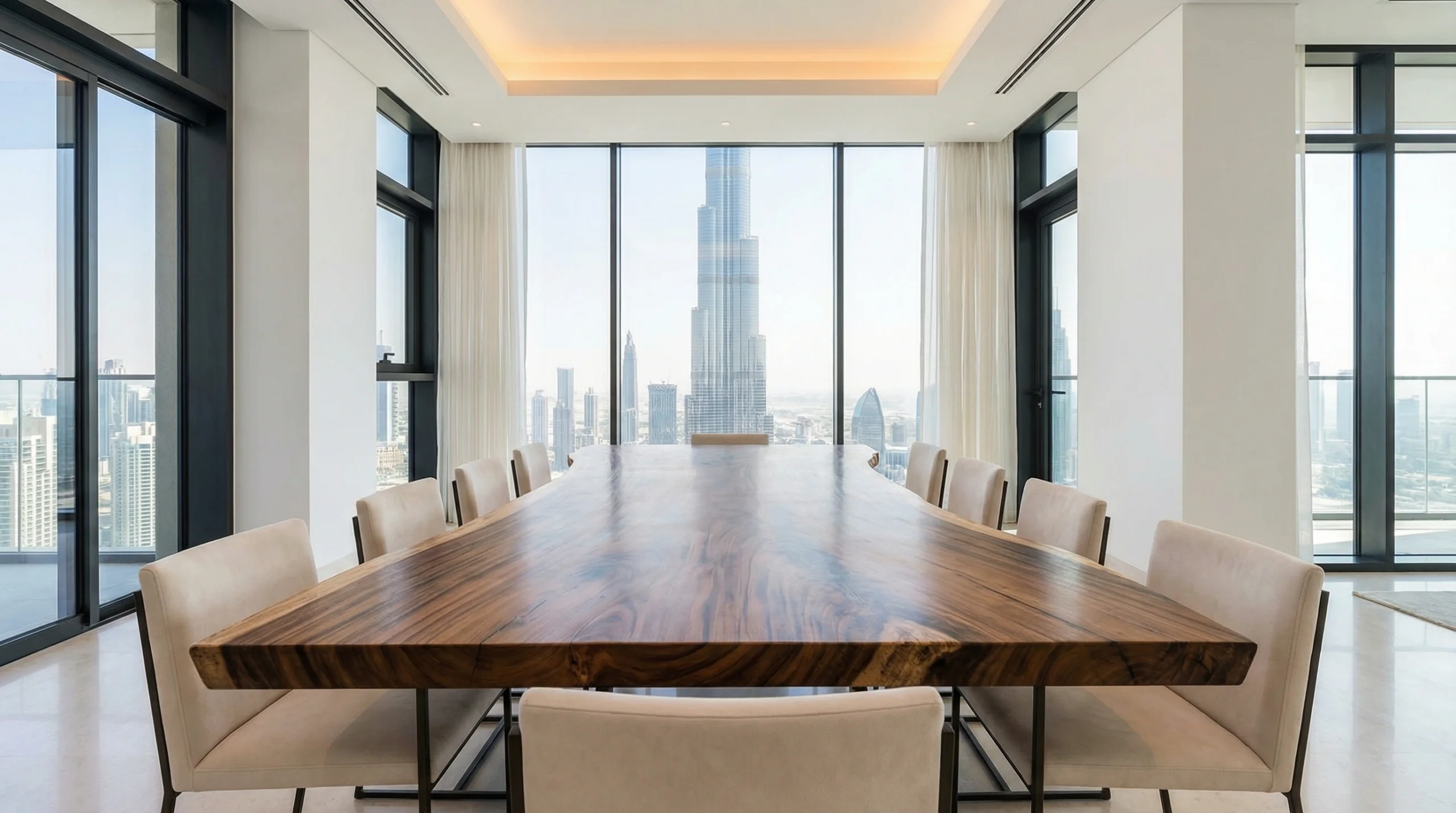
When you commission custom furniture in Dubai, you’re not just buying something that fits a specific space. You’re investing in pieces that withstand 45-degree summers, humidity that would warp inferior materials within months, and the dust that penetrates everything in this desert city. Since 1988, we’ve understood these challenges intimately because we’ve solved them 10,000 times across every emirate.
The UAE furniture market floods with mass-produced pieces designed for European climates and cookie-cutter dimensions. Walk into any showroom and you’ll find the same limitations: standard sizes that leave awkward gaps, materials that buckle in Gulf heat, finishes that fade under relentless sun streaming through those spectacular Dubai windows. We’ve watched countless clients settle for “close enough” from retail options, only to call us two years later when reality disappoints.
Karnak Carpentry operates differently. Our 12,000-square-foot Dubai workshop houses craftsmen who’ve spent decades perfecting furniture techniques specifically for Emirates living. Every piece we create starts with understanding your exact requirements, then applying engineering solutions we’ve refined across three decades of UAE projects—from Presidential Palace commissions to cozy studio apartments in JBR.
Why Custom Furniture Matters in the UAE
The decision to invest in custom furniture rather than retail alternatives fundamentally changes your relationship with your space. In Dubai’s competitive residential and commercial markets, where first impressions determine property values and business success, furniture that merely functions isn’t enough. The pieces that fill your rooms communicate volumes about quality standards, attention to detail, and long-term thinking.
The UAE Climate Challenge
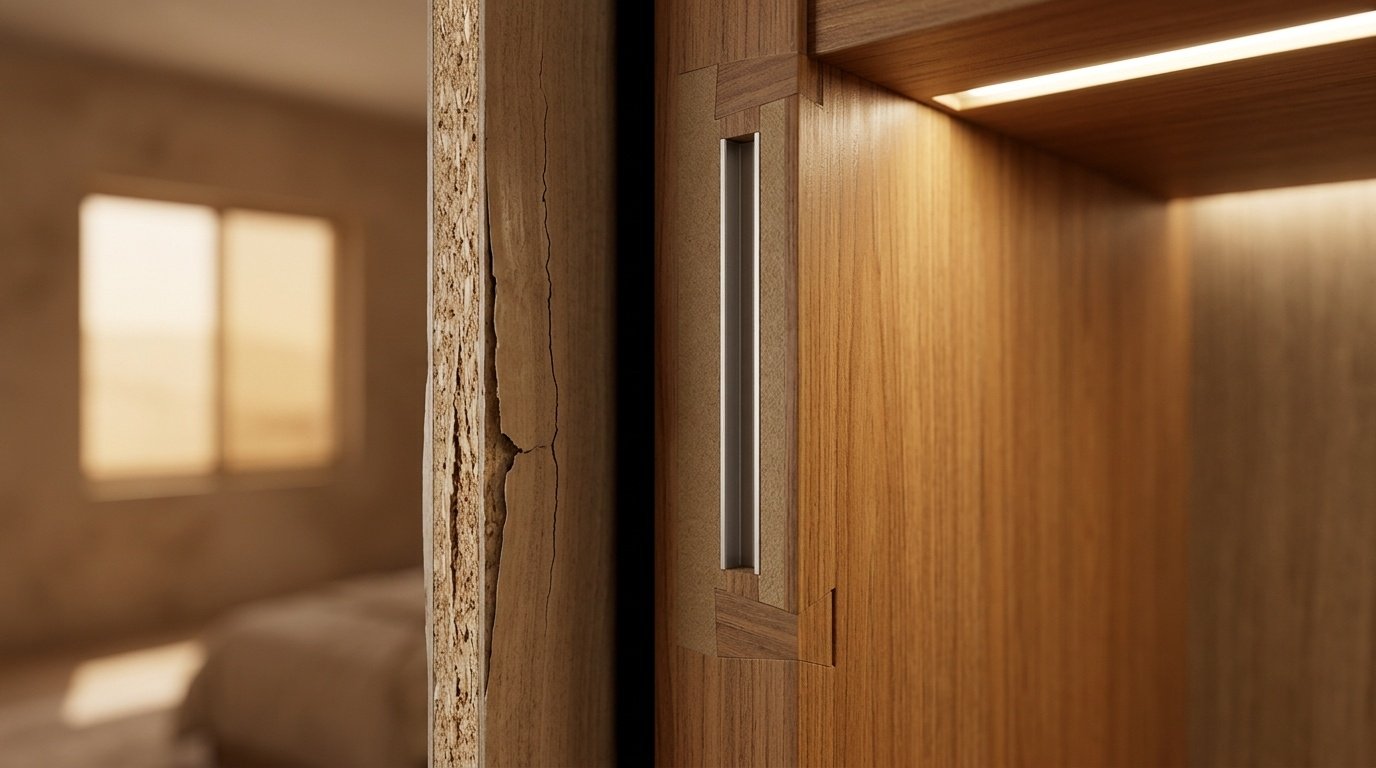
Dubai’s extreme environment destroys furniture designed for moderate climates. We’ve examined hundreds of failed retail pieces over the years—wardrobes with doors that won’t close after one summer, dining tables with veneer peeling at the edges, bookcases that developed alarming bows despite holding minimal weight. The problem isn’t craftsmanship failure; it’s fundamental material science misapplied to Gulf conditions.
Wood moves. It expands in humidity, contracts in air conditioning, responds to temperature fluctuations that swing 20 degrees between your cooled interior and your sun-baked balcony just meters away. Retail furniture manufacturers optimize for European or Asian climates where seasonal changes happen gradually. Dubai hits you with everything simultaneously—morning humidity from the Gulf, afternoon heat that makes metal handles too hot to touch, evening air conditioning that drops indoor humidity to 30%, dust storms that infiltrate the tightest seals.
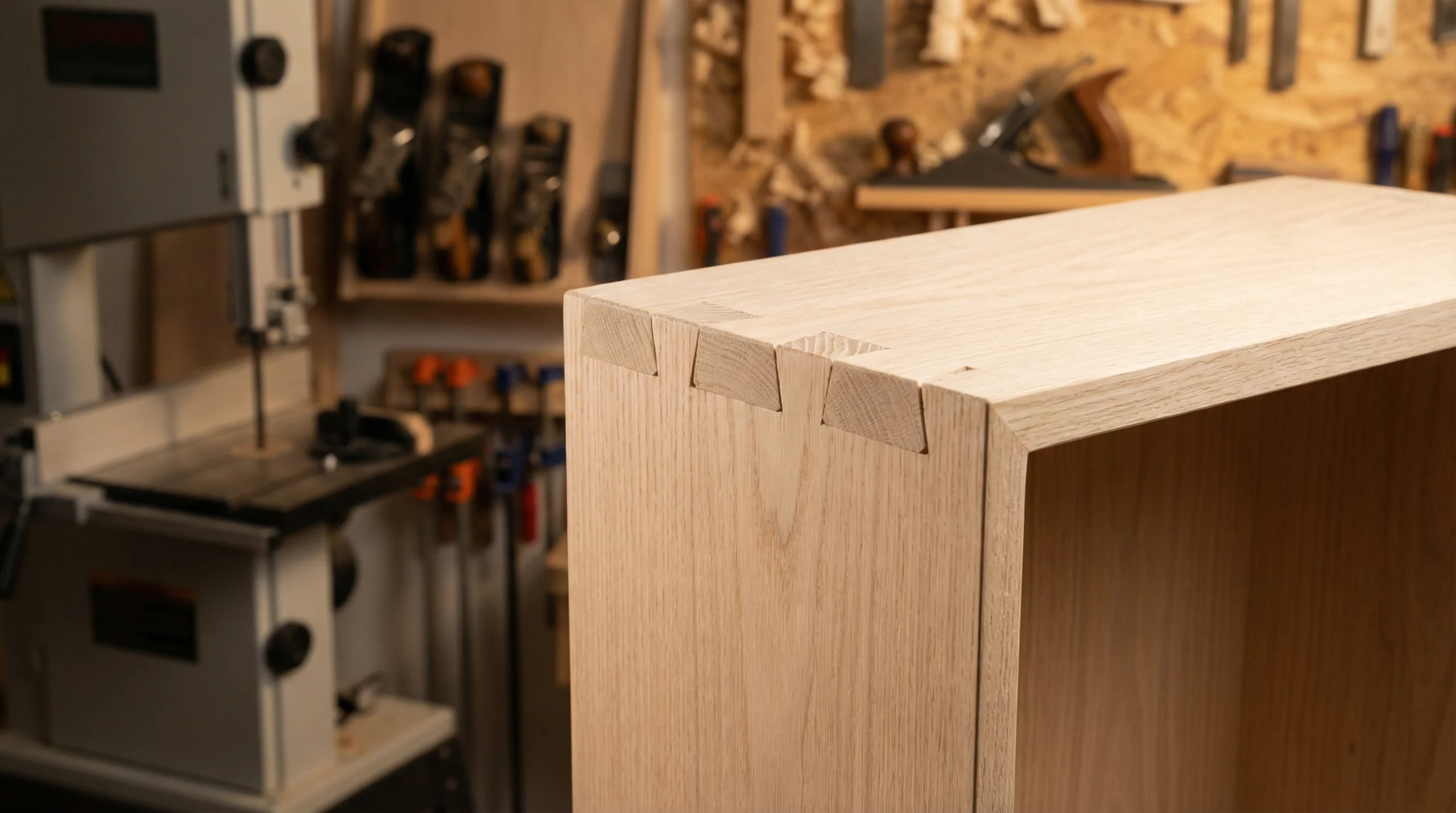
Our custom furniture accounts for these realities from the first design sketch. We specify wood species that maintain dimensional stability in extreme conditions—not what looks beautiful in a Portuguese catalog. We engineer joint systems with expansion gaps calculated for Dubai’s specific humidity range. We apply finish systems tested in our own workshop environment that replicates your home’s conditions. A custom wardrobe we built in 2012 for a Palm Jumeirah villa still operates flawlessly today because we designed every detail for this exact climate, this exact usage pattern, this exact maintenance reality.
Space Optimization in Dubai Properties
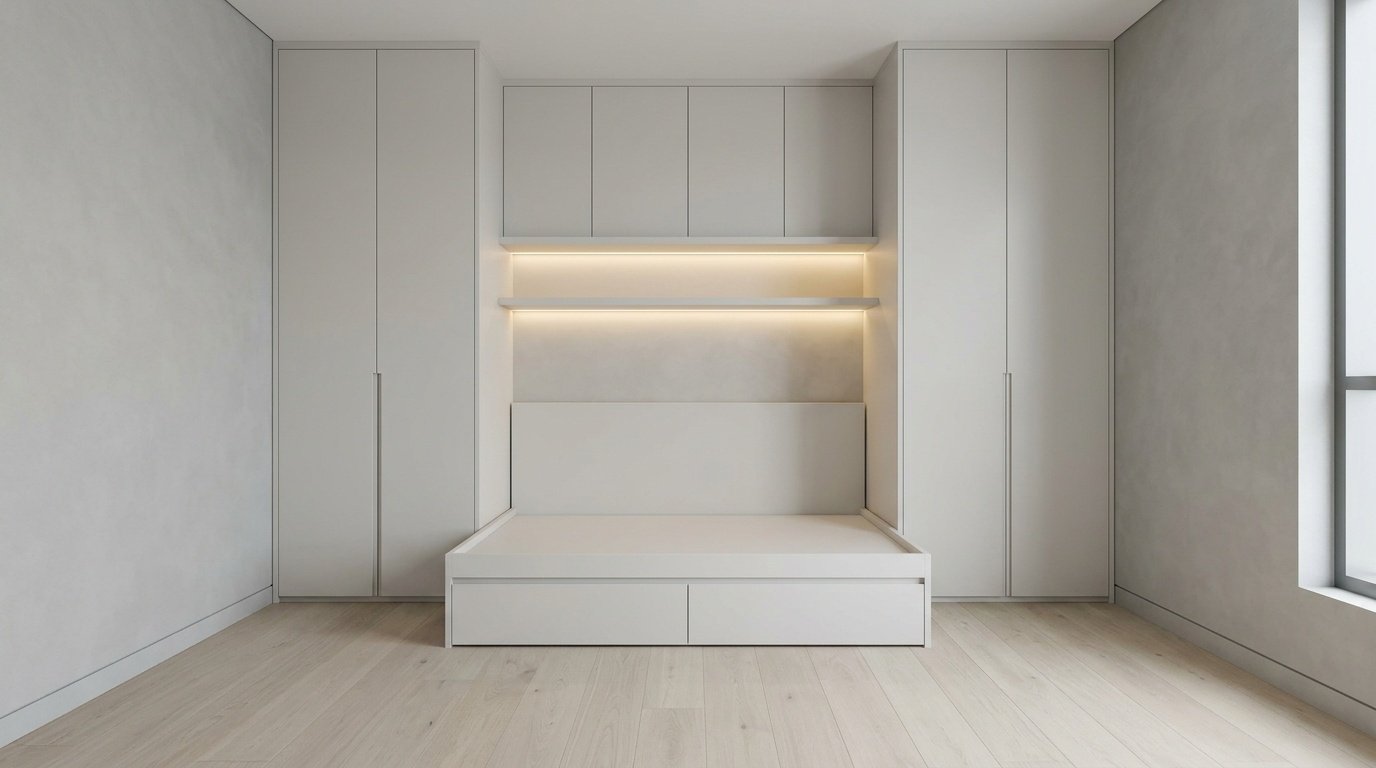
Dubai property developers build to maximize units per floor. The result? Homes and offices with challenging dimensions, awkward corners, structural columns in inconvenient locations, and spaces that don’t quite fit standard furniture proportions. A typical Dubai Marina apartment bedroom measures 3.8 meters by 3.2 meters—dimensions that make retail wardrobe shopping an exercise in compromise.
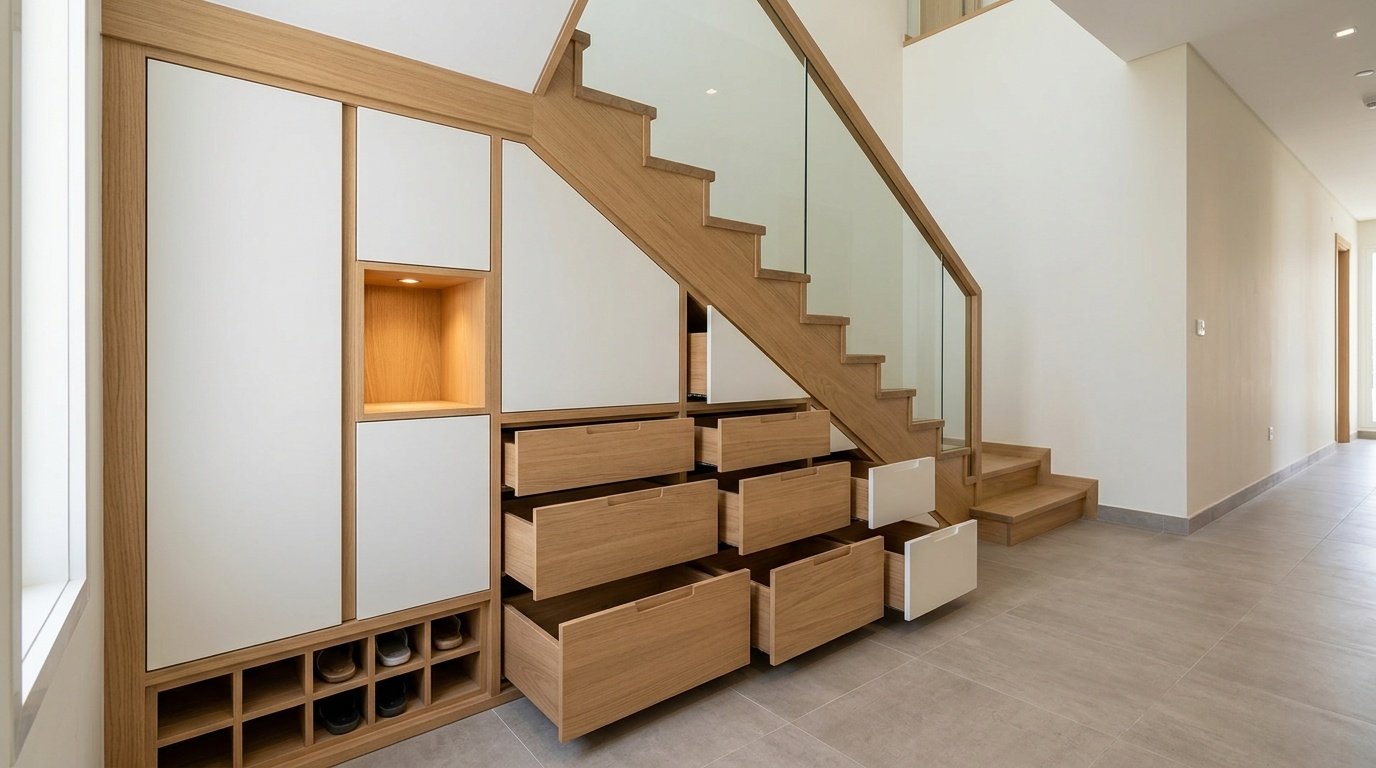
Custom furniture transforms these limitations into advantages. That structural column the developer couldn’t remove? We design around it, creating a built-in feature that adds character rather than eating usable space. The awkward 2.3-meter wall that’s too long for one standard cabinet but too short for two? We build a single piece that fills it perfectly, eliminating the dust-catching gaps retail furniture creates. The under-stairs void in your Emirates Hills villa? We convert it into precisely fitted storage that adds 40% more capacity than modular solutions.
We’ve templated thousands of Dubai properties. Downtown apartments have different quirks than Arabian Ranches villas. JBR penthouses present different challenges than Mirdif townhouses. Business Bay offices operate under different constraints than DIFC corporate headquarters. This accumulated knowledge means we anticipate problems before they arise and design solutions that work specifically for your property type, your building’s construction methods, and your space’s unique geometry.
Investment Value and Longevity
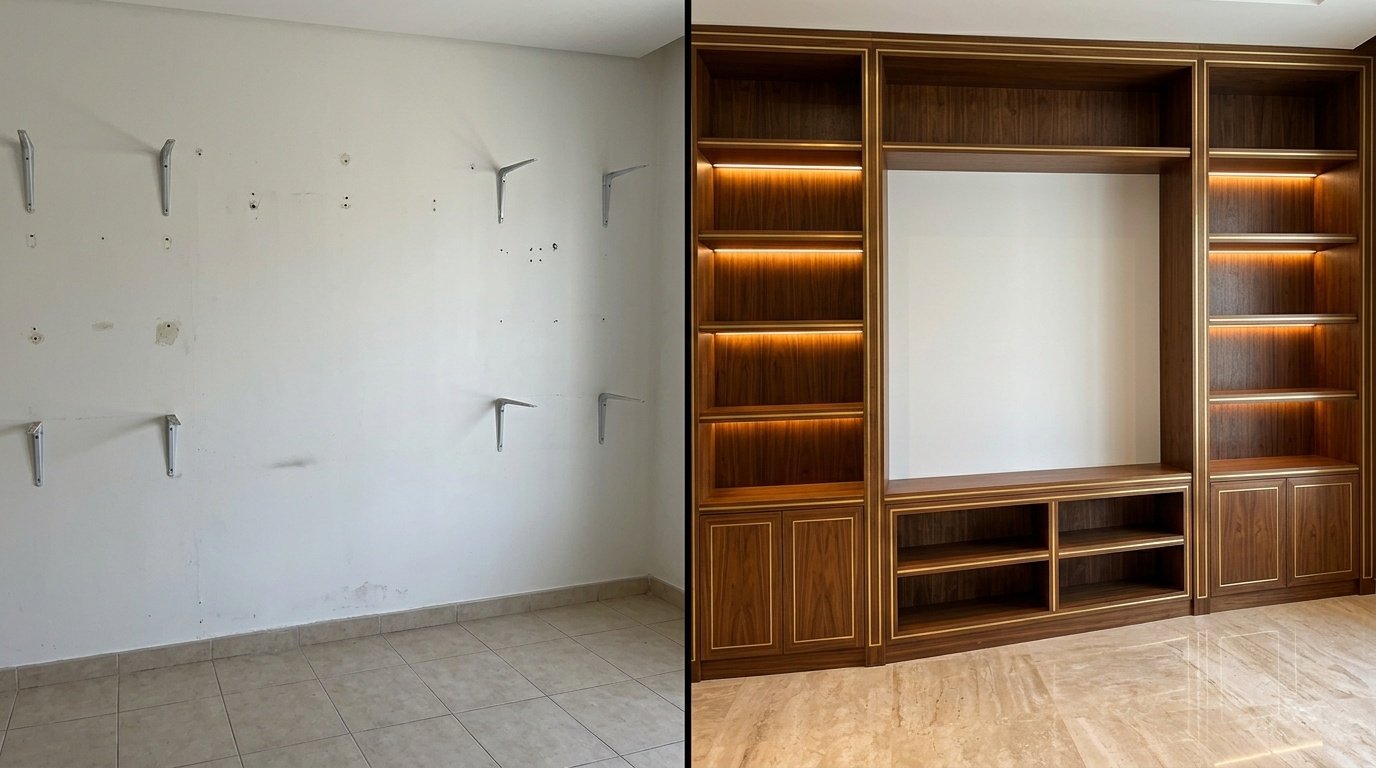
Retail furniture depreciates the moment you assemble it. Custom furniture from Karnak appreciates with your property. We’ve appraised homes where our built-in wardrobes and custom libraries added 8-12% to sale values because buyers recognized quality that would cost significantly more to replicate. Commercial clients report that our custom reception desks and boardroom tables become signature features prospects remember months later.
This value stems from material choices that improve with age rather than deteriorate. The solid teak desk we craft today develops richer patina over decades. The hand-rubbed oil finish we apply penetrates deep into wood fibers, allowing future refinishing that looks better each time rather than wearing through to substrate like polyurethane films. The joinery techniques we employ—dovetails, mortise and tenon, traditional joining—strengthen over time as wood settles into position.
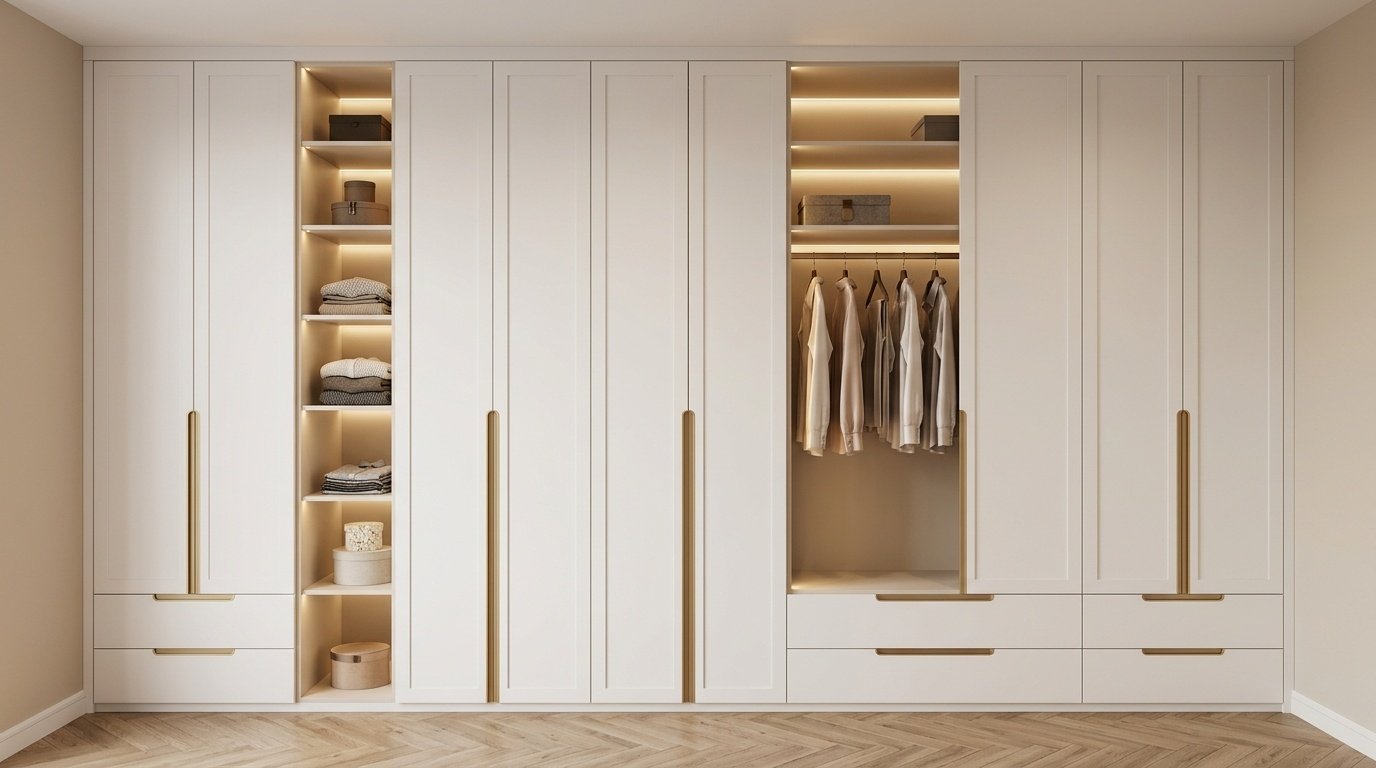
We’ve refinished furniture we originally built in 1995. The underlying construction remained so sound that clients chose restoration over replacement. Try that with particleboard retail pieces held together with cam locks and hope. The environmental mathematics matter too—one custom piece lasting 40 years generates far less waste than three retail replacements over the same period, each ending up in Jebel Ali landfill after 12 years of service.
Our Custom Furniture Categories
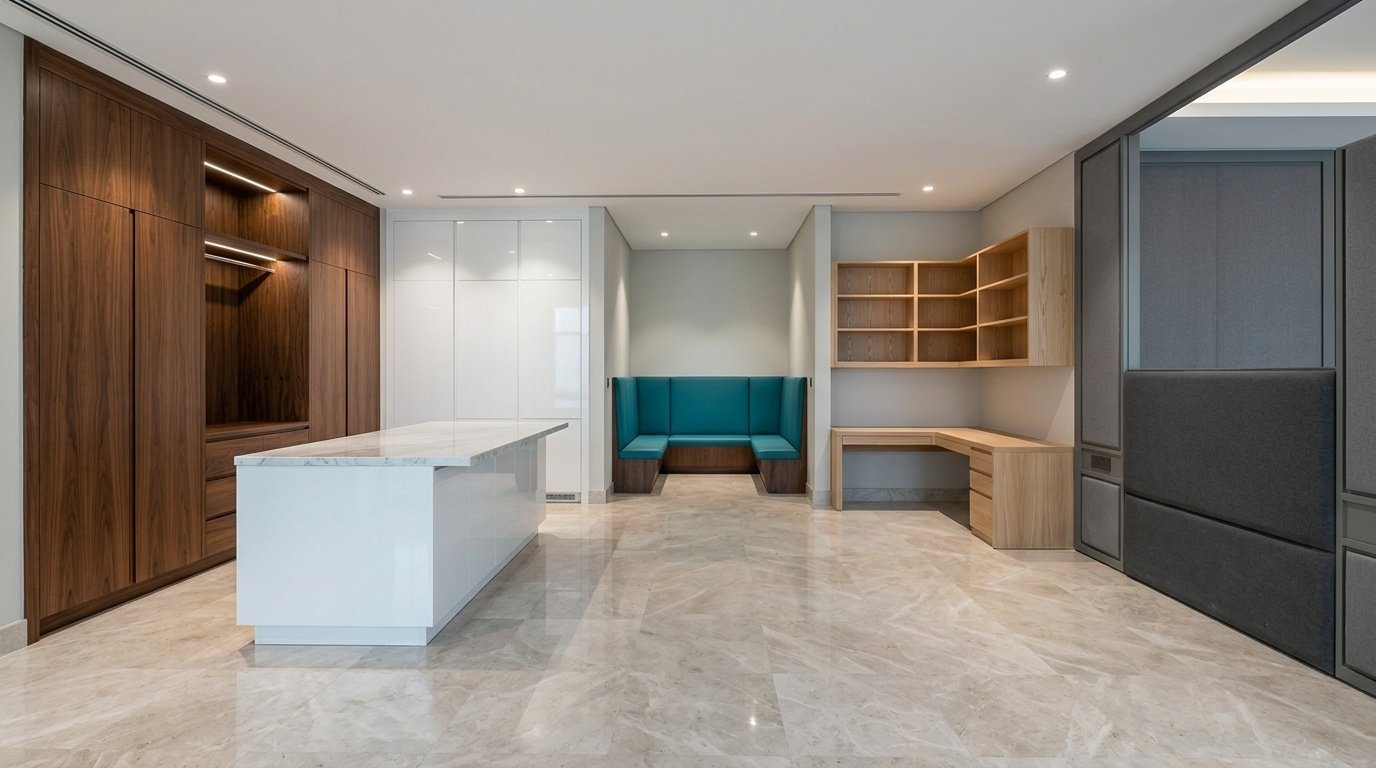
Every piece we create serves specific purposes while reflecting the client’s vision and our expertise in UAE-appropriate construction. Our portfolio spans from intimate personal items to large-scale commercial installations, united by the same commitment to materials, craftsmanship, and longevity.
Living Spaces: Custom Tables, Seating, and Storage
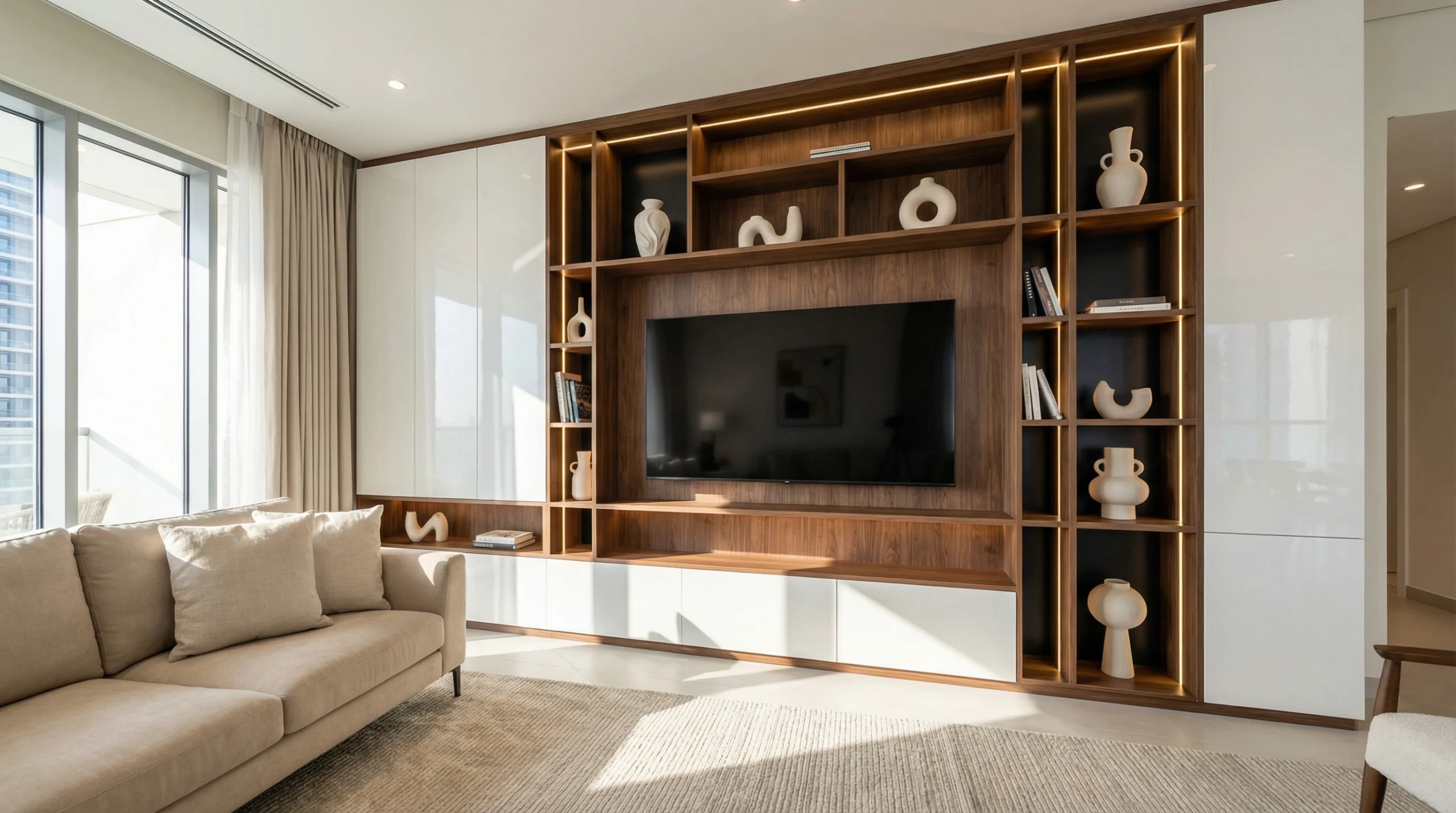
Living room furniture sets the tone for your entire home. This comprehensive service encompasses initial design consultation where we assess your space dimensions, understand your lifestyle requirements, and explore aesthetic preferences. We discuss how you actually use the room—formal entertaining, family gatherings, media viewing, work-from-home needs—because furniture that looks spectacular but doesn’t support your daily life fails regardless of craftsmanship quality. Material selection follows, where we guide you through wood species, finishes, and hardware options that align with your interior design vision while meeting our stringent UAE climate standards.
The fabrication phase happens entirely in our Dubai workshop under controlled conditions. Unlike contractors who assemble pieces on-site with variable quality, we pre-build everything where humidity and temperature remain constant, where we can test drawer action repeatedly, where finishing can cure properly before installation. This means when our team arrives at your home, they’re installing completed furniture, not constructing it in your living room. Installation typically completes in a single day for most living room projects, with minimal disruption and zero construction dust in your living space.
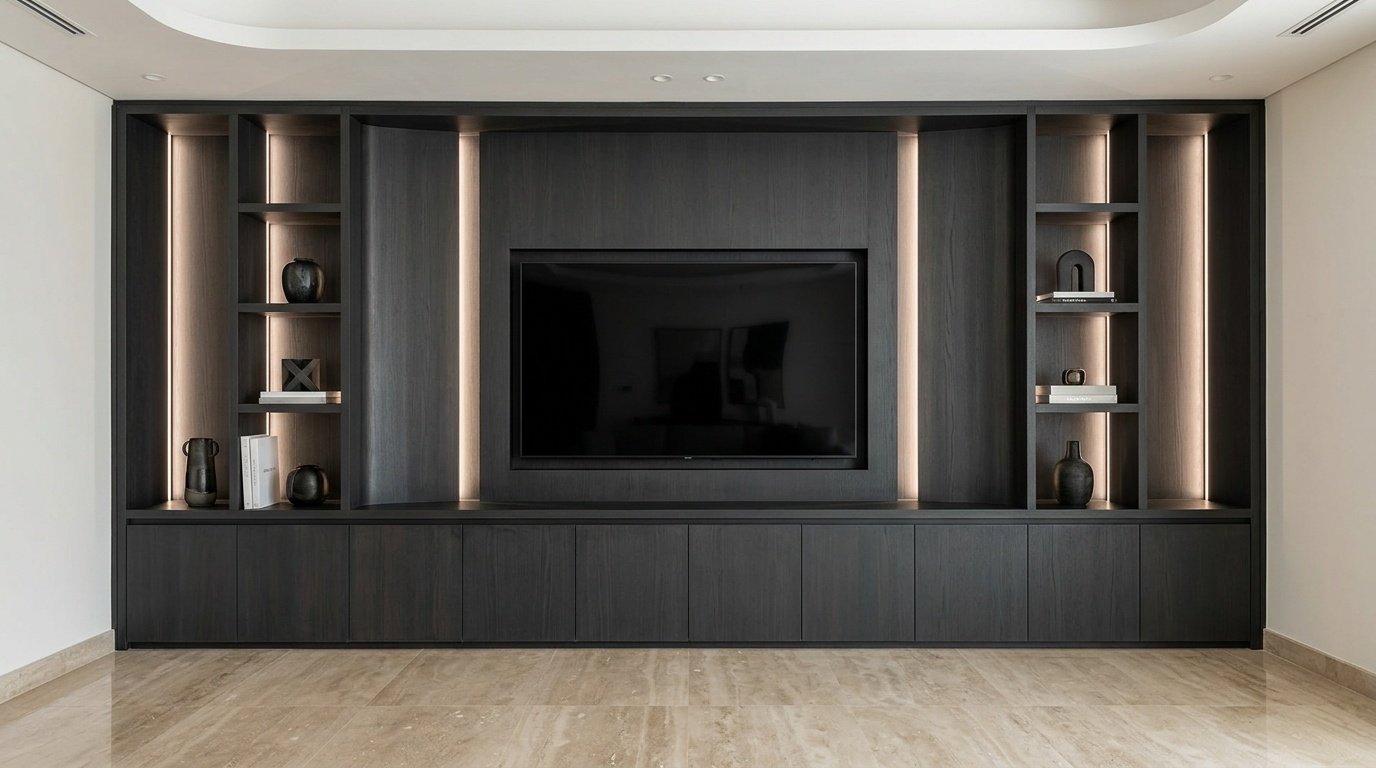
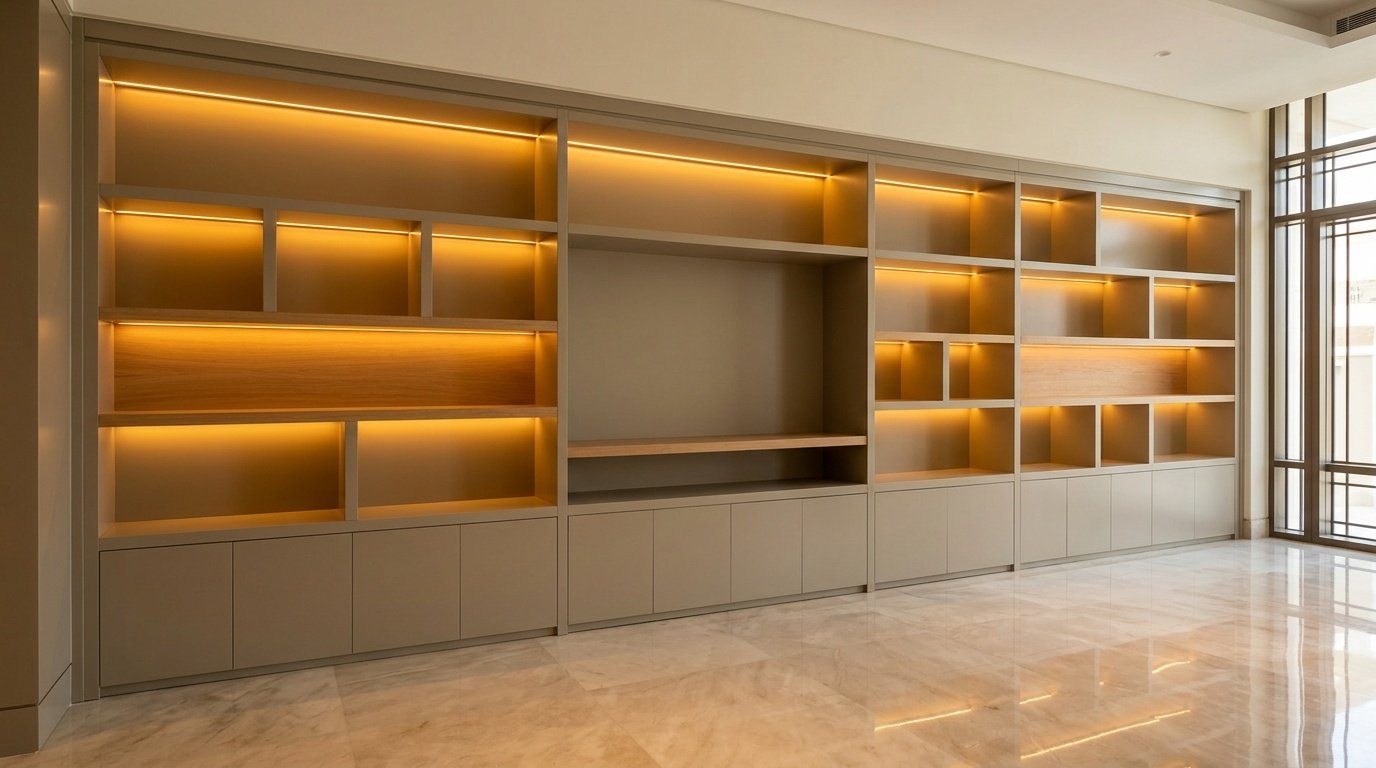
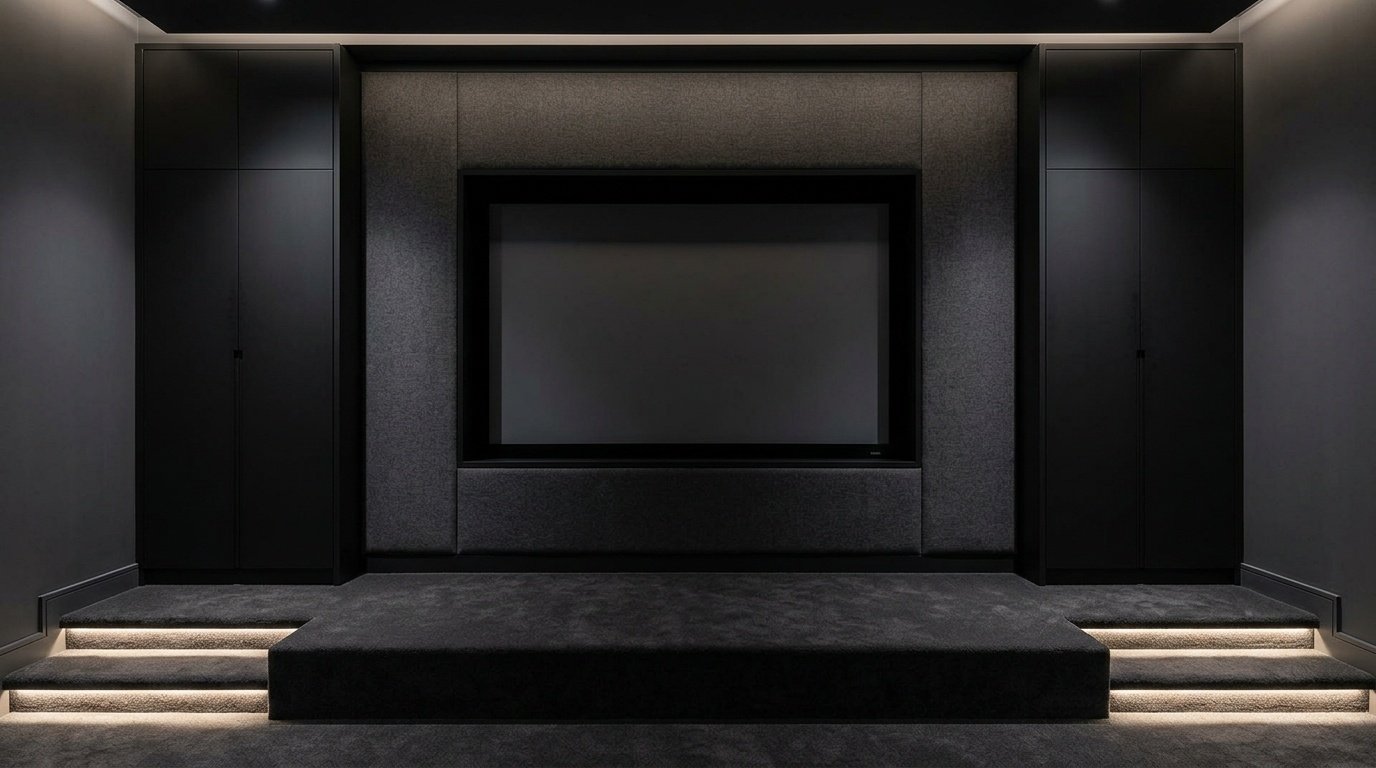
Living room pieces we frequently create include media walls that integrate your television and equipment while providing display areas for art and personal items, coffee tables with hidden storage compartments for remote controls and magazines, console tables sized exactly for your entry hallway, built-in bookcases that fill entire walls from floor to ceiling, window seats with lift-up storage, and custom side tables that tuck perfectly beside your specific sofa model. Each piece incorporates cable management solutions, adjustable shelving where appropriate, and finishes that resist the coffee spills, wine glass rings, and daily wear living rooms endure.
Dining Furniture: Tables and Chairs Built for Gathering
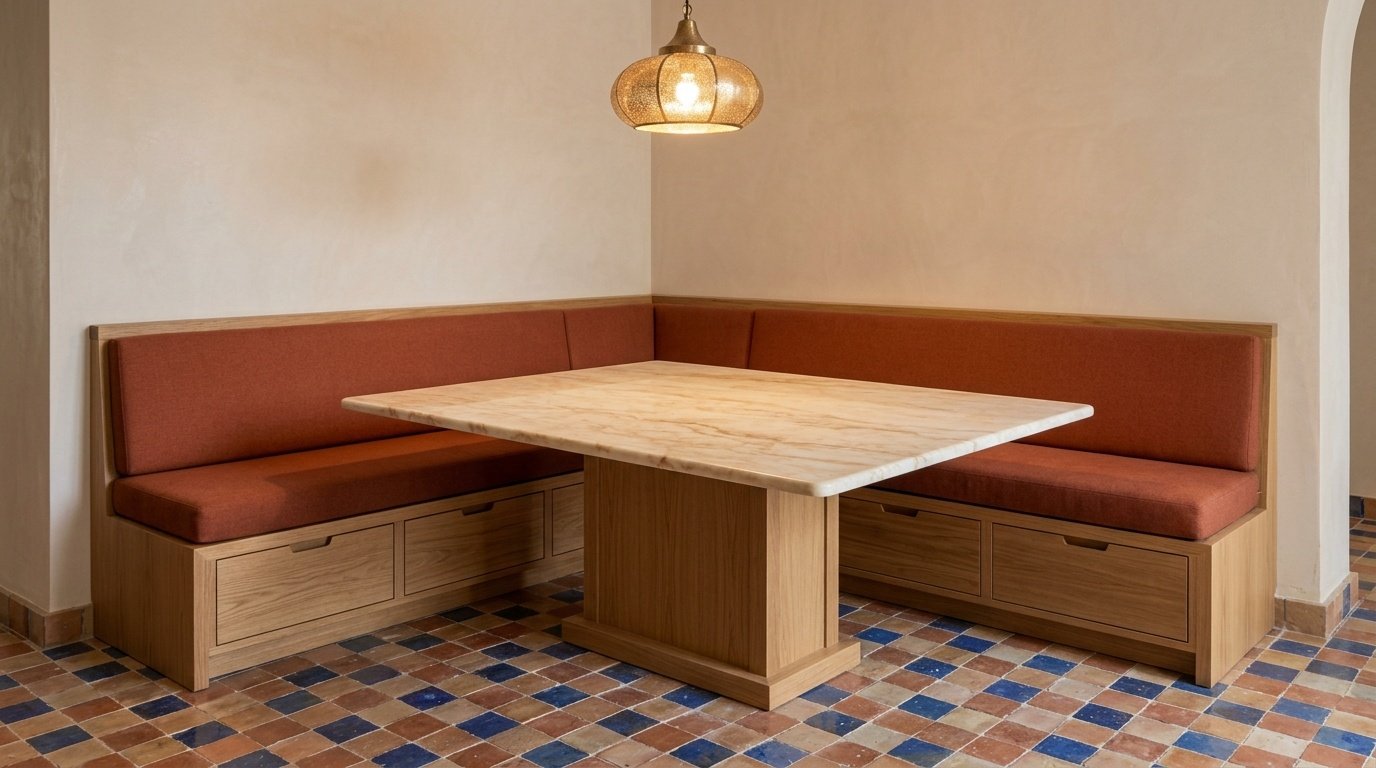
Your dining table hosts the conversations that matter—business negotiations over working lunches, family celebrations, dinner parties that extend past midnight. Custom dining furniture from Karnak ensures these moments happen around pieces worthy of the occasions. We begin every dining project by understanding your entertaining style and frequency. A family of four who occasionally hosts weekend brunches needs different solutions than a couple who regularly entertains twelve guests for formal dinners.
Table size and shape require careful consideration beyond simple room dimensions. We account for traffic flow around the table, ensuring guests can pull out chairs without hitting walls or blocking doorways. We calculate how many people you need to seat comfortably versus occasionally, designing extension systems that store neatly when not needed. We orient wood grain to create visual impact when viewed from your primary entrance angle, making the table a focal point that draws eyes naturally.
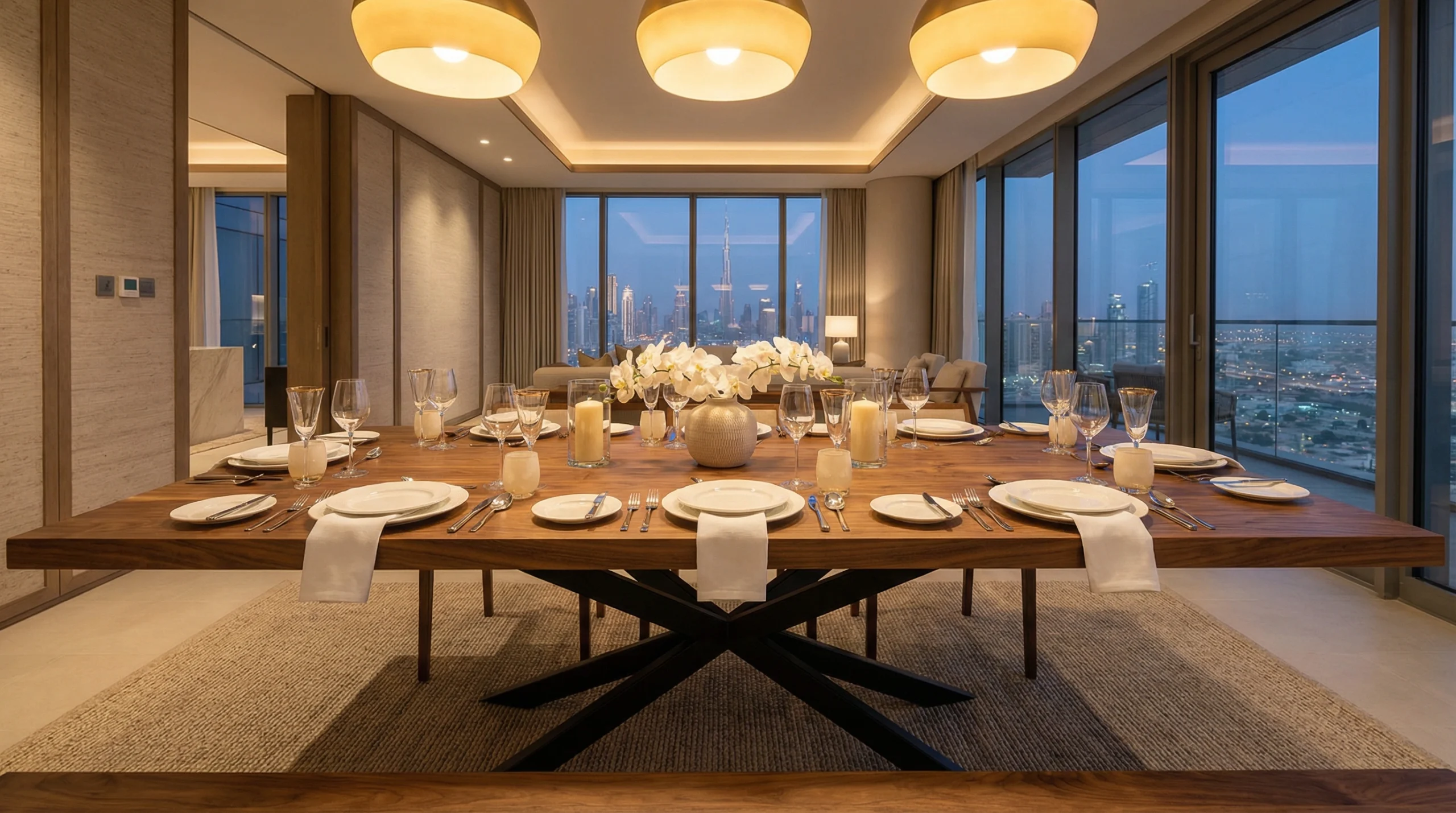
Material selection for dining tables balances beauty with performance. That gorgeous live-edge slab looks stunning, but will it remain stable in your Marina apartment’s humidity swings? We guide clients toward species that combine aesthetic appeal with structural reliability. Walnut, teak, and oak perform exceptionally in UAE conditions when properly kiln-dried to 8-10% moisture content—the specific range that accounts for Dubai’s typical indoor humidity. We steer away from species that look beautiful in European showrooms but develop stress cracks in Emirates environments.
Base construction determines longevity more than clients realize. We engineer table bases that support the top’s weight while allowing for wood movement, preventing the stress fractures that plague poorly designed pieces. For larger tables exceeding 2.5 meters, we incorporate hidden support systems that maintain clean sight lines while ensuring structural integrity that lasts decades. Finish selection matters enormously for dining surfaces. We recommend hand-rubbed oil finishes that penetrate wood fibers, creating water resistance while allowing future maintenance that keeps tables looking pristine through years of daily use.
Bedroom Furniture: Wardrobes, Beds, and Personal Spaces
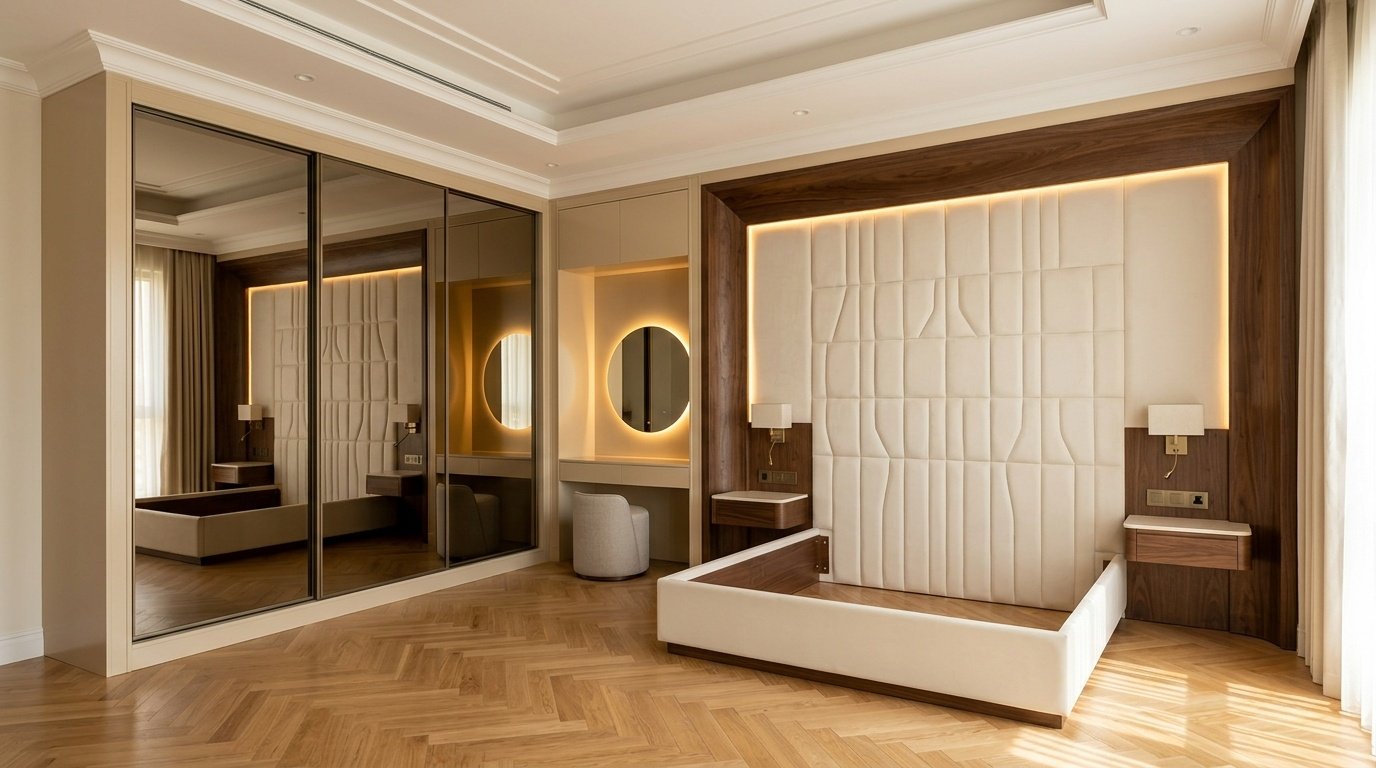
Bedrooms demand furniture that maximizes storage while creating tranquil environments conducive to rest. Our custom bedroom solutions transform cramped Dubai apartment bedrooms into organized sanctuaries and convert spacious villa master suites into luxury retreats with every storage need addressed. The process begins with analyzing your wardrobe—not metaphorically, but literally counting hanging items, folded garments, shoes, accessories, seasonal clothing, and luggage to determine precise storage requirements.
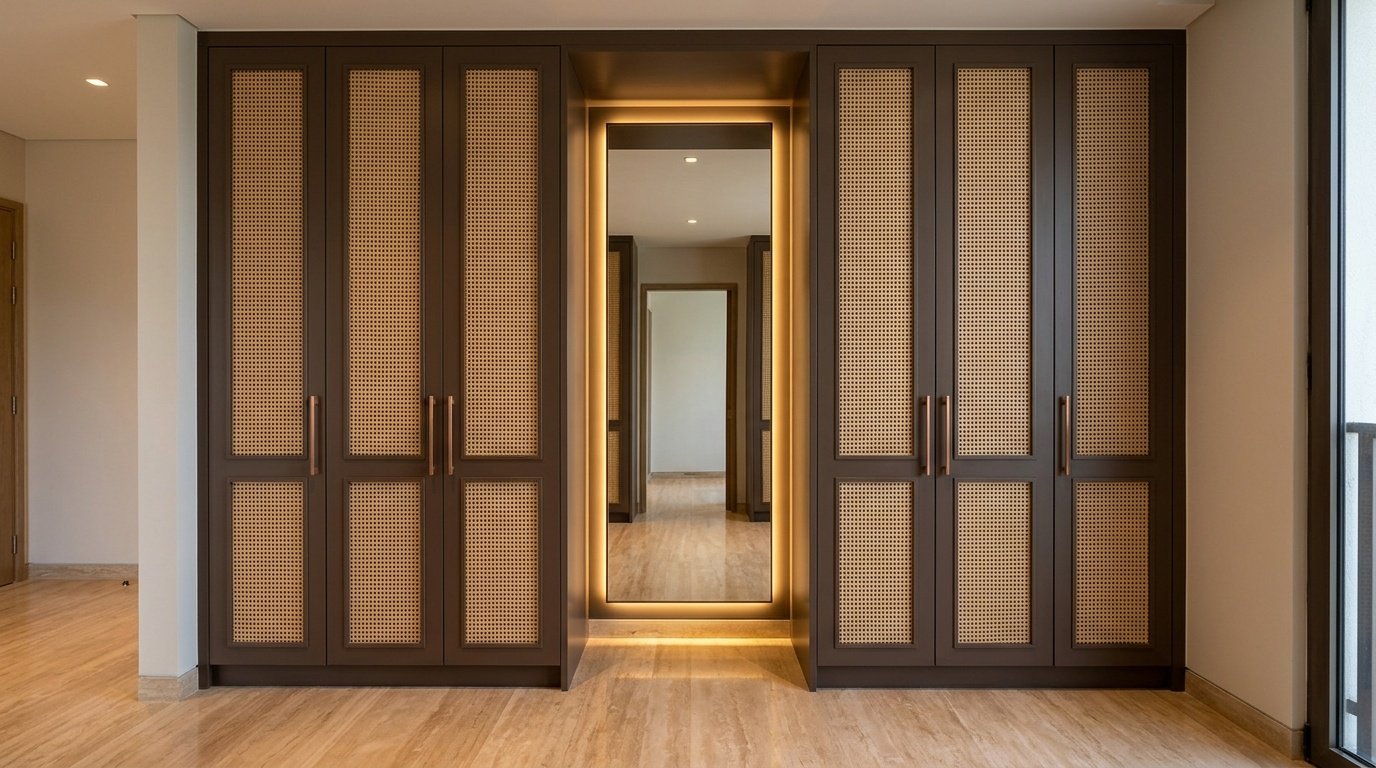
Custom wardrobes we design incorporate hanging space configured for your specific clothing types, with rod heights optimized for your longest dresses or suits. We include adjustable shelving for folded items, with shelf depths calculated for your preferred storage baskets or boxes. Shoe storage might mean angled shelves for high heels, cubby systems for sneakers, or tall compartments for boots. We integrate jewelry drawers with velvet-lined compartments, pull-out tie racks, built-in lighting that illuminates interiors when doors open, and soft-close mechanisms that function silently at 3 AM when you’re trying not to wake your partner.
Climate control remains crucial for bedroom furniture. Dubai apartments often feature wardrobes against exterior walls where temperature differentials create condensation risk. We design with ventilation gaps, specify moisture-resistant backboards, and select finishes that won’t support mold growth in occasional humidity exposure. The result? Wardrobes that protect your investment in clothing rather than creating musty environments where fabrics deteriorate.
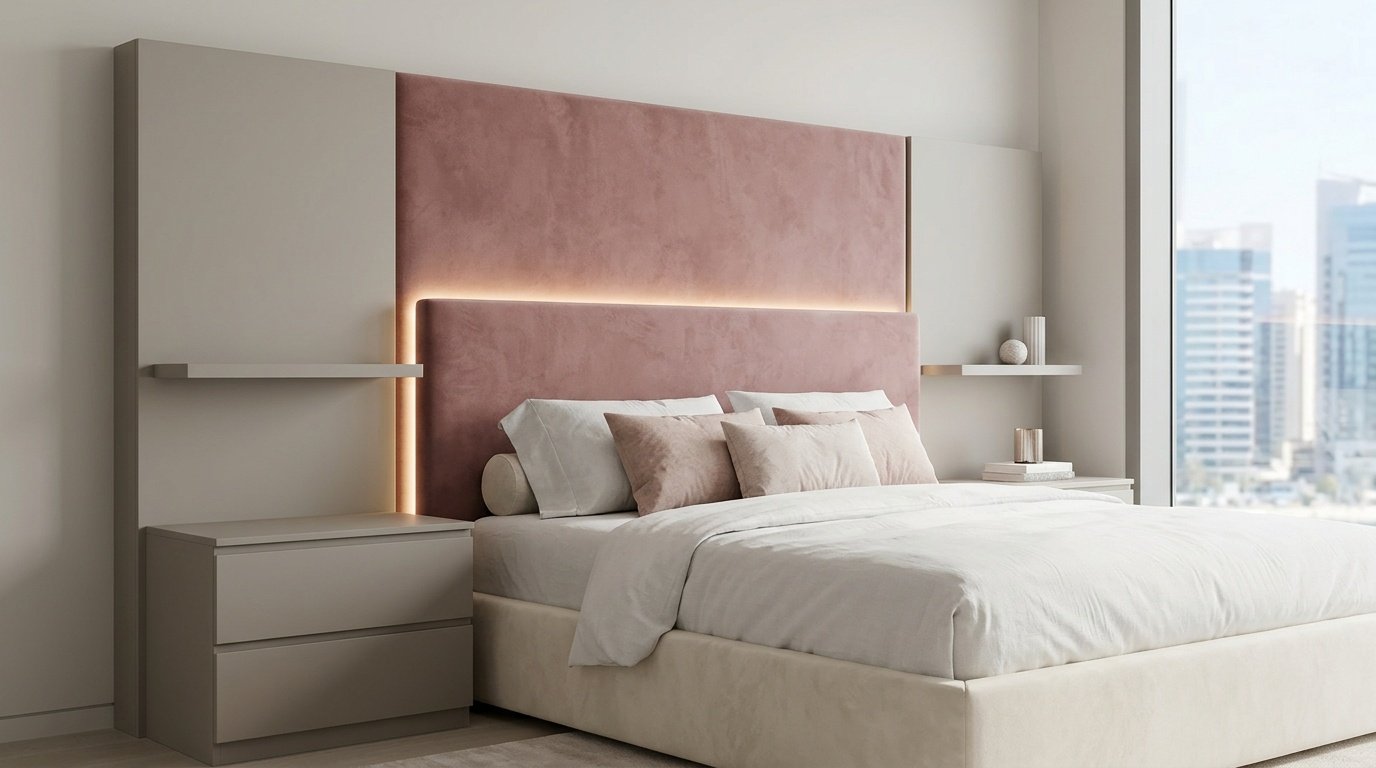
Custom beds we fabricate go beyond standard retail frame offerings. We create beds with integrated storage drawers that glide on full-extension slides, headboards with built-in reading lights and USB charging ports positioned exactly where you need them, hidden compartments for valuables, and under-bed platforms engineered to support your specific mattress type while providing maximum storage access. For villa master bedrooms, we design complete wall systems integrating the bed frame with flanking wardrobes and overhead storage, creating seamless built-in environments that maximize every centimeter.
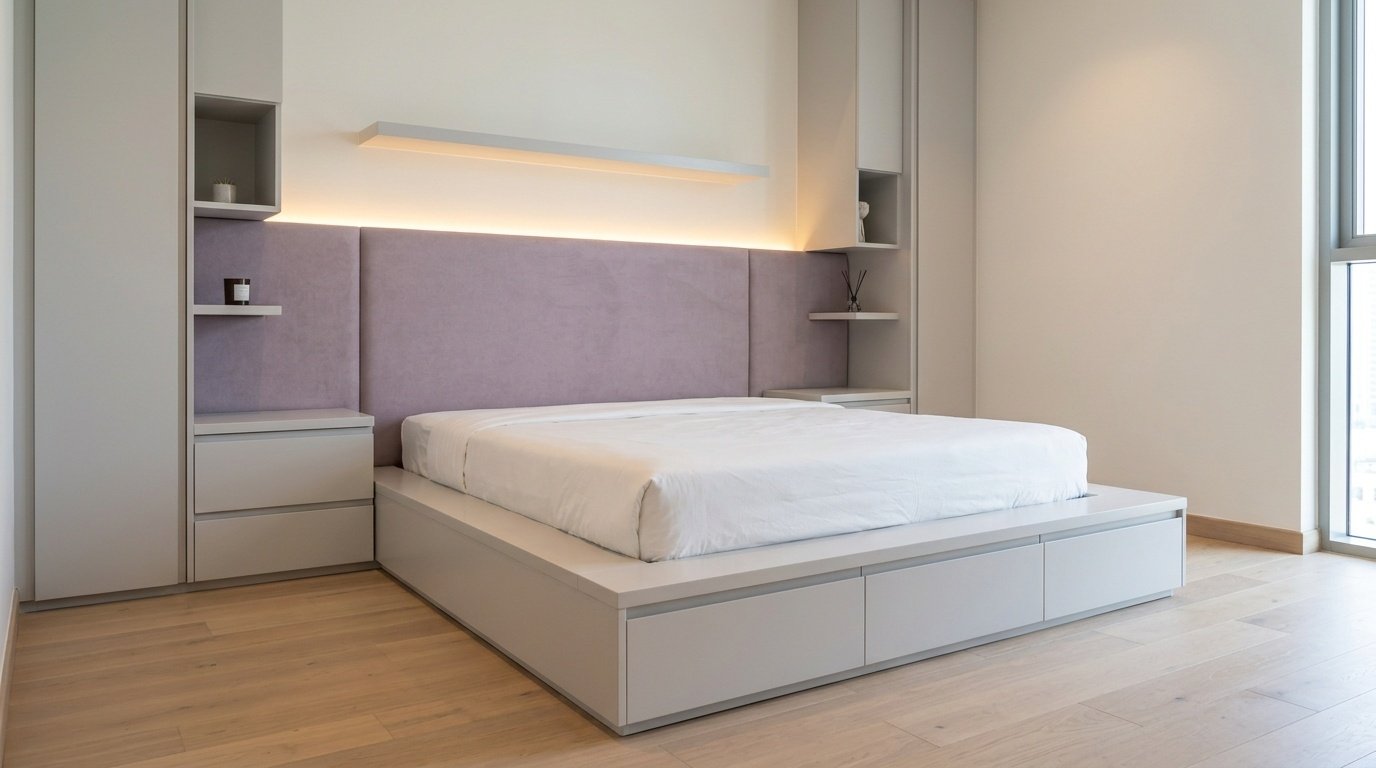
Bedside tables get customized to your exact needs—height matching your mattress plus 5-8 cm for ideal bedside lamp placement, drawer sizes that accommodate your specific items, integrated charging solutions that hide cables, surfaces sized for your water carafe and book stack. These details seem minor until you live with furniture that gets every dimension exactly right for your daily routine.
Home Office and Study Furniture
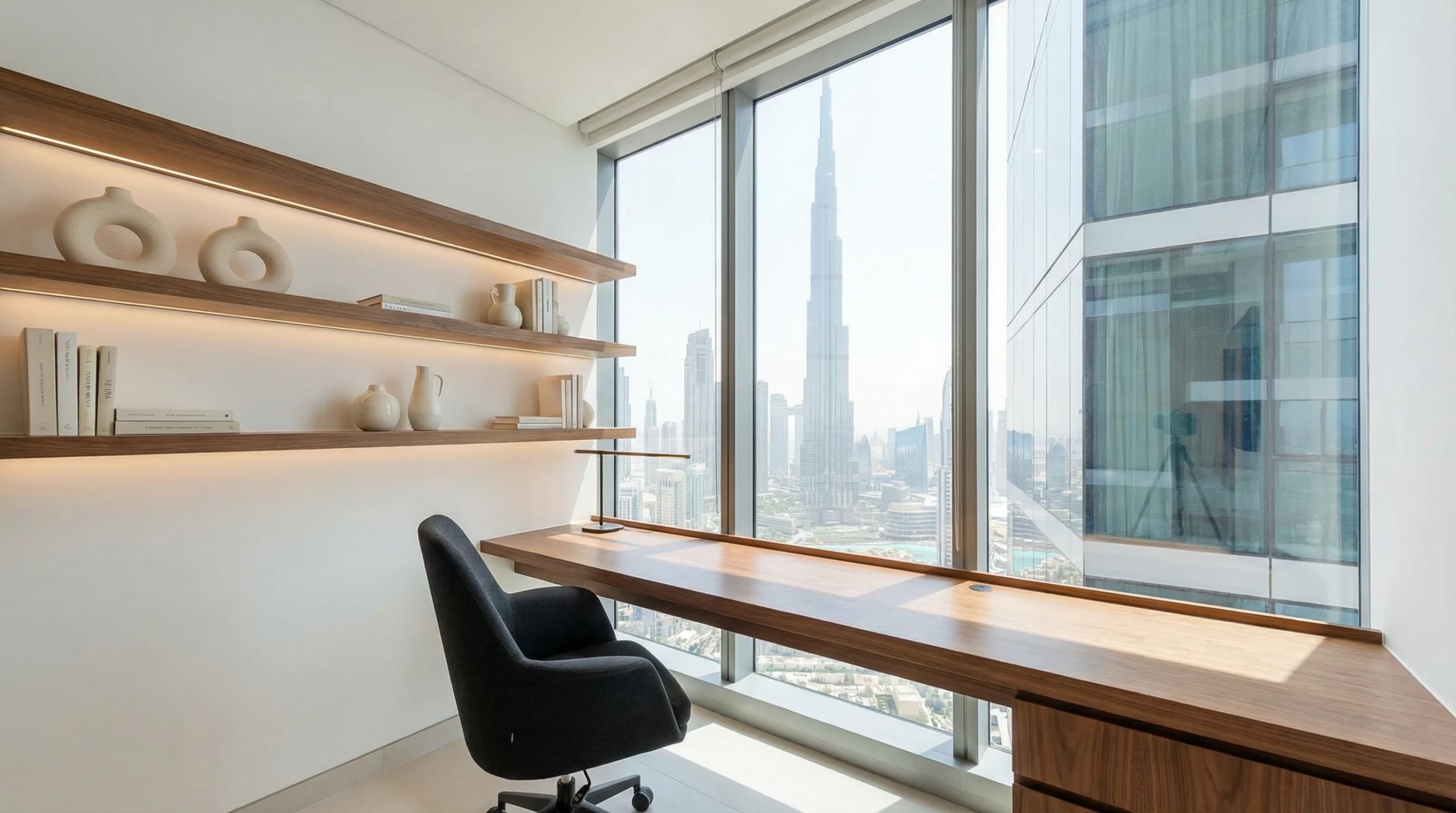
The rise of remote work transformed home offices from occasional-use spaces into professional environments requiring serious furniture solutions. We design custom office furniture that supports productivity while fitting seamlessly into Dubai homes where dedicated office space often means converted bedrooms or carved-out corners of living areas. Our approach starts by understanding your work style, technology requirements, storage needs, and how many hours daily you’ll spend in this space.
Custom desks we create account for your specific work setup—dual monitor configurations need different dimensions than laptop-only setups. We incorporate cable management systems that route power and data connections invisibly, creating clean work surfaces without the wire tangles that plague retail desk solutions. Desk heights get calculated for your body dimensions and whether you’ll use the desk seated, standing, or both with height-adjustable solutions. We design keyboard trays that tuck away when not needed, pull-out surfaces for peripheral equipment, and built-in filing systems that keep important documents accessible without cluttering your work surface.
Built-in shelving for home offices gets configured for your specific storage—legal-size file boxes, A4 binders, reference books, equipment manuals, or display space for professional certifications. We design closed cabinets that hide clutter during video calls while keeping items accessible, open shelving that displays your library, and combinations that balance function with aesthetics. For clients conducting frequent video conferences, we position shelving as attractive backgrounds that communicate professionalism without appearing staged.
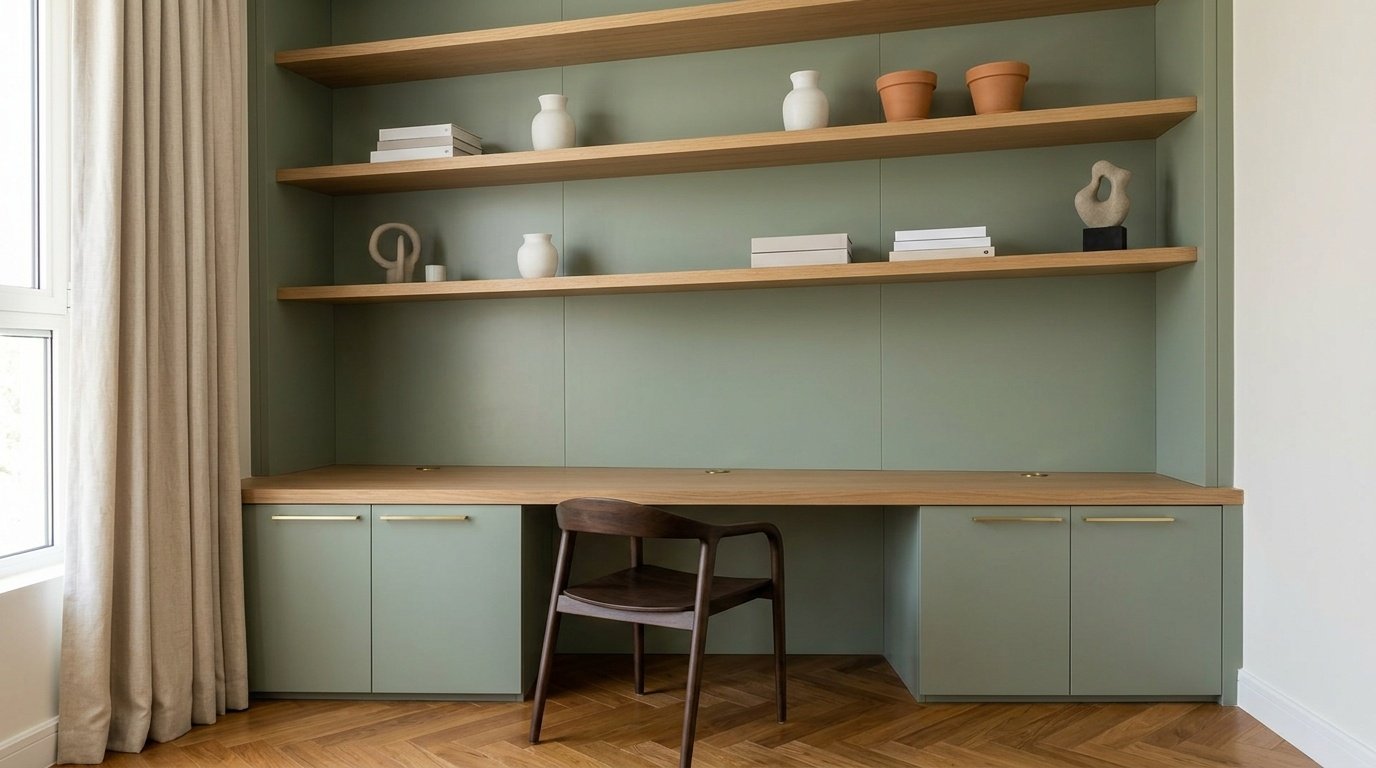
Materials for home offices blend durability with refined appearance. Work surfaces need resistance to daily wear—coffee cup rings, pen marks, paper shuffling, keyboard friction. We recommend hardwoods with proper finish systems rather than veneers that show wear patterns quickly. Edge treatments get designed to prevent fraying where arms rest during long work sessions. Drawer slides must operate smoothly under load because desk drawers hold heavy items—staplers, paper reams, equipment—unlike bedroom furniture drawers that store lightweight clothing.
Kitchen Furniture Beyond Cabinetry
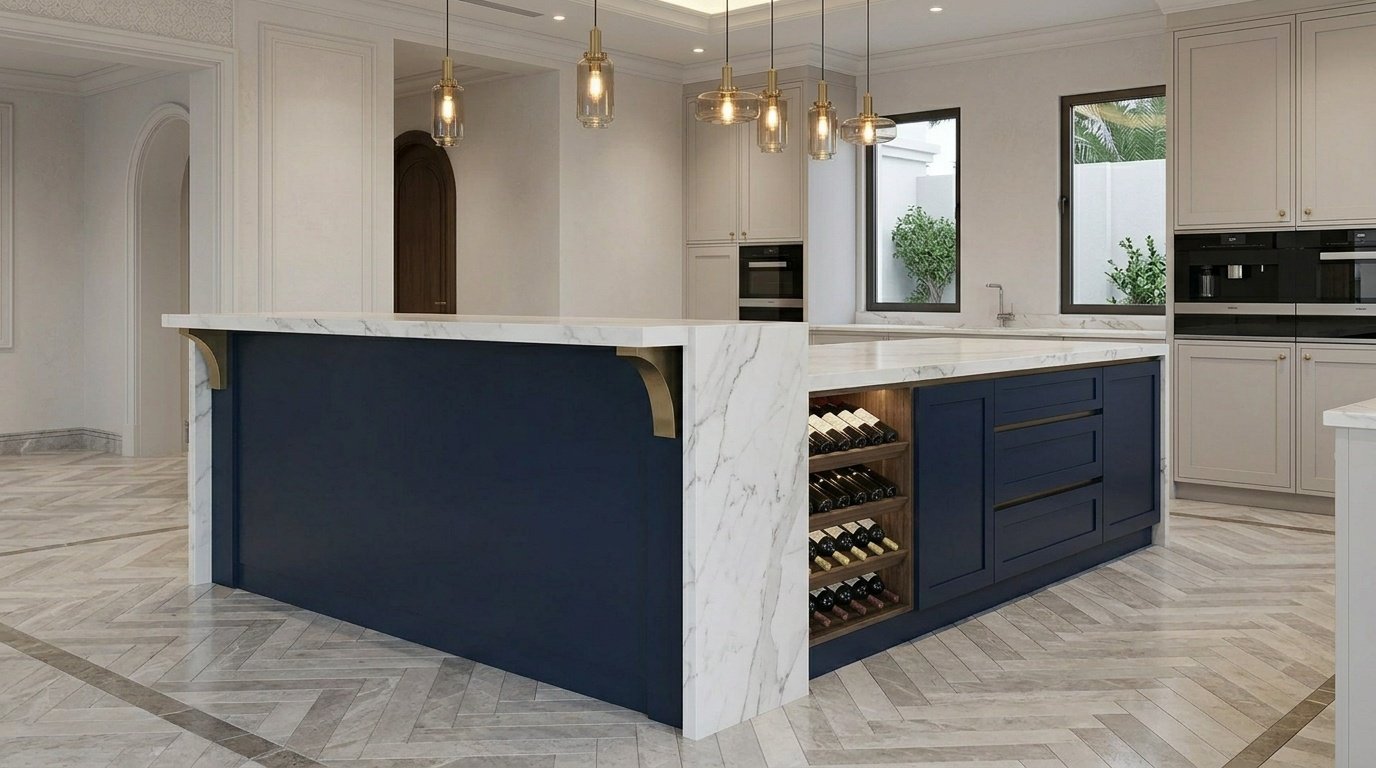
While most custom kitchen work focuses on cabinetry covered in our dedicated kitchen services, kitchen furniture encompasses the pieces that make cooking spaces functional and inviting. Custom kitchen islands we design become command centers for modern cooking, incorporating prep surfaces at optimal working heights, storage configured for your specific cookware and appliances, eating areas with appropriate overhang for comfortable seating, and integration of electrical outlets positioned exactly where you need them.
Breakfast tables and banquettes transform kitchen corners into gathering spots. We size these pieces precisely for your available space while ensuring comfortable seating capacity. Banquette seating we build includes hidden storage beneath cushioned seats, perfect for infrequently used serving pieces or seasonal items. Table heights coordinate with your chair or banquette seat heights, ensuring ergonomic comfort rather than the mismatched dimensions retail solutions create.
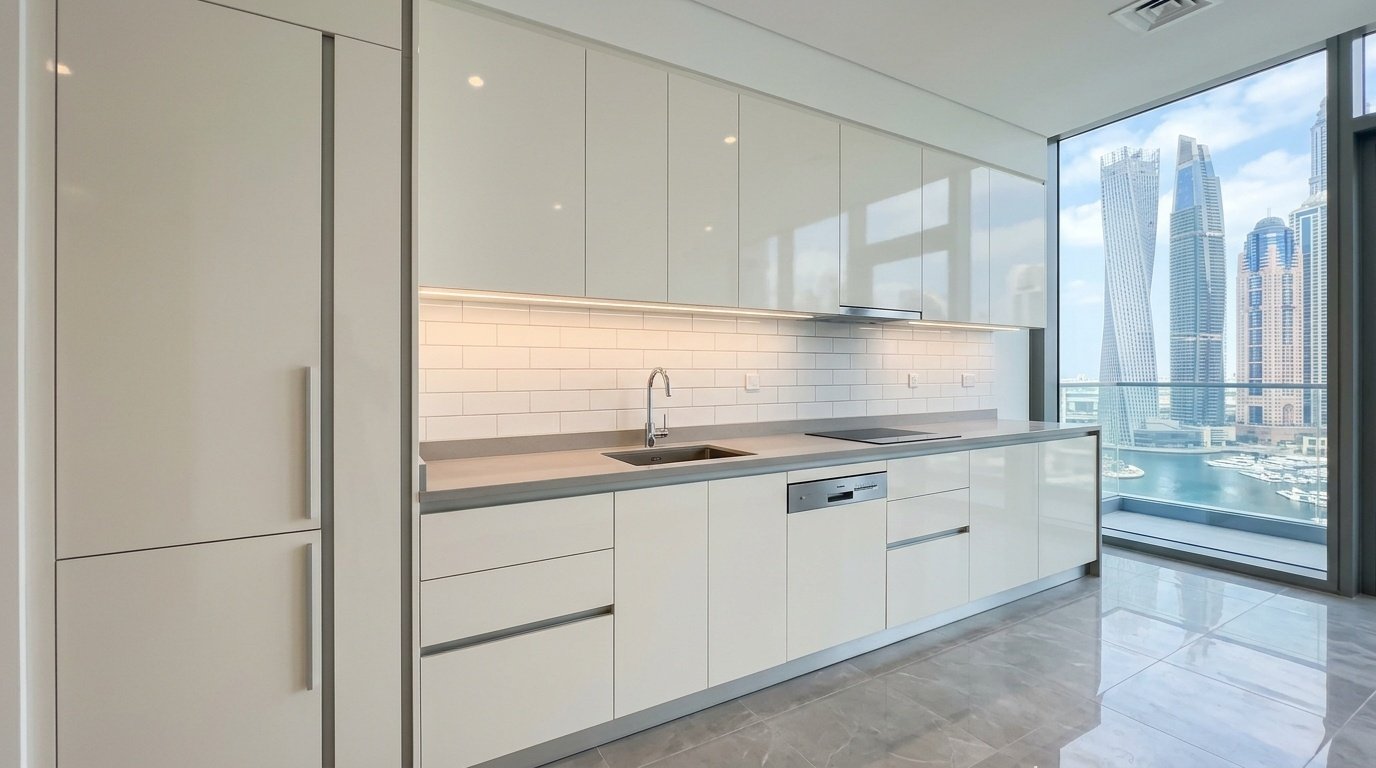
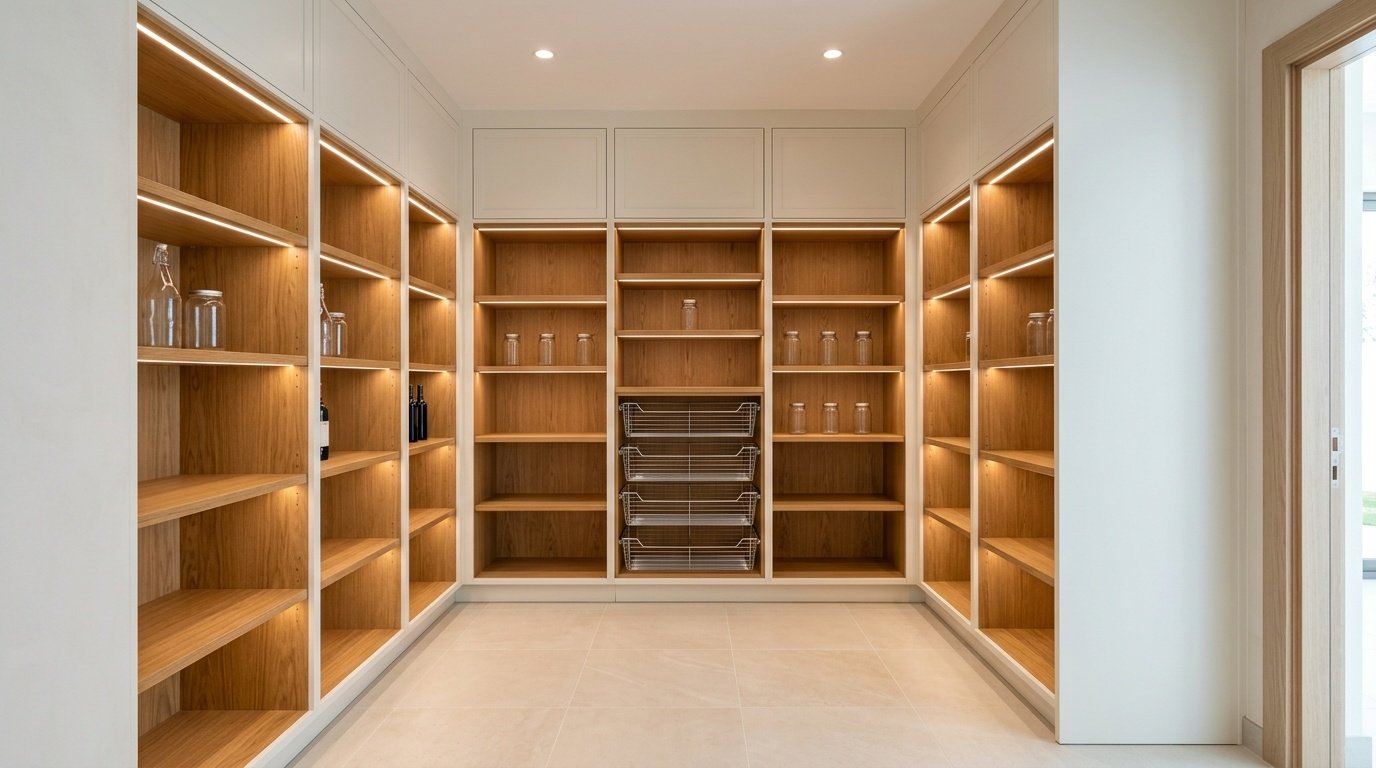
Pantry systems we design maximize vertical space in ways standard shelving cannot. We create pull-out pantry units that bring the entire storage area into view, rotating corner solutions that eliminate the black hole where items disappear, adjustable shelving with stops that prevent items from sliding to the back, and specialized storage for specific items—spice racks at eye level, appliance garages that keep counters clear, wine storage at proper angles. Every element gets configured for your family’s specific food storage patterns and grocery shopping habits.
Materials for kitchen furniture require maximum durability. Steam from cooking, heat from appliances, spills inevitable in busy kitchens, and frequent cleaning with various products create harsh environments. We specify water-resistant hardwoods, sealed finishes that prevent staining, edge treatments that resist impact damage, and hardware that functions smoothly despite grease exposure. The breakfast table that serves triple duty as homework station and bill-paying desk needs construction quality that handles this multifaceted use.
Commercial Furniture for UAE Businesses
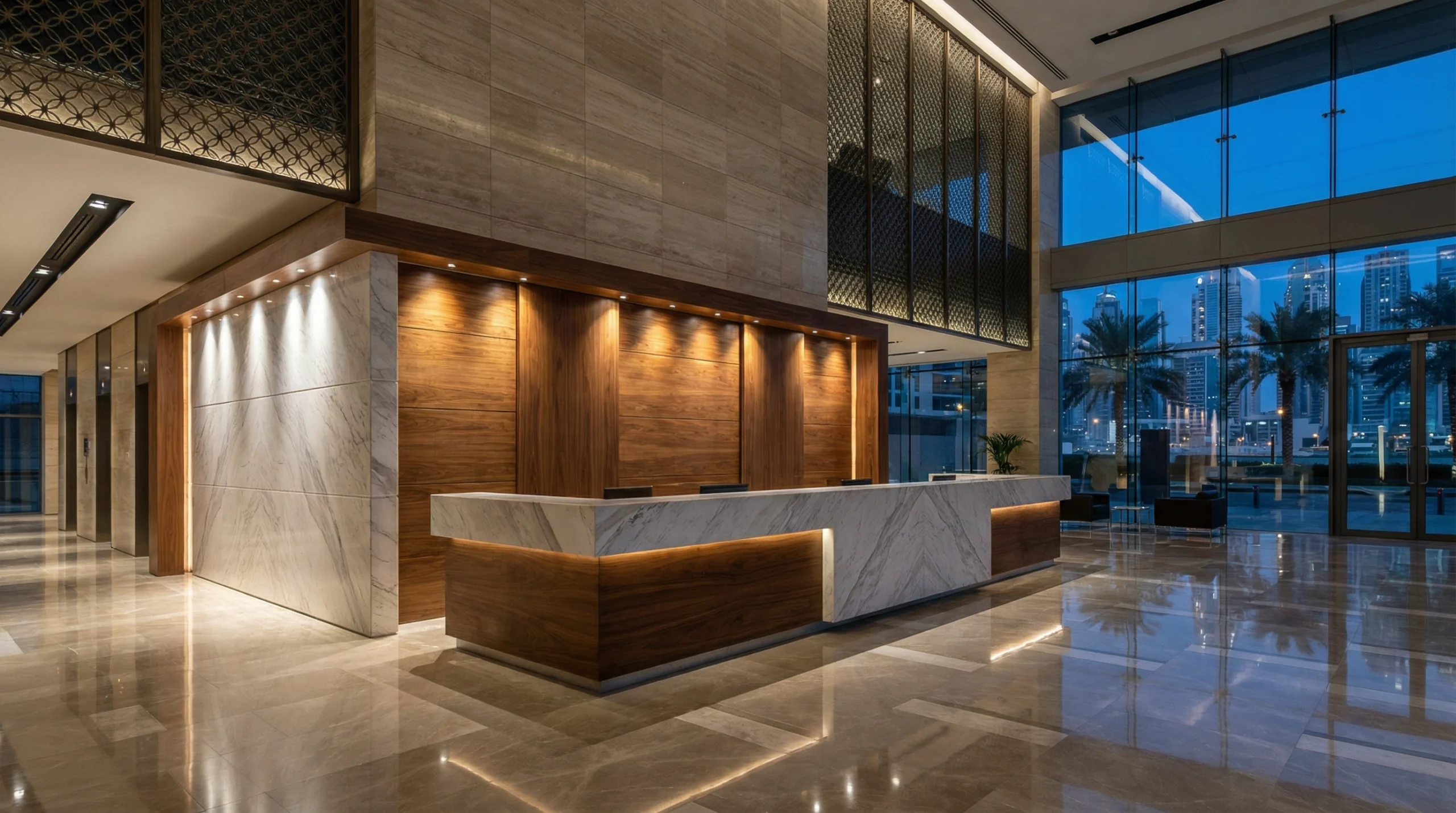
Commercial spaces across Dubai demand furniture solutions that project brand identity while withstanding intensive daily use. Our commercial custom furniture portfolio includes reception desks that create powerful first impressions, boardroom tables where critical decisions happen, executive office furniture that communicates authority, retail displays that showcase products optimally, restaurant seating that balances comfort with durability, and hotel furniture that maintains luxury appearance through thousands of guest interactions.
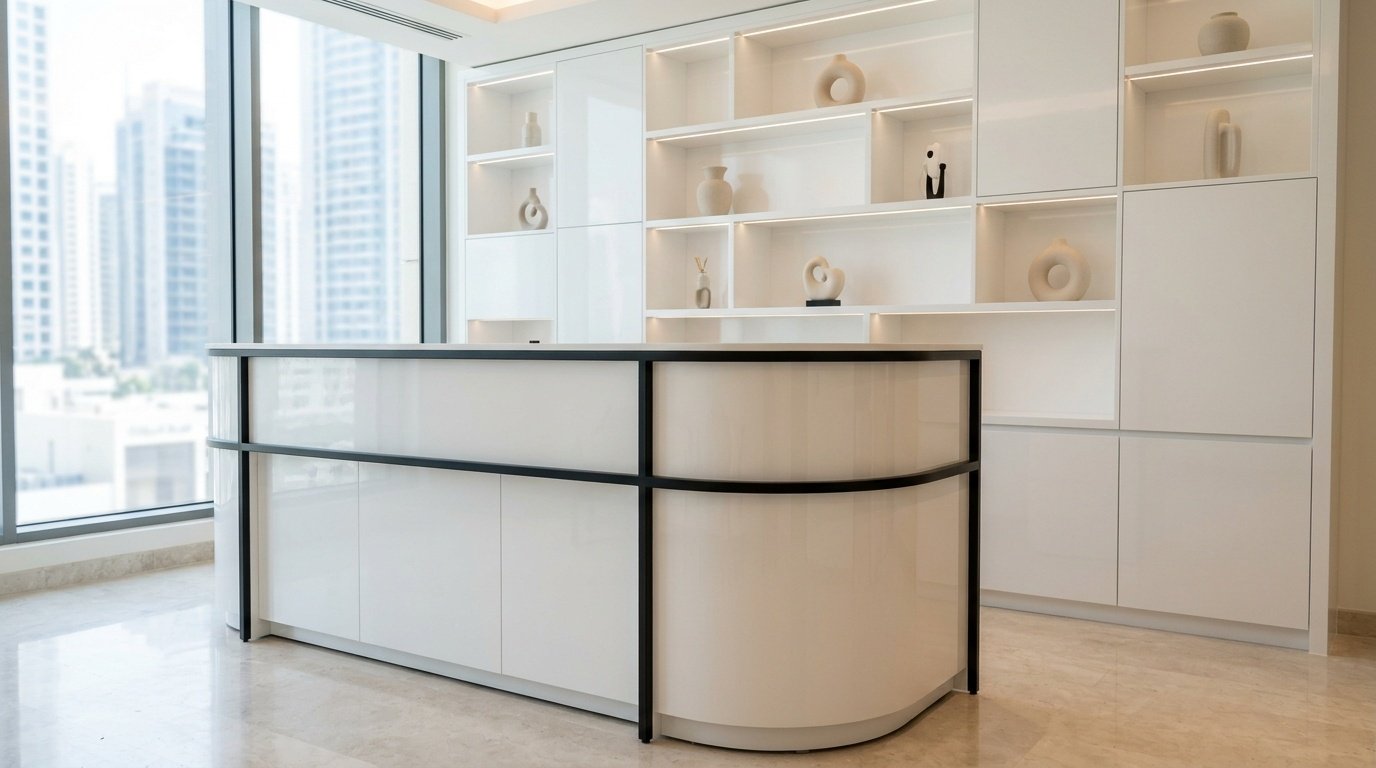
Reception desks set the tone for every business visitor. We design these statement pieces to embody your brand while incorporating functional requirements—transaction surfaces at comfortable working heights, concealed storage for equipment and supplies, integrated power and data connections, security features where needed, and materials that maintain pristine appearance despite constant public interaction. For corporate offices in DIFC or Business Bay, we create reception environments that communicate established success. For creative agencies or tech startups in Dubai Design District, we design pieces that reflect innovative thinking.
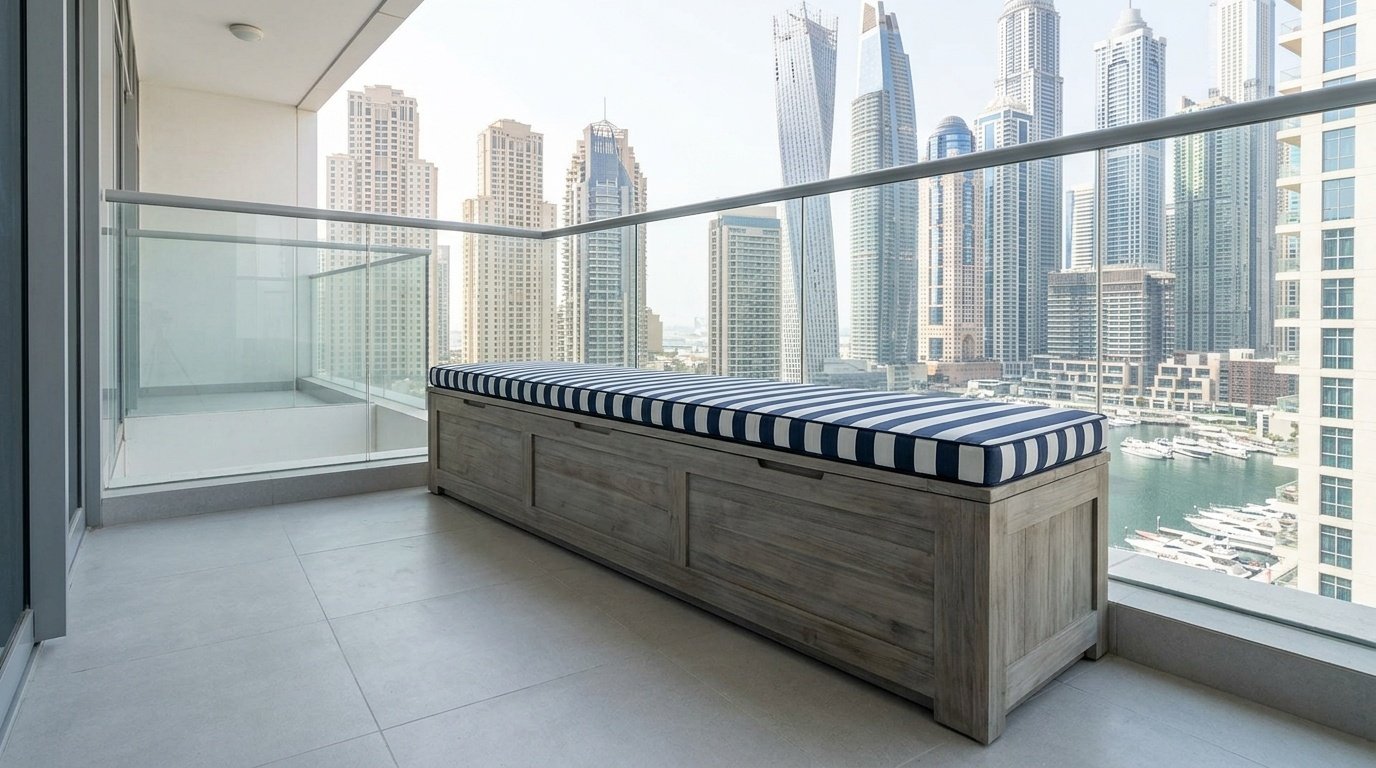
Boardroom tables require engineering precision because they support expensive technology, host critical meetings, and operate as the physical center of organizational decision-making. We build these tables at exact dimensions for your conference room, ensuring appropriate clearance for chairs and circulation. We integrate power modules, data ports, and cable management systems that keep technology accessible without cluttering the surface. Materials get selected for durability and appropriate formality—polished hardwoods for traditional corporate environments, mixed materials incorporating metal and glass for contemporary offices, or custom finishes that match your specific brand colors.
Restaurant and hospitality furniture faces the harshest commercial conditions—constant use, diverse users, frequent cleaning, and the requirement to maintain appearance that justifies premium pricing. We design restaurant tables engineered for stability despite uneven floors, finished with systems that resist water rings and food stains, sized for optimal guest comfort while maximizing seating capacity. Bar counters we create incorporate structural support for leaning customers, surfaces that don’t show wear from glass sliding, and integrated elements like drip edges that protect the structure. Hotel furniture balances luxury aesthetics with maintenance reality, using materials that maintain beautiful appearance through housekeeping’s daily cleaning cycles.
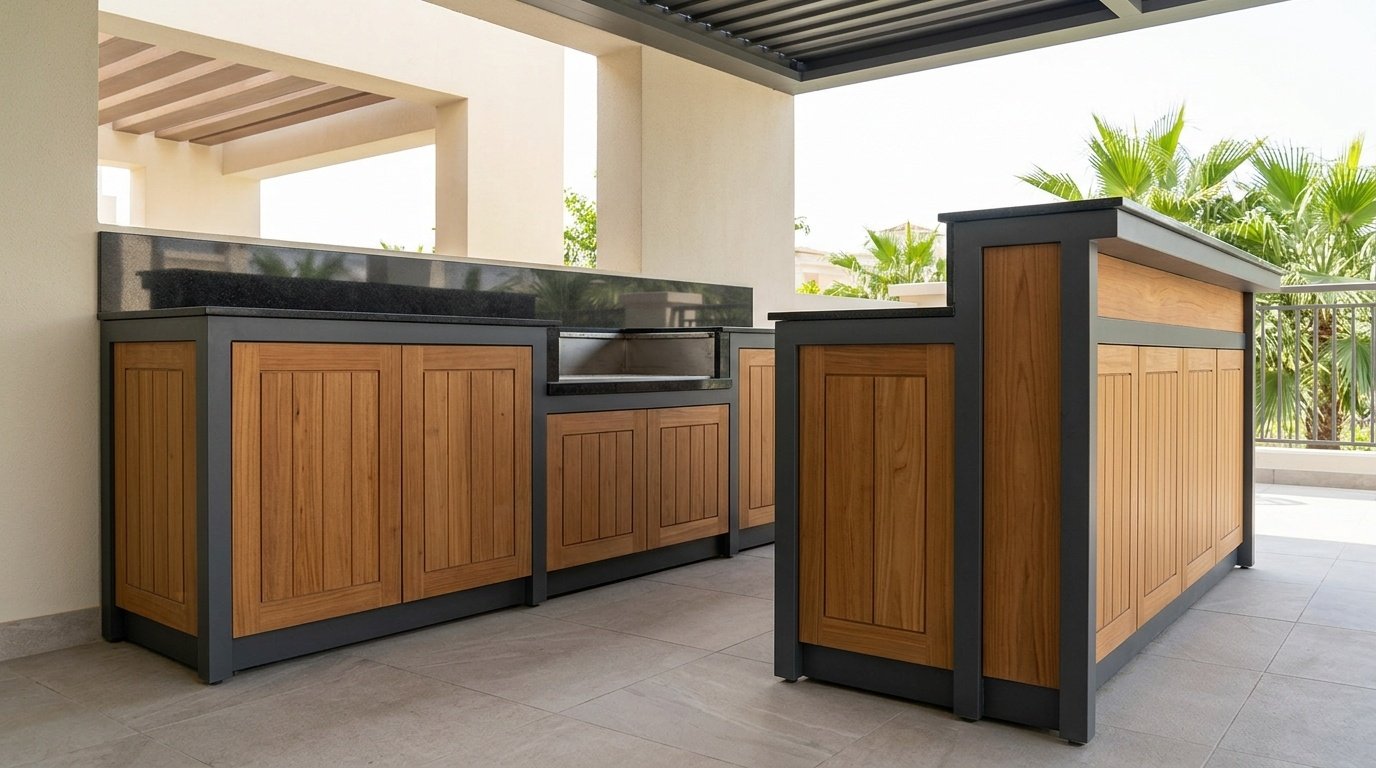
Commercial projects demand understanding of UAE regulatory requirements, including Dubai Civil Defense specifications for materials and construction, Dubai Municipality standards for food service environments, and specific requirements for different commercial license categories. Our 35 years navigating these regulations means projects proceed smoothly without delays from approval issues or last-minute design modifications.
Outdoor Furniture for UAE Climates
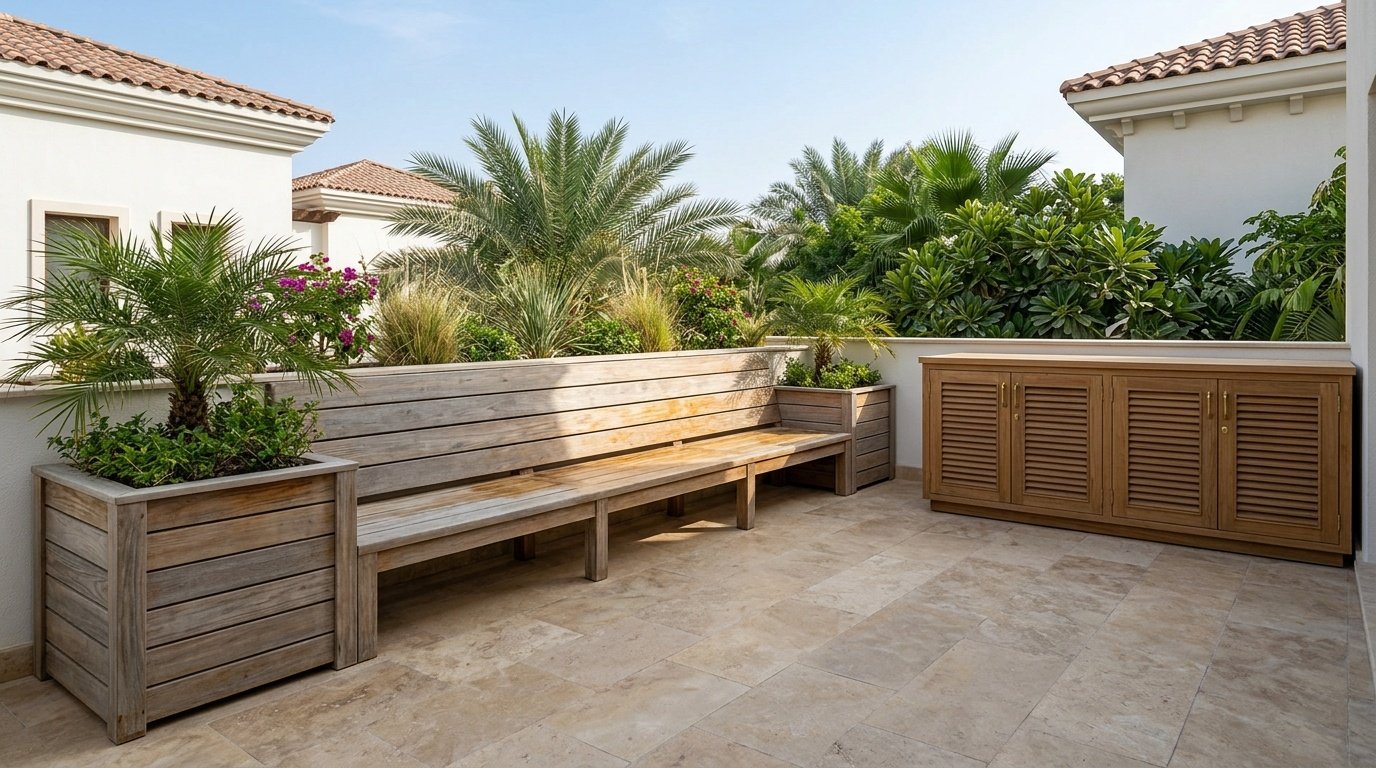
Dubai’s outdoor living spaces create wonderful lifestyle opportunities eight months yearly, but outdoor furniture faces extreme challenges. Direct sunlight that exceeds 100,000 lux, surface temperatures reaching 70 degrees on summer afternoons, occasional dust storms, salt air in coastal locations, and the temperature cycling between day and night create conditions that destroy conventional outdoor furniture rapidly. We design custom outdoor pieces specifically engineered for Emirates environmental realities.
Wood selection for outdoor furniture requires species that naturally resist decay, insect damage, and weathering. Teak remains the gold standard for outdoor use, with natural oils that repel water and resist deterioration. We source plantation teak kiln-dried to specific moisture content, then allow it to acclimate in our Dubai workshop before fabrication. This process ensures stability when the finished piece faces UAE conditions. For contemporary aesthetics, we combine weather-resistant hardwoods with powder-coated aluminum frames engineered to prevent galvanic corrosion where metals contact wood.
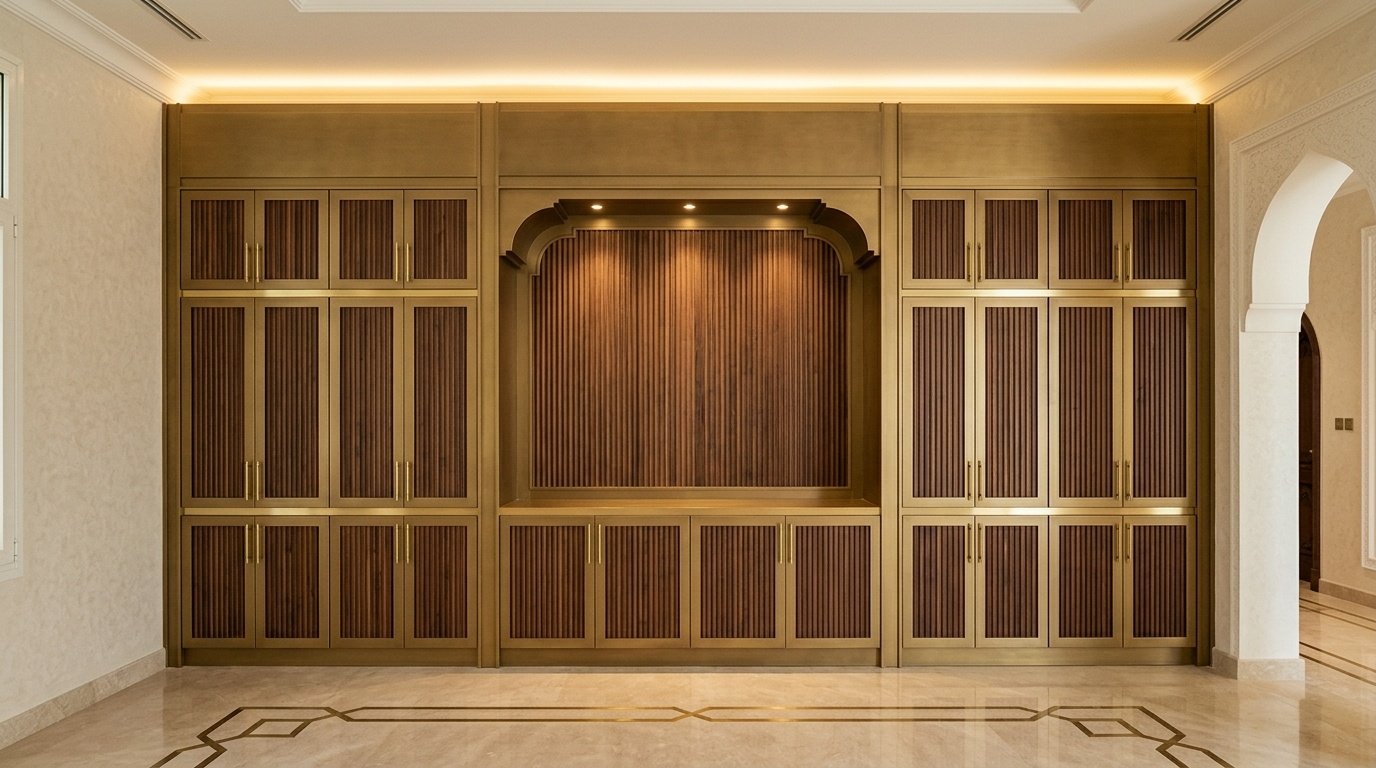
Construction techniques for outdoor furniture differ fundamentally from interior pieces. We use marine-grade stainless steel fasteners that won’t corrode from humidity exposure, joinery designed with larger expansion gaps accounting for greater temperature ranges, and finish systems that include UV inhibitors preventing sun damage. Cushions we specify use outdoor-rated fabrics with solution-dyed fibers that won’t fade and quick-dry foam cores that shed moisture rather than becoming mildew factories.
Maintenance requirements get explained thoroughly because outdoor furniture demands care despite its durable construction. We provide specific cleaning instructions, refinishing timelines, and storage recommendations for summer months when outdoor living becomes impractical. Clients who follow these guidelines enjoy outdoor furniture that remains beautiful for 15-20 years rather than deteriorating into replacement candidates after three seasons.
Restoration and Refinishing Services
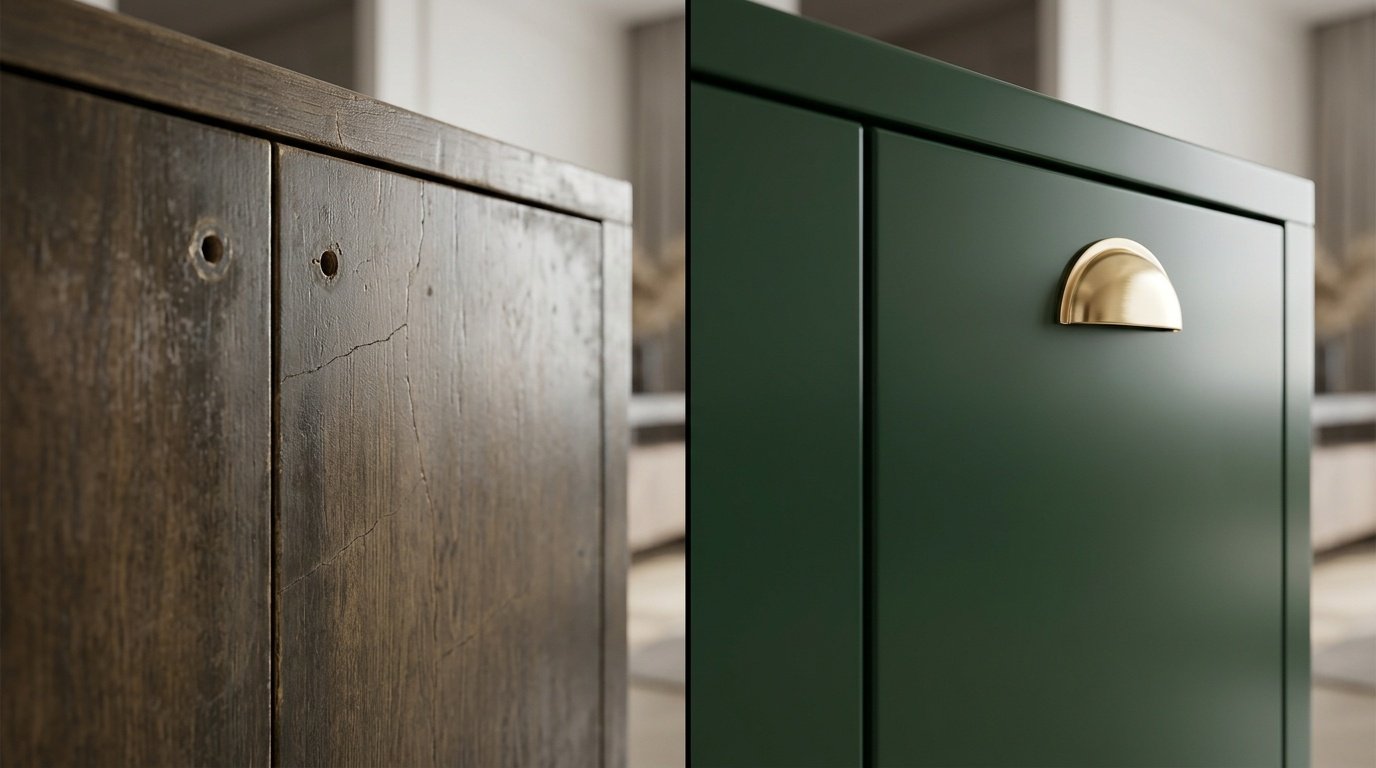
Beautiful furniture sometimes needs renewal rather than replacement. Our restoration services breathe new life into worn pieces, whether family heirlooms brought from home countries, vintage finds from Dubai’s antique shops, or our own earlier work requiring refreshing after years of service. The restoration process begins with thorough assessment—examining structural integrity, identifying damage causes, determining whether restoration makes economic sense versus replacement, and establishing realistic outcomes.
Structural repairs might involve re-gluing loosened joints, replacing broken components, stabilizing cracks, or rebuilding damaged sections. We match original construction techniques when restoring antiques, maintaining historical authenticity while ensuring stability for continued use. Modern pieces get repaired using current best practices that often exceed original construction quality. Wood replacement uses species matching the original as closely as possible, though we sometimes substitute more stable alternatives when originals prove unsuitable for UAE conditions.
Refinishing transforms appearance while protecting the underlying wood. We strip old finishes completely rather than coating over them—a shortcut that inevitably fails. The bare wood gets assessed for repairs needed, sanded through progressive grits until perfectly smooth, then finished with appropriate systems for the piece’s intended use and environment. Hand-rubbed oil finishes work beautifully for dining tables and desks, while conversion varnishes provide maximum protection for high-use commercial pieces.
Upholstery restoration for furniture with fabric or leather elements gets coordinated with specialized upholsterers we’ve partnered with for 20+ years. We handle the frame restoration while they address cushions, covering, and padding. This collaboration ensures the complete piece returns to you in like-new condition with all elements properly restored.
The Karnak Custom Furniture Process
Every successful custom furniture project follows a systematic approach that ensures your vision translates accurately into physical pieces that exceed expectations. This process has evolved over three decades of UAE projects, incorporating feedback from thousands of clients and lessons learned from both triumphs and the occasional challenge that taught us better methods.
Step 1: Initial Consultation and Vision Development
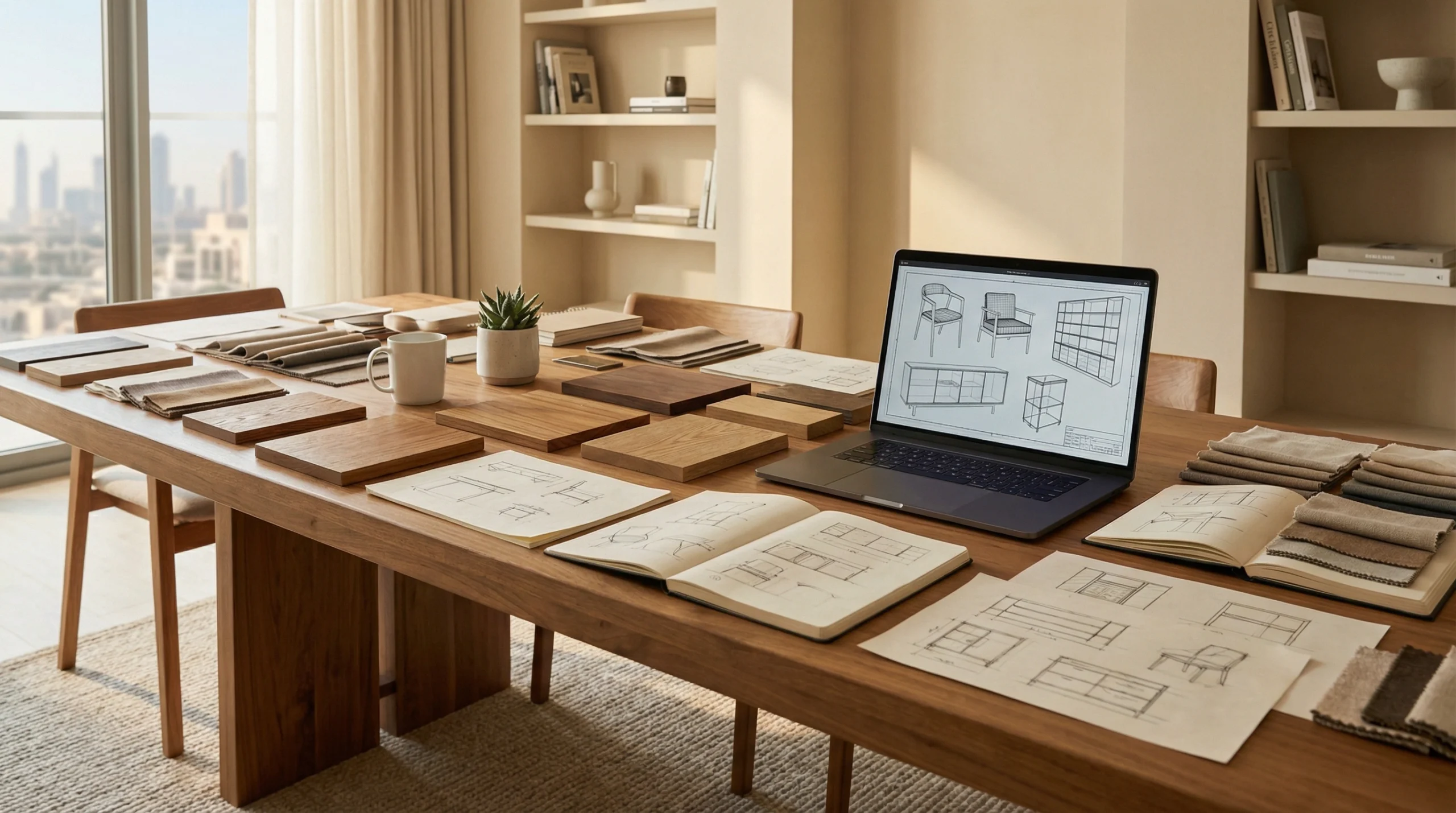
Your custom furniture journey begins with conversation, not measurements. We meet at your location—your home, your office, your future space if you’re still in construction—to understand what you envision and why custom furniture makes sense for your situation. This meeting typically lasts 60-90 minutes for residential projects, longer for commercial work, and covers far more than dimensions.
We ask about your lifestyle or business operations. How do you actually use your spaces? What frustrates you about current furniture? What pieces do you love and why? For residential clients, we explore daily routines, entertaining patterns, storage pain points, and aesthetic preferences. Commercial clients discuss brand identity, customer flow, employee workflows, and maintenance capabilities. These conversations reveal requirements that never appear on specification sheets but profoundly impact design success.
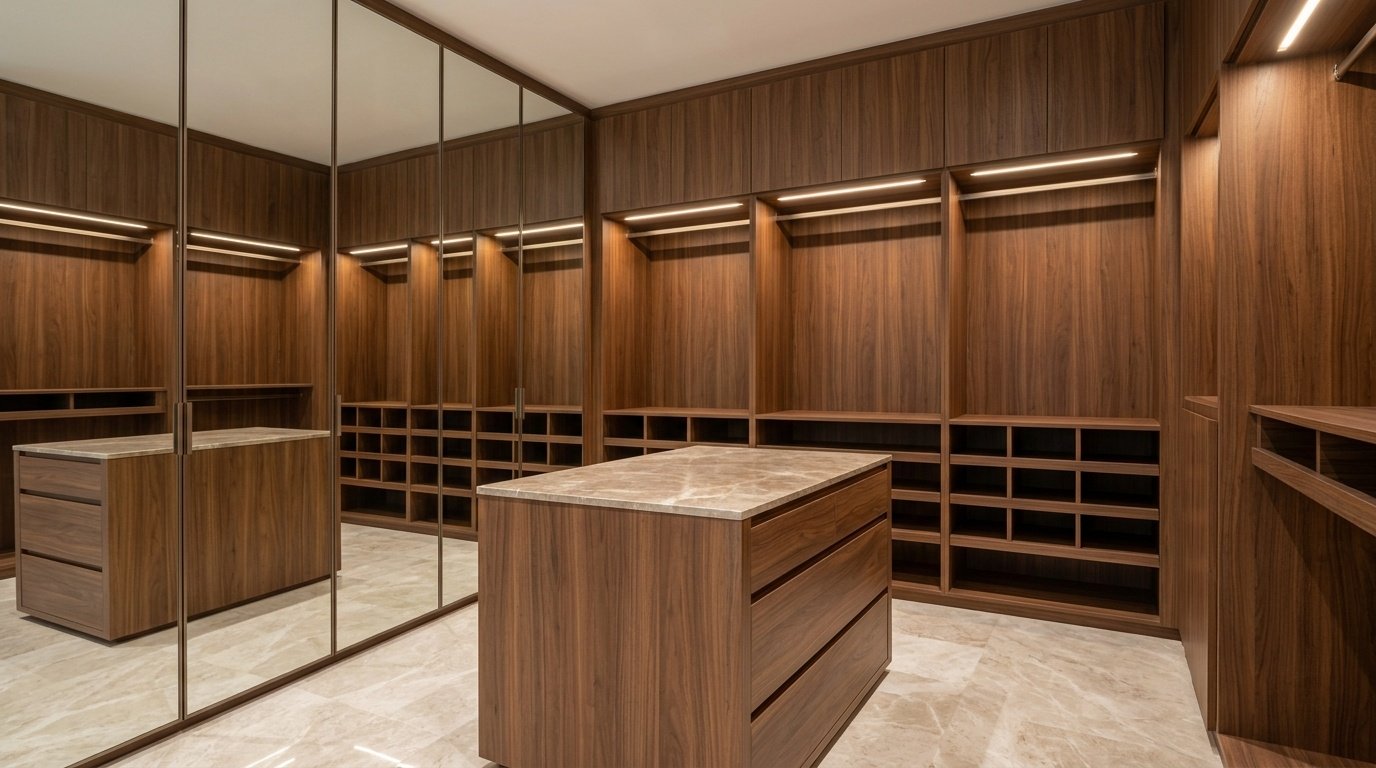
Space assessment happens simultaneously. We photograph the area from multiple angles, measure all dimensions including ceiling heights and obstacle locations, note light sources and their quality, identify architectural features that influence design, and document any constraints like structural columns or mechanical systems. We test wall construction to determine mounting capabilities, verify floor levelness affecting furniture stability, and identify HVAC patterns that might create humidity variations affecting wood.
We discuss timeline expectations, budget parameters, and decision-making processes. Understanding who needs to approve designs prevents delays later. Knowing your target completion date lets us schedule fabrication appropriately. Budget conversation happens early because it guides material and design recommendations toward solutions that make sense for your investment level. This transparency prevents the frustration of falling in love with designs exceeding realistic budgets.
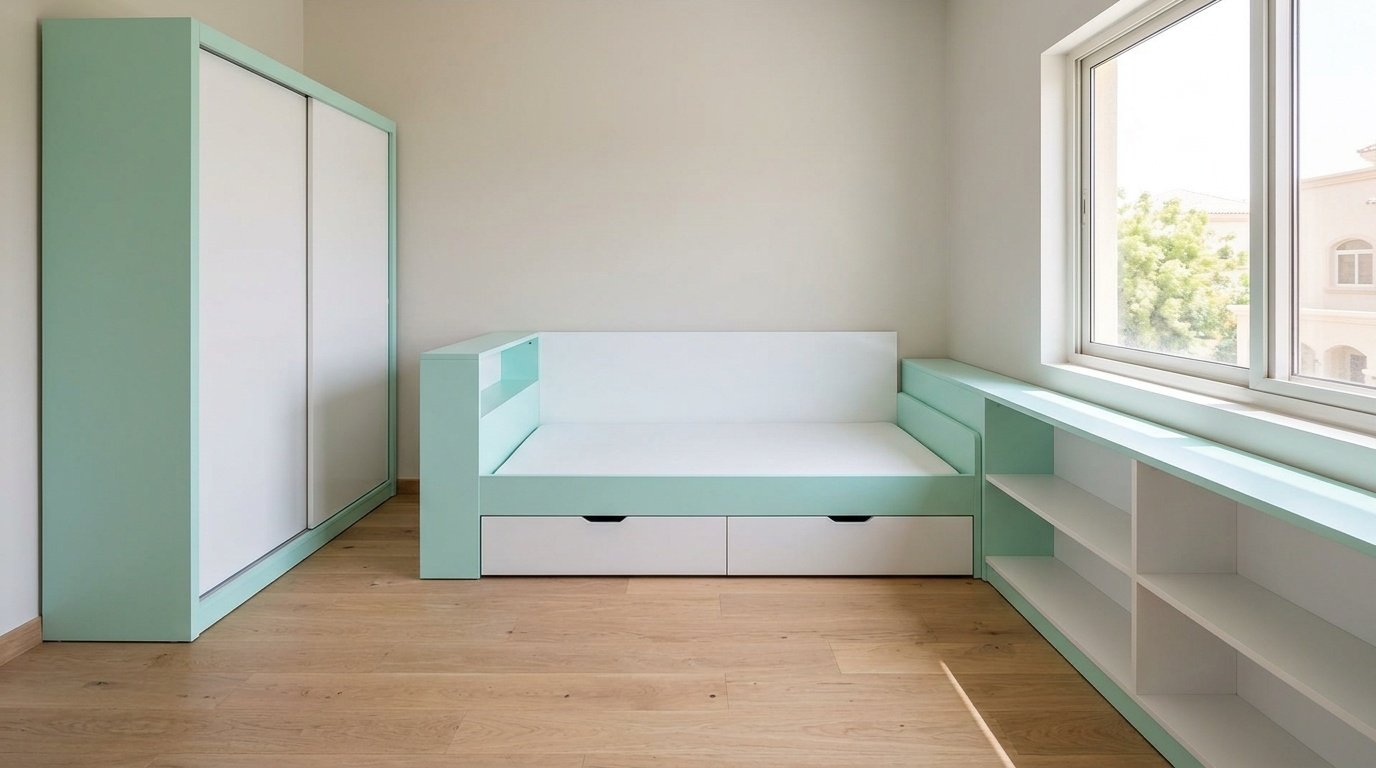
The consultation concludes with next steps clearly defined—what information we’ll develop, when you’ll receive it, what decisions you’ll need to make, and the timeline for moving forward. Most clients receive preliminary concepts within one week of this initial meeting.
Step 2: Design Development and Material Selection
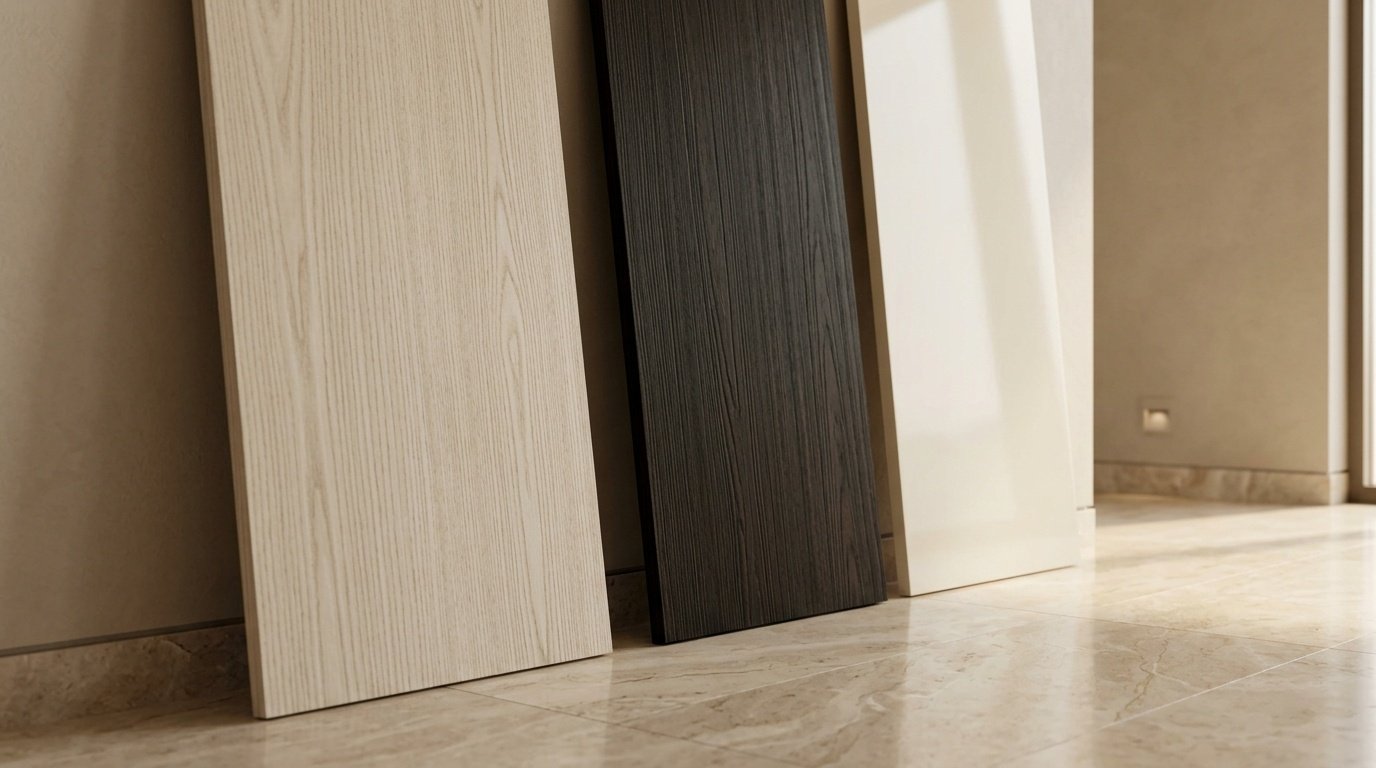
Design development transforms conversational ideas into visual plans you can evaluate. We create detailed drawings showing your furniture from multiple angles, with dimensions clearly marked, proportions accurate to how the piece will appear in your space, and enough detail that you understand exactly what you’re approving. For complex projects, we develop 3D renderings that show pieces in context within your actual room, helping visualize how everything relates.
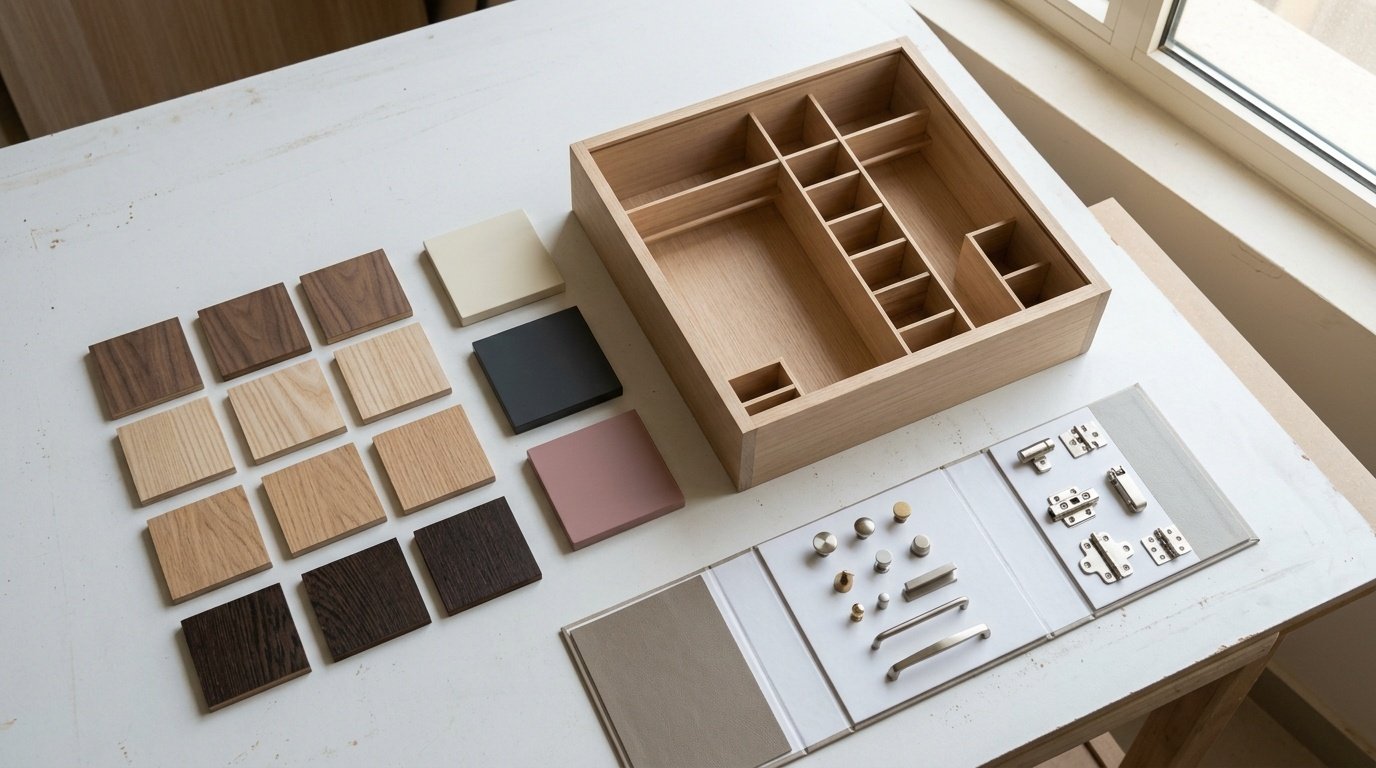
Material selection runs parallel to design work. We present wood species options appropriate for your project, explaining the characteristics of each—grain patterns, color variations, density affecting durability, dimensional stability in UAE climate, and maintenance requirements. We provide actual samples, not just photographs, because wood’s tactile qualities and how it reflects light cannot be adequately conveyed in images. You’ll see and touch the materials that will become your furniture.
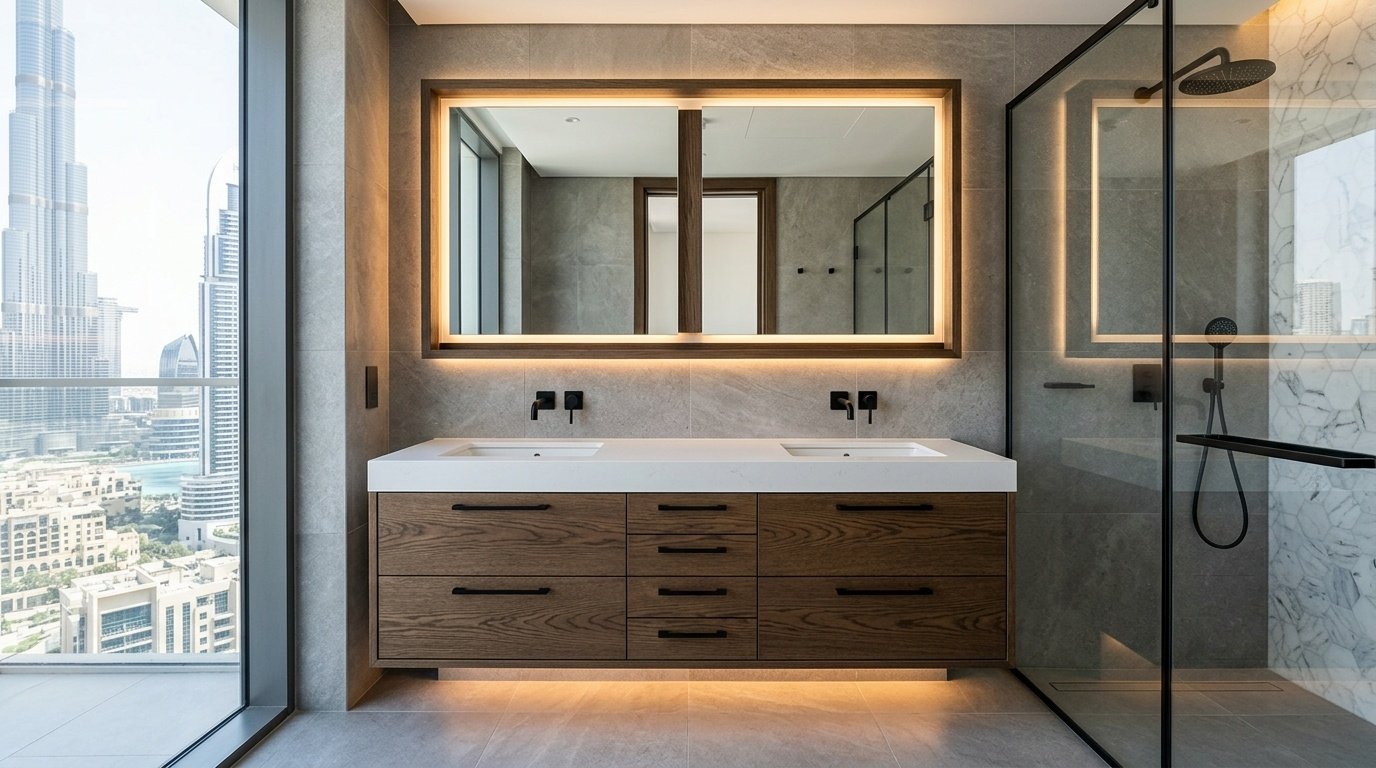
Finish options get presented with samples showing different staining and sealing approaches. A natural oil finish creates specific appearance and maintenance characteristics. Lacquer finishes offer different benefits and constraints. We explain these tradeoffs clearly, recommending options based on your piece’s intended use and your preferences regarding ongoing maintenance. Hardware selection—handles, knobs, hinges, slides—happens now, with samples of different styles and finishes for you to evaluate.
This phase typically involves 2-3 revision cycles as we refine designs based on your feedback. Perhaps the initial wardrobe design included too many drawers and insufficient hanging space. Maybe the desk depth needs adjustment for your monitor configuration. The dining table’s base style might not match your aesthetic preference. We incorporate these adjustments, developing designs that genuinely reflect your requirements rather than our assumptions.
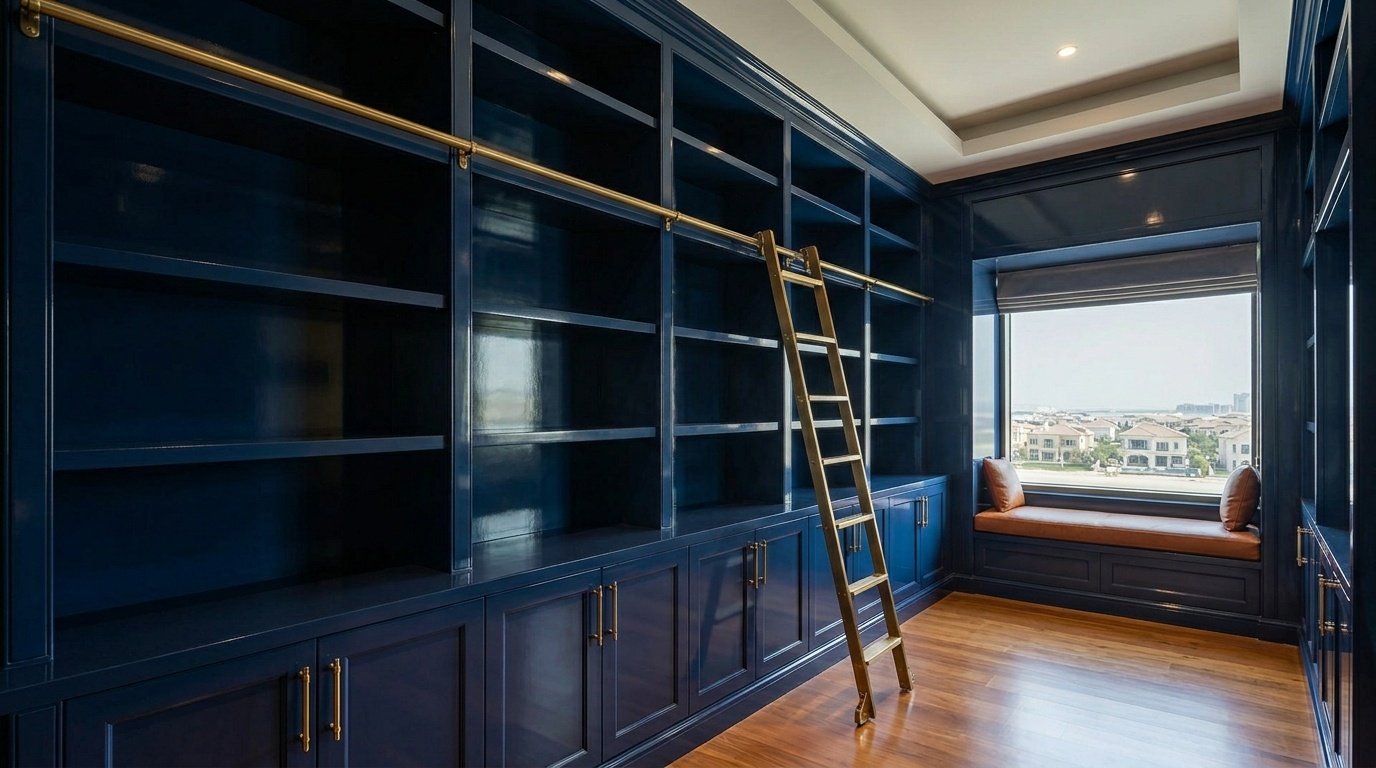
Cost estimation accompanies final designs. You receive detailed breakdowns showing material costs, fabrication labor, finishing expenses, hardware investment, and installation fees. This transparency lets you understand where money goes and make informed decisions about any modifications. If budget requires adjustment, we discuss options—alternative materials, simplified designs, or phased implementation where we build critical pieces now and additional elements later.
Approval to proceed requires your signature on drawings and acceptance of final quotation. This formality protects both parties by documenting exactly what we’ll build and what you’ll pay, preventing misunderstandings during fabrication when changes become expensive and disruptive.
Step 3: Workshop Fabrication
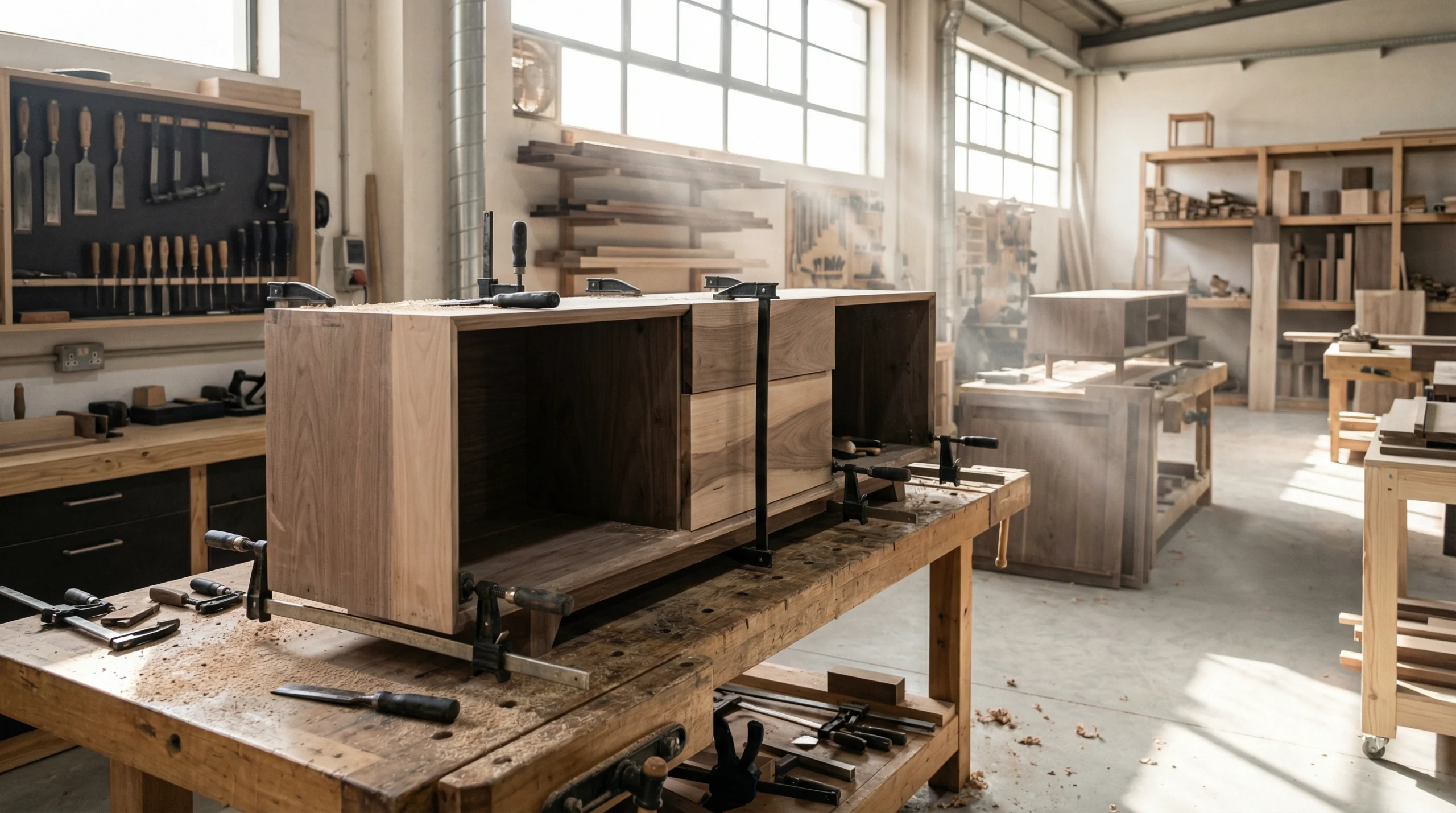
Once designs receive approval, fabrication begins in our climate-controlled Dubai workshop. Your project receives a designated space where all components stay organized throughout the build process. We don’t juggle multiple projects on the same bench—each piece gets the focused attention required for quality outcomes.
Material preparation starts the physical work. Lumber gets inspected for defects, then cut to rough dimensions slightly oversized. These components acclimate in the workshop for 48-72 hours, allowing them to stabilize at our controlled humidity level before precision machining. This acclimation prevents the warping and twisting that plague furniture built from freshly delivered materials.
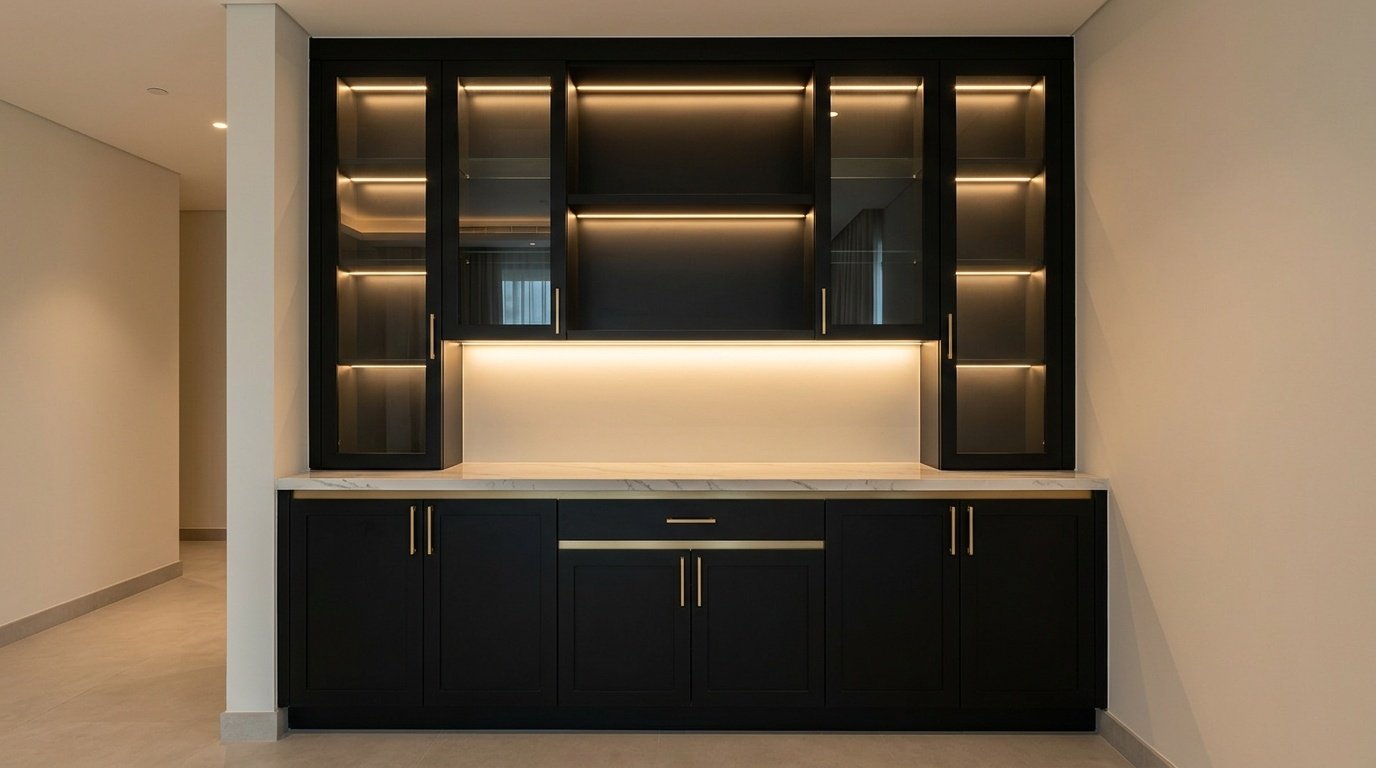
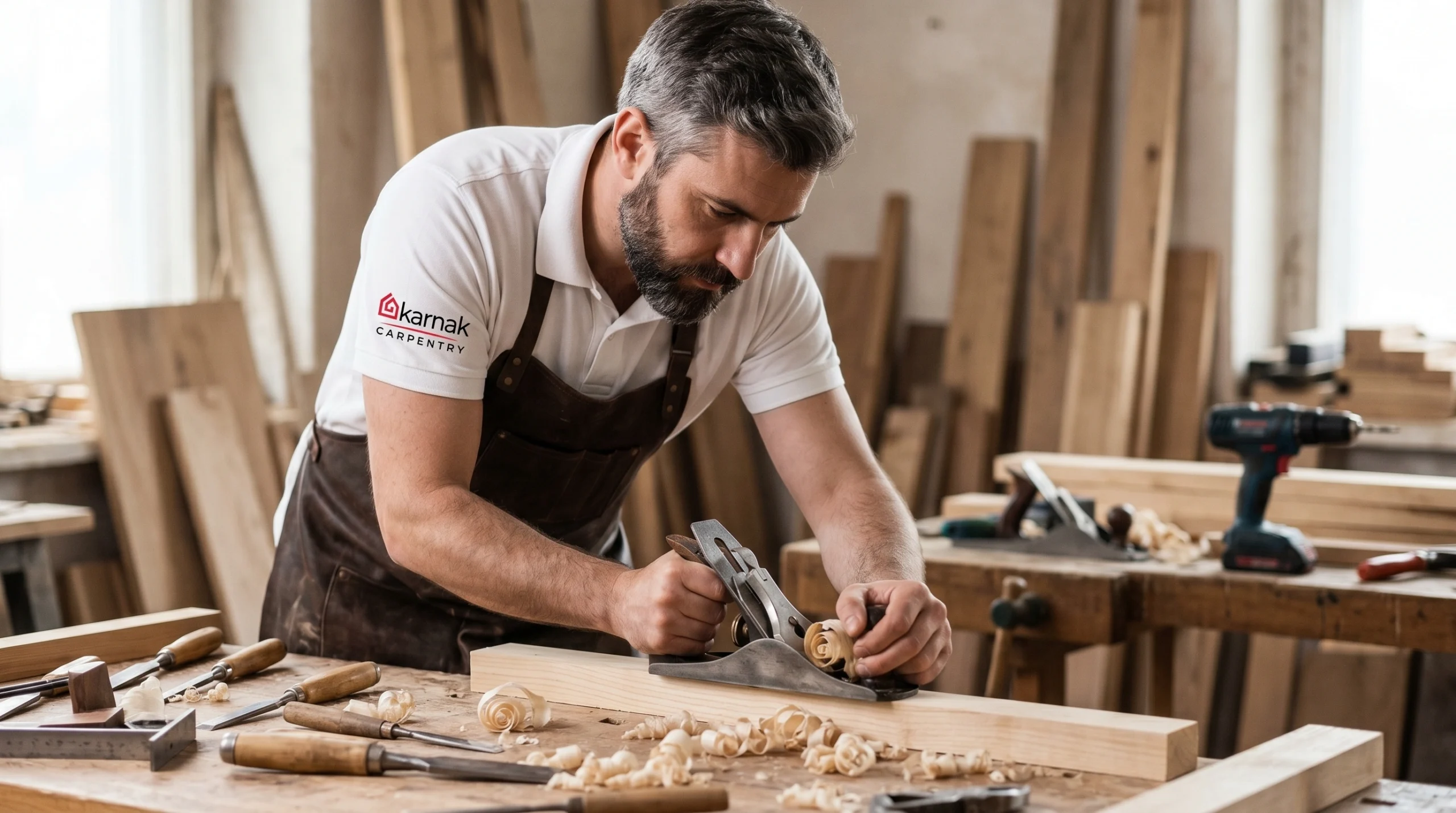
Precision cutting follows acclimation. We use CNC machinery for components requiring exact dimensional accuracy, but skilled craftsmen handle shaping and detail work that machines cannot achieve. This hybrid approach combines modern precision with traditional techniques that create character and quality. Joints get cut using time-tested methods—dovetails for drawer construction, mortise and tenon for frame joining, dowels and biscuits for panel assembly—chosen specifically for each application’s stress patterns and aesthetic requirements.
Assembly happens in stages, allowing glue to cure properly between operations. Rushing this process creates weaker joints that fail prematurely. We take the time required for chemistry to work—allowing polyvinyl acetate adhesives their full 24-hour cure, letting epoxies reach maximum strength before stressing joints, and ensuring mechanical fasteners seat properly before proceeding. Quality here determines whether your furniture lasts five years or fifty.
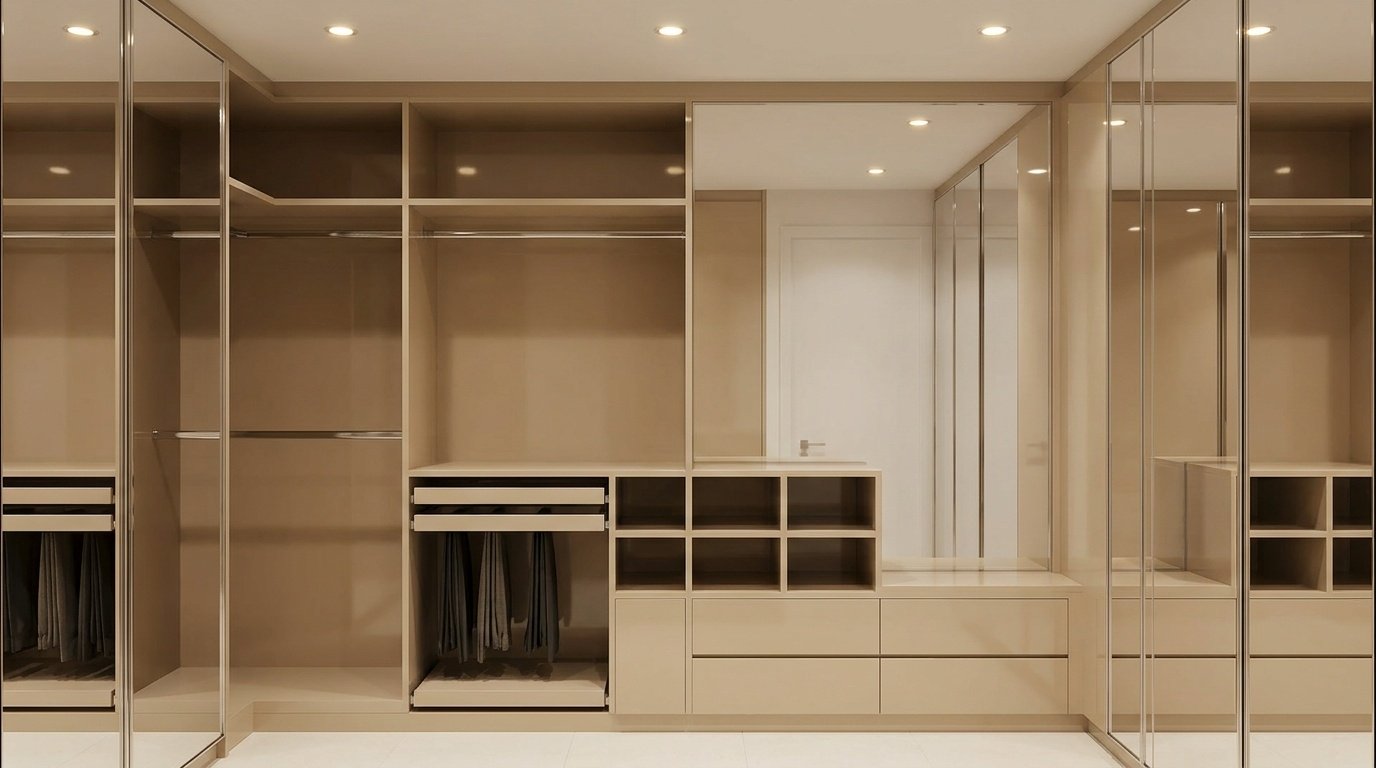
Sanding progression moves through multiple grits, each removing scratches from the previous level while preparing surfaces for the next. We typically progress through six grits from 80 through 320, with hand sanding for areas machines cannot reach properly. This meticulous surface preparation determines finish quality more than the finish itself—beautiful coatings on poorly prepared surfaces highlight every defect.
Step 4: Finishing and Quality Control
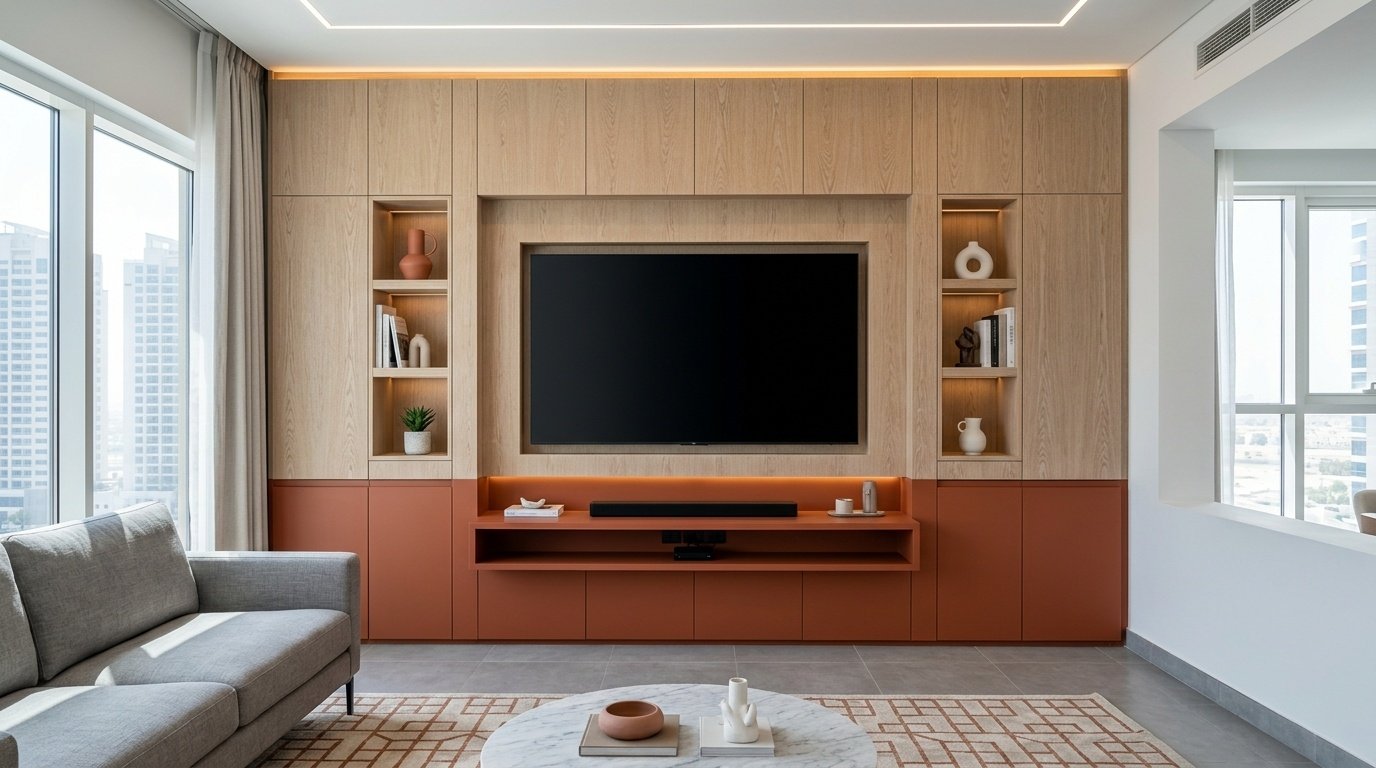
Finishing transforms shaped wood into furniture. The specific finishing process depends on the system selected during design—oil finishes require different application than lacquers or conversion varnishes—but the attention to detail remains constant regardless of material.
Oil finishes get hand-rubbed into wood in thin coats, allowing each application to penetrate before applying the next. This process might involve 5-8 coats over several days, with light sanding between coats using 600-grit paper. The result penetrates deep into wood fibers, creating protection from within rather than surface film. These finishes require ongoing maintenance but can be refreshed indefinitely, making them ideal for pieces you’ll keep for decades.
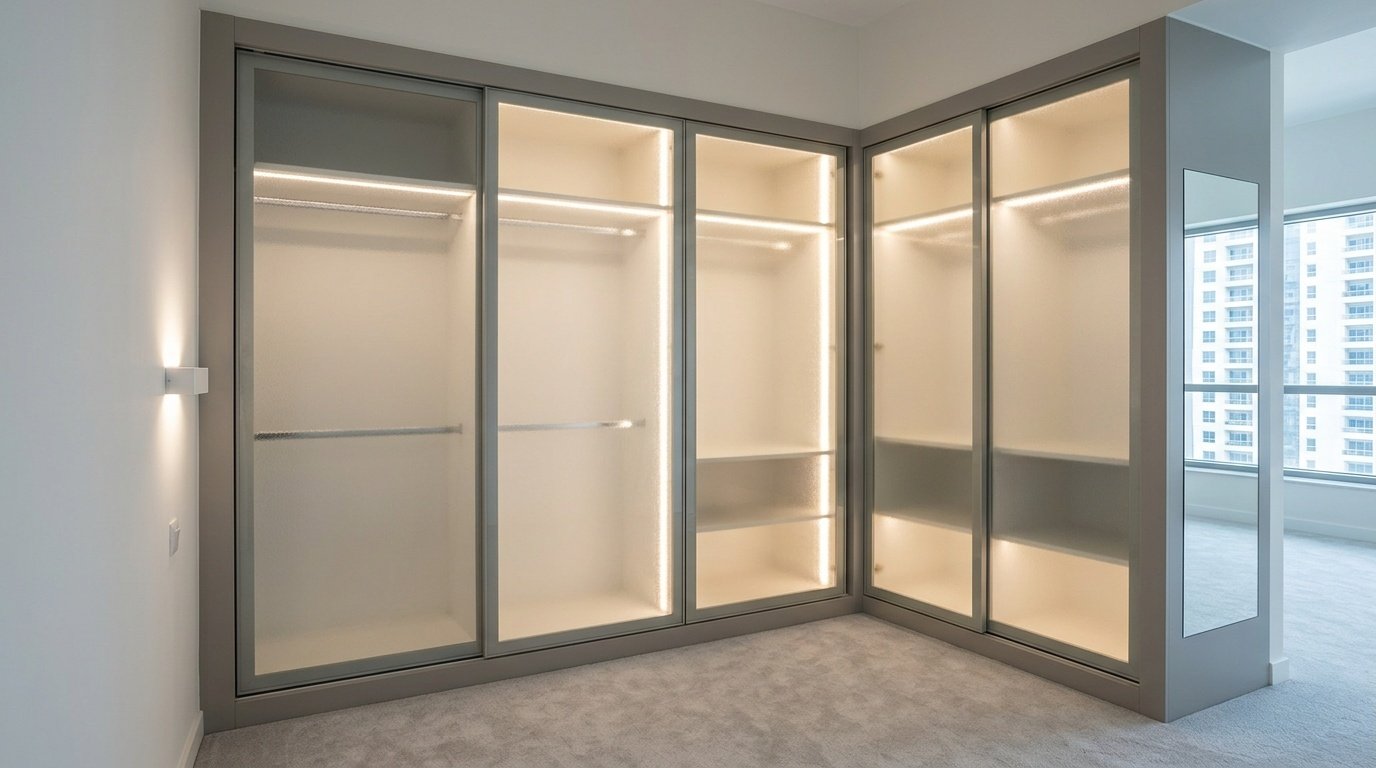
Film-forming finishes like lacquer or varnish get sprayed in our dedicated finishing booth equipped with proper ventilation and humidity control. Multiple thin coats build optimal thickness gradually, with sanding between coats ensuring proper adhesion and eliminating defects. Final coats get rubbed out to desired sheen level—from high gloss that mirrors reflections to matte finishes showing wood naturally. This rubbing out process separates professional finishing from amateur work, creating depth and clarity impossible to achieve otherwise.
Hardware installation happens during finishing stages. Hinges, drawer slides, and other mechanical components get fitted precisely, adjusted until operation feels smooth and effortless, then checked repeatedly to ensure consistency. A drawer that glides perfectly today but binds in two weeks represents installation failure. We verify function under varying humidity conditions when possible, ensuring hardware operates reliably throughout UAE’s seasonal changes.
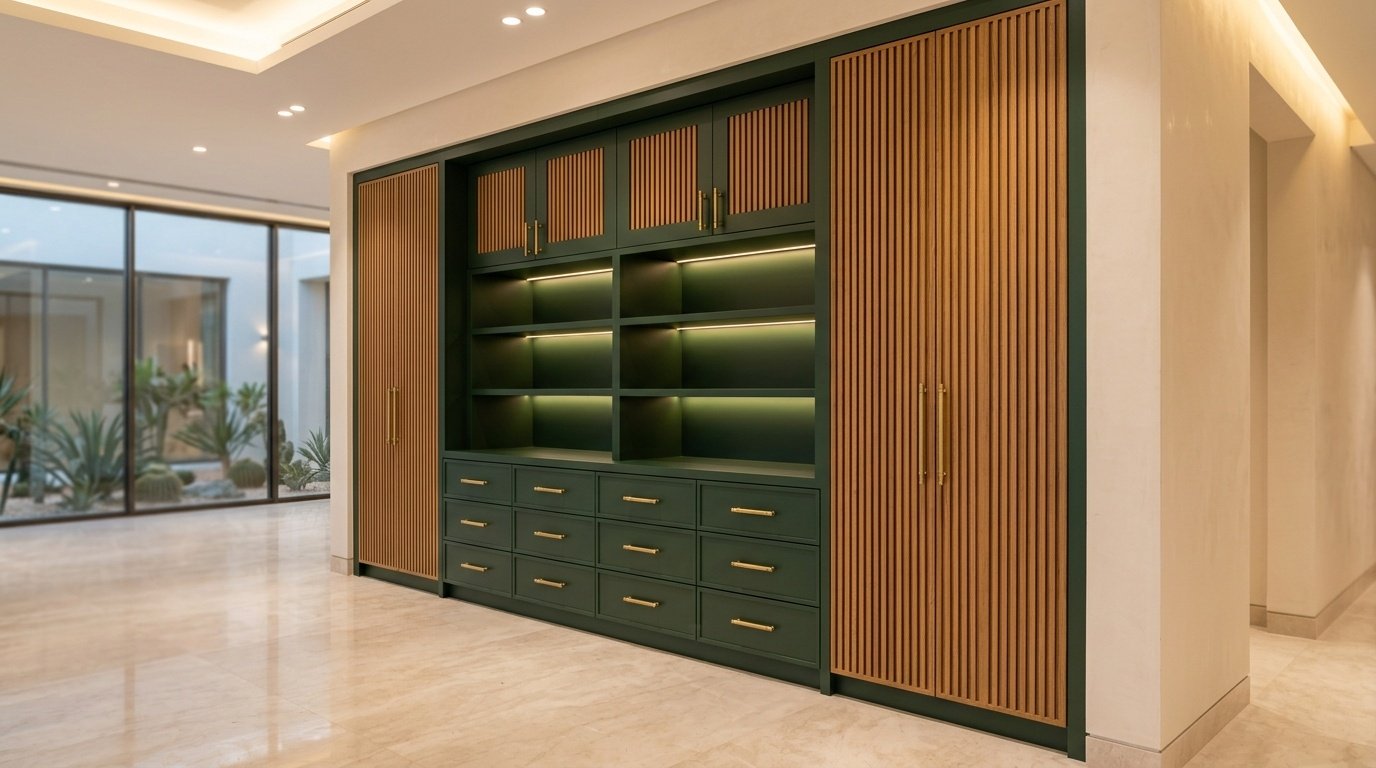
Quality control inspection happens before anything leaves the workshop. We examine every surface for finish defects, test every mechanical component for smooth operation, verify all dimensions match approved drawings, check joints for strength, and assess overall appearance from multiple angles and lighting conditions. Pieces meeting our standards get carefully wrapped for transport. Items requiring adjustment return to their workstations for correction before re-inspection.
Step 5: Delivery and Installation
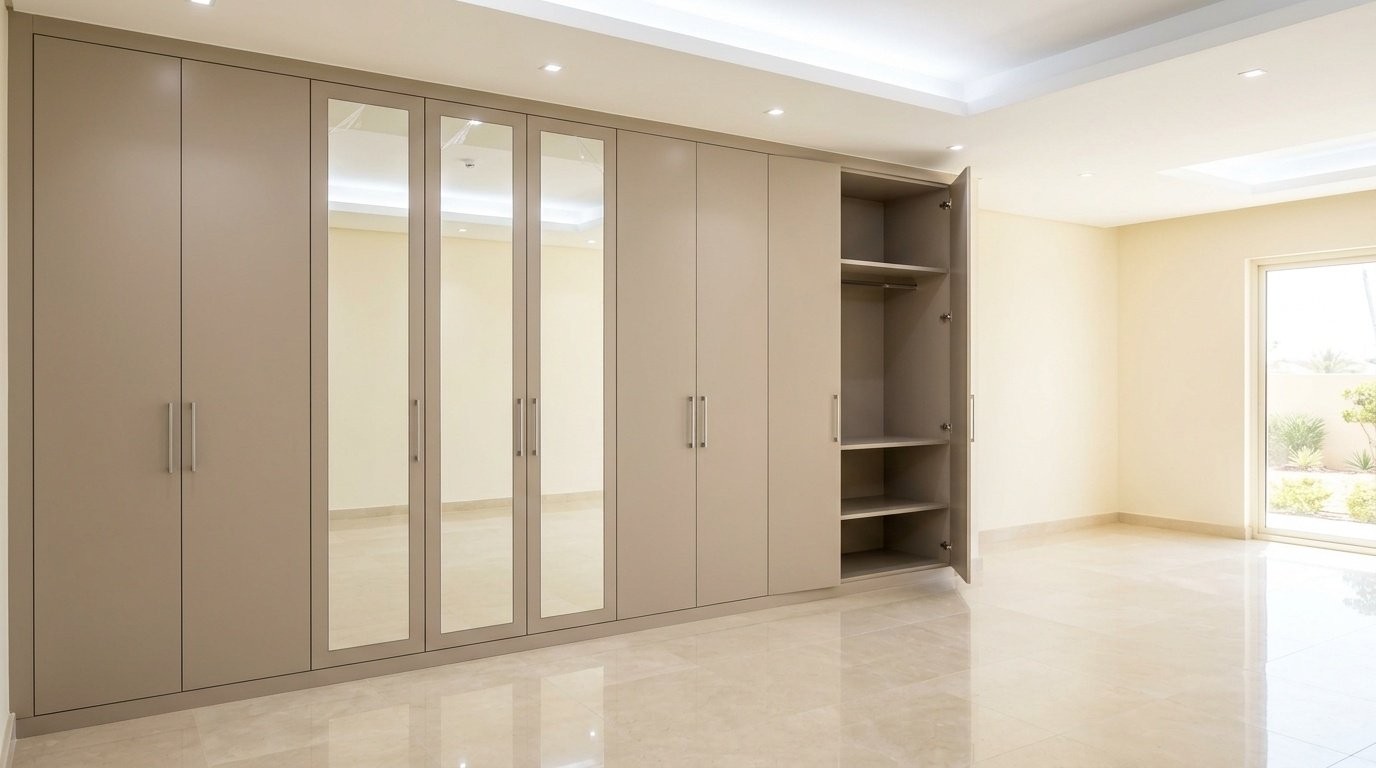
Delivery scheduling coordinates with your availability and project readiness. We don’t deliver bedroom furniture until your new flooring installation completes. We don’t install office furniture until painting finishes and your IT infrastructure is ready. This coordination prevents damage to completed furniture from ongoing construction and eliminates the storage problems that arise from premature delivery.
Our installation teams arrive with all necessary tools, hardware, and protective materials. They assess your space immediately upon arrival, identifying any concerns that might affect installation—floor levelness, wall plumb, clearance issues—and addressing them before unpacking furniture. Protection of your existing finishes and possessions gets priority attention. We cover floors, protect walls along movement paths, and take precautions that prevent the dings and scrapes careless installers leave behind.
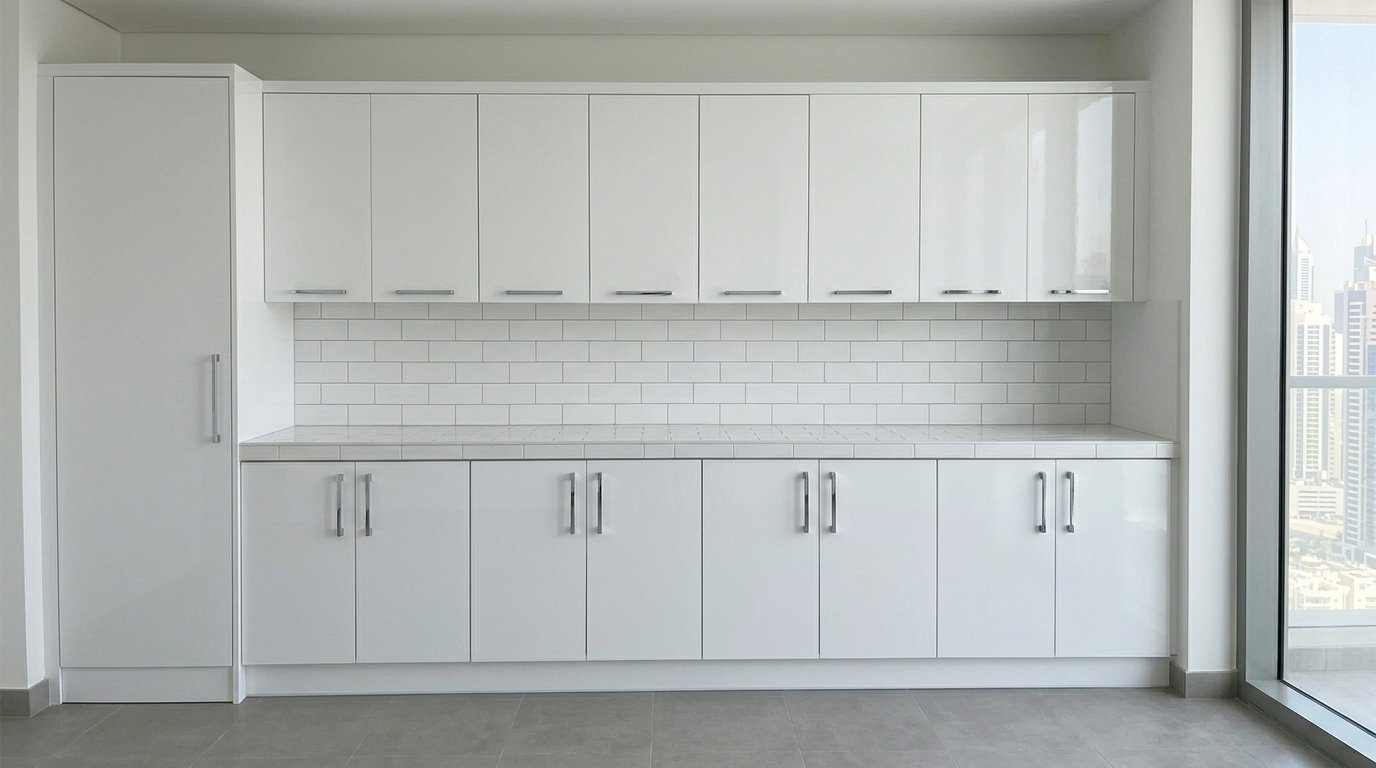
Furniture placement follows the layout we documented during design development, adjusted as needed for your final preferences. Built-in pieces get permanently mounted with appropriate fastening for your wall construction—concrete walls require different approach than gypsum board partitions. Freestanding furniture gets positioned precisely, then shimmed if necessary to compensate for floor irregularities preventing stable placement.
Final adjustments happen with you present. Drawer slides get fine-tuned for perfect operation. Door alignments get adjusted until reveals remain consistent. Shelving gets positioned at your preferred heights. We demonstrate proper operation of any mechanisms—drawer releases, hidden compartments, integrated lighting—ensuring you understand how everything functions.
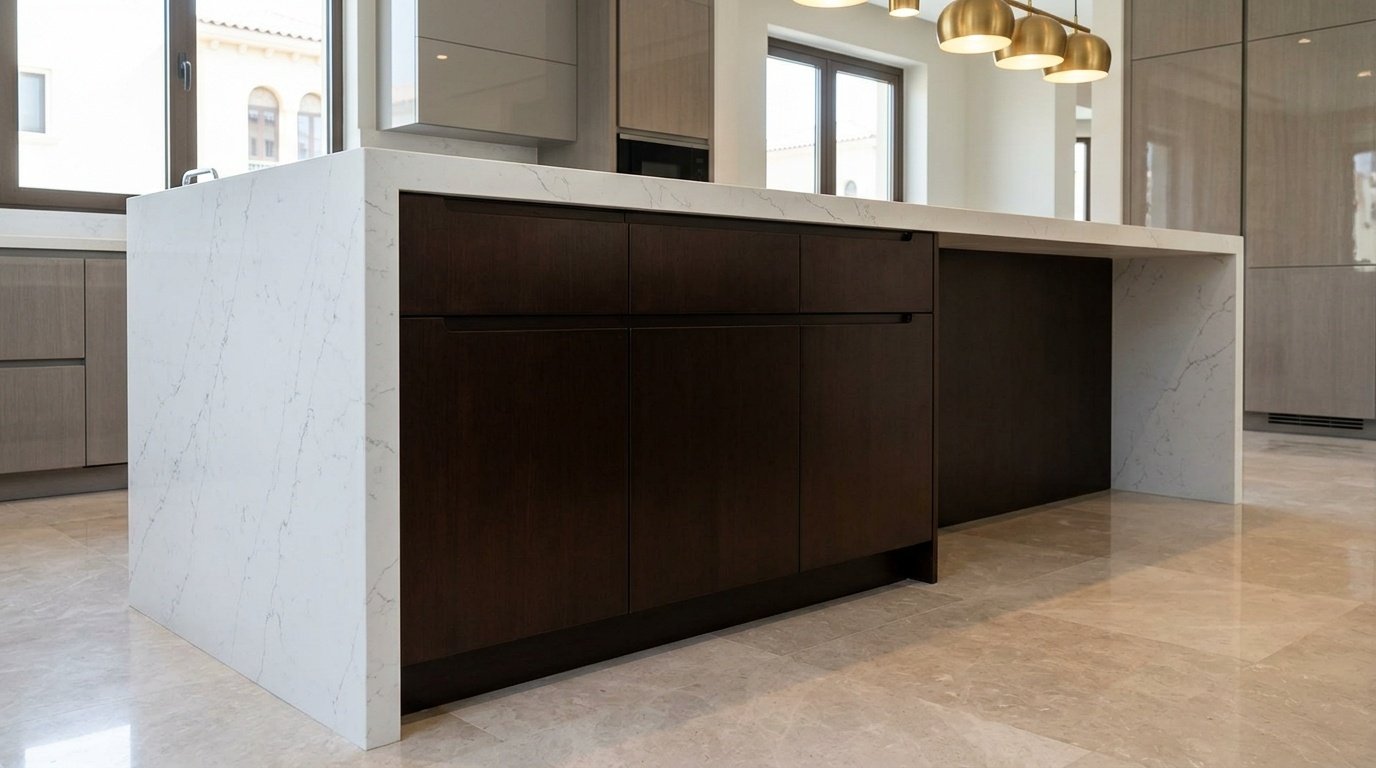
The installation concludes with thorough cleanup. We remove all packing materials, vacuum any dust created during installation, wipe down all furniture surfaces, and restore your space to pristine condition. You receive care and maintenance instructions specific to your furniture’s materials and finishes, along with our contact information should any questions arise during use.
Step 6: Follow-up and Ongoing Support
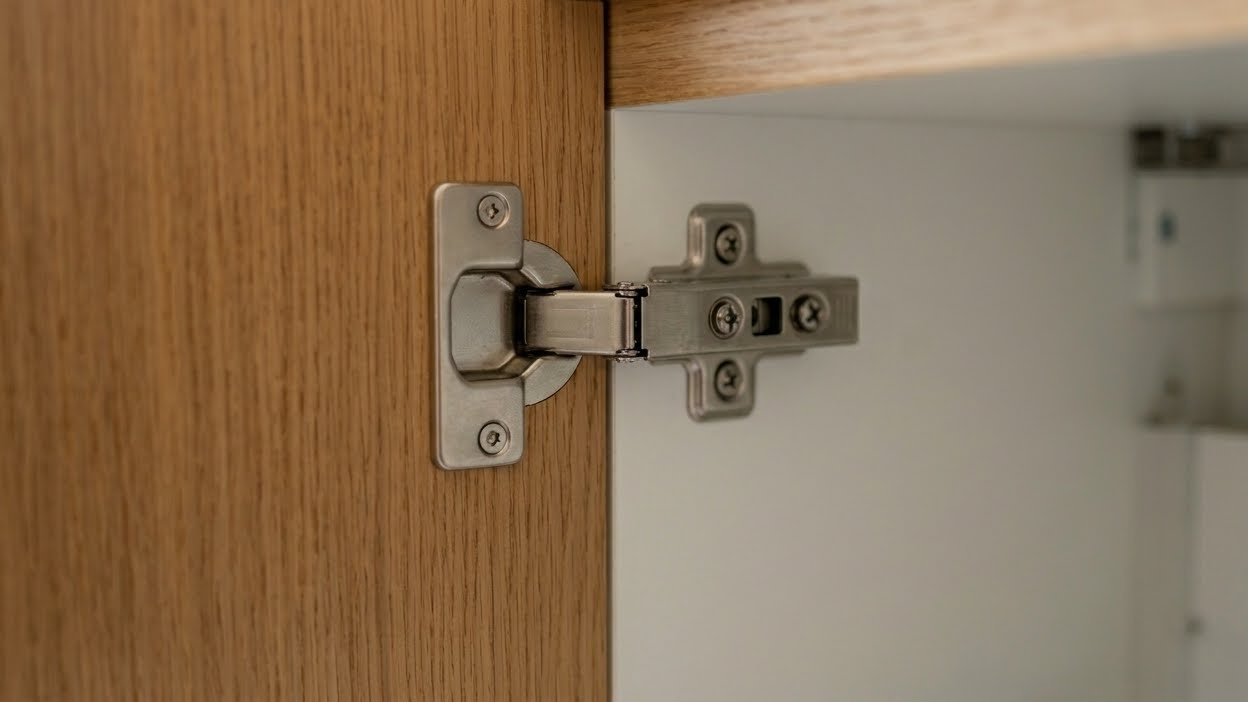
Our relationship doesn’t end when installation completes. We follow up 2-3 weeks after delivery to ensure everything functions as expected and answer any questions arising from daily use. This timing catches issues before they become problems while they’re still fresh in your mind.
Warranty coverage on our furniture extends for structural and material defects. We stand behind our craftsmanship and will address any legitimate issues promptly. The warranty doesn’t cover damage from misuse or normal wear, but we distinguish carefully between construction failures we’ll correct at our expense and user-caused damage that might require paid service.
Maintenance support continues indefinitely. Clients call years later asking about refinishing options, requesting adjustments for changed uses, or seeking advice on caring for pieces properly. We provide this guidance willingly because we want furniture lasting for decades, not becoming replacement candidates after a few years. Some pieces we built in our early years have returned multiple times for refinishing, each time leaving looking better than new.
Modification and expansion services address changing needs. That dining table serving six people perfectly when your children were young? We can extend it now that they’re bringing partners to family dinners. The home office desk that worked fine before you added a second monitor? We’ll modify it with appropriate depth and cable management. This adaptability makes custom furniture genuinely sustainable—it evolves with you rather than becoming obsolete.
Why UAE Businesses and Homeowners Choose Karnak for Custom Furniture
The decision to invest in custom furniture represents significant financial commitment and requires confidence in your chosen craftsman. Over 35 years, we’ve earned that confidence from thousands of clients through consistent delivery of quality that exceeds expectations and service that makes the journey enjoyable rather than stressful.
Three Decades of UAE-Specific Expertise
Since 1988, we’ve completed over 10,000 UAE projects. This isn’t a marketing number—it’s 10,000 unique challenges solved, 10,000 sets of specific requirements met, 10,000 opportunities to learn what works in Emirates conditions and what fails. We’ve solved the humidity warping issue in coastal Dubai apartments 847 times. We’ve navigated Dubai Municipality approvals for 3,200+ commercial fit-outs. We know which wood species survive Emirates Hills’ microclimate and which fail within two years.
This accumulated knowledge manifests in subtle design details that prevent problems rather than solve them after occurrence. We specify larger expansion gaps in wardrobe backs than European standards recommend because we’ve seen what happens when Gulf humidity hits improperly designed pieces. We avoid certain joint configurations in desert-facing furniture because sun exposure through floor-to-ceiling windows creates temperature extremes that stress typical construction. We recommend specific finish systems for coastal properties and different systems for inland locations because salt air affects wood protection differently than desert conditions.
Our material suppliers understand our requirements after decades of partnership. When we order teak, they know it needs kiln-drying to our specified moisture content and inspection for the specific defects we won’t accept. When we request hardware, they stock the heavy-duty slides and hinges we specify rather than the economy grades that might work elsewhere but fail here. These relationships ensure consistency across projects—your furniture receives the same quality materials as the presidential palace project we completed last year.
The craftsmen in our workshop average 18 years with Karnak, with our senior master carpenter having joined us in 1994. This continuity maintains institutional knowledge that would otherwise disappear with staff turnover. They’ve refined techniques specifically for UAE projects, developing methods that address challenges unique to this environment. When you commission custom furniture from Karnak, you’re accessing three decades of refined expertise applied by craftsmen who’ve perfected their skills on thousands of similar projects.
Complete In-House Capabilities
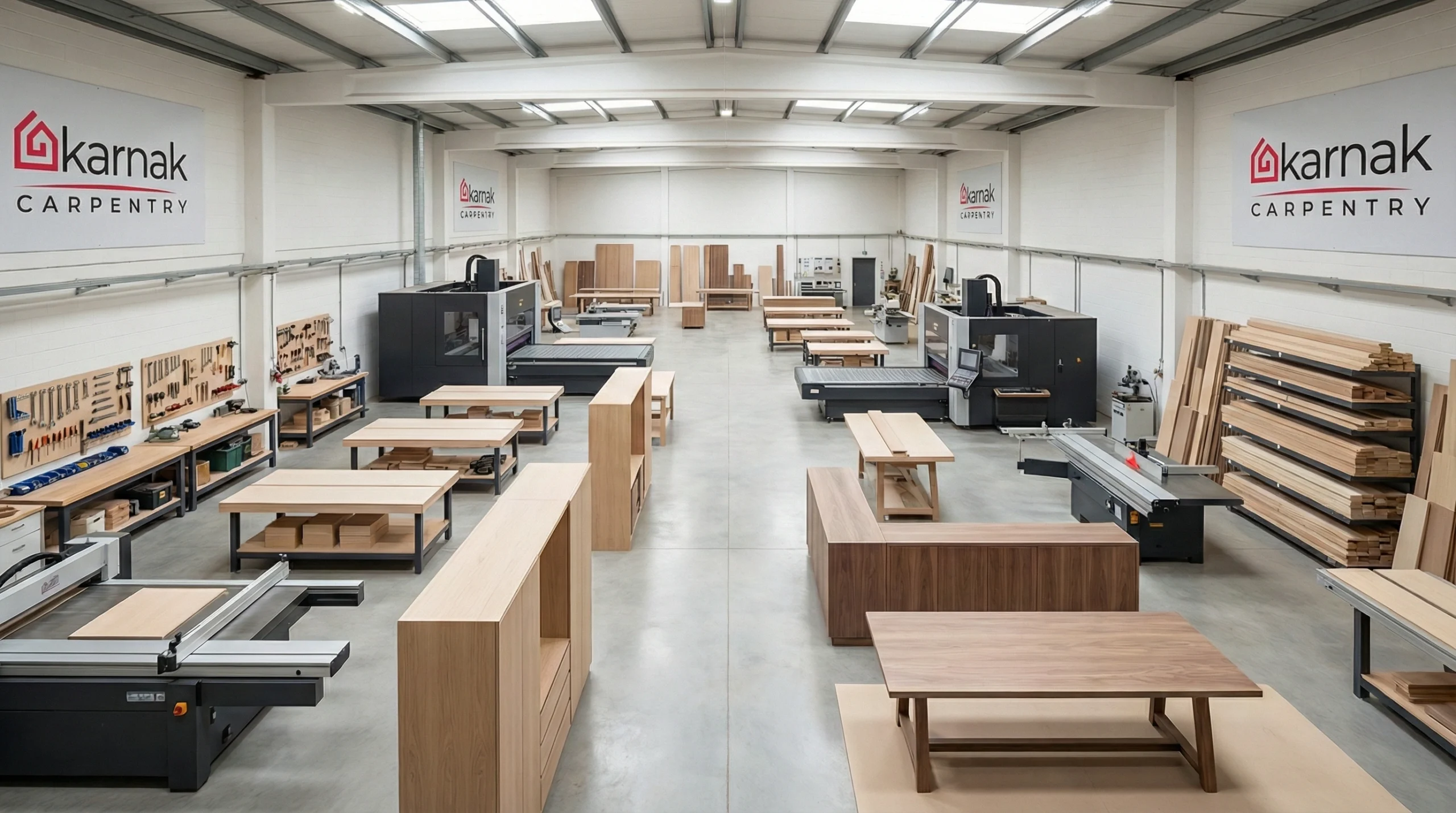
Every aspect of your custom furniture creation happens within our organization. We don’t outsource design to independent contractors, fabrication to distant workshops, or finishing to third parties. This vertical integration ensures quality control at every stage and eliminates the coordination problems and responsibility gaps that plague projects involving multiple separate vendors.
Our design team works in the same building as our workshop. When questions arise during fabrication—and they always do, because theoretical drawings sometimes encounter physical realities requiring adjustment—our designers walk 20 meters to discuss solutions with craftsmen. This immediate collaboration produces better outcomes than email exchanges with distant parties who might not fully understand the implications of proposed changes.
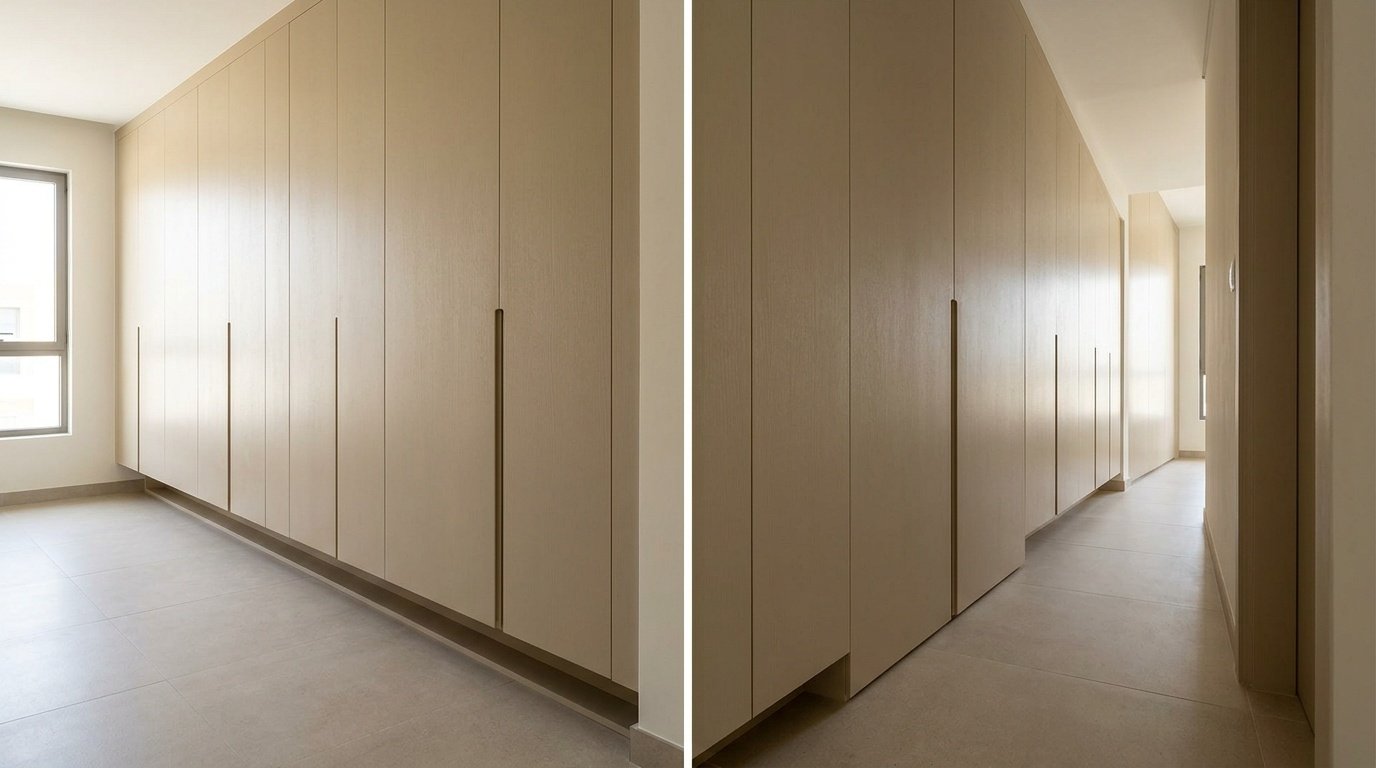
In-house finishing capabilities mean we control the critical final step where appearance gets determined. We’re not sending your furniture to a contractor who finishes everyone’s work identically regardless of wood species or intended use. Our finishing specialists understand the relationship between wood preparation, finish chemistry, and application technique. They adjust approach based on humidity and temperature in our finishing booth, ensuring optimal results rather than hoping conditions happen to be favorable when your pieces need coating.
Our installation teams consist of Karnak employees, not subcontracted laborers who’ve never seen our work before. They understand how our furniture assembles because they’ve installed hundreds of similar pieces. They recognize quality standards we demand and won’t accept the “close enough” installation that satisfies less demanding competitors. They carry tools and materials needed for our specific construction methods rather than showing up unprepared for the fastening systems or adjustment requirements our furniture requires.
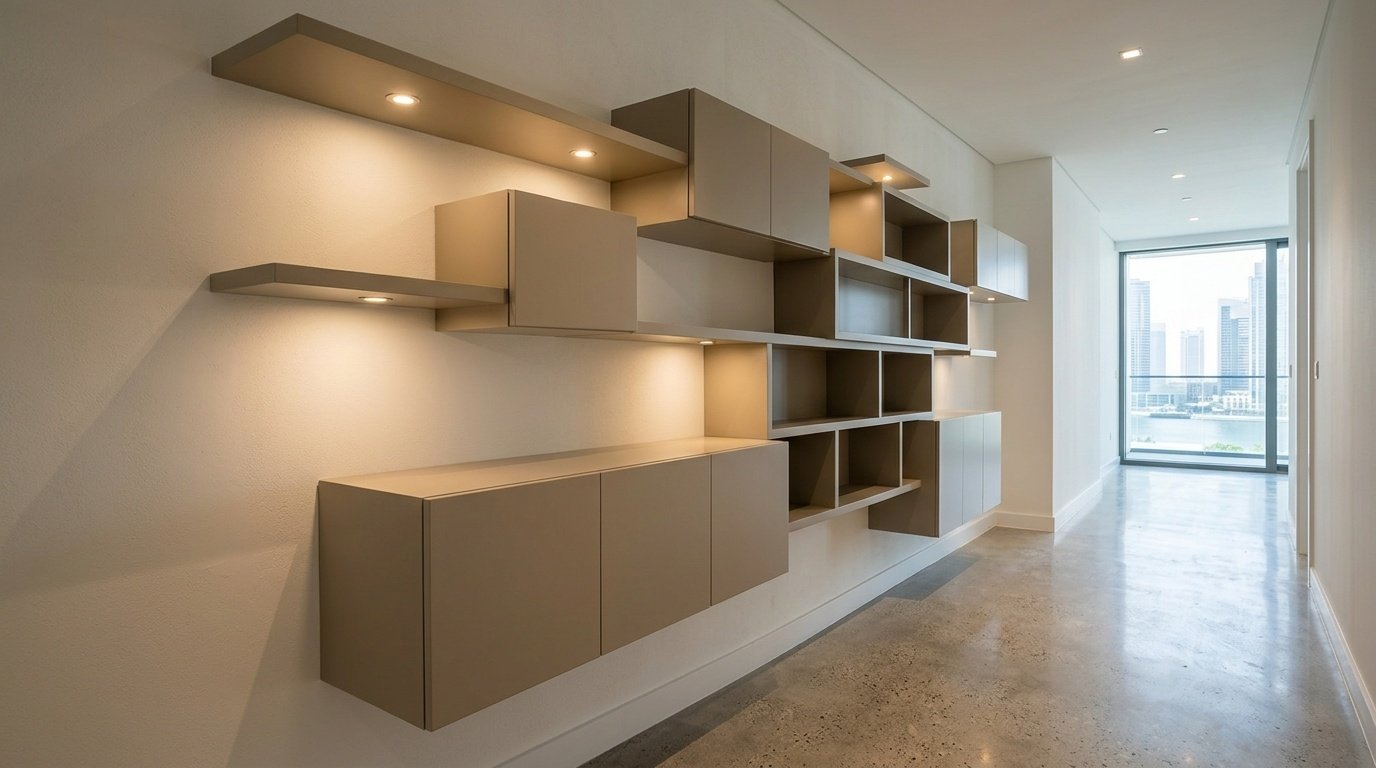
This integration extends to customer service. When you call with questions, concerns, or service needs, you speak with Karnak employees who access complete project documentation and can authorize solutions immediately rather than contractors who need to check with someone else before addressing your needs. We don’t play vendor-blame games when problems arise because there are no other vendors—just us, taking full responsibility for every aspect of your project.
Material Quality and Sourcing Standards
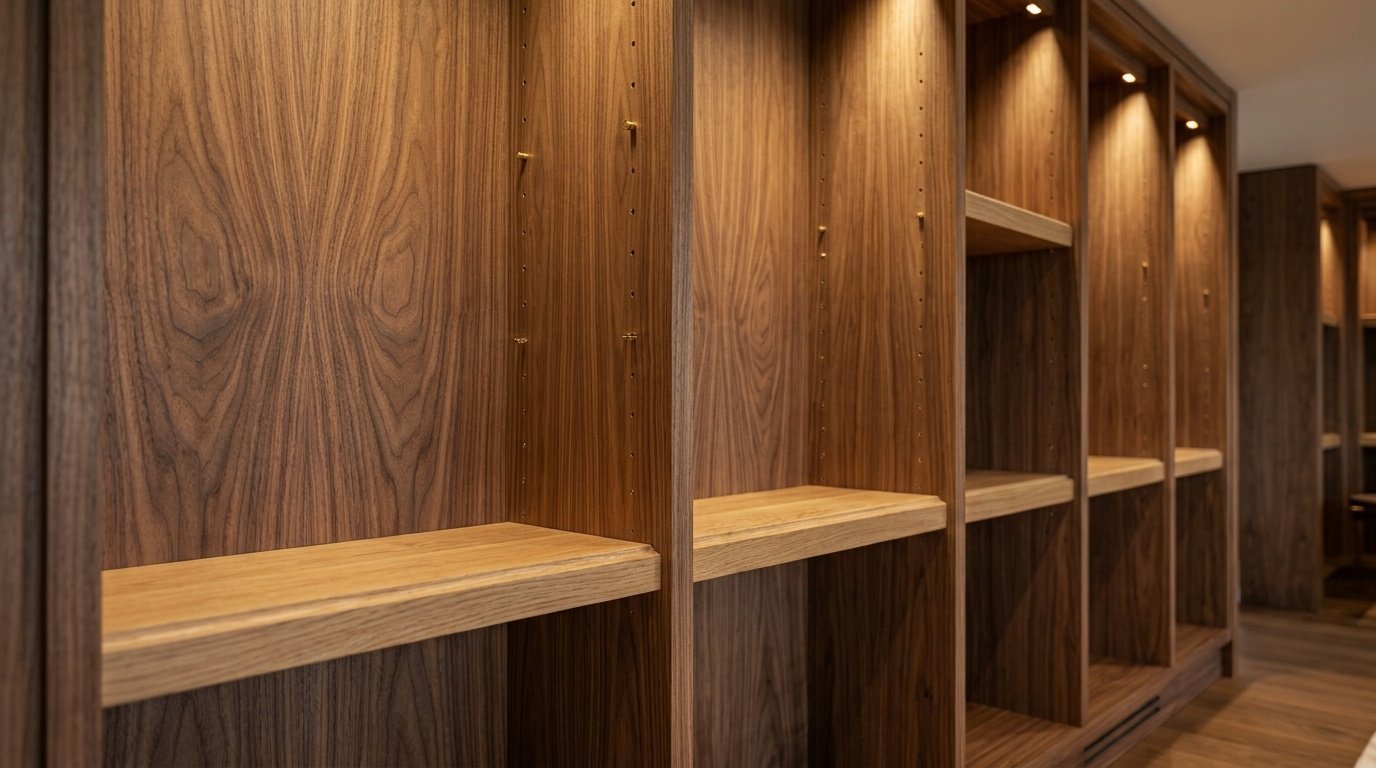
Furniture quality begins with material quality. We maintain relationships with suppliers worldwide who provide materials meeting our specifications—not the grade everyone else accepts, but the premium selection we demand. This costs more, obviously, and we could reduce pricing by accepting standard grades. We refuse that compromise because we’ve seen how inferior materials perform in UAE conditions and we won’t attach our name to furniture we know will disappoint.
Hardwood lumber we purchase gets inspected piece by piece before acceptance. We reject boards with defects that would compromise structural integrity or appearance—excessive knots in areas that will show, grain irregularities that indicate stress in the living tree, moisture content outside our specified range, or any evidence of insect damage or decay. This selectivity means we purchase more wood than projects require, accepting the cost of rejection to ensure every piece meeting our standards.
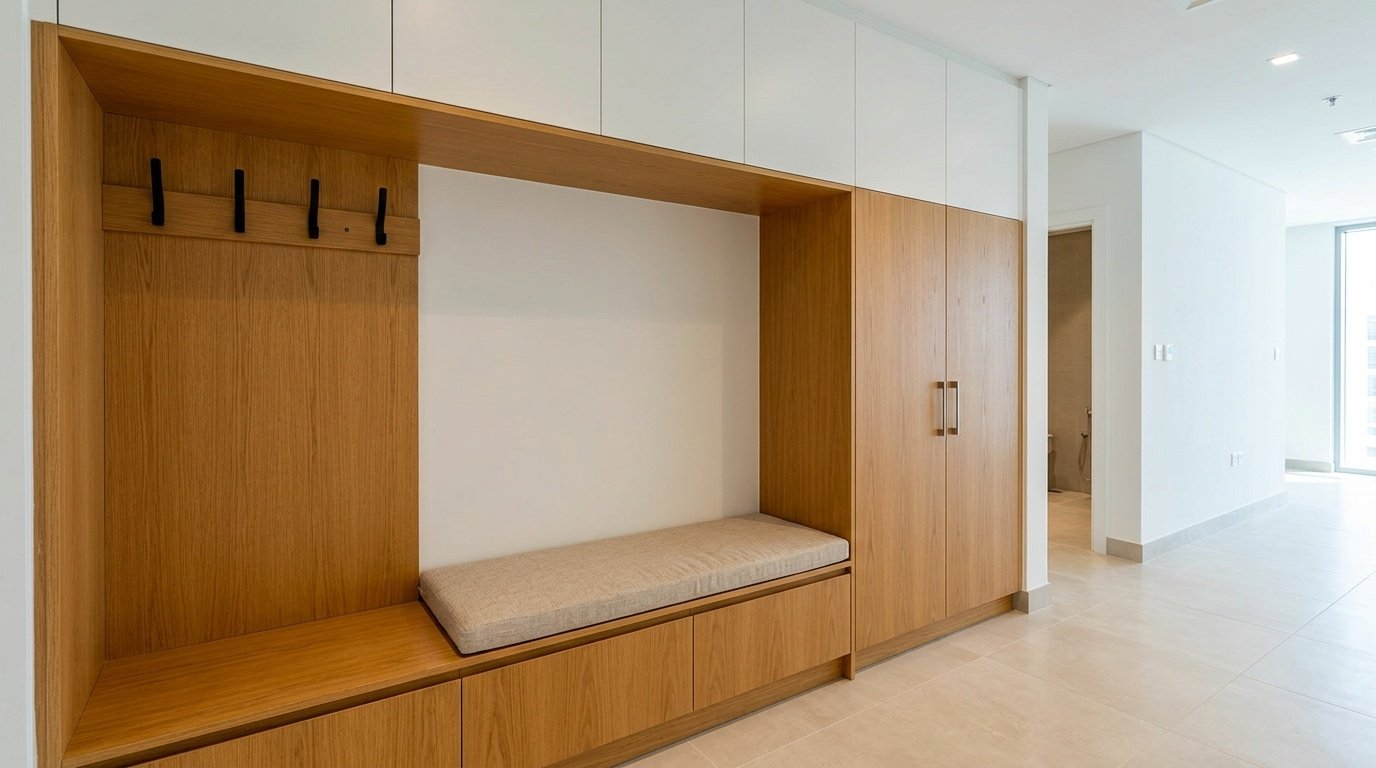
Hardware specifications exceed typical commercial grades. Drawer slides use ball-bearing systems rated for 50,000 cycles rather than economy roller slides that bind after a few years. Hinges employ commercial-grade materials and construction rather than residential economy options. Soft-close mechanisms use adjustable dampers from European manufacturers rather than fixed-rate Asian alternatives that work well initially but lose effectiveness quickly. Handles and knobs use solid metal rather than plated plastic cores that reveal their nature when finishes wear through.
Finishing materials come from industry-leading manufacturers whose chemistries perform reliably rather than economy brands with inconsistent results. We use conversion varnishes from specific product lines we’ve tested extensively rather than whatever’s on sale. Our oil finishes come from Danish manufacturers whose formulations we’ve proven over thousands of applications rather than experimenting with untested alternatives. This consistency ensures the furniture we build today matches the quality of pieces we created five years ago.
Environmental responsibility guides sourcing decisions when quality permits. We preferentially purchase FSC-certified materials from sustainably managed forests when available in grades meeting our standards. We source reclaimed lumber for appropriate projects, using salvaged wood that adds character while reducing environmental impact. We’ve developed relationships with UAE-based salvage operations that alert us when interesting materials become available from demolished buildings, allowing us to offer unique pieces with local heritage stories.
Engineering for UAE Climate Extremes
Dubai’s climate destroys poorly engineered furniture with remarkable efficiency. We’ve examined hundreds of failed pieces over the years, learning exactly which mistakes to avoid and which design approaches succeed despite environmental hostility. This knowledge gets engineered into every piece we create, preventing problems rather than reacting to failures after they occur.
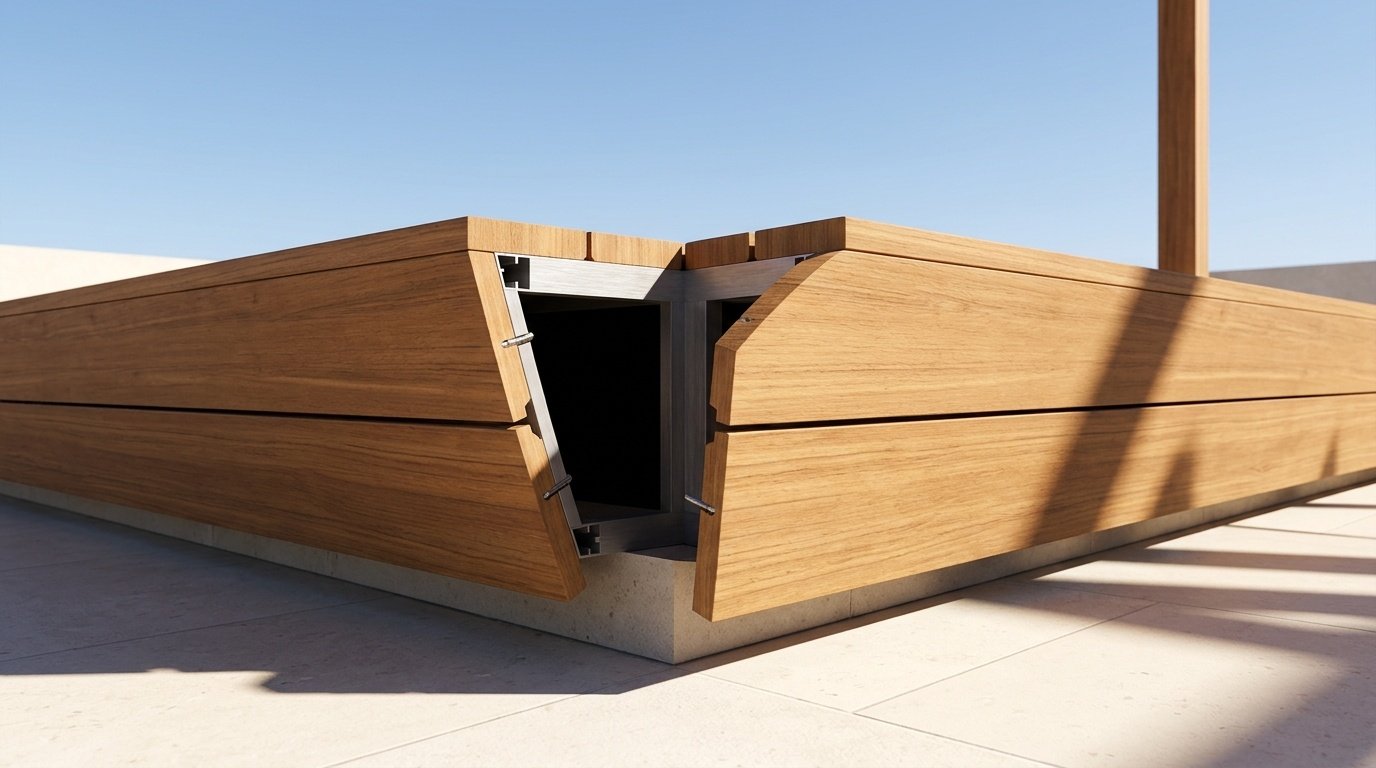
Joint design accounts for wood movement exceeding what European or American craftsmen consider. We calculate expansion and contraction ranges based on Dubai’s specific humidity patterns—not textbook averages for “coastal” or “desert” climates, but actual measured data from various UAE microclimates. Joints incorporate appropriate gaps that allow movement without causing splits or warping, dimensioned specifically for each wood species’ expansion coefficients.
Fastening systems get selected for holding power in conditions stressing connections more than moderate climates. Screws penetrate deeper, adhesives cure longer before stressing, and mechanical fasteners use larger gauges than standard practice suggests because we’ve seen what happens when heat cycling and humidity variations stress inadequately secured components. We avoid fastening methods that work perfectly in European workshops but fail in Gulf conditions—certain quick-assembly systems that rely on tight-fitting components lose effectiveness when materials expand and contract through significant ranges.
Finish systems include UV inhibitors preventing sun damage that ruins wood exposed to Dubai’s intense light through floor-to-ceiling windows. We specify moisture-vapor barriers for pieces in areas experiencing condensation risk. We select topcoats resistant to the specific cleaners and disinfectants UAE homeowners and businesses use—formulations that might damage wood in their home countries but have become standard here for hygiene in our climate.
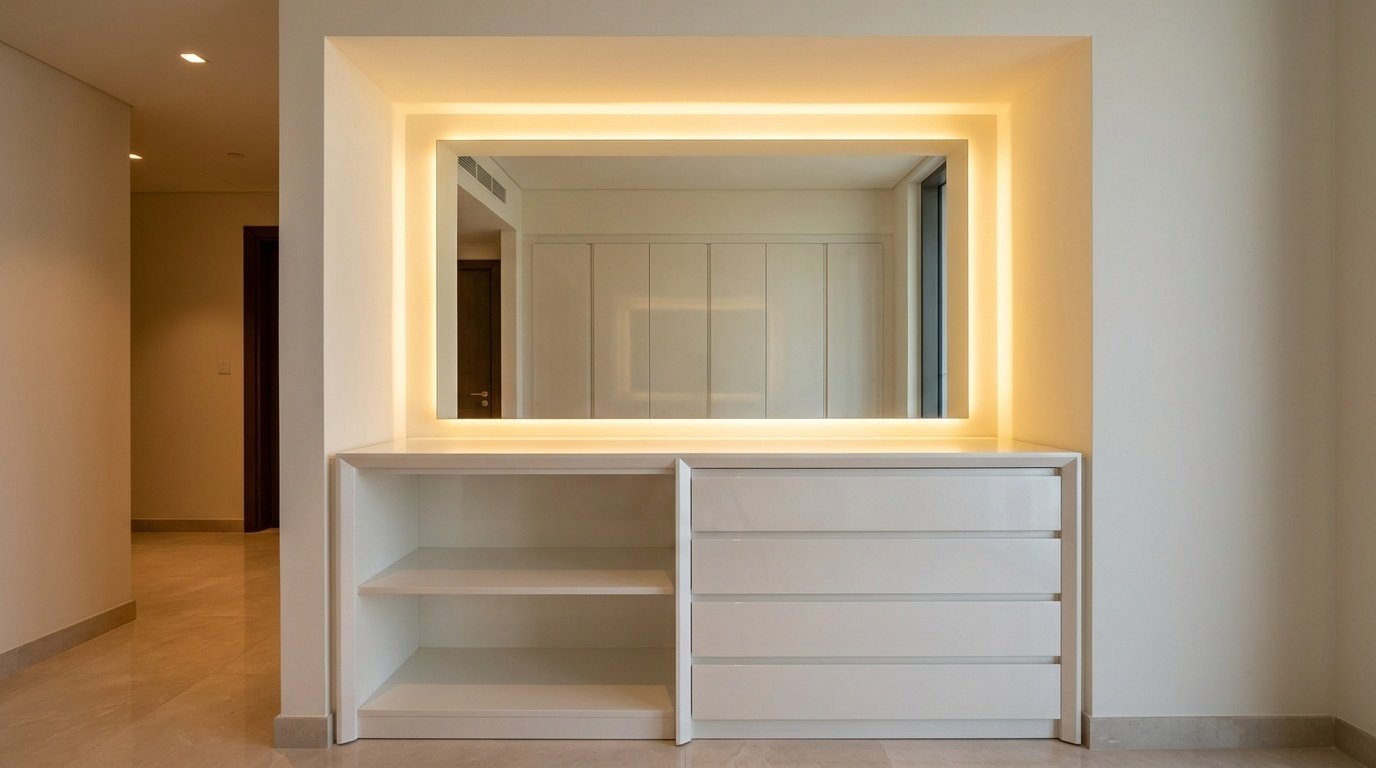
Panel construction for large components like wardrobe backs and cabinet sides uses frame-and-panel assembly rather than sheet goods wherever aesthetics permit. This traditional technique allows wood movement without the warping, splitting, and delamination that plagues plywood and MDF in humidity extremes. When sheet goods make sense for specific applications, we specify marine-grade materials designed for moisture exposure rather than interior grades that swell and deteriorate.
Transparent Process and Communication
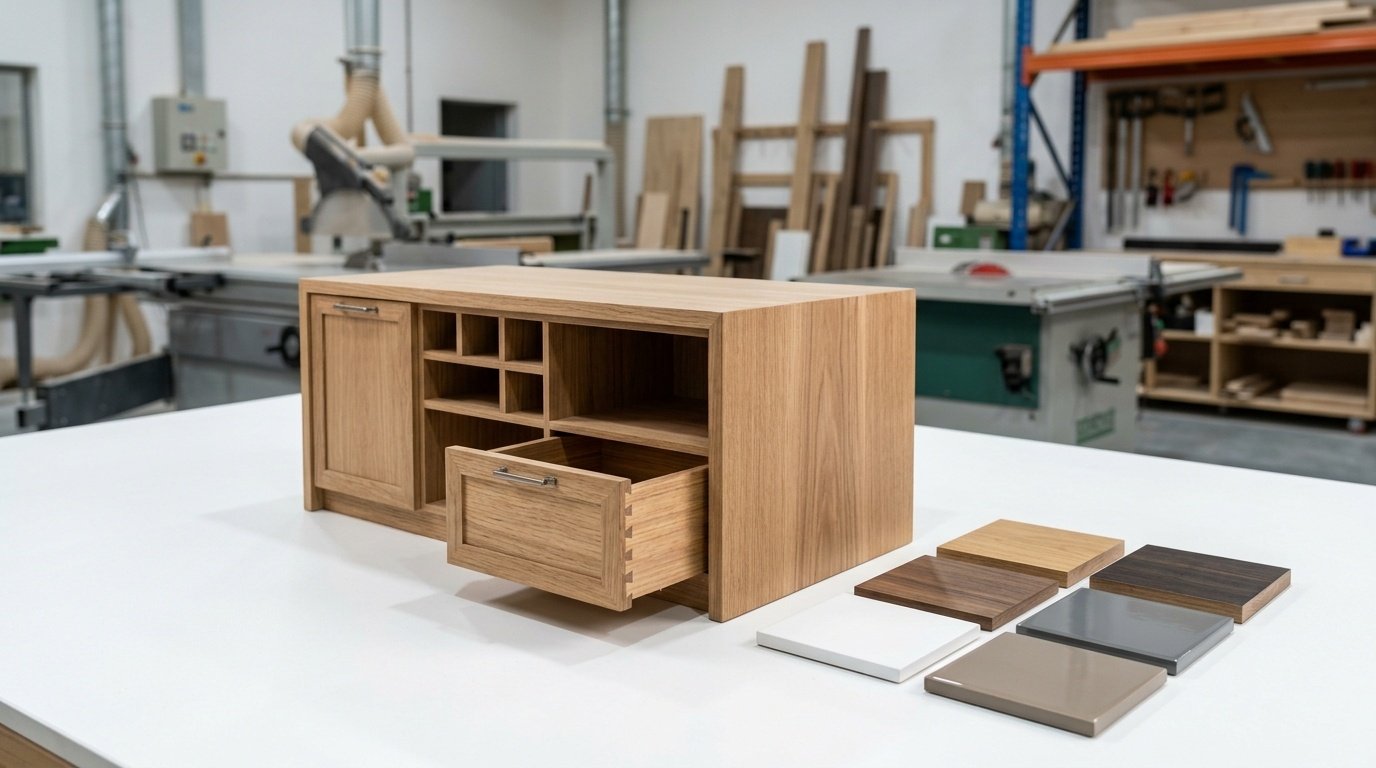
Custom furniture projects spanning several weeks or months require communication that keeps clients informed without overwhelming them with details they don’t need. We’ve refined our communication approach based on what thousands of clients told us they valued versus what created unnecessary anxiety or confusion.
You receive timeline updates at key milestones—when design approval leads to material ordering, when fabrication begins, when pieces enter finishing stage, and when installation scheduling becomes relevant. These updates arrive via your preferred communication channel—email, WhatsApp, or phone calls—and include enough information to understand progress without requiring technical knowledge to interpret.
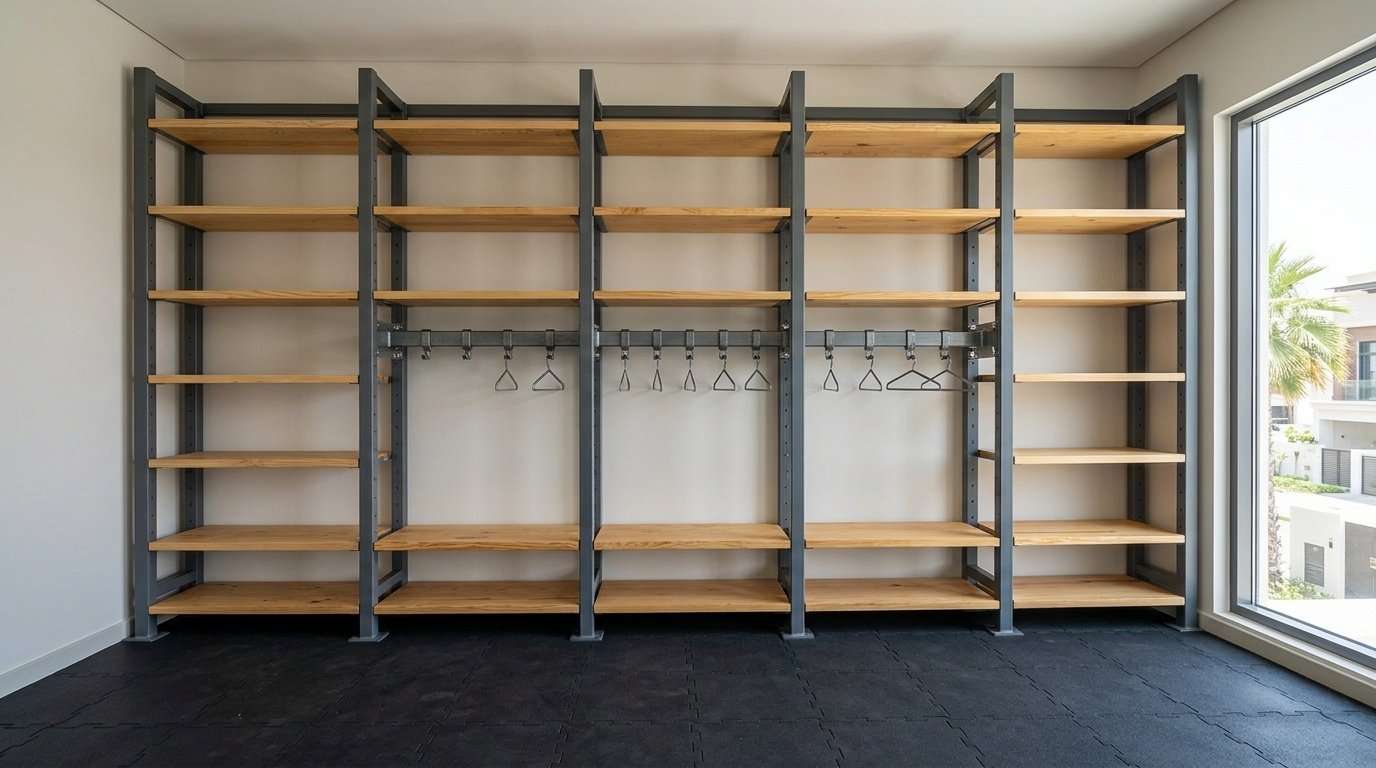
We proactively communicate if timeline adjustments become necessary. Material delays, unexpected technical challenges, or schedule conflicts get explained immediately with revised timelines, not buried until you ask why delivery hasn’t happened. This transparency maintains trust even when circumstances create delays beyond our control.
Design changes during fabrication get discussed before implementation, not discovered at installation. If our craftsmen identify a technical concern requiring modification, we explain the issue, propose solutions, discuss implications, and proceed only after your approval. We document these changes for project records, preventing disputes about what was agreed versus what assumptions someone made.
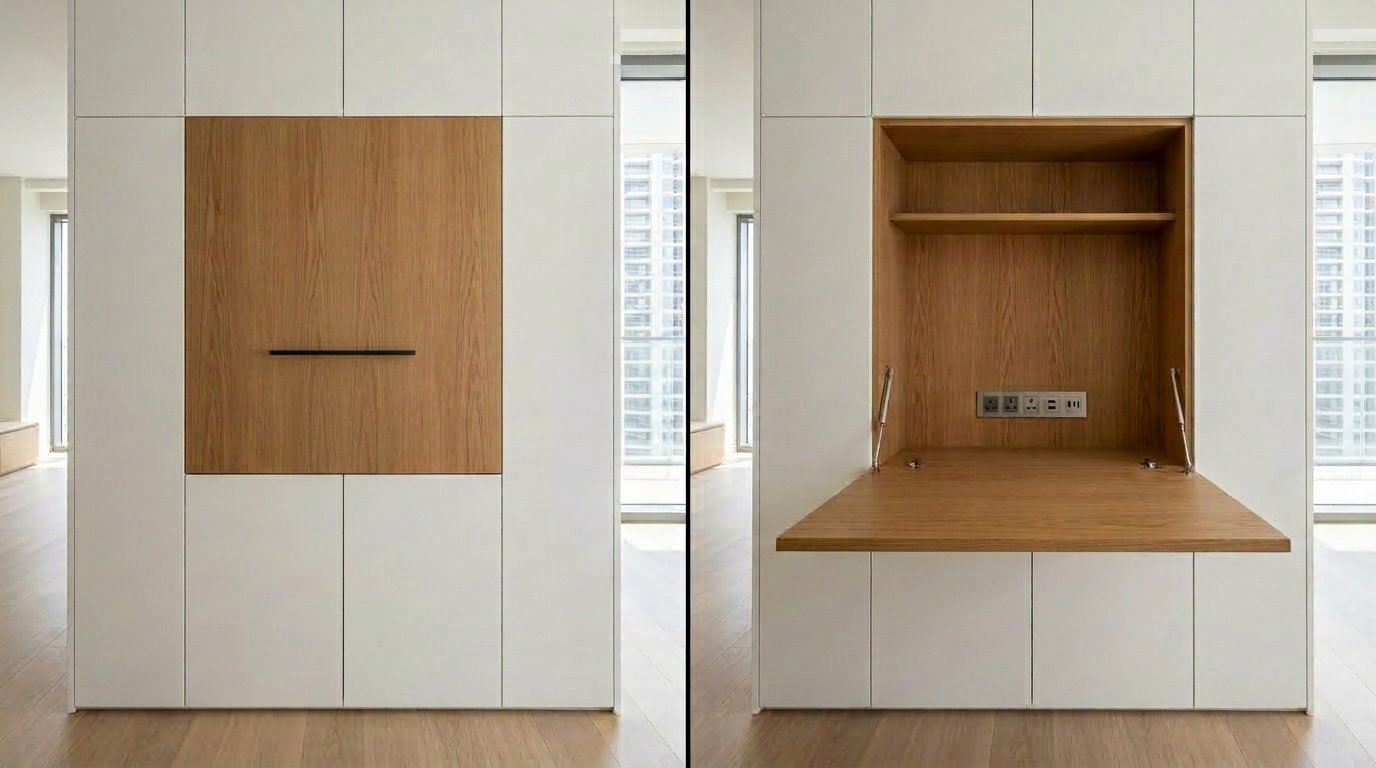
Photo documentation provides progress visibility for clients who want it. Upon request, we photograph your furniture at various fabrication stages, allowing you to see pieces taking shape even when you cannot visit our workshop. These photos typically get shared weekly for projects spanning multiple weeks, giving you confidence that work progresses appropriately.
Pricing transparency extends beyond initial quotation. If material costs increase unexpectedly due to market changes, we discuss whether to absorb the difference, adjust specifications, or modify pricing rather than surprising you with final invoices exceeding quotations. If we discover cost-saving opportunities during fabrication—perhaps material efficiency better than estimated—those savings get passed to you rather than becoming windfall profit.
Portfolio Breadth Across Residential and Commercial
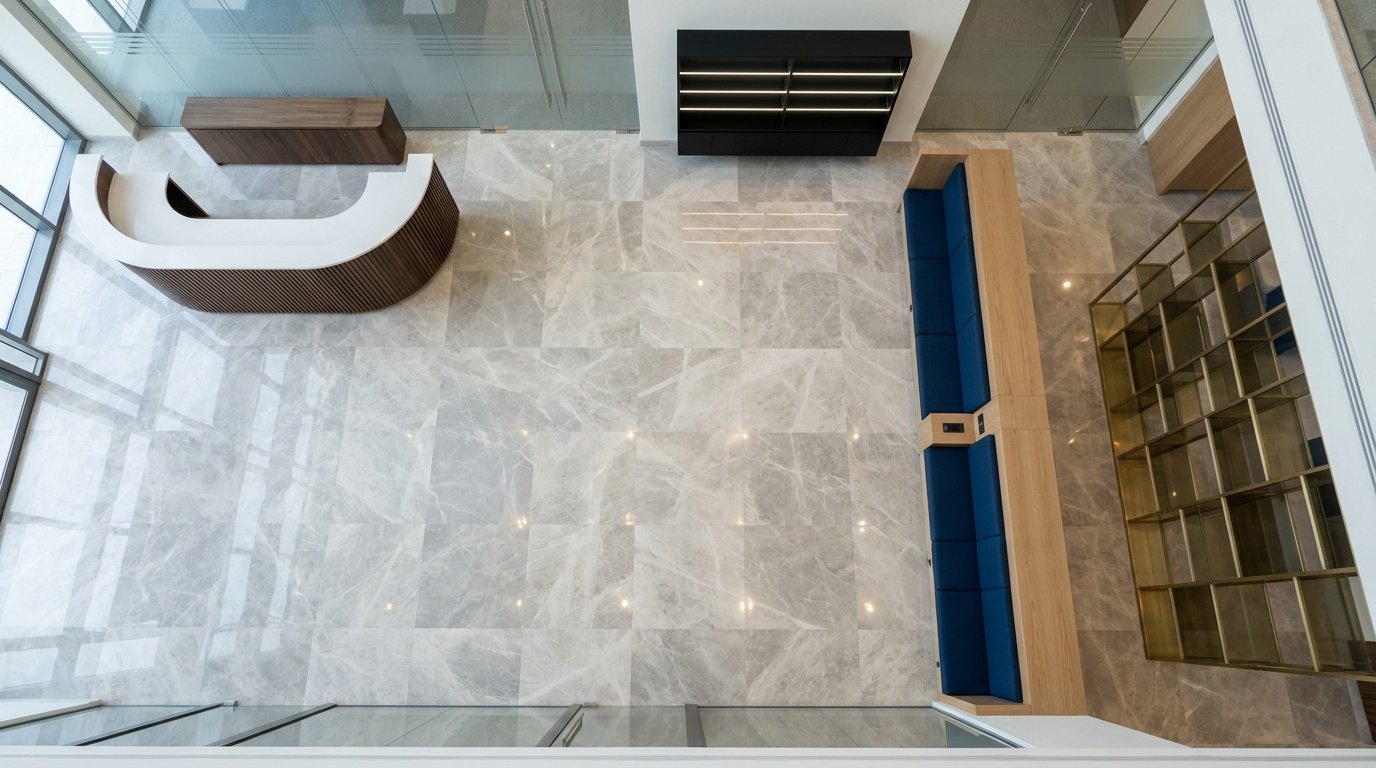
Our portfolio encompasses the full spectrum of custom furniture applications because three decades of operation naturally exposes us to every conceivable project type. This breadth means whatever your requirements, we’ve completed similar projects successfully and understand the specific challenges involved.
Residential work ranges from studio apartments requiring space-maximizing solutions to palatial villas needing furniture scaled for grand rooms. We’ve designed Murphy beds for 35-square-meter Dubai Marina studios and created library systems covering 40-meter walls in Emirates Hills estates. This range means we understand how to make small spaces work efficiently and how to fill large volumes without creating emptiness.
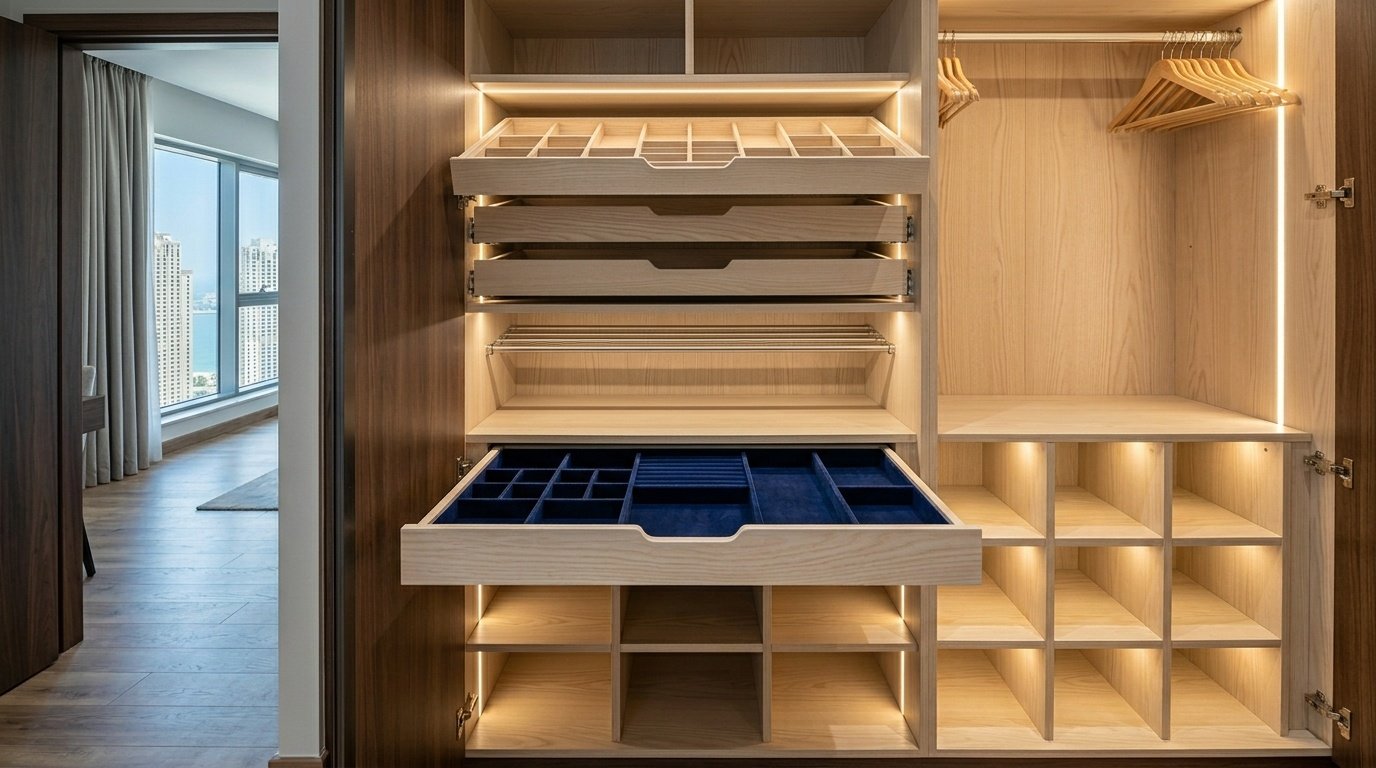
Commercial experience spans office environments, retail stores, restaurants and cafes, hotels and serviced apartments, medical facilities, educational institutions, and religious spaces. Each category demands different expertise. Restaurant furniture must withstand intensive use while maintaining appearance that justifies premium pricing. Medical furniture requires surfaces supporting rigorous cleaning protocols. Hotel furniture balances luxury aesthetics with maintenance simplicity for housekeeping staff.
Industry variety exposes us to unique requirements that cross-pollinate into other projects. Techniques we developed for museum display cases inform jewelry store showcases. Methods perfected for restaurant kitchen storage translate to residential pantry organization. Materials tested in hospital environments prove valuable for homes with allergies or chemical sensitivities.
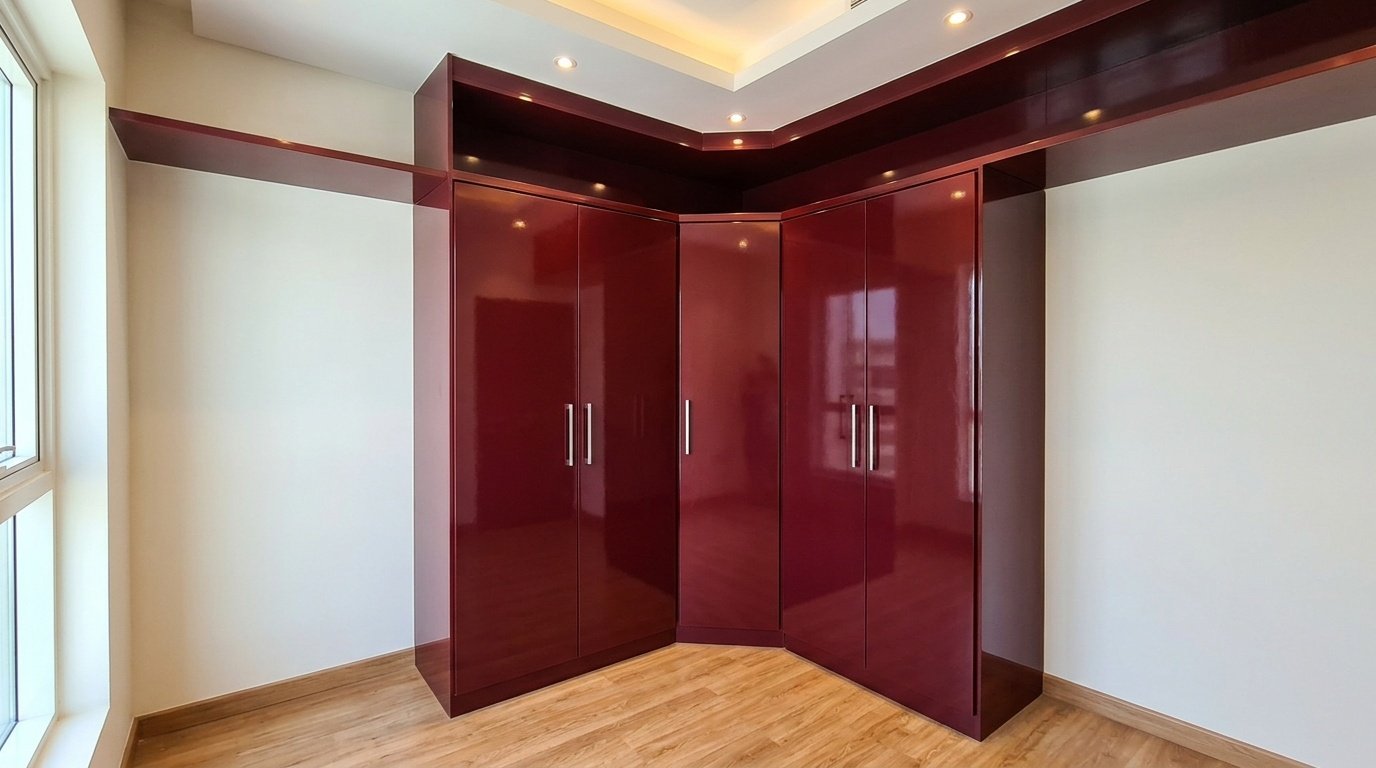
Geographic coverage throughout UAE means we understand regional differences affecting furniture design. Coastal Dubai properties face different humidity patterns than inland Sharjah locations. RAK properties experience different temperature extremes than Abu Dhabi. We’ve worked in every emirate, understanding how local conditions, construction methods, and regulatory environments affect our work.
This accumulated experience means we anticipate challenges before they arise, recommend solutions proven in similar applications, and avoid approaches we know will fail despite looking good in concept. You benefit from our entire 35-year learning curve rather than becoming the project where we discover something doesn’t work.
Recent Custom Furniture Projects Across UAE
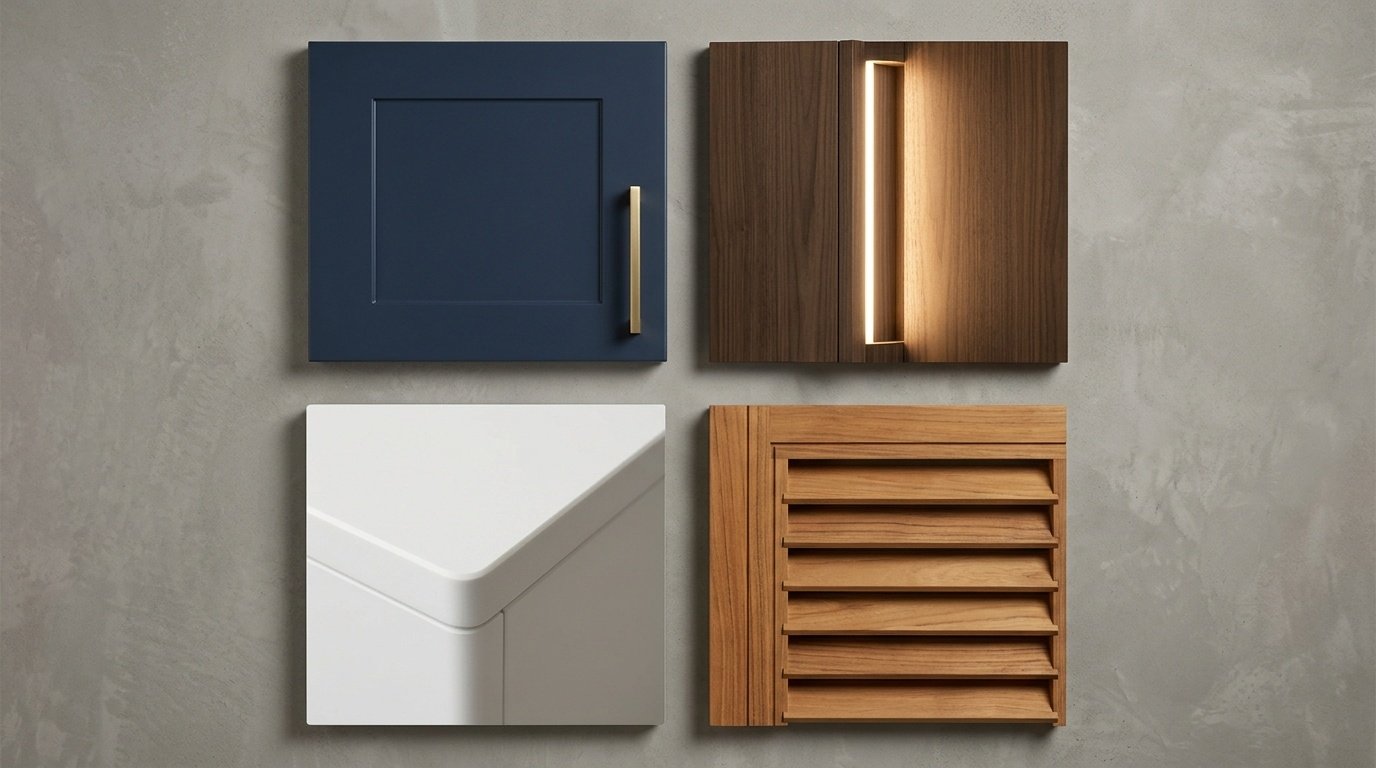
Executive Office Suite – DIFC Tower
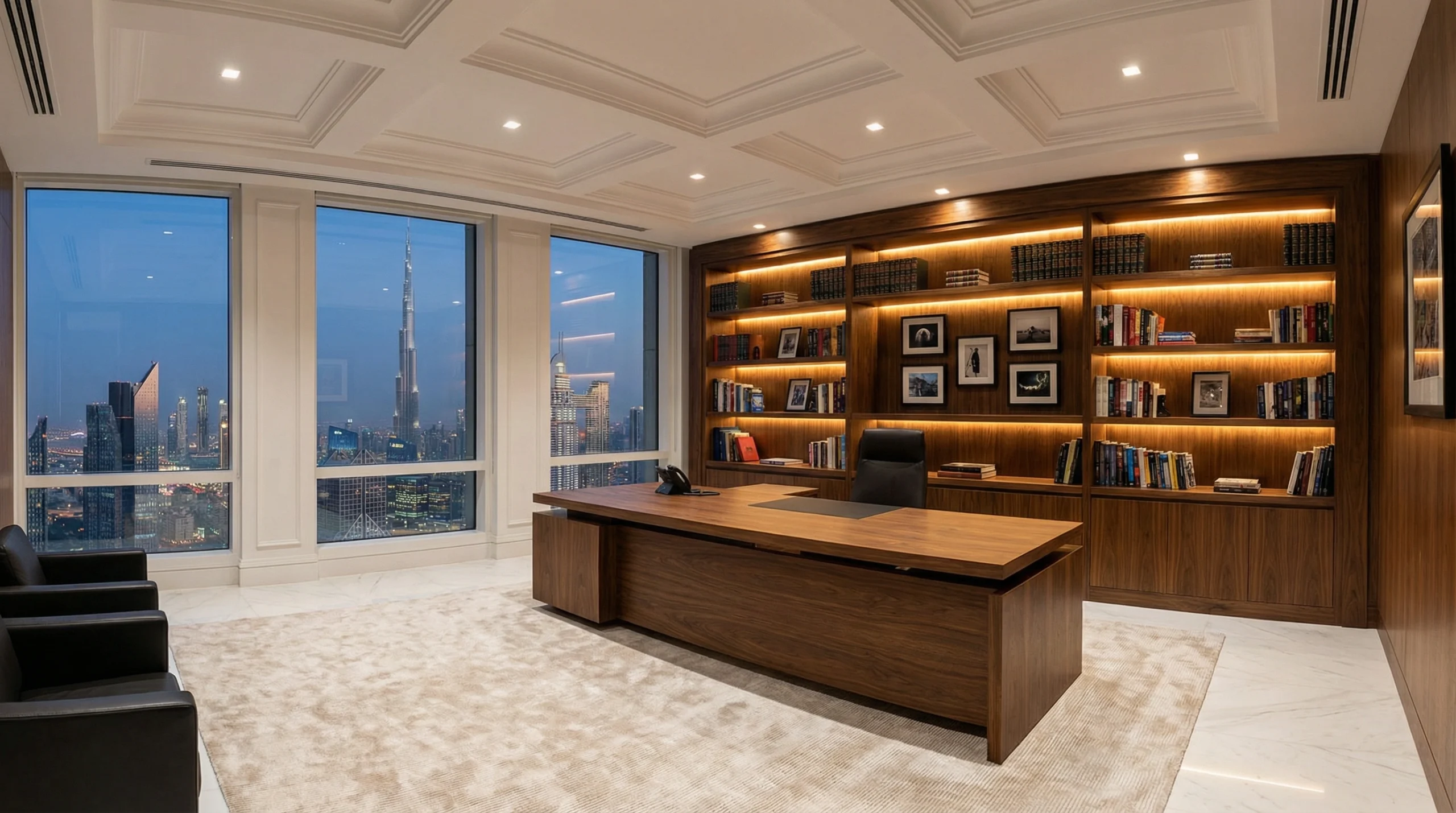
Comprehensive C-suite furniture package including executive desks, credenzas, boardroom table, and built-in library for international law firm’s Dubai headquarters. Walnut and leather materials creating traditional authority appropriate for legal practice while incorporating technology integration supporting modern work requirements. 280 square meters of office space furnished over six-week fabrication timeline, installed during weekend to minimize business disruption. Client particularly valued cable management systems keeping technology accessible without visible wiring.
Villa Master Bedroom – Emirates Hills
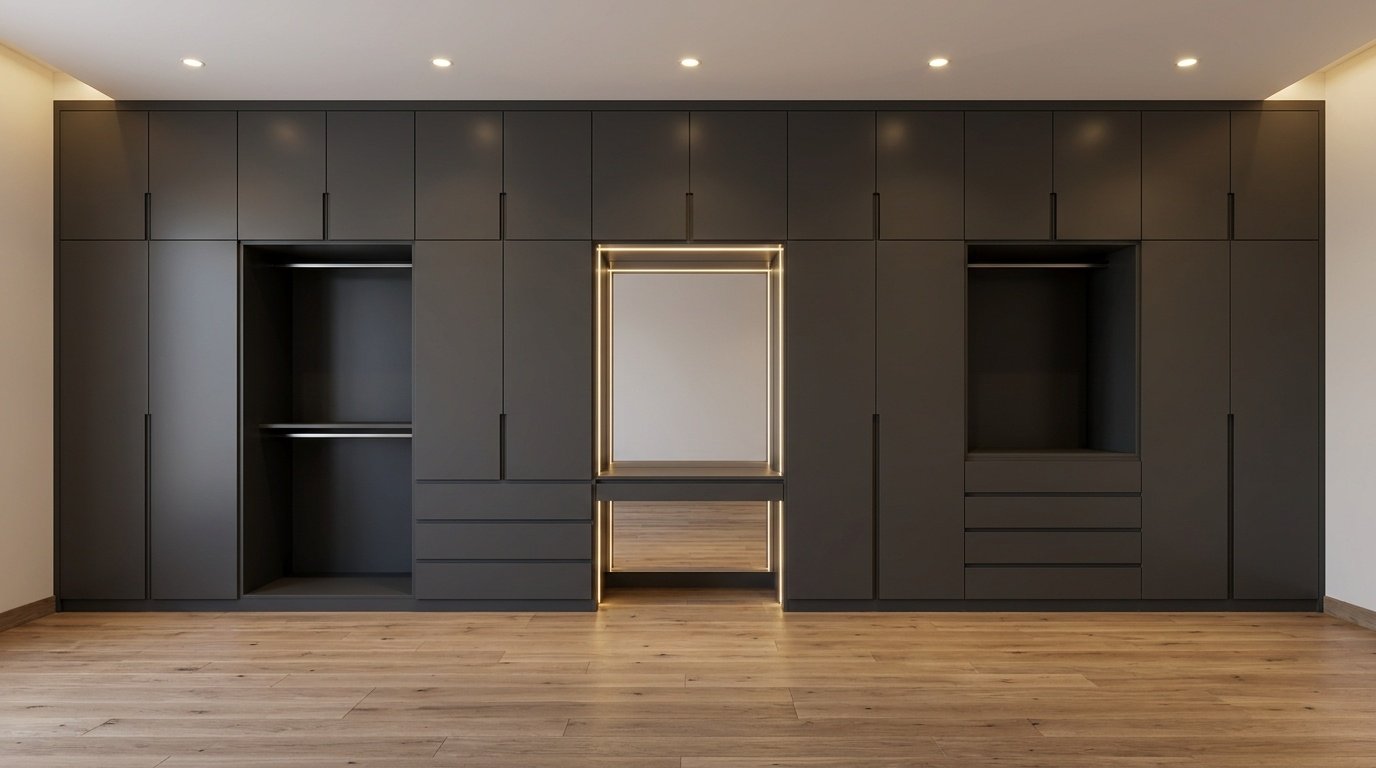
Complete bedroom furniture suite including king-size bed with integrated nightstands, his-and-hers walk-in wardrobes, vanity area, and window seat with hidden storage. Contemporary design using walnut and white lacquer combining warmth with clean lines appropriate for modern villa architecture. 85 square meters of bedroom space transformed from empty room to luxury retreat. Wardrobes incorporated 4.2 meters of hanging space, 18 drawers, dedicated shoe storage for 60 pairs, and jewelry organization system. Installation required three days including careful wall-mounting to villa’s concrete structure.
Family Kitchen Island – Arabian Ranches
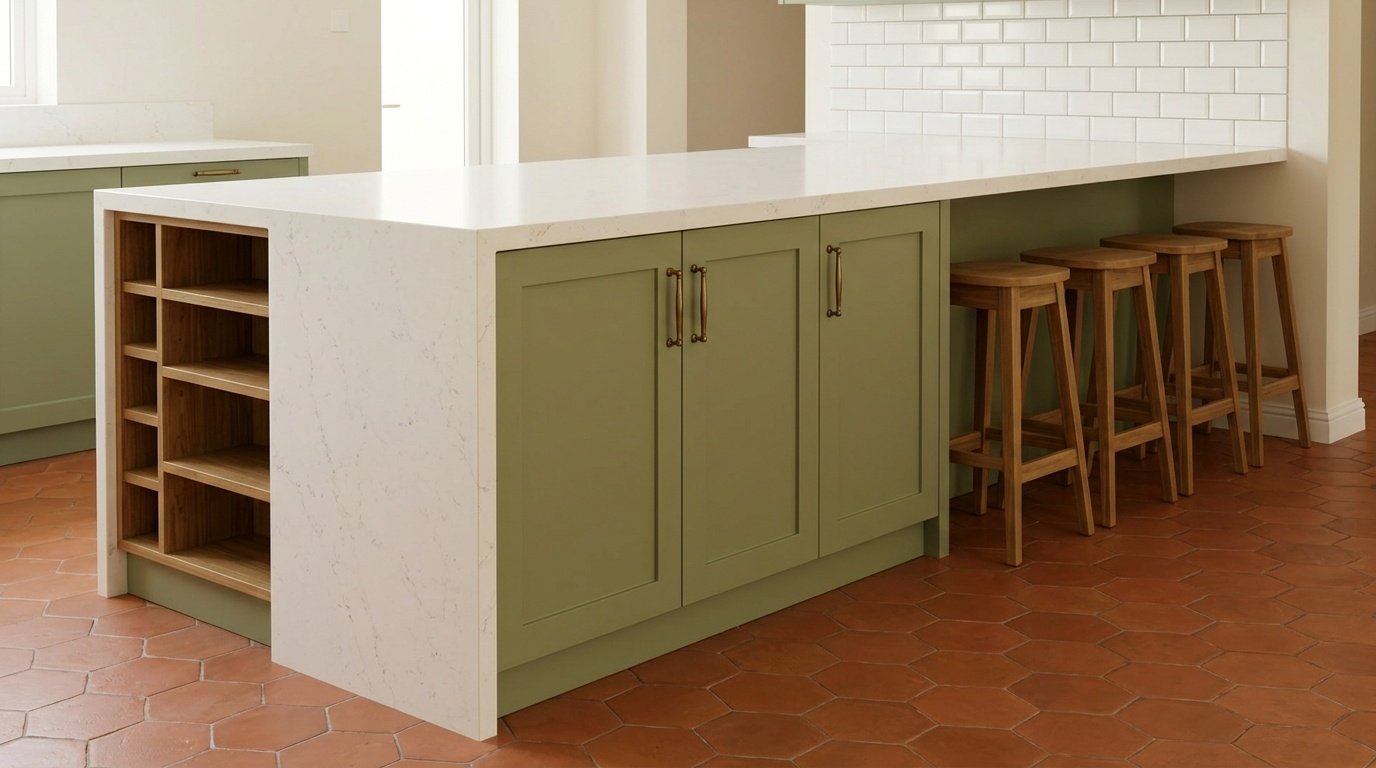
Custom kitchen island serving as cooking preparation area, casual dining space, homework station, and primary kitchen storage. 3.2 meters long by 1.1 meters deep, incorporating cooktop, prep sink, dishwasher, storage for cookware and small appliances, and seating for four. Mixed materials using reclaimed teak for eating surface providing warmth and durability, white painted cabinet bodies maintaining light feeling, and granite-insert providing heat-resistant work surface beside cooktop. Design solved the challenge of creating storage capacity equivalent to four base cabinets while maintaining open sight lines from kitchen to family room.
Restaurant Dining Furniture – JBR Beach Walk
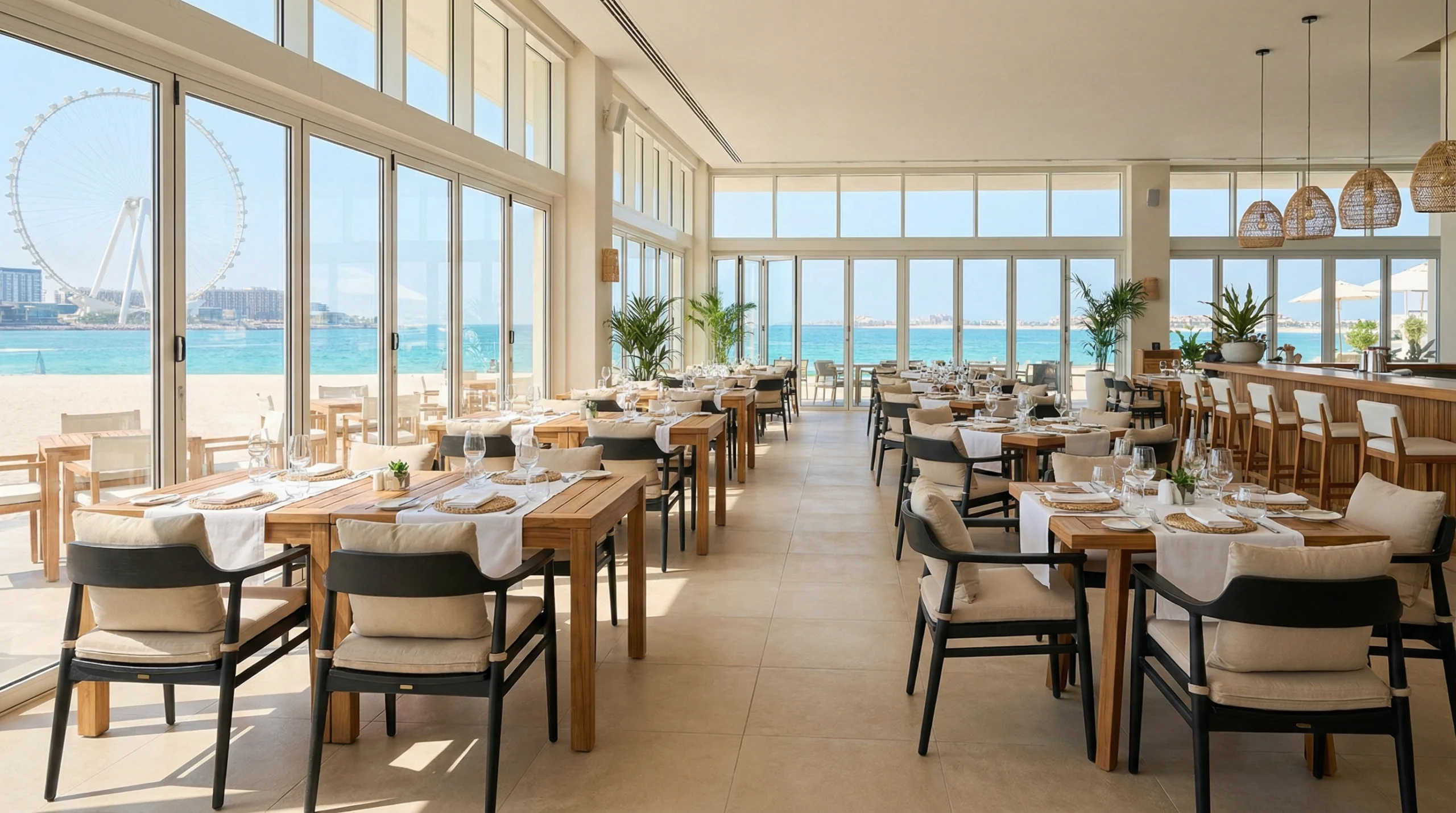
40 custom dining tables and 160 chairs for beachfront restaurant requiring furniture withstanding coastal environment while maintaining upscale appearance. Marine-grade teak frames with stainless steel accents, powder-coated to prevent corrosion from salt air. Chairs employed quick-dry foam in cushions preventing moisture retention in humid environment. Tables sized for two-top and four-top configurations allowing flexible arrangement for varying party sizes. Furniture engineered for stability on irregular tile surface while allowing easy movement for daily cleaning. Client reports furniture maintaining like-new appearance after two years of intensive restaurant use despite harsh coastal exposure.
Retail Display System – Dubai Mall
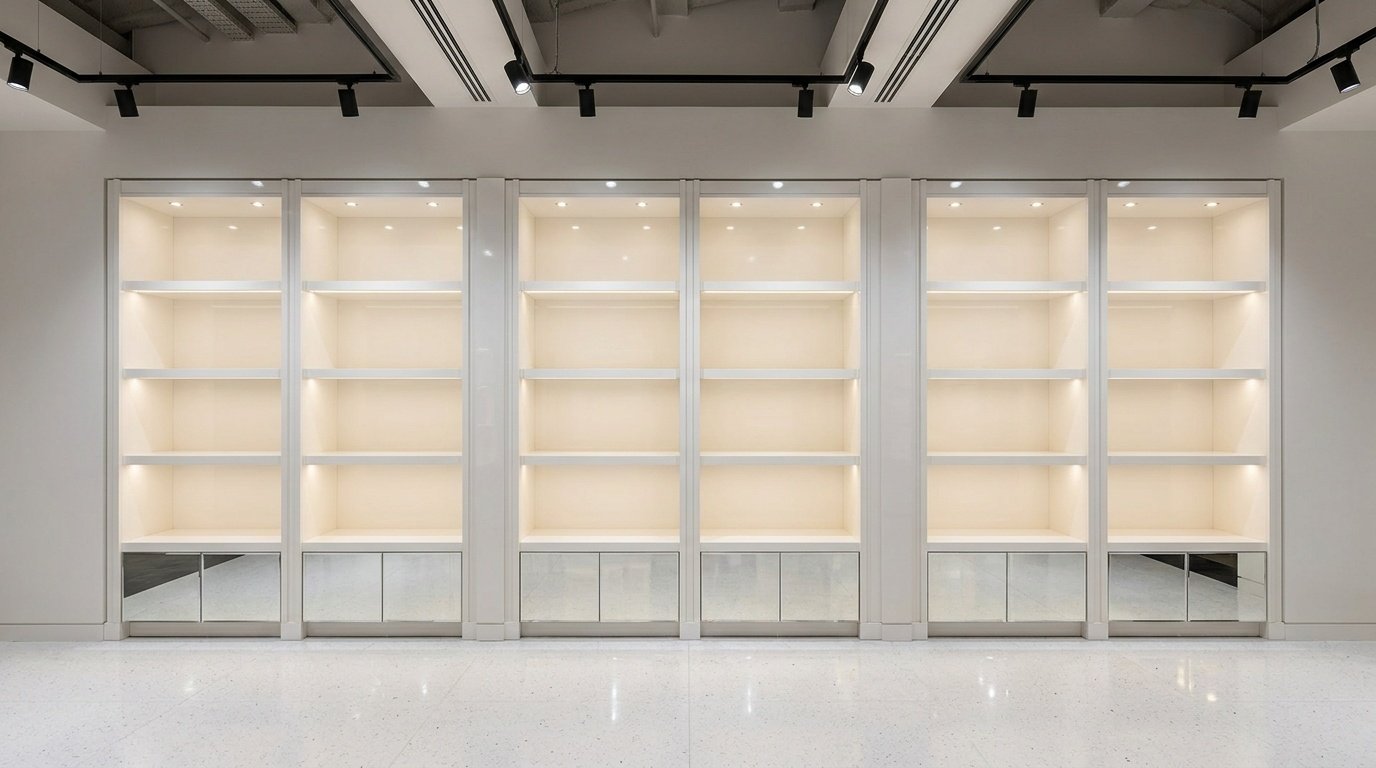
Luxury watch boutique requiring display furniture showcasing premium timepieces while incorporating security features and maintaining brand aesthetic standards. Custom displays included wall-mounted showcases, freestanding island cases, and consultation tables. Materials combined veneered surfaces matching brand specifications with concealed locking systems and integrated LED lighting highlighting merchandise. Particularly complex project requiring coordination with mall management for structural approvals, collaboration with security system installers for lock integration, and precise fabrication meeting Swiss brand’s exacting standards. 120 square meters of retail space furnished over four months from design to installation.
Home Library – Palm Jumeirah
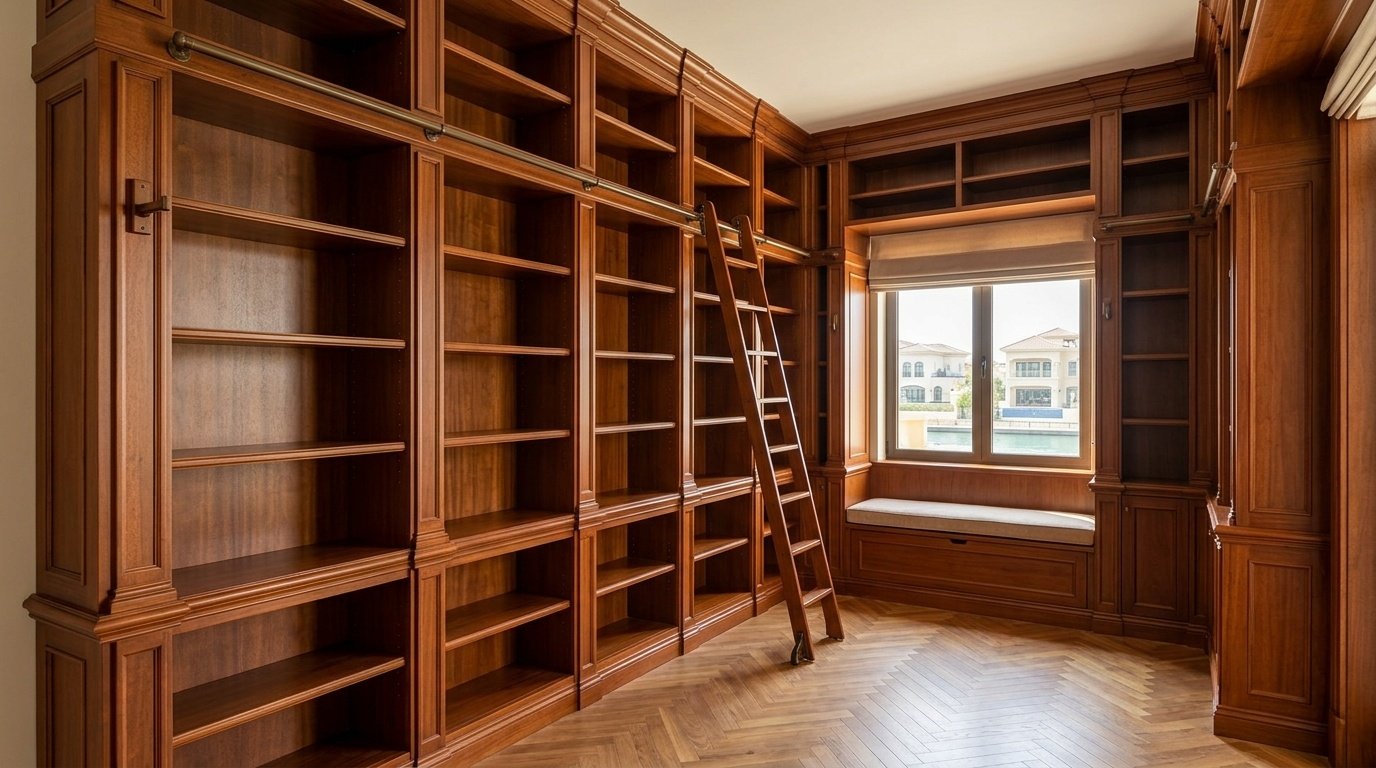
Floor-to-ceiling library system filling 7.5-meter wall with book storage, integrated desk, and display areas for art collection. American walnut construction with adjustable shelving accommodating varied book sizes, ladder rail allowing access to upper shelves, and hidden compartments for electronics and router equipment. Library incorporated 180 linear meters of shelf space organized into sections for different collections. Design challenge involved engineering support system preventing shelving sag across long unsupported spans while maintaining clean aesthetic without visible structural elements. Installation required wall mounting to villa’s exterior concrete wall, providing security against Dubai’s rare but significant seismic activity.
Medical Clinic – Healthcare City
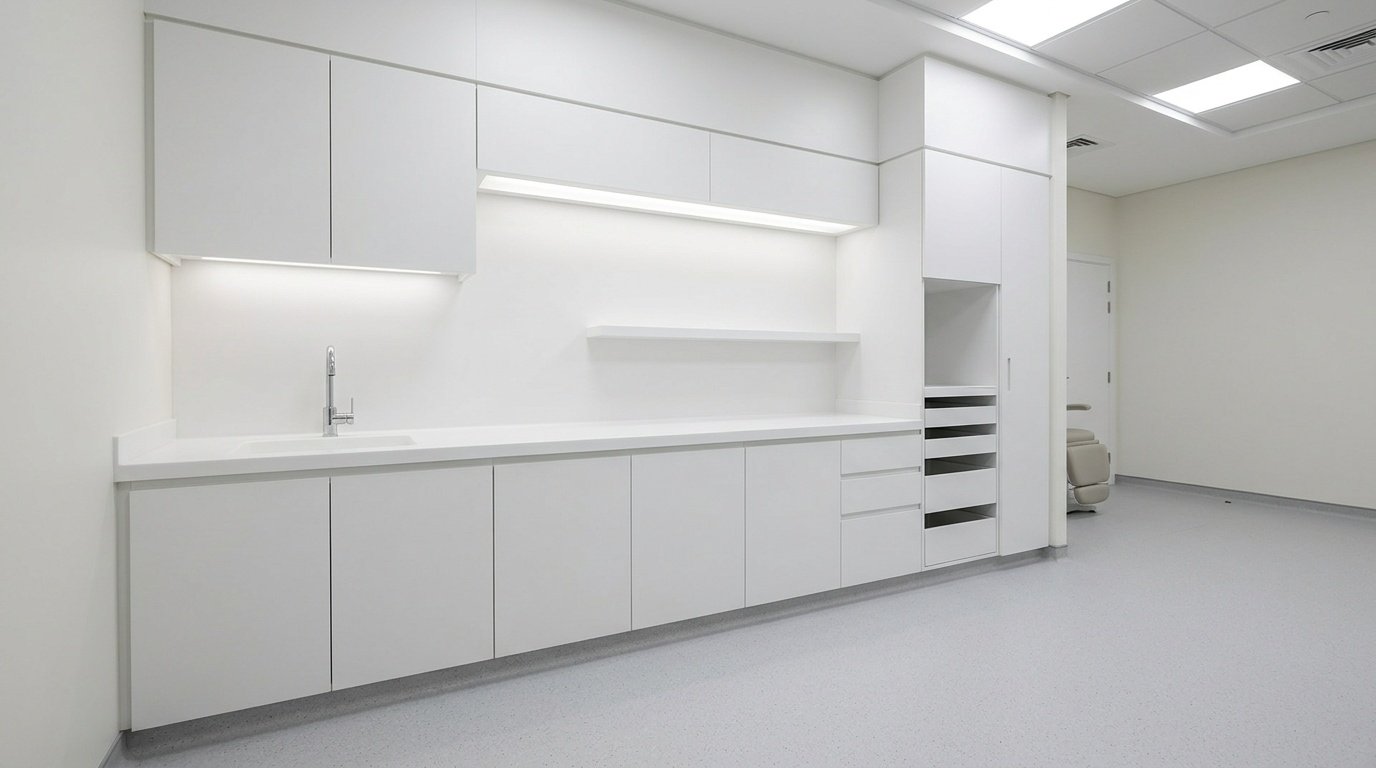
Reception area and examination room cabinetry for specialty medical practice requiring surfaces supporting medical-grade cleaning protocols while maintaining welcoming patient environment. Non-porous surfaces using solid surface materials rather than wood for examination room cabinetry, combined with wood furniture in reception area creating warmth. Custom reception desk incorporated transaction surface, secure storage for patient records, integrated computer equipment, and infection control features including hands-free access to storage. Dubai Health Authority approval required for materials and construction methods, which we navigated successfully through established relationships with regulatory officials.
Residential Media Wall – Business Bay
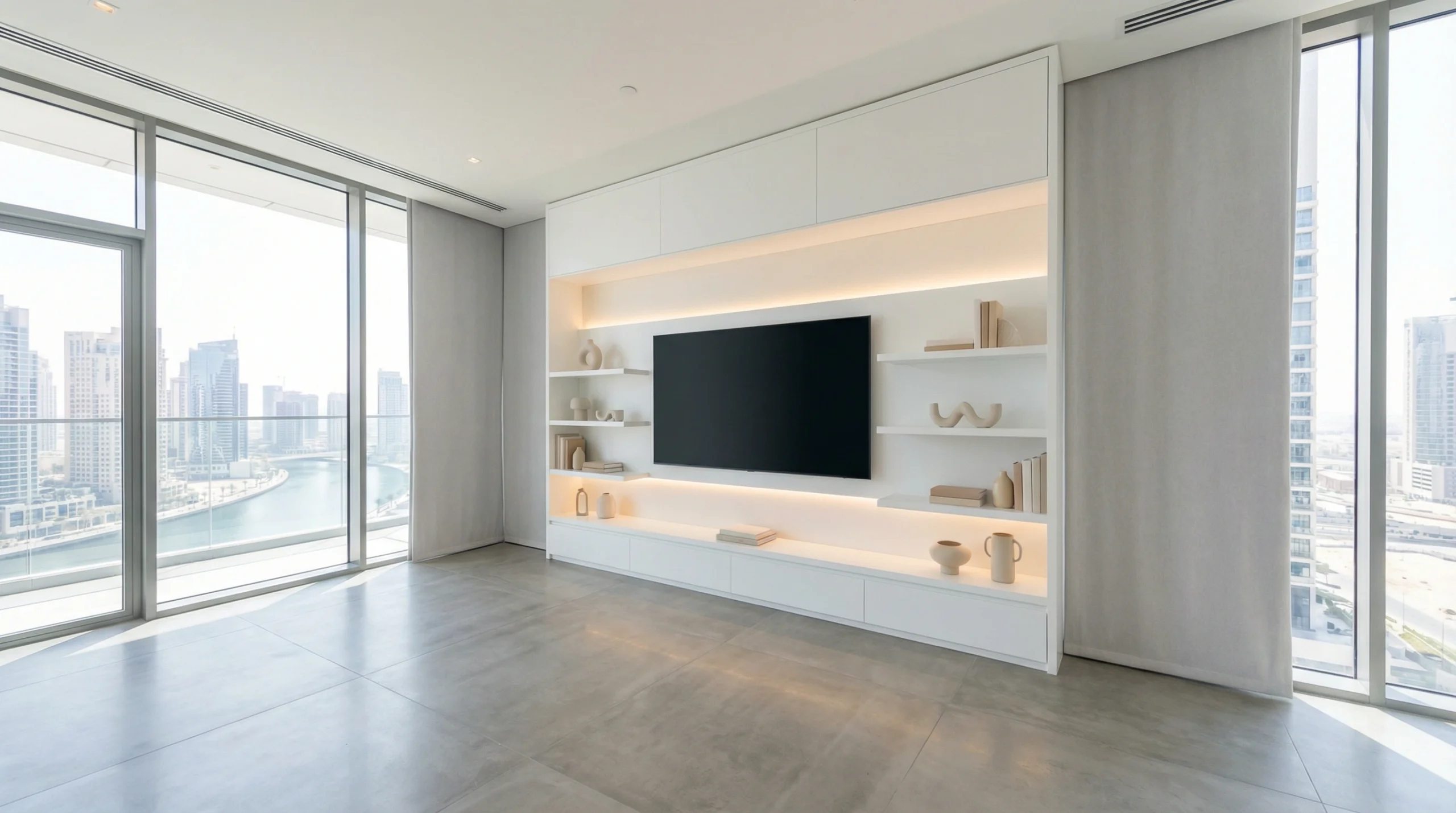
Custom entertainment unit incorporating 85-inch television, sound system, gaming consoles, and media storage while maintaining clean contemporary aesthetic appropriate for penthouse apartment. 4.8-meter wall unit combining open shelving, closed storage, and equipment integration with cable management system hiding all wiring. White lacquer finish reflecting abundant natural light from floor-to-ceiling windows. Design incorporated cooling ventilation for heat-generating equipment and remote-controlled LED accent lighting creating ambiance for movie viewing. Installation required coordination with home automation installer integrating furniture-mounted speakers into comprehensive audio system.
Hotel Suite Furniture – Downtown Dubai
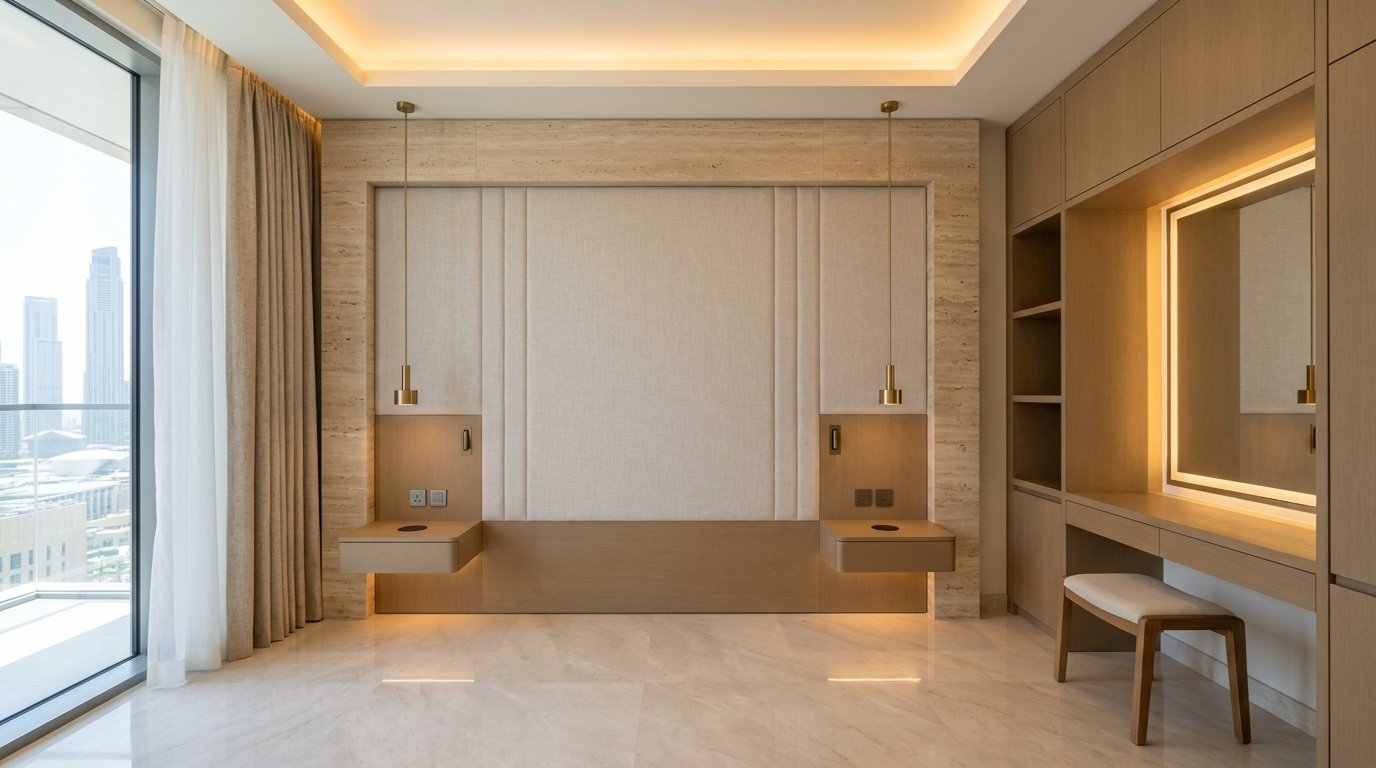
Complete furniture package for boutique hotel’s presidential suite including custom bed, wardrobes, desk, dining table, and living room pieces. Design balanced luxury aesthetics appropriate for suite commanding premium rates with durability and maintenance simplicity required for hotel operations. Materials employed contract-grade fabrics and finishes maintaining appearance through frequent housekeeping attention. Furniture engineered for easy maintenance with accessible fasteners allowing housekeeping to tighten connections if needed. Particularly proud that furniture maintained pristine appearance through two years of constant guest use without requiring any service calls.
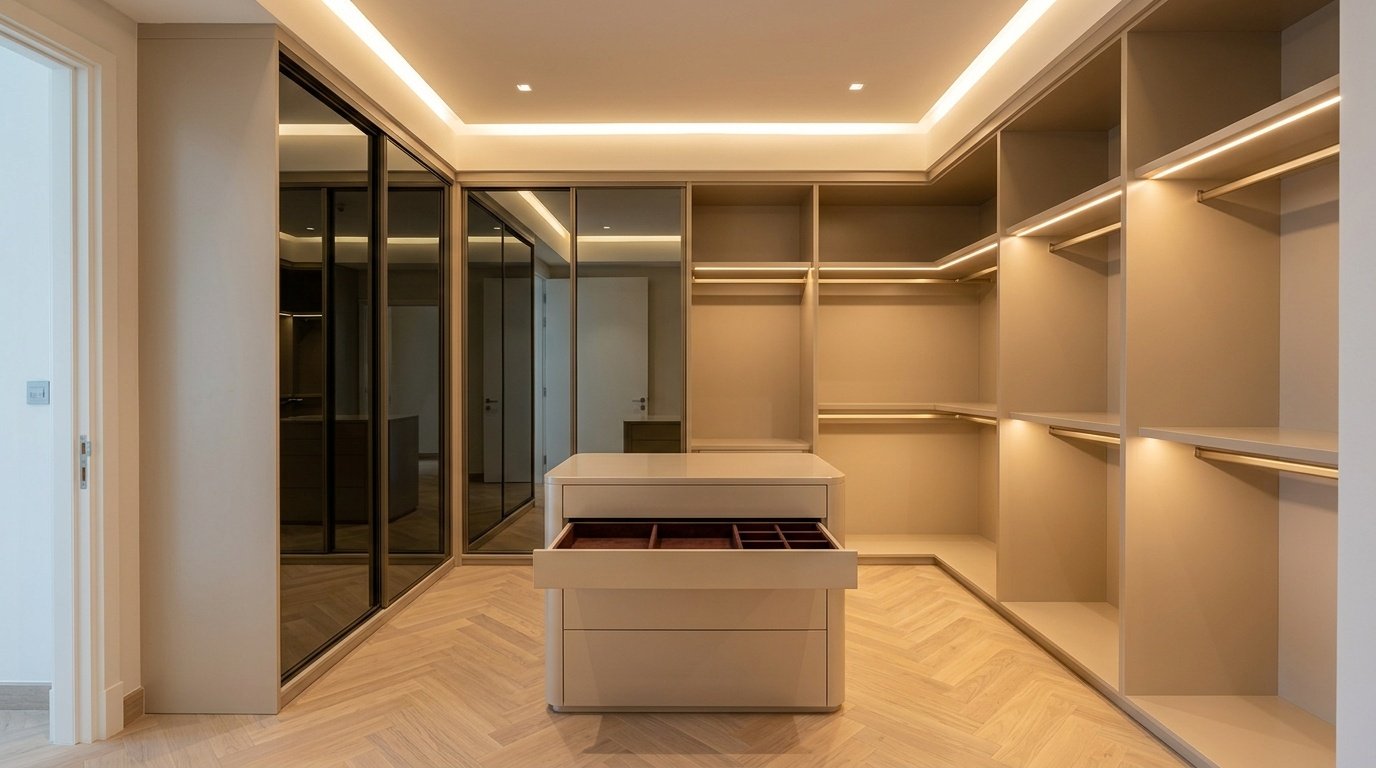
Residential Walk-in Wardrobe – Dubai Marina
Custom Furniture Questions - Expert Answers
Timeline depends primarily on project complexity and current workshop schedule, but most residential furniture projects complete within 6-10 weeks from design approval to installation. This includes design development where we refine concepts based on your feedback, typically taking 2-3 weeks for straightforward projects or 3-4 weeks for complex designs requiring multiple revision cycles. Material procurement adds 1-2 weeks depending on whether we stock items or need special orders. Fabrication consumes the majority of timeline, ranging from 2-3 weeks for simple pieces like dining tables to 5-6 weeks for comprehensive wardrobes or complex built-ins. Finishing requires 1-2 weeks including curing time, and installation usually completes in 1-2 days.
Commercial projects typically require longer timelines due to larger scale, coordination requirements, and regulatory approval processes. A small retail display might complete in 8 weeks while comprehensive restaurant fit-outs or corporate office furniture packages can require 12-16 weeks. We provide detailed schedules during quotation stage showing each milestone, allowing you to plan accordingly. Rush projects sometimes accommodate shorter timelines depending on workshop capacity, though we generally recommend against compressed schedules because quality work requires appropriate time for each stage.
We've learned that clients value realistic timelines met consistently over optimistic promises requiring constant revision. We build modest buffer into our schedules accounting for the unexpected issues that occasionally arise—material defects discovered during fabrication, finish irregularities requiring correction, technical challenges solved through modified approach. This planning means we typically deliver on promised dates rather than explaining delays.
Custom furniture investment varies enormously based on materials, complexity, size, and finish quality, making blanket comparisons with retail furniture somewhat meaningless. However, as general guidance, expect custom pieces to cost 40-80% more than premium retail equivalents initially, while delivering value that exceeds the price premium through longevity, perfect fit, and satisfaction.
A custom dining table might cost AED 15,000-35,000 depending on size, wood species, base complexity, and finish system, compared to AED 8,000-18,000 for premium retail alternatives. Custom wardrobes typically run AED 12,000-25,000 per linear meter of wall coverage depending on internal configuration, finish, and hardware quality, while retail systems might cost AED 6,000-12,000 per meter. Executive desks range from AED 8,000-20,000 for custom work versus AED 4,000-10,000 retail. These price differences reflect solid construction versus engineered materials, hand-crafted details versus machine production, perfect dimensional fit versus standard sizes, and finishes that improve with age versus those showing wear.
The economics shift dramatically when considering lifecycle costs. Custom furniture lasting 30-40 years costs far less annually than retail pieces requiring replacement every 8-12 years. Factor in the frustration of compromised dimensions, the space inefficiency of imperfect fit, and the aesthetic satisfaction of furniture designed specifically for your preferences, and custom furniture represents genuine value despite higher initial outlay.
We provide detailed quotations itemizing all costs transparently. You'll see exactly what you're paying for materials, fabrication, finishing, and installation, allowing informed decisions about where to invest and where modifications might reduce costs without sacrificing quality meaningfully.
Wood selection for Dubai furniture requires balancing aesthetic preferences with performance in our extreme climate. Species that thrive here share characteristics: dimensional stability through humidity changes, density providing durability, natural resistance to decay and insects, and availability in properly kiln-dried material. Teak represents the gold standard—its natural oils repel water, its density ensures longevity, and its dimensional stability handles humidity swings better than almost any alternative. We've built teak furniture that's performed flawlessly in Dubai for 25+ years.
Walnut offers beautiful chocolate-brown coloring and excellent workability while maintaining good stability in UAE conditions when properly prepared. We specify American walnut kiln-dried to 8-10% moisture content, then acclimate it in our workshop before fabrication. White oak and red oak both perform well here, with white oak's closed grain structure providing slightly better moisture resistance. These species take stain beautifully, allowing color customization while maintaining structural integrity.
Mahogany and sapele provide excellent options for traditional furniture styles, both offering dimensional stability and workability. Cherry works well for lighter-colored furniture, though it darkens significantly over time from UV exposure—beautiful evolution if you expect it, disappointing if you prefer light wood permanently. Maple's hardness makes it ideal for table surfaces receiving heavy use, though its tight grain limits staining options.
We generally avoid species prone to significant movement in humidity changes—certain softwoods, beech, and some tropical species that sound exotic but perform poorly in Gulf conditions. The species matters less than proper drying and acclimation—even ideal species fail if rushed from sawmill to fabrication without stabilization. Our insistence on kiln-dried material at specific moisture content, followed by workshop acclimation, ensures stability regardless of species selected.
Matching existing furniture, whether replicating pieces you own or recreating designs you've seen, forms a significant portion of our work. The process begins with thoroughly documenting what you want replicated—photographs from multiple angles, measurements of all dimensions, samples of existing finish if possible, and detailed discussion about which aspects matter most for successful matching. Perfect replication proves impossible in many cases because wood varies naturally in grain and color, but we can achieve matches close enough that only experts notice differences.
Style matching spans design periods and aesthetic approaches. We've created traditional Arabic furniture incorporating mashrabiya details and geometric patterns, contemporary minimalist pieces with clean lines and concealed joinery, mid-century modern furniture referencing iconic designers, rustic pieces with distressed finishes and rough-hewn characteristics, and formal traditional furniture appropriate for classical interiors. Our craftsmen understand joinery, proportions, and details that define each style, allowing authentic recreation rather than superficial imitation.
Matching existing furniture in your home creates cohesive environments when adding pieces. Perhaps you've purchased a retail dining table you love but need matching buffet and china cabinet. We can analyze the table's construction, finish, and design language, then create complementary pieces that feel like a coordinated collection. Perfect matching proves challenging when we're working from closed-source designs, but creating harmonious additions that clearly belong together remains very achievable.
Inspiration from magazines, Pinterest, or Instagram gets translated into custom reality regularly. Bring us images of furniture you admire and we'll develop similar pieces adapted for your specific requirements and space. We're happy to acknowledge when designs you've shown us exceed our capabilities or when licensing issues prevent replicating protected designs, steering you toward achievable alternatives that capture what attracted you to the original inspiration.
We provide comprehensive warranties covering materials and workmanship for three years from installation, with structural components warranted for five years. This warranty commits us to correcting any defects arising from faulty materials or craftsmanship errors at our expense, including return to workshop if necessary for proper correction. Warrantied issues include joint failures, finish defects like bubbling or peeling, hardware malfunctions from manufacturing defects, and structural problems like warping or splitting from improper construction.
The warranty excludes damage from misuse, accidents, unauthorized modifications, or normal wear consistent with furniture's age and use intensity. A finish showing wear patterns from ten years of daily use represents normal aging, not warrantable defect. Scratches from moving furniture carelessly, water damage from spills left to soak, or structural damage from overloading beyond reasonable capacity don't qualify for warranty coverage. We assess warranty claims fairly, distinguishing between construction failures we'll correct versus damage beyond our control.
Beyond formal warranty period, we maintain lifelong relationships with clients and furniture we've built. Call us in year twelve with questions about refinishing and we'll provide guidance willingly. Need modifications as requirements change? We'll discuss options and pricing. This ongoing support reflects our commitment to furniture lasting decades, not just surviving warranty period before becoming your problem.
Documentation of your furniture's specifications and finish system remain in our records indefinitely, enabling us to match materials and methods decades later if you need repairs or additions. This institutional memory proves valuable when you want to expand custom wardrobes built 15 years ago or refinish the dining table we created in 2010.
Budget conversations happen early in our process because understanding investment parameters guides design recommendations toward realistic solutions. We work with clients across enormous budget ranges—from modest projects totaling AED 8,000 to comprehensive villa furniture packages exceeding AED 500,000. The question isn't whether your budget suffices, but rather what represents optimal value within your specific constraints.
When budgets prove tight relative to initial visions, we discuss prioritization and phasing. Perhaps you envision comprehensive bedroom furniture but budget permits only the wardrobe system currently. We can design a complete vision, build the wardrobe now, and fabricate nightstands and dresser later when budget allows, ensuring eventual pieces coordinate perfectly. This phased approach spreads investment over time while ensuring cohesive results.
Material substitutions offer cost management without abandoning custom furniture benefits. Maybe white oak delivers 85% of walnut's aesthetic appeal at 60% of the cost. Perhaps painted finishes eliminate wood selection as cost driver while creating exactly the appearance you want. We present options transparently, explaining tradeoffs so you make informed decisions about where to invest and where alternatives provide acceptable results.
Simplified designs reduce fabrication time while maintaining quality construction. Straightforward drawer fronts cost less than detailed panel designs. Simple door styles reduce material and labor versus complicated frame-and-panel construction. We never recommend simplifications that compromise structural integrity or longevity, but aesthetic simplicity often costs less while looking equally beautiful in contemporary interiors.
What we won't do is reduce material quality or construction standards to hit price targets. Using inferior hardware that binds within two years or finishes that deteriorate quickly doesn't serve anyone's interests. If genuinely custom furniture exceeds your budget, we'll say so directly rather than compromising quality to close sales. Sometimes retail furniture makes more sense than custom work done poorly.
Design changes during fabrication require careful handling because work already completed creates constraints on what modifications remain feasible without starting over. We accommodate reasonable changes but need clear communication about implications for timeline and cost. The earlier changes happen in fabrication process, the easier implementation becomes and the lower the cost impact.
Changes during design development stage, before fabrication begins, typically incur no additional costs beyond any premium materials or additional design time for complex modifications. Once we've purchased materials, changes requiring different wood species or dimensions waste already-purchased material, creating costs we pass through at our cost without markup. After fabrication begins, changes become progressively more expensive and time-consuming depending on how far construction has progressed.
We document all design approvals in writing specifically to prevent misunderstandings about what we agreed to build. If you believe we're fabricating something different than you approved, tell us immediately so we can review documentation and correct any miscommunication before proceeding further. Waiting until installation to mention that drawer configuration doesn't match expectations creates problems that could have been avoided through earlier intervention.
Some clients struggle making final decisions and request multiple changes as fabrication proceeds. We accommodate this when possible but explain clearly that indecision creates costs in wasted materials, reworked components, and timeline extensions. After the second significant change, we typically require additional design approval in writing confirming you've committed to revised specifications before proceeding further.
Emergency changes occasionally happen—perhaps your home's electrical work revealed limitations requiring modification to planned furniture, or structural issues discovered during construction require design adjustments. We handle these pragmatically, working with you and other contractors to develop solutions that maintain project success despite unexpected complications.
Maintenance requirements depend entirely on finish systems and materials selected during design, ranging from minimal attention for properly finished pieces to periodic maintenance for specific finish types. We provide detailed care instructions specific to your furniture during installation, covering routine cleaning, periodic maintenance, and practices to avoid.
Oil-finished furniture requires the most active maintenance but rewards this attention with ability to renew appearance indefinitely. Plan on cleaning with slightly damp cloth for routine maintenance, avoiding soaking that raises grain. Every 6-12 months depending on use intensity, apply fresh oil coat following product-specific instructions—typically involving thin application, allowing penetration for specified time, then wiping excess. This periodic refreshing maintains protection and appearance while allowing you to address minor scratches by light sanding and re-oiling affected areas.
Lacquer and varnish finishes require minimal maintenance beyond routine cleaning with appropriate products. Use cleaners formulated for finished wood, avoiding silicone-based products that create buildup requiring professional removal. Dust regularly with soft cloths, clean spills promptly before they penetrate finish, and use coasters, placemats, or pads protecting surfaces from heat, moisture, and scratching. These finishes don't require reapplication like oils, but eventually show wear from years of use and might need professional refinishing after 10-15 years depending on use intensity.
Hardware maintenance involves periodic tightening of screws that can loosen from wood movement and normal use vibration. Every six months, check drawer slides, hinges, and handles, tightening any that have loosened. This five-minute task prevents the accelerated wear that occurs when hardware operates while loose. Soft-close mechanisms typically require no maintenance but might need adjustment if they stop functioning properly.
Wood furniture benefits from controlled interior environments. Maintaining relatively stable humidity and temperature reduces stress on materials and joinery. While Dubai's climate creates challenges, modern HVAC systems usually maintain conditions within acceptable ranges. Extreme changes—like turning off air conditioning for extended periods then resuming cooling—create expansion and contraction cycles stressing furniture unnecessarily.
We provide refinishing services when furniture shows wear after years of service. Many clients bring pieces back after 8-12 years for complete refinishing, restoring them to better-than-new condition. This lifecycle maintenance approach means quality custom furniture improves with age rather than deteriorating toward replacement.
High-quality custom furniture, particularly built-in pieces, absolutely increases property values in UAE real estate markets where buyers pay premiums for turnkey properties requiring no immediate renovation or furnishing. The impact varies based on furniture type, quality, and how well it suits the property, but we've seen custom work add 5-12% to sale values for properties where furniture represented significant value and design coherence.
Built-in furniture creates the strongest value impact because it transfers with the property and becomes integral to the home's functionality and appeal. Custom wardrobes, kitchen islands, entertainment centers, home office built-ins, and library systems all attract buyers who recognize these elements would cost significantly more to install than they add to purchase price. A comprehensive custom wardrobe system that would cost AED 75,000 to replicate might add AED 50,000-60,000 to sale value—substantial return despite not fully recovering installation cost.
Quality matters enormously for value impact. Poorly executed custom work or furniture styled inappropriately for the property can actually reduce values by creating expensive removal and replacement obligations for buyers. Beautiful custom work using premium materials and professional craftsmanship creates opposite effect, becoming selling features that distinguish your property from comparable listings.
Real estate agents report that custom furniture helps properties sell faster even when values don't increase dramatically. Buyers viewing multiple similar properties remember the one with the spectacular library or perfectly organized master closet. This mental distinction translates to offers coming in more quickly and sometimes at asking price rather than requiring negotiation.
We've worked with several property developers installing custom furniture in show units and select inventory units. They report that furnished units command 8-15% premiums and sell significantly faster than unfurnished alternatives. While your situation differs from new development sales, the principle holds—quality custom furniture distinguishes properties in competitive markets.
For rental properties, custom furniture increases achievable rents and attracts higher-quality tenants who value quality finishes and appreciate not needing to furnish themselves. Landlords report that fully furnished properties with custom elements rent for 15-25% premiums compared to unfurnished alternatives while maintaining higher occupancy rates and attracting tenants who care for properties better.
Commercial furniture projects differ from residential work in several fundamental ways affecting design, materials, construction, and installation approach. While craftsmanship standards remain identical, the requirements and constraints create different decision frameworks and priorities.
Durability expectations for commercial furniture far exceed residential standards because use intensity differs dramatically. A restaurant chair might seat eight different people daily—2,800 seating events annually compared to perhaps 300 for residential dining chairs. Office furniture operates 8-10 hours daily versus 2-4 hours for home office pieces. We specify heavier-duty hardware, engineer joints with greater strength reserves, select materials resisting wear better, and apply finish systems surviving commercial cleaning protocols.
Regulatory compliance requirements affect commercial projects extensively. Dubai Civil Defense fire safety codes specify approved materials for certain applications. Dubai Municipality standards govern restaurant furniture materials and construction. Free zone authorities enforce specific requirements for their jurisdictions. We navigate these regulations routinely, understanding which authorities govern your specific location and project type, what documentation they require, and how to expedite approvals through established relationships with regulatory officials.
Budget considerations operate differently in commercial contexts. Residential clients might agonize over AED 5,000 cost differences while commercial clients focus on total investment relative to revenue impact and accounting treatment. Commercial furniture often gets capitalized and depreciated, making upfront cost less important than lifecycle value. We help commercial clients understand these economics, presenting options that optimize total cost of ownership rather than just minimizing initial investment.
Timeline pressures intensify for commercial projects. Opening delays cost revenue daily, creating pressure for compressed schedules. We accommodate these realities when possible but maintain quality standards regardless of schedule pressure. Rush fees apply for expedited work because overtime and priority scheduling impose real costs we need to recover.
Installation coordination becomes more complex in commercial environments. We might need to work overnight or weekends avoiding business disruption, coordinate with multiple other contractors also working on fit-outs, navigate building management requirements for construction access and freight elevator scheduling, and complete work within tight windows before grand opening events.
Maintenance planning gets incorporated into commercial furniture design from the start. We discuss who will maintain furniture, their skill level, available tools and time, and typical maintenance cycles. This influences design decisions—perhaps simpler hardware requiring less adjustment, finishes surviving specific cleaning products, or modular construction allowing component replacement without skilled carpentry.
Reclaimed wood furniture represents a significant and growing portion of our work, valued both for environmental responsibility and the unique character aged materials provide. We source reclaimed materials from various places—demolished UAE buildings providing local heritage connection, dhow breaking yards in Sharjah offering teak with maritime history, salvage operations throughout the region, and international sources for specific species unavailable locally.
Reclaimed material requires extensive preparation before becoming usable furniture components. We examine every piece for hidden metal—nails, screws, bolts embedded in wood that would destroy cutting tools if undetected. Metal detection and careful inspection precede any machining. Wood gets cleaned of accumulated dirt, paint, or finishes that would contaminate our workspace or interfere with new finishing. Checking for rot, insect damage, or structural issues that might compromise furniture integrity happens before committing to using questionable pieces.
Dimensional preparation often proves more complex than processing new lumber because reclaimed materials arrive in random sizes with irregular surfaces, requiring more waste to achieve usable dimensions. A 100-year-old beam might yield 60% usable material after removing deteriorated surfaces, splits, and defects, versus 85% yields from new lumber. We account for this waste in material costs, explaining why reclaimed wood furniture sometimes costs more than pieces from new premium hardwoods.
Character and imperfections define reclaimed wood's appeal but require client understanding about what's expected versus defective. Nail holes, age checking, color variation, and evidence of previous use create the story and patina clients value in reclaimed furniture. However, we ensure structural components meet full strength requirements regardless of character features. A dining table showing 100 years of history still needs engineering ensuring it lasts another 100 years.
Design approach for reclaimed material differs from working with new lumber. We design around available dimensions rather than assuming any size we need exists somewhere. If reclaimed beams measure 200mm x 300mm, we create furniture suited to these proportions rather than forcing designs requiring different dimensions. This constraint-based design often produces more interesting results than unconstrained approaches, though it requires flexibility from clients willing to embrace what materials offer rather than imposing predetermined visions.
Environmental benefits of reclaimed furniture extend beyond the obvious carbon embodiment in already-manufactured materials. Using reclaimed wood reduces landfill waste, preserves old-growth forests by reducing demand for new lumber, and creates furniture with genuine sustainability story rather than just meeting certification requirements. For commercial clients pursuing LEED certification or similar sustainability goals, reclaimed furniture contributes toward credits while creating distinctive interiors impossible with new materials.
Perfect dimensional fit requires meticulous measurement, careful templating, and understanding that buildings deviate from theoretical perfection in ways requiring accommodation during fabrication. Our measurement process exceeds what clients expect, documenting far more than obvious dimensions because details matter for fit quality.
Initial measurements during consultation capture overall space dimensions—wall lengths, ceiling heights, alcove depths. We measure at multiple points because walls rarely run perfectly plumb or parallel. A room might measure 3.75 meters on one side and 3.78 meters on the opposite wall three meters away. Floor-to-ceiling heights often vary 10-15mm across a single room due to floor or ceiling irregularities. We document these variations rather than assuming perfection.
For built-in furniture, we return for final templating after committing to projects but before beginning fabrication. This visit happens after any construction work completes—painting finished, flooring installed, trim work completed—because we need to measure the actual final conditions where furniture will install, not theoretical dimensions from drawings or mid-construction states. We create cardboard or MDF templates for complex shapes, capturing irregular walls or obstacles exactly rather than relying solely on measurements.
Fabrication accounts for documented irregularities. If a wall runs out of plumb by 12mm over 2.4 meters, we build furniture matching this angle rather than square construction that would create gaps. If ceiling height varies, we design pieces accommodating the variation—perhaps tapering tops to match sloped ceilings or creating reveals that hide irregular junctions. This customization to actual conditions differentiates custom work from retail furniture assuming perfectly square, level, and plumb conditions rarely found in real buildings.
Installation includes final adjustments accounting for conditions we couldn't fully anticipate. Shims level furniture on irregular floors. Scribing matches pieces to wall irregularities. Trim pieces cover gaps where theoretical designs meet physical reality. Our installers carry tools and materials needed for these adjustments, completing them during installation rather than discovering problems requiring return visits for correction.
Despite this meticulous process, we maintain realistic expectations about "perfect" fit. Wood moves seasonally and over time. Buildings settle. Climate control systems create humidity variations. A gap-free installation in January might show 2-3mm gaps by July in some locations. We design accounting for expected movement, positioning gaps where they'll be least visible or covering them with trim allowing seasonal expansion and contraction without creating stress.
Client satisfaction represents our primary success measure, and we address dissatisfaction seriously while distinguishing between legitimate issues requiring correction and subjective preference changes after approving specific designs. The process for handling concerns depends on the nature and timing of dissatisfaction.
During installation, speak up immediately if something doesn't match expectations. We can often address concerns on-site through adjustments, repositioning, or modifications. This immediate feedback lets us solve problems while our team is present with tools and materials rather than requiring return visits. Most installation-phase concerns involve minor issues—hardware needing adjustment, drawer spacing requiring modification, or positioning changes improving function.
After installation, contact us promptly if problems arise. We respond to all service requests within 24-48 hours and schedule visits to assess concerns. For issues clearly arising from our errors—incorrect dimensions, finish defects, hardware malfunctions, or construction failures—we correct problems at our expense, including returning furniture to our workshop if necessary for proper correction. We commit to making things right when we've made mistakes.
Subjective dissatisfaction with appearance after approving specific designs creates more complex situations. If you approved walnut with natural oil finish and now wish you'd chosen darker stain, we can discuss refinishing options but this becomes a paid service rather than warranty work. We minimize these situations through thorough design development with samples and visualizations helping you understand what you're approving before fabrication begins.
We've never had situations requiring complete furniture rejection, partly because our thorough approval process catches issues before fabrication and partly because our construction quality consistently meets or exceeds specifications. However, if fundamental problems arose making furniture genuinely unusable for intended purpose due to our failures, we would rebuild pieces correctly at our expense. Our reputation matters far more than any single project's profit margin.
Documentation of your original requirements, approved designs, and installation photos protects both parties should disputes arise. We can reference exactly what you approved versus what we delivered, facilitating objective assessment of whether concerns reflect legitimate problems or changed preferences. This transparency maintains trust even when addressing difficult conversations.
The best outcome—which happens with over 95% of projects—involves clients thrilled with results and telling friends about their experience. We work hard to achieve this outcome through excellent communication, thorough planning, meticulous execution, and genuine commitment to your satisfaction.
While we're not interior designers ourselves, we collaborate extensively with design professionals and provide design-assist services helping clients develop furniture concepts that work with their overall interior visions. This hybrid approach gives you access to furniture-specific expertise while recognizing that comprehensive interior design requires skills beyond furniture fabrication.
For clients working with interior designers, we function as the implementation partner bringing furniture designs to physical reality. Designers provide conceptual direction, material selections, and aesthetic vision while we contribute technical expertise about what's feasible, how to engineer designs for UAE conditions, and how to detail furniture for proper construction. This collaboration produces better results than designers working alone without fabrication input or fabricators working without design direction.
We frequently assist clients who need furniture design services but aren't engaging comprehensive interior design. For these projects, we provide design development focused specifically on furniture while respecting the broader interior aesthetic you've established. We can work from inspiration images you've collected, match existing furniture styles, or develop designs from scratch based on your preferences. This service provides furniture design expertise without the cost of full interior design engagement.
Material and finish selection assistance forms a significant portion of our design-assist services. We guide you through wood species options, stain colors, hardware styles, and finish systems, explaining how each choice affects appearance, maintenance, and longevity. We provide samples allowing you to see and touch materials rather than choosing from photographs. This tactile engagement helps you make confident selections matching your vision.
Space planning for furniture arrangements isn't technically interior design but benefits from our experience seeing how furniture functions in various room configurations. We can advise on optimal furniture sizes for your space, suggest arrangements maximizing flow and function, and flag potential problems with proposed layouts before fabrication begins. This input prevents the disappointment of beautiful furniture that doesn't work well in your specific space.
Contractor coordination happens naturally when we work with other trades on comprehensive renovations or fit-outs. We attend site meetings, coordinate with painters about finish schedules, discuss with electricians about power placement for furniture integration, and collaborate with other specialists ensuring your project proceeds smoothly. This coordination benefits you by reducing the management burden of juggling multiple contractors who may or may not communicate effectively without intervention.
For clients wanting comprehensive design services, we maintain referral relationships with talented interior designers whose work we respect and who understand our capabilities. We're happy to recommend designers appropriate for your project scope and style preferences, facilitating introductions that can lead to successful collaborations.
Custom Furniture Coverage Throughout UAE
Our custom furniture teams serve all seven emirates with the same expertise and quality standards. Consultation visits happen throughout UAE at no additional charge for projects exceeding minimum thresholds, and our installation teams travel regularly to every emirate. Response times for service calls typically range from same-day for Dubai clients to within 48 hours for northern emirates depending on issue urgency and schedule availability.
Dubai: We complete custom furniture projects across Business Bay, DIFC, Dubai Marina, JBR, Downtown Dubai, Palm Jumeirah, Emirates Hills, Arabian Ranches, The Springs, The Meadows, Jumeirah 1-3, Jumeirah Islands, Mirdif, Dubai Silicon Oasis, International City, and all other communities. Our Dubai workshop location provides quick access throughout the emirate, with installation teams typically arriving within scheduled windows. Commercial projects span Dubai Mall, Mall of the Emirates, City Walk, Dubai Design District, Dubai International Financial Centre, Media City, Internet City, Knowledge Park, and industrial areas throughout Jebel Ali and Al Quoz.
Abu Dhabi: Regular projects in Khalifa City, Al Reef, Saadiyat Island, Yas Island, Al Raha Beach, Marina Village, Corniche area, Tourist Club, Khalidiya, and throughout the capital’s residential communities. Commercial work includes Yas Mall, Marina Mall, The Galleria, Abu Dhabi Mall, corporate offices in downtown Abu Dhabi, hotels on Corniche and Saadiyat, and government facilities across the emirate. We typically schedule Abu Dhabi installations on specific days each week to maximize efficiency while ensuring availability.
Sharjah, Ajman, RAK, Fujairah, UAQ: Comprehensive coverage throughout northern emirates for both residential and commercial projects. Common locations include Sharjah Corniche, Al Nahda, University City, Al Khan, Ajman Corniche, RAK City, RAK Marina, Fujairah Corniche, and UAQ Marine Club. Installation scheduling coordinates multiple projects when possible to optimize travel, though urgent service requests receive priority regardless of location.
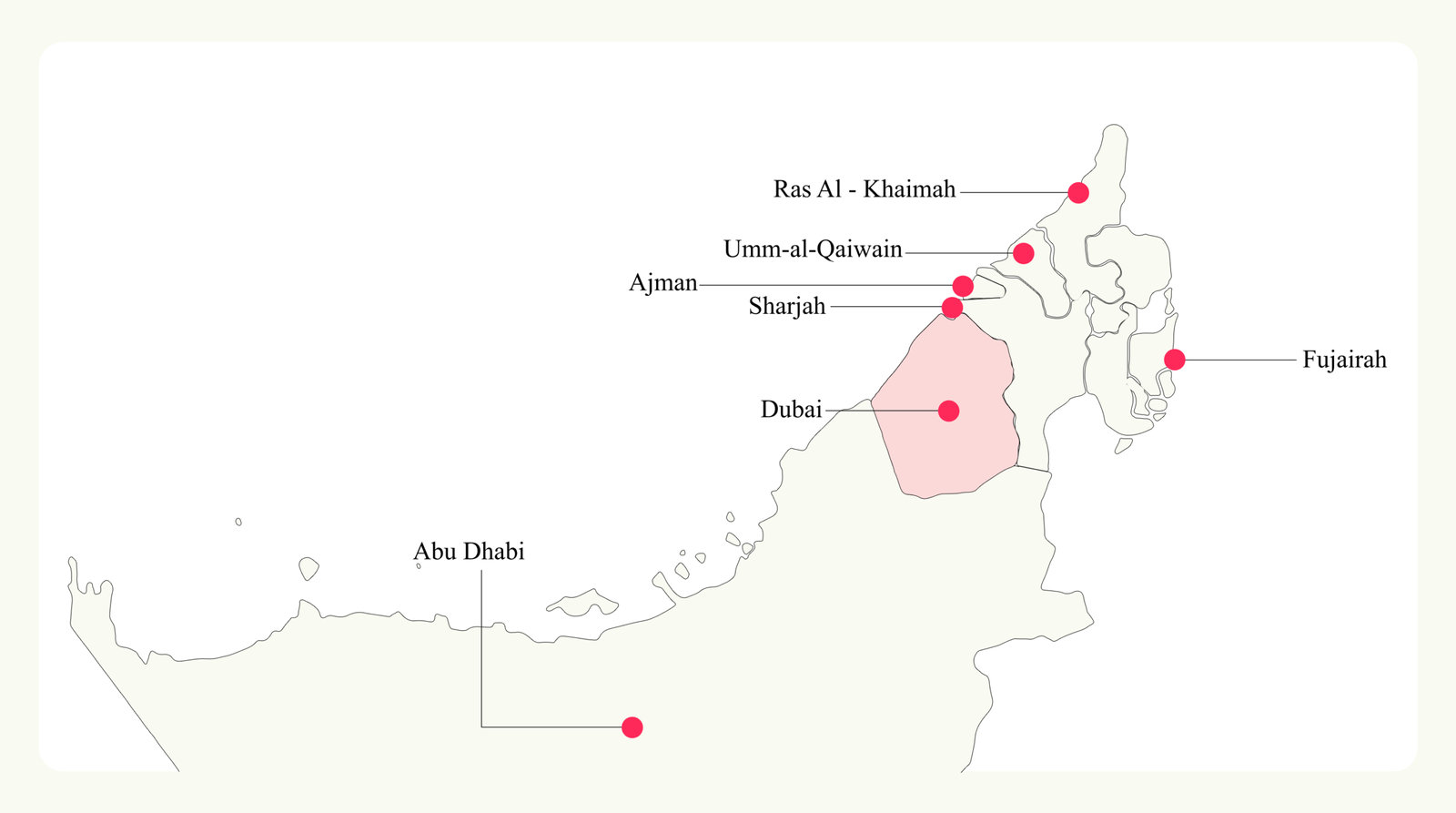
Start Your Custom Furniture Project
Transforming your space with furniture built specifically for your requirements begins with a simple conversation about what you envision and how we can make it reality. Our free consultation provides opportunity to explore possibilities without obligation, discuss feasibility and budgets, and determine whether custom furniture makes sense for your situation. We bring 35 years of expertise to every conversation, whether you’re furnishing a single room or creating comprehensive solutions for villa or commercial space.
IF YOU HAVE ANY QUESTION? WE ARE GLAD TO
CONSULT YOU AS SOON AS POSSIBLE
Get Started
Immediate assistance from our team regarding your project details.
Form Submitted!
Thank you for contacting us. Our team will get back to you within 24 to 48 hours regarding your query.
Contact us on WhatsApp for Quick Response