Transform Your Dining Space with Custom Dining Tables Crafted in Dubai
For over three decades, we’ve built dining tables where UAE families gather, celebrate, and create memories—each one designed specifically for your space, your style, and your life.
Every custom dining table we build at Karnak begins with a simple question: how do you want to live around this table? Since 1988, we’ve crafted over 2,400 dining tables across Dubai, Abu Dhabi, and the Northern Emirates, and we’ve learned that the best tables aren’t just furniture—they’re the center of your home where life actually happens.
The UAE climate demands specific expertise when building dining tables. Summer humidity reaching 90% will warp improperly prepared timber within months. Direct sunlight through floor-to-ceiling villa windows degrades certain finishes. Sand-laden air requires particular joinery techniques to maintain structural integrity. We’ve spent 35 years solving these exact problems in over 10,000 UAE projects, which means your dining table will perform beautifully for decades, not just look good in the showroom.
Our workshop in Dubai employs seventeen master craftsmen, several who’ve been with us for over twenty years. We source materials from sustainable suppliers across four continents, maintain climate-controlled storage specifically for UAE conditions, and complete every project—from initial design sketches to final installation—right here in the Emirates where we understand your exact requirements.
Understanding Custom Dining Table Design for UAE Homes
Creating a dining table that works perfectly in your UAE home requires balancing aesthetics, functionality, climate considerations, and cultural needs. The difference between a beautiful table and one that becomes your home’s centerpiece lies in understanding how these elements interact with your specific space and lifestyle.
Sizing Your Dining Table for UAE Properties
The dimensions of your dining table determine everything from daily comfort to how your entire dining space functions. We start every consultation by measuring your room, but more importantly, by understanding how you actually use the space. A family of four who entertains monthly needs different proportions than a couple hosting weekly gatherings for twelve.
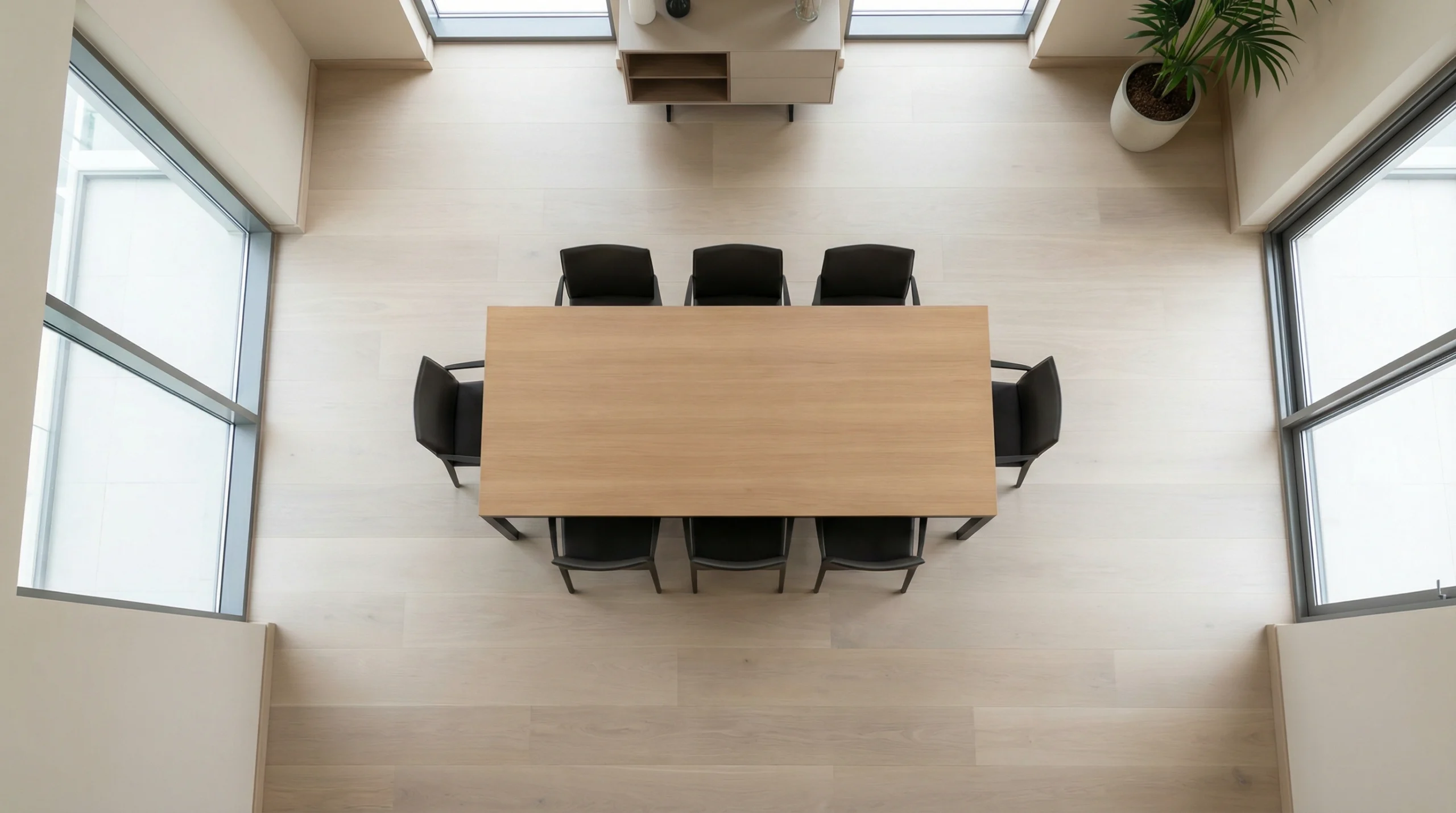
Dubai apartments typically feature dining areas between 3.2 and 4.5 meters in length, while villa dining rooms can span 6 to 10 meters. The standard recommendation of leaving 90 centimeters clearance around the table works in theory, but we’ve found that UAE properties with large windows often need 110 to 120 centimeters on the window side to accommodate curtain stacking and allow natural light flow without bumping chairs. Similarly, if your dining area flows into a majlis or living space—common in Arabian Ranches and Emirates Hills villas—circulation patterns require careful consideration.
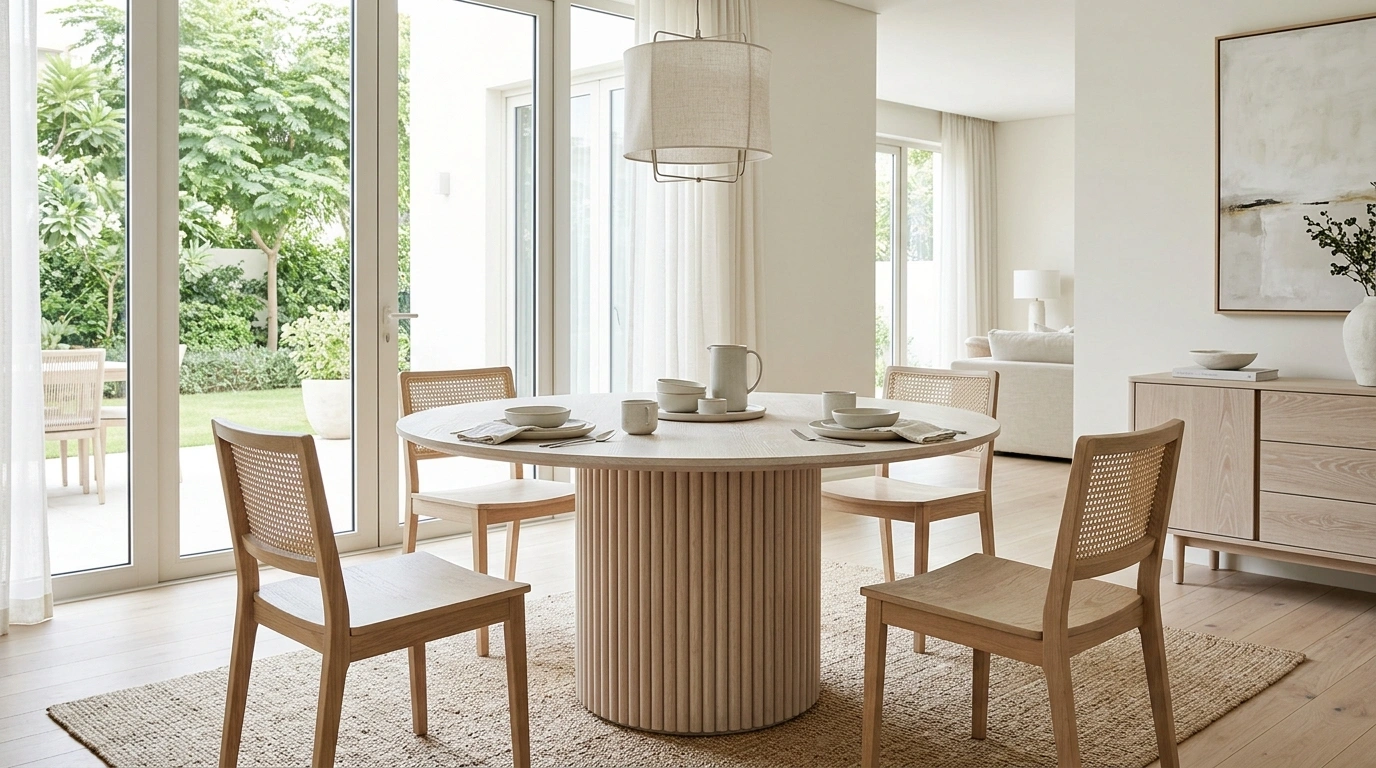
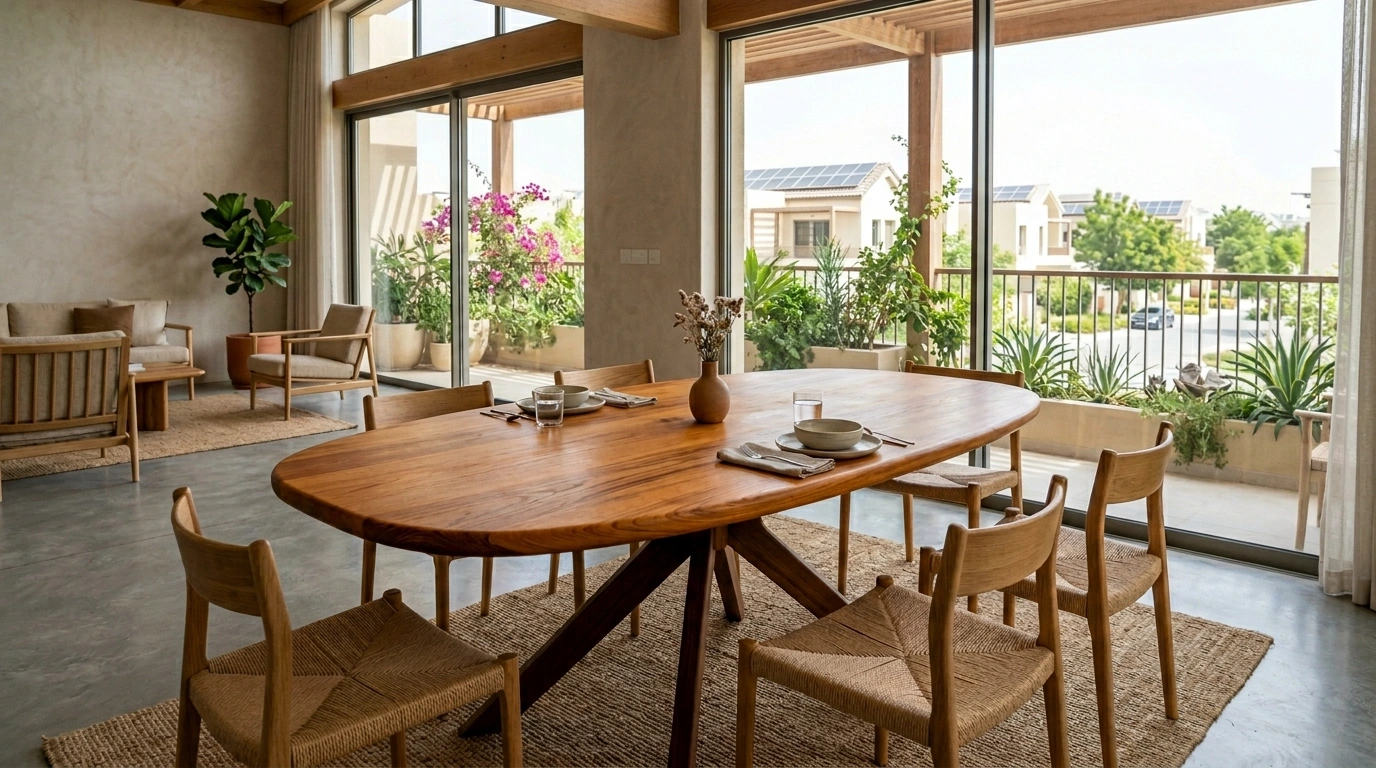
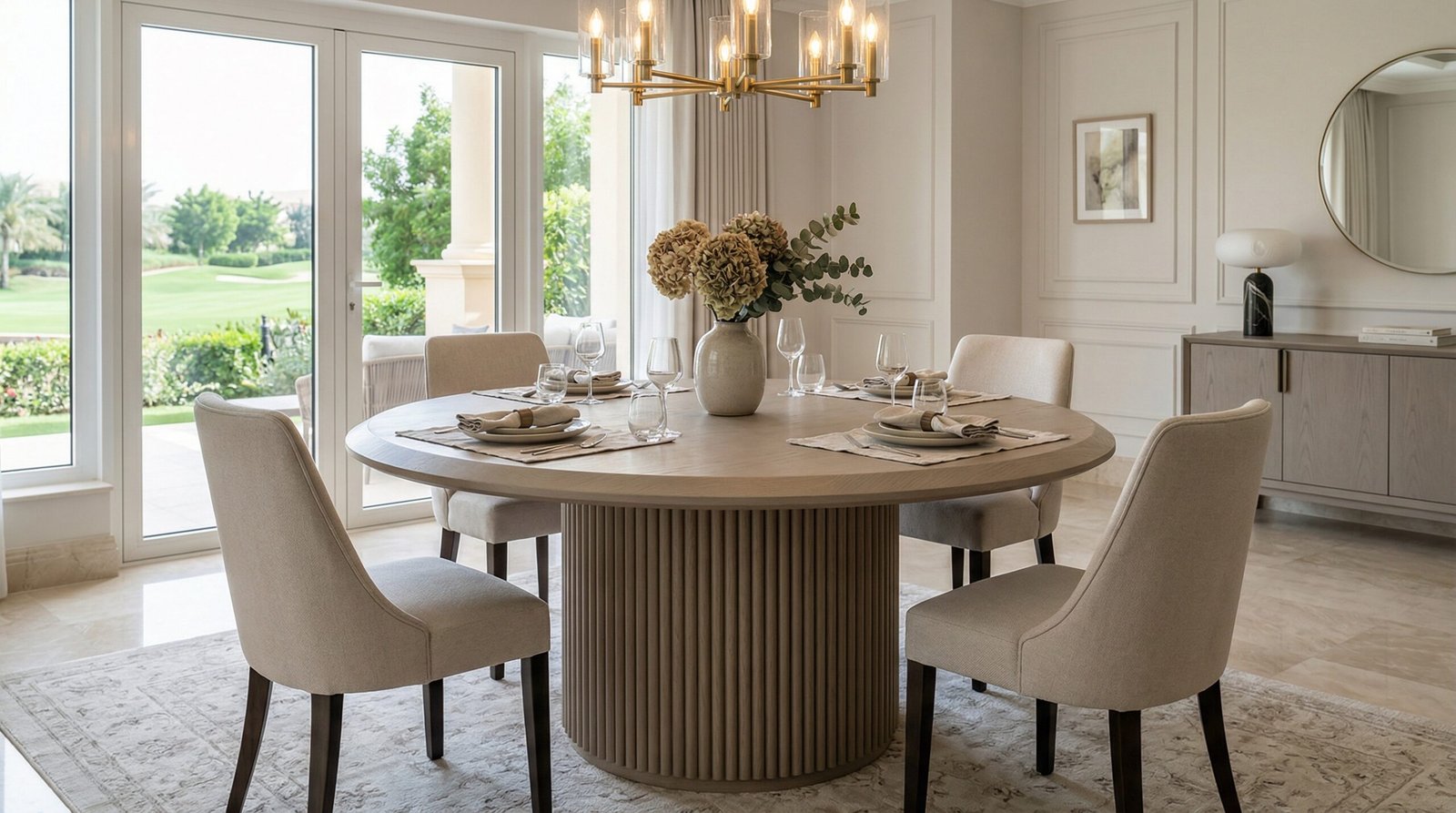
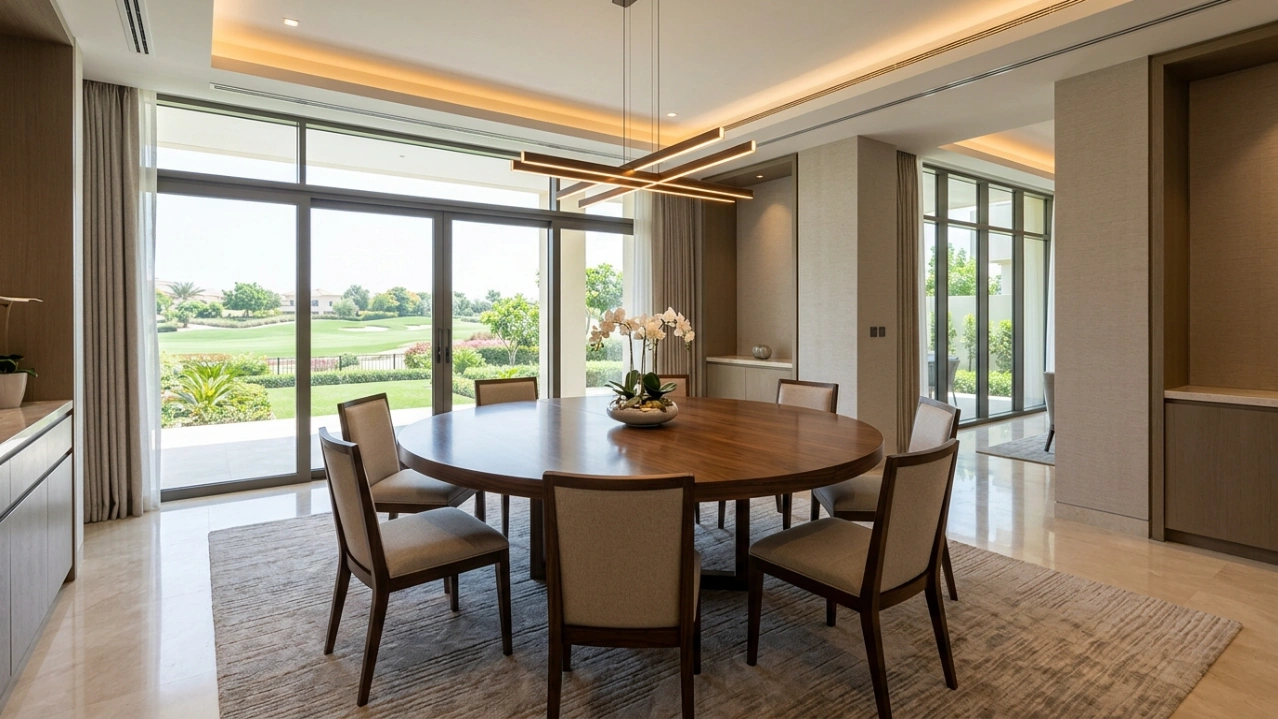
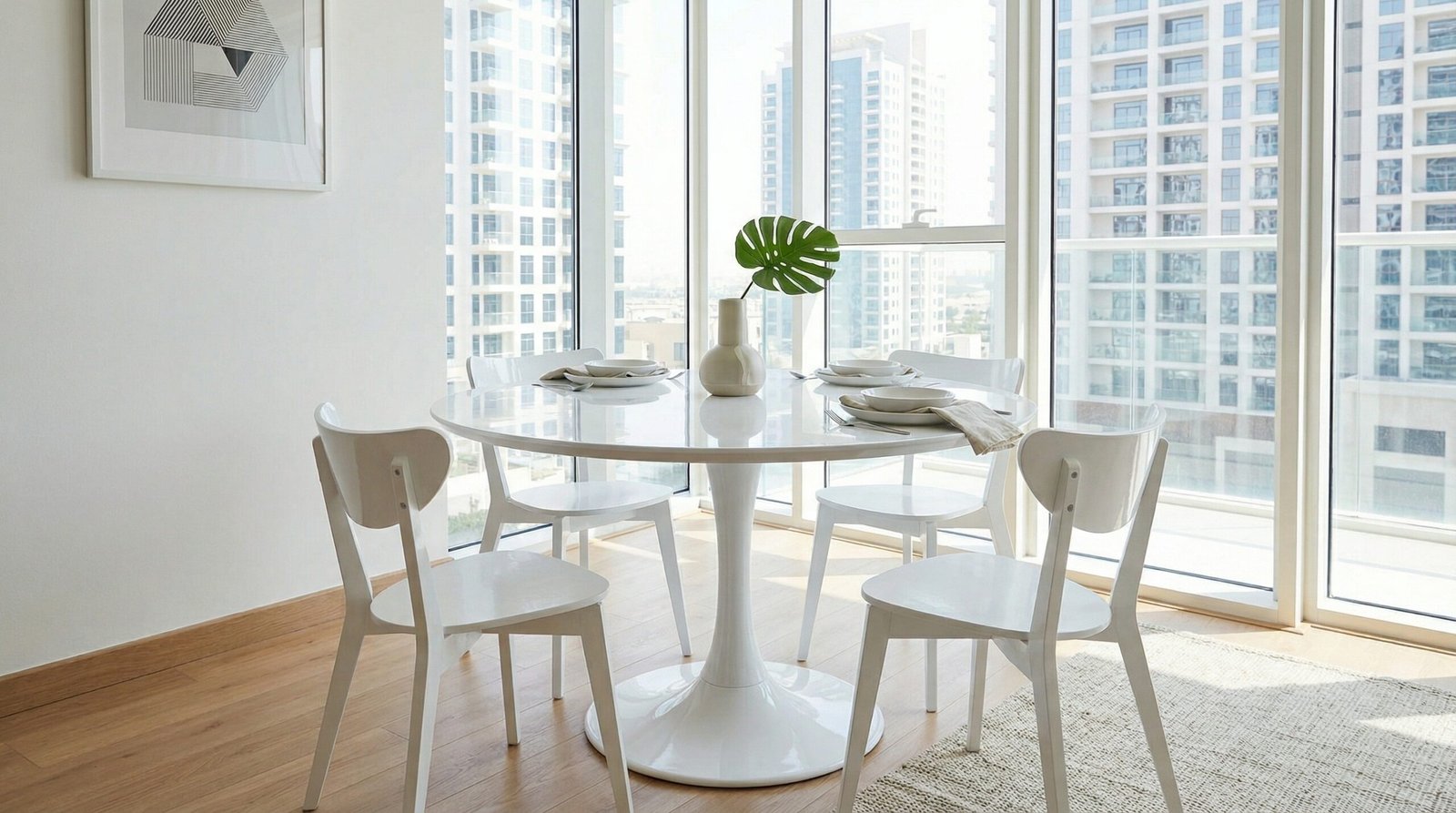
For seating calculations, we allocate 60 centimeters per person as a minimum, though 70 centimeters provides the comfort level most clients prefer. Rectangular tables work efficiently for most spaces, but we’ve designed stunning round tables up to 180 centimeters diameter for homes where conversation and equal seating take priority. Oval tables solve the interesting challenge of combining round table intimacy with rectangular table capacity—particularly effective in the narrow-but-long dining rooms common in Business Bay and DIFC apartments.
Material Selection for Gulf Climate Performance
Wood selection makes the difference between a dining table that lasts two years and one that becomes a family heirloom. The UAE climate isn’t just hot—it’s the dramatic swing from 22°C air-conditioned interiors to 48°C exterior temperatures, combined with humidity fluctuating from 30% to 95%, that destroys poorly chosen materials.
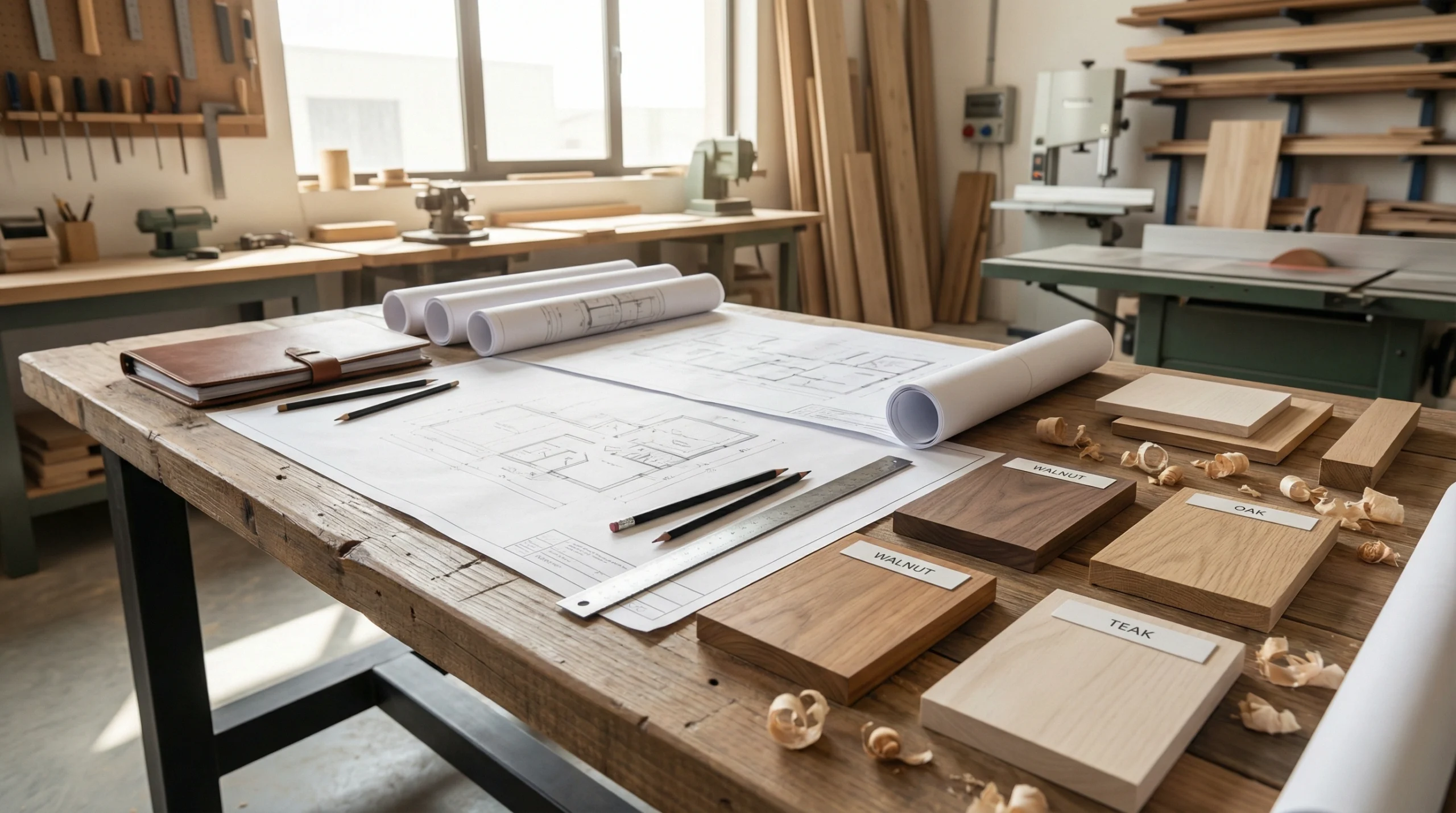
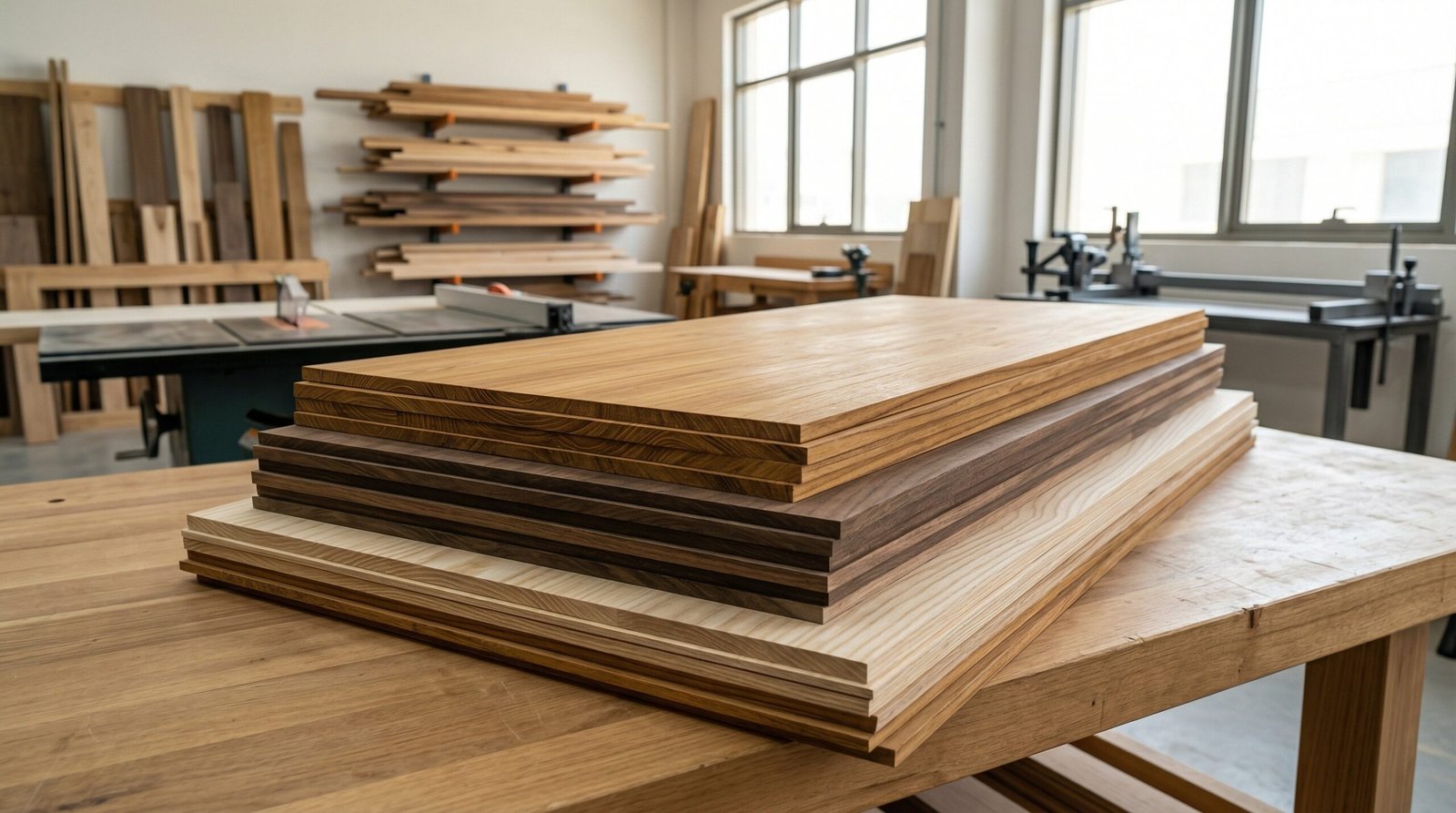
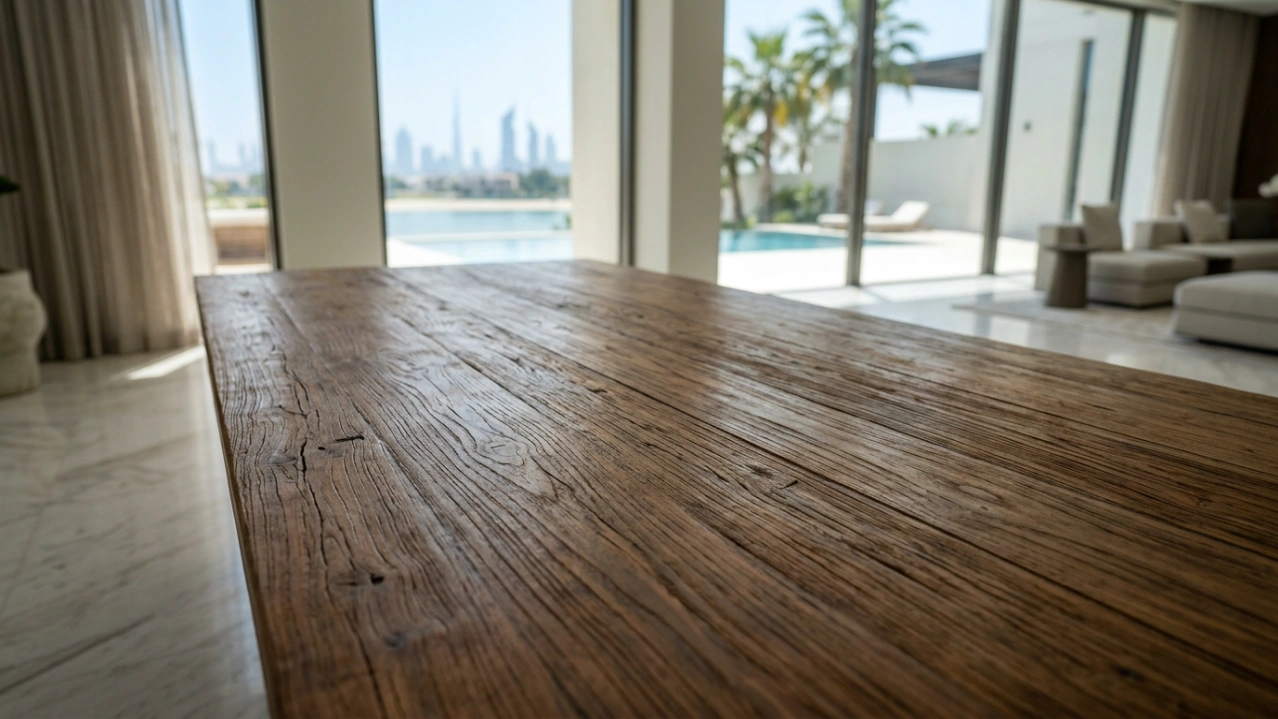
We work primarily with kiln-dried hardwoods that we further acclimatize in our climate-controlled Dubai facility for a minimum of four weeks before fabrication. American walnut, with its dimensional stability and rich chocolate tones, performs exceptionally well here and remains our most requested material for contemporary designs. European oak, quarter-sawn to minimize movement, provides the light tones and pronounced grain that complement modern Scandinavian-inspired interiors popular in newer Dubai developments. For traditional Arabic designs, we source solid teak that’s been naturally aged—its inherent oil content makes it nearly impervious to humidity fluctuations.
Some materials simply don’t work in the Gulf. Maple and birch, beautiful in temperate climates, expand and contract excessively here. We’ve removed and replaced three tables from competitors who used these woods without proper preparation—all developed gaps and joint failures within eighteen months. Similarly, certain veneered constructions using inferior core materials will delaminate in our climate. When we do use engineered materials, which can be appropriate for specific designs, we specify marine-grade substrates with cross-grain construction that physically prevents warping.
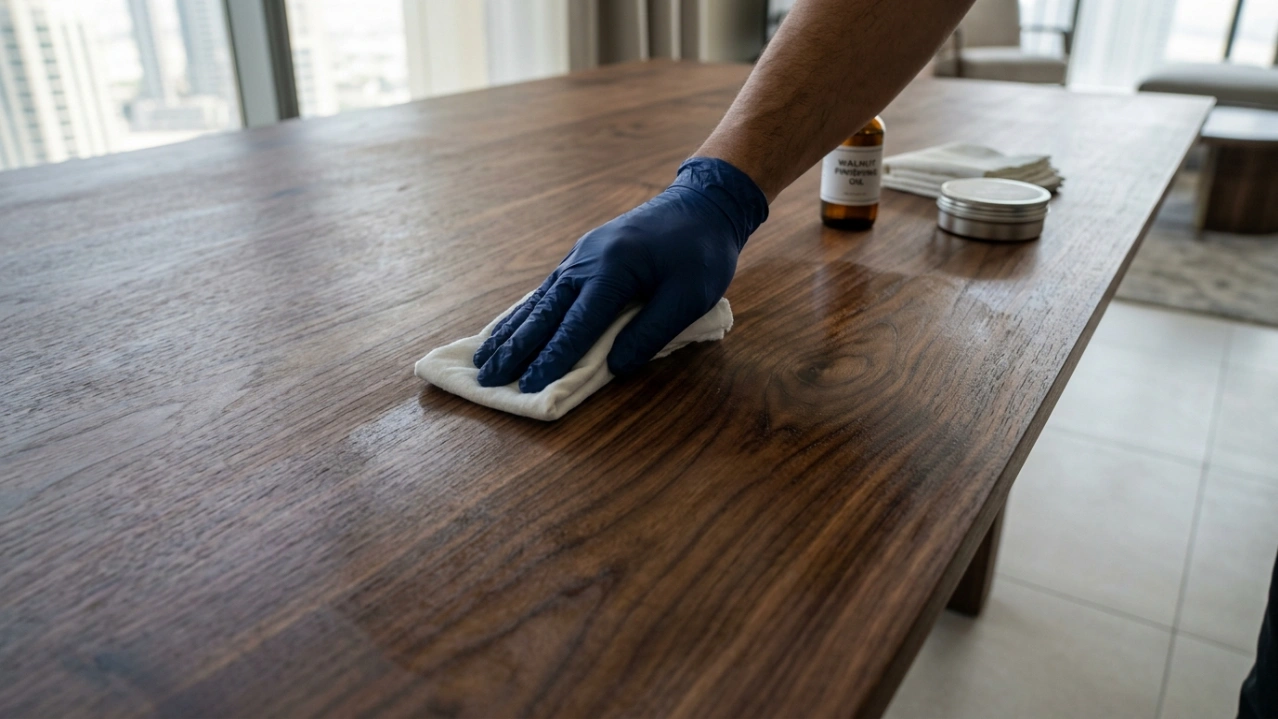
The finish matters as much as the wood itself. Standard polyurethane yellows under UAE sun exposure. We apply conversion varnish systems originally developed for yacht interiors—they provide protection against moisture, heat, and UV damage while maintaining clarity for twenty years or more. For clients wanting natural oil finishes, we use modified formulations with higher solids content and UV inhibitors, though these require annual maintenance that we provide through our care program.
Design Styles that Define UAE Dining Spaces
Your dining table should reflect how you want to live, not just follow current trends. That said, we see distinct style preferences across different UAE communities and property types, shaped by architecture, cultural background, and lifestyle.
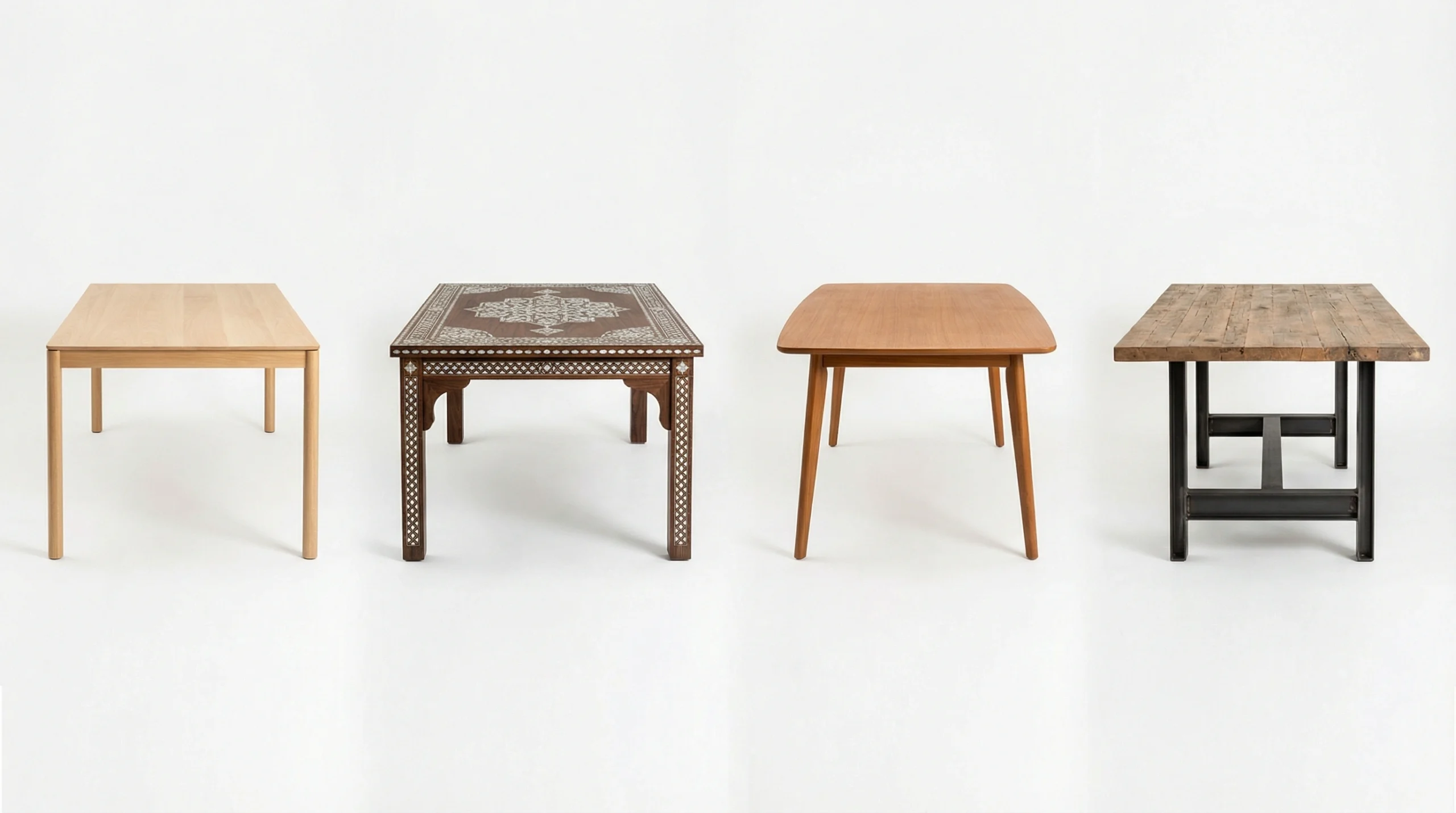
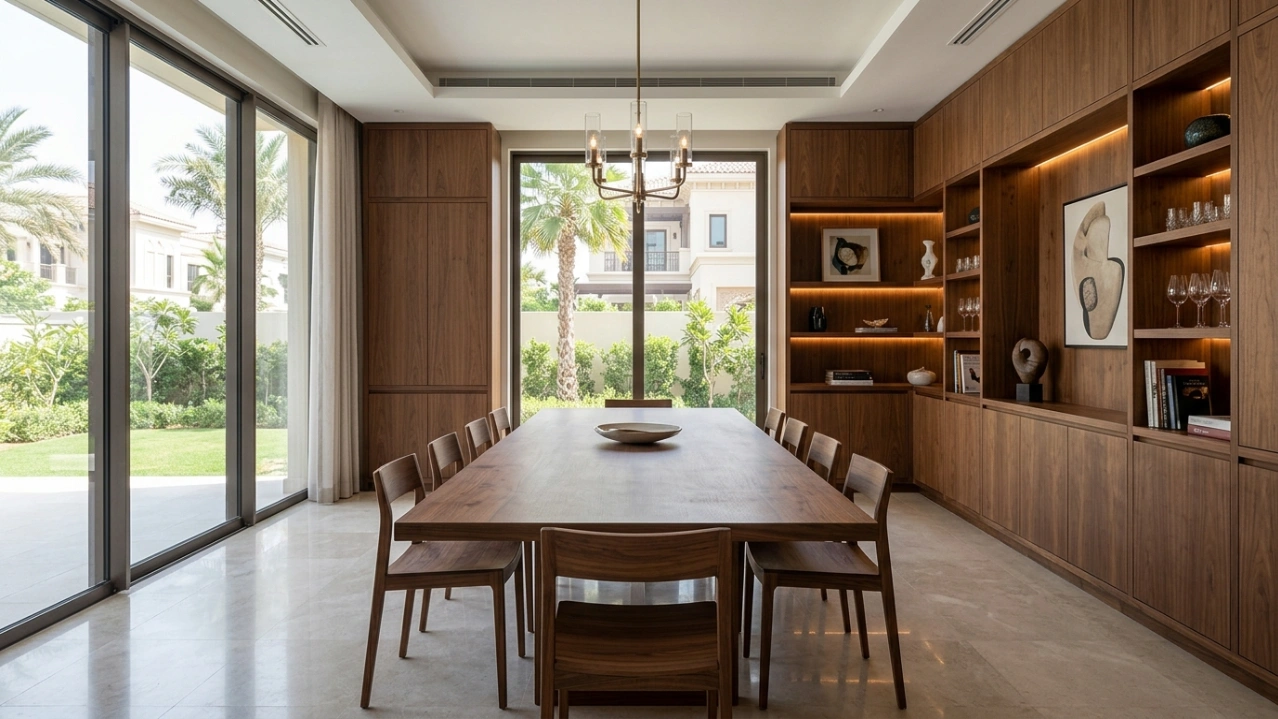
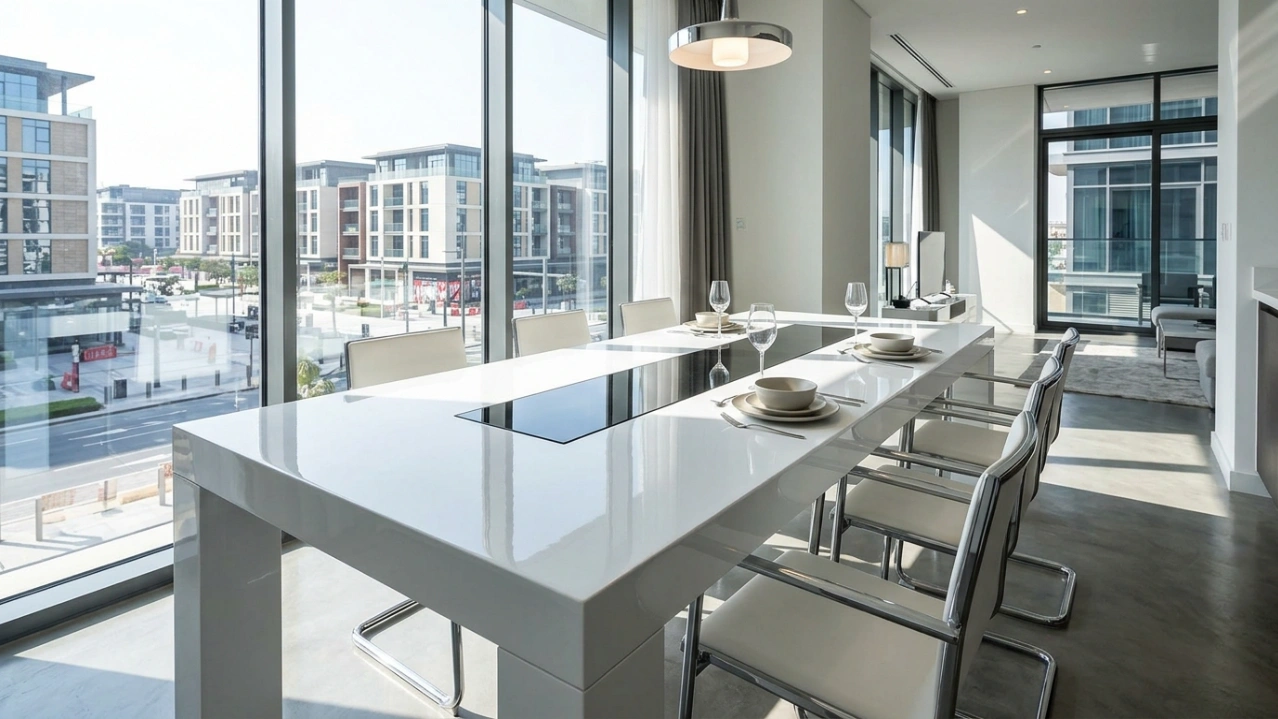
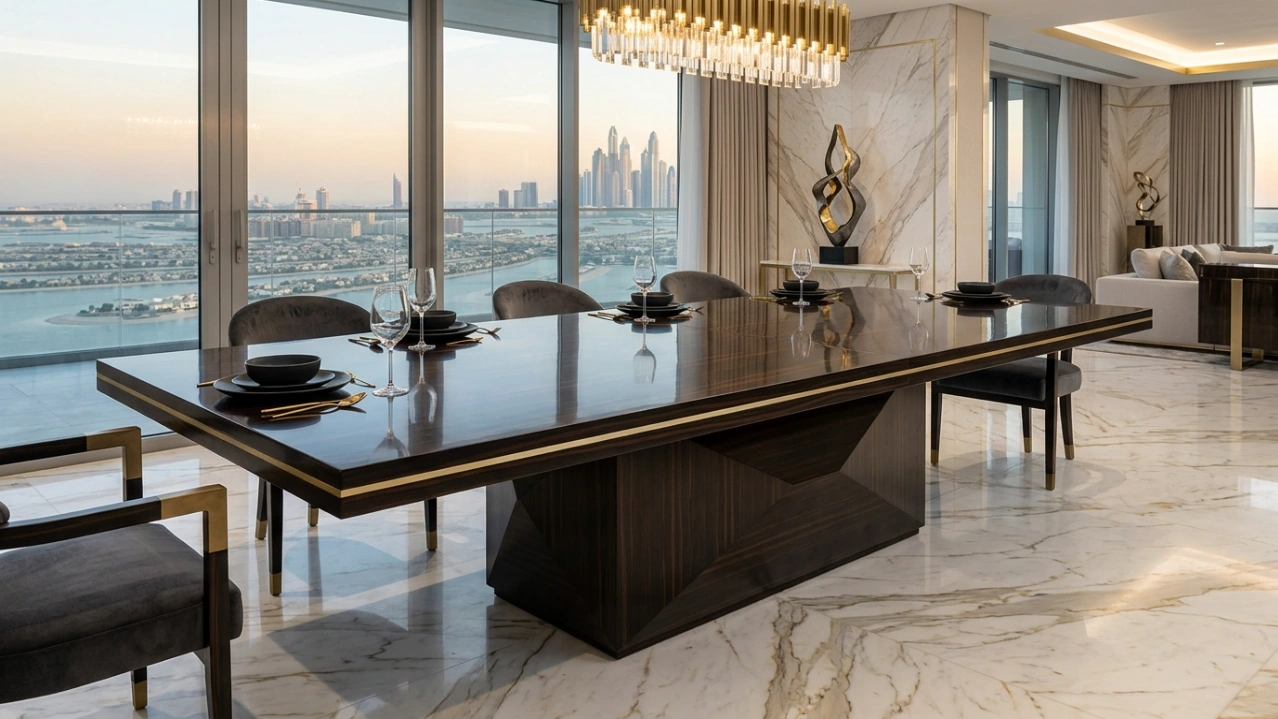
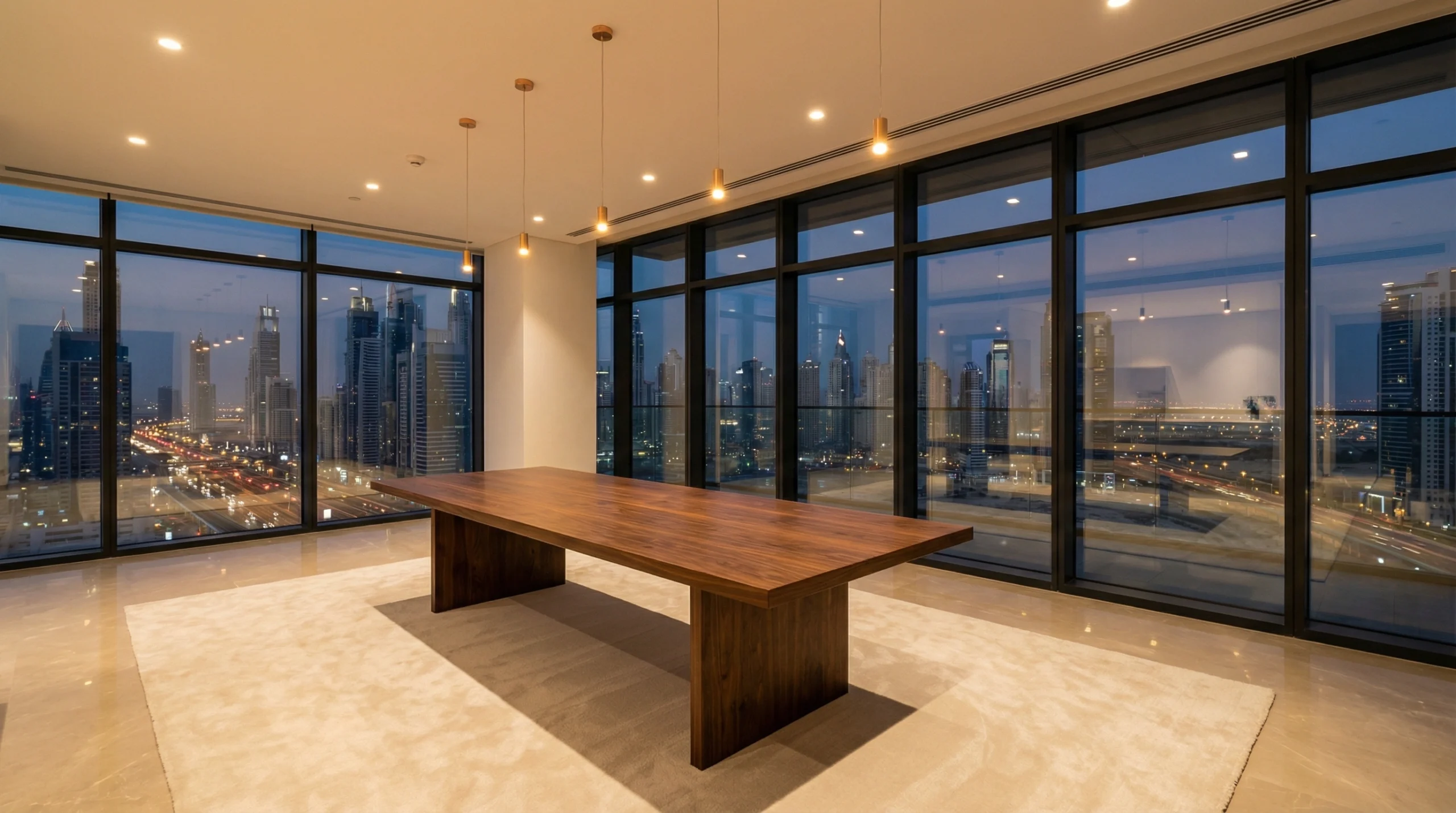
Contemporary minimalist designs dominate Dubai Marina and Downtown Dubai apartments where clean lines and space efficiency take priority. These tables feature waterfall edges, minimal ornamentation, and rely on wood grain and proportion for visual impact. We craft these from single solid slabs up to 4.5 meters long, or use book-matched panels that create symmetrical grain patterns—both approaches require exceptional material selection and joinery invisible to the eye.
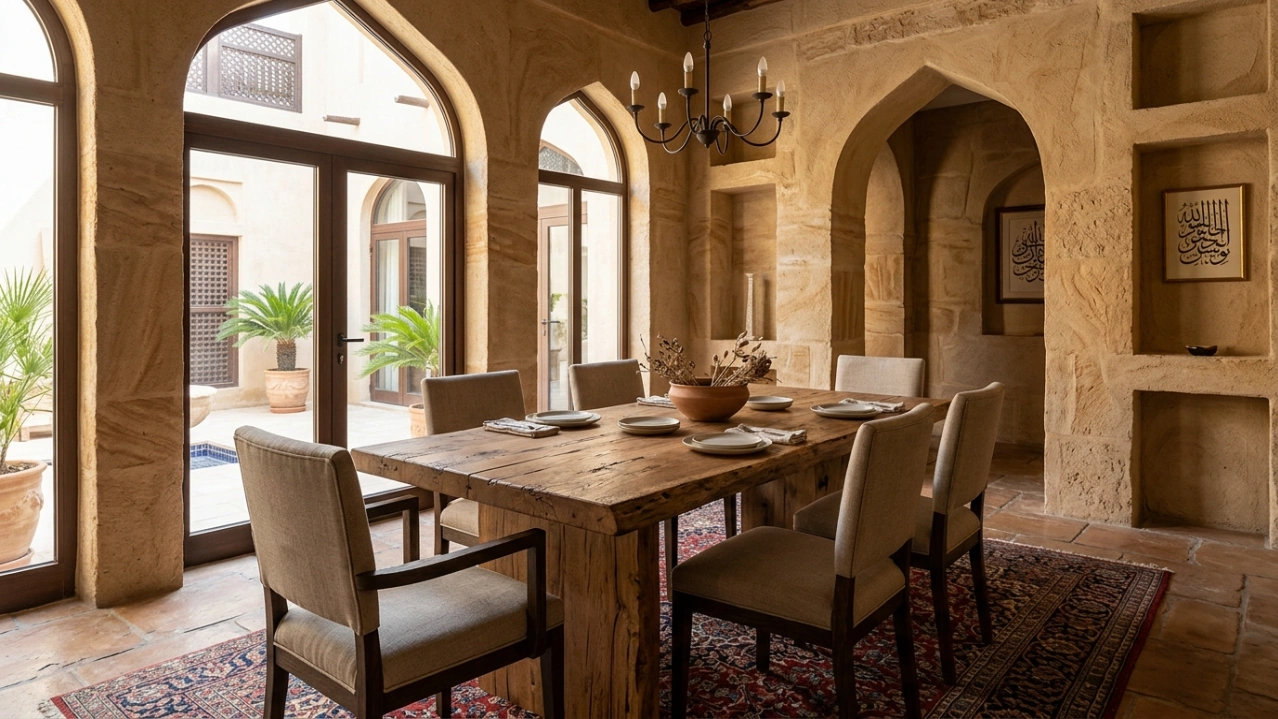
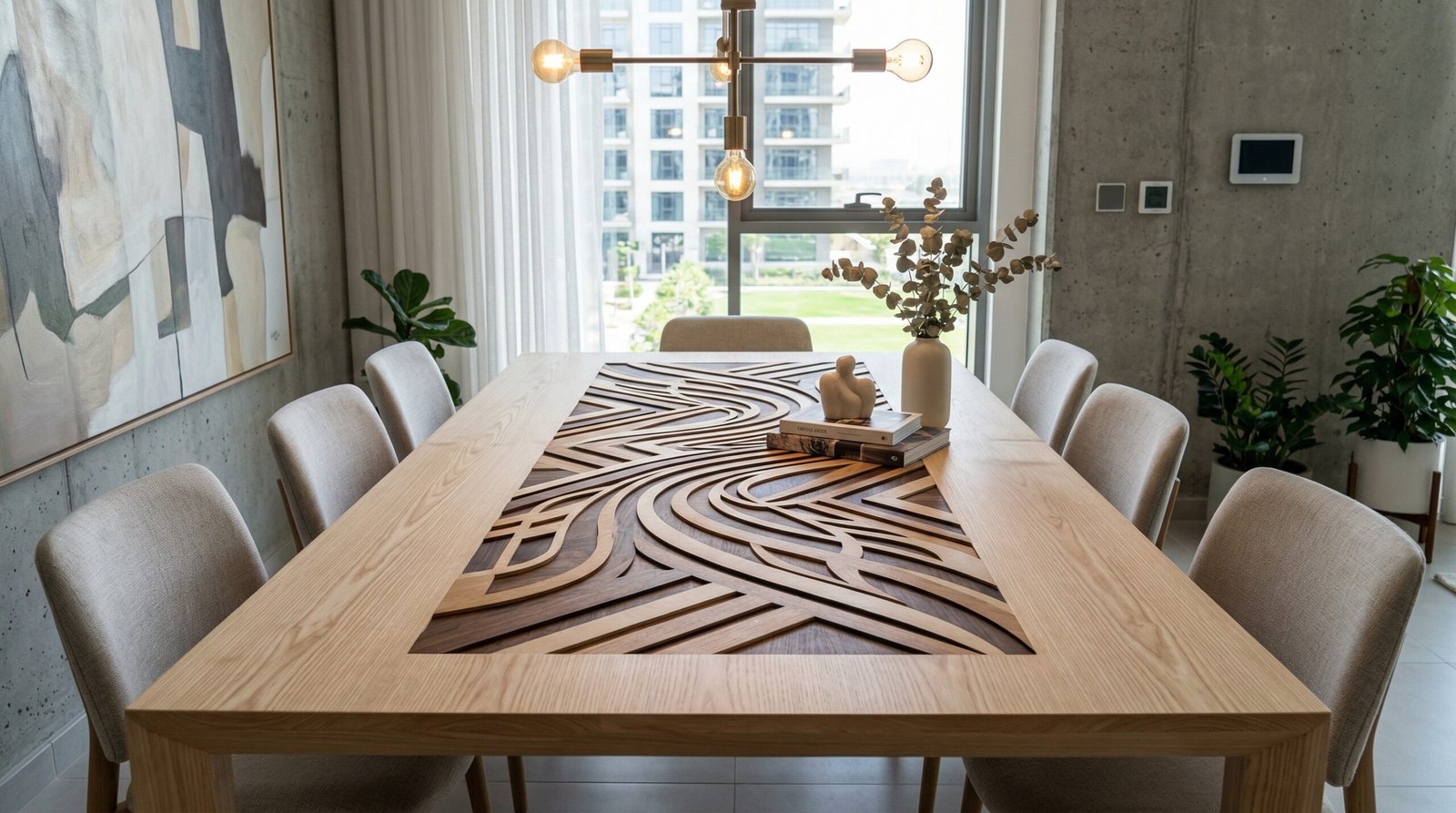
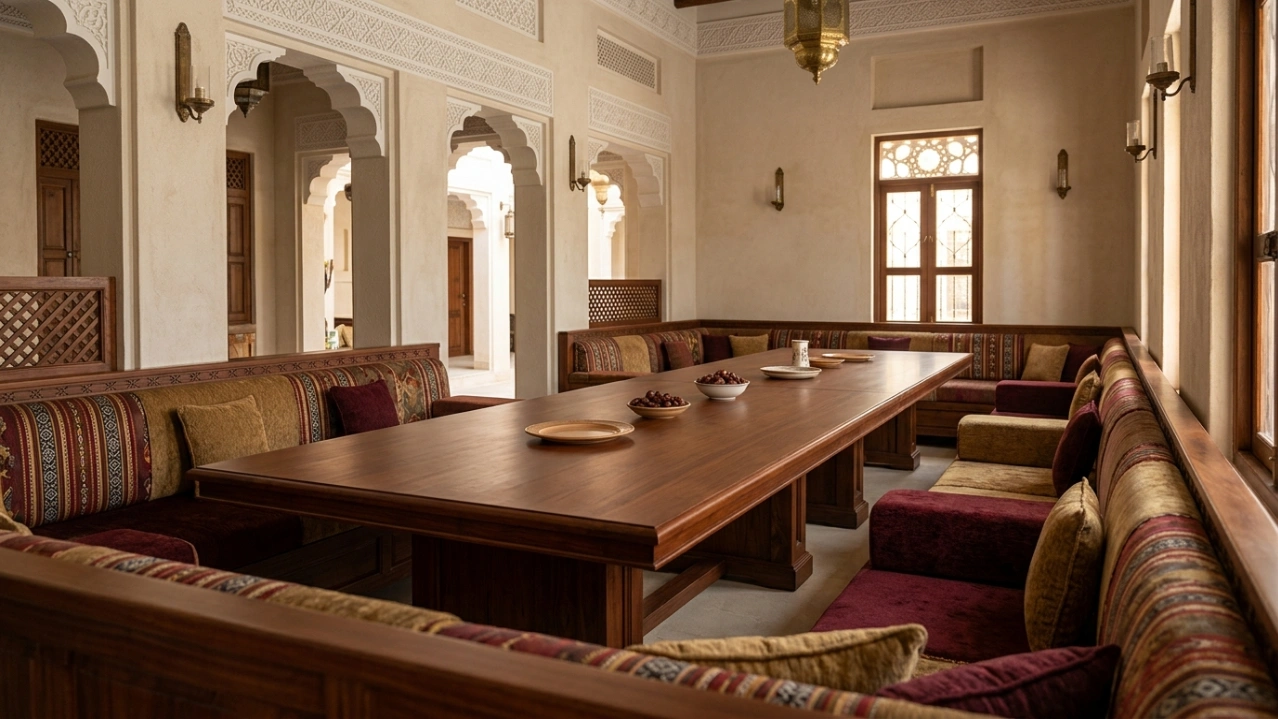
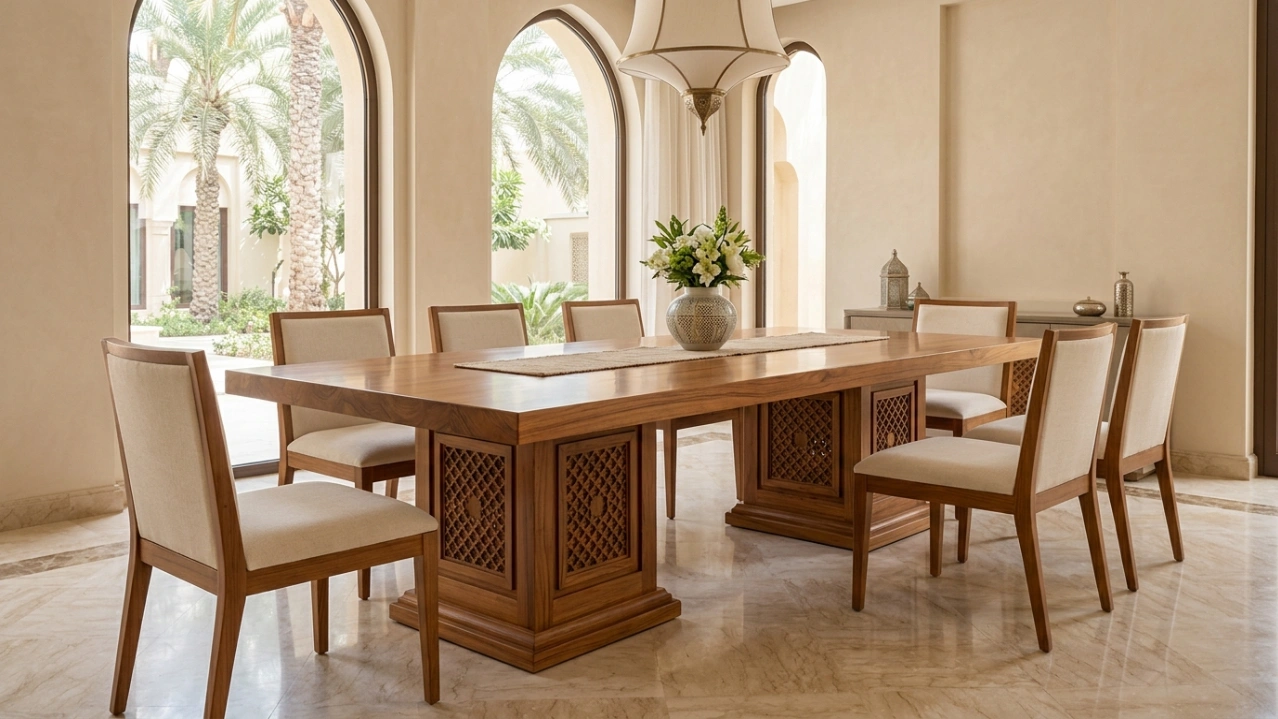
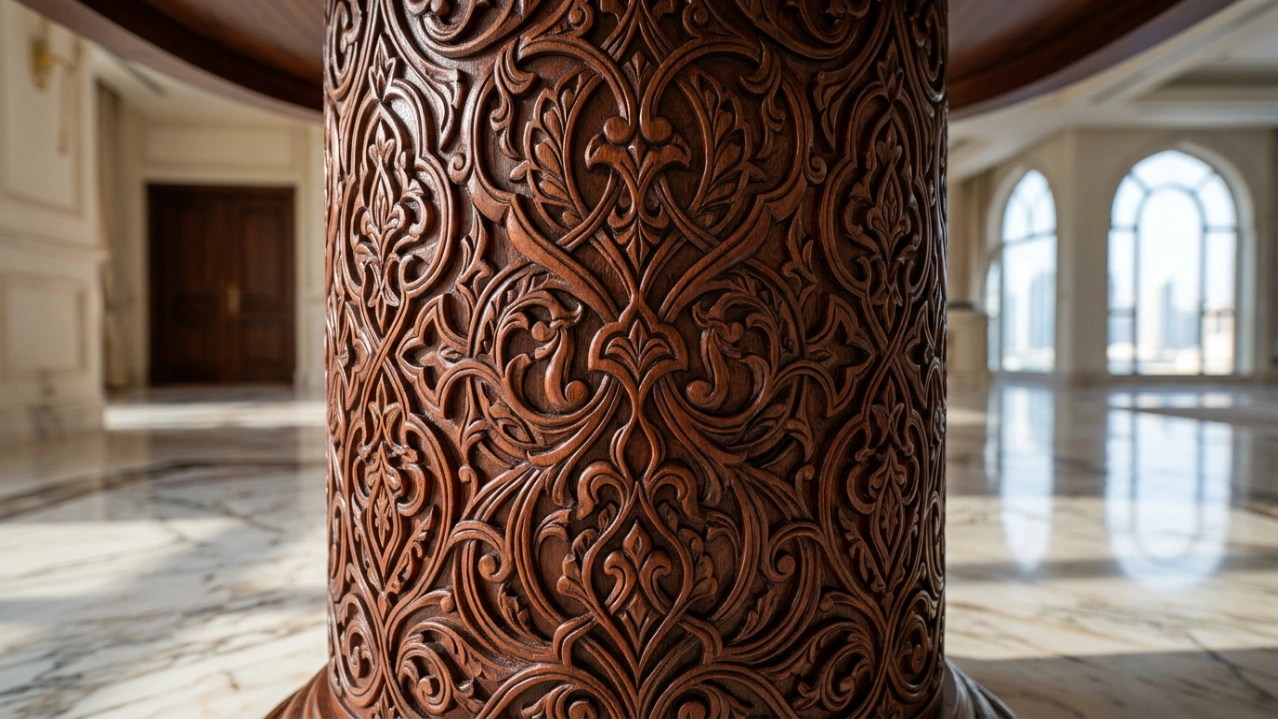
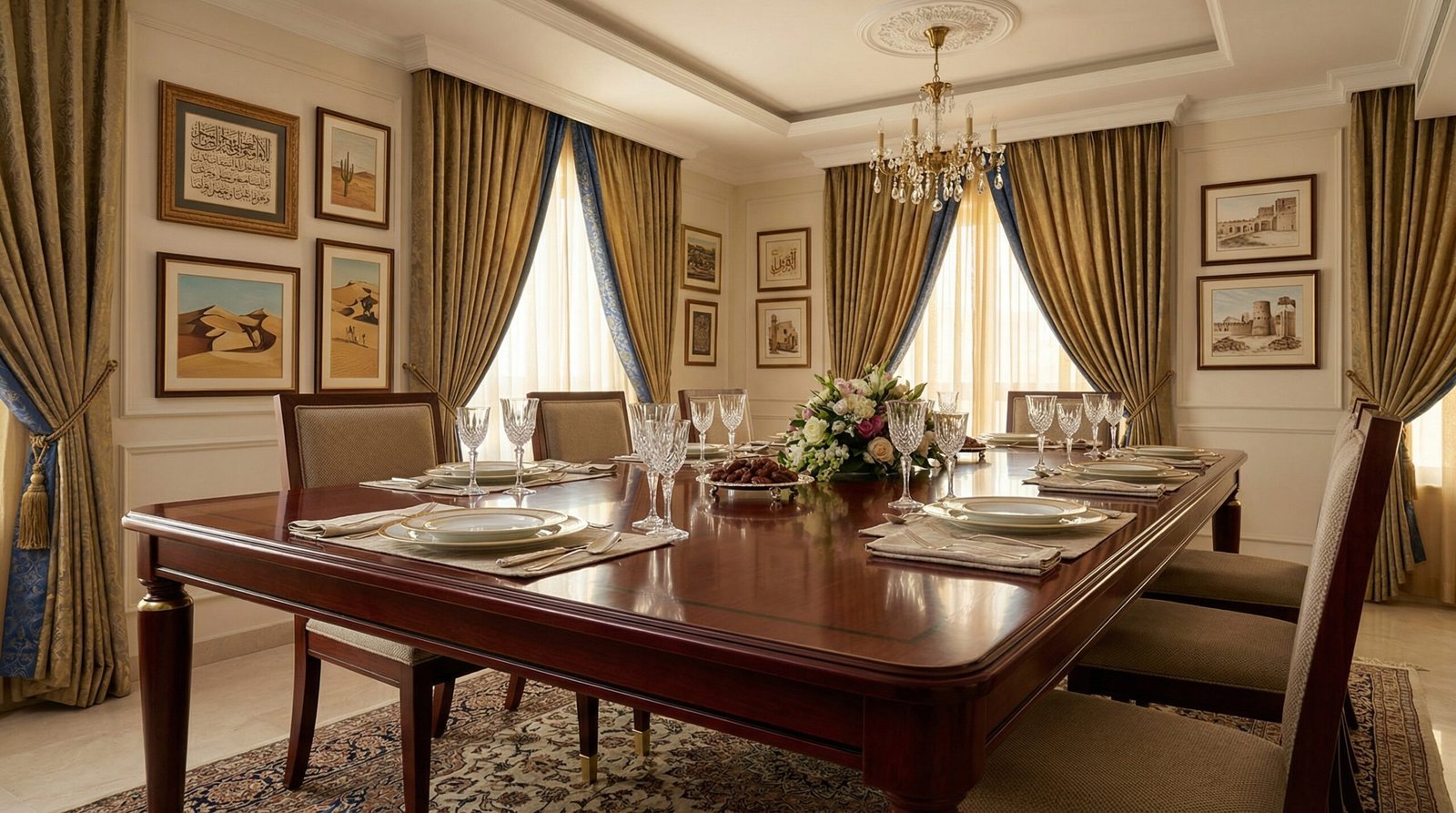
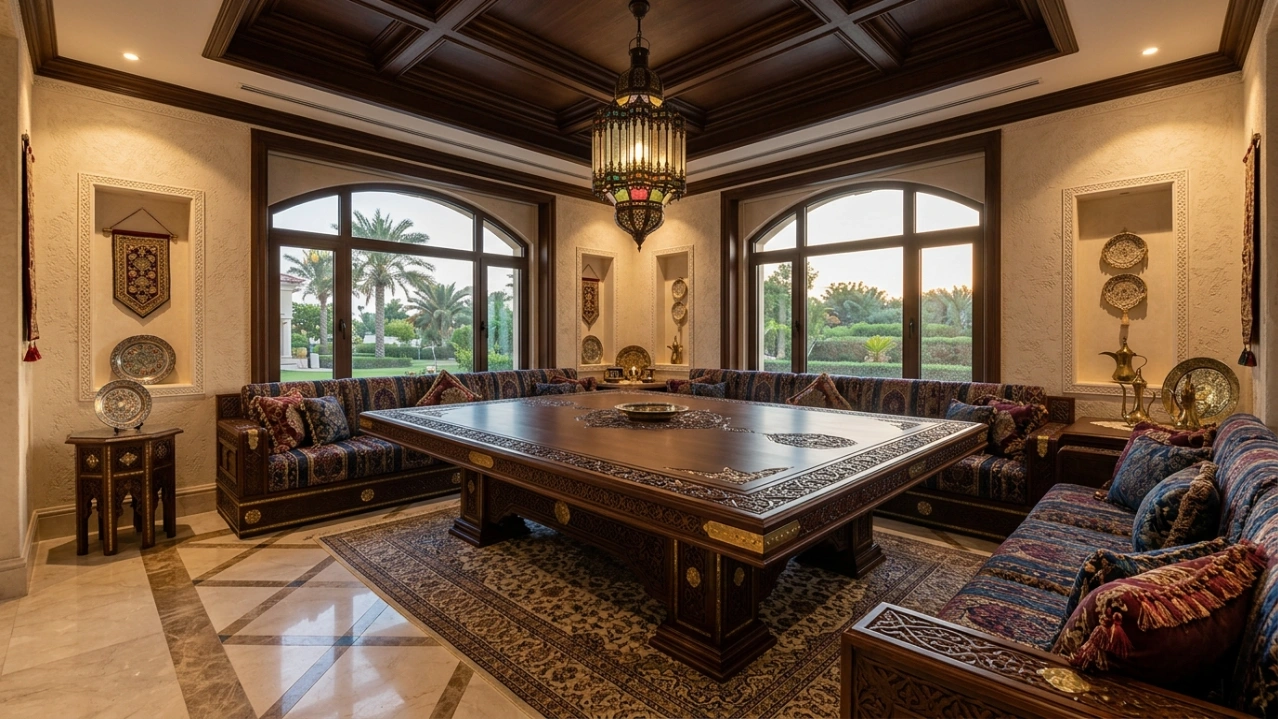
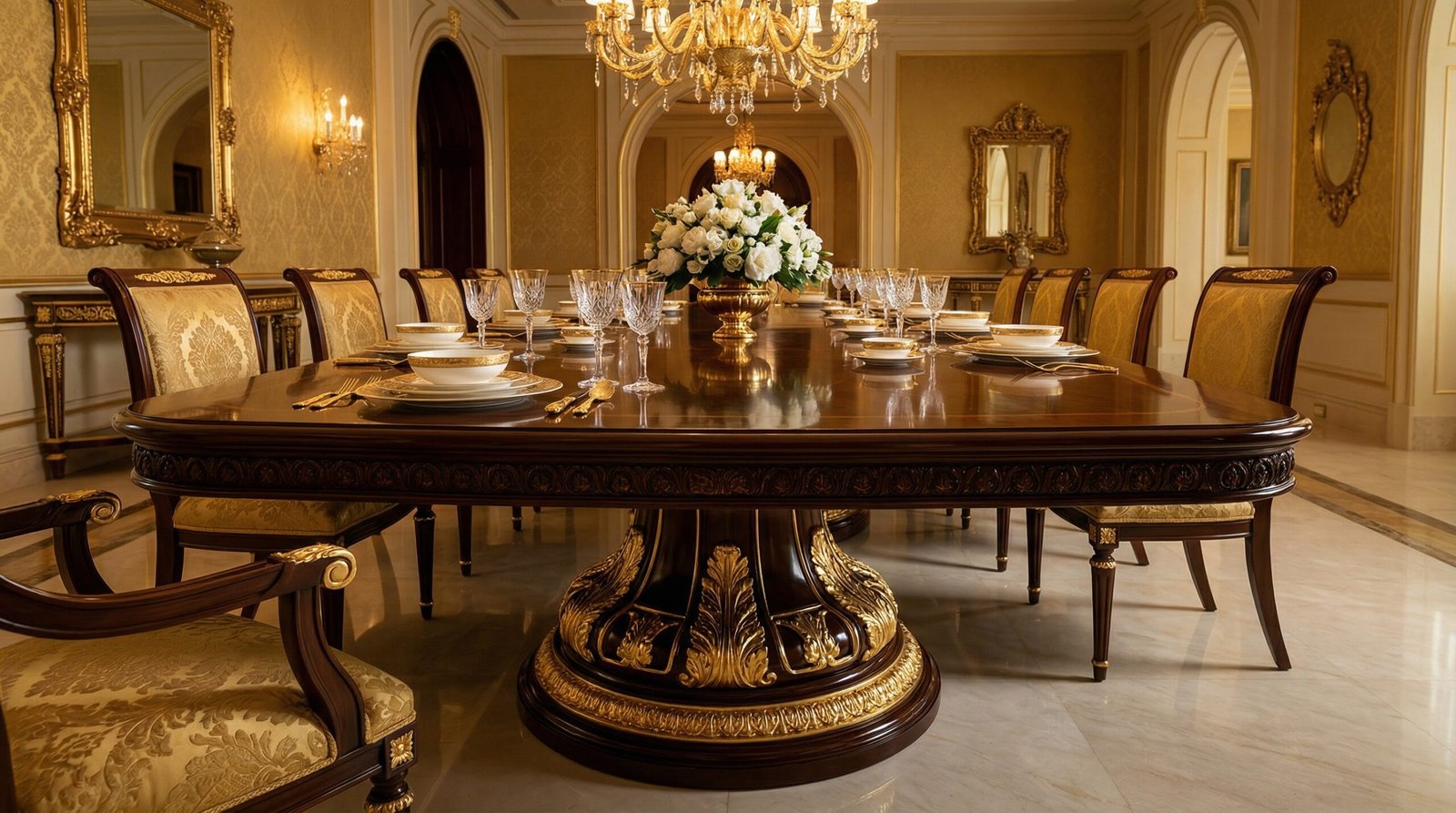
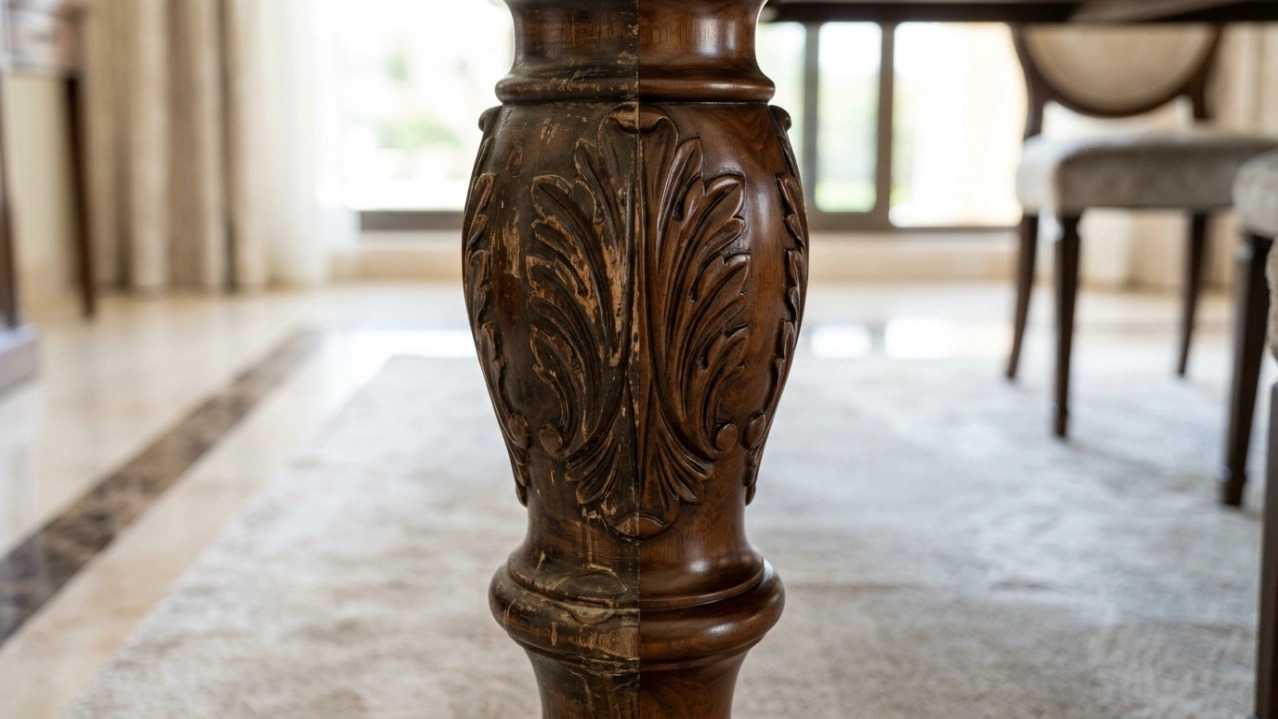
Traditional Arabic designs incorporate geometric patterns, inlay work, and often include extending leaves to accommodate large family gatherings. We’ve built dining tables with mother-of-pearl inlay creating Islamic geometric patterns, and others with hand-carved borders referencing mashrabiya screens. These take longer—typically 12 to 16 weeks versus 8 to 10 for contemporary pieces—because each decorative element is individually crafted and fitted.
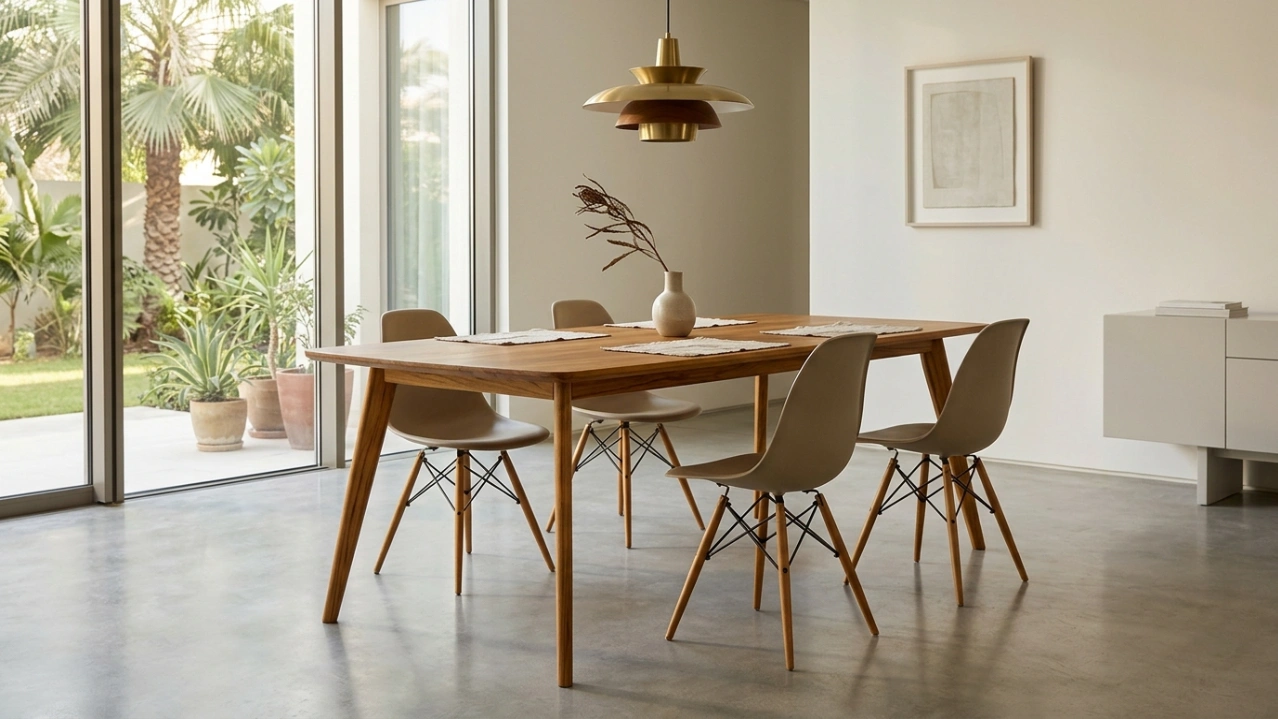
Mid-century modern remains popular in villa communities like The Springs and The Meadows, where homes built fifteen years ago suit the warm wood tones and organic forms of 1950s and 60s Scandinavian design. We craft tables with tapered legs, rounded edges, and the visual lightness that style demands, though we reinforce joinery beyond original specifications because modern entertaining places different stresses on furniture than formal dining did seventy years ago.
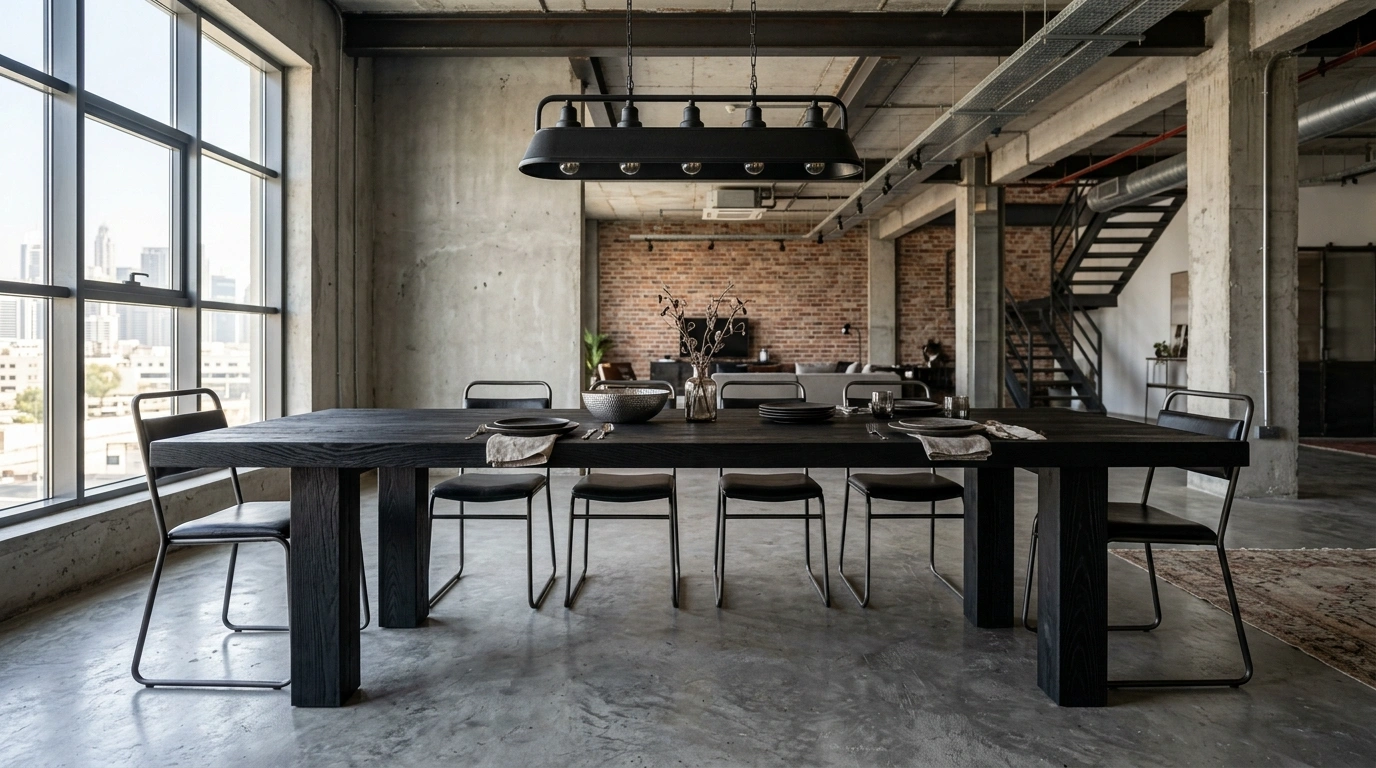
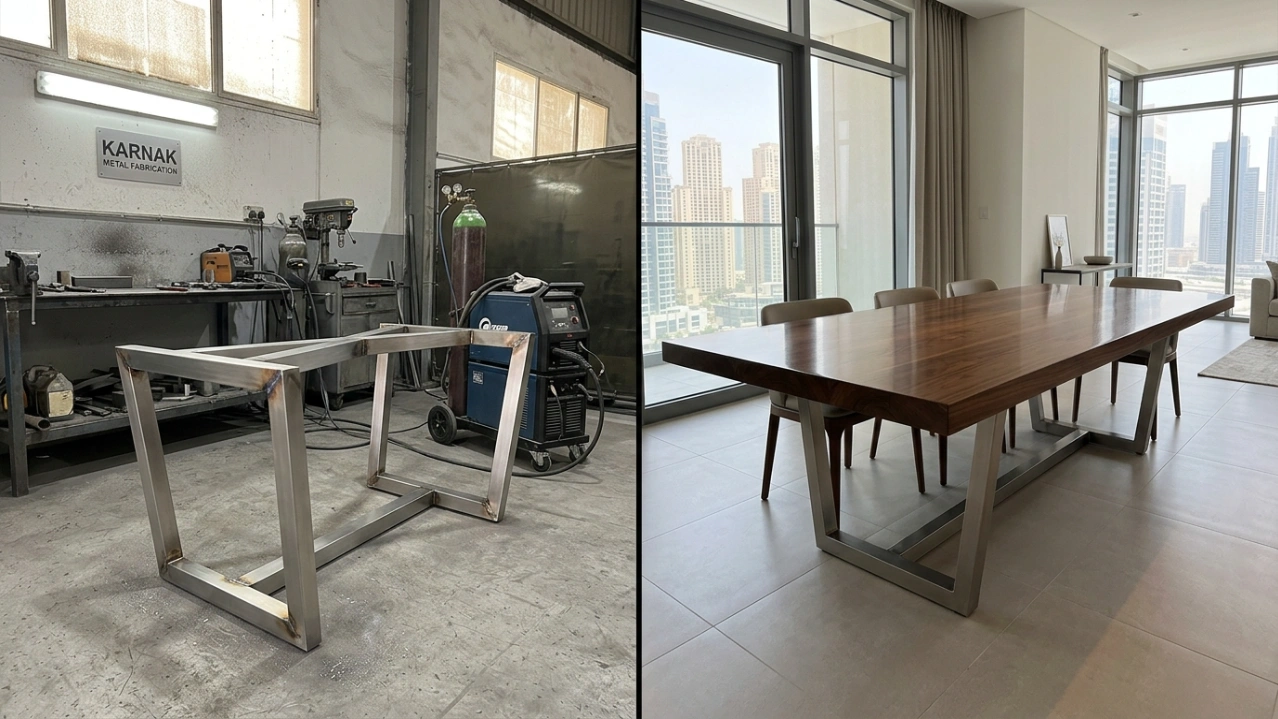
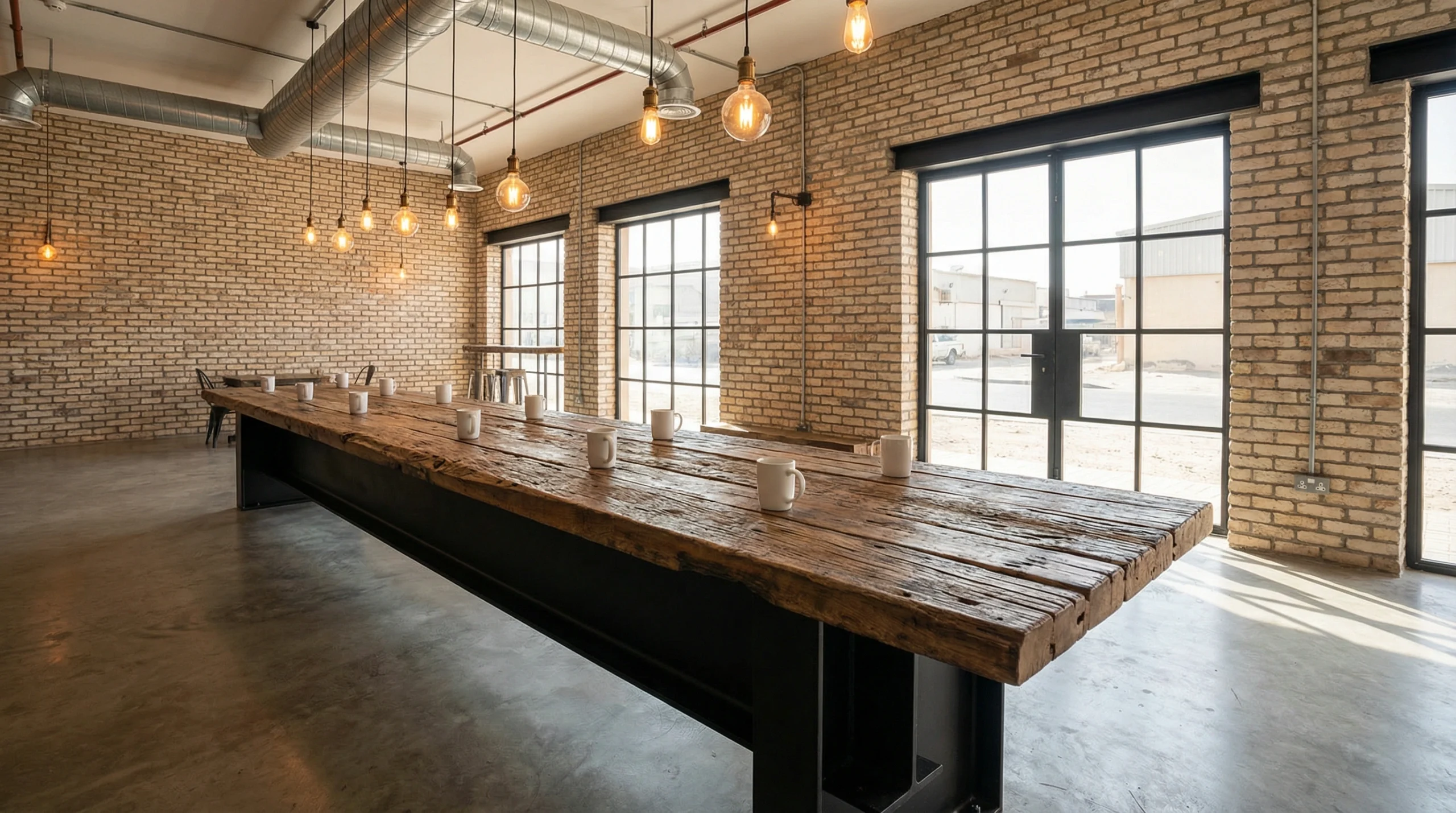
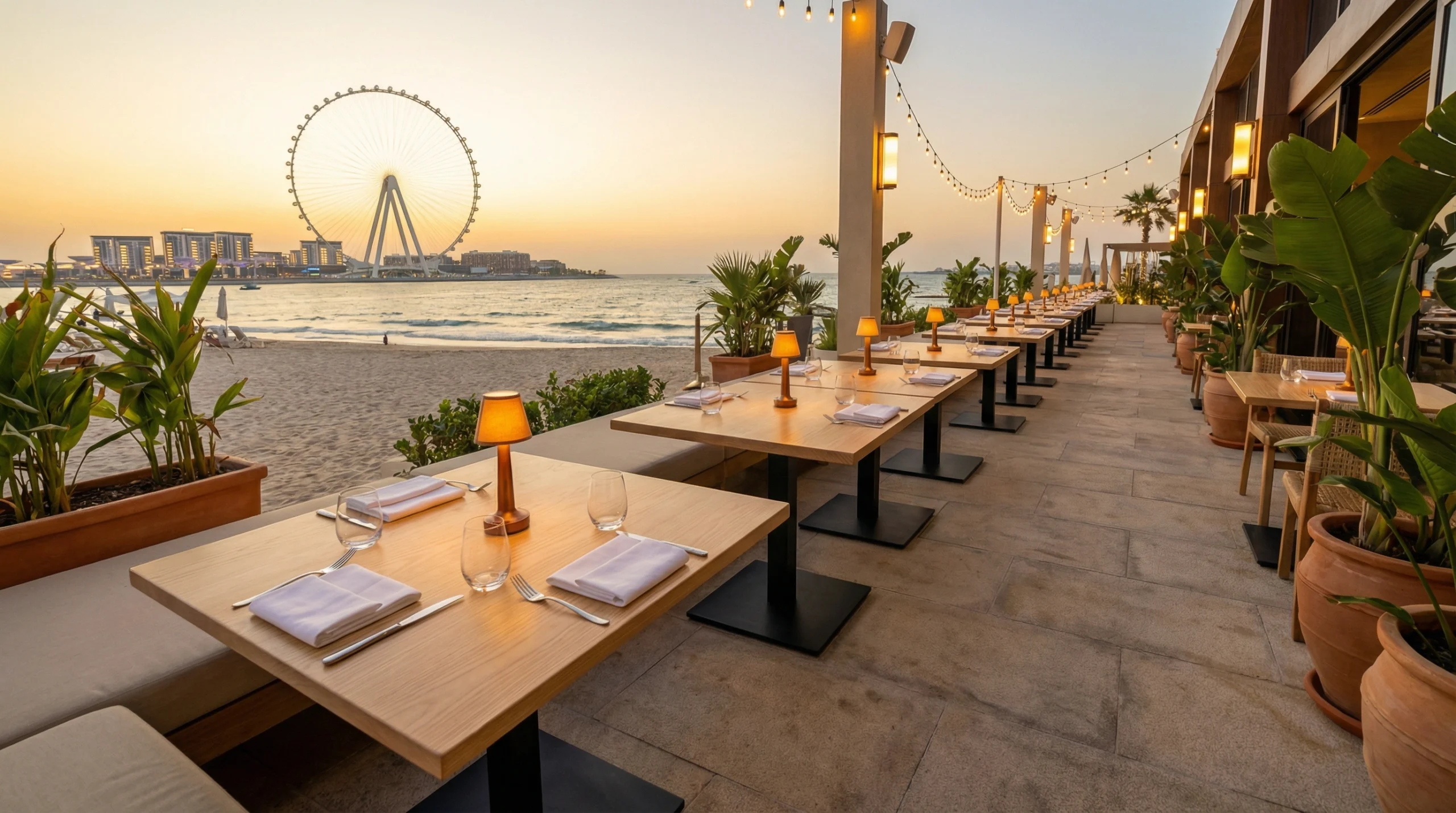
Industrial designs with metal bases and reclaimed wood tops work particularly well in commercial settings—restaurants in JBR, cafes in Al Quoz, office spaces in Business Bay. We fabricate steel bases in-house, applying powder coating that withstands constant chair scraping and cleaning, then marry them to solid timber tops we’ve sometimes deliberately distressed to create aged character while maintaining the structural integrity new wood provides.
Functional Features for Modern UAE Living
The most successful dining tables we build incorporate features that adapt to how people actually live in the UAE—where entertaining is frequent, spaces are often multi-functional, and households blend different cultural traditions.
Extension mechanisms allow tables to grow from intimate four-person dinners to twelve-seat gatherings. We install several systems depending on your needs and budget. Traditional pull-out leaves store separately and require two people to install—they’re the most economical option and work perfectly fine for occasional use. Self-storing butterfly leaves fold and hide within the table itself, deploying in under thirty seconds—ideal for clients who extend their table weekly during social seasons. The most sophisticated mechanism we offer uses German-engineered synchronized rails that allow one person to smoothly extend even a 180-kilogram solid walnut table while maintaining perfect alignment.
Built-in lazy Susan mechanisms work beautifully for large round or square tables, particularly in homes where Arabic and Asian dining traditions prefer shared dishes at table center. We craft these from the same wood as your table, mounting them on concealed ball-bearing assemblies that rotate smoothly even when laden with serving dishes. For rectangular tables, we’ve designed central troughs with removable panels—they function as dramatic floral displays for formal dinners, then convert to serving channels for family-style meals.
Cable management, while unglamorous, matters enormously in modern dining spaces that double as work-from-home offices. We route discreet channels through table legs to floor-mounted power sources, or install pop-up power modules that sit flush when not in use. These details make the difference between a beautiful table you constantly work around and one that seamlessly supports your actual life.
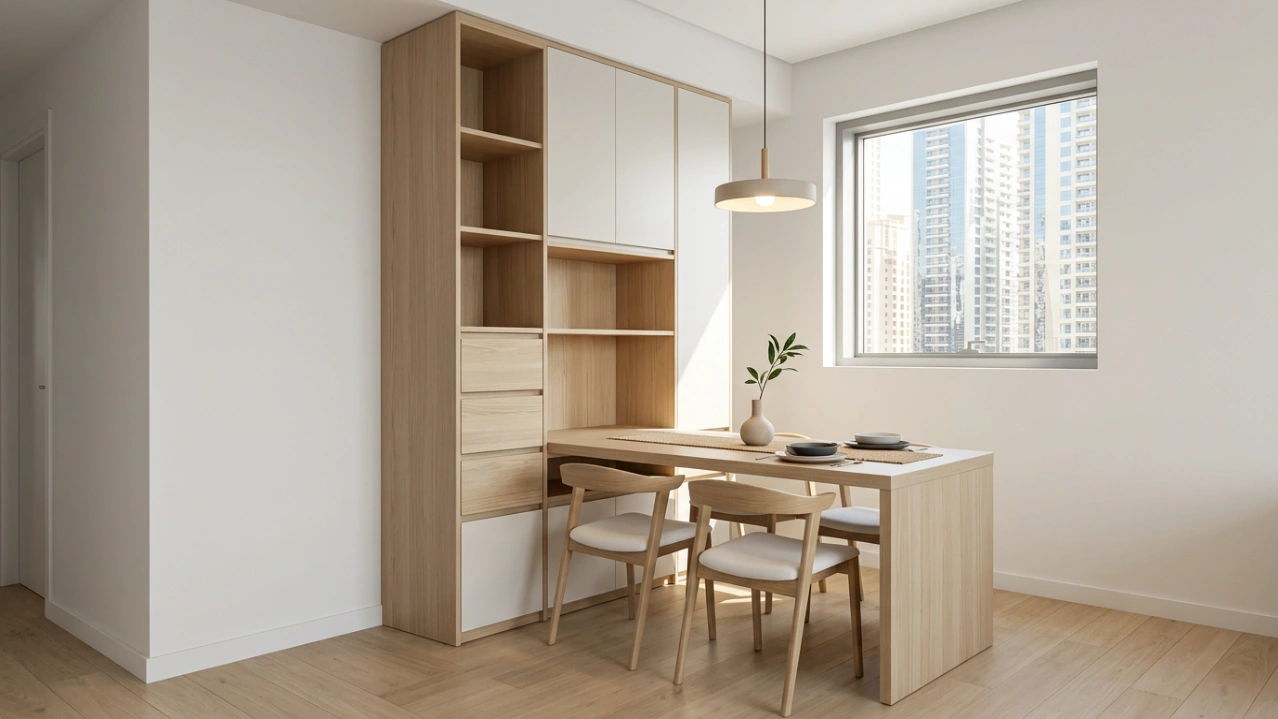
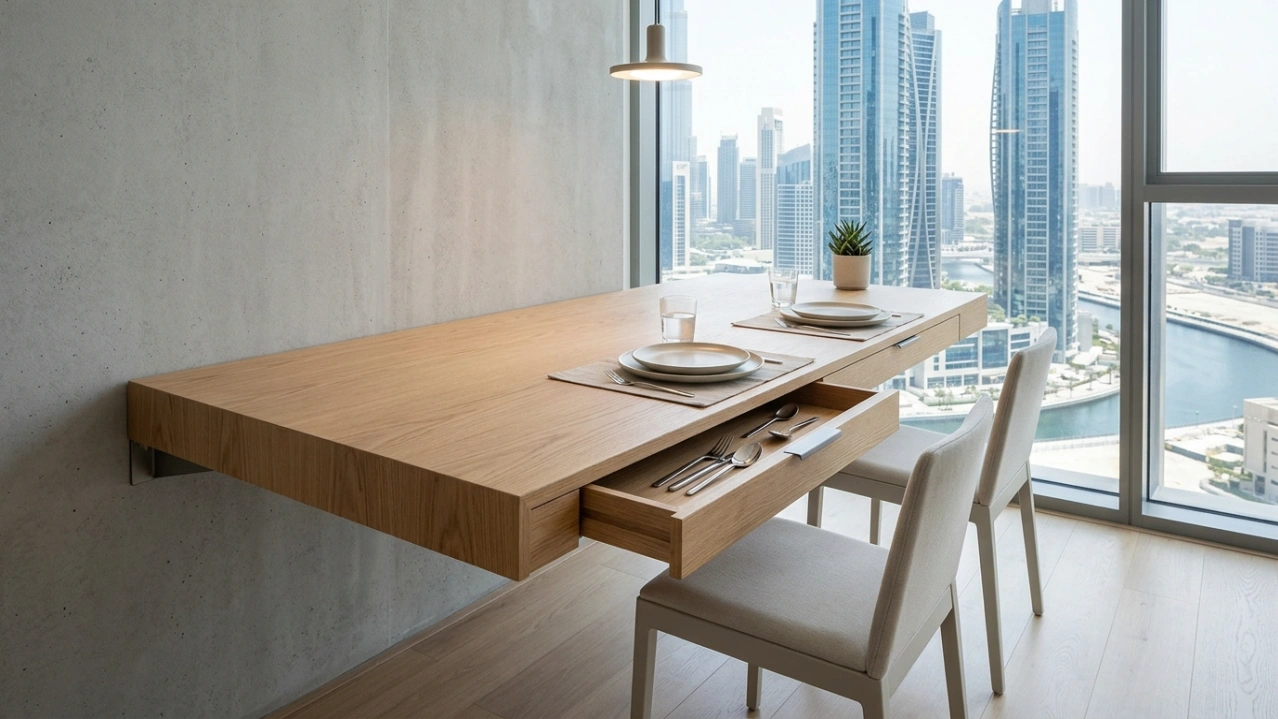
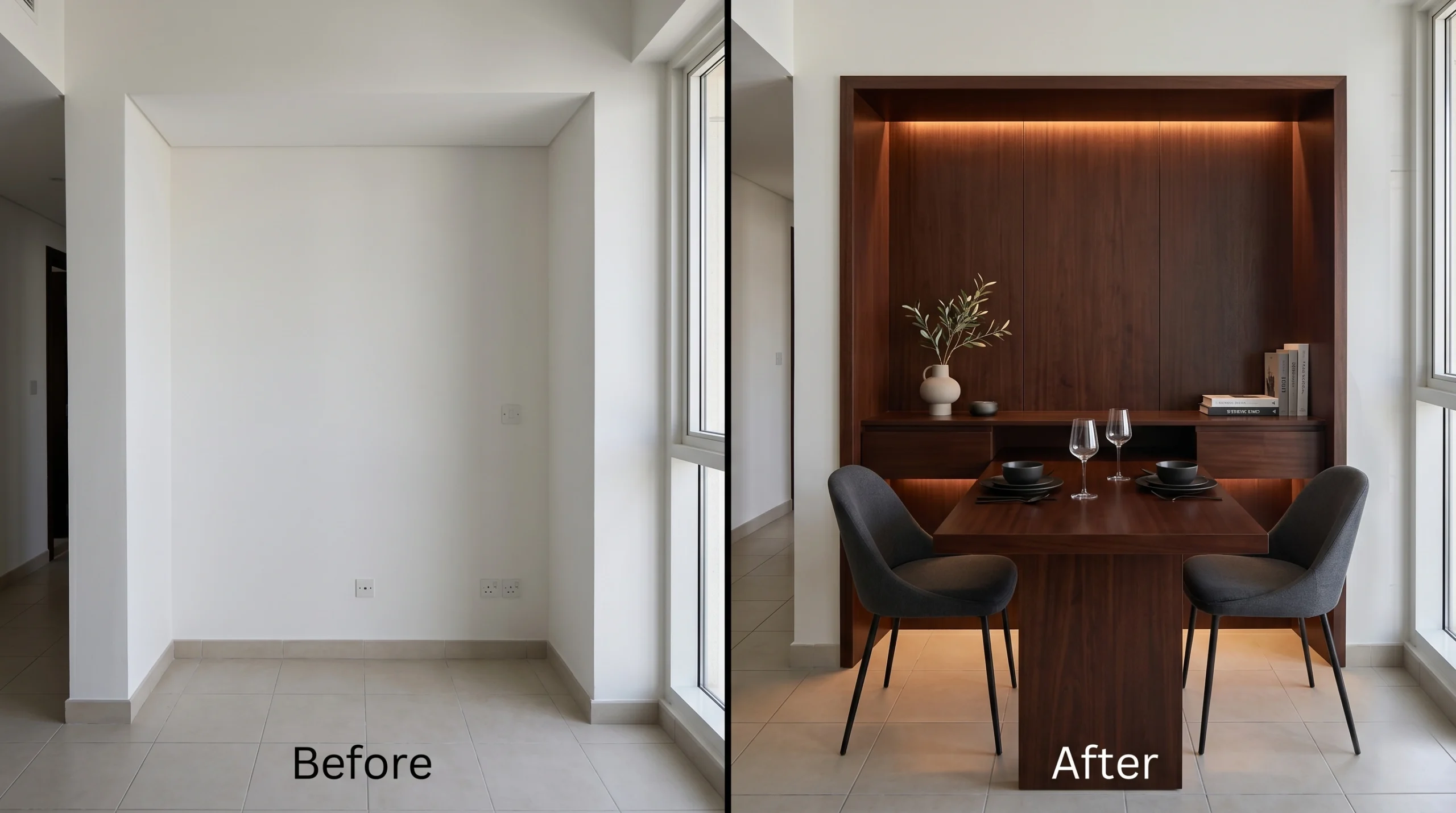
Storage integration serves clients with smaller apartments where every centimeter counts. We build tables with drawer units at the ends—perfect for table linens, placemats, and serving pieces. Some designs incorporate full shelf systems below the table surface, though these work better for homes with consistent table settings rather than those using varied chair styles that might interfere with lower shelving.
The Complete Dining Table Solution: Our Service Range
When you commission a custom dining table from Karnak, you’re not just buying furniture—you’re engaging a complete design, fabrication, and installation service that’s been refined through 10,000+ UAE projects. We handle every aspect because we’ve learned that’s the only way to guarantee the outcome you’re imagining.
Full Custom Design and Engineering
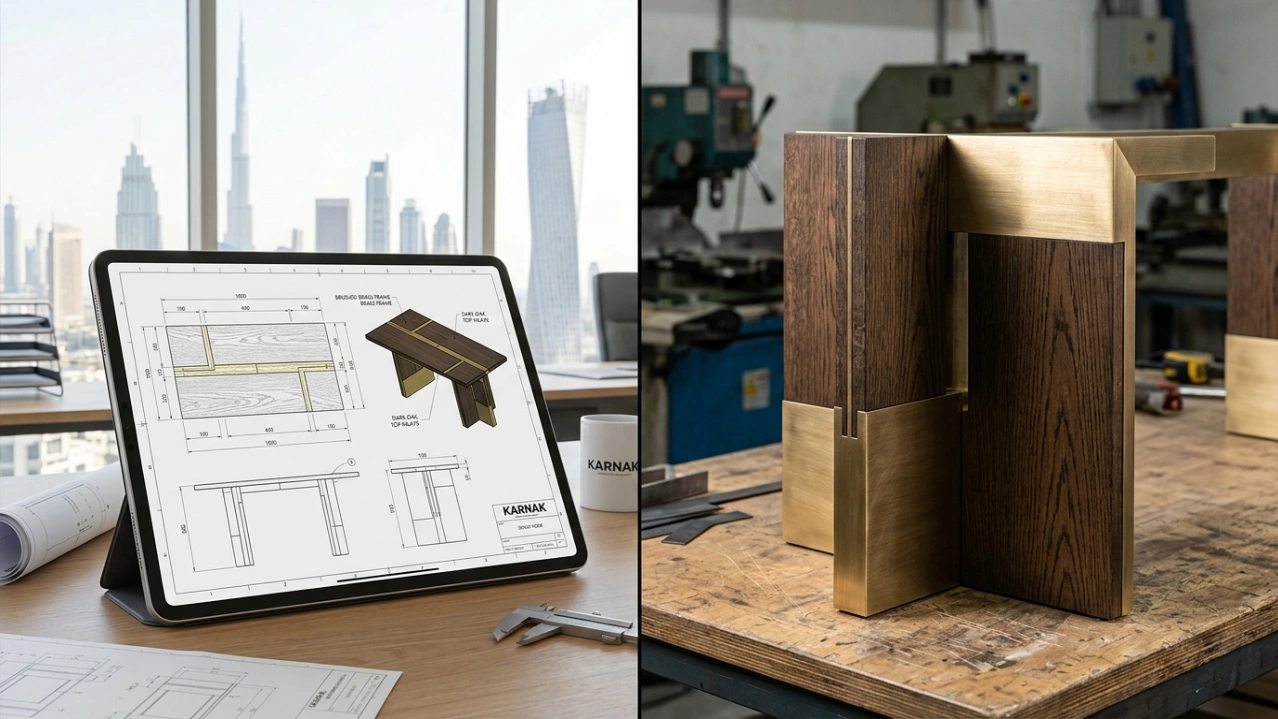
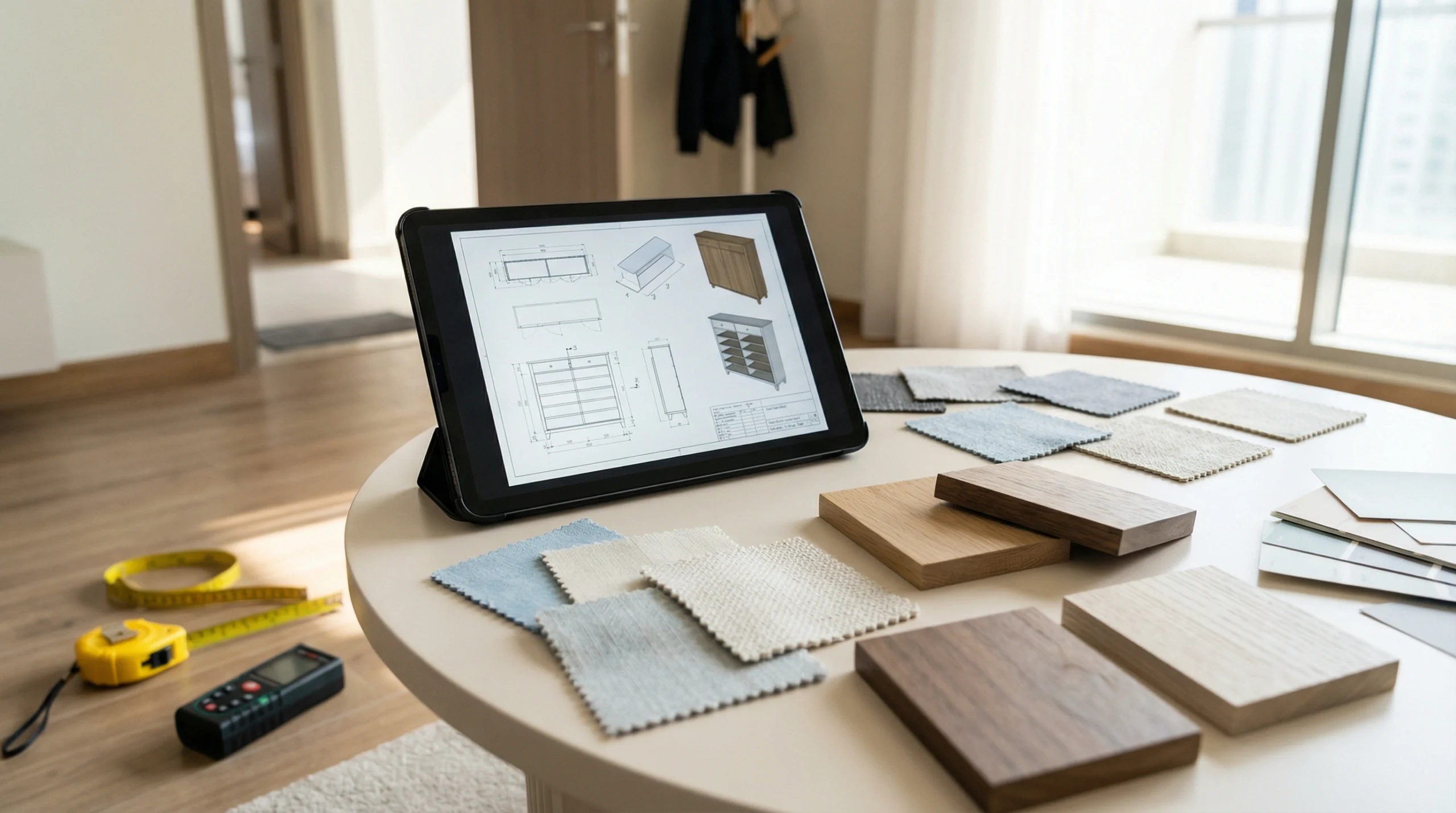
This comprehensive service encompasses initial space analysis and measurement, collaborative design development with our senior craftsmen, detailed technical drawings showing all dimensions and joinery methods, material selection from our curated inventory, finish sampling with actual wood species under your home’s lighting conditions, and 3D renderings that show exactly how your table will look in your space. Additionally, we calculate structural loading to ensure stability with your intended use—critical for large tables or those with cantilevered sections—and provide detailed timelines with milestone updates throughout fabrication.
Every custom design begins with understanding your space constraints and aspirations. We visit your home to measure accurately, but also to observe natural light patterns, floor level variations, and how people move through your dining area. Dubai apartments built in the 2000s often have subtle floor slopes that become obvious once a two-meter table is installed—we factor these into our leg lengths during fabrication. Similarly, modern villas with open-plan layouts need tables that look appropriate from multiple viewing angles, not just the dining room entrance.
The engineering phase addresses questions most clients haven’t considered. How much deflection will occur at the center of a 3.5-meter table? How do we attach a solid wood top to a metal base while allowing seasonal movement? Where should seating legs be positioned to avoid interfering with chair placement? We solve these through joinery techniques refined over decades: mortise and tenon joints for traditional leg attachment, breadboard ends that prevent warping while allowing expansion, hidden steel reinforcement when span exceeds what wood alone should safely carry.
Precision Workshop Fabrication
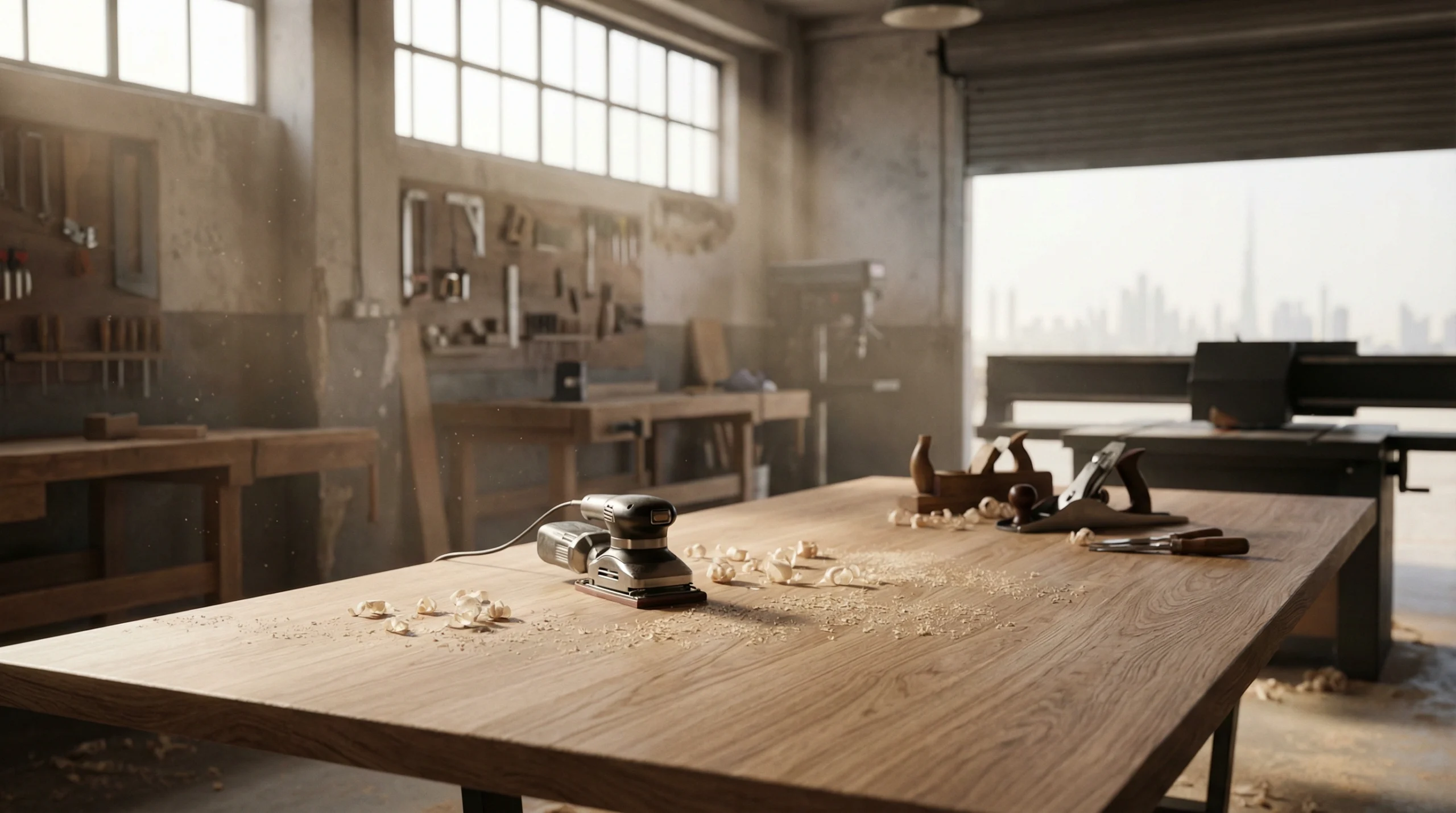
Our Dubai workshop fabrication service includes all material preparation and acclimatization, hand-selection of boards for color and grain matching, precision cutting on CNC and traditional machinery, hand-crafted joinery executed by master craftsmen, multiple rounds of sanding progressing from 80 to 320 grit, finish application in our dust-free spray booth with climate control, and rigorous quality inspection before any piece leaves our facility. The process typically spans eight to twelve weeks for standard designs, extending to sixteen weeks for complex traditional pieces with decorative elements.
We begin with wood selection, examining each board individually under full-spectrum lighting to identify the pieces that will create the visual harmony your table deserves. For book-matched designs, we slice sequential boards from the same log section, creating mirror-image grain patterns. For length, we join multiple boards using techniques that make the seam invisible—we’ve perfected rubbed glue joints that are stronger than the surrounding wood and visually disappear once finished.
The joinery defines longevity. We cut mortise and tenon joints on precision machinery, then hand-fit each one because wood is organic material that defies perfect mechanical replication. Table aprons connect to legs through joints that are 50 millimeters deep with draw-bore pinning—an ancient technique where slightly offset holes create mechanical compression as we drive the pin home. Your grandchildren will use this table, and these joints will still be tight. For tops, we use domino joinery or traditional biscuits depending on design requirements, always cut across grain lines to maximize glue surface area.
Finishing represents forty percent of fabrication time. We sand by hand for final grits because machinery leaves microscopically consistent patterns that can telegraph through finishes. Between finish coats, we sand with 600-grit to create glass-smooth surfaces. The conversion varnish systems we use cure through chemical reaction rather than simple evaporation, creating cross-linked polymer structures that are genuinely waterproof and impact resistant—critical when your table will face daily use in a busy household.
Professional Delivery and Installation
Our installation service provides scheduled delivery with minimum one-day advance confirmation, professional installation teams who’ve completed hundreds of table placements, leveling and adjustment accounting for floor variations, protective felt or nylon glide installation to prevent floor scratching, detailed care instructions specific to your table’s wood and finish, and optional table pad fitting if you’ve ordered protective coverings. We coordinate delivery around your schedule, including evening and weekend installations when necessary.
Installing a dining table properly requires more than carrying it through your door. We navigate the challenging access points common in Dubai properties—tight elevator dimensions in older buildings, stairways with 180-degree turns in townhouses, the narrow service corridors in many apartment complexes. Before delivery, we confirm all access points and if necessary, we build tables in sections that we assemble on-site using concealed fastening systems. We’ve installed tables through third-floor windows using professional rigging when no other access existed.
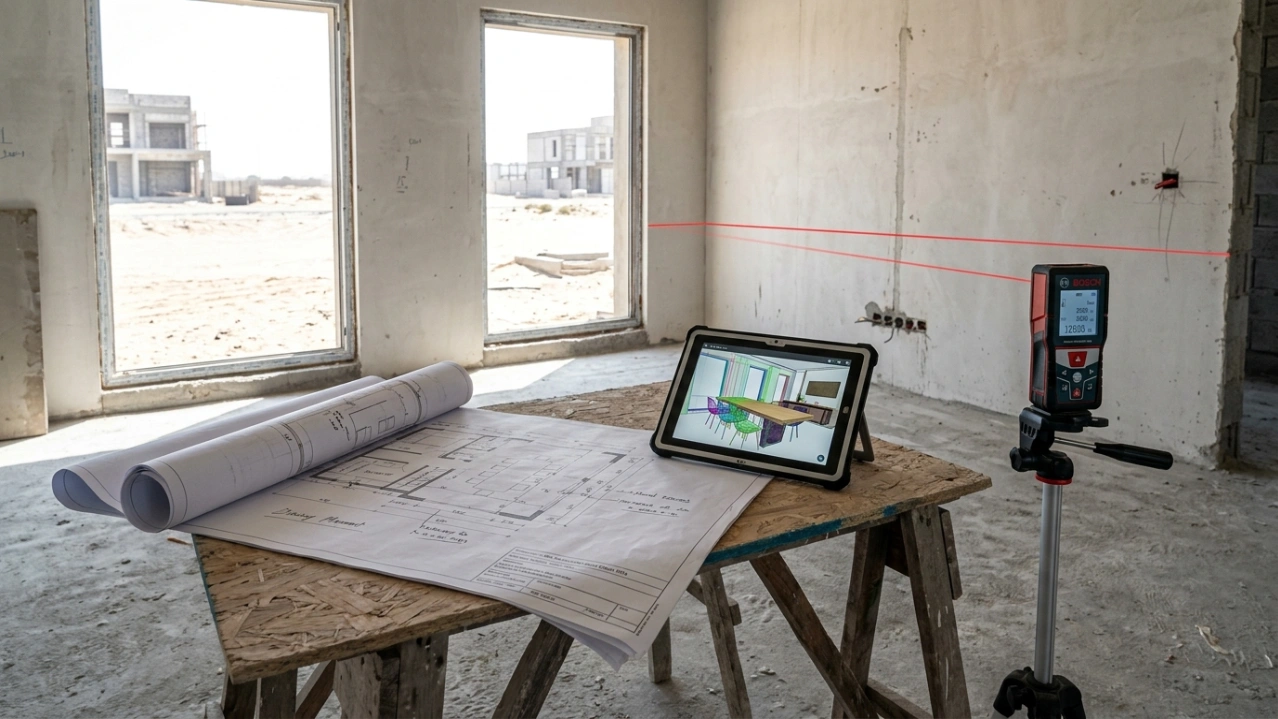
Leveling matters more than most people realize. An unlevel table rocks, yes, but it also creates uneven pressure on joints that can cause long-term problems. We use precision levels and laser measurement, adjusting individual legs by millimeters. For tables with threaded leveling feet, we set them precisely and lock them in position. For tables where adjusters would compromise design integrity, we shim during installation, then fix shims permanently in place so they can’t shift.
Floor protection receives careful attention because scratched marble or damaged hardwood is expensive to repair. We install felt pads on traditional leg designs, but for modern metal bases or tables that will be moved frequently, we specify nylon glides or custom-fabricated stainless steel shoes that distribute weight across larger surface areas and slide smoothly without catching on grout lines or floor transitions.
Restoration and Refinishing Services
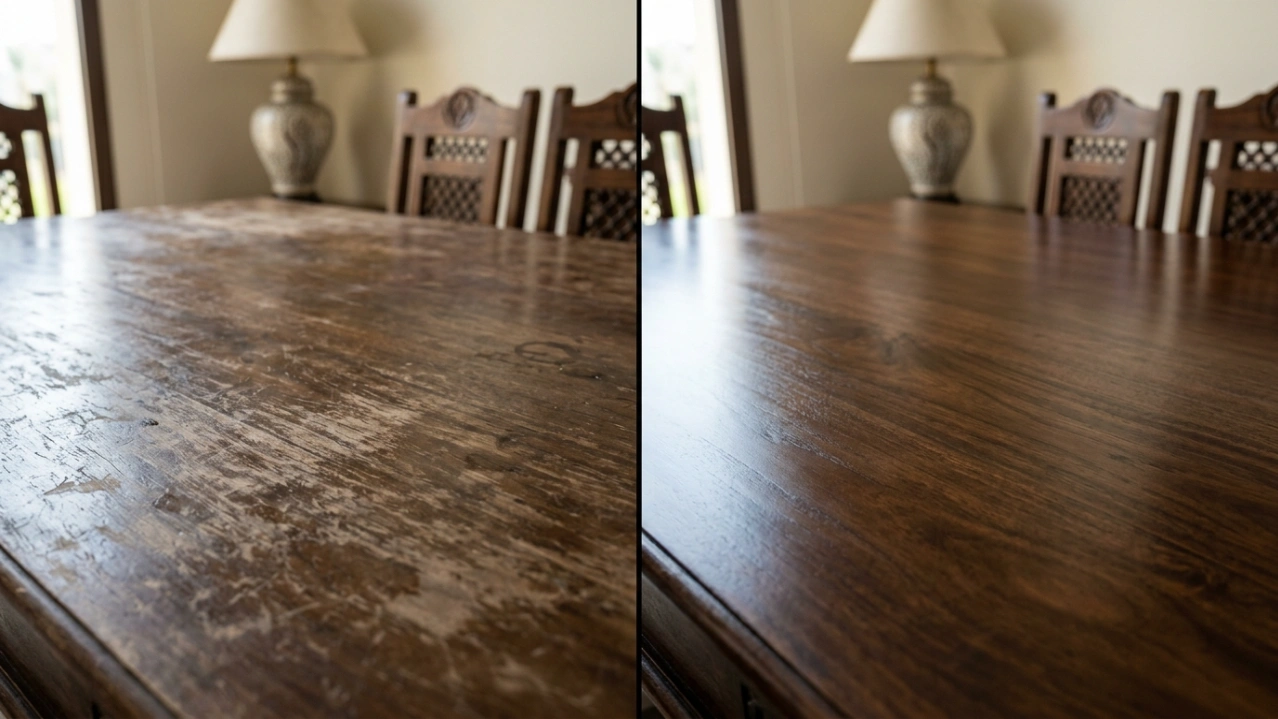
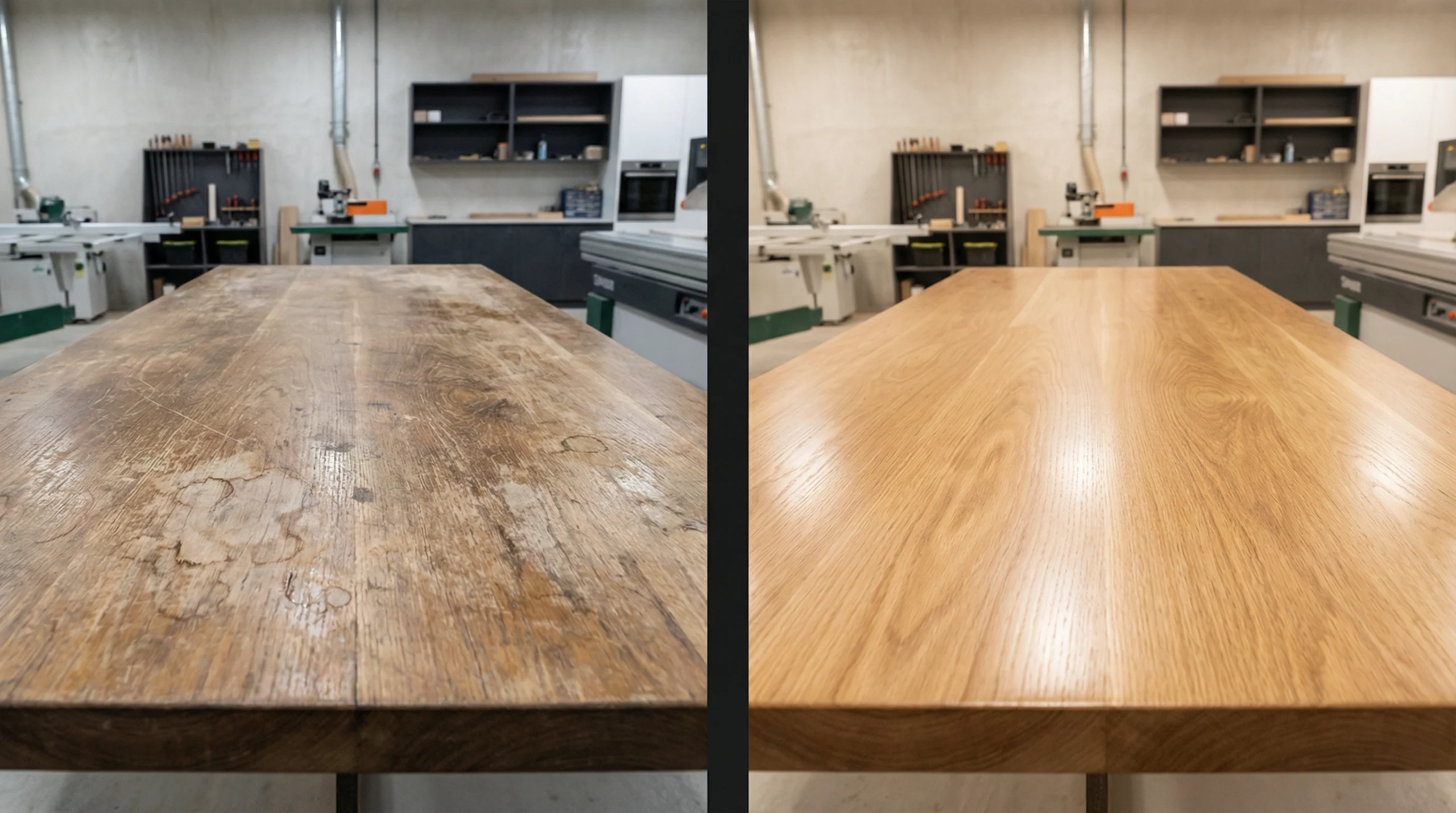
We provide complete restoration for dining tables from any source including full surface stripping and preparation, damage repair addressing water rings, scratches, dents, or burns, structural repairs for loose joints or damaged components, color matching to original finish or modification to new preferences, complete refinishing with modern protective systems, and structural reinforcement when necessary. Many clients bring us tables twenty or thirty years old that have sentimental value but have suffered from neglect or inappropriate repairs—we bring these back to better-than-new condition.
The restoration process begins with assessment. We examine finish condition, test adhesion, check structural integrity, and provide honest recommendations about what’s possible and worthwhile. Some damage is reversible, some requires replacement of components, some means accepting character marks as part of the piece’s history. We help you make informed decisions about how much to restore versus preserve.
Water damage, particularly common in UAE coastal areas where humidity is extreme, requires specific treatment. White rings from condensation respond to mild abrasive rubbing and rewaxing. Black rings indicate moisture has penetrated into wood fibers—these require stripping finish and bleaching the affected area, then careful color matching during refinishing. We’ve developed techniques for blending repairs seamlessly, even in woods with complex grain like walnut or ash.
Joint repair often involves disassembly, which requires patience and expertise. Modern polyurethane glues and some epoxies don’t soften with heat or moisture, which means we sometimes must carefully router out failed joints and recut them slightly larger to fit new joinery. We never compromise structural integrity for cosmetic convenience—if a repair requires rebuilding a section, we recommend that rather than masking problems with fillers that will fail again.
Matching Furniture and Coordination
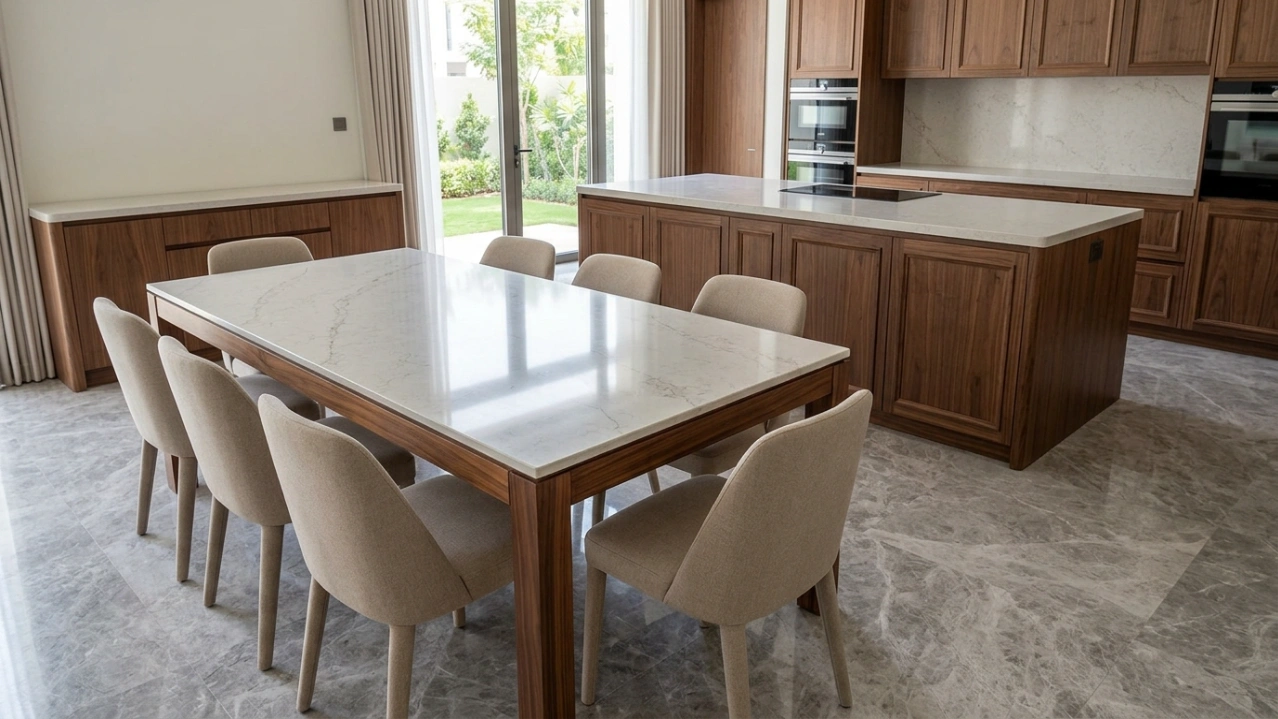
Our furniture coordination service extends beyond your dining table to include matching benches or chairs designed to complement your table, coordinating buffets and credenzas in the same wood and finish, bar units or drinks cabinets that create cohesive dining spaces, and custom shelving or display units that complete the room. We provide design unity across all pieces while ensuring each component functions optimally for its specific purpose.
Matching chairs requires balancing visual coherence with practical comfort. We craft chairs with seats at precisely 45 centimeters height to pair with standard 75-centimeter table height, though we adjust for non-standard designs. Arm clearance is critical—chairs must slide fully under your table’s apron to allow comfortable seating and preserve sight lines across the table. We test this during design phase using mockups, never leaving it to chance.
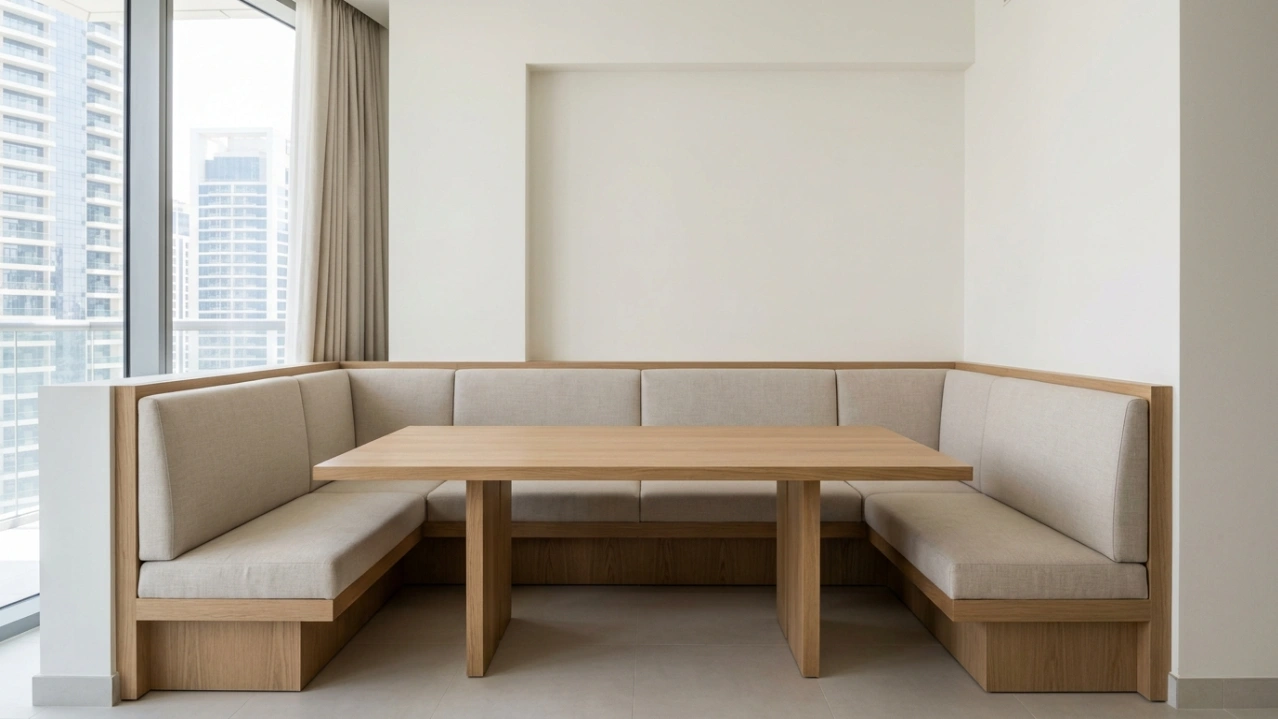
Benches work beautifully in contemporary interiors and for families with young children—they accommodate flexible seating numbers and are easier to clean than upholstered chairs. We build benches with hidden stretchers for strength without visual bulk, and at lengths that relate proportionally to your table. A 2.4-meter table might pair with a 1.8-meter bench, creating asymmetry that’s more visually interesting than exact matching.
Buffets and sideboards extend your storage while providing serving surfaces. We design these at 90 to 95 centimeters height—comfortable working height for adults and proportionally related to standard table height. Interior organization matches how you actually use these pieces: shallow drawers for linens, deeper ones for serveware, possibly wine storage or specialized sections for specific needs. The wood grain book-matching techniques we use on your table extend to these pieces, creating visual continuity across the entire dining room.
Commercial Dining Installation
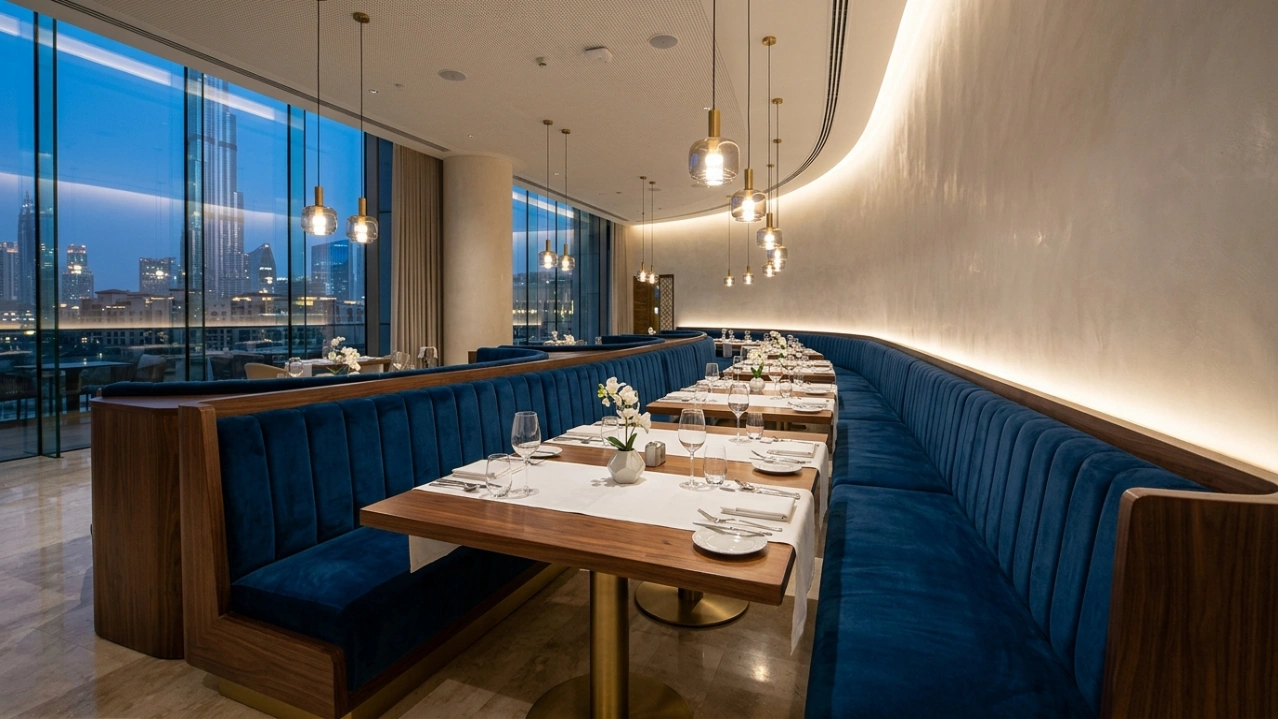
Our commercial dining table service serves restaurants, hotels, corporate dining facilities, and other hospitality applications with durability engineered for commercial use exceeding residential standards, finishes formulated to withstand professional cleaning chemicals, compliance with Dubai Municipality health and safety requirements, rapid installation schedules accommodating business operation constraints, and warranty terms specific to commercial usage patterns. We’ve completed dining furniture for over 140 restaurants and cafes across Dubai and Abu Dhabi, from intimate 20-seat establishments to dining rooms seating 200.
Commercial projects demand different thinking than residential work. A restaurant table might seat eight different parties daily, accumulating the wear a residential table experiences over months in just a week. We specify harder woods, heavier finish build, reinforced joinery, and often incorporate replaceable components in high-wear areas. Table edges receive rounded profiles that resist chipping. We’ve developed finish systems that handle cleaning protocols required by Dubai Municipality while maintaining appearance under the intense lighting restaurants use.
Size standardization helps restaurants manage space efficiently while creating visual coherence. We work with operators to develop table families—perhaps 70-centimeter squares for two-tops, 70 x 140 rectangles for fours, and 70 x 210 for sixes—all using consistent leg styles and finishes so they appear unified when occupied or when pushed together for larger parties. The engineering allows for this flexibility while maintaining stability in all configurations.
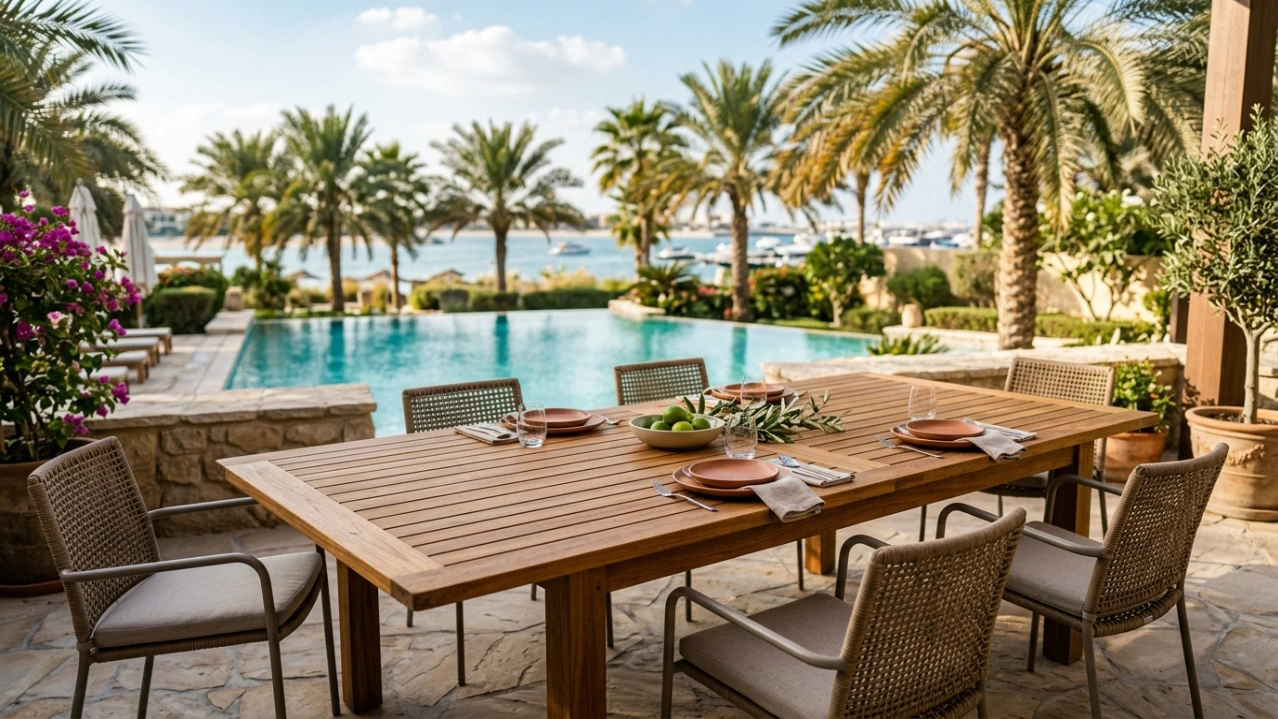
Outdoor dining areas, increasingly popular in Dubai’s cooler months, require specific material choices. We build these from teak or thermally modified ash that resist UAE outdoor conditions, though we’re clear with clients that even the best outdoor furniture requires seasonal maintenance and has finite lifespan. Metal bases receive marine-grade powder coating. We provide detailed maintenance protocols and typically establish annual service contracts where we inspect, clean, touch up, and protect these pieces before each season.
The Karnak Process for Custom Dining Table Projects
Every dining table we craft follows a proven process developed through thousands of projects. Understanding these steps helps you know what to expect and ensures we capture exactly what you’re envisioning from the very first conversation.
Step 1: Initial Consultation and Space Assessment
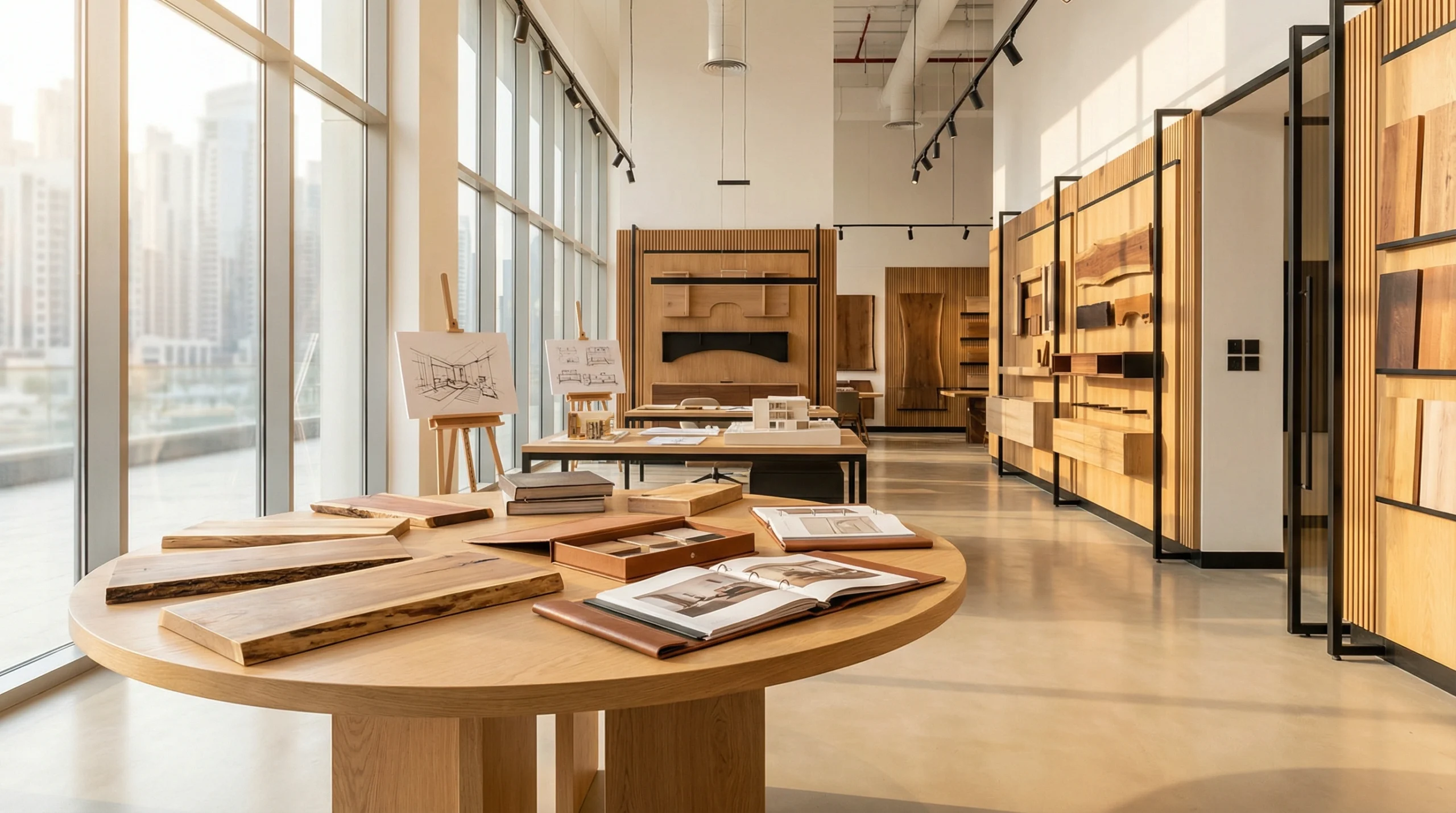
Our process begins with a conversation about how you live, how you entertain, and what you want from your dining table. This typically happens at our Dubai showroom where you can see and touch materials, though we gladly visit your home if that’s more convenient. The consultation runs 45 to 90 minutes because we’re gathering information that determines every downstream decision—rushing this phase means rebuilding mistakes later.
We ask about your household composition, entertaining frequency, whether you need the table to function beyond dining. We discuss your aesthetic preferences, showing material samples and completed projects that relate to what you’re describing. Many clients arrive with photos from Instagram or Pinterest—these help enormously because they show us what’s captured your imagination, even if the final design evolves significantly from these starting points.
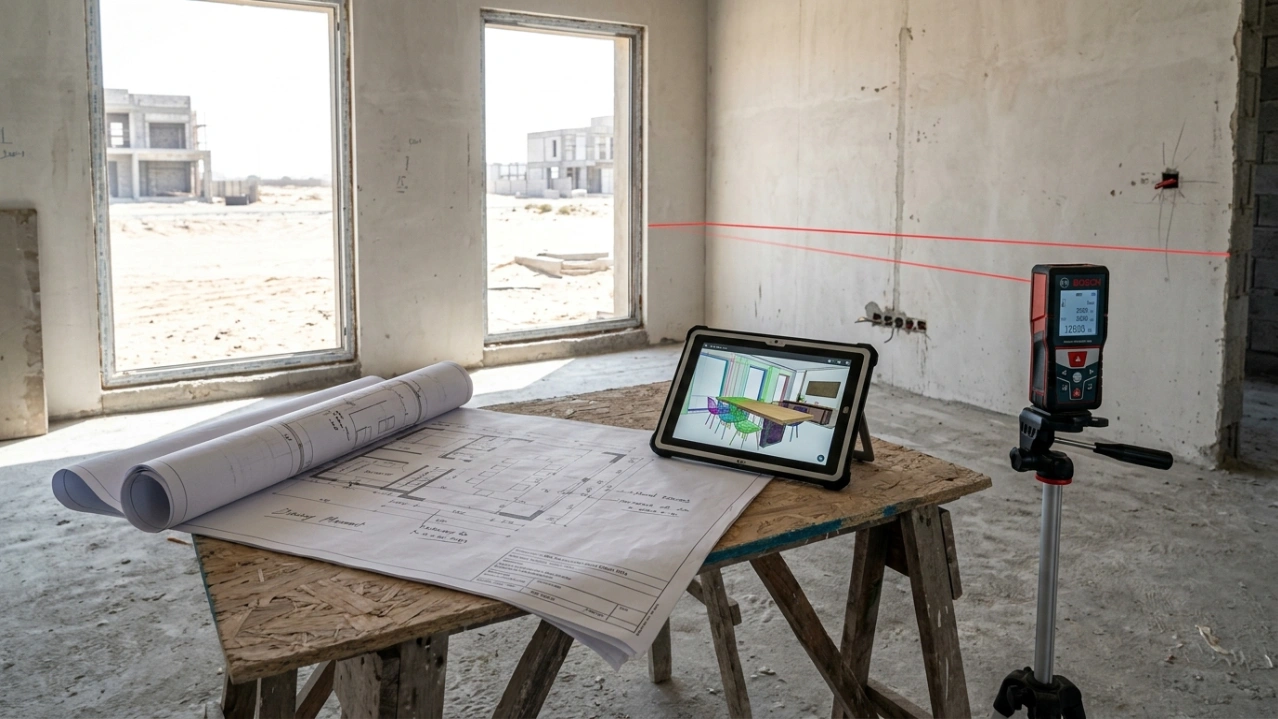
The space assessment involves careful measurement of your dining area, but also observation of how natural light moves through the space, what sight lines matter, how people circulate. We photograph from multiple angles and take detailed notes about architectural elements that will influence design—perhaps a stunning chandelier the table should complement, or floor tiles with patterns that suggest particular table orientations. For new construction projects, we work from architectural drawings while maintaining regular contact as the space develops.
We discuss timeline expectations and budget parameters. Custom dining tables from Karnak typically range from AED 12,000 for simpler contemporary designs to AED 85,000 for large traditional pieces with extensive decorative work—we provide these ranges honestly so everyone understands the investment involved. Timeline runs eight to sixteen weeks from design approval to installation, longer during our busiest periods from September through December.
Step 2: Design Development and Material Selection
Following initial consultation, we develop preliminary designs that respond to your requirements and space constraints. This phase involves our senior designers creating detailed sketches showing multiple viewing angles, providing dimensional drawings with all critical measurements, and developing material specifications for your review. We typically present two to three distinct design directions, each viable but emphasizing different aesthetic or functional priorities.
Material selection happens in parallel with design refinement. We show you actual wood samples from current inventory, not generic examples, because wood varies considerably even within species. The American walnut we’ll use for your table is the actual walnut you’re evaluating—we tag and reserve these specific boards once you approve materials. We discuss grain orientation, color variation, character marks like knots or mineral streaks, and whether you prefer uniformity or want natural variation to create visual interest.
Finish development involves applying test samples to your selected wood and evaluating them under different lighting conditions. We provide finish samples you can take home to view in your actual space, because colors shift dramatically between our showroom fluorescents and your home’s combination of natural light and LED fixtures. Oil finishes create natural matte appearances that highlight grain. Conversion varnish provides glass-smooth protective layers with controllable sheen from matte to high gloss. We explain maintenance implications of each choice because your willingness to maintain the table influences which finish will satisfy you long-term.
This phase concludes with comprehensive design approval. We provide final drawings showing all dimensions, joinery details, finish specifications, hardware selections, and estimated completion timeline. We require 50% deposit upon design approval, which allows us to purchase materials and schedule workshop time. Projects move to fabrication queue based on deposit timing—we maintain steady workflow to deliver consistent quality, which means we schedule carefully rather than overcommitting.
Step 3: Workshop Fabrication and Quality Control
Once your project enters fabrication, communication continues through regular photo updates at major milestones. You’ll see material selection and initial milling, joinery completion, assembly, and finish application. Many clients visit our workshop during fabrication—seeing your table take shape reinforces that this is genuinely custom work, not slightly modified stock designs.
The fabrication sequence we described earlier—material preparation, cutting, joinery, assembly, sanding, finishing—extends across six to ten weeks for most projects. Complex designs with inlay work or curved components require additional time. We maintain buffer in our schedules because wood sometimes reveals internal characteristics only during milling that require us to replace boards to maintain quality standards. We’d rather deliver slightly late than compromise what you’re receiving.
Quality control happens continuously, not as single final inspection. Each craftsman inspects their work before passing to the next phase. Joinery is test-fit before glue-up. We check grain matching, color consistency, symmetry of proportions. After finish application, we inspect under raking light that reveals any surface imperfection invisible under diffuse lighting. Tables must pass this scrutiny before we schedule delivery.
The final assembly sometimes happens twice—once in our workshop to verify everything functions properly, then disassembly for transport, then reassembly in your home. For tables with extension mechanisms, we test operation repeatedly with full weight loading. Leveling feet receive thread-locking compound after adjustment to prevent drift. Metal components are examined for any sharp edges or rough areas. We pack protectively using custom-cut foam and blanket wrapping that prevents any damage during transport.
Step 4: Delivery, Installation, and Client Review
Delivery scheduling accommodates your availability and property access requirements. We confirm arrival window one day in advance and typically provide a narrower two-hour window day-of-delivery. Our installation teams are uniformed professionals who’ve delivered hundreds of furniture pieces—they protect your floors and doorways during transport, work efficiently, and leave no trace beyond your beautiful new table.
The installation process involves careful positioning, precise leveling, protective felt or glide installation, and operation testing for any mechanical components. We make final adjustments based on your feedback—perhaps the table position needs to shift 10 centimeters to align with your chandelier, or you’d prefer chairs positioned differently during storage. These small details matter because you’ll live with this table for decades.
Client review happens with you present and actively examining the finished piece. We encourage you to look carefully, touch all surfaces, operate any mechanisms, and voice any concerns immediately. We’ve never had a table rejected during this review—our quality control prevents that—but we do occasionally make minor on-site adjustments to perfect the outcome. We provide detailed care instructions specific to your table’s wood species and finish, demonstrating proper cleaning techniques and discussing what products to use or avoid.
The final 50% payment is due upon completion of installation and your satisfaction confirmation. We accept bank transfer, credit cards, or cash payment. We provide complete documentation including detailed invoices for warranty purposes, care instruction sheets, and information about our annual maintenance program if you’re interested in professional ongoing care.
Step 5: Ongoing Support and Maintenance
Our relationship continues beyond installation. We contact you two weeks after delivery to ensure everything is performing as expected and answer any questions that have emerged through actual use. The first year sees highest client contact—often with simple questions about daily maintenance or observations about how wood is responding to their environment. We welcome these conversations because educated clients maintain their tables better.
Warranty coverage extends five years for structural integrity and workmanship, covering joint failure, warping beyond acceptable limits, or finish delamination. Normal wear—scratches from use, minor finish dulling, seasonal wood movement within specification—isn’t covered, but we’re always available to discuss restoration options if your table needs refreshment after years of use. We stock finish materials for every project and maintain records of wood sources so future repairs match perfectly.
Annual maintenance, while optional, extends table life significantly. We offer service visits where our technicians clean your table properly, inspect for developing issues, tighten any hardware, touch up minor damage, and reapply protective treatments to high-wear areas. This runs AED 350 to AED 600 depending on table size and typically takes 90 minutes at your home. Many clients schedule this before major holidays when the table will see heavy use.
Long-term relationship matters to us. We’ve built second and third tables for families as they’ve moved to larger homes or expanded their space needs. We’ve restored tables we built twenty years ago, meeting the next generation inheriting these pieces. We’ve adapted tables when room renovations changed dimensions or aesthetics shifted. Your dining table is the beginning of relationship, not a transaction that ends at delivery.
Why UAE Families and Businesses Choose Karnak for Dining Tables
Selecting who will craft your dining table matters as much as the design itself. The table you’re considering will gather your family for thousands of meals, witness celebrations and difficult conversations, serve guests from around the world, and potentially pass to your children. That deserves expertise you can trust.
Three Decades of UAE-Specific Expertise
Since 1988, we’ve completed over 10,000 UAE projects. This means we’ve solved the humidity warping issue in coastal Dubai apartments 847 times—we know exactly which wood species survive in JBR versus which fail within two years. We’ve navigated Dubai Municipality approvals for 3,200+ commercial fit-outs and can guide you through any regulatory requirements without delays or expensive mistakes. We know which finishes withstand Emirates Hills’ intense western sun exposure and which yellow within eighteen months.
This depth of local experience manifests in countless small decisions that determine long-term success. We know the typical floor tile layouts in Emirates Living communities mean rectangular tables longer than 2.8 meters should orient specifically to avoid legs landing on grout lines. We understand that apartments in Dubai Marina towers built between 2006-2009 often have floor slopes exceeding 15 millimeters across 3 meters—we measure and compensate during fabrication so your table sits level without visible shimming. We’ve installed tables in penthouses where getting through service elevators required partial disassembly and reassembly on-site using techniques we’ve refined through dozens of similar situations.
The climate knowledge runs deep enough that we acclimatize wood differently based on whether it’s destined for central Dubai with aggressive air conditioning or for a Jumeirah villa with substantial natural ventilation. We’ve tracked warranty claims meticulously over decades and can tell you definitively that walnut from our current supplier experiences movement of less than 0.4% across typical UAE seasonal humidity swings while oak from the supplier we used 2018-2020 moved 1.2% and caused three client complaints—so we changed suppliers.
Our installation teams know the access challenges specific to UAE developments. Burj Khalifa residences require booking service elevators weeks in advance and adhering to strict delivery windows. Palm Jumeirah villas built on original sections have different doorway dimensions than newer additions. Business Bay commercial towers implemented new loading dock protocols in 2023 that affect delivery logistics. We navigate all of this seamlessly because we do it constantly, which means you don’t face the delays and frustrations that plague projects led by less experienced firms.
Master Craftsmen, Not Production Workers
Our workshop employs seventeen craftsmen who average 22 years of furniture-making experience. Four have been with Karnak for over twenty years. These aren’t workers following assembly instructions—these are masters who understand wood, who’ve solved thousands of fabrication challenges, who take personal pride in work that will outlast them. When Rashid selects boards for your table, he’s examining grain and color with expertise developed across 8,000+ projects. When Mohammed cuts your mortise and tenon joints, his hands know from muscle memory what precision means.
This expertise appears in details invisible to most clients but critical to longevous. The joinery orientation we select depends on the grain direction in your specific boards, not generic rules. The glue we use varies based on whether joints will experience more tension or compression during seasonal movement. The sanding sequence proceeds through eight distinct grits rather than four because we’ve learned the additional steps eliminate micro-scratches that eventually telegraph through finishes. These decisions happen automatically from accumulated experience—we don’t reference manuals or debate options because we’ve already made these choices thousands of times and know what works.
The master-apprentice tradition continues in our workshop. Junior craftsmen spend their first two years learning preparation work—material handling, rough milling, initial sanding. They observe the masters, they absorb techniques through daily exposure, and gradually they’re trusted with increasing responsibility. This isn’t faster than hiring experienced workers, but it preserves knowledge and maintains quality across generations. Some techniques we use—particular approaches to book-matching veneers or the hand-rubbed joint finishing that creates invisible seams—exist nowhere in written form. They live only in demonstration and practice.
You’re not buying factory furniture with our label attached. Every table we deliver was touched by hands that care about the outcome, guided by eyes that notice imperfection, and judged against standards refined across decades. This costs more than mass production and takes longer than assembly-line work, but it’s the only way to create furniture worthy of your home’s most important gathering place.
Complete In-House Capabilities
We control every aspect of your project from initial design sketches through final installation because we maintain complete fabrication facilities right here in Dubai. Our 2,400 square meter workshop houses both CNC machinery for precision cutting and traditional equipment for hand craftsmanship. We have climate-controlled storage for wood acclimatization, a dedicated finishing booth with industrial ventilation and climate control, and space for full-scale mockups when designs require verification before committing to final materials.
This integration means accountability. There’s no finger-pointing between designer, fabricator, and installer when everyone works for the same company and shares commitment to your satisfaction. When challenges emerge during fabrication—perhaps the wood reveals unexpected character once we start working it—our designer is down the hall and can collaborate on solutions immediately rather than through extended email exchanges with external partners. When installation reveals that your floor isn’t level as assumed, our installation team includes the fabrication supervisor who can make informed decisions about adaptation without delaying your project.
The efficiency benefits you directly. Projects move faster because components don’t wait for external suppliers or suffer miscommunication between separate companies. Cost control is better because we’re not marking up subcontractor work. Quality maintains consistency because the same standards apply to every project phase. We’ve watched competitors struggle with projects where beautiful designs foundered on poor fabrication or excellent craftsmanship was undermined by careless installation—we eliminated these failure points by bringing everything in-house.
Our metal fabrication capabilities allow us to design and build custom table bases that complement wood tops perfectly. We’re not constrained by what’s available from suppliers or forced to design around standard components. If your vision requires a stainless steel pedestal base with specific dimensions and finish, we engineer and fabricate that in-house, then marry it to your solid wood top using connection techniques we’ve developed specifically for thermal expansion differentials between materials. This level of customization simply isn’t available from companies that outsource fabrication.
Transparent Process and Realistic Timelines
We tell you exactly what to expect and then deliver on those commitments. The timeline we provide during initial consultation is realistic—we buffer for contingencies rather than quoting optimistic schedules we can’t maintain. If we estimate twelve weeks to completion, we deliver in twelve weeks or sooner, not fourteen weeks with apologies and excuses. This reliability matters when you’re coordinating with other renovation work or have specific deadlines for events or relocations.
The pricing we quote is the price you pay. We itemize everything—design, materials, fabrication, finishing, delivery, installation—so you understand exactly what you’re receiving. If you want to modify design during development, we provide updated pricing immediately and clearly explain what changed and why. We’ve never had a client surprised by final invoice because we communicate every cost before commitment. Some projects do encounter price variations, but these happen only when you request changes after approval—perhaps adding extension leaves or upgrading to more expensive wood—and we document these explicitly before proceeding.
Communication happens proactively throughout your project. You receive photo updates at major milestones without needing to request them. If we encounter unexpected material issues that might affect timeline, you know immediately, not two weeks later when you’re wondering about progress. Our project coordinator maintains contact, answers questions, and coordinates any site visits or decisions that require your input. This attention feels unusual only because so many companies in the furniture industry operate through chaos and delayed responses—we just do what should be standard practice.
The warranty we provide is straightforward and honored without argument. Five years covering structural integrity and workmanship defects means if something fails due to our error in design, materials, or execution, we repair or replace at our expense. We’ve made good on this warranty seventeen times in the last five years—twice for joint failures where we underestimated load requirements for extension mechanisms that sagged slightly with maximum weight—we redesigned and replaced the mechanisms with reinforced versions. Three times, finish issues developed that we traced to defective material batches from our supplier—we stripped and refinished these tables at our expense. The remaining claims involved minor joint issues or hardware failures we corrected promptly. We never debate legitimate warranty claims—if we made an error, we fix it properly and completely.
Sustainable Practices and Material Sourcing
The wood we use comes from documented sustainable sources. We maintain FSC chain-of-custody certification for all primary hardwoods, which means we can trace your table’s materials back to specific forests managed for long-term viability rather than clearcut exploitation. This matters both ethically and practically—sustainably managed forests produce better quality timber because careful harvesting selects mature trees and allows proper drying, resulting in more stable and beautiful wood.
Our relationship with suppliers extends decades in some cases, built on mutual trust and quality commitment. We visit supplier facilities, we examine their forestry practices, we test materials before adding them to our approved list. The American walnut we source comes from three multigenerational family operations in the Midwest United States who’ve been supplying us since 2003. The European oak ships from suppliers in France and Germany who’ve maintained sustainable practices since before sustainability became marketing language. This stability means consistency for you—your table uses the same quality materials as tables we built five years ago and will build five years from now.
We minimize waste through careful material planning and repurpose most remainder. Cutoffs from your table become components for smaller projects or samples for future clients. Sawdust is collected for local agricultural use rather than landfilled. Finish products are low-VOC formulations that don’t release harmful chemicals into your home or our workshop environment. These practices add marginal cost but align with how we believe business should operate—respecting resources, protecting people, and building for longevity rather than planned obsolescence.
Local sourcing happens wherever quality allows. Metal components come from UAE suppliers we’ve developed relationships with over twenty years. Hardware is European-manufactured for reliability but stocks in Dubai to avoid shipping delays. Finishing materials are formulated specifically for Gulf climate by regional specialty suppliers. This reduces environmental impact from shipping, supports regional economy, and ensures we can obtain replacement materials quickly if future service requires matching components.
Recent Custom Dining Table Projects Across UAE
The diversity of projects we complete demonstrates our capability to adapt to any style, space, or requirement while maintaining the quality standards that define Karnak craftsmanship.
Contemporary Walnut Table – Business Bay Apartment
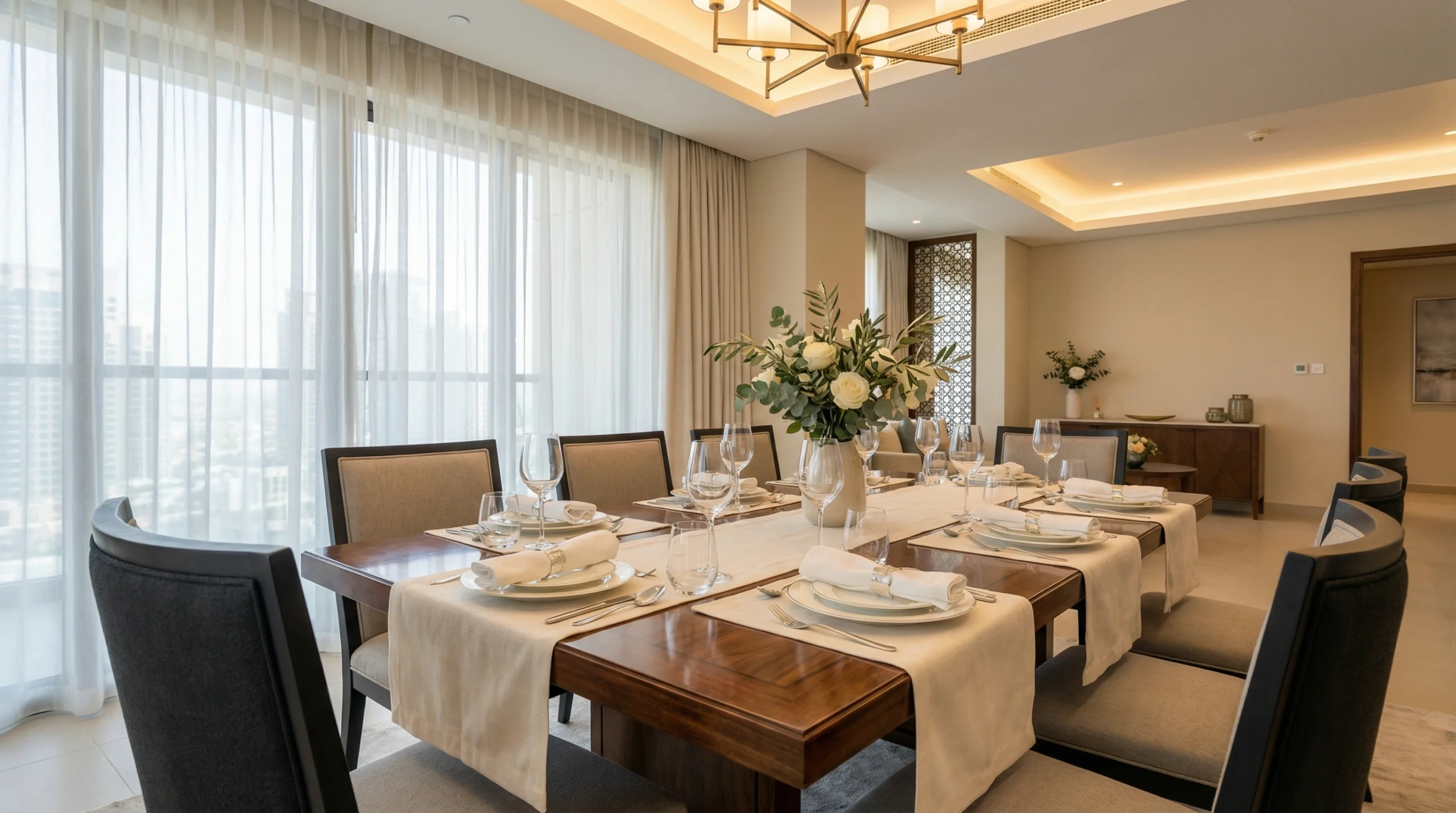
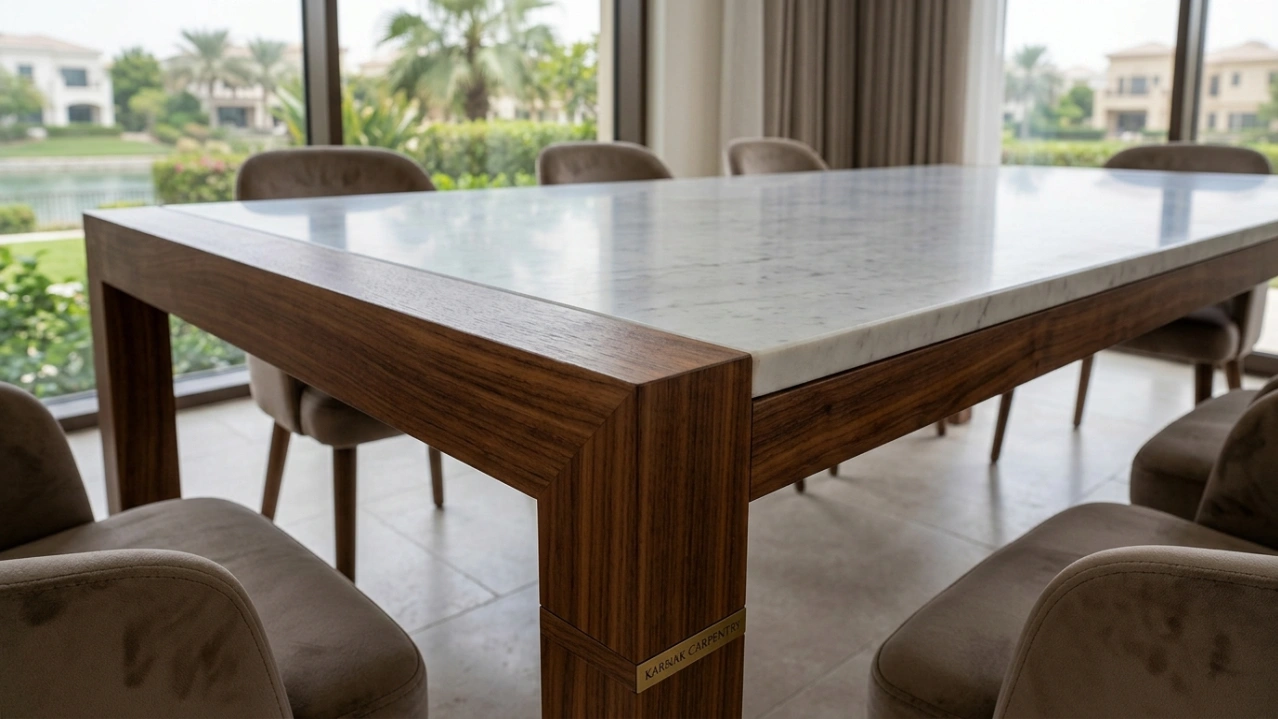
A finance executive couple needed a dining table for their 3.2 by 4.5 meter dining area that could seat six daily and ten when their extended family visits from London. We designed a 2.4-meter solid American walnut table with waterfall edges and a self-storing butterfly extension leaf that adds 60 centimeters. The book-matched top creates dramatic symmetry in the grain pattern. Matte conversion varnish finish resists their active lifestyle with two young children while highlighting the wood’s natural chocolate tones. Completed in nine weeks with installation September 2024. The table integrates pop-up power modules for their work-from-home needs.
Traditional Arabic Dining Table – Emirates Hills Villa
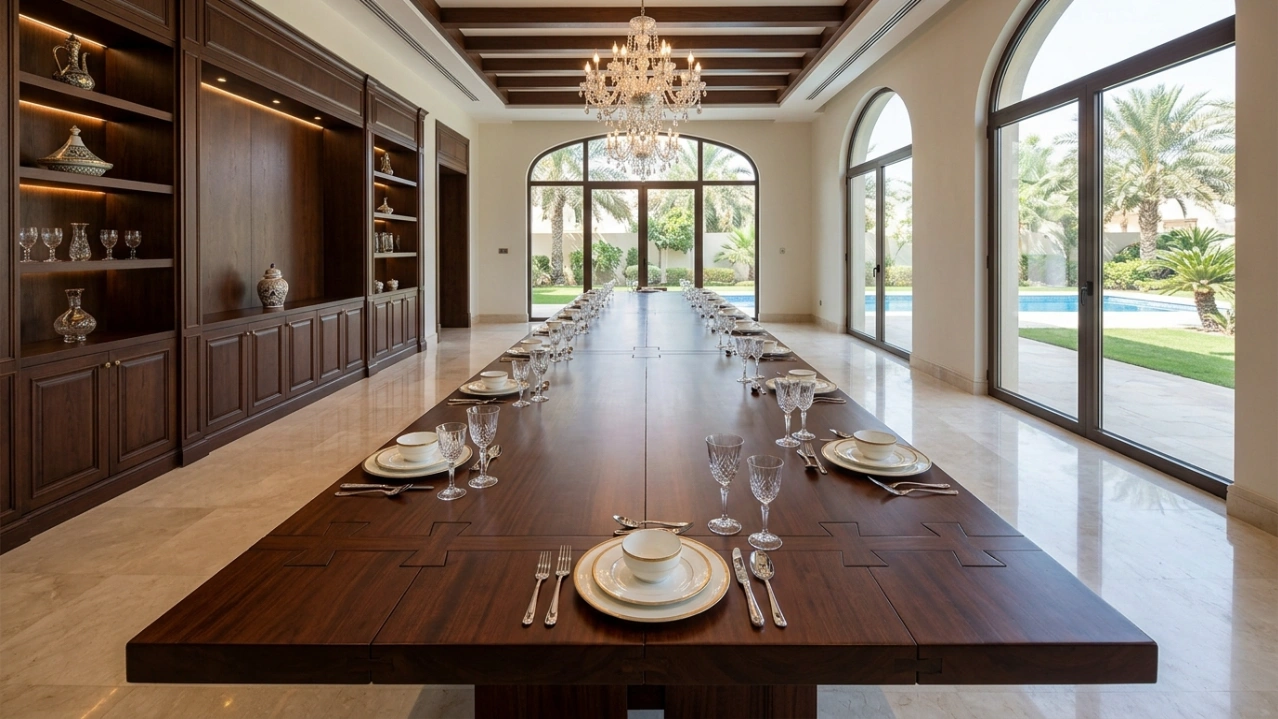
This 4.2-meter solid teak table features hand-carved geometric borders referencing traditional Islamic patterns and includes mother-of-pearl inlay creating a central medallion design. Built for a family who entertains frequently during social season, the table accommodates sixteen guests comfortably. We crafted matching serving credenza with similar decorative elements. The project required sixteen weeks due to extensive handwork on decorative components. Installed January 2025 in time for their annual Ramadan gatherings. Oil finish was applied to maintain natural wood character while protecting against heavy use.
Reclaimed Wood Community Table – Café, Al Quoz
A 3.8-meter communal dining table for an artisan café created from reclaimed teak warehouse beams we sourced and processed in our workshop. Steel I-beam base powder-coated in matte black provides industrial aesthetic while engineered for commercial durability. The top deliberately retains character marks from previous use while structural integrity comes from concealed steel reinforcement and modern joinery. Seats twelve on integrated benches. Completed in ten weeks with installation November 2024. Designed to withstand daily commercial use while developing richer patina over time.
Extending Oak Table – The Springs Villa
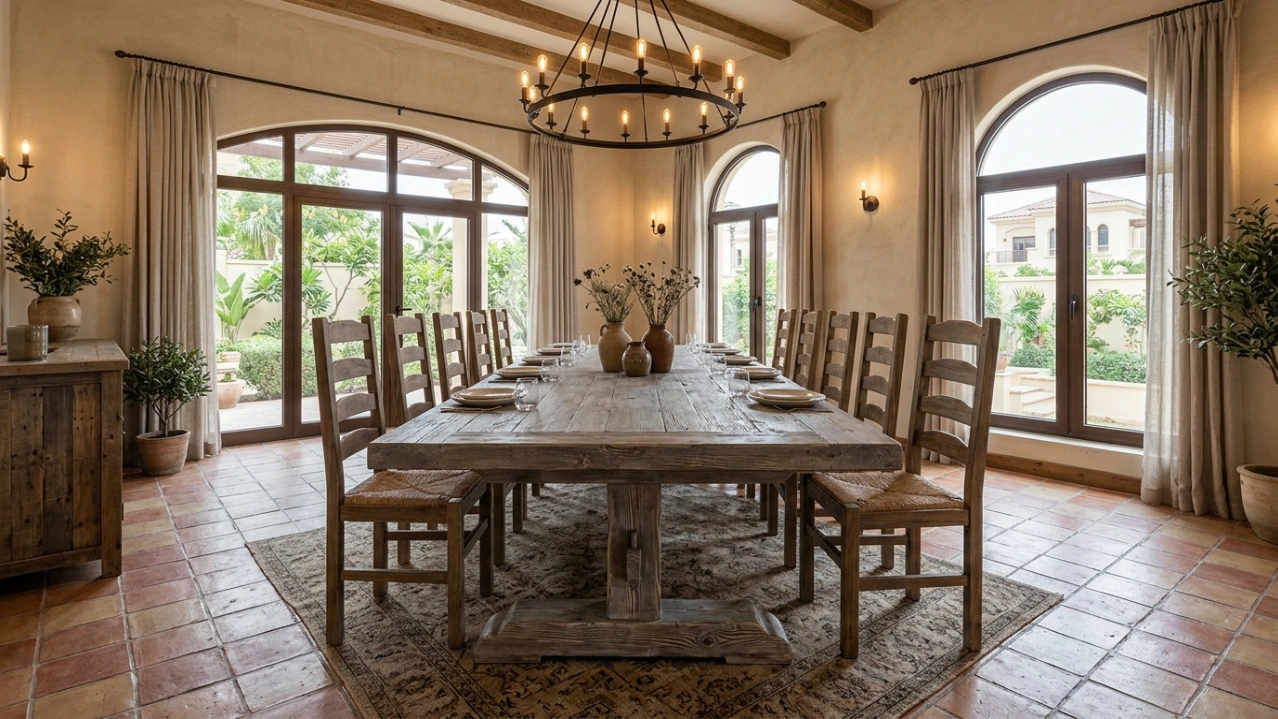
A young family in The Springs needed a dining table that could grow with their family and accommodate occasional dinner parties. We crafted a 2.2-meter solid European oak table with traditional pull-apart extension mechanism storing two 50-centimeter leaves separately. Natural oil finish emphasizes the pronounced grain while requiring annual maintenance the clients enthusiastically accepted. The light Scandinavian aesthetic complements their mid-century modern interior. Table extends to seat twelve for holiday gatherings then returns to intimate six-person size for daily meals. Eight-week fabrication with delivery October 2024.
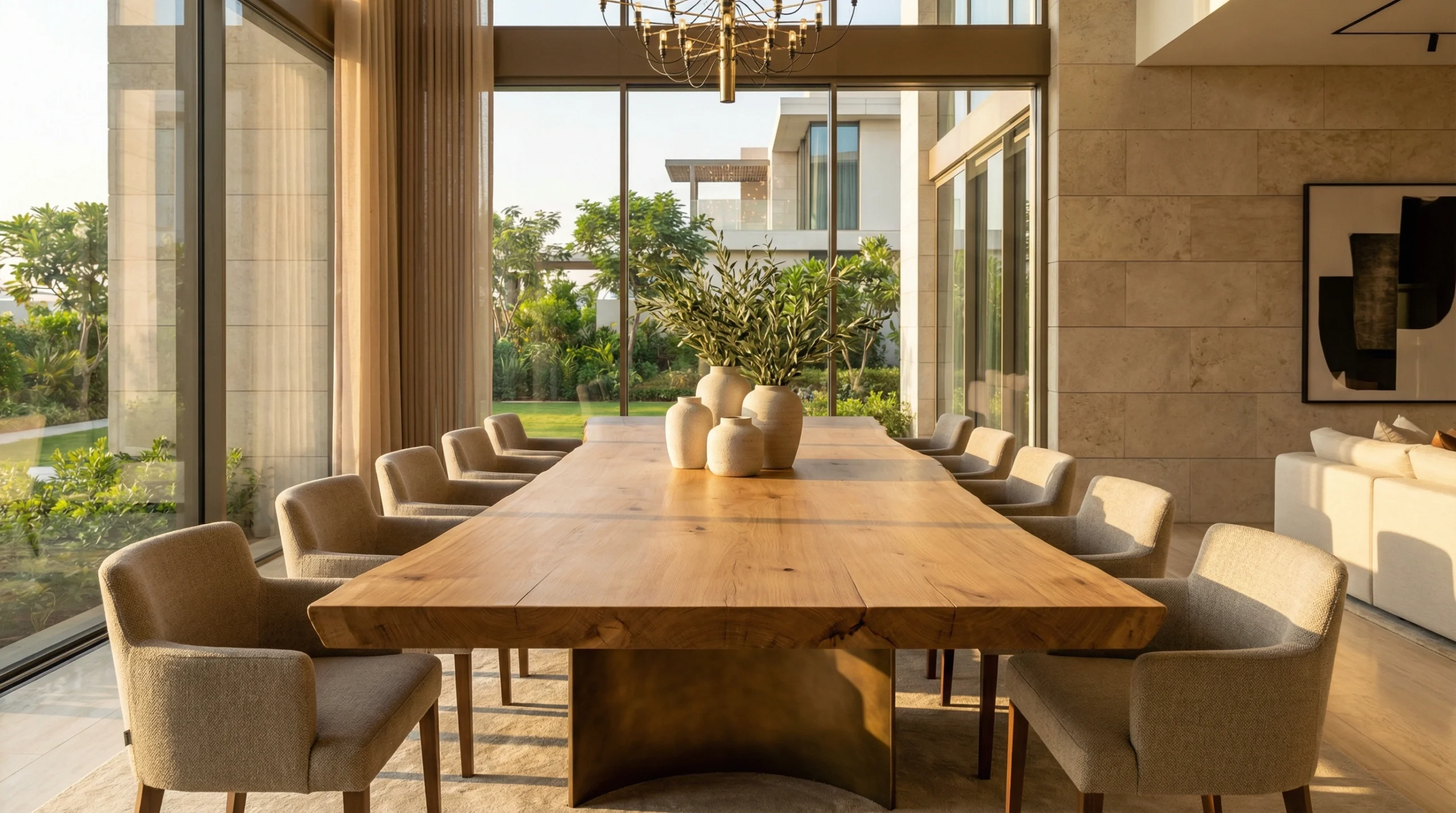
Live Edge Walnut Table – Dubai Marina Penthouse
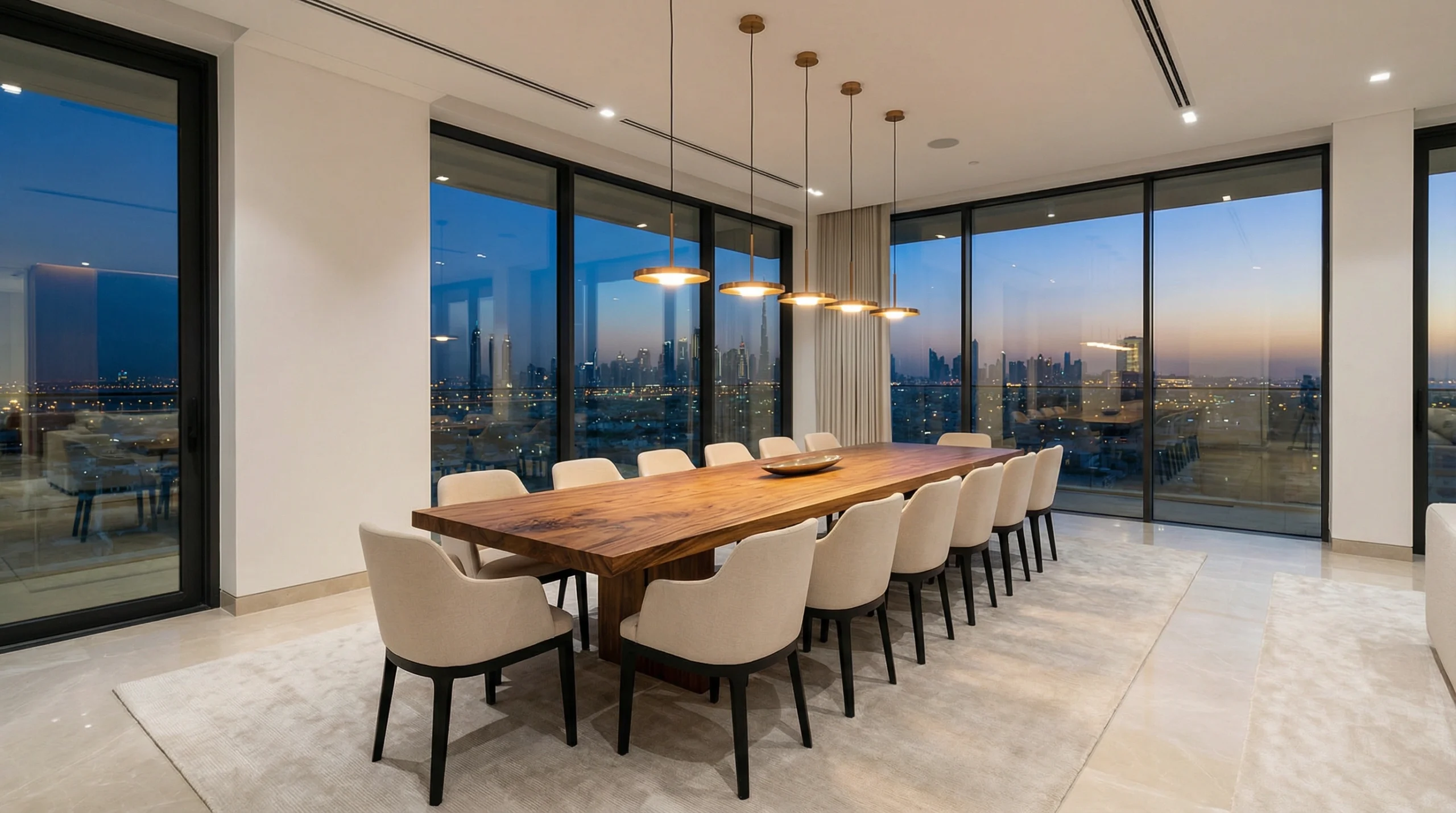
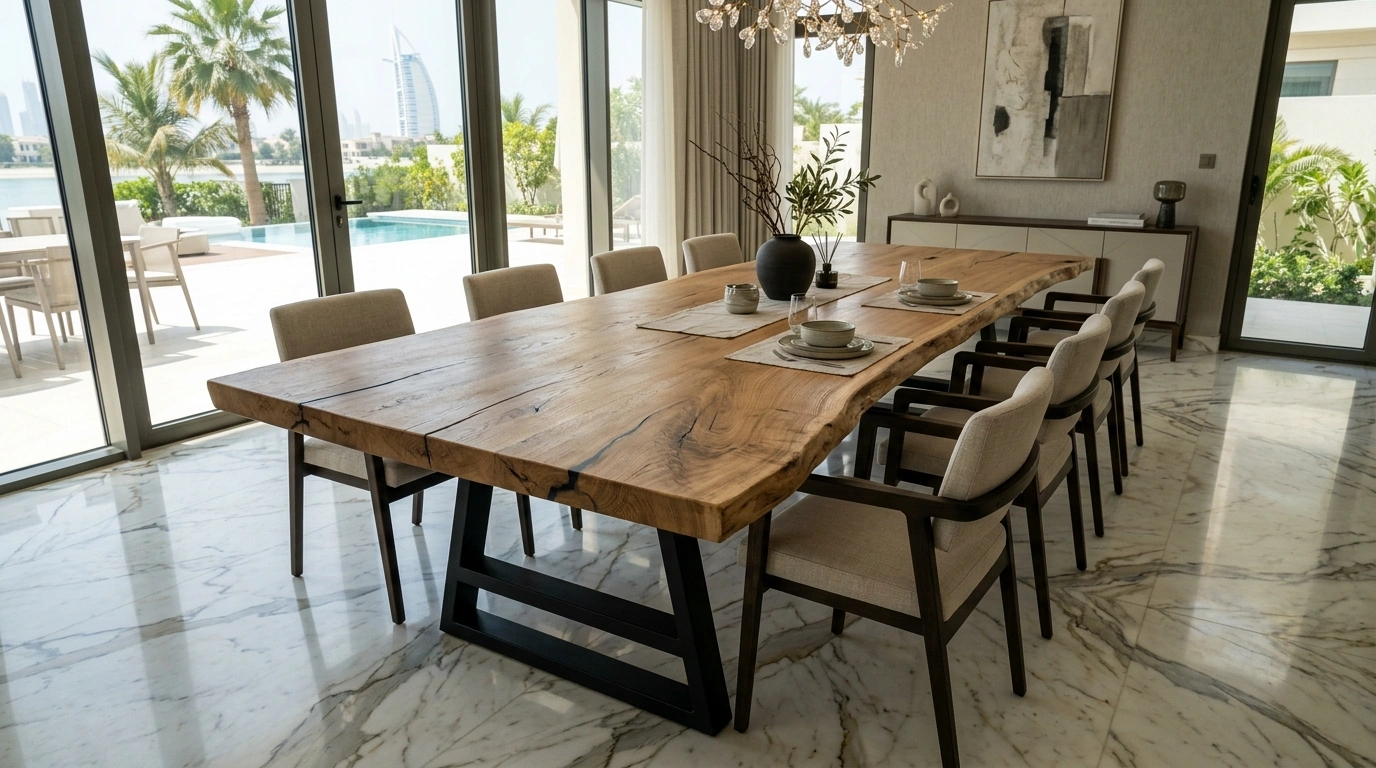
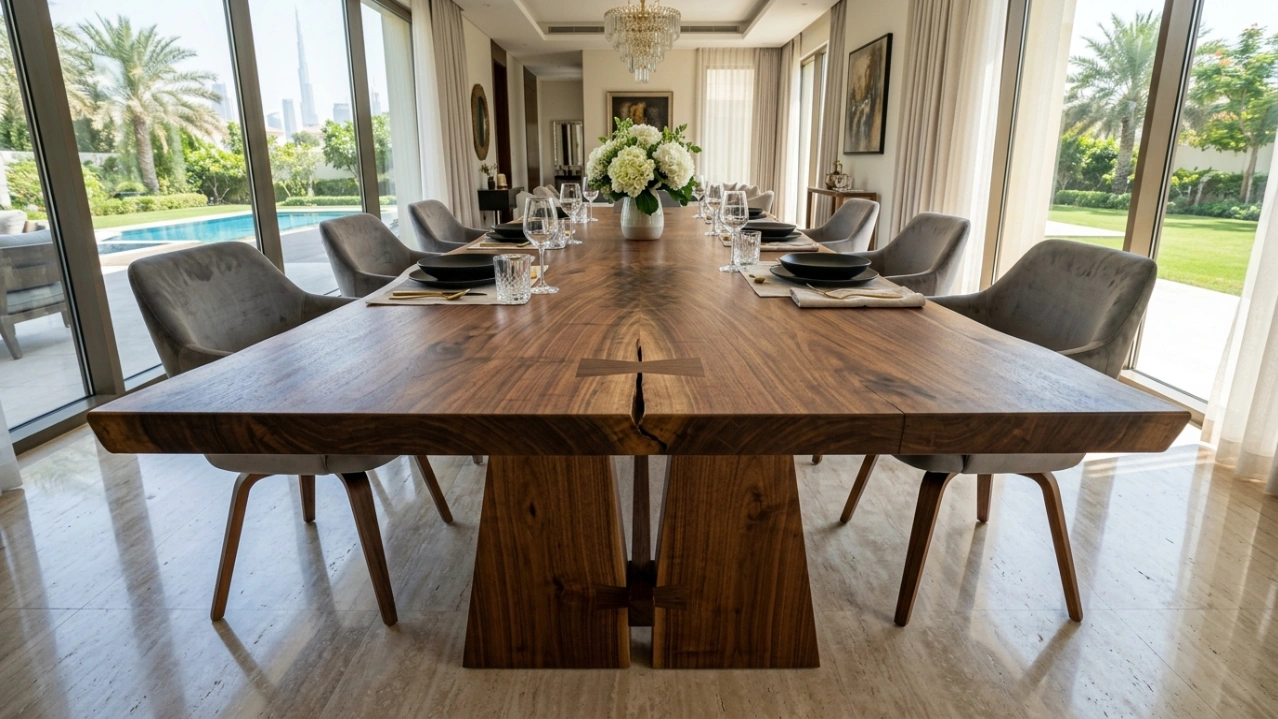
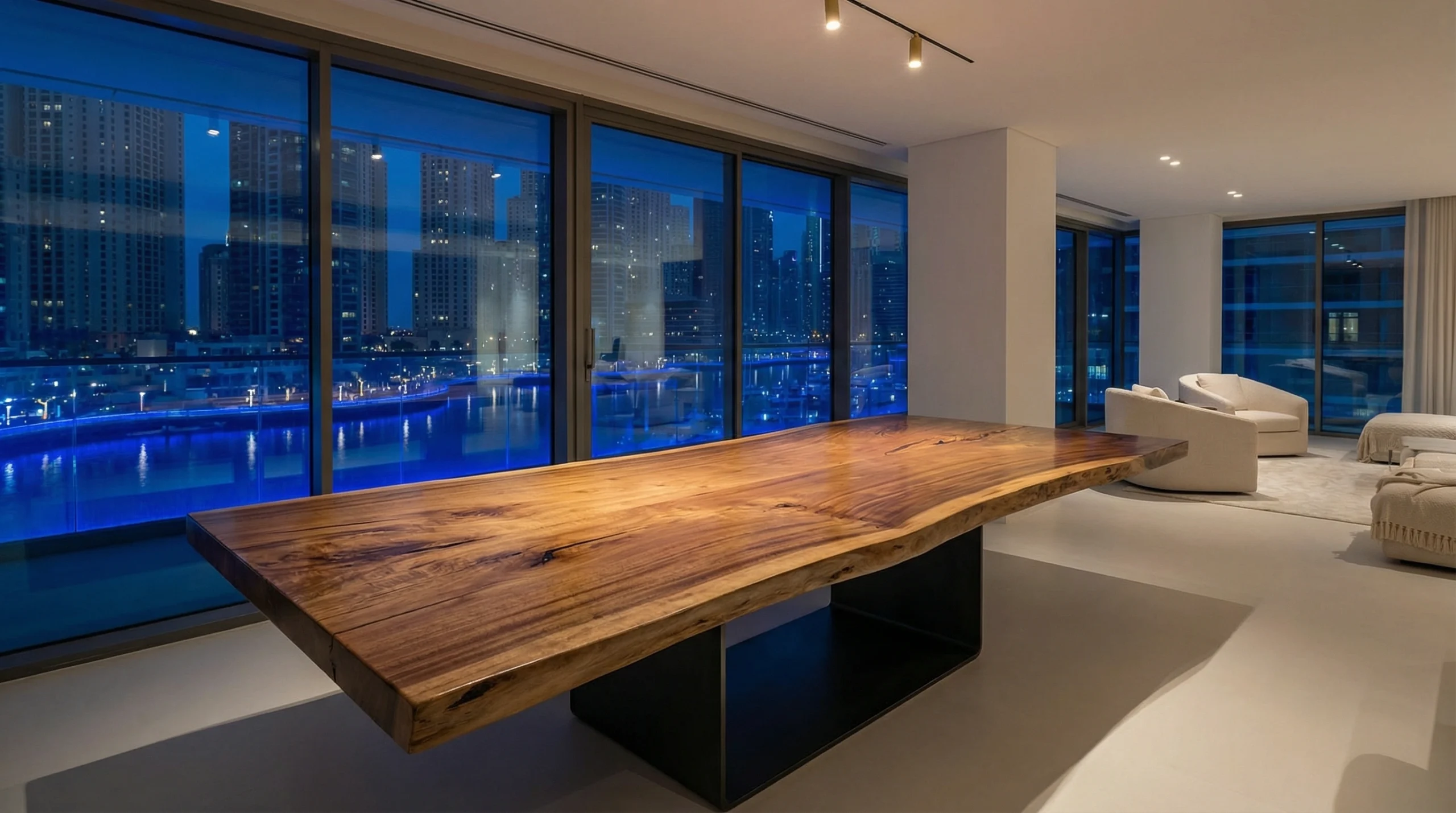
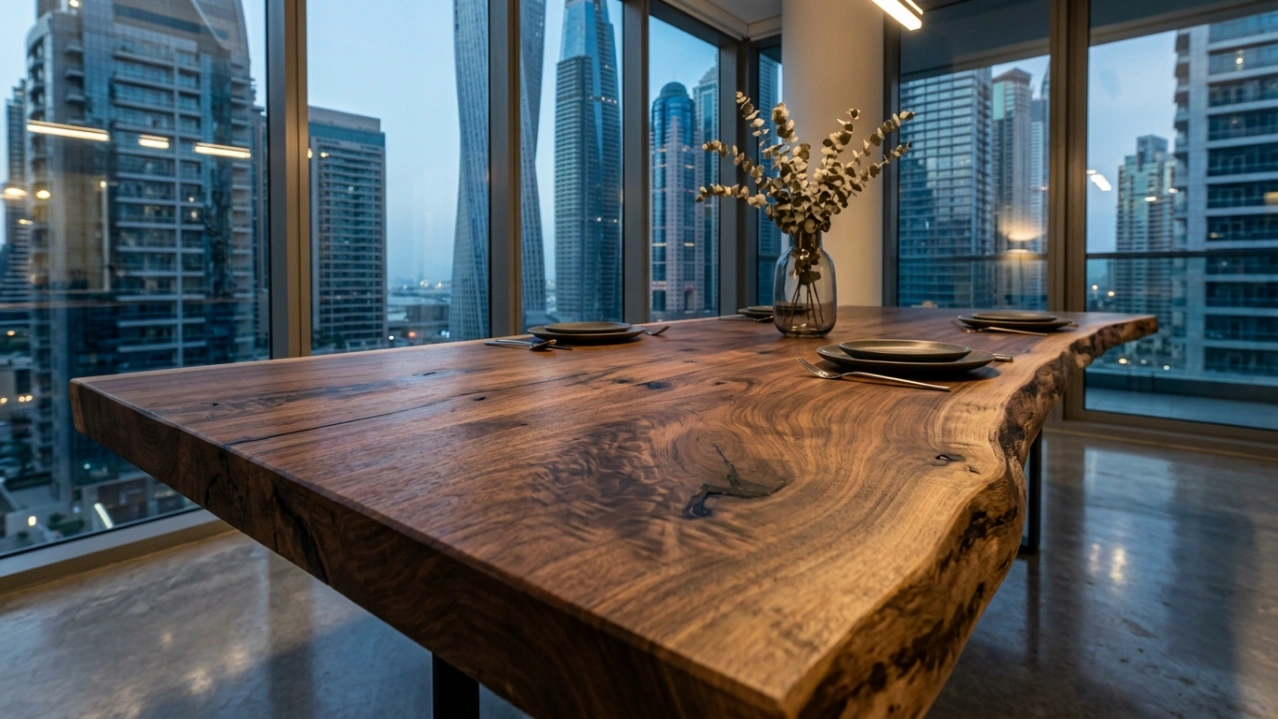
This dramatic 3.6-meter table preserves natural live edges on a spectacular walnut slab, creating organic contrast against the penthouse’s contemporary architecture. Steel pedestal base engineered to support the 240-kilogram solid wood top while maintaining visual lightness. The grain runs continuously through the single-piece top, creating the dramatic statement the clients wanted for their open-plan entertaining space. Clear high-gloss conversion varnish amplifies depth in the wood while protecting the natural edge from damage. Fourteen-week fabrication including four-week wood acclimatization period. Installed via crane through penthouse terrace August 2024.
Round Extension Table – Arabian Ranches
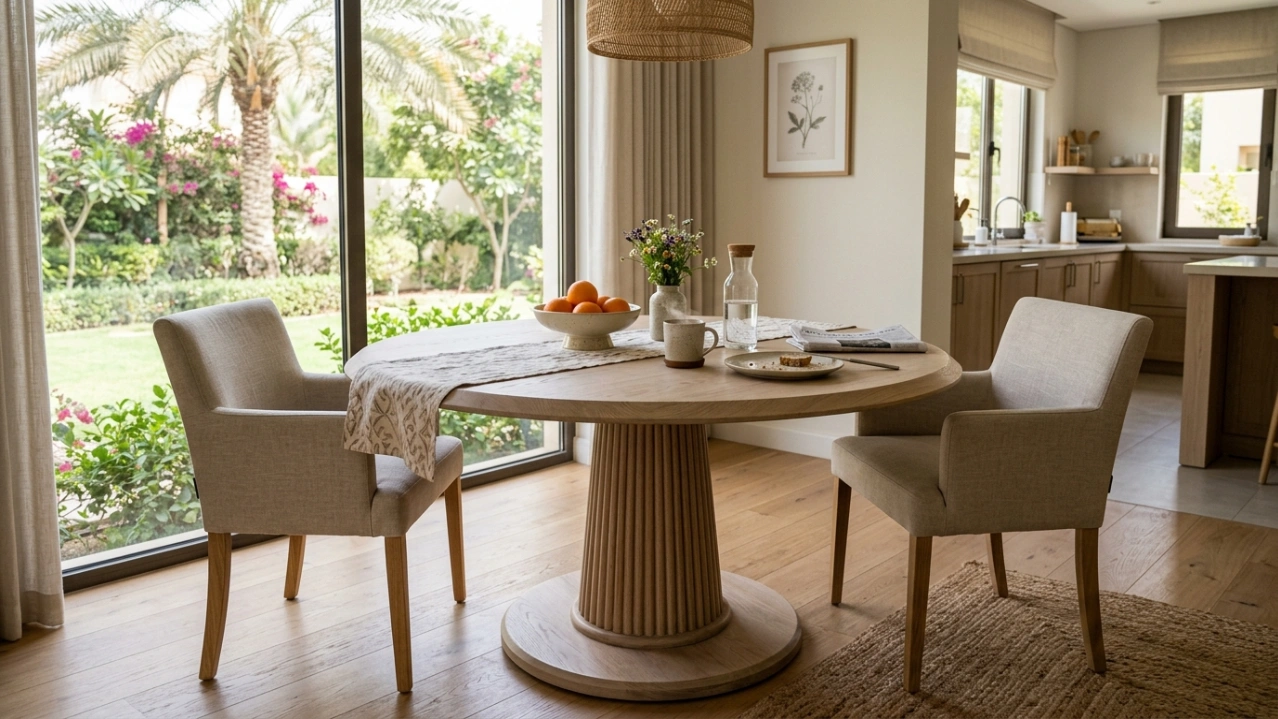
A 140-centimeter round oak table that extends to 200 centimeters oval for an Arabian Ranches family who values conversation-focused dining but needs flexibility for larger gatherings. German-engineered synchronized extension mechanism allows single-person operation. Central lazy Susan with concealed ball-bearing assembly rotates smoothly for family-style serving. Six matching upholstered chairs in complementary fabric complete the set. The table’s light natural finish integrates with their neutral Mediterranean-inspired interior. Ten-week timeline with installation December 2024 before holiday season.
Commercial Restaurant Tables – JBR Development
Forty-two tables for an upscale restaurant including 24 two-person tables at 70 centimeters square, 12 four-person tables at 140 by 70 centimeters, and 6 six-person tables at 210 by 70 centimeters. Solid ash construction with conversion varnish engineered for commercial cleaning protocols. Powder-coated steel bases designed for stability on the restaurant’s outdoor terrace while resisting coastal salt air corrosion. Modular sizing allows flexible configurations for different party sizes. Completed and installed over two weekends to minimize business disruption. Delivered June 2024 with annual maintenance contract.
Modern Glass and Wood Hybrid – Downtown Dubai
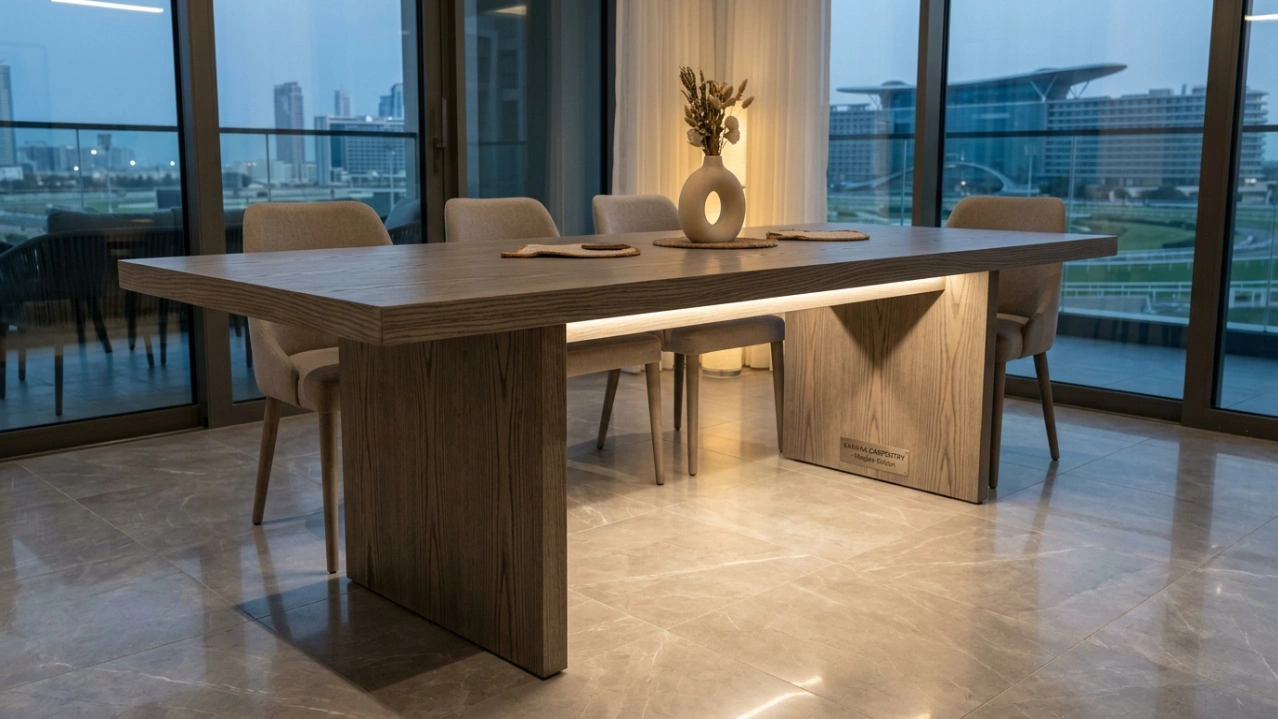
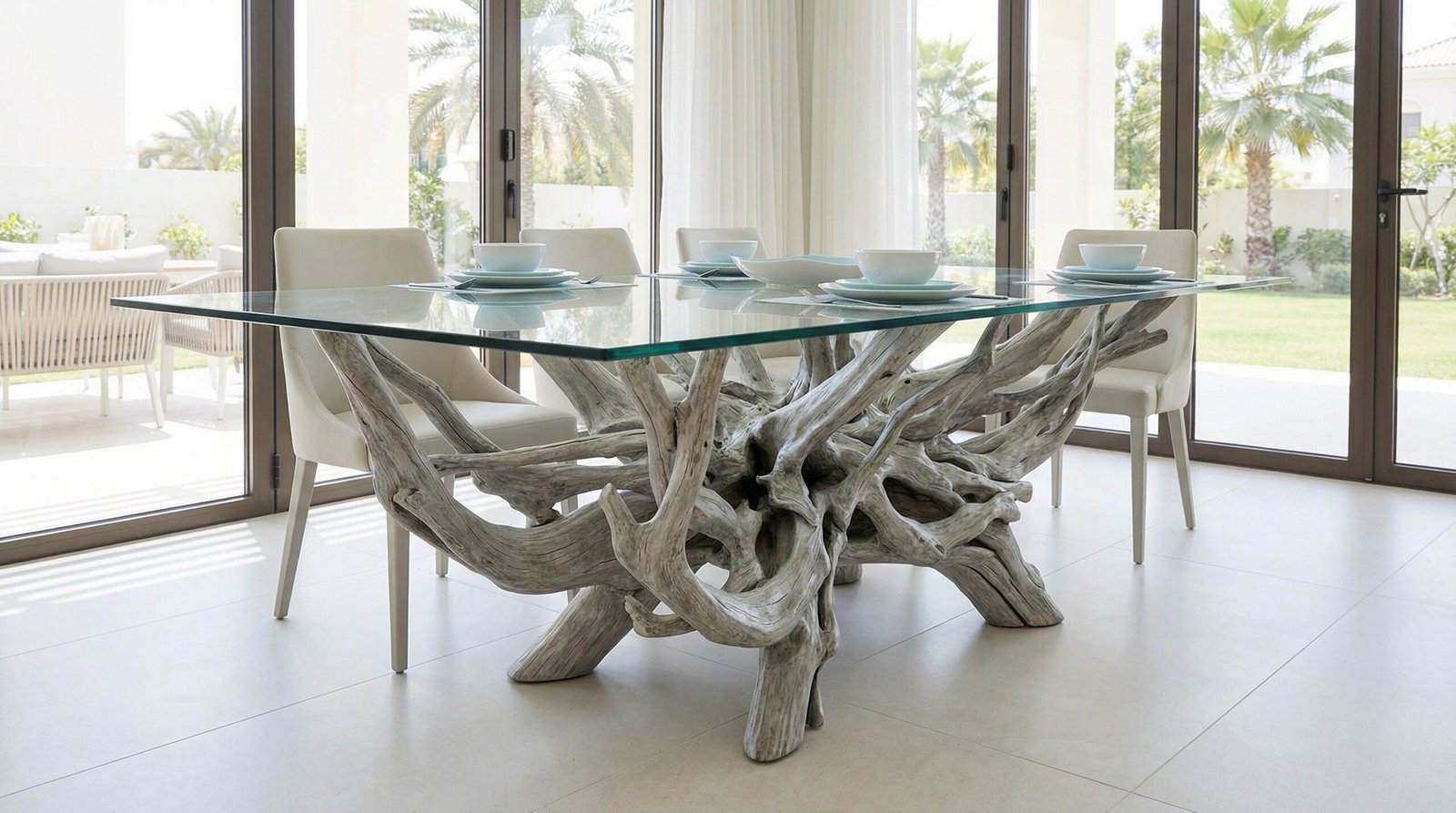
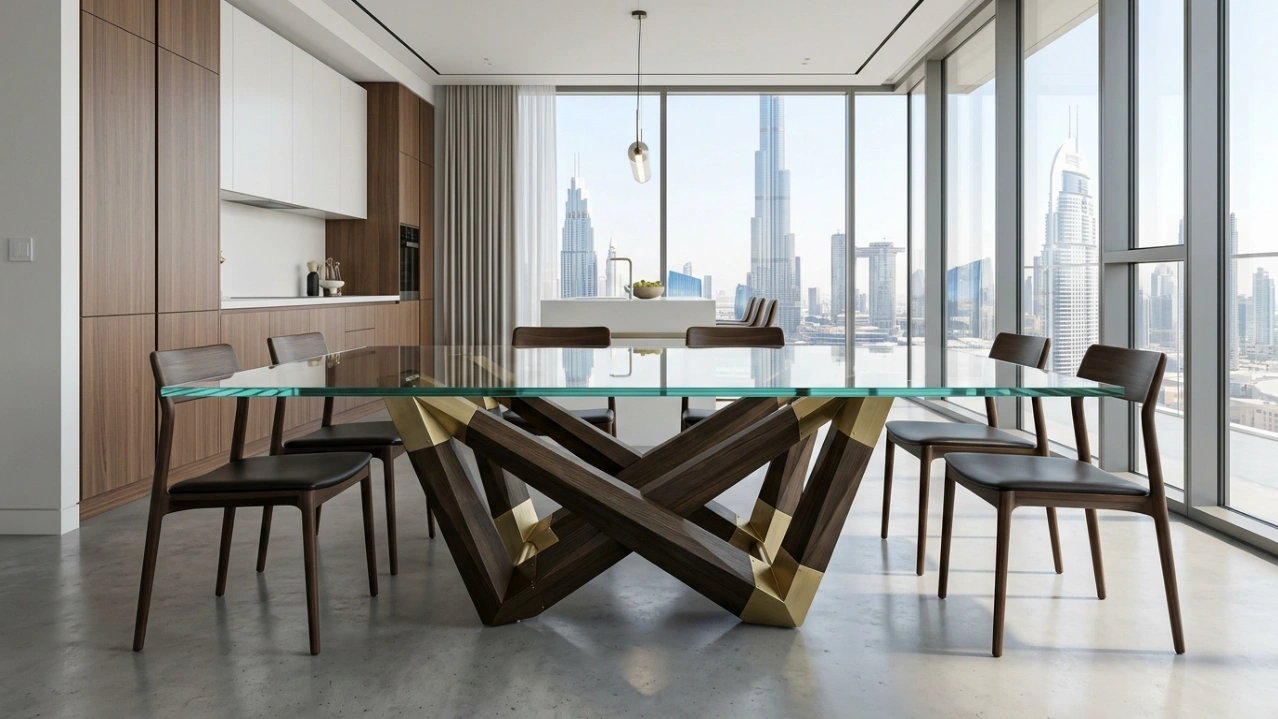
An innovative 2.8-meter table combining solid walnut base and aprons with 15-millimeter tempered glass top for clients who wanted modern transparency while appreciating wood warmth. Walnut components showcase exceptional grain matching while glass provides maintenance-free dining surface ideal for their busy lifestyle. LED strip lighting integrated under glass edge creates subtle ambient glow for evening entertaining. Complex engineering balanced thermal expansion differentials between materials. Twelve-week fabrication with installation March 2025. Represents our capability to integrate multiple materials cohesively.
Family Heirloom Restoration – Jumeirah
Complete restoration of a 1960s teak table the client’s parents brought to Dubai in 1982. Significant water damage to top, loose joints, damaged finish. We carefully disassembled, repaired joints with new mortise and tenon work, removed damaged wood sections and replaced with period-appropriate teak we matched precisely, refinished with modern protective system while maintaining original character. Six-week restoration returned the table to better-than-new condition while preserving sentimental value and extending its life another three decades. Delivered February 2025 with emotional client response.
Minimalist Concrete and Wood Design – Design District
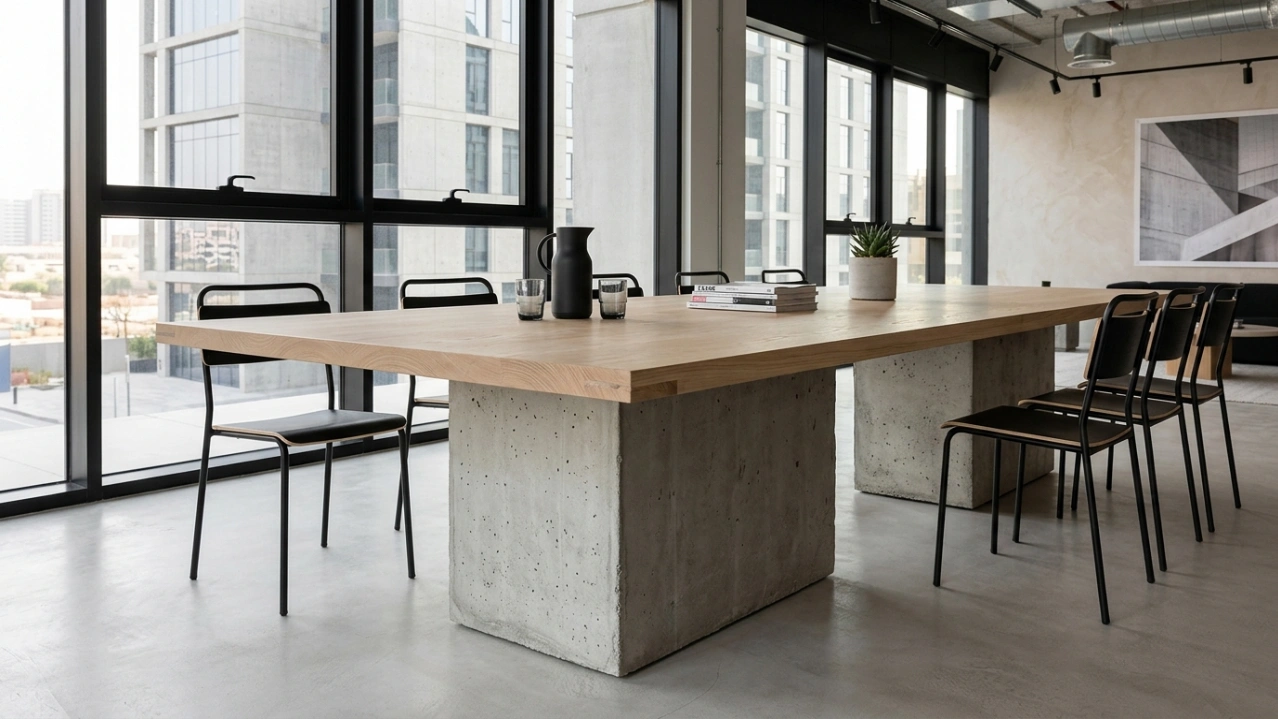
A 3-meter table for a design-forward couple combining 8-centimeter thick concrete top we cast in custom molds with solid oak base structure. Concrete surface sealed with specialized treatment providing stain resistance while maintaining matte industrial aesthetic. Oak aged and treated to create weathered grey tones complementing concrete. Engineering addressed significant weight considerations—finished table weighs 380 kilograms and required structural floor assessment before installation. Sixteen-week fabrication including concrete cure time. Installed in d3 apartment January 2025, representing our capability with non-traditional materials.
Dining Table Questions - Expert Answers
Timeline for custom dining tables typically spans eight to sixteen weeks from design approval to installation, though this varies based on design complexity, material availability, and our current project queue. The process breaks down into distinct phases: design development and approval takes one to two weeks with responsive clients, material procurement and acclimatization requires two to four weeks depending on whether we have your selected wood in current inventory, fabrication extends six to ten weeks for standard designs but can reach twelve to sixteen weeks for pieces with extensive decorative work or complex mechanisms, and delivery/installation happens within one week of fabrication completion.
We maintain realistic schedules because we'd rather deliver on-time or early than promise unrealistic timelines and disappoint you. Our busiest periods run September through December when residents return after summer and want projects completed before holiday entertaining—starting early is wise if you have specific deadline requirements. For clients with urgent needs, we occasionally accommodate expedited timelines at additional cost, though we're selective about this because rushing compromises the quality we're known for.
The timeline also depends on your responsiveness during the design phase. Clients who review proposals quickly, make decisions confidently, and approve designs within a week keep projects moving smoothly. Those who need extended consideration or involve multiple family members in decisions extend the front-end timeline, which then pushes fabrication start date. We're patient with this process—choosing a dining table is important and deserves careful consideration—but understanding that decisions affect timeline helps manage expectations.
Custom dining table pricing depends on several interconnected factors, starting with size—larger tables require more material, more labor, and more complex engineering to maintain stability. A 2-meter table might start around AED 15,000 while a 4-meter table could reach AED 45,000 for the same design and materials, simply due to scale and structural requirements.
Material selection dramatically impacts cost. Domestic softwoods represent our most economical option, suitable for certain applications but limited in durability and appearance. American walnut, our most popular hardwood, prices in the mid-range and offers excellent performance characteristics. Exotic woods like Brazilian rosewood or figured maple command premium pricing due to scarcity and import costs. The specific boards you select matter too—book-matched grain patterns require sourcing sequential cuts from the same log section, which takes time and often means purchasing more material than the project requires because we must find boards that work together visually.
Design complexity affects labor investment significantly. Contemporary designs with clean lines and minimal ornamentation might require 80 to 120 hours of skilled labor, while traditional pieces with carved details, inlay work, or complex joinery can demand 200+ hours. Extension mechanisms add cost both in hardware components and engineering time to integrate them properly. Multiple finish layers or specialized treatments increase both material and labor expense.
Customization beyond standard parameters affects pricing. If your table requires non-standard height to accommodate specific chairs, or needs integrated power systems, or must match existing furniture with particular finish characteristics, each of these custom elements adds development time and execution complexity that translates to cost. We provide detailed quotes breaking down these factors so you understand exactly what drives the investment and where modifications might reduce cost if budget is constrained.
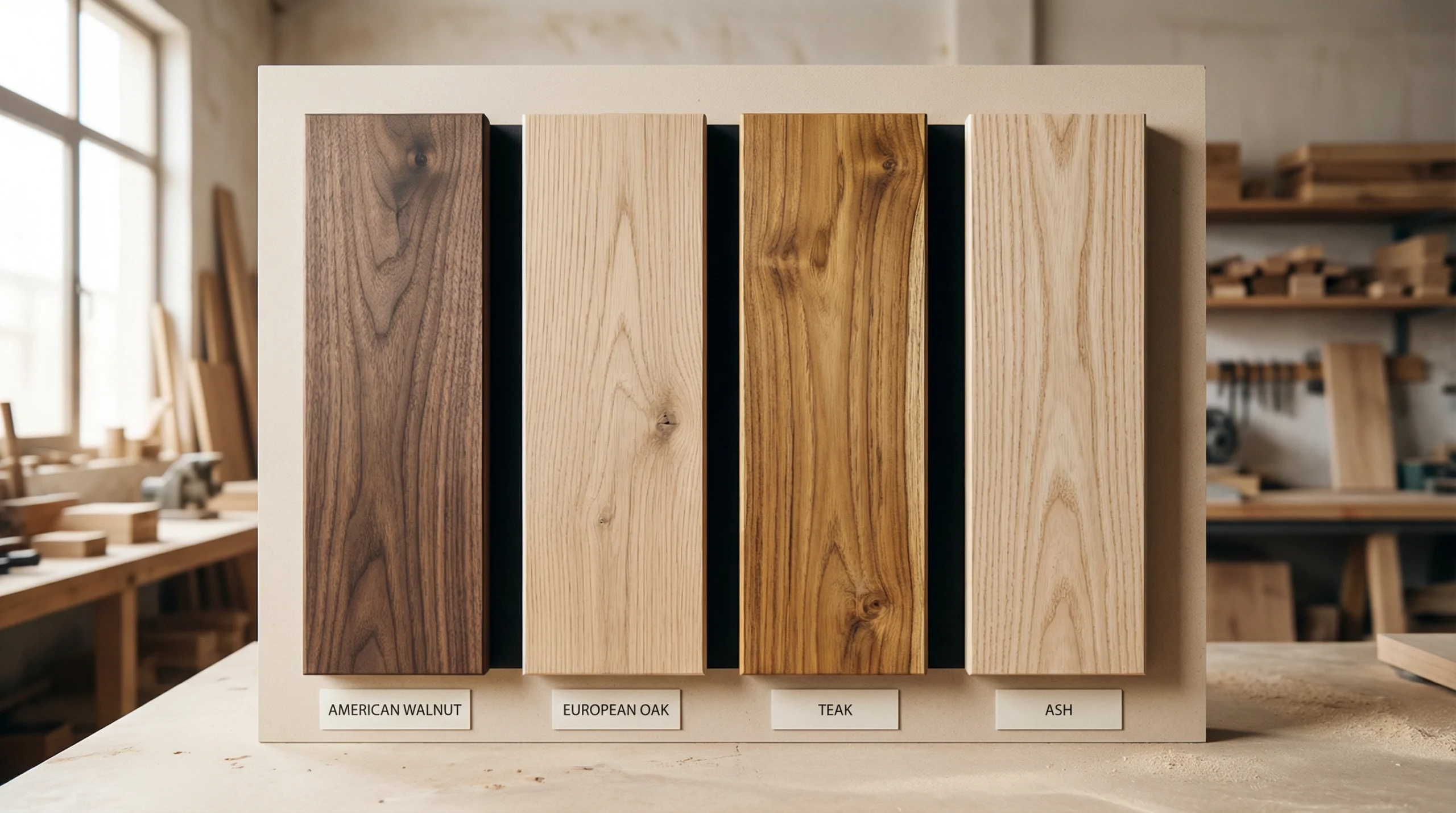
The UAE climate presents specific challenges that make some wood species perform excellently while others fail predictably. Understanding these differences helps you select materials that will remain beautiful and structurally sound for decades rather than developing problems within months.
American walnut stands as our most recommended species for UAE conditions. Its tight grain structure and natural density make it dimensionally stable despite humidity fluctuations, while the rich chocolate brown color deepens beautifully over time. We've built over 600 walnut dining tables across Dubai and Abu Dhabi since 2015, with zero warranty claims related to climate-induced problems. The wood's hardness resists scratching and denting from daily use, and it accepts our protective finishes beautifully.
European oak, particularly quarter-sawn cuts, performs admirably when properly prepared. Quarter-sawing exposes medullary rays that create dimensional stability and produces the distinctive fleck pattern many clients love. The lighter color complements contemporary and Scandinavian-inspired interiors. We've successfully delivered over 400 oak tables since 2018, though we're selective about source suppliers because oak quality varies significantly—inferior grades from fast-growth plantations move excessively in our climate.
Teak represents the ultimate choice for humidity resistance due to natural oil content that repels moisture. Traditionally used in boat building, teak tolerates UAE conditions almost indifferently. The golden-brown color and pronounced grain create warm traditional aesthetics. However, sustainability concerns around teak harvesting mean we source only from certified plantations, which commands premium pricing. Teak works beautifully for outdoor or semi-outdoor dining applications where other woods would fail.
Woods we specifically avoid or use cautiously include maple and birch—both beautiful in temperate climates but prone to excessive movement in UAE humidity swings. Cherry darkens dramatically under UV exposure, which becomes problematic in Dubai homes with large windows and intense sunlight. Pine and other softwoods lack the density to withstand daily dining table use and dent easily from normal service. We occasionally use these for specific design requirements but only with extensive client education about limitations and maintenance needs.
Proper maintenance extends your table's life indefinitely while preserving the appearance that made you love it initially. The good news is that maintenance isn't complicated or time-consuming—it just requires consistency and using appropriate products.
Daily care means wiping the table after meals with a soft, slightly damp microfiber cloth to remove food particles and spills immediately. Avoid leaving water standing on the surface and use coasters under all glasses and hot beverage containers. Placemats protect against scratches from dishes and utensils, though our conversion varnish finishes are remarkably scratch-resistant. For families with young children, we recommend table pads during messy activities like homework or crafts—not because the table can't handle this, but because prevention is easier than remediation.
Weekly cleaning should use products specifically formulated for wood furniture. We provide recommended products at delivery and sell maintenance kits for your specific table's finish. Generally, this means pH-neutral cleaners that don't contain silicones, waxes, or harsh chemicals that can build up or damage finishes over time. Spray the cleaner on your cloth, not directly on the table, then wipe in the direction of the wood grain. Follow with a dry cloth to remove any residue. This entire process takes five minutes.
Annual deep maintenance varies by finish type. Oil-finished tables require reapplication of finish oil, which we can do during a service visit or you can handle yourself following our detailed instructions. This involves light surface abrasion with very fine synthetic steel wool, cleaning, then applying thin layers of oil that penetrate and protect the wood. Conversion varnish finishes need only the weekly cleaning described above but benefit from occasional application of furniture polish to maintain sheen—perhaps twice yearly.
Environmental factors matter significantly. Maintain relatively consistent humidity in your home through air conditioning and humidity control—not for the table specifically but for overall comfort and building preservation. Avoid placing tables where direct sunlight hits them for extended periods, or use window treatments to filter UV exposure. If you're away during summer months and reduce air conditioning, leave humidity control running to prevent extreme swings that could affect even properly built furniture.
We offer annual maintenance service visits where our technicians perform professional deep cleaning, inspect for any developing issues, make minor repairs if needed, and reapply protective treatments. Many clients schedule this before major holidays when the table will see heavy use. The service runs AED 400 to AED 650 depending on table size and takes 90 to 120 minutes at your home.
Matching existing furniture or replicating specific designs represents a significant portion of our work, though the approach varies depending on what you're trying to achieve. Understanding the possibilities and limitations helps set appropriate expectations.
For matching existing furniture you already own, we start by examining the pieces carefully, ideally in person at your home. We photograph from multiple angles, take precise measurements, analyze the wood species and finish characteristics, and study construction details. Modern furniture often uses veneers or engineered woods that can complicate matching—we explain honestly whether achieving a perfect match is possible or if close approximation is more realistic. If the existing piece is solid wood with accessible finishes, we can typically match quite precisely, selecting wood that complements color and grain characteristics, then custom-mixing stains and finishing materials to achieve visual continuity.
For replicating designs you've seen elsewhere—perhaps at a restaurant, in a photo, or at someone's home—we work from whatever reference materials you can provide. Photos from multiple angles help immensely. We can recreate the overall aesthetic and proportions while adapting dimensions to fit your specific space. However, we don't directly copy proprietary designs from other custom furniture makers, both for ethical reasons and because the design intellectual property belongs to its creator. We can create pieces inspired by designs you admire while making them distinctly yours through dimensional changes, material selections, or detail modifications.
When you bring us design inspiration from commercial furniture retailers, we can certainly build similar pieces, often at comparable or lower cost with far superior quality. Mass-produced furniture uses shortcuts we won't—engineered wood cores, mechanical fasteners rather than traditional joinery, thin finishes that don't provide long-term protection. Our custom version will be substantially more durable and built specifically for your space rather than designed for container-efficient shipping and assembly by untrained consumers.
The matching process typically extends timeline by one to two weeks for analysis, sampling, and approval of match quality before we proceed to full fabrication. We provide finish samples you evaluate in your home's lighting conditions because color matching requires assessing under actual environmental conditions, not just our workshop lighting. Most clients are thrilled with results, though we're forthright when perfect matching isn't achievable—perhaps because original furniture used wood species no longer commercially available, or finishes whose composition we cannot determine through analysis.
We provide comprehensive five-year warranties covering structural integrity and workmanship defects on all custom dining tables. This warranty protects you against joint failures, warping beyond acceptable specifications, finish delamination or failure, and any defect traceable to materials, design, or fabrication errors. If problems develop within the warranty period, we repair or replace affected components at our expense including all labor, materials, and travel to your location.
The warranty scope focuses on defects rather than damage, which is an important distinction. Normal wear from daily use—minor scratches, finish dulling in high-contact areas, or small dents from impacts—represents expected aging and isn't covered. Similarly, damage from misuse, accidents, or improper maintenance falls outside warranty protection. If you drag heavy objects across the table surface causing scratches, or place extremely hot items directly on wood causing burns, or use harsh chemical cleaners that damage the finish, these aren't warranty issues though we're happy to discuss repair options at standard service rates.
Wood movement within industry-standard specifications doesn't constitute a defect. All solid wood furniture expands and contracts with seasonal humidity changes—this is normal material behavior, not a defect. We engineer tables to accommodate this movement without developing problems, but you may notice slight seasonal gaps or changes, particularly in very large tables. Movement exceeding 3 millimeters in table length or causing joint separation would fall under warranty coverage, but typical seasonal variation of 1-2 millimeters does not.
We've honored warranty claims seventeen times in the past five years across over 400 tables delivered. Twice, we underestimated load requirements for extension mechanisms that sagged slightly with maximum weight—we redesigned and replaced the mechanisms with reinforced versions. Three times, finish issues developed that we traced to defective material batches from our supplier—we stripped and refinished these tables at our expense. The remaining claims involved minor joint issues or hardware failures we corrected promptly. We never debate legitimate warranty claims—if we made an error, we fix it properly and completely.
Beyond the formal warranty, we maintain long-term relationships with clients and often provide service that technically falls outside warranty coverage but feels like the right thing to do. If you contact us five years and two months after delivery with a problem, we're not going to refuse service because you're technically eight weeks beyond warranty. We'll assess the situation, provide honest diagnosis, and either cover it as a goodwill gesture or quote reasonable repair costs if the issue clearly resulted from damage or wear rather than defects.
Extension mechanisms allow your dining table to grow for gatherings and shrink for daily use—extraordinarily practical for UAE homes where entertaining is frequent but space is often constrained. We offer several extension systems ranging from traditional to sophisticated, each with particular advantages depending on your priorities and budget.
Traditional pull-apart extensions represent our most economical option. The table separates at center, you insert stored leaves, and the table closes back together. Leaves typically store separately in a closet or against a wall, which requires storage space but keeps table cost lower. Installation requires two people and takes two to three minutes. This system works perfectly well for occasional extensions—perhaps monthly during social season—and many clients prefer it specifically because keeping leaves separate ensures they don't forget the table extends and overload the mechanism.
Self-storing butterfly leaf mechanisms hide extension leaves within the table itself. You pull the table apart, stored leaves fold up from the center cavity, and you close the table back together with leaves deployed. The entire operation takes under sixty seconds and one person can manage it easily. The mechanism adds complexity and cost—approximately AED 3,500 to AED 6,500 depending on table size—but the convenience appeals to clients who extend their table weekly or more frequently. The mechanism requires precise engineering to maintain alignment and we use German-manufactured hardware that operates smoothly even after thousands of cycles.
Synchronized sliding rail systems represent our most sophisticated option for very large or heavy tables. These use precision rails and synchronization mechanisms that allow smooth extension even with tables weighing 150 to 200 kilograms. The system maintains perfect alignment throughout extension travel and includes locking mechanisms that prevent accidental closing. This technology adds AED 8,000 to AED 12,000 to project cost but becomes necessary for tables above 250 centimeters that would be impractical to extend through manual systems.
Drop-leaf designs work for specific applications where space is extremely limited. Hinged leaves drop down against the table sides when not in use, creating narrow profiles for tight spaces, then lift and lock into position for dining. These work best for smaller tables—up to about 140 centimeters base length—and suit apartment dining areas or breakfast nooks rather than primary dining tables for larger homes.
The engineering challenges with extension tables exceed what most people realize. The table must remain perfectly stable at all extension positions, not just fully closed and fully extended. Locking mechanisms must engage positively to prevent accidental collapse. Alignment must maintain consistent surface levels across all sections without lips or gaps where leaves meet. We've solved these challenges thousands of times and can guide you toward the extension system that matches your use patterns, budget, and aesthetic preferences.
UAE properties present unique access challenges that we've learned to navigate through thousands of deliveries. The key is planning ahead rather than discovering problems when our truck arrives at your building with a 3.5-meter table that won't fit in the elevator.
Our process begins during initial consultation when we ask detailed questions about your property's access points. For apartment buildings, we need to know elevator dimensions, loading dock procedures, whether freight elevators exist or we'll use passenger elevators, what delivery time restrictions apply, and whether building management requires advance notification. For villas, we assess gate widths, interior door dimensions, stairway configurations, and ceiling heights. Many newer Dubai developments require scheduling freight elevator usage weeks in advance and restrict delivery hours to avoid resident disruption—we manage all of this coordination.
When standard access won't accommodate your table, we design around the limitation. Large tables can be built in sections that we assemble in your home using concealed fastening systems invisible when complete. We've installed a 4.2-meter table in a Business Bay apartment by bringing the top in three sections that bolted together underneath, creating what appears to be a solid single surface. The seams are invisible and the structural integrity matches single-piece construction.
For genuinely challenging situations, we employ creative solutions refined through experience. We've hoisted tables through balconies using professional rigging and crane service when no interior access existed—this adds cost but sometimes represents the only viable approach. We've temporarily removed door frames to gain clearance, then reinstalled them after table placement. We've navigated spiral staircases in townhouses by rotating tables precisely through the turns, which requires experience and patience but works when space is tight.
Palm Jumeirah properties present particular access issues due to narrow villa entries designed for aesthetic appeal rather than furniture delivery practicality. We measure carefully, create full-scale cardboard mockups when uncertainty exists, and often adjust designs to ensure successful delivery. Marina tower residential units often have service entrances through parking levels—we've mapped these routes for most major developments and know which buildings allow furniture access through which entrance points.
The cost for special access handling varies from zero for standard straightforward deliveries to AED 1,500 to AED 4,000 for situations requiring crane service, extensive disassembly/reassembly, or multiple-day installation coordination. We provide these costs upfront during the quotation phase so there are no surprises. Occasionally we recommend clients wait until renovations are complete and door frames can be adjusted before we deliver extremely large pieces—the two-month delay in delivery is preferable to discovering the table simply won't fit.
The differences between custom tables from Karnak and mass-produced furniture from retail stores span materials, construction, customization, durability, and long-term value—though retail furniture certainly serves specific needs and budget constraints.
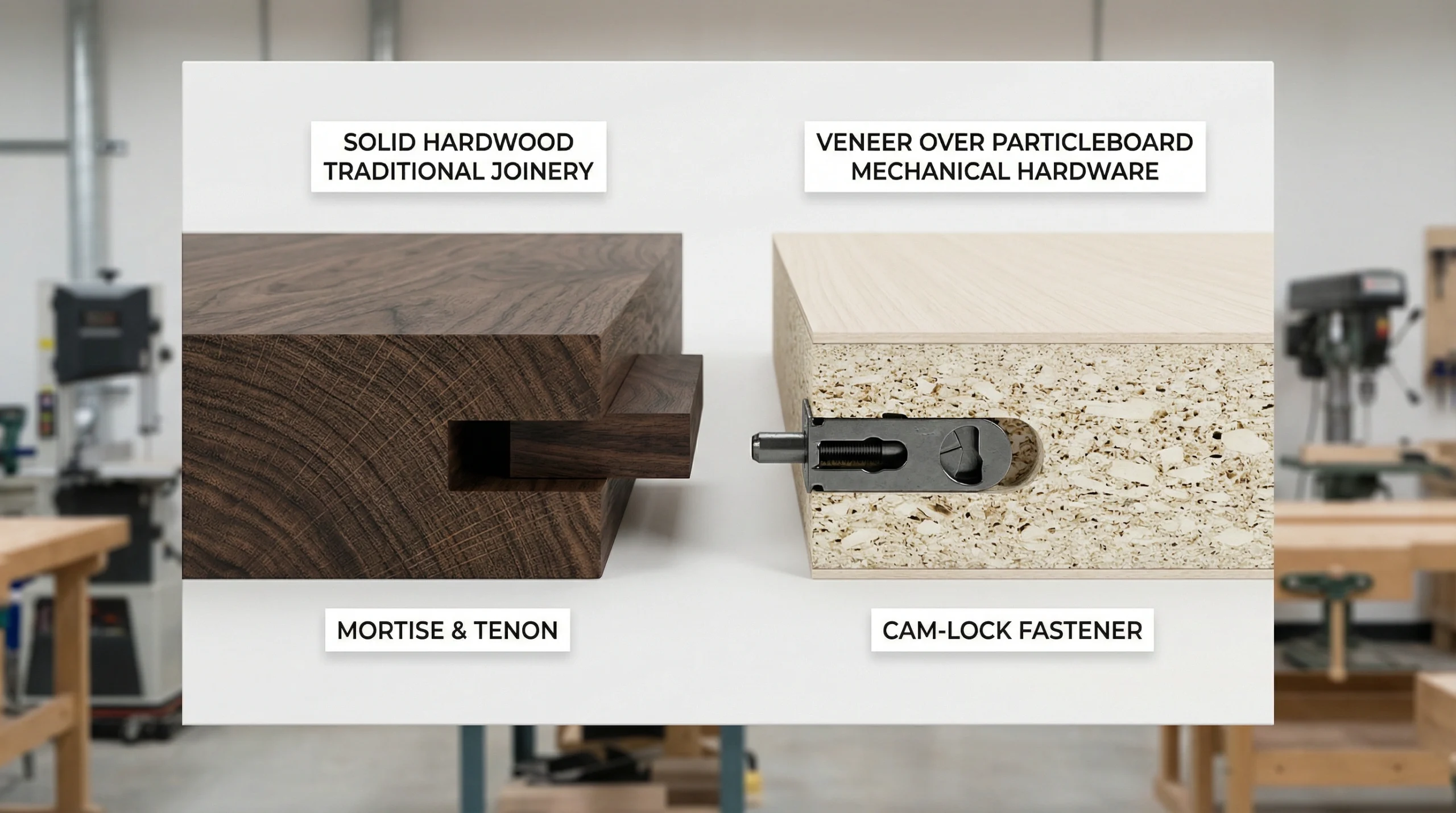
Material quality represents the most fundamental difference. We use solid hardwoods throughout table construction—your tabletop is solid walnut or oak or teak, not veneer over particleboard or MDF. Commercial furniture often uses engineered cores with thin veneers that can delaminate in UAE climate or chip at edges revealing composite underneath. Our solid construction means damage can be sanded and refinished indefinitely, while veneer damage often requires replacement because you can't sand through to the core material without destroying appearance.
Construction methods differ dramatically. We join components using mortise and tenon, dovetail, and domino joinery techniques that create mechanical strength independent of glue. Retail furniture relies heavily on mechanical fasteners—screws, brackets, dowels—that work initially but loosen over time with the wood movement that's inevitable in furniture. Twenty years from now, our tables will still be solid while conventionally constructed pieces develop wobbles and joint failures that can't be easily repaired.
Customization is the obvious difference but deserves emphasis. Every dimension, proportion, material choice, finish selection, and functional feature adapts specifically to your needs. Retail furniture offers limited size options—perhaps a choice between 180 or 200 centimeters—whereas we build to your exact spatial requirements. If your room is 230 centimeters wide and positioning the table precisely centered requires a 195-centimeter table, that's what we build. This precision transforms how furniture functions in your space.
Durability expectations differ significantly. Retail furniture is designed for a product lifecycle measured in years—perhaps five to ten years before replacement becomes attractive or necessary. We build for generational use. The tables leaving our workshop should serve your family for thirty to fifty years and beyond, developing character and patina that makes them more beautiful over time. This requires overbuilding beyond minimum functional requirements, using materials and finishes that age well rather than simply look good initially.
The investment comparison isn't straightforward. A mid-range commercial dining table might cost AED 6,000 to AED 12,000, while our custom tables start around AED 15,000 and extend above AED 60,000 for large or complex pieces. However, our tables last three to five times longer, can be refinished rather than replaced, and maintain value better than mass-produced furniture. Amortized over the table's lifetime, custom work often costs less per year of service while providing dramatically better function and appearance. That said, if you're furnishing a temporary space or expect to relocate frequently, retail furniture's lower initial cost might better match your situation.
Commercial dining table projects represent approximately thirty percent of our annual work, serving restaurants, hotels, corporate dining facilities, cafes, and other hospitality applications. The approach differs from residential work in several important ways that address the specific demands commercial environments place on furniture.
Durability requirements for commercial tables exceed residential standards significantly. A restaurant table might serve twenty covers daily, accumulating wear in weeks that residential tables experience over months. We engineer commercial tables with reinforced joinery, heavier finish builds, and often incorporate replaceable components in high-wear areas. Table edges receive rounded profiles that resist chipping from constant chair contact. Hardware specifications exceed residential applications—we use commercial-grade extension mechanisms rated for thousands of cycles where residential versions might be adequate for hundreds.
Material selection favors species that combine hardness, stability, and appearance. We commonly use maple for light-colored commercial applications due to its exceptional hardness and ability to withstand constant impacts and abrasion. Walnut serves for upscale establishments wanting darker, richer aesthetics. Teak or thermally modified woods work for outdoor dining spaces where weather resistance is essential. We avoid softer species that would show wear rapidly under commercial use patterns.
Finish systems must withstand commercial cleaning protocols including chemicals and procedures that would damage residential finishes. We use conversion varnish systems formulated for commercial applications, often applying additional coats to build thicker protective layers. The finish schedule we provide to restaurant owners specifies approved cleaning products and methods—generally neutral pH cleaners and microfiber cloths rather than abrasive scrubbing or harsh chemicals. Dubai Municipality health inspectors sometimes request documentation of our finishing materials and methods, which we provide readily.
Compliance with regulations matters significantly in commercial work. Dubai Municipality requires specific approvals for food service establishments including furniture component specifications. We maintain relationships with inspectors and understand current requirements, ensuring our commercial tables pass inspection without delays or expensive modifications. Fire safety standards sometimes affect finish selections or construction details, particularly in high-rise properties or locations with specific occupancy classifications.
Timeline coordination becomes more critical with commercial projects because opening dates are fixed and missing them costs money daily. We build buffer into schedules and communicate proactively about any issues that might affect delivery. We've completed rush commercial projects on accelerated timelines when necessary—though we prefer avoiding this as it adds cost and pressure—because we understand the business realities of hospitality operations.
Pricing for commercial dining tables often runs lower per-unit than comparable residential pieces because quantity creates efficiencies. Ordering twenty identical tables allows optimized material purchasing and streamlined fabrication that reduces per-unit costs. However, the engineering time to develop commercial-grade designs and the higher material specifications often balance this efficiency, resulting in per-table costs only slightly below residential pricing. Volume orders of fifty-plus units do see more significant per-unit cost reductions.
We provide commercial warranties covering three years rather than five for residential work, reflecting the accelerated wear commercial use creates. Maintenance contracts are common with commercial clients—we perform annual or semi-annual service visits to inspect, repair minor damage, refresh finishes, and ensure tables continue performing optimally. These maintenance programs extend furniture life significantly while preventing small issues from becoming major problems.
Outdoor dining tables require fundamentally different approaches than interior furniture due to direct weather exposure, extreme temperature swings, and UV radiation intensity that's particularly severe in the UAE. We build outdoor tables but limit materials and set realistic expectations about maintenance needs and lifespan even with the best construction.
Teak represents our primary outdoor wood choice due to natural oil content that repels moisture and resists decay. Properly maintained teak outdoor furniture serves fifteen to twenty-five years in Dubai conditions, though it requires annual cleaning and periodic oiling to maintain appearance and prevent surface checking. Teak develops silver-grey patina when left untreated—some clients love this weathered appearance while others prefer maintaining golden-brown tones through regular oil application. We discuss these aesthetic choices during design because they affect maintenance commitment.
Thermally modified ash or pine offers lighter color alternatives to teak's warm tones. Thermal modification involves heating wood to high temperatures in controlled oxygen-free environments, which changes cellular structure to improve stability and decay resistance. These modified woods perform well outdoors and complement contemporary aesthetics, though they still require finish maintenance and have shorter lifespans than teak—typically ten to fifteen years with proper care.
Metal bases work better than wood bases for most outdoor applications. We fabricate stainless steel or powder-coated aluminum bases that resist corrosion from Dubai's coastal salt air while supporting solid wood tops. The thermal expansion difference between materials requires specific connection detailing that allows wood to move while maintaining structural integrity—we use slotted mounting systems and flexible fasteners that accommodate this movement.
Semi-outdoor spaces—covered terraces, screened patios, or majlis areas with partial exposure to elements—create middle ground between full outdoor and interior conditions. For these applications, we sometimes use the same hardwoods we'd specify for interiors but with enhanced finish protection. Multiple coats of exterior-grade spar varnish with UV inhibitors provide reasonable protection, though annual refinishing may be necessary depending on exposure levels. We assess each situation individually, examining sun exposure patterns, rain protection, and ventilation to recommend appropriate materials and finishes.
Maintenance expectations for outdoor tables exceed interior furniture significantly. Annual cleaning removes accumulated dirt, mildew, and environmental deposits. Inspection identifies developing problems like joint looseness or finish breakdown. Refinishing or re-oiling maintains protective barriers. Even with diligent maintenance, outdoor furniture has finite lifespan—eventually UV damage, moisture cycles, and temperature extremes degrade even the best materials beyond economical repair. Setting these expectations upfront prevents disappointment while allowing you to make informed decisions about outdoor furniture investment.
We don't recommend outdoor placement for tables built from standard interior woods with interior finishes. The Dubai sun and humidity will destroy these within months regardless of promises from competitors who lack long-term experience with Gulf conditions. If you have a protected outdoor space and want to furnish it properly, we'll provide honest assessment of what's possible and what's not worth attempting.
The UAE's multicultural population brings diverse dining traditions that influence table design in practical ways. We've learned to understand and accommodate these preferences through thousands of projects serving families from every continent and dozens of cultural backgrounds.
Arabic and Middle Eastern families often prefer larger tables to accommodate extended family gatherings, with emphasis on sharing dishes and communal dining. We build tables that comfortably seat twelve to sixteen people for regular meals, not just occasional entertaining. Central lazy Susan mechanisms work beautifully for this dining style, allowing shared dishes to rotate around the table within easy reach of all guests. Some clients request slight table height adjustments—perhaps 72 rather than 75 centimeters—to coordinate with Arabic-style floor seating combinations where some guests prefer floor cushions. We've built low dining tables at 40 to 45 centimeters height specifically for traditional majlis dining areas where floor seating is preferred.
Asian dining traditions often emphasize round or square tables for symbolic and practical reasons, with lazy Susan features for shared dishes similar to Arabic preferences. Chinese families frequently request tables accommodating specific numbers based on cultural significance—eight, ten, or twelve seats rather than seven or nine. Japanese-influenced clients sometimes want lower table heights coordinating with floor-level seating, or tables with minimal visual weight achieving aesthetic simplicity valued in Japanese design philosophy.
European dining traditions tend toward rectangular tables with emphasis on individual place settings and formal dining structure. Extension capabilities matter because entertaining happens frequently but daily dining involves smaller numbers. Scandinavian-influenced clients prioritize light wood tones, minimal ornamentation, and proportions that feel airy rather than imposing. Mediterranean families want tables that encourage lengthy meals with multiple courses and extensive conversation—solid, substantial pieces that anchor spaces rather than appearing delicate.
South Asian families often request very large tables accommodating ten to fifteen people for regular meals, reflecting strong extended family traditions and frequent gathering. The tables need to withstand heavy use and potentially hot serving dishes placed directly on surfaces. Intricate decorative details sometimes appeal—carved elements or inlay work that creates visual richness and demonstrates craftsmanship value.
We've designed tables for families blending multiple cultural traditions—perhaps an Emirati husband and European wife wanting furniture that honors both backgrounds. These projects require understanding how different dining traditions can coexist: tables accommodating both individual plating and shared service, heights working for both chair seating and occasional floor cushions, aesthetics blending contemporary European minimalism with traditional Arabic decorative elements.
Gender separation considerations occasionally influence dining space design, particularly for families maintaining traditional practices. We've created furniture plans with separate but coordinated dining tables for gender-separated entertaining, or larger tables positioned to allow flexible division of dining spaces using decorative screens or room arrangements. These conversations require sensitivity and cultural awareness—we ask questions respectfully and design solutions that honor clients' traditions without assumption or judgment.
Religious observances sometimes affect timing and design. We're mindful that Ramadan creates specific dining patterns with iftar gatherings requiring different furniture arrangements than typical meals. Some clients request storage solutions integrated with dining tables for religious texts or prayer materials kept in dining areas. We coordinate project timelines to respect religious holidays and fasting periods when appropriate, never scheduling intensive consultation meetings or installations during periods when families are observing religious commitments.
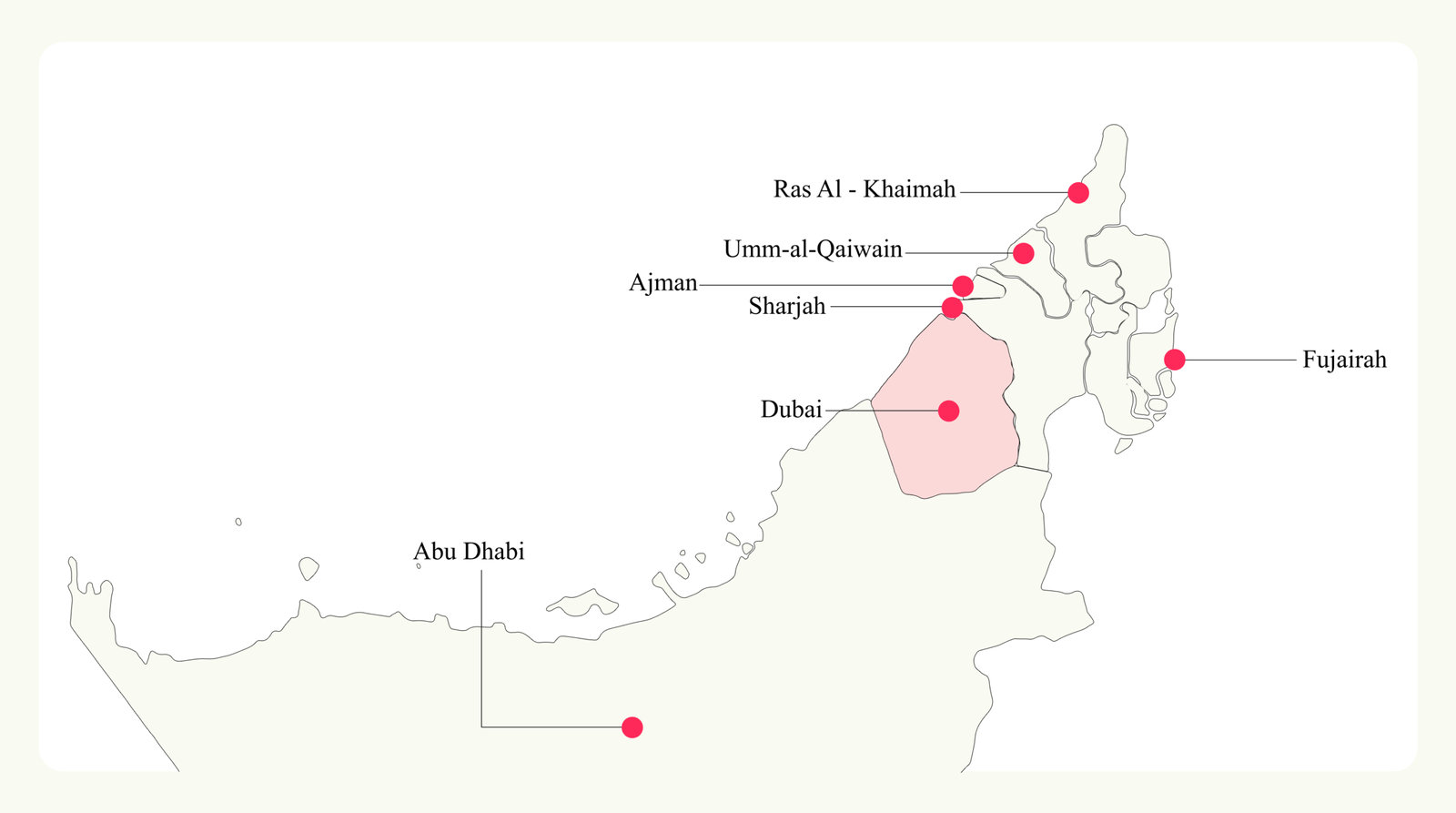
Custom Dining Table Coverage Throughout UAE
Our custom dining table services reach all seven emirates with consistent expertise, quality standards, and professional support. Whether your property is in Dubai Marina or Ras Al Khaimah, you receive the same master craftsmanship that’s defined Karnak’s reputation since 1988. We maintain teams throughout the UAE rather than traveling from single location, which means faster response times and better understanding of regional variations that affect furniture design.
Dubai: We complete dining table projects across Business Bay, DIFC, Dubai Marina, JBR, Downtown Dubai, Palm Jumeirah, Arabian Ranches, Emirates Hills, The Springs, The Meadows, Jumeirah, Mirdif, Dubai Silicon Oasis, Al Barsha, Greens, Views, Motor City, Sports City, International City, and all other communities. Our Dubai workshop serves as our primary fabrication facility with full design consultation capabilities, material showroom, and project management offices. Most Dubai consultations happen within 48 hours of initial contact, and our understanding of specific building access requirements across hundreds of developments streamlines every project phase.
Abu Dhabi: Custom dining tables throughout Abu Dhabi island, Al Raha, Yas Island, Saadiyat Island, Al Reef, Khalifa City, Mohammed Bin Zayed City, Masdar City, and all Abu Dhabi regions. We maintain consultation capabilities in Abu Dhabi and coordinate regularly with our Dubai workshop for fabrication while ensuring delivery and installation teams familiar with Abu Dhabi property access navigate your project smoothly. The capital’s distinct aesthetic often emphasizes traditional luxury and grand proportions that we accommodate through experience with hundreds of Abu Dhabi villa and apartment projects.
Sharjah: Complete dining table services across Sharjah including Al Majaz, Al Khan, Al Nahda, Muwaileh, University City, and all Sharjah communities. Sharjah properties often feature more traditional layouts and design sensibilities that we understand from extensive regional experience. We navigate Sharjah Municipality requirements and coordinate delivery timing with the emirate’s distinct traffic patterns and access considerations.
Ajman, Umm Al Quwain, Ras Al Khaimah, Fujairah: Full dining table design, fabrication, and installation throughout the Northern Emirates. These regions see increasing development of villa communities and waterfront properties requiring furniture expertise that matches Dubai standards. We schedule consultations to coordinate with our Northern Emirates service visits, typically weekly, or more frequently during busy seasons. Our teams understand the more relaxed pace and often more personal approach clients in these emirates prefer, adjusting our service style accordingly while maintaining identical quality standards.
Start Your Custom Dining Table Project
Your dining table deserves more than browsing catalogs hoping something almost fits your space and style. It deserves the expertise that comes from building 2,400+ dining tables across 35 years specifically for UAE homes and businesses, the craftsmanship that creates furniture your grandchildren will use, and the partnership that ensures what you’re imagining becomes exactly what we deliver. Contact our team today to begin the conversation about your custom dining table—we’re here to help you create the gathering place where your life happens.
IF YOU HAVE ANY QUESTION? WE ARE GLAD TO
CONSULT YOU AS SOON AS POSSIBLE
Get Started
Immediate assistance from our team regarding your project details.
Form Submitted!
Thank you for contacting us. Our team will get back to you within 24 to 48 hours regarding your query.
Contact us on WhatsApp for Quick Response