Hotel & Hospitality Carpentry Dubai: Precision Fit-Outs That Pass Brand Audits
From a 12-room boutique in Al Seef to a 500-key luxury tower on Palm Jumeirah, the carpentry inside a hotel either holds up to daily guest punishment or it doesn’t. Karnak has been the contractor that holds up since 1988.
Hotel carpentry in Dubai operates under pressures that most markets never see. Brand standard audits from IHG, Marriott, Hilton, and Accor happen with little warning. DTCM inspections follow their own checklist. Guests in this city come from 196 countries and have stayed in the finest hotels on every continent — they notice a veneer edge that isn’t flush, a drawer that binds in August humidity, a panel join that’s opened a hairline crack because the substrate wasn’t acclimatized properly. Karnak’s hotel carpentry team has been navigating all of this since 1988, long before Dubai’s hospitality sector became one of the most competitive on earth.
The UAE hospitality environment creates specific technical challenges that general carpentry contractors regularly underestimate. Coastal projects from JBR to Yas Island deal with salt-laden air that attacks unprotected MDF edges and causes delamination within 18 months. Inland projects in areas like Al Ain face temperature swings of 25°C between February nights and August afternoons, which means substrate selection and acclimatization protocols aren’t optional — they determine whether your millwork survives its first year of operation. Add the operational reality that hotels rarely close for renovation, and every fit-out phase must happen around live guests, active kitchens, and functioning elevators.
Over 35 years and more than 10,000 completed UAE projects, Karnak has built the systems, supplier relationships, and on-site experience to handle hotel carpentry at every scale and every standard. Our hospitality division works directly with project managers, interior designers, main contractors, and hotel operators — whichever coordination structure your project requires.
Understanding Hotel Carpentry Scope: What Actually Happens on a Hospitality Fit-Out
Hotel carpentry is not a single trade. It is a collection of highly specialized disciplines that all fall under one umbrella — and the contractor who excels at custom millwork isn’t always the same one equipped to manage FF&E installation coordination, back-of-house utility joinery, and exterior timber cladding simultaneously on a live property. Understanding what “hotel carpentry” actually encompasses is the first step toward planning a fit-out that doesn’t fragment into coordination failures.
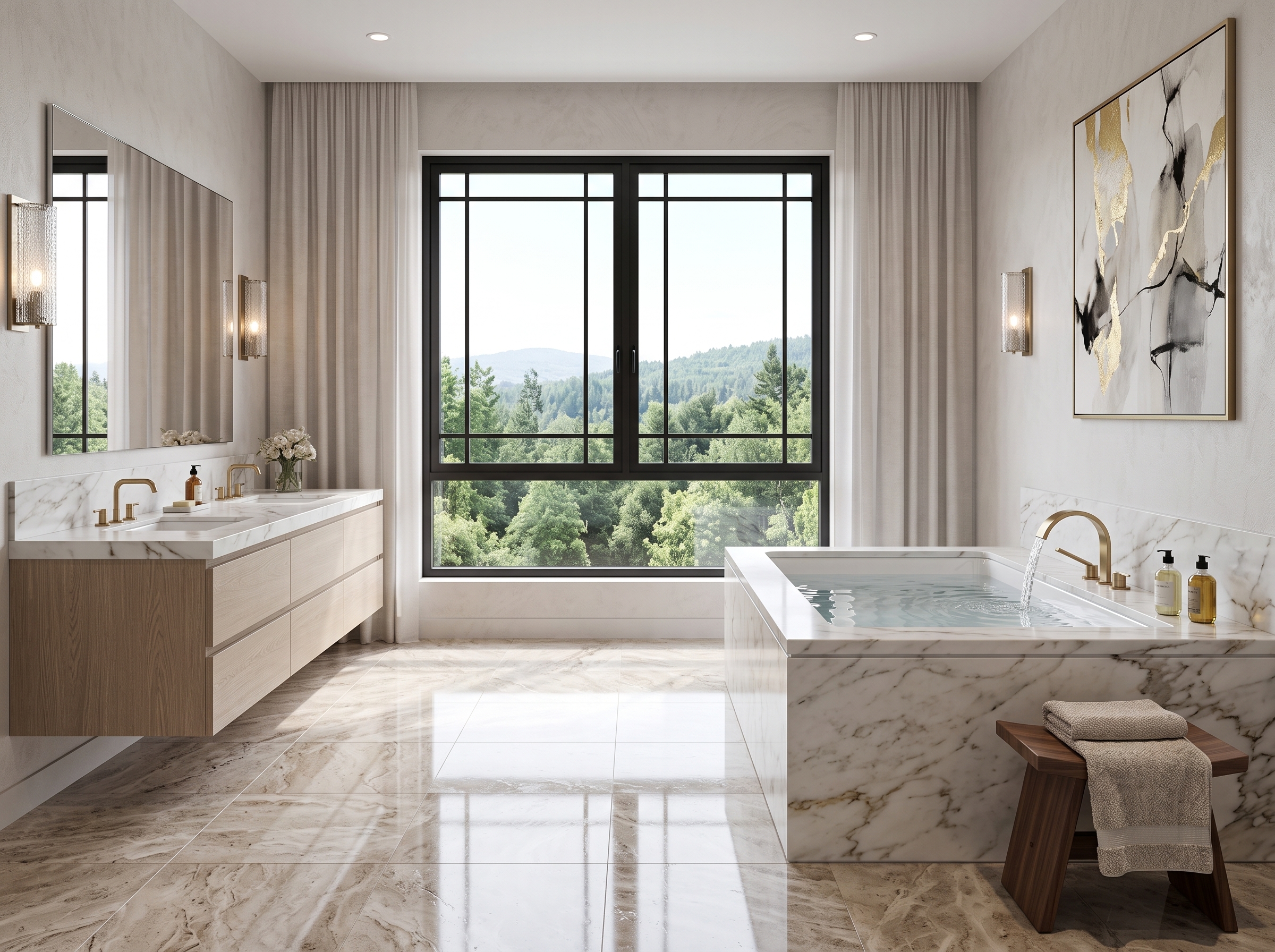
Guest Room Joinery and Casegoods
The guest room is where carpentry failure is most visible and most costly. A headboard that separates from the wall becomes a maintenance call within weeks. A wardrobe with poorly calibrated soft-close hinges becomes a noise complaint within days. Minibar units built without proper ventilation clearance become a fire safety issue immediately. These aren’t hypothetical failures — they are the predictable consequences of specifying carpentry from contractors without deep hospitality experience.
Karnak fabricates guest room casegoods entirely in our Dubai workshop, which means quality control happens before anything reaches site. Each unit — wardrobe, nightstand, desk, TV cabinet, minibar surround — is built to the project’s exact brand standard specification, pre-finished to the approved sample, and dry-fitted in our facility before disassembly and delivery. For a 200-key project, this workshop-first approach eliminates the on-site rectification work that typically adds 15–20% to smaller contractors’ timelines.
The substrate choices we make for guest room furniture differ by project location. Moisture-resistant MDF with sealed edges and back panels is our standard specification for coastal Dubai properties. For mountain resort projects in RAK or Al Ain, we switch to solid timber core components in high-stress areas — hinges, drawer runners, and structural rails — because the humidity cycling in those environments creates movement that MDF simply cannot absorb long-term without face cracking.
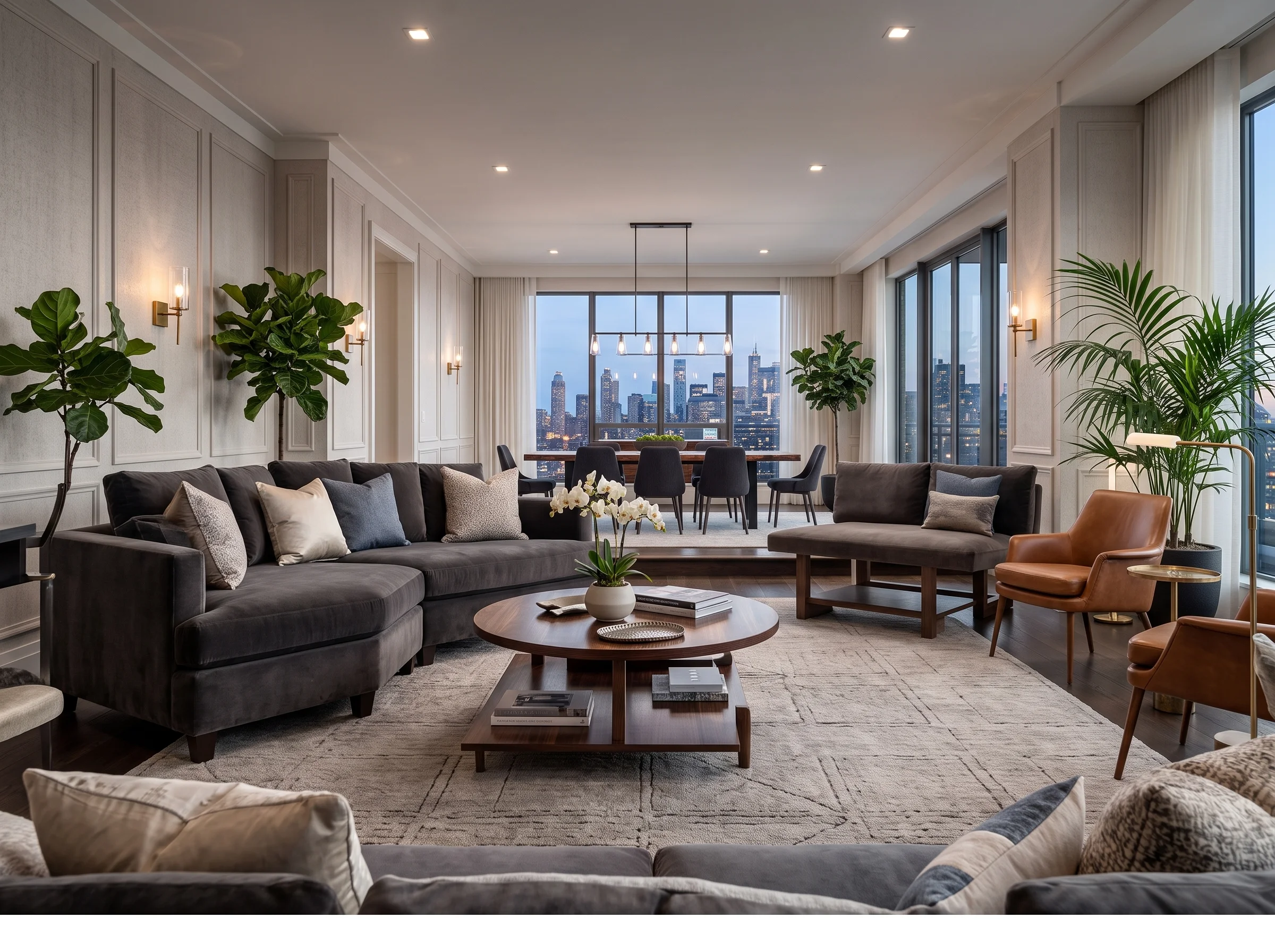
Lobby, Reception, and Public Area Millwork
The lobby sets every guest’s first impression, and it takes punishment proportional to the foot traffic a hotel generates. A 5-star property in DIFC might see 2,000 people pass through its lobby on a busy conference day. Every surface at arm height gets touched. Every desk edge gets leaned on. Every panel at shoulder height gets brushed by luggage. Public area millwork must be built for that reality, not for a photography shoot.
Karnak’s lobby and public area work includes custom reception desks, concierge stations, bell desk furniture, feature wall paneling, integrated lighting coves, elevator lobby joinery, and decorative ceiling elements. We work from designer drawings and 3D models, but we also bring workshop expertise that designers don’t always have — flagging specifications that look correct on screen but will fail in service, and proposing engineered solutions that achieve the same visual outcome with better structural integrity.
For feature wall paneling in high-traffic areas, we typically specify HDF substrate for base layers where MDF would dent too easily, with the decorative face material — veneer, lacquer, fabric-backed panel, or textured laminate — applied and edged in our workshop for consistency. Sections are then site-installed with concealed mechanical fixings rather than adhesive-only attachment, which matters enormously when a panel needs to be removed for in-wall service access two years into operation.
Restaurant, Bar, and F&B Fit-Outs
Food and beverage spaces within hotels present the most technically demanding carpentry environment on any property. Kitchen adjacent areas face grease-laden air, heat, and regular chemical cleaning. Bar tops take daily abuse from glasses, bottles, and occasional misuse. Restaurant banquette seating needs to survive thousands of seating cycles per year. Outdoor terrace woodwork in Dubai faces UV degradation, sand abrasion, and coastal salt — often simultaneously.
Karnak has completed F&B fit-outs ranging from intimate 30-cover hotel restaurants to 400-seat ballroom banqueting configurations. Our specification for bar tops and service counters in humid or spillage-prone environments uses solid surface or stone veneer over engineered timber substrate, with fully sealed edge profiles and waterproof adhesive throughout — not the standard approach, but the one that prevents the swelling and delamination that appear within the warranty period when contractors cut corners on moisture protection.
Corridor and Back-of-House Carpentry
Corridor joinery rarely appears in hotel photography, but it represents a significant portion of any fit-out budget and a major source of operational callbacks when it’s done poorly. Skirting boards in hotel corridors take daily trolley impacts. Doorframes receive constant contact from housekeeping carts. Service door frames in back-of-house areas need to tolerate heavy goods movement without constant repainting and patching.
Karnak approaches corridor carpentry with the same specification discipline we apply to showcase areas. Impact-resistant skirtings in MDF-core with factory-applied primer coat reduce painting rectification by roughly 60% compared to site-painted raw timber alternatives. Doorframe linings in high-traffic service corridors are specified in solid timber rather than MDF where budget permits — the marginal cost difference over a 300-room hotel is recoverable within the first year of avoided maintenance.
Hotel Brand Standards and Technical Compliance
Every major hotel brand operates a technical standards manual — a document that specifies everything from the minimum drawer depth in a guest room wardrobe to the edge profile on a reception desk. These manuals exist because brand owners have learned, expensively, what fails in hotel environments. Working with a carpentry contractor who has never opened one of these documents creates predictable problems: millwork that looks correct but fails brand audit, remediation costs that fall on the owner, and delays that push opening dates.
Reading and Interpreting Brand Standard Documentation
Karnak’s hospitality team has worked within the technical standards frameworks of Marriott International, IHG Group, Hilton Worldwide, Accor, Rotana, Jumeirah Group, Minor Hotels, and several independent luxury operators. We know that Marriott’s brand standards for Westin properties differ meaningfully from their Autograph Collection requirements. We know that IHG’s technical standards for voco differ from their Crowne Plaza specifications. These distinctions affect timber species selection, hardware grade requirements, fire rating specifications, and surface finish standards.
When a brand’s technical standards manual specifies a particular drawer runner brand, load rating, or cycle count, that specification exists because a failure analysis drove the requirement. We follow it. When a designer’s drawing conflicts with a brand standard — which happens regularly in our experience — we flag the conflict before fabrication rather than after installation. That single practice has saved project teams significant remediation costs across dozens of hotel projects.
Fire Rating Requirements for UAE Hotel Carpentry
UAE Civil Defense requirements mandate specific fire ratings for carpentry elements in hotel applications. Corridor doors and frames require fire-rated assemblies. Certain ceiling installations require fire-retardant treated timber or Class 1 fire-rated boards. In some configurations, decorative wall paneling in escape route corridors must meet specific flame spread classifications.
Karnak works with tested and certified fire-retardant treated materials where regulations require them, and we maintain documentation for every fire-rated element installed. This is not bureaucratic box-ticking — it is the difference between a hotel that gets its DTCM operating license on schedule and one that faces deficiency notices that push opening by weeks. Our project documentation includes material certificates, installation records, and handover files structured for authority inspection.
DTCM and Dubai Municipality Coordination
Hotel fit-out projects in Dubai require coordination with both Dubai Municipality for structural and fit-out approvals and DTCM (Dubai Tourism Commerce and Marketing) for hospitality-specific requirements. Karnak has navigated this dual-authority approval process across hundreds of commercial projects in Dubai. We prepare the material submissions, installation methodology statements, and as-built documentation that authorities require, reducing the administrative burden on main contractors and project managers.
For hotel renovation projects on live properties, we also manage the phasing submissions required when work takes place in occupied areas. Hoarding requirements, noise restriction schedules, and fire compartmentalization maintenance during construction are all documented and submitted correctly — because shortcuts here create liability, not savings.
Karnak’s Hotel Carpentry Services: Complete Scope
Custom Hotel Furniture and Casegoods Fabrication
This service covers the design, engineering, fabrication, finishing, and installation of all furniture units within guest rooms and suites. The scope encompasses bed frames and headboards (both wall-fixed and freestanding configurations), bedside tables with integrated charging and lighting controls, wardrobes and dressing areas with soft-close hardware throughout, minibar enclosures with ventilation compliance, luggage racks in timber or metal-timber hybrid, writing desks with cable management, and vanity units for bathroom-adjacent applications.
We fabricate from drawings or work with your interior designer to develop shop drawings from concept designs. Every casegood is sample-approved before batch production, with material, finish, and hardware sign-off from the client or designer before manufacturing begins. Lead times for standard guest room furniture run 6–10 weeks from approved drawings depending on volume; complex custom designs may require 12–14 weeks for first article production and approval before batch run.
Hotel Lobby and Public Area Fit-Out
From the first nail to the final polish, Karnak manages the complete carpentry scope of hotel lobbies, reception areas, concierge zones, elevator lobbies, and retail corridor spaces. Custom reception desks are engineered to accommodate PMS terminals, guest-facing counters, back counter equipment, and cable management — the ergonomic and technical requirements that off-the-shelf solutions never properly address. Feature wall installations incorporate solid timber battens, veneered panels, decorative screens, and integrated lighting elements as specified.
We work under main contractor coordination or directly with hotel owner representatives, adapting our management structure to the project’s existing hierarchy. For renovation projects, we develop detailed area-by-area sequencing plans that maintain uninterrupted guest access to lobby facilities throughout the works. Dubai’s major hotel operators have learned that lobby shutdowns, even partial ones, affect TripAdvisor scores in ways that persist long after the renovation is complete — we plan around this reality.
Restaurant and F&B Carpentry
Restaurant fit-out within hotels involves every carpentry trade simultaneously: banquette seating fabrication and installation, bar top construction, back bar cabinetry, waiter station joinery, hostess desk, decorative ceiling elements, acoustic panel systems, and all associated skirting and trim. Our F&B team understands the operational flow of restaurant service — where waiter stations need to be positioned relative to service paths, how bar back dimensions relate to bottle display and refrigeration equipment, and why banquette heights need to match table dimensions to a standard that ensures guest comfort rather than aesthetics alone.
For outdoor terrace and pool deck carpentry, we specify and treat all timber to UAE exterior conditions. Teak, iroko, and accoya are our preferred species for high-UV exterior applications; all are sourced from suppliers providing FSC-certified sustainable materials. Decking installation uses hidden fixing systems that prevent the water-trapping and staining that surface-fixed decking generates within its first season.
Hotel Renovation and Refurbishment Carpentry
Most of Karnak’s hotel work is renovation rather than new build — a reality that reflects Dubai’s maturing hospitality market, where properties built during the 2005–2015 expansion cycle are now entering their first major refresh cycle. Renovation carpentry on live hotels requires a completely different operational approach than new construction.
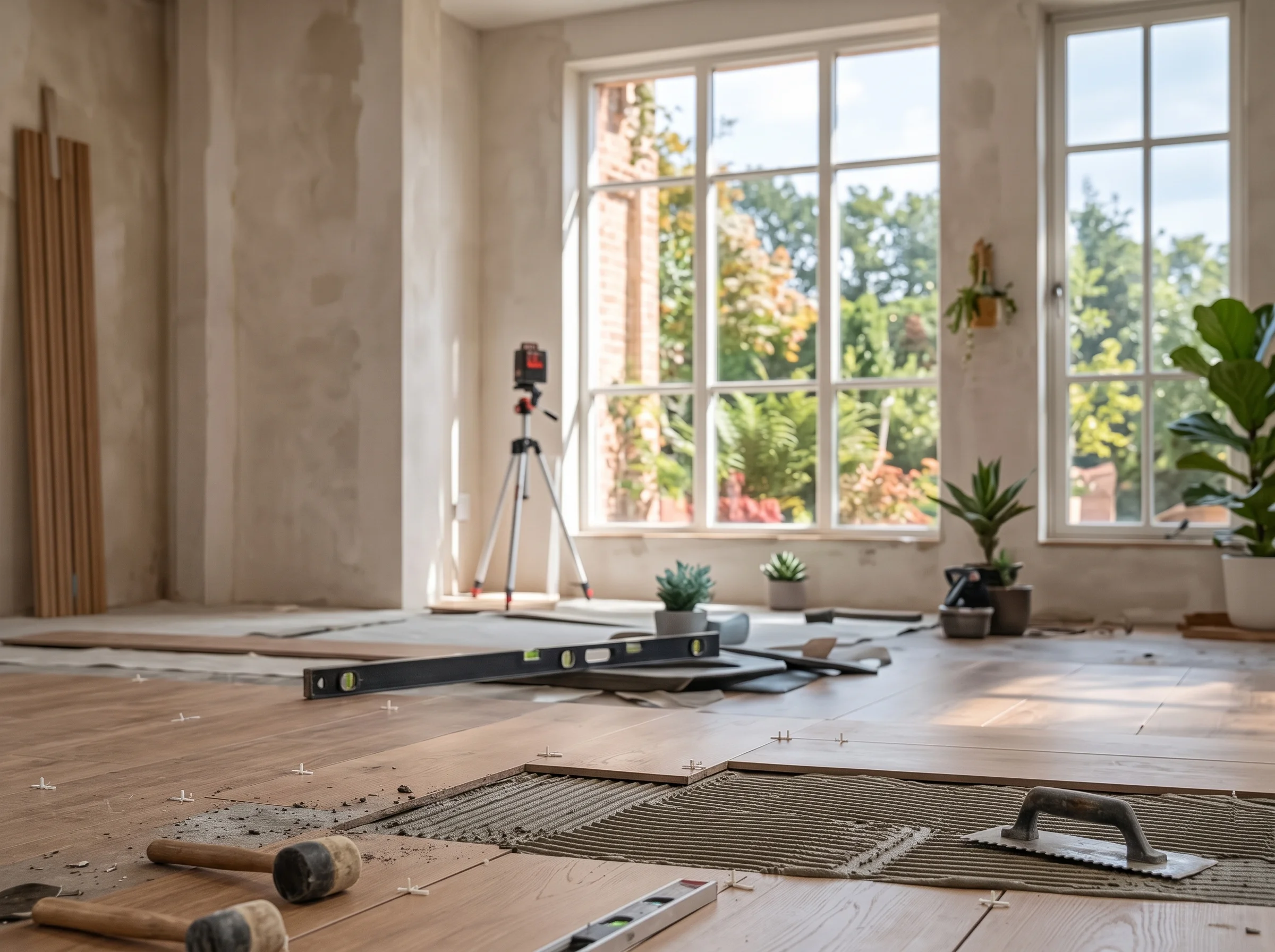
Our renovation process begins with a detailed existing condition survey — not a visual inspection, but a measured assessment of substrate conditions, moisture readings in walls and floors, structural anchor points, and clearance dimensions for new work. Hotels frequently discover during renovation that as-built conditions differ from available drawings, and catching these discrepancies before fabrication saves weeks of costly remediation. We have completed renovation projects at properties in Downtown Dubai, Dubai Marina, Abu Dhabi Corniche, and Sharjah without a single night of full property closure — a track record built on meticulous phasing planning.
FF&E Installation and Coordination
Many hotel projects source furniture from international manufacturers — Italy, Germany, China, or India — and require a specialist UAE contractor to manage receiving, unpacking, inspection, and installation. Karnak’s FF&E installation team handles exactly this scope, working from the brand’s FF&E schedule to verify each piece against specification, document damage claims, and install according to manufacturer and designer requirements.
We are experienced at the practical realities of FF&E installation: that hotel elevators are rarely sized for the furniture being delivered, that service corridor widths don’t match furniture dimensions from overseas factories, and that tight sequencing with MEP trades is the difference between a smooth FF&E installation and a chaotic one. Our site management team coordinates directly with the main contractor’s program to ensure carpentry and FF&E installation phases don’t create bottlenecks for other trades.
Spa, Wellness, and Back-of-House Carpentry
Hotel spa carpentry requires materials and construction methods that tolerate extreme moisture — steam room environments, wet treatment room floors, sauna changing areas, and hydrotherapy pool surrounds. We specify marine-grade plywood substrate, solid teak or cedar for steam-adjacent applications, and full-perimeter sealing on every joint that might see moisture contact. Our spa carpentry work extends to reception desks, product display cabinetry, locker rooms, relaxation area furniture, and all associated built-in joinery.
Back-of-house carpentry — staff areas, laundry rooms, luggage stores, engineering offices, and kitchen ancillary spaces — is specified for durability over aesthetics. Commercial-grade laminate surfaces, impact-resistant edge banding, heavy-duty hardware rated for continuous use, and simple maintenance access are the priorities. The guest never sees this work, but the hotel’s maintenance team lives in it daily.
The Karnak Process for Hotel Carpentry Projects
Step 1: Pre-Tender Review and Technical Advisory
Karnak engages with hotel projects at the earliest opportunity — ideally during the tender preparation phase, before specifications are finalized. At this stage, we review designer drawings and specifications for technical feasibility, flag potential brand standard conflicts, and provide preliminary cost guidance that helps project owners establish realistic budgets. This advisory engagement is provided without charge for projects above a qualifying scope threshold, because we understand that contractors who add value before winning work earn longer-term relationships.
For projects where we receive tender documentation without prior engagement, we provide a detailed technical clarification list alongside our tender submission. Every ambiguity in a specification is a potential variation claim later — we prefer to resolve them during tender, which saves everyone involved significant administration and dispute.
Step 2: Shop Drawing Development and Sample Approval
Once appointed, Karnak’s drafting team develops detailed shop drawings from the designer’s design intent drawings. Shop drawings show exact dimensions, substrate composition, joinery details, hardware specifications, edge profiles, and installation methodology — the working documents from which our workshop fabricates. Shop drawings are submitted for designer and client review, with comments incorporated before fabrication begins.
Sample approval runs parallel to shop drawing development. We produce physical material samples, finish samples, and where required, prototype sections of critical assemblies — a headboard panel junction, a reception desk edge profile, a feature wall panel connection detail — for client and designer review. Approvals are documented with signed sample boards retained in our project files and duplicates provided to the client.
Step 3: Workshop Fabrication
All hotel carpentry elements are fabricated in Karnak’s Dubai workshop — not subcontracted to third-party workshops, not partially outsourced. This matters because the quality control environment of a single dedicated workshop is categorically different from a fragmented supply chain. Our workshop operates CNC routing equipment for precision panel cutting, edge banding machinery for consistent sealed edges, spray finishing booths for controlled lacquer and stain application, and assembly bays sized for full casegood units.
For large-volume hotel projects, we operate a parallel production system: fabricating, finishing, and quality-checking units in batches synchronized with site installation readiness. On a 300-key project, this means the site team is installing floors 1–5 while the workshop is completing floors 6–10. The system requires disciplined program management, but it eliminates the site storage and damage problems that come from delivering all 1,800 furniture units to site simultaneously.
Step 4: Site Installation
Hotel site installation is coordinated through the main contractor’s master program. Karnak provides a dedicated site manager for all projects above 100 keys, whose sole function is coordinating our installation sequence with MEP rough-in completion, civil finishes handover, and access constraints on live properties. Daily look-ahead schedules, weekly progress reports, and immediate flagging of blockers keep our installation on track regardless of the complexity of the overall program.
Our installation teams are experienced at the physical constraints of hotel work: narrow service corridors, freight elevator time windows, floor-by-floor access restrictions, and the requirement for dust and noise control adjacent to occupied areas. We bring our own protection materials and apply them consistently — a practice that eliminates the disputes over floor damage and surface contamination that are depressingly common on hotel renovation sites.
Step 5: Snagging, Handover, and Documentation
Before any area is handed over, Karnak conducts an internal snagging inspection using the same checklist the client’s project manager or brand representative will use. This internal review — conducted by a team member not involved in the installation — catches the issues that the installation team becomes blind to after weeks on site. The result is a handover snagging list that is typically 70–80% shorter than what clients expect from a contractor of our scope.
Handover documentation includes as-built drawings, material and finish schedules, hardware specifications with supplier contacts, care and maintenance instructions specific to the finishes installed, and warranty documentation. For brand-managed properties, we structure documentation to align with the brand’s own property management records system where possible.
Step 6: Warranty Support and Post-Opening Service
Karnak’s hotel carpentry warranty is 24 months on fabricated joinery and 12 months on hardware — in line with standard UAE commercial practice, but backed by a response commitment that distinguishes us from contractors who regard warranty calls as a cost to be avoided. For hotel clients, a faulty wardrobe in an occupied guest room is an urgent matter, not a scheduled maintenance item. Our post-opening support team responds to warranty calls within 48 hours for non-urgent items and same-day for guest-room-affecting issues.
We have ongoing maintenance relationships with several hotel properties that originated as fit-out projects. These relationships — now spanning 5, 10, in some cases 20 years — are the clearest indication we can offer that our work performs as promised in real hotel environments.
Why Hotel Project Teams Choose Karnak
Three and a Half Decades in UAE Hospitality
Karnak was established in 1988, when Dubai’s hospitality sector was a fraction of its current size. We’ve worked on properties that were among the first luxury hotels in Dubai Marina, that were part of the original expansion of Abu Dhabi’s hotel stock, and that now represent the boutique and lifestyle segment that barely existed fifteen years ago. This depth of experience isn’t nostalgia — it translates into a practical understanding of how UAE hotels operate, what hotel operators prioritize, and where fit-out contractors most commonly create problems for the teams that follow them.
We know, for example, that the first major piece of information a Dubai hotel GM wants about a renovation project is the expected noise impact on occupied floors during each phase. We build that into our planning before the question is asked. We know that hotel F&B outlets in this market reposition their concept every 4–6 years and that the carpentry we install today needs to be designed for future disassembly, not just current aesthetics. These insights come from 35 years of hospitality relationships, not from reading industry reports.
Single-Source Responsibility
Hotel fit-outs frequently fracture into coordination failures when carpentry scope is split across multiple contractors — one for FF&E installation, another for built-in millwork, a third for exterior timber, a separate specialist for spa areas. Each interface between contractors is a potential dispute, a gap in responsibility, and a delay waiting to happen. Karnak’s capability covers the complete carpentry scope of a hotel project, which means a single point of contact, a single quality standard, and a single party responsible for all carpentry-related outcomes.
For main contractors, this simplifies site coordination dramatically. For hotel owners and operators, it means warranty questions, maintenance requirements, and future renovation planning all route through one experienced relationship.
Workshop Control and Quality Consistency
Our Dubai fabrication workshop is not a subcontracted facility — it is Karnak’s own operation, which means we control every stage from material selection to final finishing. For a hotel project specifying 250 identical wardrobes, the consistency of production that a controlled workshop environment provides is not achievable through site-built or subcontracted fabrication. Unit 250 is finished to the same standard as unit 1, because the same equipment, the same materials, and the same quality checks produce both.
This also means we are not dependent on the capacity or reliability of third-party workshops during critical program periods. When a hotel project needs its delivery accelerated — a situation that arises on every complex project at least once — we have direct control over the response.
Material Sourcing and Supplier Relationships
Karnak imports timber, veneers, hardware, and surface materials through established relationships with European and Asian suppliers developed over decades. For hotel projects requiring specific species — American black walnut for a Marriott luxury brand, white oak for a Scandinavian-inspired lifestyle property, wenge for a contemporary African-themed resort — we source accurately and verify moisture content, grading, and cut consistency before anything reaches our workshop.
Our hardware relationships include Hettich, Häfele, Blum, and Grass — the European manufacturers whose hotel-grade soft-close systems are specified in many brand standard documents precisely because of their documented cycle-life ratings. We do not substitute equivalent-looking alternatives to achieve a lower tender price. In a hotel room used by 300 guests per year, the difference between a 50,000-cycle hinge and a 150,000-cycle hinge becomes visible within the first property refresh cycle.
Programme Reliability
In Dubai’s hotel market, opening delays carry tangible costs: pre-sales revenue lost, staff salaries during delay periods, brand relationship damage, and in some cases, contractual penalties. Karnak operates a programme management system that tracks every fabrication batch, every delivery, and every installation area against the master programme. Delays within our scope are flagged at weekly programme meetings with recovery proposals already prepared — not presented as problems for the client to solve.
Our record of on-programme delivery across hotel projects in the UAE is the metric we’re most consistently complimented on by main contractors and hotel owners alike. It is the result of realistic programming at tender stage, disciplined production management in the workshop, and a site team experienced enough to absorb the inevitable surprises of hotel construction without losing their timeline.
Selected Hotel and Hospitality Projects Across UAE
Luxury Tower Hotel Lobby Renovation — Downtown Dubai
A 487-key five-star property required a complete lobby and reception area refresh while maintaining full hotel operation. Karnak designed and fabricated a new curved reception desk in book-matched American walnut veneer with integrated technology provisions, replaced all corridor wall paneling across 18 floors of guest accommodation, and installed a feature ceiling installation in the main restaurant. The project was completed in 14 weeks of phased works with zero full-lobby closure periods and zero guest complaints attributed to the renovation.
Boutique Heritage Hotel — Al Seef, Dubai
A 76-room boutique property in Dubai’s heritage district required carpentry that referenced traditional Arabic craftsmanship while meeting contemporary fire and safety standards. Karnak fabricated custom mashrabiya-inspired screen panels in solid timber for corridor feature walls, built all guest room furniture in reclaimed-effect oak with hand-finished details, and installed carved timber door surrounds throughout public areas. All decorative timber elements met UAE Civil Defense Class 2 fire rating requirements through fire-retardant treatment applied in our workshop.
Beachfront Resort Pool Deck — JBR, Dubai
Complete replacement of a 1,400 sqm timber pool deck across two hotel towers on Jumeirah Beach Residence. The project specified FSC-certified teak with hidden fixing systems, replacing a surface-fixed hardwood deck that had deteriorated significantly from UV and salt air exposure. Installation was completed during a 9-week off-peak period with temporary fencing maintaining guest access to adjacent beach areas throughout.
International Chain Hotel Room Refurbishment — Abu Dhabi
A 320-key business hotel on Abu Dhabi Corniche engaged Karnak to complete a full guest room furniture replacement to updated brand standards. The project covered wardrobes, headboards, bedside units, desks, and minibar enclosures across all room categories, plus corridor joinery throughout. Working alongside the client’s procurement team, we produced samples against brand standard references in advance of main contract award, ensuring material and finish approvals were complete before fabrication commenced — a sequencing approach that saved approximately 6 weeks against the original programme.
Five-Star Hotel Spa — Palm Jumeirah, Dubai
Complete carpentry fit-out for a new 800 sqm spa facility within an established Palm Jumeirah resort. Scope included teak-clad steam room interiors, solid teak changing room benches and locker surrounds, reception and retail cabinetry, relaxation room built-in furniture, and all wet area timber detailing. All teak was specified with full sap-wood exclusion and pressure-treated for the extreme humidity environment. The spa has been in continuous operation for three years without a single carpentry warranty callback.
Hotel Restaurant Redesign — Business Bay, Dubai
Complete F&B fit-out for a 180-cover all-day dining restaurant within a Business Bay hotel, including repositioning from casual to contemporary fine dining to align with updated brand positioning. Karnak fabricated custom walnut banquette seating with integrated table bases, bar counter in honed concrete-effect surface over engineered timber substrate, back bar cabinetry with integrated wine storage, waiter stations, and a full acoustic timber slat ceiling system. The project was completed in a 6-week closure window timed to coincide with the hotel’s lowest occupancy period.
Airport Adjacent Business Hotel — Dubai Silicon Oasis
A 210-key business hotel required a phased renovation of all guest floors while maintaining 70% occupancy throughout. Karnak developed a floor-by-floor installation sequence that completed one floor every 5 days — wardrobes, desks, headboards, and all associated trim — working exclusively during approved quiet hours and maintaining complete dust containment on every working floor. The project completed all 210 rooms within the 52-week programme, with occupied floors never affected by noise or debris from adjacent work areas.
Hotel Carpentry Questions: Expert Answers
The timeline depends on volume, complexity, and approval speed — three variables that differ considerably across projects. For a straightforward business hotel room furniture package (wardrobe, desk, bedside units, headboard) in a single finish and specification, our typical timeline from contract award to first unit installation runs 10–14 weeks. This includes 2–3 weeks for shop drawing development and approval, 1–2 weeks for sample production and sign-off, and 6–8 weeks of workshop fabrication. For projects requiring custom design development, complex veneers, or brand standard approval from an international franchisor, add 3–4 weeks to account for review cycles that involve overseas stakeholders.
Volume also affects timing in a way that counterintuitively works in larger projects' favor: our parallel production system means a 300-room project doesn't take three times as long as a 100-room project — the workshop production runs simultaneously once fabrication begins, typically adding only 30–40% to the duration while tripling the output.
Yes, and this represents the majority of our hotel renovation experience. Live hotel renovation requires a completely different operational approach: strict noise windows (typically 9am–6pm on occupied floors, with pre-approved exceptions for specific activities), dust containment systems installed before any work begins, daily cleaning of all access routes, coordination with housekeeping and front desk for room access, and immediate response protocols when issues arise that could affect guests.
We maintain a detailed live hotel operational protocol that covers every aspect of our activity from delivery scheduling (no lobby deliveries during check-in peak hours) to team presentation standards (identification, uniform, behavior). Hotel general managers who have worked with us on live renovation projects consistently note that guest-affecting incidents from our works are close to zero. This isn't accidental — it's the result of applying a system that we've refined across dozens of live hotel projects since the mid-1990s.
UAE Civil Defense regulations, which align with the NFPA 101 Life Safety Code framework, categorize hotel spaces and apply different flame spread requirements accordingly. Means of egress — corridors and stairwells — require materials meeting specific Class ratings for flame spread and smoke development. Guest room interiors have somewhat less restrictive requirements, but materials are still required to meet documented standards. In all cases, fire-retardant treated timber must be treated to a verified standard with documentation available for inspection.
Karnak uses fire-retardant treatment certified to BS EN 13501 and provides full material certificates for every fire-rated element installed. For projects requiring specific civil defense submissions, we prepare and submit the material documentation. This is not an area where we ever substitute untested materials or rely on untested assumptions — the liability exposure for doing so in a hotel environment is significant for both contractor and owner.
Hotel carpentry projects are priced based on a detailed bill of quantities drawn from approved drawings, with rates covering materials, workshop fabrication, delivery, and installation. We do not provide lump-sum prices from conceptual drawings — the variation risk embedded in a lump sum price for a complex hotel project would either be excessive (inflating your cost) or underestimated (creating conflict during delivery). Our preferred commercial structure is a fixed rate schedule with clearly defined scope inclusions and exclusions, applied to a measured or estimated quantity.
For tender submissions, we price from tender drawings and include a list of clarifications and assumptions. Items not shown on drawings but referenced in specifications, or items shown on drawings with insufficient detail for accurate pricing, are identified explicitly rather than estimated speculatively. This approach produces a more accurate tender price and significantly fewer variation claims during the project.
The answer varies by application and location. For interior dry-environment applications — guest room casegoods, lobby reception desks, dry restaurant areas — a wide range of species performs well when properly processed and finished: American walnut, white oak, European oak, maple, ash, and wenge are all commonly specified and appropriate when acclimatized correctly before installation.
For moisture-adjacent applications — bathroom vanities, spa areas, pool-adjacent features — we recommend teak, iroko, accoya, or marine-grade plywood substrate as the structural element regardless of decorative finish. Teak's natural oil content gives it exceptional moisture resistance without requiring frequent maintenance; accoya's acetylation process makes it dimensionally stable in ways that natural timber cannot match. For exterior applications in coastal Dubai — pool decks, terrace furniture, cladding features — we will not specify MDF-based or untreated timber, regardless of what the project budget suggests. The cost of replacement timber decking after premature failure is always greater than the marginal cost of doing it correctly the first time.
Yes, with the transparency that matching existing finishes is a skilled discipline with inherent limitations. When existing timber or lacquer finishes were applied 5–10 years ago, the original material may no longer be available in its exact specification. Timber species age and oxidize, changing their color. Lacquer formulations change over time. Our finishing team works from physical samples of existing finishes and can achieve very close matches in most cases, but we document the match process and present sample matches for client approval before production — because "very close" and "identical" are not always the same thing, and the client should be in a position to make an informed decision.
Our standard warranty is 24 months on fabricated joinery (structural integrity, finish adhesion, dimensional stability) and 12 months on hardware. Hardware warranties from European manufacturers — Hettich, Blum, Häfele, Grass — typically run independently alongside our installation warranty, providing additional coverage through manufacturer channels for defective components.
The more meaningful commitment beyond warranty terms is our response protocol. A defective wardrobe door in an occupied hotel room is not a warranty claim to be scheduled for the next available technician visit — it is a guest experience issue requiring same-day resolution. Our post-opening team has a dedicated number for hotel clients that reaches a human being during business hours and connects to an on-call technician outside them.
We flag the conflict in writing to the designer and client, with the specific brand standard reference and the section of the designer's drawing that conflicts. We then provide our assessment of the options: modify the design to comply, seek a brand variance approval from the franchisor, or proceed with a documented risk assessment if the conflict is in an area where variances are routinely granted.
We do not make this decision ourselves. Our role is to identify the conflict and the options, not to resolve it unilaterally. The project's designer and client are in the best position to determine the commercial and brand relationship implications of each option. What we will not do is build to a non-compliant specification and say nothing — because the consequence of a brand audit failure falls on the hotel owner, not on us.
Yes, within defined parameters. For projects where the client has specified furniture from international manufacturers — European, Asian, or otherwise — Karnak can manage procurement coordination, customs clearance, and receiving inspection on the client's behalf, with the physical FF&E installation forming part of our scope. We charge for this coordination service on a management fee basis.
For projects where the client is open to sourcing recommendations, we maintain relationships with manufacturers in Italy, Germany, China, and India whose products we have installed and whose quality we have verified through experience. We can facilitate direct-purchase relationships between clients and these manufacturers, providing our technical input on specification compliance without taking a markup on the supply.
Our current operational capacity allows us to manage between 3 and 5 concurrent hotel projects at different scales. For very large projects — 400+ key hotels or major resort fits-out — we dedicate a standalone project team (project manager, site manager, and workshop production coordinator) to the project exclusively. Workshop capacity scales with project demand through a combination of our permanent workforce and vetted specialist tradespeople brought in for peak fabrication periods.
The meaningful capacity constraint for any large hotel project is not workforce — it is the quality management bandwidth of experienced supervisors. Karnak does not scale by reducing supervision ratios; we scale by adding supervisory capacity. This means our maximum sustainable throughput at any given time is lower than some of our competitors, but the quality outcomes justify the constraint.
For projects above 150 keys, we recommend engagement at least 6 months before your target start of installation. This allows adequate time for tender review, commercial negotiation, shop drawing development, sample approval cycles (which frequently involve overseas stakeholders with slower response times than UAE-based teams), and workshop production ahead of site readiness.
For smaller boutique hotels and F&B fits-out, a 3–4 month engagement timeline is typically achievable for standard specifications. Complex custom work, imported materials, or projects requiring brand franchisor approval extend this timeline regardless of project scale.
Yes. We maintain a reference list of hotel clients and main contractors who have agreed to receive reference inquiries on our behalf. We provide this list to shortlisted tenderers and serious enquiries. We do not provide unverifiable testimonial quotes as a substitute for genuine references — the hotel development and project management community in the UAE is small enough that reputations, both positive and negative, are verifiable through direct conversation.
Where projects specify or clients request sustainable materials, we source timber from suppliers providing FSC-certified sustainable materials with valid chain of custody documentation. For projects pursuing LEED certification or Green Building compliance under Estidama, we can provide the material documentation required for materials credits. Our standard specification excludes endangered species and does not use tropical hardwoods from unverified sources regardless of project specification.
We are transparent that sustainable certified materials typically carry a cost premium over uncertified equivalents — typically 10–20% on timber supply costs. For clients who value this certification, we recommend specifying it explicitly in tender documents rather than assuming it will be included by default.
Our quality management system for hotel projects involves three inspection stages: workshop inspection before delivery (dimensional, finish, and hardware function check on every unit), receiving inspection on site (damage check, completeness verification), and post-installation inspection by our quality manager against the project snagging checklist. For projects above 200 keys, we conduct floor-by-floor quality sign-off with the client's representative before moving installation to the next floor, which means issues are identified and resolved while the installation team is still set up on that floor — dramatically more efficient than a final snagging exercise across the entire property.
Cost varies too significantly with specification level, volume, and market conditions for meaningful range figures to be genuinely helpful — numbers quoted without understanding your specific project specification create false expectations in both directions. What we can say is that our pricing reflects actual material and labour costs plus a sustainable margin, not the artificially low initial tender prices that some contractors use to win work before managing cost through variations.
For budget planning purposes, we recommend requesting a Karnak estimate against your schematic drawings and specification intent. This early-stage estimate, provided without charge for qualifying projects, will give you a reliable planning figure based on your specific requirements rather than a market range that may bear no relationship to your project.
Yes, and this is an area where our experience with hotel brand standards adds practical value beyond what a standard carpentry contractor offers. We have reviewed the furniture layout standards for multiple major brands and understand the minimum clearance requirements, accessibility compliance dimensions, and functional requirements that constrain where furniture can be positioned in a hotel room. When designers or project managers ask our workshop to flag dimensional conflicts between their furniture layout and room dimensions or brand standards, we do so as part of our standard shop drawing service.
Hotel Carpentry Services Across All Seven UAE Emirates
Karnak’s hospitality carpentry teams operate across all seven emirates with the same production infrastructure, quality standards, and project management approach. Where hotel projects have specific local authority requirements — as they do in Abu Dhabi under TAMM authority frameworks, in Sharjah under Sharjah Municipality, or in RAK under Ras Al Khaimah Tourism Development Authority — we have navigated those requirements on previous projects.
Dubai: Our primary operational base, with hotel project experience across Downtown Dubai, DIFC, Dubai Marina, JBR, Business Bay, Palm Jumeirah, Dubai Creek, Al Seef, Dubai Silicon Oasis, Al Barsha, Dubai Investment Park, and every other sub-market where hotel properties operate. Dubai’s dual-authority environment — Dubai Municipality for fit-out approvals and DTCM for hospitality licensing — is familiar territory for our project management team.
Abu Dhabi: Regular project delivery across Abu Dhabi Corniche, Al Reem Island, Yas Island, Saadiyat Island, Al Maryah Island, and downtown Abu Dhabi commercial and residential areas. Abu Dhabi’s higher proportion of large-scale resort and conference hotel properties means many of our Abu Dhabi projects are among our largest by scope.
Sharjah, Ajman, Ras Al Khaimah, Fujairah, Umm Al Quwain: Northern Emirates hotel projects typically involve a combination of established business hotel renovation and new resort development, particularly in RAK and Fujairah where hospitality investment has grown significantly over the past decade. Our teams mobilize from Dubai for Northern Emirates projects with project-specific site offices established for works exceeding 6 weeks in duration.
Start Your Hotel Carpentry Project with Karnak
Hospitality fit-out decisions carry real consequences — on guest experience, brand audit outcomes, maintenance budgets, and the opening timeline that every stakeholder is working toward. Karnak brings 35 years of UAE hotel carpentry experience to every project inquiry, and our initial consultation is structured to give you useful, specific guidance — not a sales presentation. Bring your drawings, your specification, and your questions about timeline and approach, and we’ll give you our honest assessment of what’s achievable and what it requires.
IF YOU HAVE ANY QUESTION? WE ARE GLAD TO
CONSULT YOU AS SOON AS POSSIBLE
Get Started
Immediate assistance from our team regarding your project details.
Form Submitted!
Thank you for contacting us. Our team will get back to you within 24 to 48 hours regarding your query.
Contact us on WhatsApp for Quick Response