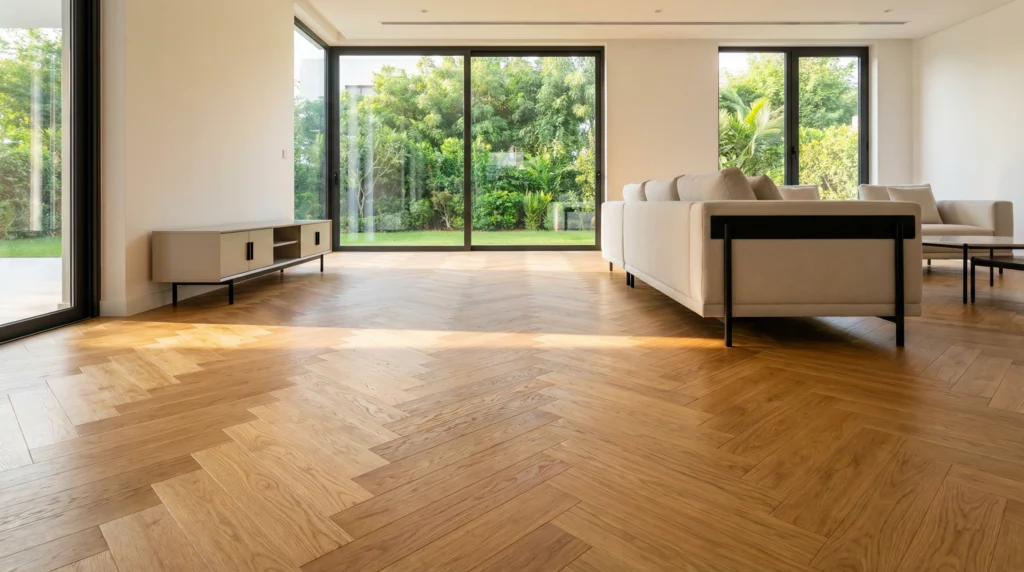
Transform Your Space with Expert Parquet Flooring Installation in Dubai
Since 1988, Karnak Carpentry has installed premium parquet flooring across 10,000+ UAE properties, combining timeless European craftsmanship with solutions engineered for Gulf climate demands. We bring three decades of wood flooring expertise to every Dubai home and business.
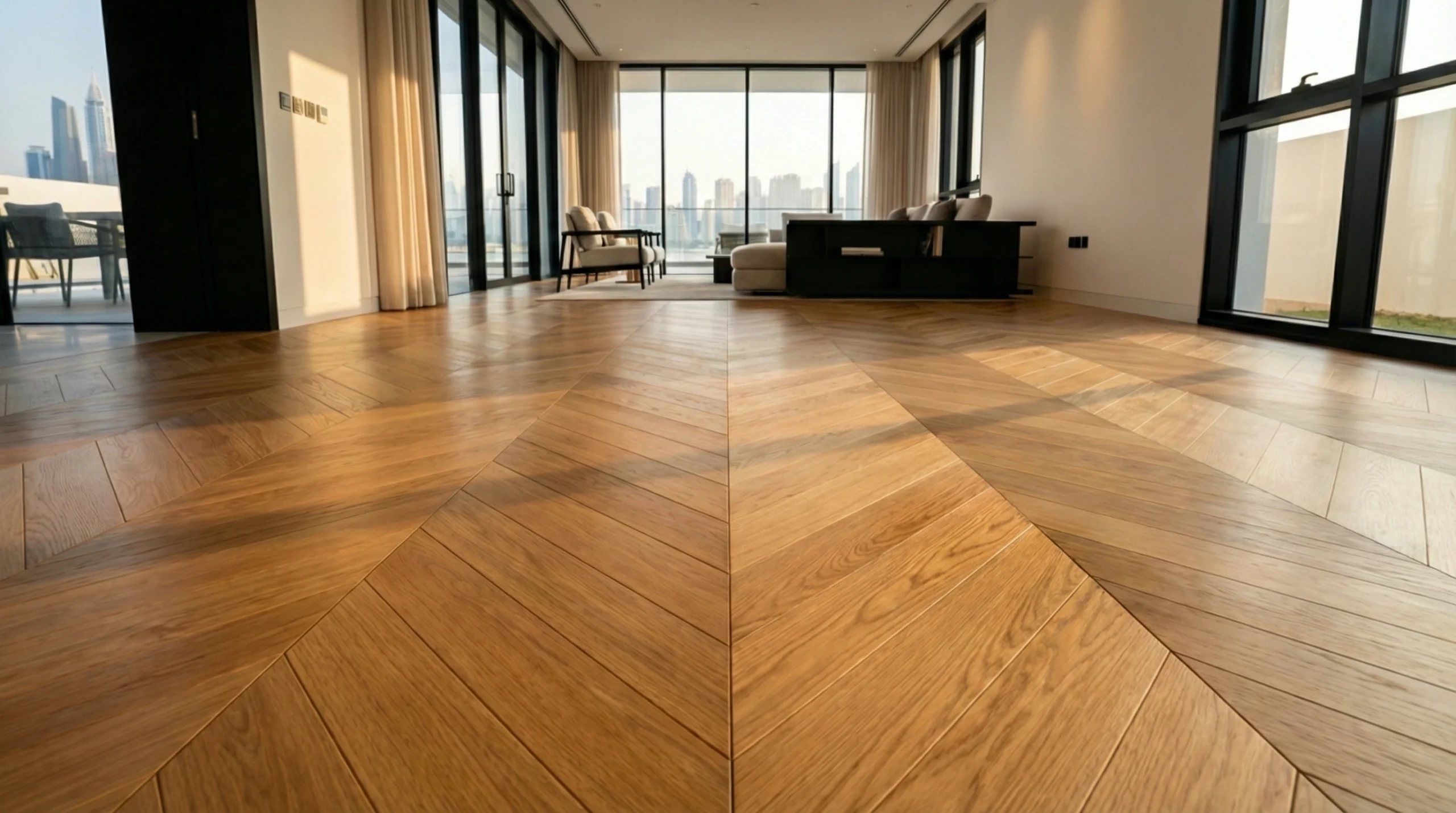
Parquet flooring brings unmatched elegance to UAE interiors, but success depends entirely on expertise that accounts for Dubai’s unique environmental challenges. Since our founding in 1988, we’ve mastered the precise science of installing wood flooring that performs flawlessly despite 90% summer humidity, dramatic temperature fluctuations between air-conditioned interiors and outdoor heat, and the specific subfloor conditions found in Emirates construction. Our parquet installations grace Dubai Marina penthouses, Arabian Ranches villas, DIFC executive offices, and heritage restoration projects across all seven emirates.
The UAE market demands parquet solutions far beyond standard European or American installation protocols. Coastal properties face salt air penetration. Homes with underfloor heating require engineered wood with specific construction tolerances. Ground-floor installations need moisture barriers engineered for water table proximity in reclaimed land developments. Dubai Municipality building codes require particular adhesive specifications for high-rise applications. We’ve navigated these challenges 4,200+ times in residential projects alone, developing installation methodologies that ensure your parquet flooring remains stable, beautiful, and dimensionally accurate for decades.
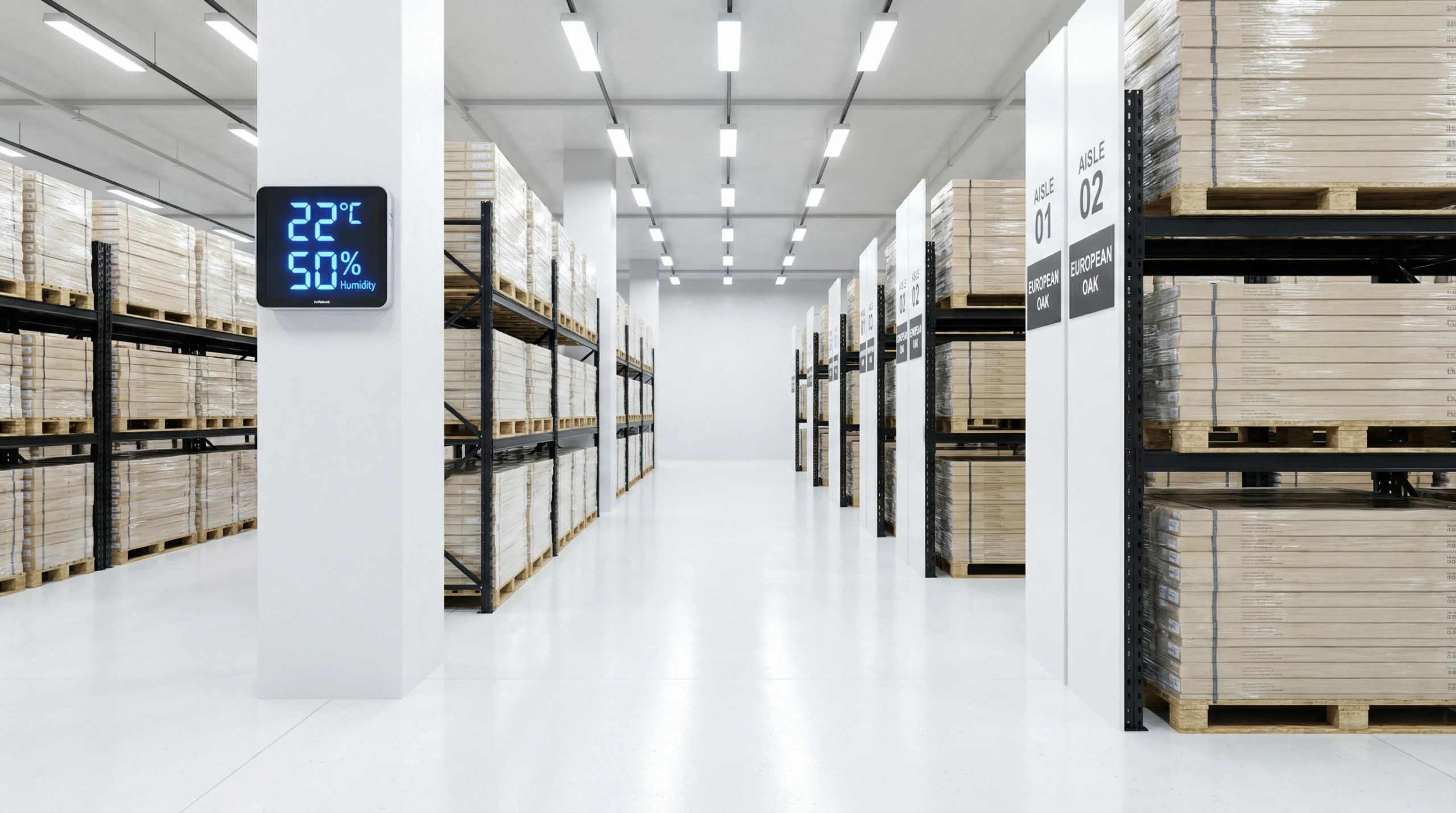
What sets Karnak apart is comprehensive in-house capability from initial moisture testing through final hand-polishing. We maintain climate-controlled storage in Jebel Ali for acclimatizing premium European oak, American walnut, and exotic species before installation. Our workshop pre-finishes custom patterns under controlled humidity to exact specifications. Our installation teams include craftsmen who’ve worked exclusively on parquet for 15-25 years. This integration means your flooring arrives on-site ready for precision installation, not field adjustments that compromise long-term performance.
Understanding Parquet Flooring for UAE Applications
Parquet flooring represents one of the most sophisticated wood flooring categories, distinguished by geometric patterns created from individual wood pieces assembled into larger modular blocks or laid in precise site-installed patterns. Unlike plank flooring that runs in single directions, parquet creates visual interest through herringbone, chevron, Versailles, basket weave, and countless custom geometric arrangements. This complexity makes material selection, subfloor preparation, and installation technique absolutely critical in Dubai’s demanding climate. We’ve installed every major parquet pattern across UAE property types over 35 years, and the difference between installations that perform flawlessly versus those that cup, gap, or buckle within two years comes down to understanding how wood movement interacts with pattern geometry.
Parquet Categories and Dubai Climate Suitability
Solid parquet remains the traditional choice, milled from single pieces of hardwood typically 10-22mm thick. In UAE applications, we specify solid parquet primarily for ground-level installations in older Dubai properties built before 2000, heritage restorations where authenticity matters, and specific high-traffic commercial applications where thickness allows multiple refinishing cycles. The limitation is dimensional stability. Solid oak herringbone we installed in a 1992 Jumeirah villa performs beautifully because that property has concrete slab foundations with proper damp-proof membranes and mature climate control. The same material would fail catastrophically in a 2020 Dubai Marina high-rise where subfloor moisture vapor transmission rates exceed 5 lbs per 1000 sq ft per 24 hours during winter months when HVAC systems cycle differently.
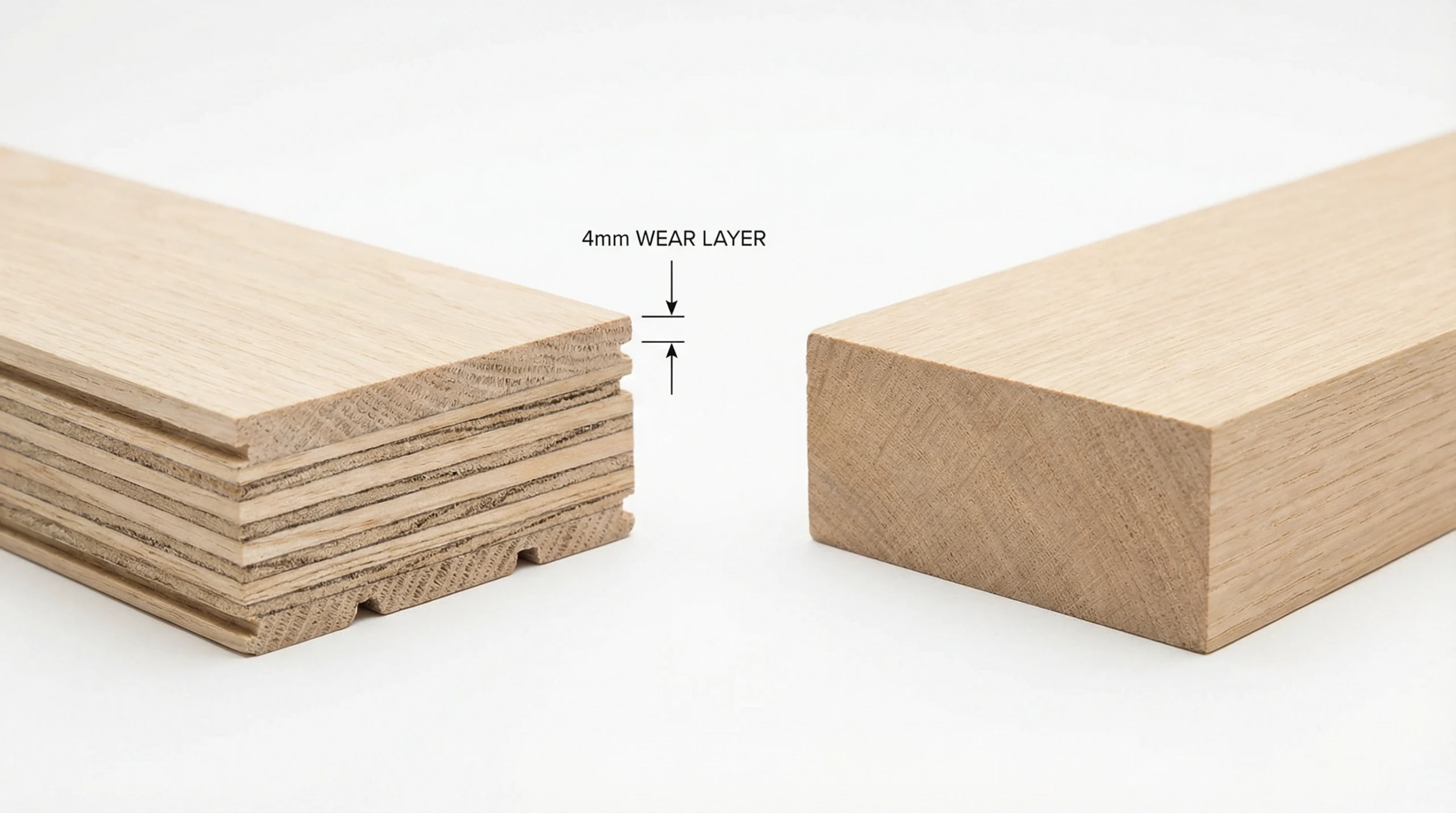
Engineered parquet has become our recommended specification for 94% of UAE installations since 2008. These products feature a 3-4mm hardwood wear layer bonded to 7-9 layers of plywood or HDF core material arranged in cross-grain construction. This engineering approach reduces expansion and contraction by 60-75% compared to solid wood while maintaining authentic appearance and refinishing capability. For Dubai projects, we source engineered parquet from European manufacturers who understand Gulf installation requirements, specifying products with moisture content tolerances between 6-9% and construction that tolerates the 30-35°C temperature differential between outdoor heat and air-conditioned interiors. The engineered construction also permits installation over underfloor heating systems increasingly common in luxury UAE villas, something solid parquet cannot reliably accommodate.
Species Selection for Gulf Environmental Conditions
French oak dominates our parquet installations, representing approximately 70% of projects, because European oak (Quercus robur and Quercus petraea) offers optimal stability, hardness ratings between 1290-1360 on the Janka scale, and grain patterns that accept both natural oil and UV-cured polyurethane finishes we specify for UAE applications. We source French oak from forests in Burgundy and Limousin regions where slow growth produces tight grain structure essential for dimensional stability. After 35 years installing oak parquet across coastal Dubai properties, desert-climate Abu Dhabi villas, and humidity-variable Fujairah developments, we’ve documented that properly installed French oak engineered parquet maintains gap tolerances under 0.4mm even through summer-winter humidity swings from 35% to 85%.
American walnut brings deep chocolate tones increasingly requested for contemporary UAE interiors, particularly in media rooms, libraries, and executive office spaces where clients want departure from ubiquitous light wood aesthetics. Walnut parquet requires careful specification because the species has lower Janka hardness (1010) than oak and more pronounced expansion characteristics. We specify engineered walnut parquet with slightly wider expansion gaps (12mm perimeter versus 10mm for oak), modified adhesive with higher elasticity ratings, and always recommend climate control maintained within 20-24°C year-round. A 420 sq meter walnut chevron installation we completed in an Emirates Hills residence in 2023 required moisture content adjustment from the manufacturer’s standard 8% to 6.5% specifically because that property’s HVAC system maintains 21°C constant temperature but humidity varies seasonally between 40-70%.
Exotic species including Brazilian teak, wenge, merbau, and iroko appear in approximately 8% of our parquet projects, almost exclusively in ultra-luxury residential applications or hospitality installations where clients prioritize unique aesthetic over cost considerations. These species cost 2.5-4× more than European oak and require extended acclimatization periods in our climate-controlled Jebel Ali facility. We installed 280 sq meters of Brazilian teak herringbone in the One Palm penthouse in 2021, a project that required six weeks material acclimatization, custom moisture barriers, and finishing protocols different from standard specifications because those tropical hardwoods have oil content that interacts differently with adhesives. Exotic species parquet demands expertise most contractors simply don’t possess.
Pattern Complexity and Installation Implications
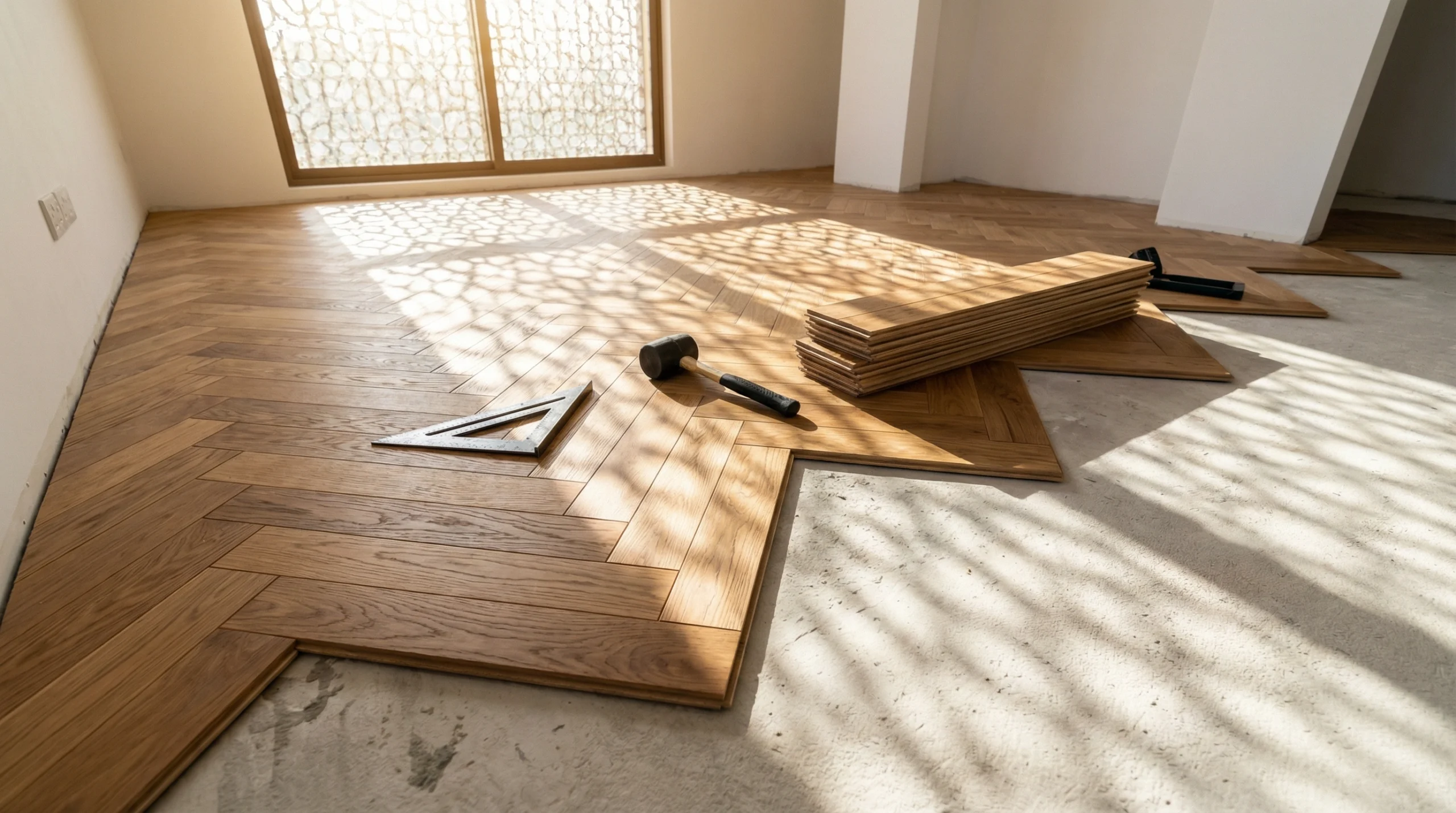
Herringbone remains the most requested parquet pattern, appearing in 45% of our installations. The classic 45-degree V-pattern created by laying rectangular planks perpendicular to one another creates visual movement while remaining relatively straightforward to install compared to more complex geometries. We typically specify herringbone in 600x90mm or 700x100mm plank sizes for residential applications, scaling to 800x120mm in commercial properties with larger floor areas. The critical installation factor is starting point accuracy. A 0.5-degree deviation in the initial centerline translates to 15mm misalignment across a 6-meter room width, creating visible pattern distortion. Our installation teams use laser-guided layout systems for all herringbone projects, marking centerlines and perpendiculars before adhesive application begins.
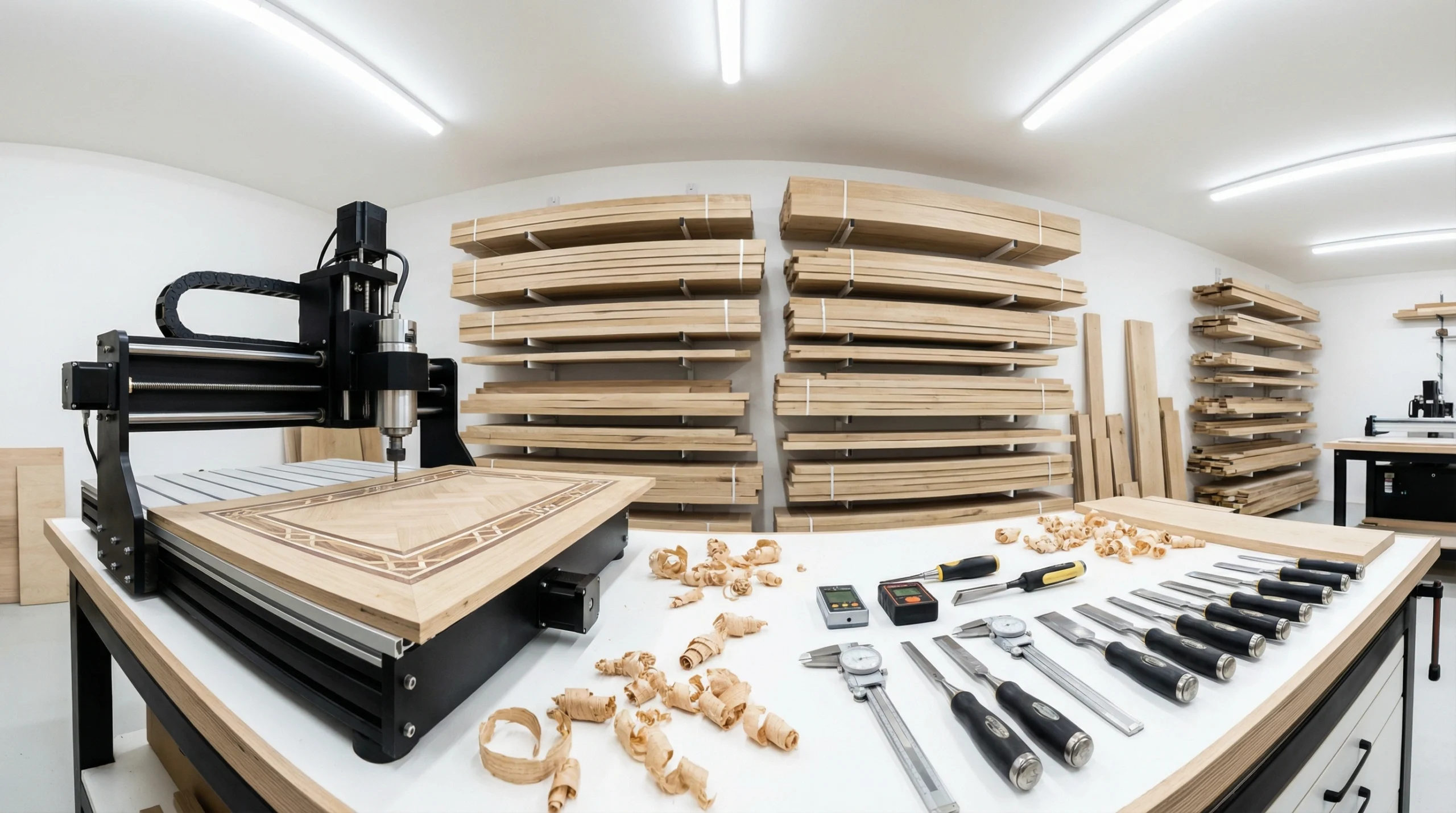
Chevron parquet creates sharper, more contemporary aesthetics through point-to-point alignment where plank ends are cut at precise angles, typically 45 or 60 degrees, creating continuous V-patterns without the broken line visible in herringbone. This pattern requires manufacturing precision because field cutting produces inconsistent angles and visible alignment errors. We order chevron parquet pre-cut from European manufacturers who maintain CNC cutting tolerances within 0.1mm, ensuring perfect point alignment across entire installations. The manufacturing precision increases material cost 30-40% versus herringbone, but eliminates field cutting time and produces superior visual results. We’ve installed chevron patterns in properties from Dubai Opera executive suites to Ras Al Khaimah resort lobbies, and the pattern particularly suits contemporary architecture with clean lines and minimal ornamentation.
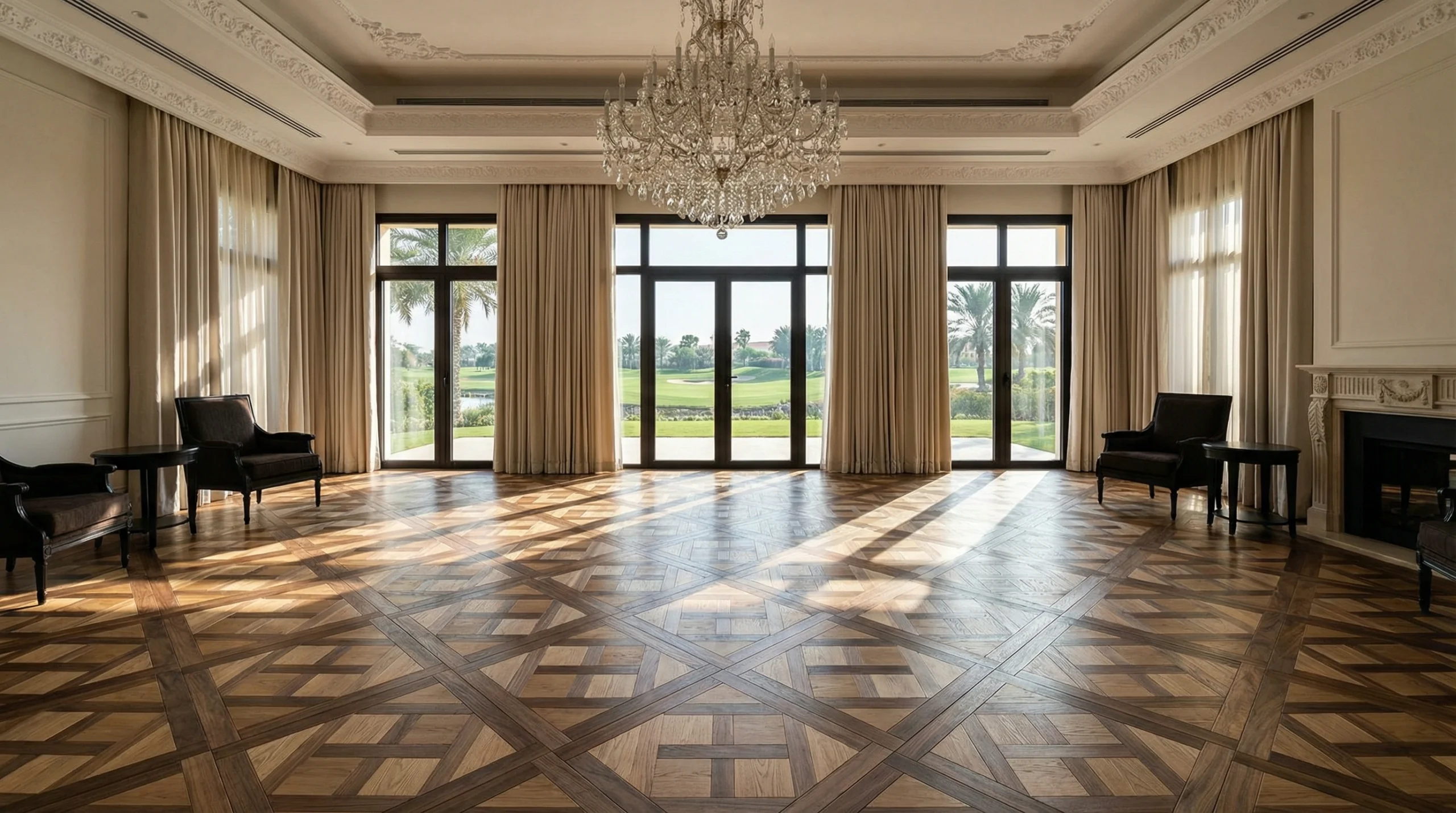
Versailles panels and custom geometric patterns represent the pinnacle of parquet complexity, typically reserved for entrance foyers, formal dining rooms, or feature areas where flooring becomes architectural statement rather than simple backdrop. A Versailles installation we completed in a Palm Jumeirah villa’s double-height entrance foyer required 18 custom-manufactured panels with alternating grain directions creating a frame-within-frame pattern, surrounded by border details incorporating three different wood species. This level of complexity demands expert installation because each panel must be positioned with absolute precision while managing glue open time, and any error in one panel affects all subsequent alignments. These installations cost 3-5× standard herringbone rates and require 40-60% longer installation timelines, but create absolutely unique interiors impossible to replicate through any other flooring approach.
Why Parquet Flooring Transforms Dubai Properties
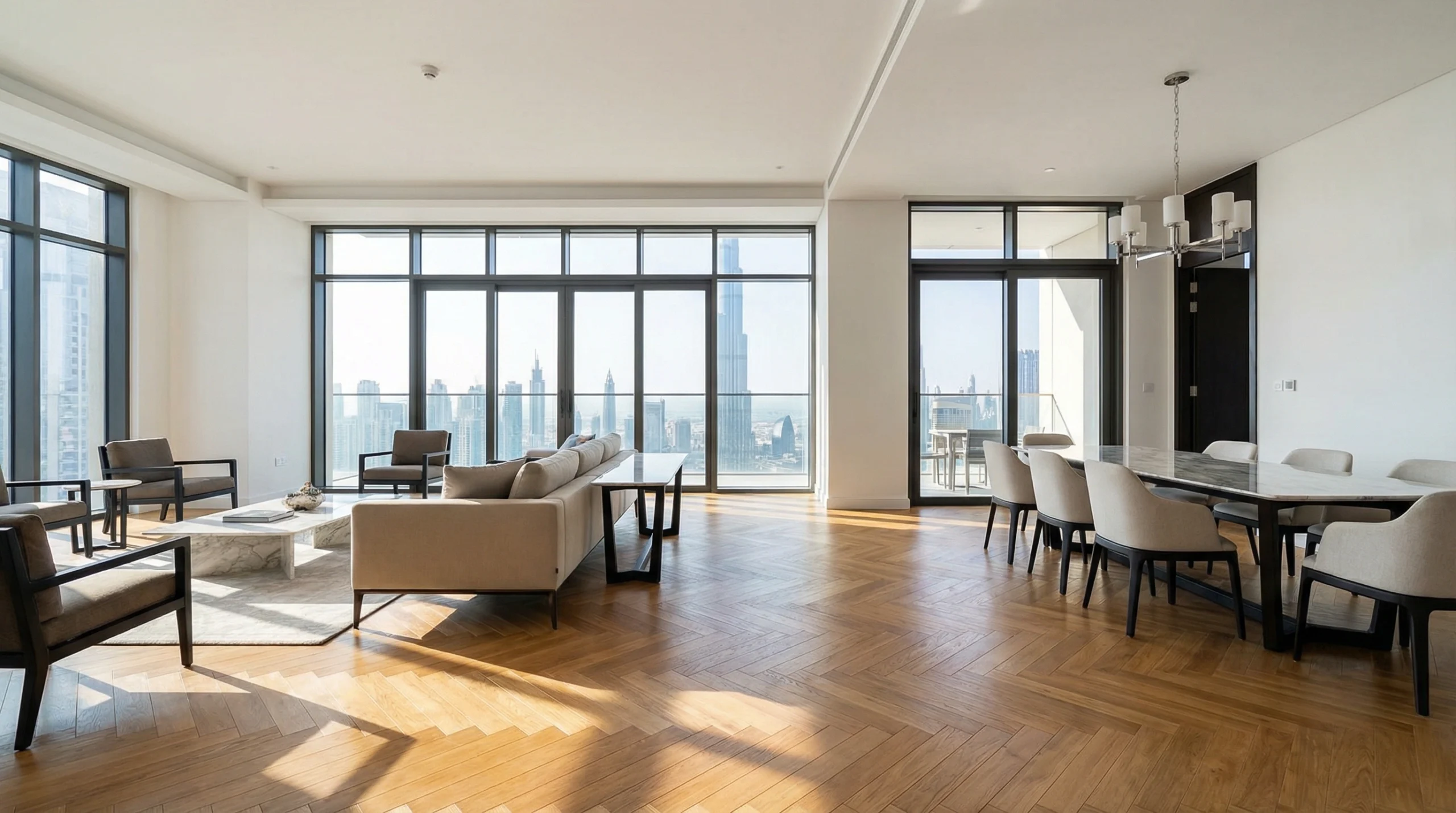
Beyond obvious aesthetic appeal, parquet flooring delivers functional advantages particularly relevant to UAE property markets. The multi-directional grain patterns inherent in parquet construction distribute stress more evenly than plank flooring, reducing the telegraphing of subfloor imperfections common in Dubai high-rise concrete slabs poured with speed-over-precision during construction booms. Parquet patterns create visual interest that makes spaces appear larger and more luxurious, a psychological impact we’ve observed clients consistently value in Dubai’s competitive real estate market where every design element contributes to property valuation and rental appeal.
Thermal Performance in Air-Conditioned Environments
Wood flooring fundamentally differs from tile and stone in thermal characteristics, remaining closer to ambient air temperature rather than conducting heat away from surfaces. In Dubai’s permanently air-conditioned interiors, this translates to parquet feeling comfortable underfoot year-round without the cold-shock sensation that sends residents reaching for slippers the moment they step onto marble floors. We’ve had numerous clients report that parquet installation transformed their willingness to use formal living areas that previously felt unwelcoming due to cold stone floors. This comfort factor particularly matters for families with young children spending floor time during play, and for anyone walking barefoot in home environments.
The thermal properties also enable integration with underfloor heating systems increasingly specified in luxury UAE villas and high-end apartment renovations. Engineered parquet compatible with underfloor heating systems allows precise temperature control while maintaining wood aesthetics. We’ve successfully installed underfloor heating beneath engineered oak parquet in 140+ projects since 2015, working with systems from Warmup, Devi, and other manufacturers approved for use beneath wood flooring. The engineering requirements include limiting surface temperatures to maximum 27°C to prevent wood drying and cupping, ensuring the screed or subfloor achieves complete cure before parquet installation, and specifying parquet products with maximum moisture content 7% to accommodate the slight drying effect that occurs even with temperature-controlled systems.
Acoustic Benefits for High-Rise Living
Parquet installation over appropriate underlayment systems dramatically reduces impact sound transmission through floor-ceiling assemblies, a critical consideration in Dubai’s high-rise towers where neighbor noise complaints drive property value and rental tenant satisfaction. Dubai Municipality building codes require minimum Impact Insulation Class (IIC) ratings for multi-family residential construction, standards that basic tile or stone installations often barely meet. We’ve measured IIC improvements of 12-18 points installing engineered parquet over specialized acoustic underlayment compared to baseline tile floors, bringing noise reduction into ranges where footfall, dropped objects, and furniture movement become essentially inaudible to neighbors below.
The acoustic performance extends to interior sound quality within rooms. Parquet absorbs more sound energy than hard surfaces while avoiding the sound-deadening effect of carpet, creating pleasant acoustics for conversation and entertainment spaces. Multiple clients with home theater rooms or music listening spaces have specifically chosen parquet over alternative flooring precisely because of balanced acoustic character that enhances rather than detracts from sound system performance.
Long-Term Value and Refinishing Capability
Properly installed parquet flooring offers decades of service life with maintenance requirements far lower than most Dubai residents expect based on experiences with inferior installations. We warranty our engineered parquet installations for 25 years on structural integrity and 10 years on finish durability under normal residential use. Over those timescales, parquet flooring cost per year of service drops well below luxury vinyl, tile, or carpet alternatives when factoring replacement cycles. A 250 sq meter parquet installation might cost AED 180,000-240,000 depending on species and pattern complexity, but that flooring will likely outlast the owner’s occupancy period and transfer full value to next property owners. Compare this to carpet requiring replacement every 5-7 years or luxury vinyl wearing through in 10-12 years requiring full replacement.
The refinishing capability of both solid and engineered parquet extends effective life even further. Engineered parquet with 3-4mm wear layers accommodates 1-2 full refinishing cycles, allowing complete restoration of appearance after 15-20 years of wear. We’ve refinished parquet installations in older Dubai properties that received original installation in the 1990s, bringing them back to like-new condition through sanding and refinishing that costs approximately 20-30% of new installation expense. This restoration capability means parquet remains the only flooring category where appearance can be completely renewed rather than requiring full replacement.
Complete Parquet Flooring Solutions from Karnak
Our parquet expertise spans every application category from intimate residential rooms to expansive commercial floor areas. We approach each project recognizing that successful installations require integrated solutions addressing subfloor preparation, material selection, pattern layout, installation methodology, and long-term maintenance planning. This comprehensive capability sets us apart from tile contractors attempting parquet installations without wood flooring specialization or material suppliers offering installation services through subcontracted labor with minimal quality control.
Residential Parquet Installation Throughout Dubai and UAE
Residential projects represent our foundation, built through 35 years serving Dubai homeowners across every property type and community. We’ve installed parquet in downtown Dubai apartments where concrete subfloors require moisture mitigation systems before any wood installation can proceed safely. We’ve completed villa projects in Emirates Hills, Arabian Ranches, Jumeirah Golf Estates, and similar established communities where clients renovate existing tile or marble flooring with parquet to update aesthetics and improve comfort. We’ve worked in new construction developments from Damac Hills to Mohammed Bin Rashid City where we coordinate directly with developers and contractors to ensure subfloor specifications meet our parquet installation requirements before construction progresses beyond remediation possibility.
The residential category also includes townhouse developments where unit sizes and layouts create specific installation challenges. Staircase parquet requires expertise in riser and tread construction that maintains pattern continuity while meeting safety codes. Multi-level layouts need careful pattern alignment planning so herringbone or chevron installations maintain visual flow as they transition through doorways and across level changes. We completed a 14-townhouse development in Town Square Dubai in 2022 where each unit received identical herringbone parquet in the same oak species, yet each installation required custom layout planning because builder modifications had created slight dimensional variations between supposedly identical units.
Commercial Parquet for Corporate and Retail Environments
Commercial parquet installations operate under different performance requirements than residential applications, demanding higher traffic durability, accelerated installation timelines, and coordination with multiple trades working simultaneously on project sites. We’ve installed commercial parquet in DIFC financial services offices, Dubai Design District creative agency workspaces, Business Bay corporate headquarters, and retail flagship stores from Mall of the Emirates to Dubai Mall. These projects taught us that commercial success requires industrial-grade moisture barriers, adhesive systems with faster cure times, finishing protocols using commercial-grade polyurethane with aluminum oxide additives for scratch resistance, and installation sequencing that minimizes business disruption.
A representative project involved 840 sq meters of French oak chevron parquet installed across three floors of a Business Bay corporate office in 2021. The client needed installation completed during a three-week period between tenant departure and new tenant move-in, working around existing ceiling contractors, data cabling installers, and furniture installation teams. We deployed four installation crews working staggered 12-hour shifts, coordinating daily with the project manager to sequence work zones avoiding conflict with other trades. The project demanded industrial dehumidification equipment to accelerate adhesive cure in an unconditioned building, and finishing completed using fast-cure UV polyurethane that achieved full hardness within 48 hours rather than 5-7 days required for conventional finishes. This type of complex commercial coordination requires experience most residential-focused contractors completely lack.
Hospitality and Restaurant Parquet Installations
Hospitality parquet serves the UAE’s vibrant hotel, resort, and restaurant sectors where flooring endures extreme traffic while maintaining luxury aesthetics that justify premium pricing. We’ve installed parquet in hotel lobbies, resort villas, spa reception areas, and upscale restaurants across Dubai, Abu Dhabi, and resort destinations. These applications require parquet products specifically engineered for commercial traffic, typically with wear layer thickness 4-5mm minimum, factory finishing using commercial polyurethane systems with hardness ratings above 2H on pencil hardness scales, and installation over subfloors that accommodate structural movement in large-format floor areas without telegraphing cracks through the parquet.
Restaurant installations present unique challenges because foodservice environments combine high foot traffic with grease, moisture, and cleaning chemical exposure that would destroy standard parquet installations within months. We specify restaurant parquet with UV-cured polyurethane finishes incorporating stain-resistant additives, use moisture barriers engineered to prevent liquid penetration from surface spills migrating to subfloors, and detail perimeter areas with sealed transitions that prevent moisture infiltration beneath cabinetry and equipment. A notable project involved parquet installation in a Japanese restaurant at Bluewaters Island where the client wanted authentic wood aesthetics in dining areas but faced moisture risks from adjacent sushi preparation areas. We created hybrid detailing using engineered oak parquet in dining zones transitioned to porcelain wood-look tile in wet areas with visual alignment so guests experience seamless flooring aesthetics while the installation addresses practical performance needs.
Heritage Restoration and Villa Renovation Parquet
Dubai and UAE heritage properties increasingly require parquet restoration and replacement as original installations from the 1980s and 1990s reach end-of-life or suffer damage from inadequate maintenance. We’ve completed restoration projects in original Jumeirah villas, older Al Barsha properties, and heritage-designated structures where parquet restoration must respect original design character while incorporating modern installation methodologies that ensure future durability. This work requires detective skills identifying original parquet species, patterns, and finishes from aged samples, then sourcing modern equivalents that match vintage aesthetics while providing improved performance.
A complex restoration involved a 1987 Jumeirah villa where original solid oak parquet had suffered water damage from an undetected slab leak affecting approximately 40% of the ground floor installation. We documented the original herringbone pattern using 600x90mm planks in a specific oak tone, salvaged and refinished undamaged sections, then manufactured replacement parquet from French oak hand-selected to match the aged patina of 35-year-old wood. The installation required matching original adhesive trowel patterns visible on the concrete slab, recreating expansion gap detailing using materials unavailable since the 1980s, and finishing with modified polyurethane tinted to match existing areas. The completed restoration made replacement sections visually indistinguishable from original installation, preserving the home’s character while ensuring the new work will outlast the original by incorporating modern moisture barriers and improved adhesive technology.
Parquet Refinishing and Restoration Services
Beyond new installation, we offer complete parquet refinishing and restoration services that extend the life of existing floors and restore appearance degraded by years of traffic, sun exposure, or improper maintenance. Refinishing engineered parquet requires calculating remaining wear layer thickness to ensure adequate material remains after sanding, a measurement we perform using digital calipers and test sanding in inconspicuous areas. We’ve successfully refinished engineered parquet with as little as 2.8mm remaining wear layer thickness, but always discuss with clients whether refinishing makes economic sense versus replacement if wear layer thickness drops below 2.5mm.
The refinishing process begins with complete room clearing and careful removal of baseboard moldings we catalogue and reinstall post-finishing. We use dustless sanding equipment with HEPA filtration that captures 99% of sawdust, essential for occupied homes and absolutely required for occupied commercial properties. Progressive sanding with 40-grit through 120-grit sequences removes old finish, levels minor surface variations, and prepares for new finish application. We offer both traditional polyurethane finishes and natural oil finishes depending on client preference, though we recommend polyurethane for UAE installations because oil finishes require more frequent maintenance than most clients willingly commit to. A refinished parquet floor looks identical to new installation, typically at 25-30% the cost of replacement.
The Karnak Parquet Flooring Installation Process
Successful parquet installation follows a methodical process refined over thousands of projects. Every installation begins with site assessment and only proceeds when subfloor conditions meet our requirements. Rushing installation over inadequate subfloors guarantees future failure regardless of parquet quality or installation skill. Our process ensures your investment delivers decades of reliable performance.
Step 1: Detailed Site Assessment and Subfloor Analysis
Initial site assessment involves comprehensive moisture testing using both calcium chloride tests that measure moisture vapor emission rates and resistance-type meters that measure concrete moisture content at depth. We perform minimum four test locations per 100 sq meters of installation area, mapping results to identify problematic zones. Dubai concrete slabs frequently show moisture readings between 3-6% on resistance meters, but vapor emission testing reveals transmission rates exceeding safe thresholds for wood flooring. We’ve measured vapor emission rates above 8 lbs per 1000 sq ft per 24 hours in ground-floor Dubai Marina apartments, levels that require moisture mitigation systems before parquet installation can proceed without risk of future cupping or adhesive failure.
Subfloor flatness evaluation uses 3-meter straightedges and precision levels measuring deviation across the floor area. Industry standards specify maximum 3mm variation across any 3-meter span for parquet installation, but we’ve found Dubai high-rise slabs often exceed this specification due to rapid construction timelines where slab finishing received minimal attention. Correcting these variations requires grinding high spots and filling low areas with self-leveling compounds, work we price separately from parquet installation because scope varies dramatically between properties. A 200 sq meter apartment might require minimal leveling compound while another identical unit needs 15-20 bags covering nearly the entire floor area.
We also evaluate existing flooring if the project involves renovation rather than new construction. Removing tile or marble affects subfloor flatness and usually requires leveling compound application. Removing carpet and underpad often reveals unexpected moisture issues that were masked by breathable flooring materials but will cause problems beneath impermeable parquet and adhesive systems. We’ve discovered active slab leaks, foundation waterproofing failures, and HVAC condensate drainage problems during renovation assessments, issues that must be corrected before parquet installation or the entire investment becomes pointless.
Step 2: Material Selection and Acclimatization
Material selection consultation reviews wood species, parquet pattern options, finish types, and budget parameters to identify optimal specifications for your specific project. We guide clients through species selection considering traffic levels, aesthetic preferences, maintenance commitment, and compatibility with existing interior design elements. Pattern selection involves reviewing how different parquet layouts interact with room dimensions, furniture placement plans, and architectural features like columns or focal walls. We provide sample boards showing actual materials in proposed finishes so decisions are based on physical samples rather than website images that never accurately represent real wood appearance.
Once materials are ordered from our European suppliers, delivery to our Jebel Ali facility begins the acclimatization process essential for UAE installations. Parquet manufactured in Europe arrives with moisture content optimized for European climates, typically 8-9%. Dubai’s air-conditioned environments stabilize at lower equilibrium moisture content, usually 6-7%. Installing parquet without acclimatization results in boards shrinking after installation as they release moisture to the surrounding environment, creating gaps between planks and potentially causing finish cracking. We store all parquet materials in our climate-controlled facility maintained at 22°C and 50-55% relative humidity for minimum three weeks before installation, allowing moisture content to stabilize at levels matching the installation environment.
Step 3: Subfloor Preparation and Moisture Mitigation
Subfloor preparation begins after site access is cleared of all furniture, existing flooring is removed if renovation, and other trades complete work that might damage prepared surfaces. We grind concrete high spots using planetary grinders with diamond tooling, creating flat surfaces that meet specification tolerances. Low areas receive moisture-tested self-leveling compound applications, products we select based on required cure time and compatibility with our adhesive systems. The self-leveling compound must achieve minimum compressive strength 3000 PSI and cure to moisture levels compatible with moisture-sensitive adhesives before parquet installation proceeds.
Moisture mitigation systems are installed when vapor emission testing revealed rates exceeding 3 lbs per 1000 sq ft per 24 hours, the maximum our standard adhesive systems tolerate. We primarily use two-component epoxy moisture barriers rolled onto prepared concrete substrates, creating impermeable membranes that block vapor transmission while providing suitable bonding surfaces for parquet adhesive. These systems require 24-48 hour cure periods before adhesive application, extending project timelines but providing essential protection against moisture-related failures. We’ve installed moisture barriers in approximately 60% of Dubai residential projects and 85% of ground-floor commercial installations since 2015, reflecting the prevalence of elevated moisture conditions in UAE construction.
Perimeter isolation installation creates necessary expansion space around all room edges, column penetrations, and fixed elements like kitchen islands or stair stringers. We install 10-12mm cork expansion strips around all perimeters, removing existing baseboard and replacing after parquet installation. This expansion space accommodates the seasonal movement even engineered parquet experiences through humidity variations, preventing buckling that occurs when flooring lacks adequate expansion relief.
Step 4: Pattern Layout and Starting Point Establishment
Pattern layout represents the critical planning phase where installation centerlines are established and pattern orientation is determined. For herringbone and chevron installations, we calculate room centerlines in both directions, marking perpendicular reference lines using laser levels ensuring absolute accuracy. Starting pattern installation from these centerlines guarantees equal border course widths on opposite walls, creating balanced appearance essential for quality installation. We’ve encountered numerous failed installations from other contractors who started herringbone patterns at room edges, resulting in full-width planks along one wall and narrow slivers along the opposite wall that look terrible and often require removal and reinstallation.
Complex pattern installations like Versailles panels or custom geometric designs require full-scale layout drawings we prepare showing panel positioning, border details, and transition treatments. These drawings guide field installation and allow clients to visualize the completed floor before installation begins. Changes at this stage cost nothing beyond layout revision time; changes after adhesive application begins cost thousands in wasted materials and labor.
We also plan installation sequencing to minimize trapped areas where installers must work themselves into corners without escape routes. Large open areas are typically installed from center toward perimeters. L-shaped rooms require careful sequencing planning. Multi-room installations need coordination ensuring pattern alignment maintains consistency as it transitions through doorways between spaces.
Step 5: Adhesive Application and Parquet Installation
Installation begins with adhesive selection appropriate for the specific parquet product, subfloor preparation, and environmental conditions. We primarily use single-component polyurethane adhesives for engineered parquet, products offering excellent bond strength, elasticity to accommodate minor wood movement, and moisture resistance superior to water-based adhesives. These adhesives require trowel application creating uniform ribbed patterns that spread when parquet planks are pressed into position, achieving 100% adhesive coverage essential for sound transfer elimination and long-term bond integrity.
Adhesive is applied in sections sized for 30-45 minute working time, the period during which adhesive maintains sufficient wet tack for reliable bonding. Our installation teams work in pairs, one team member troweling adhesive while the second positions and seats parquet planks or panels. Each plank is firmly pressed into adhesive using hand pressure or weighted rollers ensuring complete adhesive transfer. Installation proceeds following the planned layout, with installers constantly checking pattern alignment against reference lines and making micro-adjustments before adhesive begins initial set.
Herringbone installation requires particular attention to maintaining 45-degree angles as the pattern develops. Even slight deviations compound across multiple rows, creating noticeable pattern distortion. Our installers use laser angle guides and check every 4-5 rows against reference lines, making corrections before deviation becomes uncorrectable. Chevron installation demands even greater precision because the point-to-point alignment shows every alignment error immediately. We achieve this precision through material quality pre-cut to exact angles and experienced installer skill developed over years of dedicated parquet work.
Step 6: Border Installation and Transition Detailing
Border courses frame the primary parquet pattern where it meets walls, creating clean finished appearance and accommodating the expansion space required around perimeters. Border installation requires precision cutting and fitting because these pieces must maintain consistent width while accommodating actual room dimensions that deviate from perfect rectangles. We cut border pieces using pneumatic flooring nailers and fine-tooth saws, achieving clean cuts with minimal tear-out that would be visible along exposed edges.
Transition detailing addresses how parquet flooring meets other flooring materials, doorway thresholds, staircase nosings, and elevation changes. We fabricate custom wood transitions for parquet-to-parquet transitions between rooms, parquet-to-tile transitions at wet area boundaries, and parquet-to-carpet transitions in mixed-material floor plans. Metal transitions are used sparingly and only where wood transitions prove impractical. The goal is seamless appearance that maintains visual flow while accommodating material height differences and providing necessary expansion relief.
Staircase transitions receive special attention because stairs create both safety concerns and aesthetic opportunities. We extend parquet patterns onto stair treads where appropriate, maintaining pattern continuity that makes stairs appear integrated with adjacent flooring rather than afterthought elements. Nosing details must meet code requirements for slip resistance and edge safety while coordinating visually with the parquet pattern and finish. We’ve detailed parquet staircase installations using both factory-fabricated stair nosings and custom-milled profiles that exactly match the parquet species and finish.
Step 7: Finishing Application and Protection
Finishing begins after adhesive achieves sufficient cure, typically 24-48 hours for polyurethane adhesives depending on temperature and humidity conditions. We lightly sand the entire installation using 120-grit screens to remove any adhesive residue, smooth minor surface variations, and prepare the wood surface for finish acceptance. This preparatory sanding is performed using dustless equipment that captures particulate before it can contaminate the space or settle on surface about to receive finish.
Our standard finish specification uses water-based polyurethane systems with UV inhibitors and aluminum oxide hardness additives, applied in three coats achieving total dry film thickness 4-5 mils. Water-based polyurethanes dry clear without the amber tones of oil-based polyurethanes, preserving the natural wood color while providing excellent durability and resistance to scratching, moisture, and UV degradation. Each coat receives 3-4 hours drying time before light sanding with 220-grit abrasive and application of subsequent coats. Final coat receives no sanding, creating the smooth surface clients walk on.
Alternative finishes include oil-based polyurethanes for clients preferring slightly warmer amber tones, UV-cured commercial polyurethanes for high-traffic commercial applications needing maximum hardness, and natural oil finishes for clients prioritizing easy repair and maintenance over maximum durability. We discuss finish options during material selection, explaining maintenance requirements and performance characteristics so clients make informed decisions.
Floor protection installation happens immediately after final finish coat to prevent traffic damage during remaining construction or move-in activities. We cover finished parquet with breathable protective materials, never using plastic sheeting that traps moisture and can damage uncured finishes. Protection remains in place until all construction activity completes and the client is ready for occupancy.
Why UAE Businesses and Homeowners Choose Karnak for Parquet Flooring
The parquet flooring decision represents significant investment in your property’s value, aesthetics, and occupant comfort. Choosing installation contractors determines whether that investment delivers decades of satisfaction or years of problems requiring expensive remediation. Our 35-year track record across 10,000+ UAE projects reflects accumulated expertise that simply cannot be replicated by contractors entering the market recently or companies treating parquet as sideline to primary tile or marble businesses.
Three and a Half Decades of UAE-Specific Parquet Expertise
Since 1988, we’ve installed parquet flooring across every UAE climate zone, property type, and application category. This experience means we’ve encountered and solved every challenge Dubai’s unique environment presents. We’ve addressed the coastal humidity affecting Dubai Marina and JBR properties where salt air accelerates finish degradation. We’ve engineered solutions for inland desert properties in Arabian Ranches and Sustainable City where extreme summer heat creates indoor-outdoor temperature differentials exceeding 35°C. We’ve navigated the specific moisture conditions in reclaimed land developments from Palm Jumeirah to Bluewaters Island where proximity to water tables affects ground-floor vapor transmission rates.
This accumulated knowledge manifests in specifications customized for UAE conditions rather than generic installation protocols developed for European or American markets. When we install parquet in a 30th-floor Dubai Marina apartment, we account for building sway affecting expansion joint requirements. When we work in a ground-floor Arabian Ranches villa, we incorporate moisture barriers engineered for that community’s specific water table depths and soil conditions. When we install parquet in a heritage Jumeirah property built in 1992, we evaluate how original construction details interact with modern parquet specifications. This customization based on actual UAE experience prevents the failures we regularly see from contractors applying textbook procedures without adjustment for local conditions.
In-House Capabilities Eliminating Subcontractor Variability
Complete in-house capability from initial assessment through final finishing means quality control throughout every project phase. We don’t subcontract installation to independent crews with minimal training and inconsistent skills. We don’t outsource finishing to separate companies using whatever products they happen to stock. Our installation teams include craftsmen employed by Karnak for 12-25 years who’ve worked exclusively on wood flooring installations throughout their careers with us. These teams know our standards, use our methodologies, and deliver consistent results because they’ve installed thousands of parquet projects following the same protocols.
This integration particularly matters during problem-solving when unexpected conditions arise. Our site supervisors have authority to implement solutions immediately rather than waiting for subcontractor callbacks or material supplier approvals. When we discovered elevated subfloor moisture during a Business Bay renovation that would have delayed installation three weeks waiting for moisture barrier cure, our team had alternative fast-cure moisture mitigation systems in inventory and implemented the solution within 48 hours, maintaining project schedule. When a custom chevron pattern shipment arrived with incorrect angles due to manufacturing error, our workshop milled replacement planks from inventory materials, avoiding the six-week delay reordering from Europe would have required.
Climate-Controlled Materials Management
Our Jebel Ali facility maintains dedicated climate-controlled storage for parquet materials, a capability that distinguishes us from contractors storing materials in unconditioned warehouses or job site locations. This climate control ensures materials acclimatize to UAE moisture conditions before installation, preventing the shrinkage, gapping, and cupping problems endemic to parquet installed immediately after arriving from European manufacturers. We’ve documented cases where competitors installed parquet directly from shipping containers without acclimatization, resulting in 1-2mm gaps opening between planks within 6-8 weeks as materials adjusted to UAE humidity levels. Those installations required complete replacement at contractor expense, delays affecting property completion schedules, and enormous client frustration.
Beyond parquet storage, our facility stocks comprehensive adhesive, moisture barrier, leveling compound, and finishing product inventories from multiple manufacturers. This inventory eliminates project delays waiting for material procurement and allows us to specify optimal products for each specific application rather than forcing every project into whatever products happen to be available. When a project requires fast-cure moisture barriers to meet aggressive timelines, we stock those systems. When another installation needs maximum elasticity adhesives for engineered parquet over concrete with hairline crack risk, we have those products ready. This materials access comes from 35 years establishing relationships with global manufacturers and maintaining inventory investment most competitors cannot justify.
Moisture Testing Equipment and Expertise
Proper moisture testing requires specialized equipment and training that most general contractors lack. We maintain calcium chloride test kit inventories, digital moisture meters with deep-probe capabilities, infrared thermal imaging cameras detecting moisture patterns, and documentation systems tracking test results across project timelines. Our supervisors attend annual training on concrete moisture testing methodologies, ensuring we implement current ASTM standards and interpret results accurately. This expertise prevents installation over problematic subfloors that will cause future failures.
We’ve measured thousands of Dubai subfloors over 35 years, developing databases correlating building age, construction type, floor level, and geographic location with expected moisture conditions. This data informs our assessment process, allowing us to predict potential issues before testing confirms them. When assessing a 2019 Dubai Marina tower ground-floor apartment, our experience suggests elevated moisture probability requiring thorough testing. When evaluating a 2015 Arabian Ranches villa second floor, our data indicates low moisture risk but we still test to confirm assumptions. This combination of statistical knowledge and verification testing provides certainty competitors operating on assumptions and limited experience cannot match.
Warranty Coverage Demonstrating Installation Confidence
We provide comprehensive warranties covering both materials and installation labor, demonstrating confidence in our work quality and long-term performance. Engineered parquet installations receive 25-year structural warranties covering delamination, adhesive failure, and subfloor-related issues provided reasonable maintenance and normal use. Finish warranties cover 10 years for residential applications against premature wear, UV degradation, or finish delamination. Commercial installations receive modified warranty terms reflecting increased traffic but still provide coverage far exceeding industry standards.
These warranties matter when problems occur years after installation. We’ve honored warranty claims for installations completed 15+ years ago, sending crews to assess issues, determine root causes, and implement repairs at our expense when warranty conditions apply. This long-term commitment requires financial stability and confidence that installations were performed correctly initially. Contractors offering minimal warranties or disappearing after project completion cannot provide this assurance.
Transparent Pricing with Detailed Specifications
Our quotation process provides detailed specifications listing exact parquet products with manufacturer and model numbers, adhesive and moisture barrier systems by product name, finishing products and application protocols, and complete scope definitions so clients understand precisely what they’re purchasing. This transparency eliminates the change order games competitors play, submitting low initial quotes then adding charges for “required” moisture barriers, premium adhesives, or other elements any competent contractor should have included initially. Our quotes might not always be lowest, but they’re complete and honest, reflecting actual installed cost rather than bait pricing that doubles through change orders.
We also provide detailed payment schedules tied to completion milestones rather than demanding large upfront deposits. Typical payment structures include 30% deposit at contract signing, 40% at material delivery and installation start, 20% at installation completion, and 10% final payment after finishing and client acceptance. This structure aligns our interests with yours, ensuring we maintain quality throughout the project to earn subsequent payments rather than collecting money upfront then reducing effort on project completion.
Direct Access to Project Decision-Makers
Unlike large contracting organizations where clients communicate with sales representatives who never visit job sites, our clients communicate directly with project supervisors and company principals. This access means questions get answered by people actually familiar with your specific project rather than being filtered through administrative layers. When design changes arise during installation, decisions happen immediately through direct conversations rather than request chains consuming days of delays. When problems require solutions, the people with authority to implement those solutions are directly accessible rather than hidden behind organizational hierarchies.
This accessibility particularly matters during the critical material selection phase when clients need guidance on species, patterns, and finishes. Our principals have personally installed parquet across thousands of projects and can provide experience-based recommendations rather than sales pitches. We’ll tell you when your proposed pattern won’t work in your room dimensions rather than accepting orders for installations we know will look problematic. We’ll recommend cost-effective alternatives delivering similar aesthetics at lower investment rather than maximizing every quote. This honest consultation builds relationships lasting beyond single projects, evidenced by clients who’ve commissioned parquet installations in multiple properties over years of working with us.
Recent Parquet Flooring Projects Across UAE
Our project portfolio demonstrates parquet installation expertise across residential, commercial, hospitality, and specialty applications. These representative projects illustrate the breadth of work we deliver and the solutions we’ve developed for UAE’s diverse property types.
Emirates Hills Villa – Custom Versailles Installation
A 680 sq meter ground floor parquet installation featuring custom Versailles panels in the formal living and dining areas transitioning to herringbone pattern in hallways and secondary spaces. Client requested combination of European oak and American walnut creating two-tone pattern with alternating light and dark panels. Project required engineering custom panels in our workshop, extensive subfloor moisture mitigation because ground-floor slab showed 6.2 lbs/1000 sq ft vapor emission rate, and hand-rubbed oil finish applied over three weeks. Installation timeline extended to seven weeks from material order to completion, but delivered absolutely unique flooring found nowhere else in UAE.
Business Bay Corporate Office – Chevron Pattern Commercial Installation
An 840 sq meter three-floor commercial installation completed during three-week tenant turnover period. French oak chevron parquet specified for entire office area including reception, open workspace, executive offices, and conference rooms. Project required coordination with ceiling contractors, electrical installers, and furniture teams working simultaneously, industrial dehumidification to accelerate adhesive cure in unconditioned building, and UV-cured polyurethane finishing achieving 24-hour full cure enabling furniture installation on schedule. Four installation crews working staggered shifts completed project on schedule despite compressed timeline and coordination complexity.
Palm Jumeirah Penthouse – Exotic Species Herringbone
A 280 sq meter Brazilian teak herringbone installation in One Palm penthouse requiring six weeks material acclimatization, custom moisture barriers addressing proximity to seawater, and modified finishing protocols accommodating teak’s natural oil content. Installation included seamless transitions onto cantilevered balcony areas using exterior-grade moisture-resistant adhesives and UV-resistant finishes. Project budget exceeded AED 420,000 for materials and installation, reflecting exotic species premium and specialized installation requirements, but delivered absolutely unique aesthetics client specifically requested.
Jumeirah Heritage Villa Restoration – Period-Accurate Replacement
A partial restoration replacing 170 sq meters of water-damaged solid oak parquet in 1987 villa while preserving 250 sq meters of original undamaged installation. Project required detective work identifying original wood species and finish, sourcing modern materials matching vintage aesthetics, salvaging and refinishing preserved sections, and executing replacement installation using period-appropriate techniques updated with modern moisture protection. Completed restoration made new and old sections visually indistinguishable while ensuring replacement parquet will outlast original installation through improved materials and methods.
Dubai Design District Creative Agency – Pattern Mix Installation
A 520 sq meter installation combining three different parquet patterns creating distinct zones in open-plan creative workspace. Entrance and reception featured chevron pattern in dark walnut, open workspace used standard herringbone in light oak, and executive area showcased basket weave pattern in medium-tone oak. Project required precise pattern transitions managed through custom border details separating zones while maintaining visual flow. Installation demonstrated how multiple parquet patterns can coexist creating interior variety without visual chaos when executed with proper planning and expertise.
Arabian Ranches Villa – Underfloor Heating Integration
A 340 sq meter installation integrating engineered French oak herringbone parquet over electric underfloor heating system throughout ground floor living areas. Project required coordination with heating system installer ensuring screed achieved proper cure and flatness before parquet installation, specification of heating-compatible engineered parquet with manufacturer’s approval for thermal applications, and installation protocols limiting surface temperature to 27°C maximum protecting wood from heat damage. System commissioning happened progressively over two-week period bringing temperatures up gradually, allowing materials to adjust without shock that would cause cupping or finish failure.
DIFC Wealth Management Office – High-Gloss Contemporary Finish
A 380 sq meter installation specifying engineered oak chevron pattern with piano-gloss polyurethane finish creating contemporary aesthetic requested by wealth management firm targeting ultra-high-net-worth clientele. High-gloss finishing required additional preparation ensuring absolutely flat surfaces before finish application because gloss amplifies any surface imperfection. Project specified commercial-grade UV-cured polyurethane achieving glass-smooth surface with hardness ratings 3H on pencil tests, providing resistance to shoe scuffs and furniture marks essential in high-traffic commercial application. Results created jaw-dropping visual impact precisely matching client’s luxury brand positioning.
Jumeirah Golf Estates Townhouse Development – Volume Consistency
A 14-unit townhouse installation delivering identical herringbone parquet throughout development while managing individual unit variations. Each townhouse received 180 sq meters engineered French oak herringbone in identical pattern, species, and finish, yet each installation required custom layout planning because builder modifications created slight dimensional differences between supposedly identical units. Project taught valuable lessons about maintaining visual consistency across multiple units while respecting individual site conditions, lessons we’ve applied to subsequent multi-unit development work.
Dubai Marina Apartment Renovation – Tile Removal and Replacement
A 220 sq meter renovation removing existing marble tile and replacing with engineered walnut herringbone parquet throughout apartment living areas. Project required tile removal, subfloor evaluation revealing unexpected leveling needs, moisture testing showing acceptable vapor transmission rates, 18mm self-leveling compound application achieving required flatness, and complete parquet installation with borders and transitions. Timeline extended to six weeks from demolition start to completion, transforming cold marble apartment into warm inviting living environment that increased property rental value 18% based on comparable market analysis.
Ras Al Khaimah Resort Villa – Tropical Climate Adaptation
A 450 sq meter resort villa installation in Ras Al Khaimah where humidity conditions exceed even Dubai coastal levels requiring specific material and installation specifications. Project specified engineered parquet with enhanced moisture resistance, moisture barriers on both ground-floor and second-floor installations despite elevated floor level because building HVAC system maintained inconsistent climate control, and exterior-grade finishing products providing additional moisture resistance. Installation demonstrated expertise adapting specifications to site-specific conditions rather than applying one-size-fits-all approaches that would have resulted in future failure.
Parquet Flooring Questions - Expert Answers
Detailed guidance on parquet lifespan, costs, installation, climate suitability, maintenance, and investment value in Dubai and the UAE.
Engineered parquet typically lasts 40 to 60 years in residential UAE properties. Solid parquet can exceed 60 to 100 years with proper refinishing cycles.
Longevity depends on moisture control, expansion spacing, installation quality, and climate stability between 20 to 24 degrees Celsius and 40 to 60 percent humidity.
Engineered oak herringbone typically ranges AED 280 to 420 per square meter installed. Solid parquet costs 20 to 30 percent more.
Custom patterns like chevron or Versailles significantly increase pricing due to fabrication and installation complexity.
Technically possible, but removal is usually recommended for best long-term performance. Tile removal allows proper moisture testing and leveling.
Overlay installation increases height and introduces bonding risks.
Three key controls: proper acclimatization, full adhesive coverage, and perimeter expansion space installation.
Maintaining consistent humidity indoors prevents shrinkage and seasonal separation.
Parquet works well in kitchens when moisture-resistant engineered products and sealed perimeters are used.
Full bathrooms are not recommended due to prolonged steam and standing water exposure.
Parquet offers geometric sophistication and luxury appeal unmatched by plank flooring.
LVP provides higher moisture resistance and lower cost, but lacks authentic wood depth and resale perception.
Yes, with proper moisture testing and expansion detailing for structural movement.
Installation methodology must account for slab conditions and high-rise building dynamics.
Standard 200 square meter installation typically requires 3 to 4 weeks including preparation and finishing.
Complex patterns and large villas extend timelines proportionally.
Yes. FSC-certified wood, engineered construction, and low-VOC adhesives provide environmentally responsible options.
Long lifespan and refinishing capability reduce replacement frequency and total environmental impact.
Parquet Flooring Coverage Throughout UAE
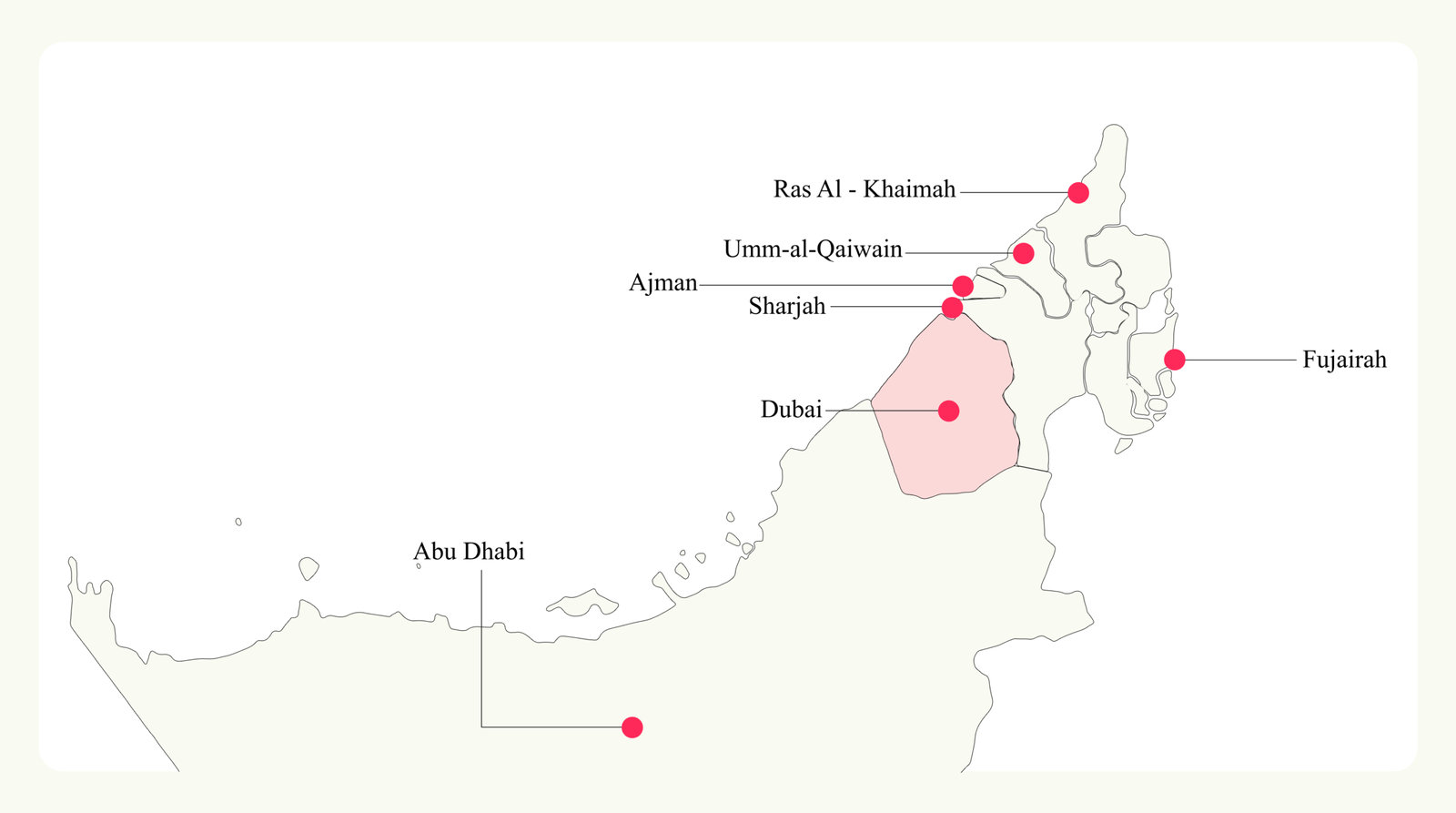
Our parquet flooring installation teams serve all seven emirates with identical expertise and quality standards regardless of project location. We maintain consistent service quality from Dubai Marina to Fujairah mountains through dedicated regional teams, equipped mobile workshops, and logistics supporting rapid material deployment across UAE. Response times for consultation requests typically fall within 24-48 hours regardless of emirate, and we schedule installations accommodating client timelines rather than forcing projects into limited availability windows common with smaller contractors.
Dubai: We complete parquet flooring projects across every Dubai community including Dubai Marina, JBR, Downtown Dubai, Business Bay, DIFC, Palm Jumeirah, Bluewaters Island, Emirates Hills, Arabian Ranches, Jumeirah Golf Estates, The Springs, The Meadows, The Lakes, Jumeirah, Umm Suqeim, Al Barsha, Mirdif, Dubai Silicon Oasis, Dubai Hills Estate, Mohammed Bin Rashid City, Town Square, Dubai South, and all other established and emerging communities. Our Dubai project history extends to 1988 when our first installations happened in original Jumeirah villas, giving us unmatched experience with Dubai’s evolution from small city to global metropolis.
Abu Dhabi: Abu Dhabi parquet installations span Corniche residential towers, Al Reem Island developments, Yas Island villas and apartments, Saadiyat Island luxury properties, Al Reef community homes, Khalifa City residential areas, Mohammed Bin Zayed City, and traditional neighborhoods throughout Abu Dhabi island and mainland areas. We maintain Abu Dhabi presence through dedicated crews familiar with that emirate’s specific building code requirements and architectural preferences differing from Dubai standards.
Sharjah: Sharjah projects include Al Majaz waterfront apartments, Al Khan residential towers, Al Nahda community properties, University City developments, and villa communities throughout Sharjah emirate. We navigate Sharjah’s distinct regulatory environment and architectural character, providing parquet installations meeting that emirate’s standards while maintaining our quality consistency.
Ajman, Ras Al Khaimah, Fujairah, Umm Al Quwain: Northern emirates coverage extends to major residential developments, hospitality properties, and commercial projects across all four emirates. These locations receive the same expertise and service quality as Dubai and Abu Dhabi projects, supported by mobile installation teams and logistics enabling efficient project execution regardless of distance from our primary Dubai facilities.
Start Your Parquet Flooring Project
Transform your Dubai property with parquet flooring installation backed by 35 years expertise and 10,000+ successful UAE projects. Whether you’re planning luxury villa renovation, commercial office upgrade, or heritage restoration requiring specialized skills, our team brings comprehensive solutions from initial consultation through long-term maintenance support. We provide transparent pricing, realistic timelines, and quality guarantees that reflect confidence in our craftsmanship. Schedule your free consultation to discuss your parquet flooring vision and receive detailed proposal addressing your specific project requirements.
IF YOU HAVE ANY QUESTION? WE ARE GLAD TO
CONSULT YOU AS SOON AS POSSIBLE
Get Started
Immediate assistance from our team regarding your project details.
Form Submitted!
Thank you for contacting us. Our team will get back to you within 24 to 48 hours regarding your query.
Contact us on WhatsApp for Quick Response