Bathroom Vanity Questions - Expert Answers
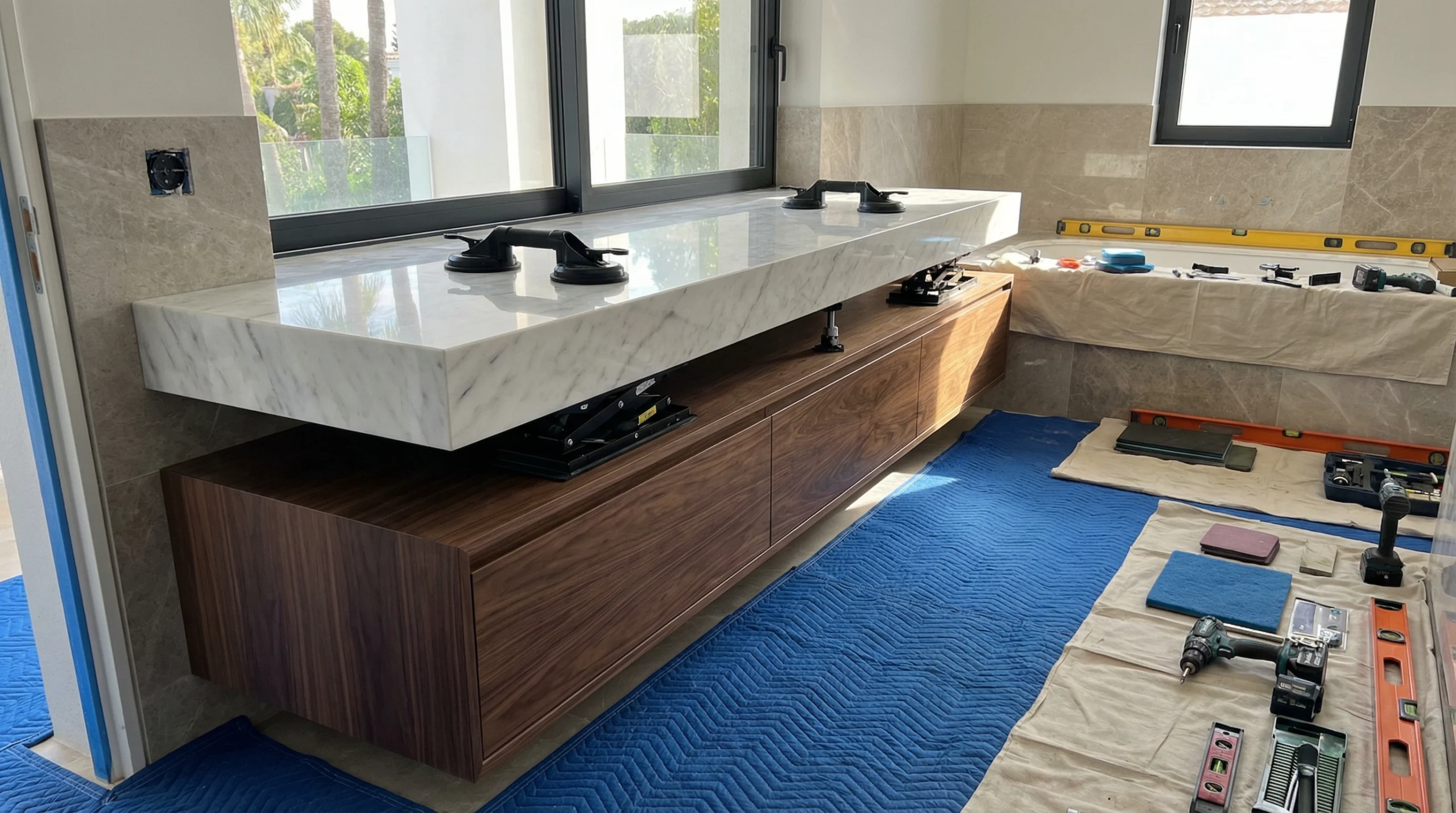
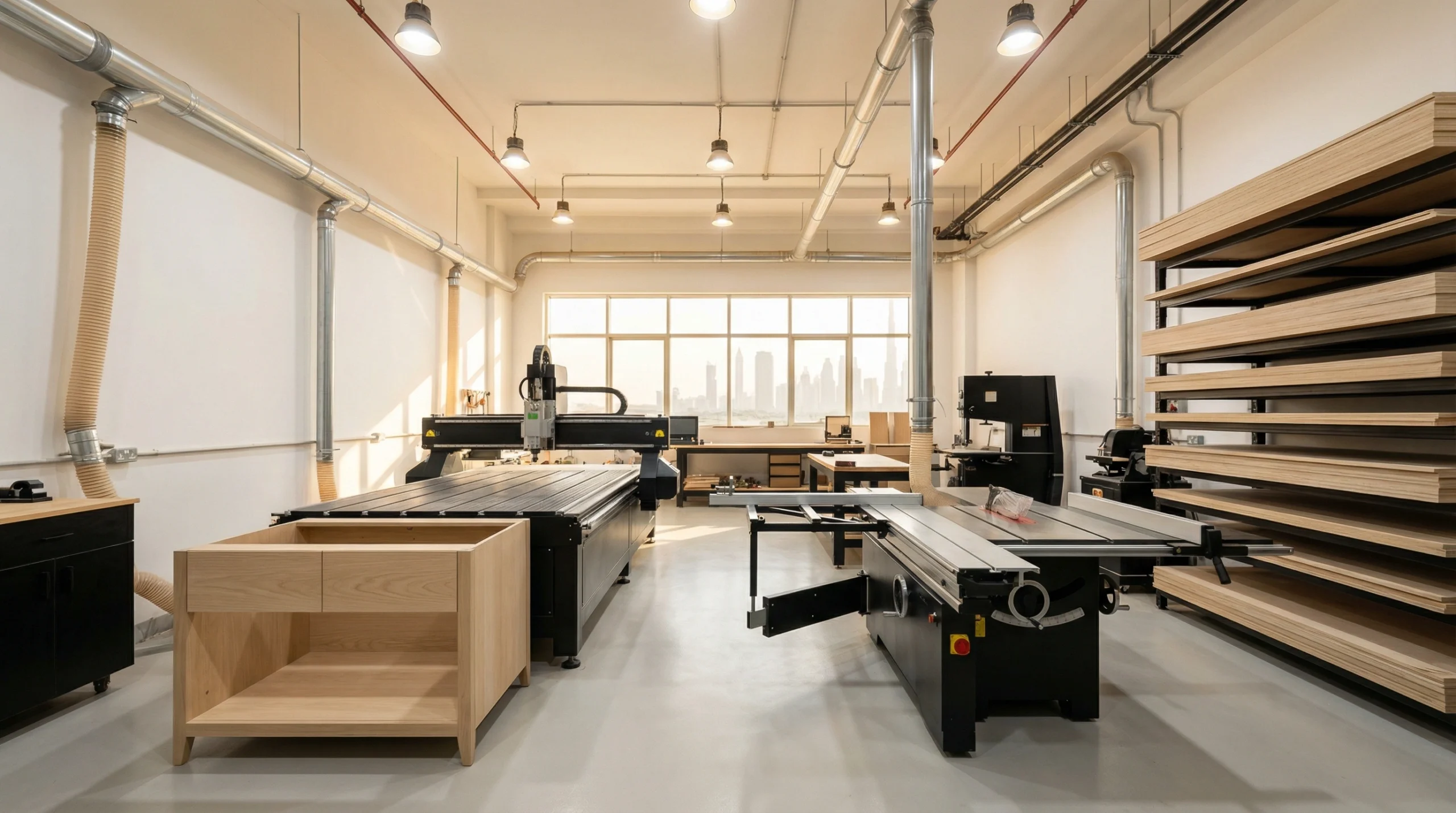
Timeline varies based on project complexity, material selections, and our production schedule, but typical custom bathroom vanity projects follow predictable phases. Initial consultation and space assessment usually occur within a week of your first contact. Design development takes 1-2 weeks depending on how many revision cycles are needed to finalize the design you want. Material selection adds another week if you need time to evaluate samples or coordinate with other design decisions. Once design and materials are confirmed, fabrication typically requires 3-4 weeks for most vanity projects—longer for complex designs or if we're creating multiple units simultaneously.
Installation scheduling depends on your bathroom's readiness. The space should have completed tile, painted walls, and functional plumbing/electrical rough-in before we install the vanity. Installation itself typically takes 4-6 hours for a single vanity, longer for double vanities or complex configurations. From your initial consultation to completed installation, plan on 8-12 weeks for most projects. We can expedite urgent projects—we've completed rush installations in as little as three weeks when circumstances demanded it—but rushed timelines limit design iteration and material selection options.
The timeline also depends on coordination with your other renovation work. If you're doing a complete bathroom renovation, we recommend finalizing vanity design early in your project—even before tile selection if possible—because the vanity dimensions and plumbing locations affect multiple other decisions. We can provide preliminary designs and plumbing location specifications while you work on other renovation aspects, then finalize details once your bathroom space is closer to completion. This parallel approach prevents the vanity from becoming the critical path item that delays your entire bathroom completion.
Custom bathroom vanity costs vary dramatically based on size, materials, design complexity, and finish specifications. A basic single vanity in a compact powder room—perhaps 750mm wide with laminate or basic wood finish and cultured marble countertop—might start around 4,500-6,000 AED including design, fabrication, and installation. Mid-range single vanities in the 1200-1500mm range with quality wood finishes or high-grade laminates, engineered quartz countertops, and premium hardware typically run 8,000-15,000 AED. Luxury single vanities with exotic wood veneers, natural stone countertops, furniture-grade construction details, and high-end finishes range 15,000-30,000 AED.
Double vanity costs obviously increase due to size, additional sink and plumbing, and increased material usage. Basic double vanities start around 9,000-12,000 AED. Mid-range double vanities typically run 16,000-28,000 AED. Luxury double vanities with premium materials and extensive customization can exceed 40,000 AED, and we've created exceptional pieces for high-end projects that reached 70,000+ AED when clients specified rare materials and extensive custom details.
These costs include complete vanity design, fabrication of the cabinet structure, countertop supply and installation, basic undermount or drop-in sinks, standard installation, and coordination with your plumber and electrician. Costs don't include plumbing or electrical work itself—those trades bill separately. Unusual access challenges, express timelines, or projects requiring extensive site preparation add costs. The most effective approach is scheduling a consultation where we can discuss your specific requirements, understand your space constraints, and provide an accurate quote based on your actual project rather than generalized ranges. We work within whatever budget makes sense for your project, adjusting material selections and design complexity to deliver the best value at your price point.
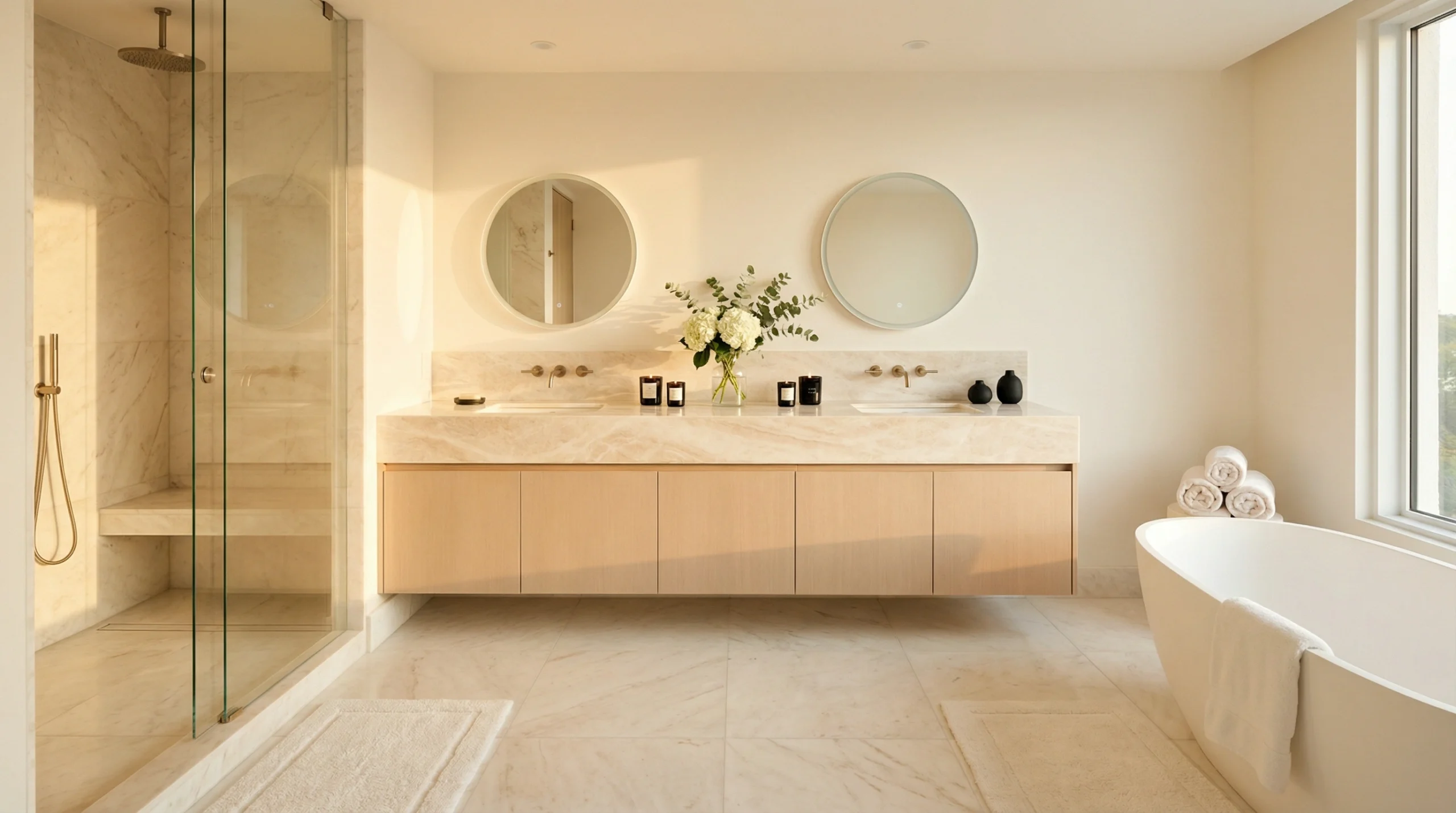
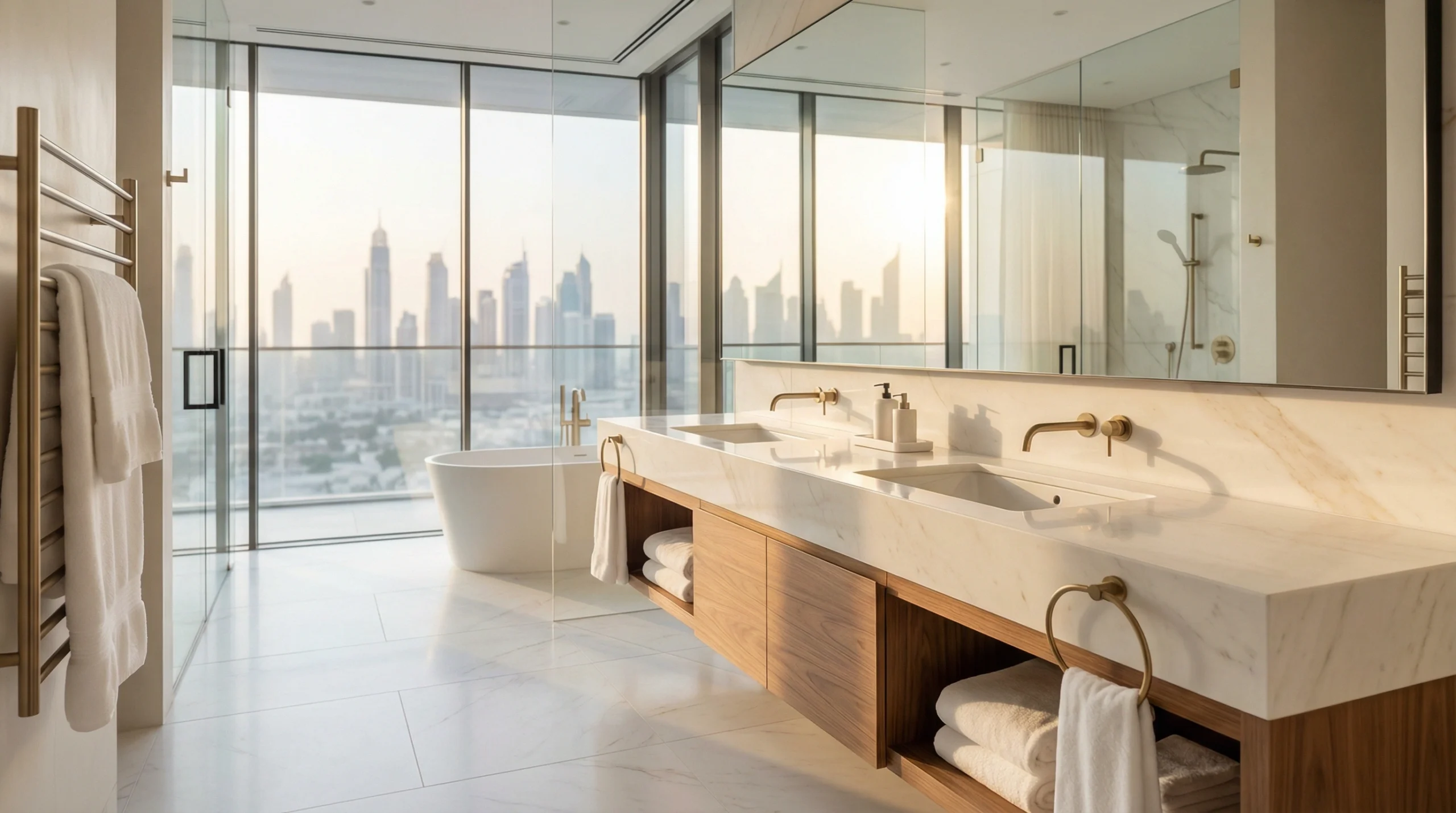
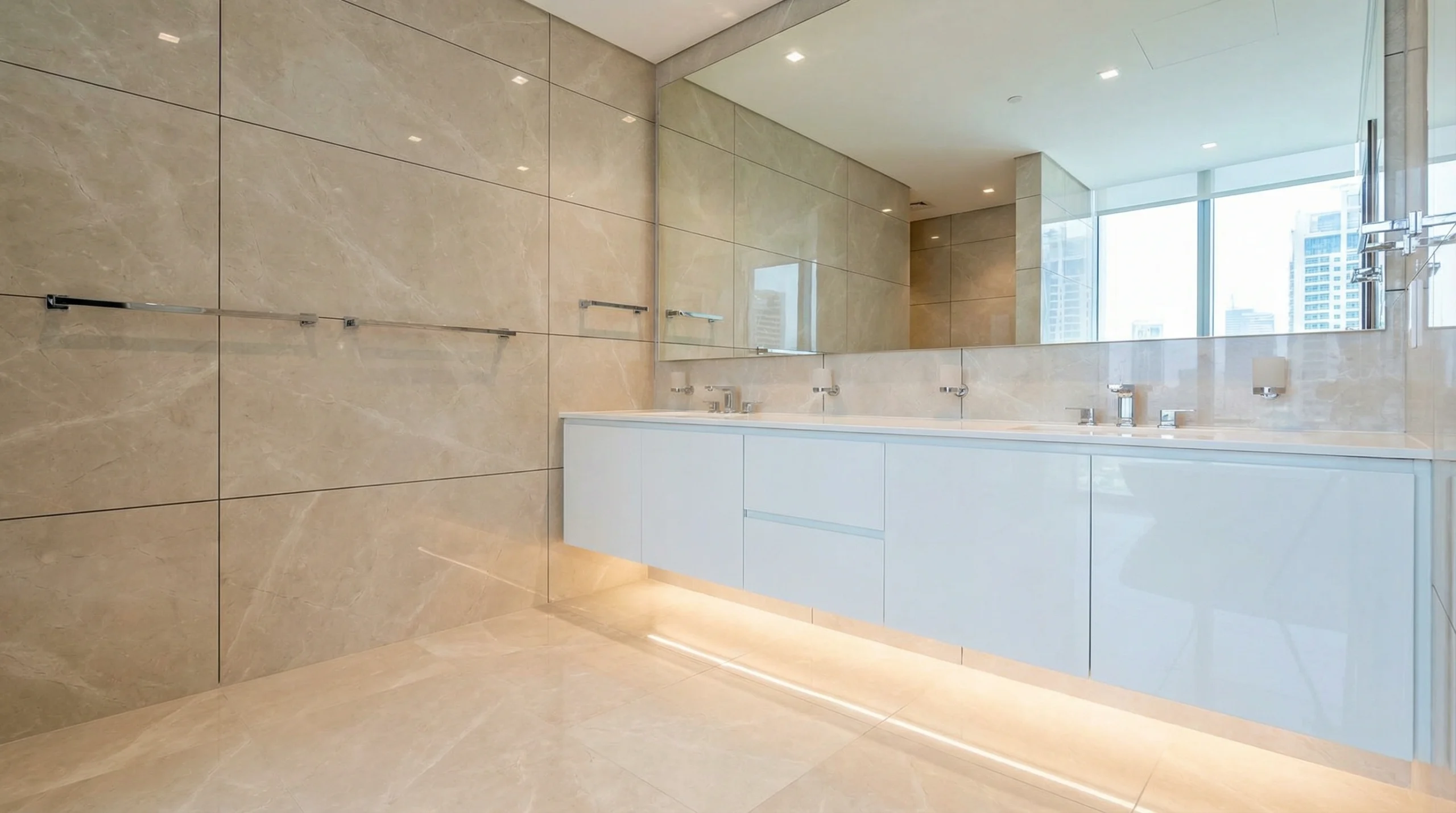
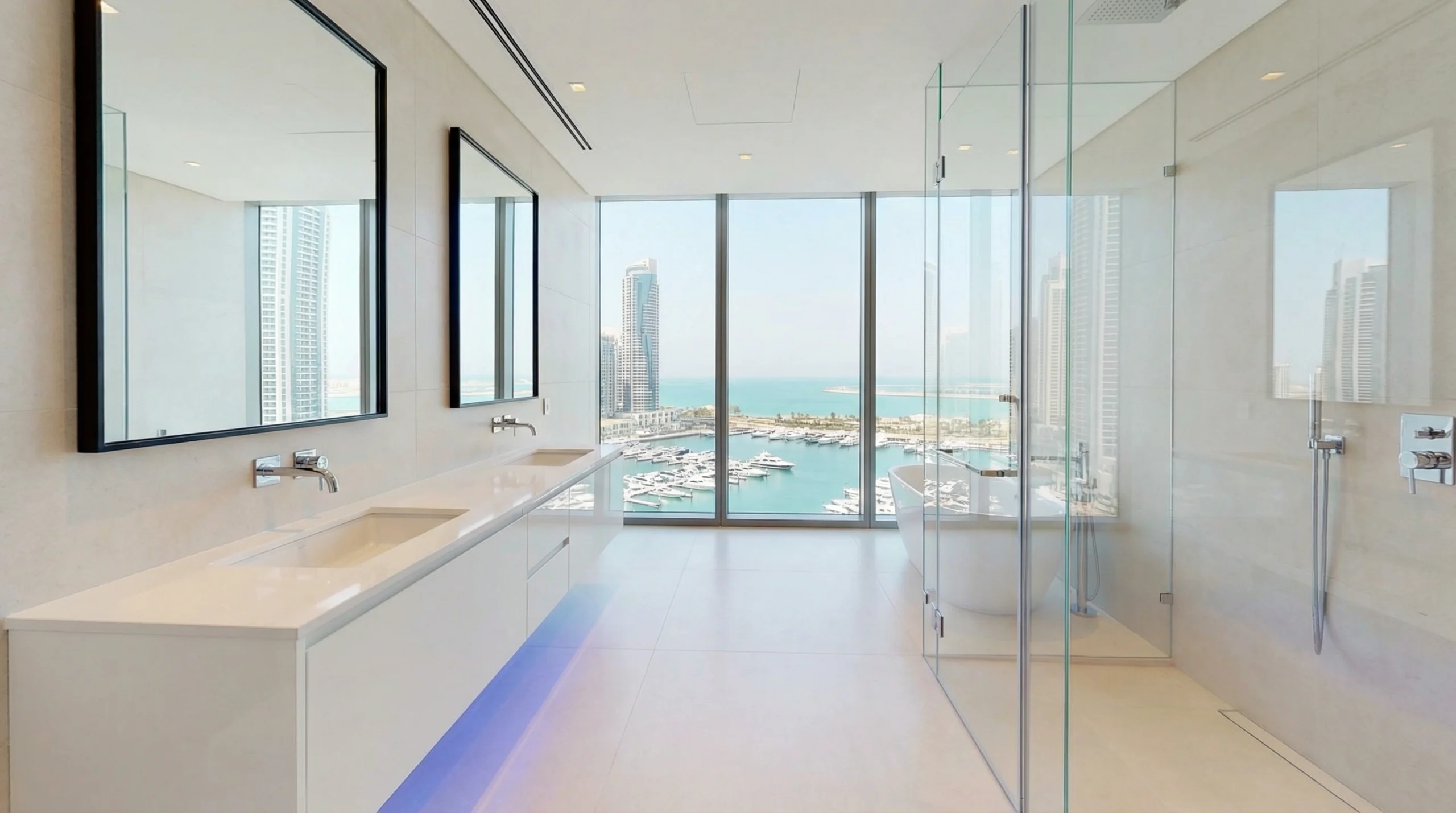
Contemporary floating vanities dominate current Dubai bathroom design, representing perhaps 60% of our residential projects. The clean lines, wall-hung installation creating visible floor space beneath, and minimalist aesthetic align with modern architecture prevalent in newer Dubai developments. These vanities typically feature handleless drawer and door designs with integrated finger pulls or push-to-open mechanisms, smooth surfaces in lacquer or high-quality laminate finishes, and understated hardware when hardware is visible. Colors tend toward neutrals—whites, grays, wood tones—with occasional bold accent colors in modern hospitality or commercial applications.
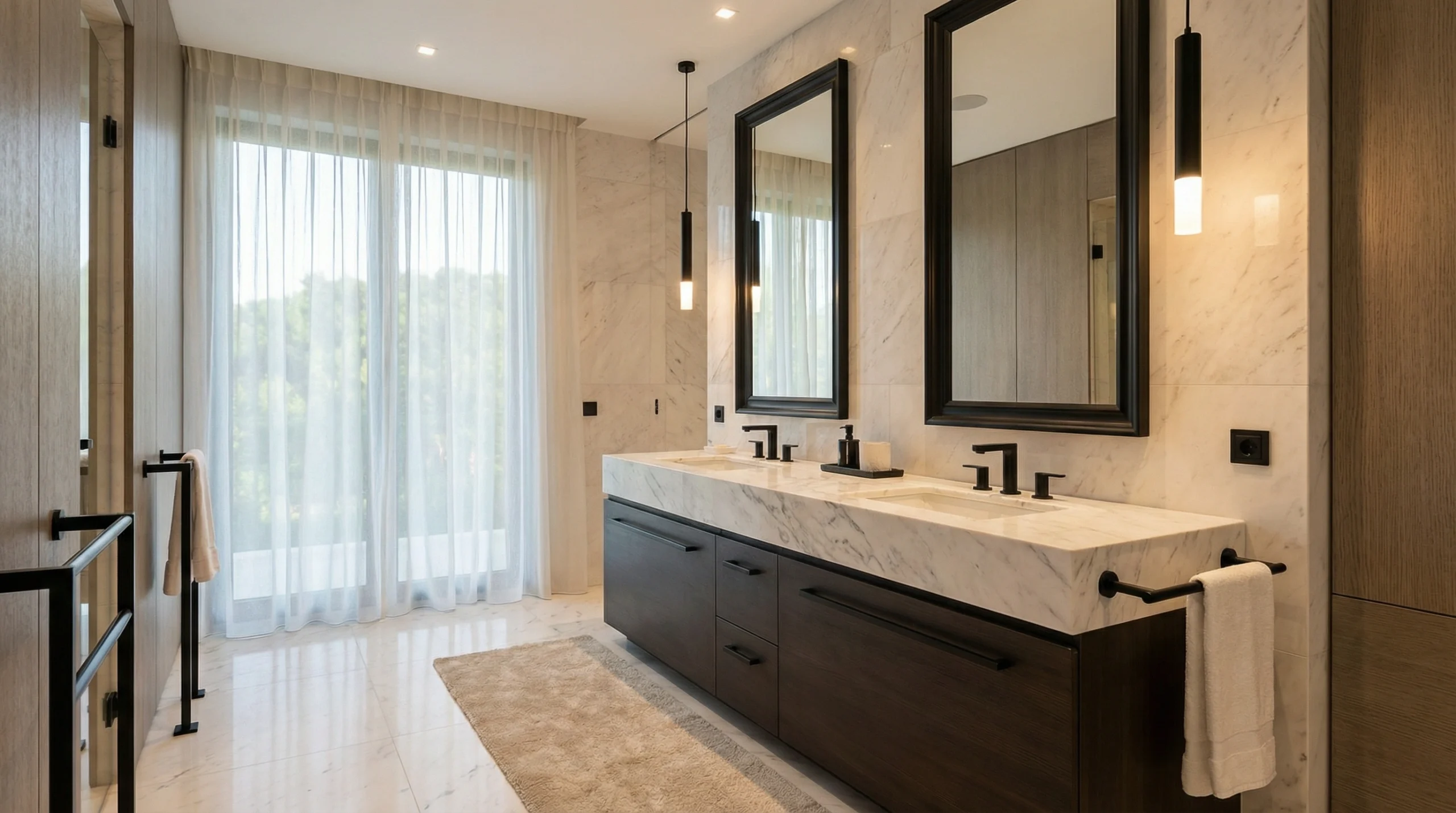
That said, traditional and transitional styles maintain strong appeal, particularly in villa projects, established neighborhoods like Arabian Ranches and Emirates Hills, and renovations where homeowners want character and warmth rather than stark minimalism. Traditional vanities incorporate furniture details like decorative legs, raised panel doors, crown molding, and visible hardware. These work particularly well in larger bathrooms where their physical presence creates appropriate scale. We've noticed increased interest in transitional styles that bridge modern and traditional—simplified traditional forms without excessive ornamentation, wood finishes combined with contemporary hardware, furniture-style construction with modern proportions.
The most important consideration isn't chasing current trends but selecting a style that complements your bathroom's overall design, feels appropriate for your property's architectural character, and—critically—that you'll still appreciate in seven or ten years. We've installed hundreds of vanities, and the ones clients remain happiest with are those designed around their specific preferences rather than whatever happens to be currently trendy. Our design consultation helps identify which style direction makes sense for your specific situation. Popular isn't always right. Right is right.
We can work with nearly any existing plumbing configuration by designing vanities around confirmed plumbing locations. During our initial site assessment, we document existing drain and supply line positions. If your current plumbing locations work reasonably well for vanity installation, we design around them rather than requiring expensive plumbing relocation. Cabinet interiors can be configured to accommodate off-center plumbing, and we can design drawer layouts that work around drain lines if necessary.
That said, sometimes plumbing relocation makes sense for better functionality. If your existing sink sits far to one side of the vanity area, relocating it to a more centered position might provide better storage on both sides. If you're upgrading from a single sink to double sinks, we'll need to add a second drain line and additional supply connections. If existing plumbing is very old or showing deterioration, your plumber might recommend replacement during renovation rather than connecting new fixtures to old lines that could fail soon. These plumbing decisions affect vanity design, so we coordinate with your plumber early to confirm the plan.
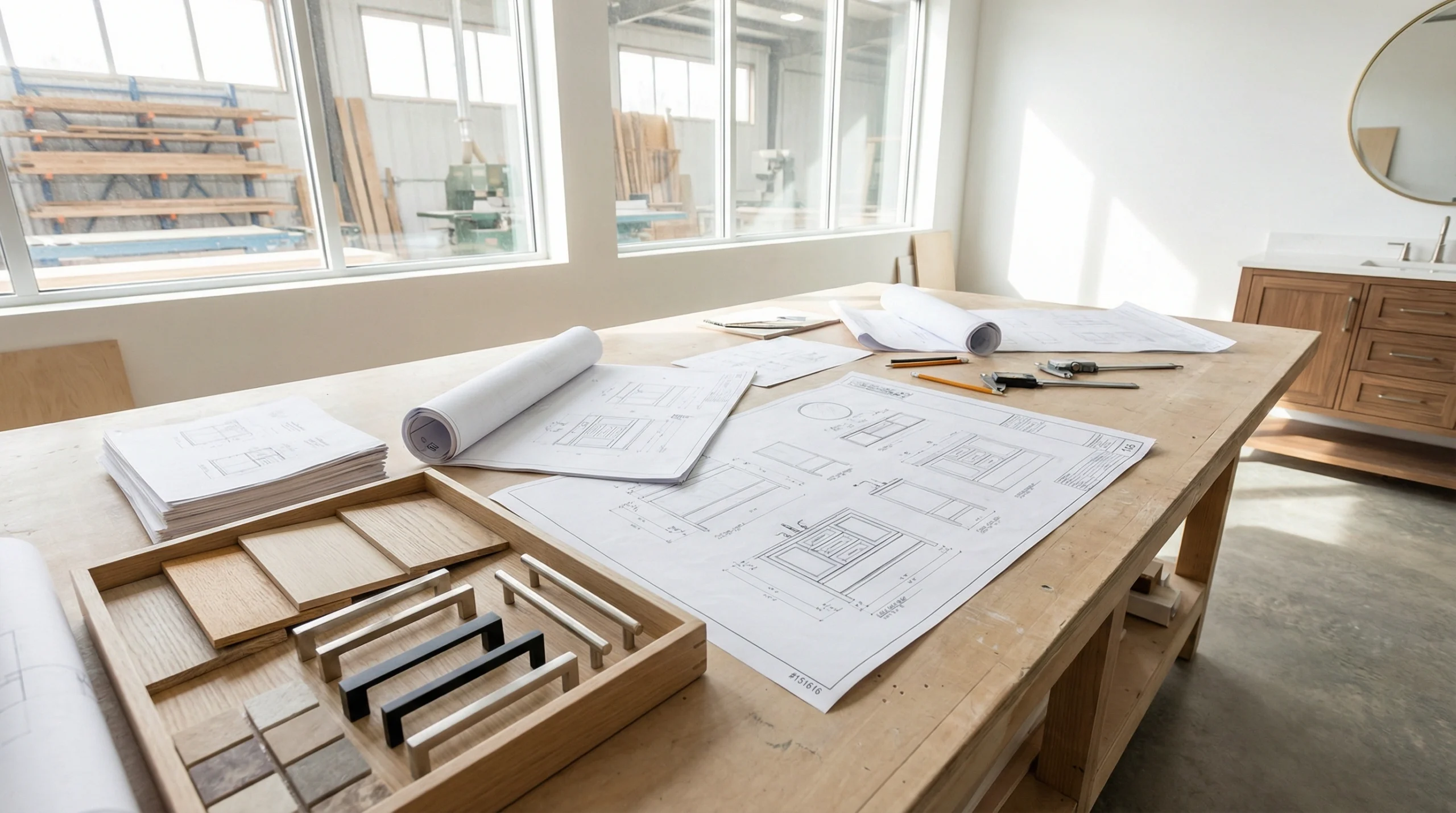
Our design process includes creating plumbing coordination drawings showing exactly where drain and supply lines should be located relative to the vanity. Your plumber receives these drawings and can confirm whether existing plumbing matches, needs minor adjustment, or requires more substantial relocation. This coordination prevents the common problem where vanity design assumes one plumbing configuration but actual conditions don't match. We'd rather spend time coordinating upfront than discovering conflicts during installation when changes become expensive and disruptive.
For renovation projects in occupied homes, we try to minimize plumbing changes because they require turning off water, creating access to plumbing lines inside walls, and potentially affecting other rooms. For new construction or complete bathroom gutting renovations, plumbing location flexibility is much greater, so we can design vanities with ideal plumbing positions without constraint. Let us assess your specific situation and we'll recommend whether working with existing plumbing makes sense or whether relocation provides sufficient benefit to justify the additional cost.
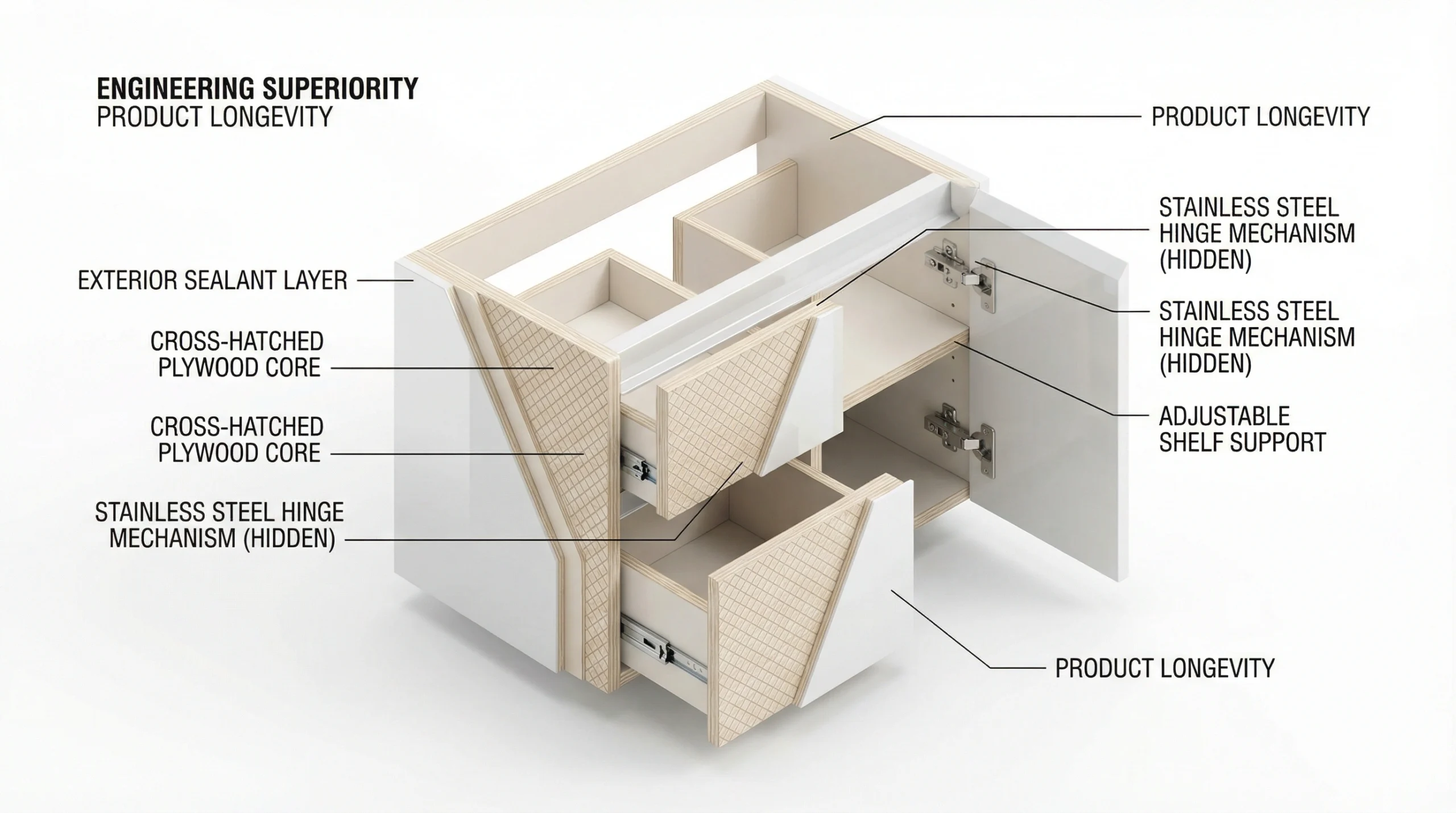
Moisture engineering is arguably the most critical aspect of bathroom vanity design for Dubai conditions. Our approach involves multiple protective strategies working together rather than relying on a single solution. We start with material selection—using only moisture-stable cores like marine-grade plywood, never standard particleboard or MDF that disintegrates when wet. Every wood surface, both visible and hidden, receives waterproof sealers before assembly. Interior surfaces get the same protection as exterior surfaces because humidity attacks from all directions.
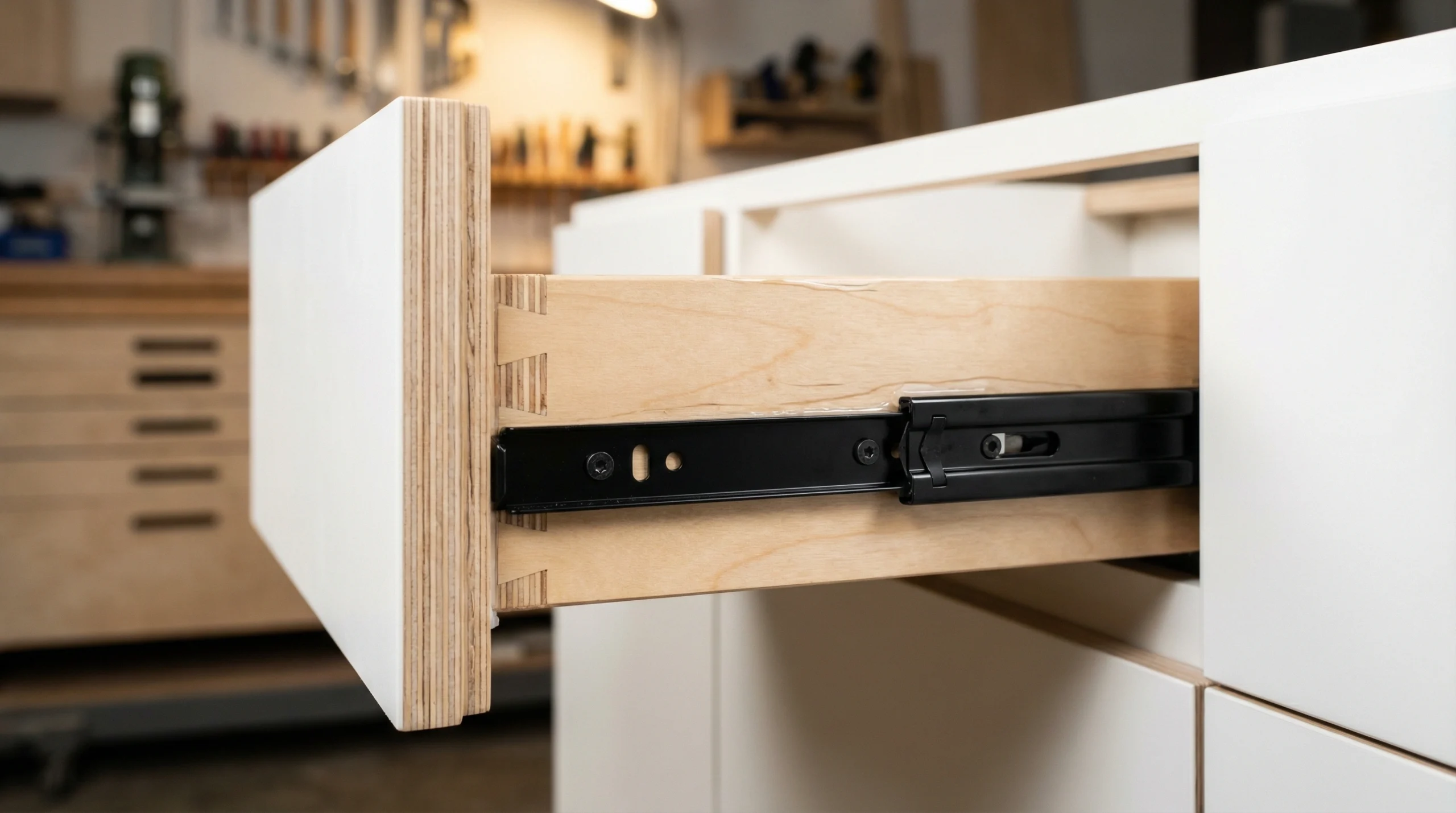
Construction methods create moisture barriers at vulnerable points. All joints use waterproof adhesive. We route water-shedding profiles into horizontal surfaces so condensation drips away from joints rather than pooling where it can penetrate. Drawer boxes use proper joinery—dovetails or dados with waterproof glue—rather than staples that rust and fail. Cabinet backs, often treated as an afterthought by other manufacturers, receive comprehensive sealing because the back faces into the enclosed humid space between vanity and wall where moisture problems often originate.
Hardware selection focuses on corrosion resistance. We specify stainless steel or marine-grade hinges and drawer slides rather than standard zinc-plated hardware that rusts in bathroom environments. All hardware includes soft-close mechanisms with sealed dampers that function reliably in humid conditions. Mounting systems for wall-hung vanities use stainless steel components with corrosion-resistant coatings. Even screw choices matter—we use stainless steel or coated screws rather than standard steel screws that rust inside wood and create stains.
Ventilation design allows air circulation through cabinet interiors. Toe-kicks include ventilation openings. Cabinet backs incorporate discrete holes for air exchange. For particularly humid locations—beachfront properties or bathrooms without windows—we can design enhanced ventilation systems. The finishing schedule includes multiple coats of waterproof conversion varnish or catalyzed lacquer with particular attention to end grain and interior surfaces. We seal the underside of every vanity as thoroughly as the visible front. This comprehensive moisture protection approach costs more initially but prevents the warping, delamination, hardware failure, and mold growth that destroy standard vanities in UAE bathrooms within 18-24 months.
Our most frequent recommendation for bathroom vanity countertops is engineered quartz—materials like Caesarstone, Silestone, or Cambria. Quartz combines attractive aesthetics with superior performance characteristics: completely non-porous surfaces that resist staining without requiring sealing, consistent coloration without natural stone's variation, integrated antibacterial protection in many formulations, and excellent strength that resists chipping. The manufacturing process creates slabs with controlled patterns that can mimic marble, granite, or concrete aesthetics. For clients initially set on natural stone, we show quartz samples first. About 60% change their preference after understanding the performance advantages and seeing how contemporary quartz products closely replicate natural stone appearance.
Natural stone remains popular despite higher maintenance requirements. Marble delivers unmatched luxury aesthetics with flowing veined patterns, but requires religious sealing maintenance and careful cleaning product selection to prevent etching from acidic substances. We recommend marble only for clients who understand and accept the maintenance commitment and appreciate that natural stone develops a patina over time—some find this character development appealing while others view it as damage. Granite offers extreme durability with lower maintenance demands, wider color selection, and natural pattern variation that makes each countertop unique. It requires less frequent sealing than marble and resists most household chemicals better.
Solid surface materials like Corian provide distinct advantages for certain applications. The ability to create seamless joints between countertop and integrated backsplash, integrated sink construction where countertop and sink become one continuous surface, and repairability when damage occurs make solid surface attractive for family bathrooms or commercial applications. Scratches can be sanded out rather than requiring replacement. The material is non-porous and easy to sanitize. The drawback is less prestige than natural stone and potentially less heat resistance, though that's rarely an issue with bathroom vanity usage.
For budget-conscious projects, cultured marble or solid surface alternatives offer acceptable performance at lower price points. These aren't as durable or prestigious as engineered quartz or natural stone but perform adequately in low-use bathrooms. We generally don't recommend laminate countertops for bathrooms despite their durability in kitchen applications—the seams where laminate joins substrate are vulnerable to water infiltration, and bathroom vanities experience more direct water exposure than kitchen counters. The ideal countertop choice depends on your aesthetic preferences, maintenance tolerance, usage patterns, and budget. During consultation, we review actual samples of different materials and discuss the trade-offs so you can make an informed decision for your specific situation.
Yes, internal storage organization is a significant focus of our design process. Generic drawer interiors where everything tumbles together waste space and create frustration. During consultation, we ask specific questions about what needs storage: cosmetics, hair tools, shaving equipment, medications, cleaning supplies, towels, extra toiletries, under-sink water filtration systems, or other items specific to your household. We then design drawer and cabinet interiors with appropriate organizational features.
Drawer inserts might include dividers for cosmetics, outlets for charging electric toothbrushes, non-slip mats to prevent bottles sliding, tall compartments for bottles and tubes standing upright, small sections for jewelry or contact lenses, and removable trays for items that need occasional washing. We don't use cheap plastic organizers that slide around and break within months. Our organizational inserts are custom-fabricated wood or high-quality purchased systems from companies like Blum or Hafele, designed to integrate perfectly with drawer dimensions.
Cabinet interiors receive similar attention. Adjustable shelves accommodate items of different heights. Pull-out organizers bring items stored at the back of deep cabinets forward for easy access. Space around plumbing lines under the sink gets maximized rather than wasted—we can add small shelves or storage pockets in areas where most installers just leave empty space. For vanities with integrated hampers, we include proper ventilation so damp towels don't create mold problems. For families with small children, we can include lockable drawer or cabinet sections for medications and cleaning supplies.
This organizational approach requires understanding how you actually use your bathroom space. If you have extensive skincare routines with many products, you need different storage than someone with minimal cosmetics but lots of hair styling equipment. If multiple people share the bathroom, dedicated storage zones for each person prevent the morning rush conflicts that arise when everyone's searching for their items in the same jumbled drawer. We're not suggesting every drawer needs elaborate organization—some drawers work fine as simple open boxes—but strategic organization in key areas dramatically improves daily functionality. These details don't add substantial cost but significantly affect how well your vanity serves you over years of use.
Absolutely. We design vanities to complement your complete bathroom aesthetic, not as standalone pieces. During consultation, we review your existing or planned tile selections, lighting fixtures, plumbing fixtures, paint colors, and any other design elements affecting the overall space. If you're renovating with new tile and fixtures, we can review those selections together to ensure everything coordinates. If you're replacing only the vanity in an otherwise finished bathroom, we design around existing conditions.
Matching wood tones, paint colors, or finish specifications to existing elements is straightforward with physical samples. We can stain wood to match existing cabinetry from other rooms if you want visual continuity throughout your home. We can paint vanities to match wall colors or create coordinated but not identical colors that complement each other. Our finishing capabilities include virtually any color achievable with paint or stain, so we're not limited to standard options from a catalog.
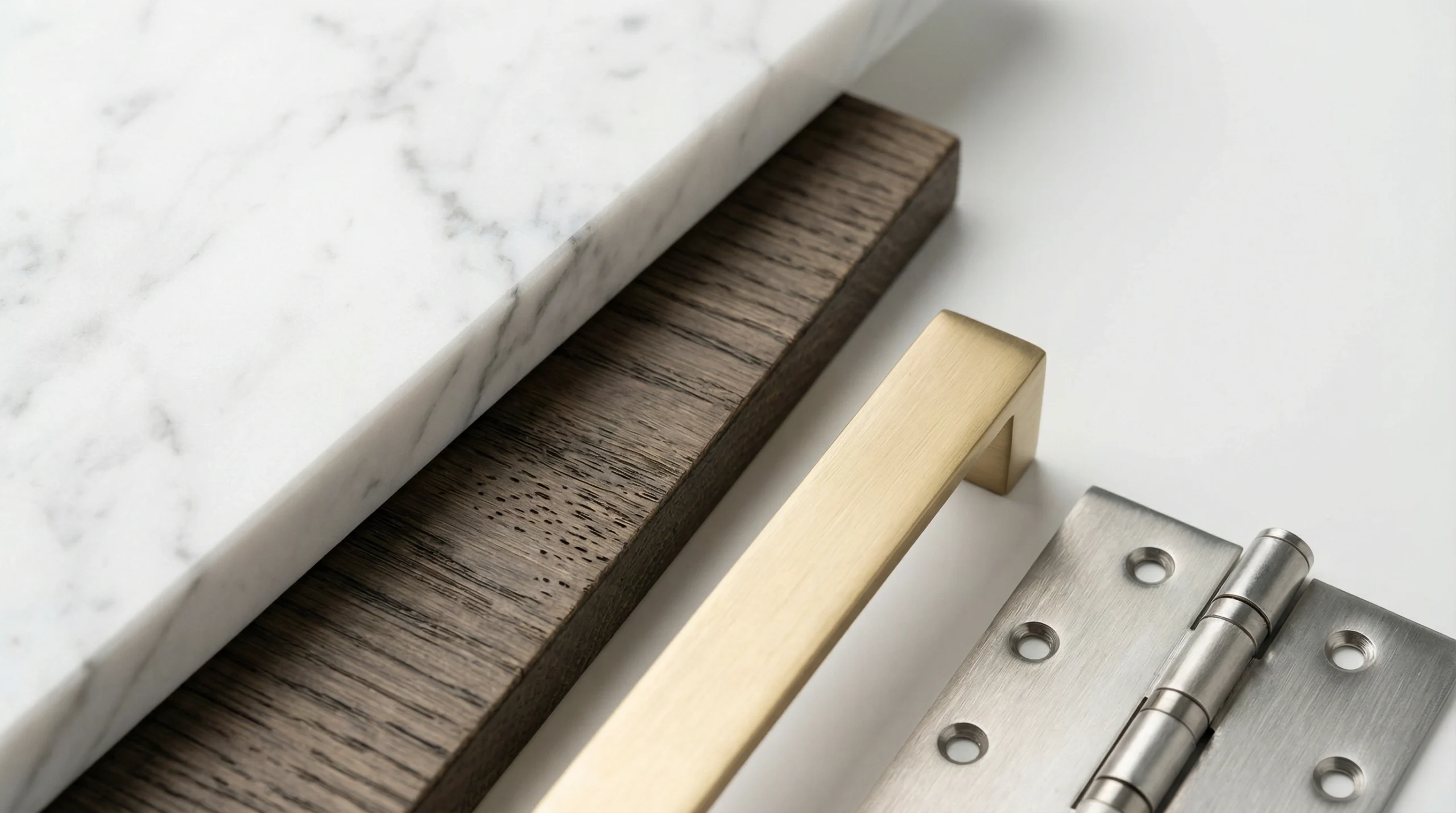
Hardware and fixture coordination matters too. If your bathroom has chrome faucets and lighting fixtures, we might recommend chrome or polished nickel vanity hardware to maintain consistent metal finishes. If you prefer mixed metals—perhaps brass faucets with black hardware—we coordinate those selections during design development. We can source hardware in virtually any finish: chrome, brushed nickel, brass, bronze, matte black, oil-rubbed bronze, gold, copper, or specialty finishes. The hardware selection affects the overall design aesthetic significantly, so we treat it as an integral design decision rather than an afterthought.
For projects where you're working with an interior designer, we collaborate directly with them to ensure the vanity design supports their overall vision. We've worked with dozens of Dubai-based designers over the years and understand how to interpret design specifications and translate them into fabricated reality. Many designers prefer specifying the aesthetic direction while letting us handle technical details like moisture protection, hardware specifications, and installation requirements. This collaborative approach ensures the vanity looks exactly how your designer envisioned while performing reliably in Dubai conditions.
We provide comprehensive three-year warranty coverage on all bathroom vanity projects covering both our fabrication workmanship and installation quality. This warranty includes free repair or replacement of any component that fails due to manufacturing defects, construction flaws, or installation errors. If drawer slides seize, hinges break, finishes peel, or structural components fail during the warranty period and the failure results from our workmanship rather than damage or misuse, we repair or replace the affected components at no charge.
The warranty specifically covers construction quality: joinery integrity, finish adhesion, hardware function, and structural stability. It covers our moisture-protection engineering—if properly maintained vanities show delamination, warping, or moisture damage from humidity exposure, that's a warranty issue we address. Installation quality is also warranted—if the vanity becomes loose, if components misalign, or if installation defects become apparent, we return and correct those issues.
The warranty does not cover several specific situations. Normal wear and tear including minor scratches, small dents, or finish dulling from years of use is not warrantable damage. Customer-caused damage from impacts, chemical exposure, or improper cleaning is excluded. Natural material characteristics like wood grain variation, natural stone veining, or minor color variation aren't defects. Changes to plumbing or electrical by other contractors that affect vanity function are excluded. Failure to follow care and maintenance instructions we provide may void warranty coverage—for example, if you never seal a natural stone countertop despite our instructions and it stains, that's not a warranty issue.
Hardware carries separate manufacturer warranties that typically extend five to ten years depending on brand and product line. Stone countertops carry fabricator warranties covering fabrication but not natural material characteristics. These manufacturer and supplier warranties we facilitate but don't directly provide. Our three-year installation and fabrication warranty is our direct commitment, and we stand behind it completely. Over 35 years in business, our warranty claim rate runs below 1% of installations—most of our work never requires warranty service because we engineer and build for longevity from the start.
Maintenance requirements depend on your specific vanity materials, but some universal principles apply to all bathroom vanities in Dubai conditions. Daily or weekly cleaning should use mild soap and water or gentle all-purpose cleaners, avoiding harsh chemicals, abrasive scrubbers, or anything containing bleach or ammonia unless we specifically recommended those products for your materials. Water spills should be wiped immediately rather than left to stand—even water-resistant surfaces can develop problems if water sits for hours. The area around sinks requires particular attention because water splashes and soap residue accumulate there.
For wood vanities, periodic conditioning maintains finish quality. We provide specific recommendations based on your finish type, but most wood vanities benefit from occasional treatment with furniture polish or conditioning oil—perhaps every 3-6 months depending on usage and how quickly the finish begins to look dry. Never use silicone-based polishes on wood finished with conversion varnish or catalyzed lacquer. The toe-kick and cabinet bottom should be checked periodically for water accumulation from mopping or plumbing leaks. If you notice moisture in these areas, address it immediately to prevent damage.
Natural stone countertops require sealing maintenance. Initial sealing happens during fabrication, but the sealer gradually wears off and must be reapplied. Marble typically needs sealing every 6-12 months depending on usage. Granite can often go 12-24 months between sealing. The water test determines when resealing is needed: sprinkle water on the stone and observe how quickly it absorbs. If water beads up and sits on the surface, the sealer is still functioning. If water darkens the stone within seconds, resealing is needed. We provide detailed instructions about appropriate sealing products and application procedures specific to your stone type.
Hardware maintenance is minimal but important. Hinges and drawer slides should be checked annually to ensure they're still functioning smoothly. If soft-close mechanisms start slamming or drawers become difficult to open, adjustment or cleaning might be needed. The mounting screws on drawer pulls and cabinet knobs can loosen over time—a quick tightening prevents handles from falling off. For wall-hung vanities, verify annually that the mounting system remains secure with no visible gaps opening between vanity and wall.
The space under the sink requires attention beyond just the vanity. Check regularly for plumbing leaks—small drips that seem minor can cause extensive damage over months. Ensure the cabinet interior remains dry; if you notice persistent moisture or musty odors, you might have a ventilation problem or hidden leak requiring attention. Store items under the sink in ways that allow air circulation rather than packing everything tightly, which can trap moisture. Following these maintenance practices adds minimal effort but dramatically extends vanity longevity and keeps everything looking and functioning like new for years.
Our installation service focuses on vanity placement, mounting, and countertop installation. We coordinate closely with plumbing and electrical trades but typically don't make final connections ourselves unless specifically contracted for complete turnkey installation. The typical installation sequence involves our team placing the vanity, securing it properly, installing the countertop, then allowing your plumber to make supply line and drain connections and your electrician to connect any electrical components.
This separation makes sense for several reasons. Plumbing and electrical work require specific licenses and permits in Dubai. Your existing plumber and electrician understand your property's systems and have established relationships with relevant authorities. They also carry appropriate insurance for their trade work. By coordinating between specialized trades rather than trying to provide everything ourselves, we ensure each component receives expert attention from properly licensed professionals.
That said, we manage the coordination carefully. We provide detailed plumbing coordination drawings to your plumber showing exactly where supply lines and drains need to be positioned. We schedule installation timing so plumbing rough-in is complete before we arrive but final connections happen after we've placed the vanity. For vanities with integrated electrical—lighting, outlets, or powered accessories—we coordinate with your electrician to ensure rough electrical is positioned correctly for final connection after vanity installation.
For clients who prefer single-source responsibility, we can provide complete turnkey installation including plumbing and electrical work through our partner network. We coordinate all trades, manage scheduling, and provide single-point accountability. This approach simplifies coordination on your end but typically costs slightly more than managing separate contractors yourself. During consultation, we discuss which approach makes sense for your project and your preference for trade management.
Yes, we regularly install bathroom vanities in occupied homes and have developed processes that minimize disruption to your daily life. The key is proper planning and clear communication about what to expect. A typical single vanity installation completes in 4-6 hours, meaning one bathroom is out of service for less than a day. For homes with multiple bathrooms, we can usually schedule installation when the affected bathroom isn't critical to your routine.
Before installation, we coordinate timing that works with your schedule. Many clients prefer weekend installations to avoid conflicting with workday morning routines. We confirm the bathroom is ready—tile complete, walls painted, plumbing and electrical rough-in finished—so we're not waiting on other trades or creating delays. We ask that the installation area is clear of personal items, allowing our team to work efficiently without concerns about damage to belongings.
During installation, we protect your property carefully. Floor coverings prevent damage to finished surfaces. Doorway protection prevents door frame marks from moving materials through your home. Our installation teams arrive with all required tools and materials, working efficiently without multiple trips outside that would leave doors open or track dust through your home. We manage dust and debris carefully—while bathroom vanity installation isn't particularly messy, we still control and contain any dust or material waste.
We communicate proactively about the installation timeline. If we encounter unexpected conditions that might extend the work, we inform you immediately rather than leaving you uncertain when your bathroom will be functional again. At completion, we clean the work area thoroughly, test all functions, and verify everything operates properly before considering the job complete. Your bathroom returns to service the same day we install, and you can resume normal usage immediately—assuming plumbing and electrical final connections are complete. Many clients tell us they're surprised how smooth and non-disruptive the installation process was compared to their expectations.
The fundamental difference is engineering for Dubai conditions versus designing for generic global markets. Furniture store vanities come from manufacturers who design for broad international sale. They make assumptions about typical humidity ranges, water quality, and usage patterns that might work in Milan or Munich but fail in Dubai. We engineer specifically for UAE coastal humidity, hard chlorinated water, temperature swings from air conditioning, and maintenance patterns common in Dubai households with domestic staff using various cleaning products.
Construction quality differs significantly. Mass-market vanities use particleboard cores that disintegrate when wet, stapled drawer boxes that fall apart quickly, standard hinges that rust in months, and thin finish coats that don't protect adequately. We use marine-grade plywood, proper joinery with waterproof adhesives, corrosion-resistant hardware, and comprehensive finishing schedules. These aren't subtle differences—they determine whether your vanity lasts three years or twenty-five years.
Customization is another distinction. Furniture store vanities come in standard sizes—perhaps 600mm, 750mm, 900mm, 1200mm widths. If your bathroom is 1350mm wide, you either leave gaps or try forcing in an oversized unit. We build to your exact dimensions, optimizing every millimeter of space. We design storage for what you actually need to store rather than generic drawer configurations. We match your aesthetic preferences rather than choosing from limited style options. We coordinate with your specific tile, fixtures, and design scheme rather than hoping something from inventory approximately works.
The accountability difference matters too. When you buy from furniture stores, you're purchasing manufactured products through retail channels. Installation might be subcontracted to installers who've never met the manufacturer. When problems arise, you're navigating between retailer, manufacturer, installer, trying to identify responsibility. We control the complete process—design, fabrication, installation—providing single-source accountability. If anything needs adjustment or repair, you call one company that designed, built, and installed your vanity and takes responsibility for all aspects.
Finally, there's the support difference. We're a local Dubai company that's been operating since 1988. We'll be here when you need service in five or ten years. We maintain records of every installation. We can fabricate replacement components if needed. We understand your specific installation and can provide informed support. Furniture store purchases leave you dependent on whether that company still stocks compatible products and whether the retail store remains in business. We build for longevity not just in product quality but in the support relationship.
Absolutely. We regularly design bathroom vanities with accessibility features for aging homeowners, family members with disabilities, or wheelchair users. UAE building codes include accessibility requirements for certain property types, and we're experienced with designing compliant installations. Even when code compliance isn't mandatory, thoughtful accessibility design makes bathrooms more usable for everyone while maintaining attractive aesthetics.
Accessible vanity design typically involves several key modifications. Counter height might be lowered from standard 850-900mm to 750-800mm for wheelchair users or raised to 900-950mm for users who have difficulty bending. Clear knee space beneath the sink allows wheelchair approach—we'd design without cabinet doors or drawers in the front section while maintaining storage in side cabinets or adjacent locations. The sink itself would be shallower to provide more knee clearance, often using wall-hung or semi-recessed models designed specifically for accessible applications.
Hardware selection considers easy operation. Lever-style faucets operate more easily than knobs for people with limited hand strength or dexterity issues. Pull-style drawer hardware or large knobs are easier to grasp than small delicate pulls. Touch-latch or push-to-open drawer and door mechanisms eliminate the need to operate handles entirely. For visual impairments, we might specify higher-contrast finishes that make edges and openings more visible or add tactile indicators that help users locate items through touch.
Storage organization becomes more important in accessible designs because users might not be able to reach deep into cabinets or high shelves easily. We design drawer-heavy storage rather than cabinet-dominant configurations, since drawer contents are visible and accessible from a seated position while cabinet interiors often require reaching and searching. Pull-out shelves in cabinets bring items forward for easier access. We locate most frequently used items within the comfortable reach zone for the primary user rather than requiring stretching or bending.
These accessibility modifications don't require institutional aesthetics. We create accessible bathroom vanities that look like thoughtfully designed custom furniture rather than medical equipment. During consultation, we discuss specific accessibility needs and design solutions that address those requirements while maintaining attractive appearance and fitting naturally into your bathroom's design aesthetic.
Design uncertainty is completely normal—most clients don't have a clear vision when they first contact us. That's why our consultation process focuses on helping you discover what you want through guided questions and physical examples rather than expecting you to arrive with complete specifications. We've guided thousands of clients through this design process and have developed an approach that makes decisions manageable.
We start by showing you existing portfolio examples spanning different styles: modern floating vanities, traditional furniture pieces, transitional designs. Rather than asking "what style do you want?"—which can feel overwhelming—we ask "which of these examples appeals to you and why?" This gives us insight into your preferences. Maybe you like the clean lines of modern design but not the stark white color. Maybe you appreciate traditional details but want simplified versions without excessive ornamentation. These observations guide us toward design directions that will satisfy you.
We also ask about your daily usage and storage needs. These functional requirements often point toward appropriate design solutions. If you need extensive drawer storage for cosmetics, that suggests certain configurations. If you want minimal visible clutter, that points toward different approaches. If the bathroom has architectural features you want to highlight, the vanity design should complement rather than compete with those features. Focusing on function often makes aesthetic decisions easier because form follows function.
Material and finish samples help clarify preferences too. Looking at actual wood species, paint colors, countertop stones, and hardware options makes abstract style conversations concrete. You might describe yourself as preferring "modern" style but discover when looking at samples that you're drawn to warmer wood tones that soften contemporary design. Or you might think you want traditional style but find that simplified transitional forms appeal to you more than heavily detailed traditional pieces.
We create 2-3 initial concept options showing different approaches. This gives you something to react to rather than trying to describe your vision from nothing. You'll likely respond with "I like these elements from option A combined with the proportions from option B"—and that reaction guides the next design iteration. This process typically involves 2-4 revision cycles before we arrive at a design you're completely happy with. We're patient with this process because getting the design right matters more than moving quickly. Your vanity will be in your bathroom for decades. Spending a few extra weeks on design refinement is time well invested..