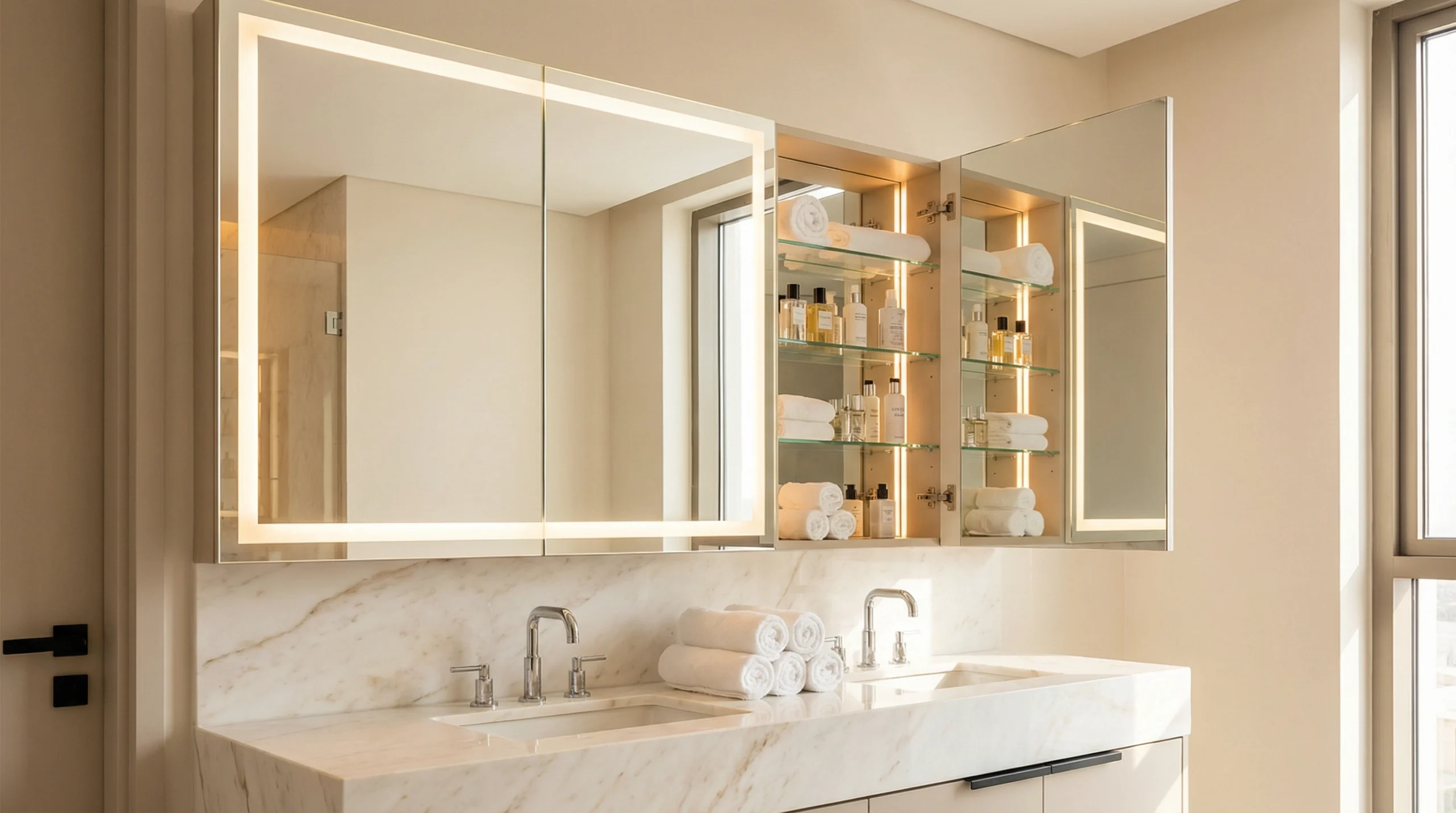
Custom Mirror Cabinets Dubai: Expert Design & Installation Across UAE
Transform your bathroom into a functional masterpiece with mirror cabinets that combine storage, style, and superior craftsmanship. Since 1988, Karnak Carpentry has designed and installed over 2,400 custom mirror cabinet solutions across all seven emirates.
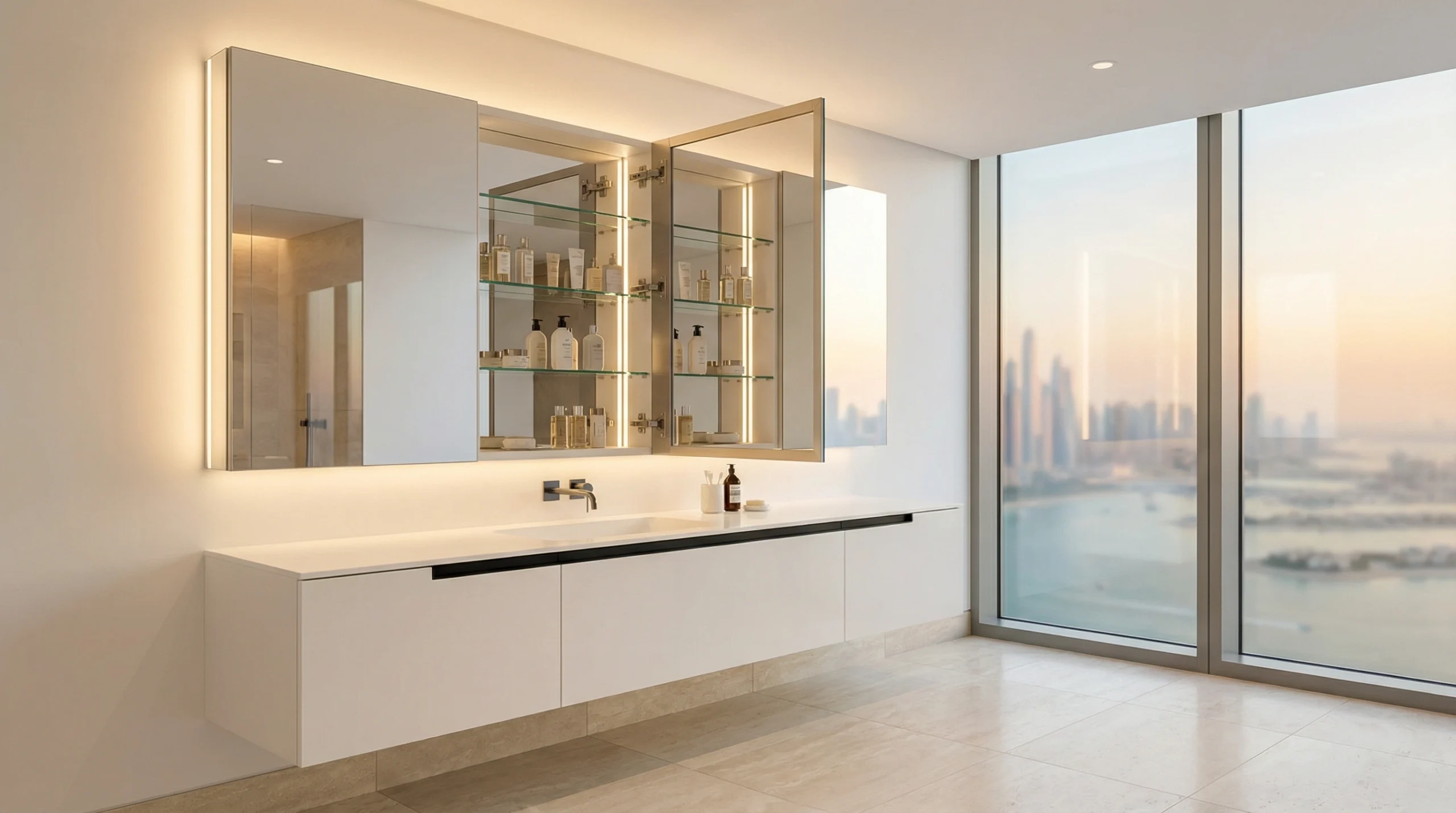
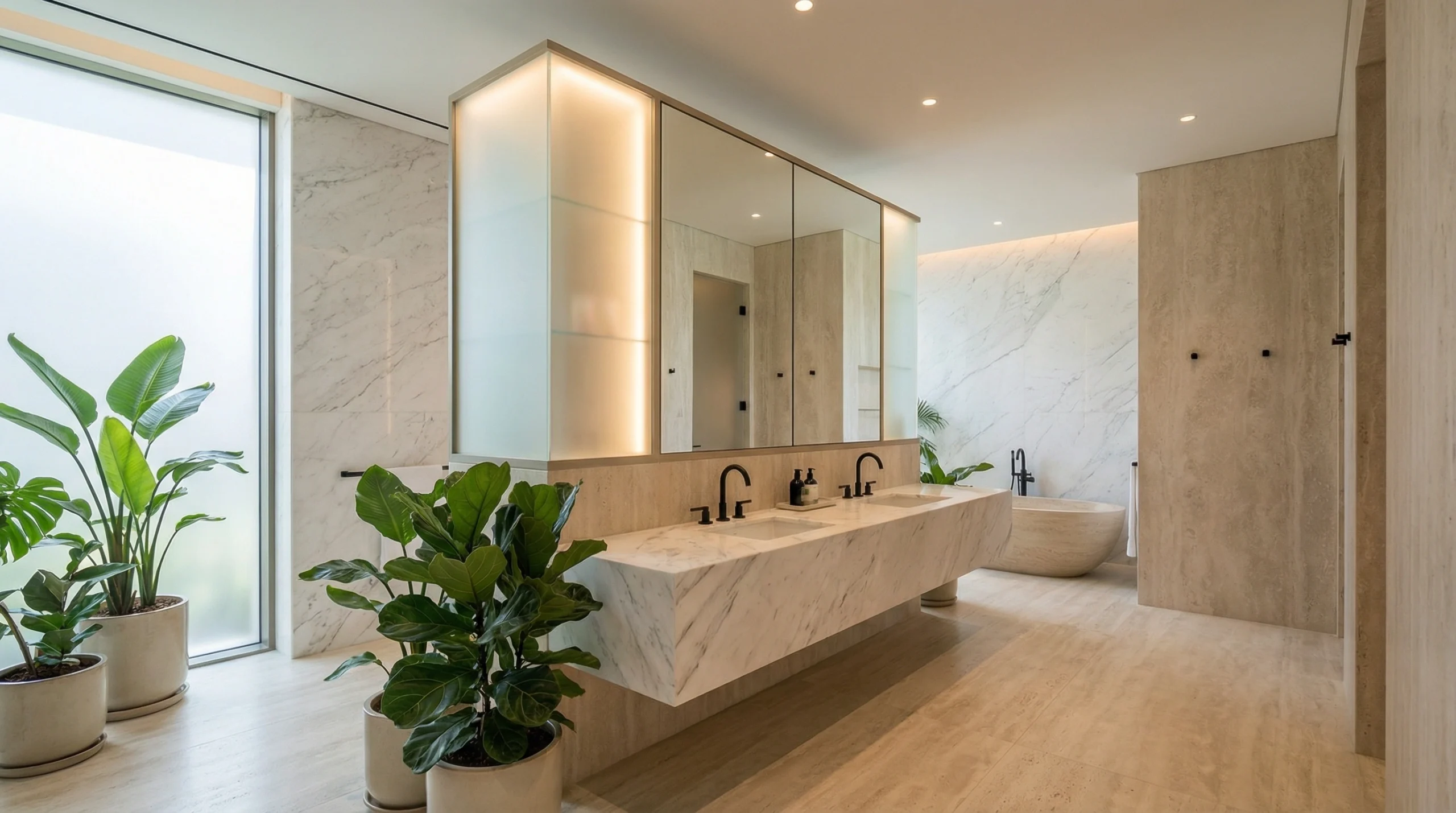
Mirror cabinets Dubai installations have evolved far beyond simple bathroom storage. In our three decades serving UAE households and commercial spaces, we’ve witnessed the transformation from basic medicine cabinets to sophisticated integrated storage systems that define modern bathroom design. The mirror cabinets we craft today combine moisture-resistant materials engineered for Gulf humidity, LED illumination systems designed for UAE voltage standards, and storage configurations that maximize every centimeter of valuable bathroom space.
Dubai’s unique climate presents specific challenges that standard mirror cabinets simply cannot withstand. Coastal humidity in areas like JBR and Dubai Marina causes standard cabinet materials to warp within eighteen months. Summer temperatures exceeding 45°C create expansion and contraction cycles that compromise inferior joinery. We engineer every mirror cabinet specifically for these conditions, selecting materials and construction methods proven across thousands of UAE installations.
Since establishing our Dubai workshop in 1988, we’ve completed mirror cabinet projects in over 3,200 bathrooms across residential villas, luxury apartments, hotels, corporate offices, and medical facilities. This experience translates into solutions you won’t find in showrooms—custom sizing that fits awkward plumbing layouts, integrated electrical routing for seamless LED installation, and moisture barriers that protect your investment for decades.
Understanding Mirror Cabinet Design for UAE Bathrooms
Every bathroom space presents unique opportunities for mirror cabinet integration. The difference between adequate storage and exceptional functionality comes down to understanding how people actually use their bathrooms, what items need accessible storage, and how lighting transforms both utility and ambiance.
Storage Requirements Analysis
Before we discuss materials or styles, we assess your actual storage needs. A family bathroom in Arabian Ranches requires fundamentally different mirror cabinet solutions than an en-suite in a DIFC apartment. We begin by understanding your household size, daily routines, and which items currently clutter countertops because proper storage doesn’t exist.
The typical Dubai family bathroom accommodates skincare products for multiple users, medications requiring cool dry storage, grooming tools, cleaning supplies, and personal care items. A well-designed mirror cabinet system provides 40-60% more usable storage than standard vanity drawers while keeping everything within arm’s reach of the sink. We configure interior shelving with adjustable heights because your storage needs will change—what works for young children today needs modification as teenagers require different products tomorrow.
Master bathroom mirror cabinets serve different purposes entirely. These spaces typically house high-end skincare collections, multiple perfumes and colognes, jewelry requiring secure storage, and grooming equipment for two users. Our designs incorporate divided interior sections that prevent one person’s items from migrating into another’s space, integrated electrical outlets for charging electric toothbrushes and shavers, and specialized lighting that makes morning routines more efficient.
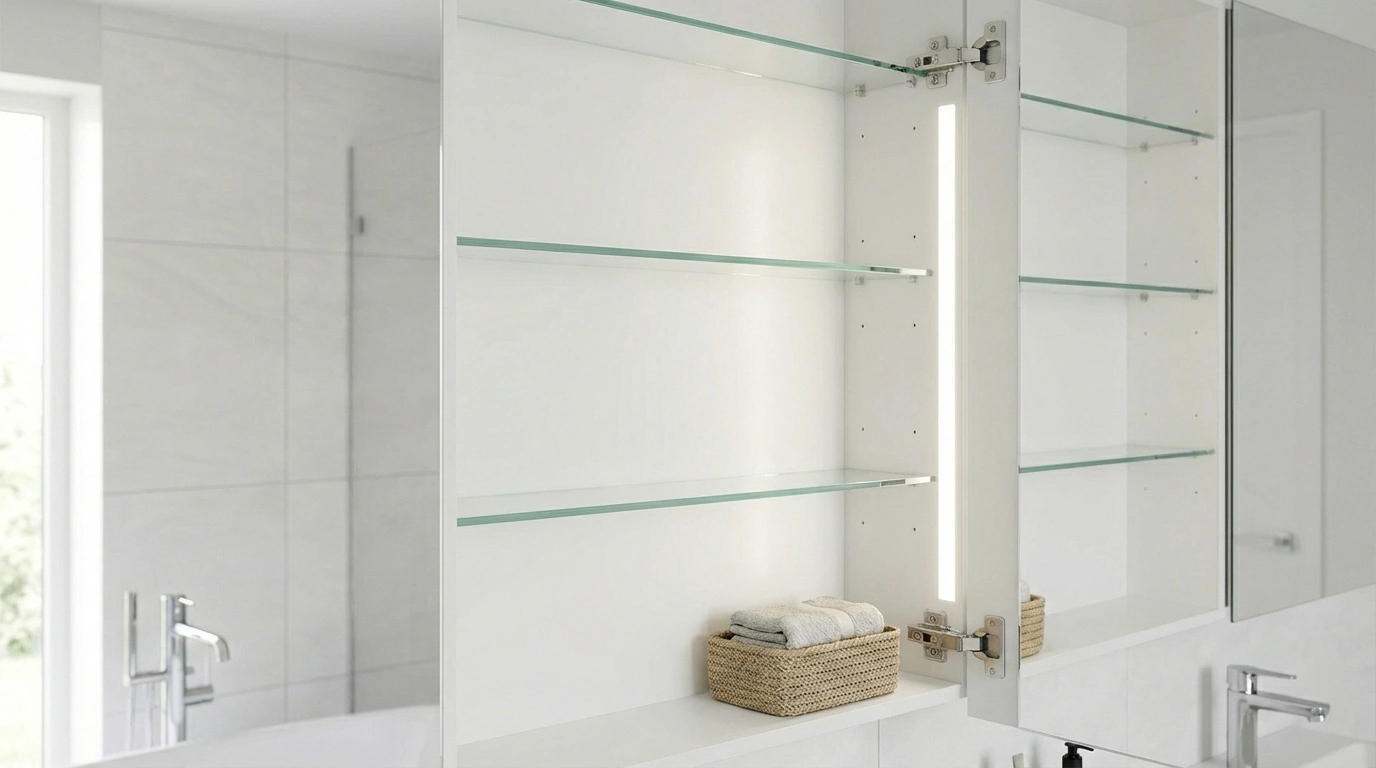
Guest bathroom mirror cabinets balance accessibility with discretion. Visitors need access to basic items without encountering personal medications or daily-use products. We design these installations with upper sections that remain locked or contain only guest-appropriate items, while lower sections stay empty for visitor use. This consideration seems minor until you’ve hosted relatives for extended stays or entertained frequently—proper segregation prevents awkward moments and maintains privacy.
Climate-Engineered Materials Selection
Standard bathroom mirror cabinets fail in UAE environments because manufacturers design for European or North American climates. Materials that perform perfectly in moderate humidity and stable temperatures deteriorate rapidly when exposed to Gulf conditions. We’ve spent three decades identifying which materials survive and which fail.
Cabinet carcass construction starts with moisture-resistant MDF or marine-grade plywood. Standard MDF absorbs humidity like a sponge, swelling and compromising door alignment within months. We use only moisture-resistant variants with hydrophobic additives throughout the material matrix, not just surface treatments. For coastal locations—anywhere within five kilometers of the Arabian Gulf—we upgrade to marine plywood with exterior-grade adhesives. The cost difference amounts to 15-20% but extends cabinet life from three years to fifteen years minimum.
Interior finishing requires equal attention to moisture resistance. We apply multiple coats of water-based polyurethane specifically formulated for high-humidity environments. Standard furniture finishes crack and peel when exposed to steam from hot showers in enclosed bathrooms. Our finish system creates a moisture barrier while remaining VOC-compliant with Dubai Municipality air quality standards. The finish cures for 72 hours in controlled humidity before we install any cabinet, ensuring complete chemical cross-linking that won’t degrade from exposure.
Mirror glass selection involves more technical considerations than most clients realize. Standard mirrors begin showing edge deterioration from moisture infiltration within two years of UAE bathroom installation. We specify only copper-free mirrors with sealed edges and moisture-resistant backing. The copper-free designation matters because traditional copper-backed mirrors corrode when exposed to cleaning products and humidity. Our mirrors undergo edge-sealing that prevents moisture from reaching the silvering layer through exposed edges—the primary failure point for bathroom mirrors.
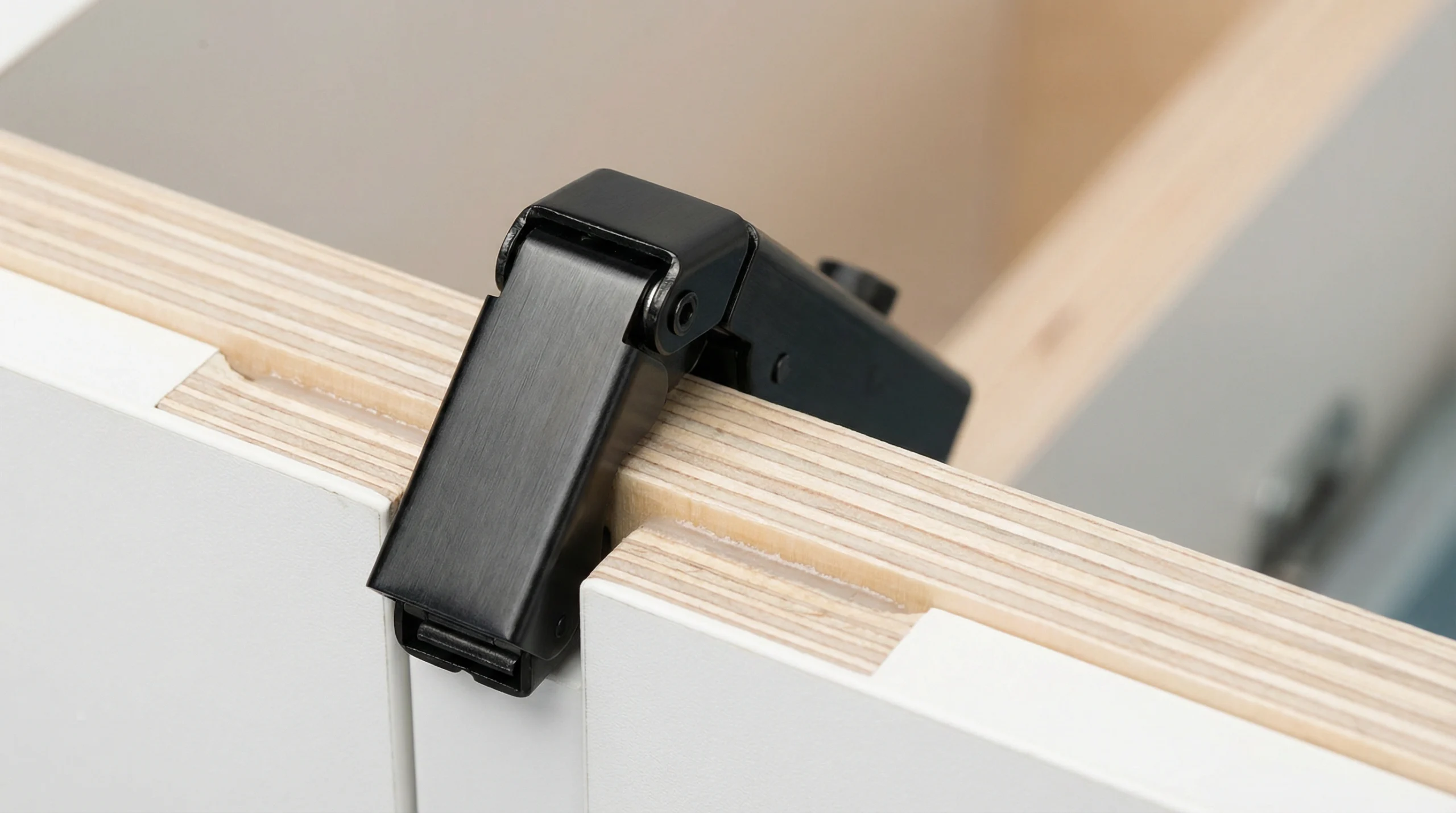
Hardware selection determines whether your mirror cabinet feels like luxury or sounds like cheap construction. Soft-close hinges aren’t aesthetic choices—they’re engineering solutions that prevent slamming damage to mirror glass and cabinet structure. We install only European-manufactured hydraulic hinges rated for 100,000 cycles minimum. Bathroom humidity accelerates hardware corrosion, so every hinge, handle, and internal bracket receives marine-grade finishes that resist oxidation.
Lighting Integration Design
LED lighting transforms mirror cabinets from functional storage into design features that enhance your entire bathroom. The lighting solutions we integrate serve three distinct purposes: task illumination for grooming activities, ambient lighting that sets bathroom mood, and accent lighting that highlights design elements.
Task lighting requires specific placement and color temperature. Most people install lighting above mirrors, creating shadows under eyes, nose, and chin—exactly where you need illumination for shaving, makeup application, and skincare routines. We position LED strips on both sides of mirror cabinets at face height, eliminating shadows while providing even illumination across facial features. The color temperature matters tremendously: 4000-4500K provides neutral white light that accurately represents how your appearance will look in outdoor daylight, while 3000K creates warm atmospheric lighting better suited for evening routines.
Integrated LED systems within mirror cabinets serve practical purposes beyond aesthetics. Interior cabinet lighting eliminates the frustration of searching through dimly-lit shelves for specific items. We install motion-activated LED strips that illuminate automatically when you open cabinet doors, using less power than your phone charger while providing perfectly positioned light exactly when needed. These systems connect to the same transformer as perimeter lighting, requiring only single electrical connection during installation.
Our LED installations meet UAE electrical codes while providing optimal performance in high-humidity environments. We specify only IP65-rated LED strips with silicone encapsulation that prevents moisture infiltration. The power supplies install outside the wet zone, typically in ceiling voids or adjacent service areas, with only low-voltage wiring entering the bathroom environment. This approach complies with Dubai Municipality electrical requirements while ensuring safe operation.
Dimming capability adds functionality most clients appreciate after installation. Bright task lighting suits morning routines but becomes harsh for nighttime bathroom visits. We integrate dimmer switches or touch controls that adjust light output from 10% to 100%, letting you customize illumination for different times and purposes. The dimming systems we specify work reliably with LED loads—standard incandescent dimmers cause LED flickering and premature failure.
Custom Mirror Cabinet Styles for Dubai Homes
Mirror cabinet design has evolved into distinct style categories, each serving different aesthetic preferences and functional requirements. The style you select should complement your bathroom’s overall design while providing the storage and features your household needs.
Recessed Built-In Mirror Cabinets
Recessed mirror cabinets integrate flush with your bathroom wall, creating seamless visual lines while maximizing usable bathroom space. This installation style works exceptionally well in smaller Dubai apartments where every centimeter counts. By recessing the cabinet into the wall cavity, you gain full-depth storage without protruding into limited floor space.
The structural requirements for recessed installation require careful planning during construction or renovation. We assess wall construction—whether block, stud, or concrete—to determine whether recessing is feasible and where we can position the cabinet for optimal function. Block walls in UAE construction provide opportunities for creating recessed cavities, though the process involves more labor than surface-mounting. Stud walls offer easier recessing but require coordination with plumbing and electrical rough-ins.
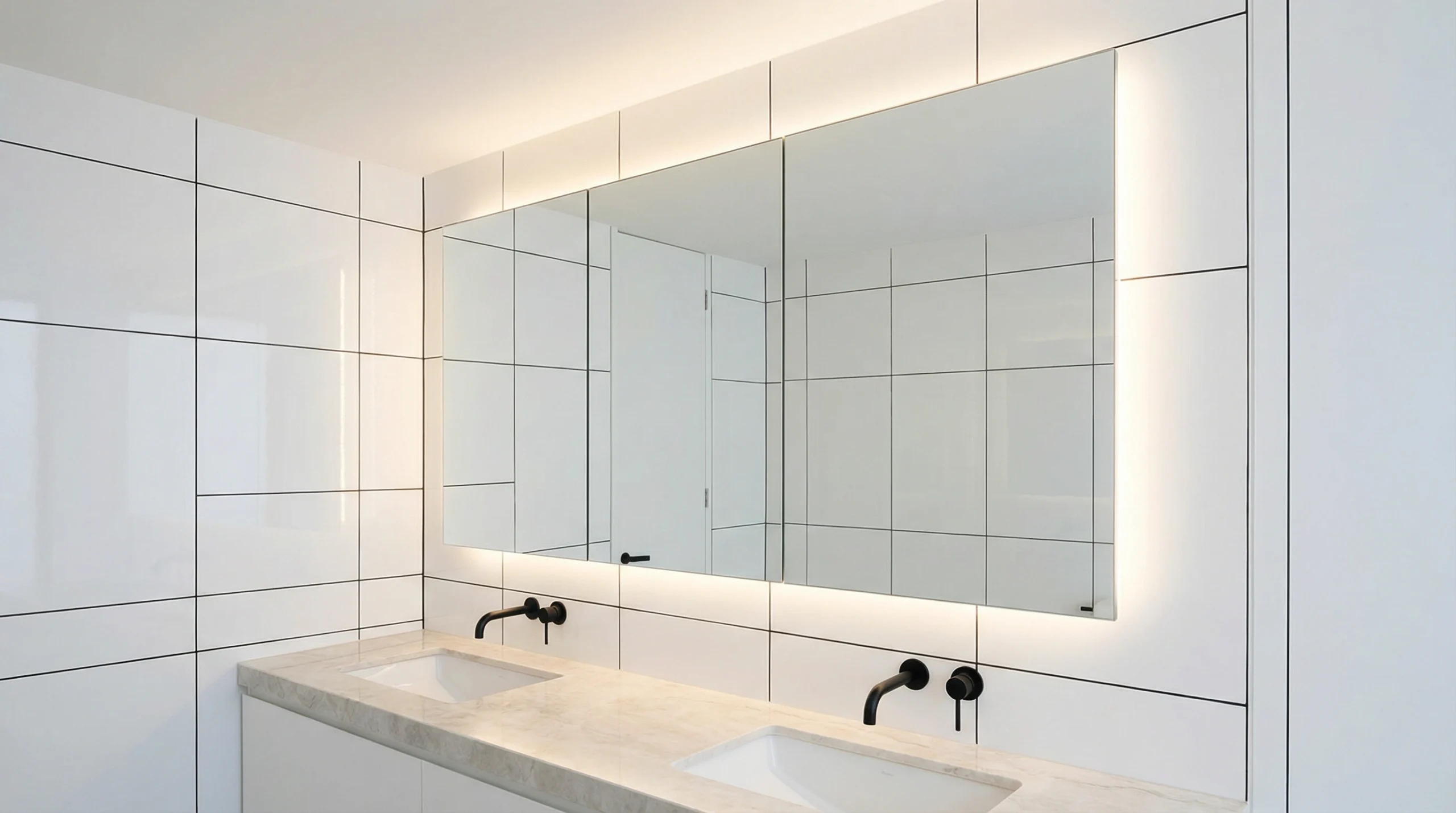
Depth planning matters critically for recessed installations. Standard wall cavities provide 10-15 centimeters of depth, adequate for medications and smaller items but insufficient for bulkier products. We sometimes create deeper recesses by adjusting wall framing during renovation, providing 20-25 centimeters of storage depth while maintaining flush exterior appearance. This approach requires coordination with other bathroom trades but delivers superior storage capacity.
Moisture management becomes more complex with recessed cabinets because the cabinet back sits within the wall cavity where condensation can accumulate. We install vapor barriers between the cabinet and wall cavity, ensuring that bathroom humidity doesn’t migrate into wall spaces where it can cause mold growth or structural damage. Ventilation provisions at cabinet top and bottom allow air circulation that prevents condensation buildup while remaining invisible to bathroom users.
Frameless Contemporary Mirror Cabinets
Frameless designs create clean modern aesthetics by eliminating visible cabinet frames around mirror edges. The mirror surface extends to cabinet edges, creating the appearance of a simple mirror until someone opens the door to reveal concealed storage. This style dominates contemporary Dubai bathroom design because it maintains minimalist visual lines while providing substantial storage.
The engineering challenges of frameless construction require precision manufacturing. Without a structural frame, the cabinet relies on the mirror door itself for rigidity and alignment. We use 6mm mirrors minimum for frameless doors, compared to 4mm mirrors adequate for framed construction. The thicker glass provides necessary structural support while maintaining perfect alignment through thousands of opening cycles.
Hinge selection becomes critical for frameless installations because hinges mount directly to glass rather than supporting frames. We use specialized glass-mounting hinges with secure grip mechanisms that distribute stress across wider surface areas. These hinges cost three times more than standard cabinet hinges but prevent the glass cracking or hinge pull-out that occurs with inferior hardware. The hydraulic soft-close mechanisms remain essential—slamming a heavy frameless mirror door creates impact forces that can shatter glass or damage wall mounting.
Edge finishing for frameless mirrors requires attention most suppliers ignore. Raw glass edges present safety concerns and look unfinished up close. We specify polished edges for all frameless mirror doors, creating smooth beveled edges that feel refined and eliminate sharp corners. For mirrors with LED edge lighting, we create routed channels that conceal LED strips while allowing light to illuminate through frosted edge sections.
Traditional Framed Mirror Cabinets
Framed mirror cabinets suit traditional and transitional bathroom styles common in Emirates Hills, Arabian Ranches, and similar villa communities. The visible frame provides architectural detail that complements classical bathroom fixtures and finishes. These designs work particularly well when matching existing bathroom cabinetry that features similar frame profiles and finish colors.
Frame materials vary based on bathroom environment and aesthetic goals. Solid wood frames—typically oak, walnut, or mahogany—provide authentic traditional character but require proper sealing for bathroom humidity exposure. We apply multiple coats of marine-grade polyurethane to wood frames, creating moisture barriers that prevent warping and finish deterioration. Maintenance-free alternatives include MDF frames with painted finishes or aluminum frames with wood-grain laminates that provide traditional appearance without moisture sensitivity.
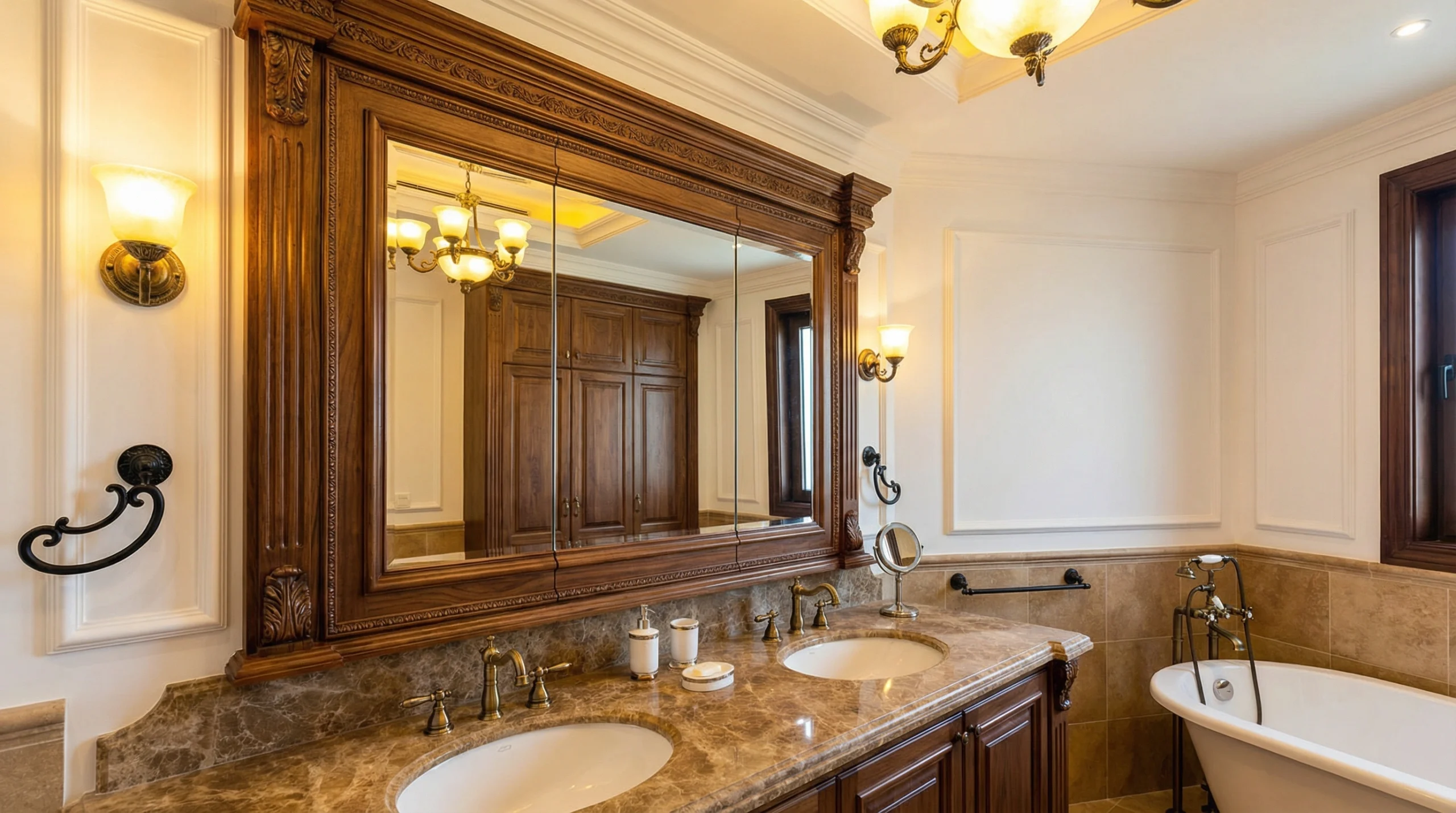
Frame profiles range from simple flat frames that add subtle definition to ornate profiles with decorative moldings and corner details. The profile selection should match your vanity cabinet doors, crown molding, and other bathroom trim work. We create custom profiles when standard options don’t achieve design consistency, matching existing millwork throughout your bathroom.
Double-door framed cabinets provide symmetrical aesthetics particularly suited to traditional design principles. Rather than one large door that swings to one side, double doors meet at the center and swing open from a center hinge point. This configuration suits wider vanities while maintaining balanced proportions. The center stile between doors provides mounting structure while creating the symmetrical appearance traditional design demands.
Illuminated LED Mirror Cabinets
Illuminated mirror cabinets integrate LED lighting directly into the mirror surface or surrounding frame, creating dramatic visual effects while providing exceptional task illumination. These installations have become increasingly popular across Dubai’s luxury residential and hospitality projects because they deliver both functional and aesthetic benefits.
Perimeter LED lighting creates a floating appearance by illuminating the wall behind the mirror cabinet. LED strips mount to the cabinet back, positioned 2-3 centimeters from the wall surface. When lit, the LED glow creates a halo effect that appears to suspend the cabinet away from the wall. This design works particularly effectively in contemporary bathrooms with darker wall colors where the light contrast becomes more pronounced.
Backlit mirrors take illumination integration further by incorporating LED panels directly behind frosted or etched sections of the mirror surface. The mirror itself becomes the light source, providing soft even illumination across your face without creating harsh shadows. We design these installations with separate controls for perimeter and backlit lighting, allowing you to use either independently or combine both for maximum illumination.
Touch sensor controls eliminate protruding switches that interrupt clean cabinet lines. Capacitive touch sensors integrate invisibly into the mirror surface, activating lighting with a simple touch. More sophisticated versions provide dimming control through touch-and-hold gestures, letting you adjust brightness without additional switches or controls. These systems require low-voltage wiring to control modules typically mounted in ceiling voids, keeping all electrical connections outside the wet zone.
Anti-fog heating elements prevent the mirror condensation that occurs during hot showers in enclosed bathrooms. These heating elements bond to the mirror’s rear surface, warming the glass just enough to prevent condensation while using minimal power—typically 50-80 watts for standard mirror sizes. The heating activates automatically with bathroom lighting in most installations, though separate switching provides more control over power consumption.
The Karnak Mirror Cabinet Manufacturing Process
Every mirror cabinet we create follows a systematic process developed over 10,000+ UAE installations. This approach ensures consistent quality while accommodating the unique requirements of each project.
Initial Consultation and Space Assessment
Your mirror cabinet project begins with detailed consultation at your property or in our Dubai showroom. We need to see your actual bathroom space because photos and measurements miss critical details that affect design and installation. During this assessment, we document existing bathroom dimensions, plumbing locations, electrical access points, wall construction, and current storage arrangements.
Measuring accurately in UAE bathrooms requires accounting for wall irregularities common in both older and new construction. Few walls sit perfectly plumb or level, particularly in buildings more than ten years old. We measure at multiple heights and locations, documenting variations that affect cabinet sizing and installation. A wall that leans 15mm over a 2-meter height requires compensation during cabinet design, otherwise gaps appear between cabinet and wall when installed.
We photograph your bathroom from multiple angles, capturing overall space and specific details like switch locations, outlet positions, and architectural features. These photos provide reference during design work, letting us verify measurements and understand spatial relationships. Clients often request design changes after our initial meeting—having comprehensive photos lets us evaluate those requests without requiring additional site visits.
Discussing how you actually use your bathroom shapes our design recommendations. A couple with identical morning schedules needs different mirror cabinet solutions than one where different wake times mean sequential bathroom use. If you share bathroom space with teenagers, we factor in storage for multiple sets of products and potential conflicts over mirror access. Elderly residents need different considerations—lower shelf positioning, easier-to-grip handles, and lighting that compensates for age-related vision changes.
Design Development and Visualization
Design work begins in our workshop using CAD software that lets us create three-dimensional models of your mirror cabinet in its intended space. These models show exactly how the cabinet will look, where doors will swing, how much storage you’ll gain, and how lighting will function. We provide rendered images from multiple angles, helping you visualize the finished installation before committing to fabrication.
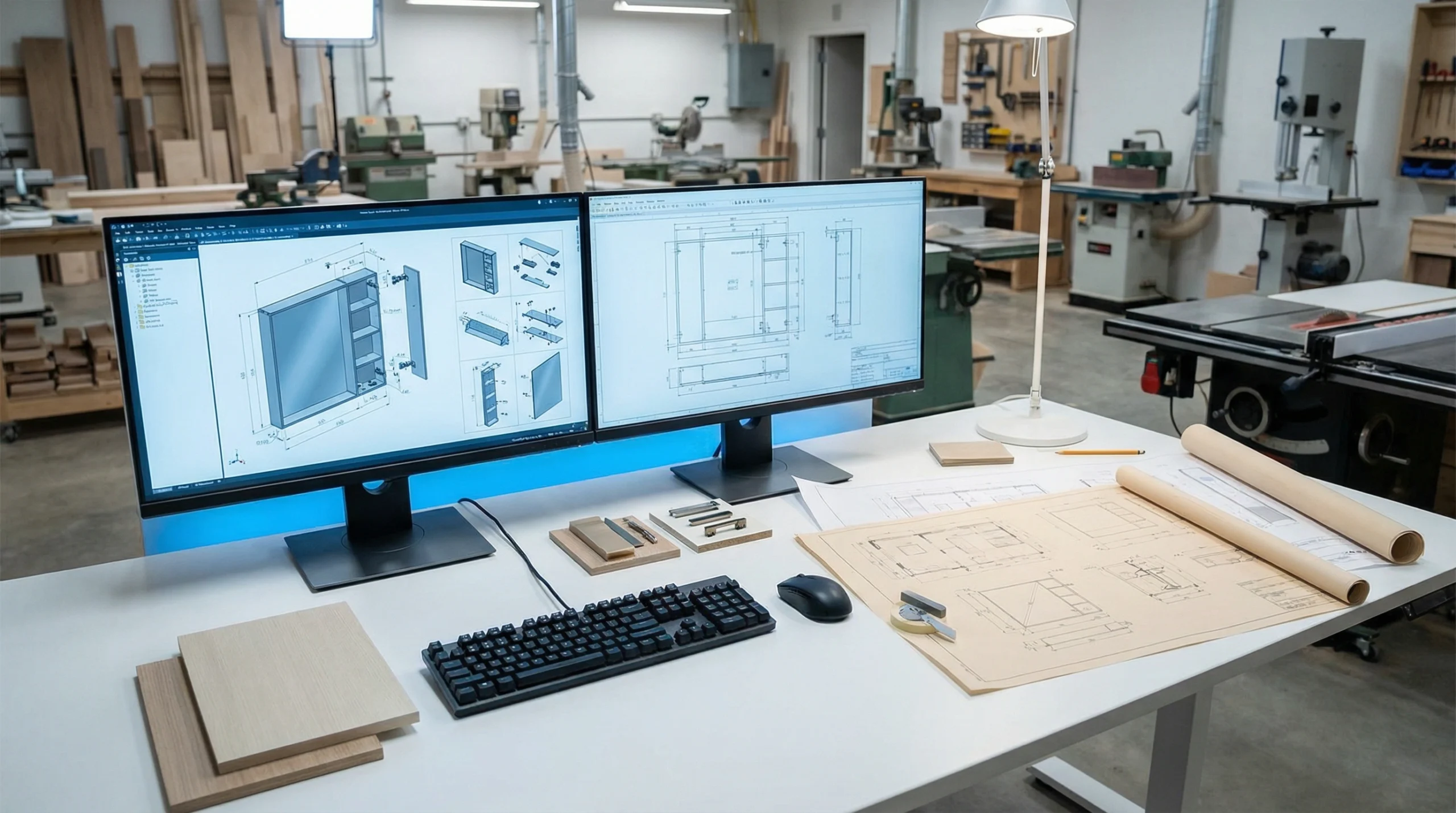
Storage configuration design involves more than placing shelves at regular intervals. We design shelf positions based on what you’ll actually store—taller spaces for bottles and aerosols, shorter sections for small items that get lost on deep shelves, specialized areas for items requiring cool dark storage. Adjustable shelving provides flexibility but sacrifices some storage efficiency because the adjustment hardware consumes space. We use fixed shelving positioned specifically for your needs, maximizing usable capacity.
Door configuration depends on cabinet width and your preferred access patterns. Single doors work well for cabinets under 80 centimeters wide—wider than that, and the door swing becomes awkward in typical bathroom layouts. Double doors provide better access to wide cabinets but create a center vertical support that interrupts the mirror surface. Sliding mirror doors eliminate swing clearance requirements but reduce access—you can only reach half the cabinet at any moment because one door always blocks part of the opening.
Material selections happen during design development. We present options for cabinet construction, interior finishes, mirror types, hardware finishes, and lighting configurations. Each choice affects both appearance and budget, so we explain the practical differences between options rather than simply showing samples. Understanding why marine-grade plywood costs more than standard MDF helps you make informed decisions about which upgrades provide value for your specific installation.
Design revisions typically require two or three iterations before finalization. Most clients request changes after seeing initial designs—adjusting sizes, modifying shelf configurations, adding features they hadn’t initially considered. We accommodate revisions without additional design fees, though significant scope changes that double cabinet size or completely alter the design approach require revised quotations. Once you approve the final design, we provide detailed specifications and a formal quotation breaking down all costs.
Workshop Fabrication
Cabinet fabrication begins in our climate-controlled Dubai workshop where we maintain temperature and humidity levels that ensure proper material behavior and finish curing. Material preparation comes first—cutting panels to precise dimensions, routing edges, drilling holes for hardware and adjusting mechanisms, and preparing surfaces for finishing.
Cutting precision matters more for mirror cabinets than typical furniture because the cabinet must mount perfectly flat against the wall—any twist or bow creates visible gaps between cabinet and wall. We use computer-controlled panel saws that achieve accuracy within 0.5mm across full panel length. This precision ensures cabinet components fit together squarely, creating the structural rigidity necessary for supporting heavy mirror doors.
Edge treatments vary based on cabinet style and which edges will remain visible after installation. Cabinet sides that sit against walls need no edge finishing beyond basic sanding, while cabinet bottoms visible below mirror doors receive matching edge banding or solid wood trim. We apply edge treatments before finish coatings, ensuring the entire cabinet receives consistent moisture protection.
Finish application follows a systematic schedule allowing proper drying time between coats. We apply primer first, then sand to remove any grain raising caused by water-based products. Two coats of finish follow, with light sanding between coats to ensure smooth surfaces. The final coat cures for minimum 72 hours before we handle the cabinet for hardware installation. Rushing finish curing causes softness that damages easily during installation and use.
Hardware installation requires precise positioning for proper function. Hinge locations must align perfectly between cabinet body and door—misalignment of even 2mm causes binding or gaps when the door closes. We use drilling jigs that ensure consistent hinge positioning, particularly critical for double-door cabinets where both doors must align perfectly at their center meeting point. Soft-close mechanisms require adjustment to provide controlled closure—too much damping and the door closes frustratingly slowly, too little and it still slams.
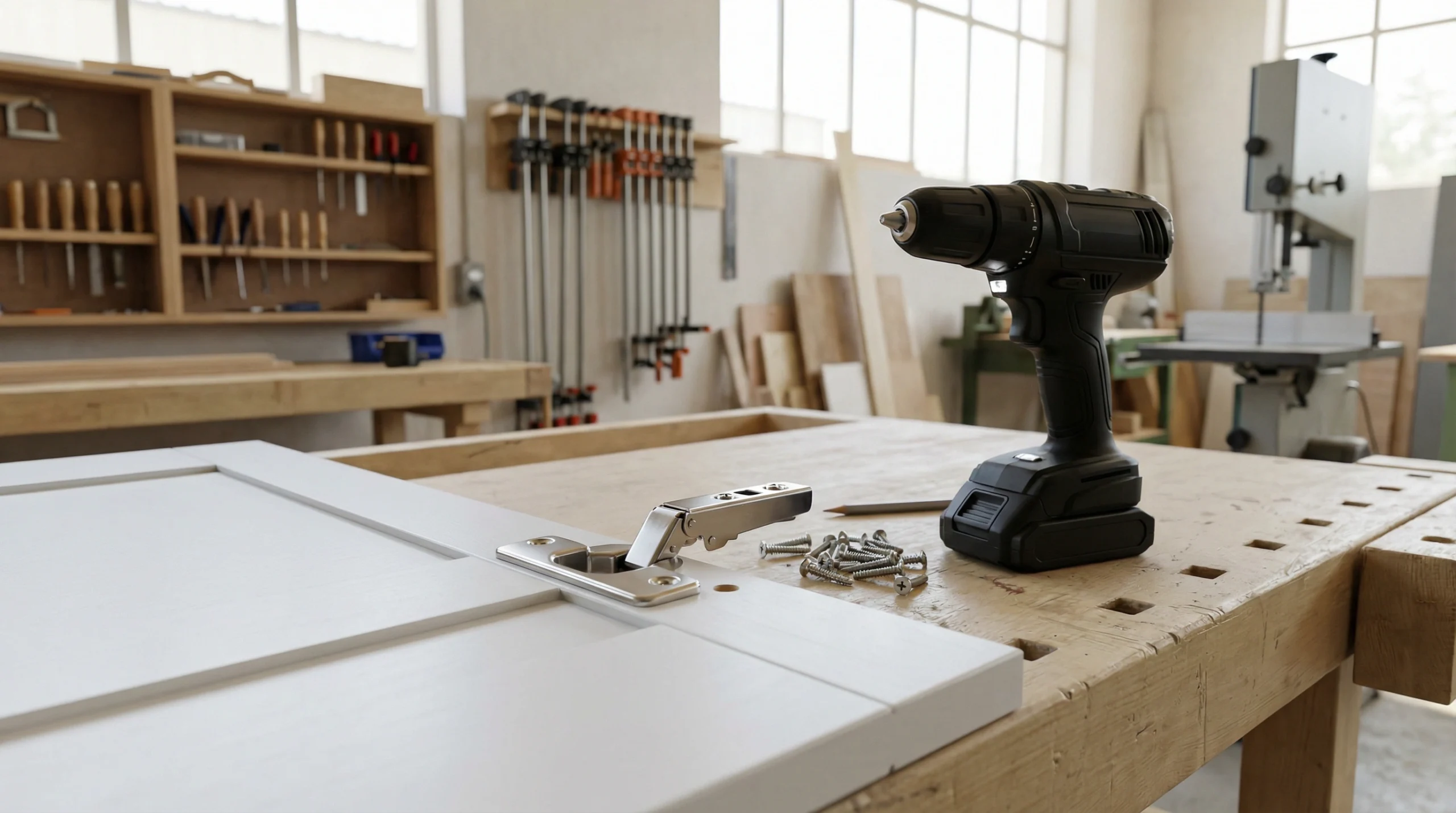
Mirror cutting and edge polishing happens in our glass-working area with specialized equipment for precision cutting and safety. We cut mirrors oversized by 1-2mm, then polish edges to final dimension. This approach prevents the edge chips that occur when cutting directly to final size. Polished edges go through three progressive grits—coarse grinding to establish bevel angle, medium grinding for smoothness, and fine polishing for glass-like clarity. The entire edge polishing process takes 15-20 minutes per mirror, but the finished quality justifies the time investment.
Quality inspection occurs at multiple fabrication stages. We check dimensions after cutting, surface quality after finishing, hardware function after installation, and overall assembly before transport. This staged inspection catches problems when they’re easily correctable rather than discovering issues after installation. A cabinet that leaves our workshop meets our specifications—if problems appear during installation, they result from site conditions rather than manufacturing defects.
Site Preparation and Installation
Installation begins with site preparation—protecting bathroom fixtures and floors from construction damage, verifying electrical power availability, confirming wall conditions match our initial assessment. We spread drop cloths across floors and tape plastic sheeting over toilets, tubs, and vanity counters. This protection seems excessive until you’ve cleaned construction dust from every bathroom surface—prevention requires minutes while cleanup requires hours.
Wall preparation determines installation success. We verify walls are plumb and flat within acceptable tolerances. Significant wall irregularities require correction—sometimes by building out low areas with shims and compound, sometimes by grinding down high spots. Block walls in UAE construction often have raised mortar lines between blocks that prevent cabinet mounting flush to the wall. We grind these down or fur out the wall with shimming strips.
Electrical rough-in happens before final cabinet mounting. LED transformers mount in ceiling voids with wiring running down to the cabinet location. We coordinate with electricians on this work, providing them our wiring diagrams showing where power connects to the cabinet. All electrical work complies with Dubai Municipality codes and receives proper inspection before covering. We never install cabinets over uninspected electrical work—shortcuts here create liability and safety issues.
Cabinet mounting uses heavy-duty fasteners appropriate for wall construction. Block walls receive expansion anchors that grip securely when tightened. Drywall or lightweight walls require fastening into wooden studs or backing boards. We install backing boards during wall construction specifically to provide secure cabinet mounting—standard drywall anchors cannot safely support mirror cabinets weighing 40-60 kilograms when fully loaded.
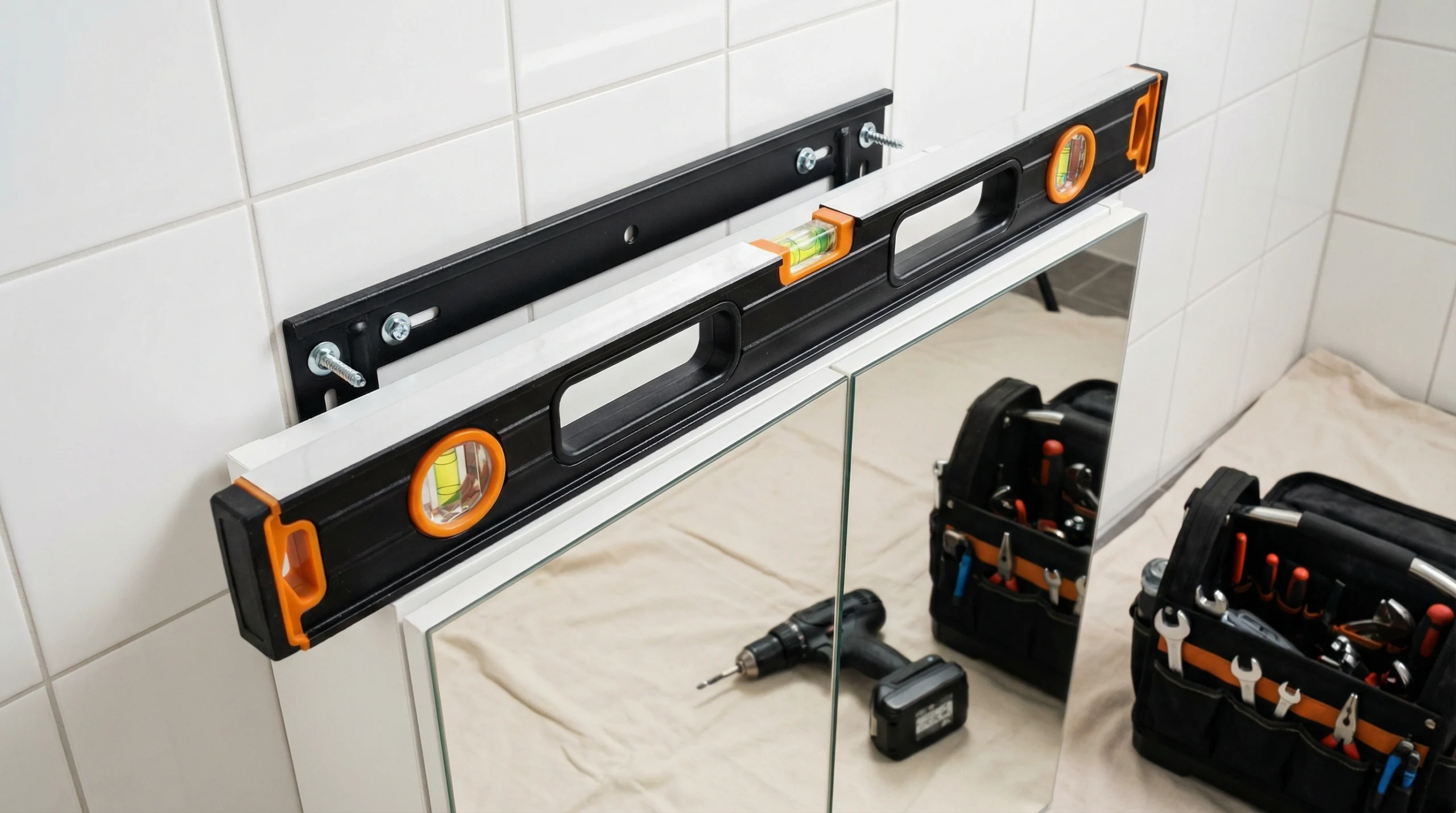
Leveling receives meticulous attention during mounting. A cabinet that looks level to casual observation can be off by 5mm across a meter width—barely noticeable until you set bottles on shelves and watch them roll to one side. We level both horizontally and vertically, checking with precision spirit levels accurate to 0.5mm per meter. Once level, we mark mounting hole locations, drill pilot holes, install anchors, and secure the cabinet with proper fasteners.
LED wiring connection follows cabinet mounting. We make all connections inside the cabinet, keeping them accessible for future service while hiding them from view. Wire management matters—loose wires look unprofessional and can interfere with stored items. We secure wiring with cable clips and route everything neatly to connection points. Testing occurs before closing up connections—verifying all LED strips illuminate, dimming functions work properly, and no flickering or dead sections exist.
Final adjustments ensure perfect function. We adjust door alignment so doors close evenly with consistent gaps around perimeters. Soft-close mechanisms receive fine-tuning for optimal closure speed—firm enough that users know the door will close but gentle enough to prevent any impact. We install shelf supports and position shelving at the heights you specified during design. Interior lighting receives adjustment if needed, ensuring even illumination without dark corners or bright spots.
Client Walkthrough and Care Instructions
Installation concludes with detailed walkthrough where we demonstrate all cabinet features and explain proper care procedures. We show you how to adjust shelving if you later want different configurations, demonstrate dimmer controls if installed, explain cleaning procedures that maintain finish quality, and provide emergency contact information should any issues arise.
Care instructions focus on moisture management and cleaning practices. While our cabinets resist moisture far better than standard furniture, excessive water exposure still causes problems over time. We recommend keeping doors closed immediately after showers to prevent steam accumulation inside the cabinet. Ventilation fans should run for 20-30 minutes after showers to remove bathroom humidity. These simple practices extend cabinet life significantly.
Cleaning procedures vary based on finish type. Painted finishes clean easily with slightly damp microfiber cloths—never abrasive scrubbers that damage finishes. Glass shelves tolerate normal glass cleaners, but we recommend avoiding ammonia-based products that can damage cabinet interiors if overspray reaches finished surfaces. Mirror surfaces clean best with specialized glass cleaners that prevent streaking, though simple water with microfiber cloths works well for routine cleaning.
We provide written care instructions along with our contact information for questions that arise after we leave. Many clients forget details from the walkthrough—having written documentation means they can reference proper care procedures months or years later. We encourage calls with questions rather than letting minor concerns develop into significant problems.
Why UAE Residents Choose Karnak for Mirror Cabinets
The mirror cabinet market includes numerous carpentry shops, international retailers, and general contractors claiming bathroom expertise. Three decades of focused work has given us capabilities competitors simply cannot match.
Three Decades of UAE-Specific Engineering
Since 1988, we’ve installed mirror cabinets in over 3,200 UAE bathrooms spanning all seven emirates. This experience base lets us predict which design approaches succeed and which fail in Gulf conditions. We’ve seen standard cabinets delaminate after two years in coastal bathrooms. We’ve replaced competitor installations where hinges corroded within eighteen months. We’ve repaired mirror edges that deteriorated because installers used inferior sealing methods.
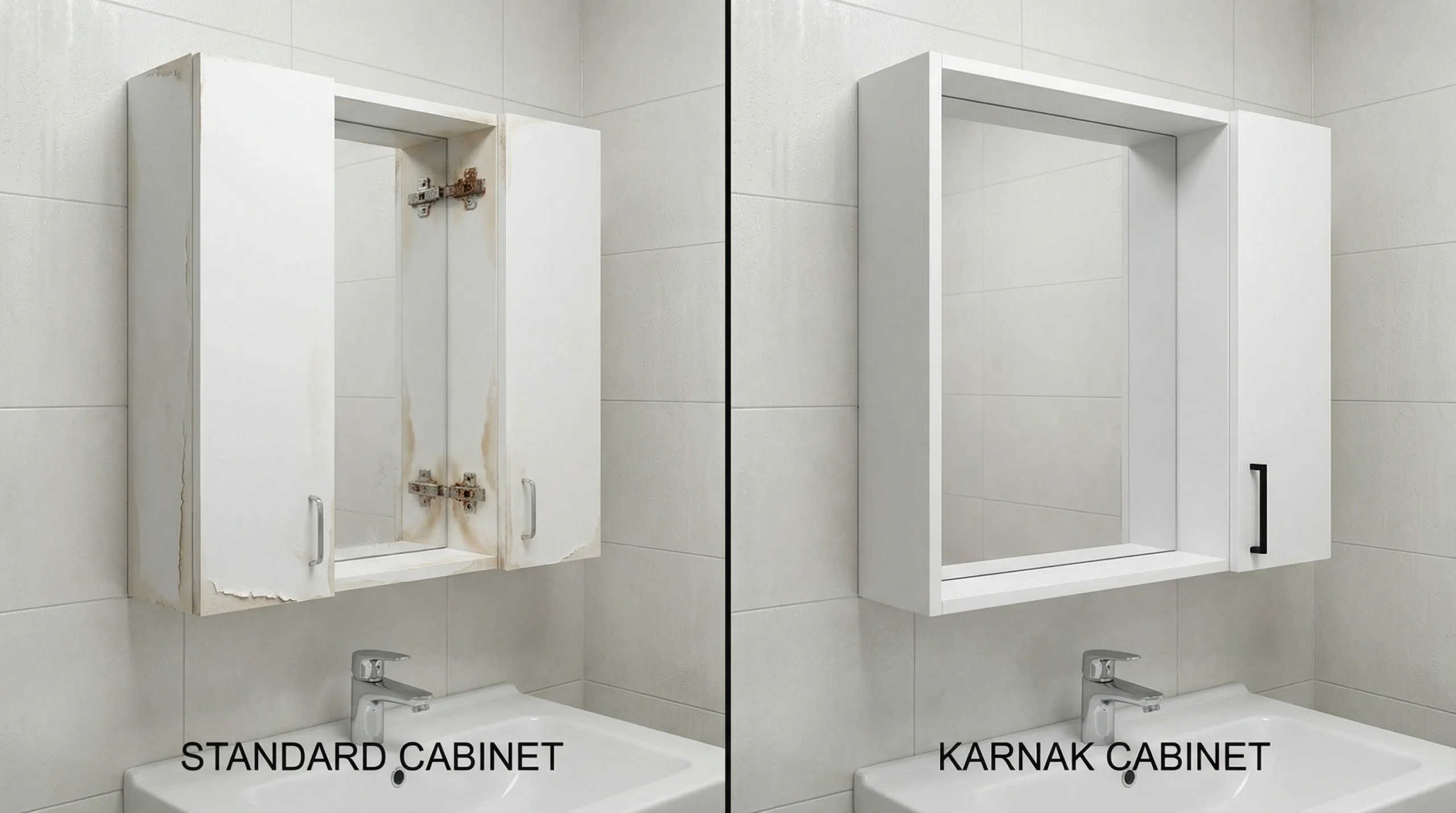
This institutional knowledge translates into tangible benefits for your project. We know which wood species survive Emirates Hills microclimates and which warp within two years. We’ve navigated Dubai Municipality approval processes for commercial bathroom fit-outs 840+ times. We understand coastal humidity in JBR differs from desert dryness in Arabian Ranches and specify materials accordingly. Competitors guess—we know from direct experience.
Our material suppliers represent another competitive advantage. Thirty-five years of consistent orders means suppliers prioritize our needs during shortages and give us first access to new products. When moisture-resistant MDF manufacturers develop improved formulations, we receive samples for testing before general availability. We’ve developed relationships with European hardware manufacturers who customize components for our specific requirements—soft-close mechanisms calibrated for heavier mirror doors, hinges finished with marine-grade coatings that resist Gulf corrosion.
The depth of our UAE experience shows in details competitors miss. We account for the expansion and contraction cycles caused by extreme temperature variations between air-conditioned interiors and summer heat. We design electrical integration that complies with Dubai Municipality codes while avoiding the common violations we’ve seen in competitor work. We specify fastening systems appropriate for UAE construction—different approaches for block walls, concrete, and stud framing.
Complete In-House Capabilities
We control every aspect of your mirror cabinet project from initial consultation through final installation and subsequent service. This vertical integration ensures consistency and accountability impossible when projects involve multiple subcontractors. Our design team creates your cabinet concept. Our workshop craftsmen fabricate the actual cabinet. Our installation crews mount it in your bathroom. Our service technicians handle any warranty issues or future modifications.
This integrated approach eliminates the coordination headaches common with multi-vendor projects. You communicate with one company throughout the project. Schedule changes require one phone call, not coordinating with separate design, manufacturing, and installation companies. Problems receive immediate attention because we own the entire project outcome, not just one portion of it.
Quality control benefits tremendously from in-house capabilities. Our designers know workshop capabilities and design within those parameters rather than creating impractical designs that require compromises during fabrication. Our craftsmen understand installation challenges and build cabinets accounting for site conditions rather than building perfect cabinets that don’t fit imperfect walls. Our installers understand design intent and fabrication methods, letting them make informed decisions during installation rather than blindly following plans.
The workshop location in Dubai provides practical advantages for your project. We can visit your site for measurements, return to the workshop for design work, then deliver the completed cabinet—all within the same day for urgent projects. International suppliers require weeks for manufacturing and shipping, with no flexibility for modifications. If you change your mind about interior configuration after seeing the initial design, we adjust and start fabrication the same week. Online suppliers and international manufacturers require restarting entire order processes.
Warranty and Long-Term Support
Every mirror cabinet installation includes comprehensive warranty coverage protecting both materials and workmanship. We warranty cabinet construction for five years—if panels warp, finishes delaminate, or structural joints fail, we repair or replace affected components at no cost. Hardware receives three-year warranty against mechanical failure or corrosion. Mirror glass is warranted for three years against silvering deterioration or seal failure. LED systems carry two-year warranty covering transformers, LED strips, and control components.
The warranty terms cover defects in materials and workmanship, not damage from misuse or accidents. A cabinet door that separates because of joint failure falls under warranty. A door damaged because someone leaned against it does not. We explain these distinctions clearly at project beginning so expectations remain realistic. Our goal involves building cabinets that need no warranty claims, but comprehensive coverage protects your investment if problems occur.
Warranty service happens promptly without bureaucratic hurdles. If issues arise, you call our office and speak with someone who can access your project records immediately. We schedule service visits within three business days for warranty issues—typically sooner for problems affecting cabinet function. Simple fixes like hinge adjustments happen during a single visit. More involved repairs may require removing components for workshop correction, though we provide temporary solutions maintaining bathroom function during repair periods.
Beyond warranty periods, we remain available for service, modifications, and upgrades. Clients often request interior reconfiguration as storage needs change—adding or repositioning shelves, installing additional interior lighting, upgrading to smart controls. We maintain detailed records for every cabinet we build, including complete dimensions, materials used, finish colors, and hardware specifications. These records let us fabricate matching additions years after original installation without guessing at specifications.
Recent Mirror Cabinet Projects Across UAE
Our portfolio demonstrates the range of mirror cabinet solutions we’ve created for diverse UAE properties and purposes.
Luxury Villa Master Bath – Emirates Hills
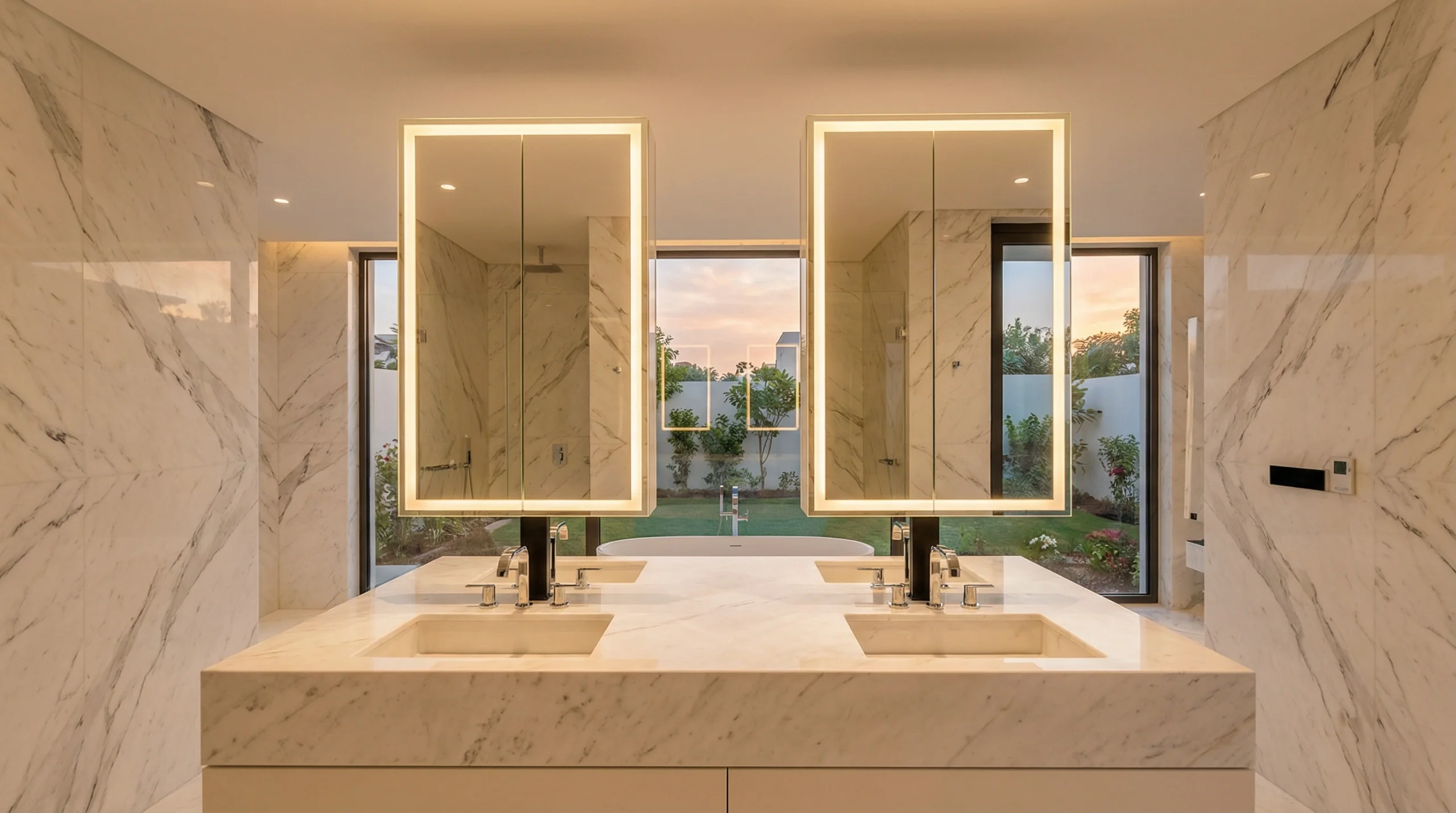
This 2.8-meter wide dual-vanity installation required two separate mirror cabinets creating symmetrical design while providing independent storage for the homeowners. Each cabinet measures 1.2 meters wide by 1.4 meters high with 18-centimeter depth. Interior configuration includes three adjustable glass shelves on the left side of each cabinet with fixed shelf arrangement on the right side for frequently-used items. Integrated LED perimeter lighting provides 4200K illumination controlled by touch sensors on mirror surface. Moisture-resistant white lacquer interior finish matches existing vanity cabinetry. The project included coordinating with bathroom renovation contractor for electrical rough-in and wall preparation. Installation completed over two days including electrical connection and final adjustments. The homeowners particularly appreciated the even task lighting eliminating shadows during morning grooming routines.
Business Bay Apartment Bathroom – Guest Suite
Space constraints in this 62-square-meter apartment required maximizing storage in limited bathroom area. We designed a recessed mirror cabinet fitting between existing plumbing stacks, utilizing the 15-centimeter wall cavity depth. The 75-centimeter wide installation provides storage for guest bathroom necessities while maintaining the minimalist aesthetic the owner requested. Frameless mirror design creates seamless appearance. Interior includes two fixed shelves positioned specifically for standard toiletry item heights. The recessed installation protrudes only 3 centimeters beyond wall surface, preserving floor space in the compact bathroom. Simple LED strip at cabinet top provides adequate task lighting. White interior finish matches wall color, making the cabinet nearly invisible when doors remain closed. The owner reports guests often don’t realize storage exists until they need to access items.
Arabian Ranches Villa – Children’s Bathroom
Three children sharing one bathroom created storage chaos the parents wanted to solve systematically. We installed a 1.6-meter wide mirror cabinet with custom interior organization dividing space into three equal vertical sections—one for each child. Color-coded interior sections (blue, pink, and green paint on back panels) help children identify their assigned spaces. Each section includes two adjustable shelves letting parents modify configuration as children grow. Magnetic closures replace traditional latches because young children struggled with standard mechanisms. Lower sections remain accessible to children while upper shelves provide parent-controlled storage for medications and first aid supplies. Safety-backed mirror prevents glass shards if accidental breakage occurs. The parents report significant reduction in bathroom arguments since installation gave each child dedicated personal space.
Dubai Marina Apartment – Coastal Installation
The 19th-floor apartment sits 200 meters from the Arabian Gulf, creating extreme humidity challenges for bathroom installations. We specified marine-grade plywood construction throughout with triple-sealed mirror edges. All hardware received marine-grade finishes tested in salt-spray environments. Interior finish included moisture barrier coating applied before standard polyurethane coats. Extra ventilation slots at cabinet top and bottom promote air circulation preventing condensation buildup. The cabinet has performed flawlessly for four years since installation despite coastal humidity levels that destroyed two previous standard cabinets the owner purchased from international suppliers. This project demonstrates why material selection matters so critically for Gulf coast installations.
Medical Clinic – Sharjah
This dermatology clinic required mirror cabinets in six examination rooms complying with healthcare facility standards. Each cabinet measures 80 centimeters wide with stainless steel interior surfaces that tolerate medical cleaning protocols. Keyless magnetic locks prevent patient access while remaining easily accessible to medical staff. Interior layouts accommodate medical supply storage specific to dermatological procedures. Bright 5000K LED lighting provides clinical-quality illumination necessary for skin examinations. Frameless white-backed mirrors prevent the darker reflections of standard silver mirrors that made color assessment difficult. All materials meet Dubai Health Authority requirements for medical facility installations. The clinic has expanded to three additional locations, requesting identical mirror cabinet installations for consistency across all facilities.
DIFC Office Tower – Executive Washrooms
The executive floor washroom renovation included eight mirror cabinets for individual washroom cubicles. Each installation features dark walnut frames matching office millwork throughout the floor. Interiors include electrical outlets for charging devices and USB ports integrated into interior sidewalls. Touch-activated LED lighting with automatic shut-off after two minutes conserves energy. Soft-close mechanisms ensure quiet operation appropriate for professional environment. Mirror glass includes slight tinting that complements the warm metal finishes throughout the restroom. The project required coordinating with building management for after-hours installation to avoid disrupting office operations. Installation occurred over two weekends, completing all eight cabinets without business interruption.
Jumeirah Villa – Retrofit Installation
The homeowners wanted mirror cabinet storage added to their existing master bathroom without major renovation. The challenge involved working around existing electrical, plumbing, and wall finishes while adding substantial storage. We designed surface-mount cabinets that sit over existing smaller mirrors, incorporating those mirrors into the lower sections while adding upper storage cabinets with new mirror doors. This approach avoided the wall demolition required for recessed installation. Custom color matching ensured new cabinetry blended with ten-year-old existing vanity. The installation provided the storage the homeowners needed while preserving the bathroom aesthetic and avoiding renovation expense. We completed measurements, fabrication, and installation within two weeks from initial consultation.
Palm Jumeirah Villa – Spa-Style Master Suite
This extensive master bathroom renovation included his-and-hers mirror cabinets as part of the spa-inspired design. Each 1.4-meter wide cabinet features frosted mirror sections alternating with clear mirror sections, creating visual interest while providing privacy. Integrated RGB LED lighting offers multiple color options the homeowners use for different moods—cool white for morning routines, warm amber for evening relaxation. Interior configuration includes specialized sections: cosmetic organizers with multiple small compartments, taller sections for bottles, and a jewelry storage section in her cabinet with felt-lined drawers. Heated mirror elements prevent fogging after the couple’s regular steam shower use. The spa aesthetic extended throughout the cabinets with polished chrome hardware and white high-gloss interior finishes. Installation required three days including extensive LED programming for the color-changing lighting effects.
Mirror Cabinet Questions - Expert Answers
Timeline depends primarily on cabinet complexity and current workshop schedule. Simple single-door mirror cabinets measuring under one meter wide typically require two weeks from design approval to completed installation—one week for fabrication and finishing, several days for finish curing, and installation scheduling. More complex installations involving double doors, recessed mounting, extensive LED integration, or specialty finishes require three to four weeks.
The design phase preceding fabrication adds time to overall project duration. Initial consultation and site measurement happen within days of your inquiry. We provide preliminary designs within one week of site visit. Design revisions typically require another week for finalizing dimensions, materials, and features. Clients wanting to compare multiple design options or coordinate with larger bathroom renovations sometimes extend design phases to three or four weeks before approving fabrication.
Installation duration varies with cabinet complexity and site conditions. Surface-mounted single cabinets install in three to four hours including electrical connection and final adjustments. Large installations like dual-vanity configurations require full-day installation. Recessed cabinets need longer because of wall preparation requirements—typically six to eight hours for single recessed installation. Multiple cabinets in the same property can often be installed on the same day by expanding crew size.
Rush service is available for urgent needs with corresponding cost adjustments. We've fabricated and installed emergency replacement cabinets in four days when necessary—though this requires dedicating workshop resources that might otherwise serve multiple projects. Realistic planning allowing three to four weeks from initial consultation to completed installation ensures optimal quality without rushing any fabrication or finishing stages.
The difference between quality construction and cheap alternatives becomes apparent within months of bathroom use. Material selection creates the most significant quality division. Inexpensive cabinets use standard MDF that swells when exposed to bathroom humidity, standard glass mirrors that corrode at edges within two years, basic hinges that corrode and loosen quickly, and inadequate finish systems that don't protect underlying materials.
Quality construction starts with moisture-resistant materials engineered specifically for bathroom environments. Moisture-resistant MDF or marine-grade plywood resists swelling from humidity exposure. Copper-free mirrors with sealed edges prevent the silvering deterioration that ruins cheap mirrors. European-manufactured soft-close hinges with marine-grade finishes operate smoothly through 100,000+ cycles without loosening or corroding. Multiple coats of water-based polyurethane formulated for high-humidity environments create durable moisture barriers.
Construction methods matter as much as materials. Quality cabinets feature proper joinery—doweled and glued joints rather than stapled corners. Cabinet backs use substantial panels rather than flimsy hardboard that bows over time. Shelving includes proper support rather than resting on plastic pins that crack. Electrical integration follows code requirements with proper junction boxes and strain relief rather than exposed wire connections that create safety hazards.
The operational difference manifests daily. Quality cabinet doors close smoothly and softly regardless of how hard you swing them shut. Shelves remain level supporting weight without sagging. Hardware maintains adjustment over years rather than loosening within months. Finishes resist moisture damage, maintaining appearance while cheap cabinets show water staining and peeling. LED systems operate reliably while cheap installations flicker or fail.
Cost differences seem significant initially but value emerges over cabinet lifetime. A quality mirror cabinet costing AED 4,500 that functions perfectly for fifteen years provides far better value than a AED 1,800 cheap cabinet requiring replacement after three years. Factor in installation costs for replacing failed cabinets and quality construction costs less long-term while providing superior function throughout ownership.
Working around existing electrical and plumbing requires careful measurement and design but rarely prevents mirror cabinet installation. The key involves designing cabinet configuration that avoids conflicts while maintaining functionality. We document all existing electrical outlets, switches, plumbing supply lines, and drain locations during initial site assessment. Cabinet design incorporates these constraints rather than ignoring them.
Electrical outlets within the cabinet area present common challenges. Surface-mounted outlets sometimes fit within planned cabinet boundaries, requiring cutouts in cabinet backs. Recessed outlets may interfere with cabinet depth, necessitating either relocating the outlet or adjusting cabinet configuration. We coordinate with electricians on outlet relocation when necessary, though design adjustments often avoid this expense. For outlets that must remain accessible, we create removable access panels within cabinet interiors maintaining code-required outlet accessibility.
Plumbing supply lines and shut-off valves beneath sinks require continued access even after mirror cabinet installation. Most mirror cabinets mount above these areas without conflict. For vanities with upper storage where plumbing might interfere, we design cabinet sections that avoid plumbing runs or create access panels permitting valve operation and supply line service. Building codes require maintaining plumbing access—we never permanently enclose shut-off valves or supply connections.
Existing lighting presents both challenges and opportunities. Over-mirror light bars that would conflict with new mirror cabinets can often be relocated to vanity sides or removed entirely when integrated LED lighting provides superior illumination. We coordinate lighting changes with electricians, providing them requirements for new circuit locations. Some clients keep existing overhead lighting as supplemental illumination while relying on cabinet LED lighting for primary task illumination.
Ventilation fans and their ductwork sometimes run through wall cavities where recessed cabinets would install. This situation requires either relocating ductwork (expensive) or choosing surface-mount cabinet installation instead. We identify these conflicts during initial assessment rather than discovering them during installation when modifications become costly and disruptive. Thorough site assessment prevents surprises.
Proper maintenance extends mirror cabinet life significantly while improper care accelerates deterioration even with quality construction. Start with moisture management—the primary enemy of bathroom cabinetry in Gulf climates. Run your bathroom ventilation fan for 20-30 minutes after hot showers to remove humidity before it penetrates cabinet materials. Keep cabinet doors closed during and immediately after showers to prevent steam accumulation within cabinet interiors.
Regular cleaning prevents buildup that traps moisture against surfaces. Clean mirror surfaces weekly with glass cleaner and microfiber cloths. Avoid ammonia-based cleaners that damage cabinet finishes if overspray reaches painted or finished surfaces. Clean cabinet exteriors monthly with slightly damp microfiber cloths followed immediately by dry cloths. Never use abrasive scrubbers or harsh chemicals that damage protective finishes.
Interior cleaning requires attention to avoid moisture buildup on shelves and interior surfaces. Empty cabinets quarterly and wipe all interior surfaces with barely-damp cloths. Check for any signs of moisture accumulation in cabinet corners or along bottom edges—early detection prevents deterioration. Ensure stored items don't leak or spill—bottles with compromised closures damage cabinet interiors when contents seep onto shelves.
Hardware maintenance keeps doors operating smoothly. Soft-close hinges typically need no adjustment if properly installed, but occasionally check that doors close evenly without binding. If alignment changes, contact us for adjustment—forcing misaligned doors damages both hinges and cabinet structure. Clean hardware monthly with damp cloths to remove soap scum and moisture that accelerate corrosion despite protective finishes.
LED lighting systems require minimal maintenance beyond cleaning. Dust accumulation on LED strips reduces light output over time, so include LED surfaces in your quarterly cabinet interior cleaning. If LED sections stop functioning, contact us for diagnosis—sometimes transformers need replacement, sometimes individual LED strips fail. Never attempt electrical repairs yourself—improper LED system repairs create fire hazards and void warranties.
Annual professional inspection catches developing issues before they require expensive repairs. We offer annual maintenance services that include hardware adjustment, seal inspection, electrical testing, and finish assessment. This service costs a fraction of repair expenses while ensuring your cabinet provides decades of reliable function.
LED lighting serves three distinct functions in mirror cabinet installations, and optimal solutions often incorporate multiple lighting types. Task lighting provides illumination for grooming activities—this should be your primary consideration. Perimeter lighting creates aesthetic effects while providing supplemental illumination. Interior lighting improves storage accessibility.
Task lighting location affects functionality dramatically. Most people install lighting above mirrors, creating shadows under facial features exactly where you need illumination. Superior task lighting positions LED strips on both sides of mirror cabinets at face height—typically 160-170 centimeters above floor for average-height adults. This side lighting eliminates shadows across facial features while providing even illumination for shaving, makeup application, and skincare routines.
Color temperature selection impacts how accurately you see your appearance. We recommend 4000-4500K color temperature for task lighting—this neutral white light approximates outdoor daylight, showing how your appearance will look in natural conditions outside your bathroom. Warmer 3000K lighting creates flattering atmospheric effects but doesn't accurately represent outdoor appearance. Cooler 5000K+ lighting feels clinical and harsh in residential bathrooms though it suits medical facilities requiring precision color assessment.
Dimming capability adds functionality most clients appreciate after installation. Bright task lighting suits morning routines but becomes harsh for nighttime bathroom visits. We integrate dimmer switches or touch controls that adjust LED output from 10% to 100%. This flexibility lets you customize illumination for different times and purposes. Quality LED dimming systems work smoothly without the flickering or buzzing that occurs with incompatible dimmer-LED combinations.
Perimeter lighting creates the floating effect many contemporary bathrooms feature. LED strips mount to cabinet backs 2-3 centimeters from walls. When illuminated, they cast glow around cabinet perimeters creating the appearance of suspended cabinets. This effect works particularly well with darker wall colors where light contrast becomes more pronounced. Perimeter lighting provides supplemental ambient illumination though it doesn't replace task lighting for grooming activities.
Interior cabinet lighting eliminates searching through dimly-lit shelves for specific items. Motion-activated LED strips illuminate automatically when you open cabinet doors, using minimal power while providing perfectly positioned light exactly when needed. These systems connect to the same transformer as external lighting, requiring only single electrical connection. Interior lighting particularly benefits deep cabinets or cabinets in bathrooms with limited natural light.
RGB color-changing LEDs offer customizable lighting effects appealing to some clients. These systems let you select different colors for different moods or purposes—cool white for morning routines, warm amber for evening relaxation, even colored lighting for special occasions. The programming can be simple single-color selection or sophisticated lighting scenes with multiple colors and transition effects. This option costs more than standard white LED systems but provides unique capabilities unavailable with traditional lighting.
Mirror cabinet pricing varies substantially based on size, materials, features, and installation complexity. Understanding cost factors helps you budget appropriately while making informed decisions about which features provide value for your specific needs.
Basic surface-mount mirror cabinets measuring 60-80 centimeters wide with simple construction typically cost AED 2,800-4,200 including installation. These cabinets feature moisture-resistant construction, soft-close hinges, adjustable interior shelving, and basic installation without extensive electrical work. Suitable for guest bathrooms or straightforward residential applications where elaborate features aren't necessary.
Mid-range mirror cabinets in the AED 4,500-7,500 range include enhanced features and materials. This price point typically incorporates integrated LED lighting systems with dimming controls, premium hardware finishes, larger sizes to 1.2 meters wide, more sophisticated interior configurations, and frameless contemporary designs. Most residential master bathroom installations fall into this category because the feature set balances functionality with reasonable cost.
High-end custom installations costing AED 8,000-15,000+ include extensive customization, larger dimensions, premium materials like solid wood frames, sophisticated LED systems with multiple lighting zones and color control, recessed installation requiring wall modification, specialized interior features like electrical outlets or jewelry storage, and complex double-door configurations. Luxury residential projects, high-end hospitality installations, and commercial applications requiring specific performance standards typically specify this level of customization.
Several factors significantly impact final pricing. Cabinet width affects cost directly—wider cabinets require more materials and larger mirror panels that cost more. LED lighting integration adds AED 800-1,800 depending on complexity and features. Recessed installation costs AED 1,200-2,500 more than surface mounting due to additional wall preparation labor. Premium finishes like solid wood frames or custom color matching increase costs 20-30% compared to standard finishes. Multiple cabinets in the same project reduce per-unit costs because design work distributes across several items and installation efficiency improves.
Commercial projects follow different pricing structures accounting for quantity, specification requirements, and coordination complexity. Medical facilities requiring specific materials for health authority compliance, hospitality projects demanding specific aesthetic standards, or corporate installations needing consistency across multiple locations receive customized quotations based on their unique requirements.
We provide detailed quotations breaking down costs by component—cabinet construction, mirror panels, hardware, electrical integration, installation, and any specialized features. This transparency helps you understand where your investment goes while identifying opportunities for budget optimization if necessary. Comparing our quotations to cheap alternatives requires looking beyond initial price to materials quality, warranty coverage, and expected service life—higher initial investment in quality construction provides better long-term value.
Customization represents our core expertise—we design each mirror cabinet specifically for the client's storage requirements rather than offering standard configurations. The consultation process begins with detailed discussion of what you'll store, how you'll use the bathroom, and which specific features would improve your daily routines.
Storage item analysis shapes interior configuration. Someone storing primarily small items like cosmetics, medications, and skincare products needs different shelving than someone storing taller bottles, hair styling tools, and towels. We configure shelf heights and spacing based on your actual storage items rather than using arbitrary fixed spacing. Adjustable shelving provides flexibility but consumes some storage volume with adjustment hardware—we use fixed shelving positioned specifically for your needs, maximizing usable capacity.
Specialized storage features accommodate items requiring specific organization. Cosmetic collectors benefit from multiple shallow shelves preventing items from hiding behind each other. Tall bottle storage needs adequate vertical clearance without wasting space above shorter items. Medication storage requiring cool dark conditions benefits from interior sections without nearby LED lighting heat. Jewelry storage within bathroom mirror cabinets requires felt-lined drawers or compartments with dividers preventing tangling.
Electrical integration inside cabinets provides charging and power for devices you use during bathroom routines. We install outlets inside cabinet interiors for charging electric toothbrushes, shavers, and other grooming devices. USB charging ports can be integrated for mobile devices. These features eliminate visible countertop charging cables while ensuring devices charge conveniently overnight. All electrical work complies with bathroom wet-zone regulations, maintaining safety while providing convenient power access.
Dual-user configurations prevent the storage conflicts common in shared bathrooms. We divide cabinet interiors into separate sections—typically left and right for couples sharing vanities. Each section gets independent shelving configuration based on that person's storage needs. This segregation prevents one person's items from migrating into another's space while accommodating different storage requirements. Height differences between users can be addressed with different shelf positioning in each section.
Accessibility modifications accommodate children, elderly users, or people with mobility limitations. Lower shelf positioning within easier reach, magnetic closures instead of latches requiring grip strength, larger handles easier to grasp, and specific lighting placement all improve usability for users with special needs. We discuss these requirements during consultation because addressing them during design costs nothing while retrofitting later involves significant expense.
Comprehensive warranty protection covers both materials and workmanship for every mirror cabinet installation we complete. Understanding warranty terms helps you know what's protected and how to access warranty service should problems arise.
Cabinet construction receives five-year warranty covering structural defects, material failures, and construction quality. If panels warp beyond acceptable tolerances, joints separate, or finishes delaminate due to defects in materials or workmanship, we repair or replace affected components at no charge. This warranty excludes damage from accidents, misuse, or improper maintenance—a door damaged by impact isn't a warranty issue while a door that warps from inherent material defect is covered.
Hardware components carry three-year warranty against mechanical failure and corrosion. Soft-close hinges, handles, magnetic catches, and other operational hardware remain covered if they fail during normal use. Corrosion damage despite proper maintenance falls under warranty because we specify marine-grade finishes specifically to prevent this deterioration. Hardware damage from excessive force or accidents doesn't qualify for warranty coverage—forcing a misaligned door until hinges bend represents misuse rather than warranty failure.
Mirror glass is warranted three years against silvering deterioration and seal failure. Edge corrosion developing from moisture infiltration through failed seals falls under warranty coverage because proper edge sealing prevents this issue. Mirror breakage from impact or accidents doesn't qualify for warranty coverage. The copper-free mirrors we specify rarely experience silvering deterioration, but warranty coverage protects against the small percentage of manufacturing defects that occasionally occur.
LED lighting systems receive two-year warranty covering transformers, LED strips, control components, and installation quality. LED sections that stop functioning, transformers that fail, dimmer controls that malfunction, or wiring connections that deteriorate receive warranty service at no charge. The warranty excludes damage from electrical surges beyond our control or customer modifications to electrical systems. Most LED component failures occur within the first six months if they'll occur at all—failures after two years typically indicate normal component life expectancy rather than defects.
Installation quality is warranted for two years after project completion. If cabinet mounting loosens, alignment changes, or installation-related issues develop, we correct them at no charge. This warranty ensures our installation work meets professional standards and provides lasting function. Damage from building settling, wall deterioration, or customer modifications to surrounding areas doesn't fall under installation warranty.
Accessing warranty service involves simple contact with our office. Call or email with description of the issue and your project information. We access your project records—we maintain complete documentation for every installation including materials used, construction specifications, and installation dates. Most warranty claims receive service scheduling within three business days, often sooner for issues significantly affecting cabinet function.
Warranty service procedures depend on the issue type. Simple adjustments like hinge alignment happen during single service visits lasting under an hour. Component replacement may require ordering parts before service visits—we schedule service once replacement parts arrive. Extensive repairs occasionally require removing cabinets for workshop correction, though we provide temporary storage solutions maintaining bathroom function during repair periods.
Beyond warranty periods, we remain available for service, repairs, and modifications at standard service rates. Many clients continue relationships with us for years after initial installation, returning for modifications as needs change or requesting maintenance service ensuring continued optimal performance. We maintain complete project records indefinitely, letting us fabricate matching additions even decades after original installation.
UAE's extreme climate presents specific challenges requiring engineering considerations most international manufacturers ignore. Understanding these challenges explains why locally-engineered solutions outperform imported products regardless of price.
Temperature extremes create expansion and contraction cycles affecting cabinet materials and construction. Summer temperatures exceed 45°C while air-conditioned interiors maintain 22-24°C—this 20+ degree differential causes materials to expand and contract. Standard wood and wood-composite materials expand with heat and contract when cooled. Repeated cycles over years cause joints to loosen and panels to warp. We engineer joints accounting for this movement, using adhesives that remain flexible through temperature cycles and designing panel dimensions allowing expansion without causing structural stress.
Humidity variations compound temperature challenges. Coastal areas experience 80-95% humidity during summer months while desert interiors can drop below 30% humidity during winter. Materials absorbing moisture swell and expand—then shrink as they dry during low-humidity periods. This cyclical swelling and shrinking causes more damage than constant high humidity because materials undergo continuous stress. Moisture-resistant MDF resists this absorption, maintaining dimensional stability through humidity cycles. Marine-grade plywood with exterior adhesives provides even better performance for coastal installations where humidity remains consistently high.
Coastal salt air accelerates corrosion of metal components beyond normal humidity effects. Salt particles carried in humid air create highly corrosive environments attacking metal hardware, hinges, and mounting brackets. Standard chrome-plated hardware develops rust spots within eighteen months of coastal installation. We specify marine-grade finishes tested in salt-spray environments—these finishes cost more but resist corrosion indefinitely with proper maintenance. Stainless steel components provide ultimate corrosion resistance for ultra-demanding coastal installations.
Dust infiltration affects mechanical components and surface finishes. Dubai's desert environment generates fine dust that penetrates even seemingly sealed spaces. Dust accumulation in hinge mechanisms accelerates wear while dust on LED strips reduces light output. We design cabinets with proper sealing around doors and specify enclosed soft-close mechanisms that resist dust infiltration. Regular cleaning as part of recommended maintenance removes dust before it causes operational problems.
Building construction variations across UAE require adaptation. Older buildings often use concrete or block construction with plaster finishes that may not be perfectly plumb or level. Newer buildings increasingly use lightweight construction with metal studs and gypsum board. Extremely modern construction incorporates advanced systems like radiant cooling or humidity control that affect bathroom environments. We assess specific building construction during site visits, designing mounting systems appropriate for wall types and adjusting cabinet specifications for environmental conditions within that specific building.
Climate control within buildings affects cabinet performance. Properties with reliable air conditioning and humidity control create more stable environments than properties where systems cycle on/off or where cooling isn't used consistently. Buildings with dedicated bathroom exhaust systems that run continuously experience less moisture accumulation than bathrooms relying only on occasional fan use. We discuss building systems during consultation, recommending material specifications appropriate for actual operating conditions rather than assuming ideal climate control.
Smart home integration adds sophisticated control capabilities to mirror cabinet lighting and accessories. The specific integration possibilities depend on your existing smart home platform and which features you want to automate or control remotely.
LED lighting represents the most common smart integration point. We install LED systems compatible with standard dimmer interfaces that smart switches or smart home hubs can control. This approach lets you control mirror cabinet lighting through the same voice commands, mobile apps, or automation rules controlling other home lighting. Turning on bathroom lighting automatically illuminates mirror cabinets. "Goodnight" routines can turn off all lighting including mirror cabinets. Voice commands adjust brightness without touching switches.
Color-changing RGB LED systems offer expanded smart control. Beyond simple on/off and dimming, you can select specific colors or lighting scenes through mobile apps or voice commands. Morning routines might trigger cool white task lighting while evening routines switch to warm amber relaxation lighting. Specialized scenes could activate specific colors for occasions like photoshoots requiring particular lighting conditions. The customization possibilities expand significantly when lighting accepts digital control rather than simple switch operation.
Motion-activated interior lighting can integrate with broader bathroom automation. Bathroom occupancy sensors that trigger ventilation fans or main lighting can simultaneously activate mirror cabinet interior lighting. Walking into the bathroom at night triggers minimal lighting preventing complete darkness while avoiding the harsh brightness of full bathroom lights. This integration requires smart home hub coordination or specialized motion sensors providing multiple output controls.
Defogging elements typically operate on simple on/off control, but smart integration adds optimization. Timer-based control prevents excessive energy consumption from defogging elements left on indefinitely. Temperature and humidity sensors can activate defogging automatically when bathroom conditions indicate fogging will occur. This automatic operation ensures clear mirrors without wasting energy heating mirrors unnecessarily.
Smart mirrors represent advanced integration possibilities. These specialized mirrors incorporate displays behind mirror surfaces, showing information like weather, news, calendar appointments, or video feeds from doorbell cameras. Some systems include touchscreen interfaces for controlling smart home devices directly from mirror surfaces. Voice assistant integration lets you interact with virtual assistants while standing at the mirror. These systems require specialized mirror panels with integrated display technology—they represent higher-end custom installations beyond standard mirror cabinet capabilities.
We coordinate smart home integration with your technology provider or smart home installer during project planning. Understanding your smart home platform—whether Apple HomeKit, Google Home, Amazon Alexa, Control4, Crestron, or another system—ensures compatibility. Some integrations require only connecting to existing switches or dimmers. More sophisticated integration may require specialized control modules we install during cabinet construction. Clear communication between all parties prevents compatibility issues.
The extent of smart integration should match your actual usage patterns. Simple switch and dimmer control suits most residential installations—spending thousands for elaborate automation provides limited benefit if you rarely use advanced features. Complex commercial installations or luxury residences with comprehensive building automation systems benefit from deeper integration. We help you assess which integration level provides value rather than implementing technology for technology's sake.
Systematic maintenance prevents minor issues from becoming expensive repairs while ensuring your mirror cabinet provides optimal performance throughout its service life. The maintenance schedule we recommend balances thoroughness with reasonable time investment.
Weekly maintenance takes just minutes but prevents accumulation of moisture and residue that cause long-term damage. Clean mirror surfaces with glass cleaner and microfiber cloths, removing soap spray, toothpaste splatters, and other bathroom residues. Wipe cabinet exterior surfaces with slightly damp microfiber cloths followed immediately by dry cloths. Check that doors close properly and that no visible moisture accumulation exists around cabinet edges or corners. This quick inspection catches developing problems when they're easily addressed.
Monthly maintenance addresses areas weekly cleaning misses. Clean all hardware including handles and hinges with damp cloths to remove soap scum and moisture deposits that accelerate corrosion. Inspect soft-close mechanism function—doors should close smoothly without slamming regardless of how firmly you swing them closed. Wipe down cabinet interior surfaces if moisture accumulation is visible. Check LED lighting for any sections not illuminating or showing reduced output. Clean LED strips with dry cloths to remove dust accumulation.
Quarterly maintenance involves more thorough inspection and cleaning. Empty cabinet contents completely and wipe all interior surfaces with barely-damp cloths. Check shelf supports and adjustable shelf hardware for looseness or corrosion. Inspect electrical connections visible inside the cabinet, ensuring no loose wires or damaged insulation. Test dimmer controls through their full range verifying smooth operation without flickering. Inspect mirror edges for any signs of silvering deterioration or seal failure. Check cabinet mounting to ensure secure attachment to walls without loosening.
Annual professional inspection provides expert assessment of cabinet condition and performance. We offer annual maintenance services that include hardware adjustment ensuring doors close evenly, inspection of all seals and moisture barriers, electrical testing verifying safe operation, finish assessment identifying any needed touch-up, and comprehensive function testing. This service costs AED 280-450 depending on cabinet complexity but catches developing issues before they require expensive repairs. Many clients include annual mirror cabinet inspection with regular residential carpentry maintenance schedules.
After five years of service, more comprehensive assessment helps determine whether any preventive improvements would extend cabinet life. Hardware replacement sometimes makes sense even when current hardware still functions—installing fresh soft-close mechanisms prevents future binding or failure. LED systems may benefit from upgrading to more efficient current technology. Finish touch-up can refresh appearance. These preventive improvements cost far less than full cabinet replacement while extending service life another five to ten years.
Environmental conditions affect maintenance requirements. Coastal installations benefit from more frequent hardware cleaning preventing salt accumulation that accelerates corrosion. Properties with less reliable climate control need more careful moisture monitoring. Bathrooms experiencing heavy use by large households accumulate residue faster than guest bathrooms receiving occasional use. Adjust maintenance frequency based on your specific conditions rather than following rigid schedules.
Documentation of maintenance activities helps track cabinet condition over time. Note any issues discovered, repairs performed, or unusual conditions observed. This record helps identify patterns—recurring problems indicating design improvements for future installations, or successful maintenance approaches worth continuing. Many clients maintain simple logs in their home maintenance binders, recording mirror cabinet maintenance along with HVAC servicing, water heater inspection, and other regular property maintenance tasks.
Mirror cabinet sizing involves balancing multiple factors—bathroom dimensions, vanity width, user needs, aesthetic preferences, and installation constraints. Optimizing size requires understanding how these factors interact.
Width selection should complement vanity proportions for visual coherence. A mirror cabinet significantly narrower than the vanity below creates awkward proportions and leaves vanity edges visibly unbalanced. A cabinet wider than the vanity creates the appearance of top-heaviness. We typically design mirror cabinets matching vanity width or slightly narrower by 5-10 centimeters. For double vanities, either one wide cabinet spanning both sinks or two separate cabinets above each sink provide balanced proportions.
Height depends on user dimensions and bathroom layout. Standard mirror cabinet heights range from 80 to 140 centimeters. Taller users benefit from lower cabinet positioning placing mirrors at comfortable viewing height. Children sharing bathrooms need lower positioning or supplemental mirrors accommodating their heights. The distance between vanity countertop and mirror cabinet bottom typically measures 15-20 centimeters—this provides comfortable clearance for faucets and daily use while preventing excessive backsplash requirements.
Cabinet depth affects both storage capacity and bathroom space consumption. Recessed cabinets typically achieve 12-18 centimeters of interior depth without protruding into bathroom space. Surface-mount cabinets commonly provide 15-20 centimeters depth, though deeper cabinets reaching 25 centimeters accommodate larger items at the cost of protruding further from walls. Bathrooms with limited floor space benefit from recessed installation preserving every centimeter. Larger bathrooms can accommodate deeper surface-mount cabinets providing maximum storage.
Available wall space constrains maximum cabinet dimensions. Existing bathroom elements like light switches, outlet plates, towel bars, or adjacent walls limit where cabinets can install and how large they can be. We measure these constraints during site assessment, designing cabinets that fit available space without requiring extensive bathroom modifications. Sometimes adjacent elements can be relocated if larger cabinets would provide significant benefit—we evaluate these modifications during design development.
Multiple smaller cabinets sometimes serve large bathrooms better than one oversized cabinet. Two separate 80-centimeter cabinets provide equivalent storage to one 160-centimeter cabinet while offering better weight distribution and installation flexibility. Multiple cabinets accommodate situations where plumbing or electrical elements prevent single large cabinet installation. The separate cabinets can feature different interior configurations optimized for different users or storage types.
Commercial bathroom sizing follows different considerations than residential. Regulatory requirements often mandate specific mirror sizes and positioning in public restrooms. Multiple user stations need consistent cabinet positioning creating uniform appearance. Commercial cabinets typically feature more conservative depth—protruding cabinets in busy public restrooms create collision hazards. ADA accessibility requirements affect positioning and dimensions for facilities requiring accessible design.
We create precise scale drawings showing proposed cabinets in your bathroom context. These visualizations help you understand how different sizes affect overall bathroom appearance and function before committing to fabrication. Clients sometimes request modifications after seeing scale drawings—adjusting width, height, or depth to better suit their space. These revisions cost nothing during design phase but become expensive if needed after fabrication begins.
Post-installation modifications range from simple adjustments we can complete immediately to significant changes requiring cabinet removal and workshop modification. Understanding modification possibilities helps you make informed decisions during initial design while knowing what options exist should your needs change.
Minor adjustments typically happen during installation walkthrough or within days of completion. Hinge alignment ensuring doors close evenly with consistent gaps around perimeters represents standard final adjustment. Interior shelf positioning can be modified immediately if you determine different heights would work better after seeing the installed cabinet. LED dimming adjustments to change brightness range or default settings require only control reprogramming. These modifications cost nothing if addressed during installation completion.
Shelf reconfiguration represents the most common post-installation modification. Adding additional shelves, removing shelves, or repositioning existing shelves accommodates changed storage needs. If we installed adjustable shelving, you can make these changes yourself by moving shelf supports. Fixed shelving requires our workshop to fabricate additional shelves or modify existing support structures. We maintain complete specifications for every cabinet we build, letting us create perfectly-matched additions years after original installation.
Interior feature additions enhance cabinet functionality. Clients sometimes request adding electrical outlets inside cabinets after experiencing the convenience in friends' homes. Interior LED lighting can be retrofit into cabinets originally built without it. Specialized storage solutions like cosmetic organizers or divided sections can be added to interior spaces. These modifications require understanding cabinet construction and available space—some additions install easily while others require significant modification.
Hardware upgrades or replacements improve performance or appearance. Clients wanting to upgrade basic hinges to soft-close versions can do so years after original installation provided mounting holes align with new hardware. Handle replacements change aesthetic appearance without requiring cabinet modification. LED system upgrades to color-changing or smart-controlled versions need verification that original transformers can handle new components or installation of upgraded power supplies.
Cabinet resizing accommodates changed bathroom configurations. Bathroom renovations sometimes alter vanity sizes, requiring mirror cabinet modifications matching new proportions. Growing children eventually need different mirror heights—repositioning cabinets or creating new cabinets with different dimensions solves this issue. Major modifications may cost nearly as much as new cabinets, but sometimes preserving existing investment makes sense if the original cabinet still functions perfectly besides sizing mismatch.
Damage repair restores cabinet function and appearance following accidents. Dropped items breaking mirror panels, doors damaged by impact, scratched finishes, or water damage from plumbing leaks all receive repair services. Minor damage often repairs in place—small finish touch-ups, single shelf replacement, or individual hardware component replacement. Extensive damage may require removing cabinets for workshop repair or replacing damaged sections entirely.
We maintain detailed records for every cabinet including complete dimensions, materials specifications, finish colors, and hardware details. These records enable us to fabricate matching additions or replacement components even decades after original installation without guessing at specifications. Color matching becomes critical for additions—we reference original finish specifications ensuring new components match existing cabinets despite potential discontinuation of original finishes.
Commercial installations often need modifications accommodating facility changes. Office reconfigurations, hotel room renovations, or medical facility expansions sometimes require cabinet relocation, duplication, or modification. Our commercial service includes project management for multi-location modifications, ensuring consistency across all affected units. Volume modification projects receive scheduling priority and pricing consideration reflecting efficiency of addressing multiple units.
Contact us whenever modification needs arise rather than attempting DIY changes that might compromise cabinet integrity or warranties. Many modifications clients consider doing themselves actually require specialized tools, materials, or expertise ensuring proper results. We've repaired numerous customer-damaged cabinets where well-intentioned modification attempts went wrong—these repairs often cost more than having professionals complete the original modification would have cost.
Mirror Cabinet Coverage Throughout UAE
Our mirror cabinet teams serve all seven emirates with the same expertise and quality standards developed through 35 years serving Dubai clients. We complete projects in Abu Dhabi, Sharjah, Ajman, RAK, Fujairah, and UAQ with the same attention to detail and quality materials, maintaining consistent installation standards regardless of project location.
- Dubai: We complete mirror cabinet projects across Business Bay, DIFC, Dubai Marina, JBR, Downtown Dubai, Palm Jumeirah, Arabian Ranches, Emirates Hills, The Springs, The Meadows, Jumeirah, Dubai Hills Estate, Mirdif, Dubai Silicon Oasis, Jumeirah Village Circle, Jumeirah Lake Towers, and all other communities. Three decades in Dubai means we understand the specific challenges facing different areas—coastal humidity along the Gulf, desert conditions inland, high-rise building considerations, and villa community requirements.
- Abu Dhabi: Our Abu Dhabi service area includes Abu Dhabi Island, Al Reem Island, Yas Island, Saadiyat Island, Al Raha Beach, Khalifa City, Mohammed Bin Zayed City, Mussafah, and surrounding areas. We complete residential villas, luxury apartments, commercial offices, and hospitality projects throughout the capital with the same quality standards that established our Dubai reputation. Abu Dhabi’s coastal conditions require the same moisture-resistant engineering we’ve perfected through thousands of Gulf-facing installations.
- Sharjah, Ajman, RAK, Fujairah, UAQ: Northern emirates receive complete mirror cabinet services including consultation, fabrication, installation, and warranty support. We serve residential communities, commercial developments, and hospitality properties throughout these emirates. Many clients in northern emirates appreciate our willingness to serve all UAE locations—competitors often refuse projects outside Dubai and Abu Dhabi. Our comprehensive UAE coverage means consistent quality regardless of property location.
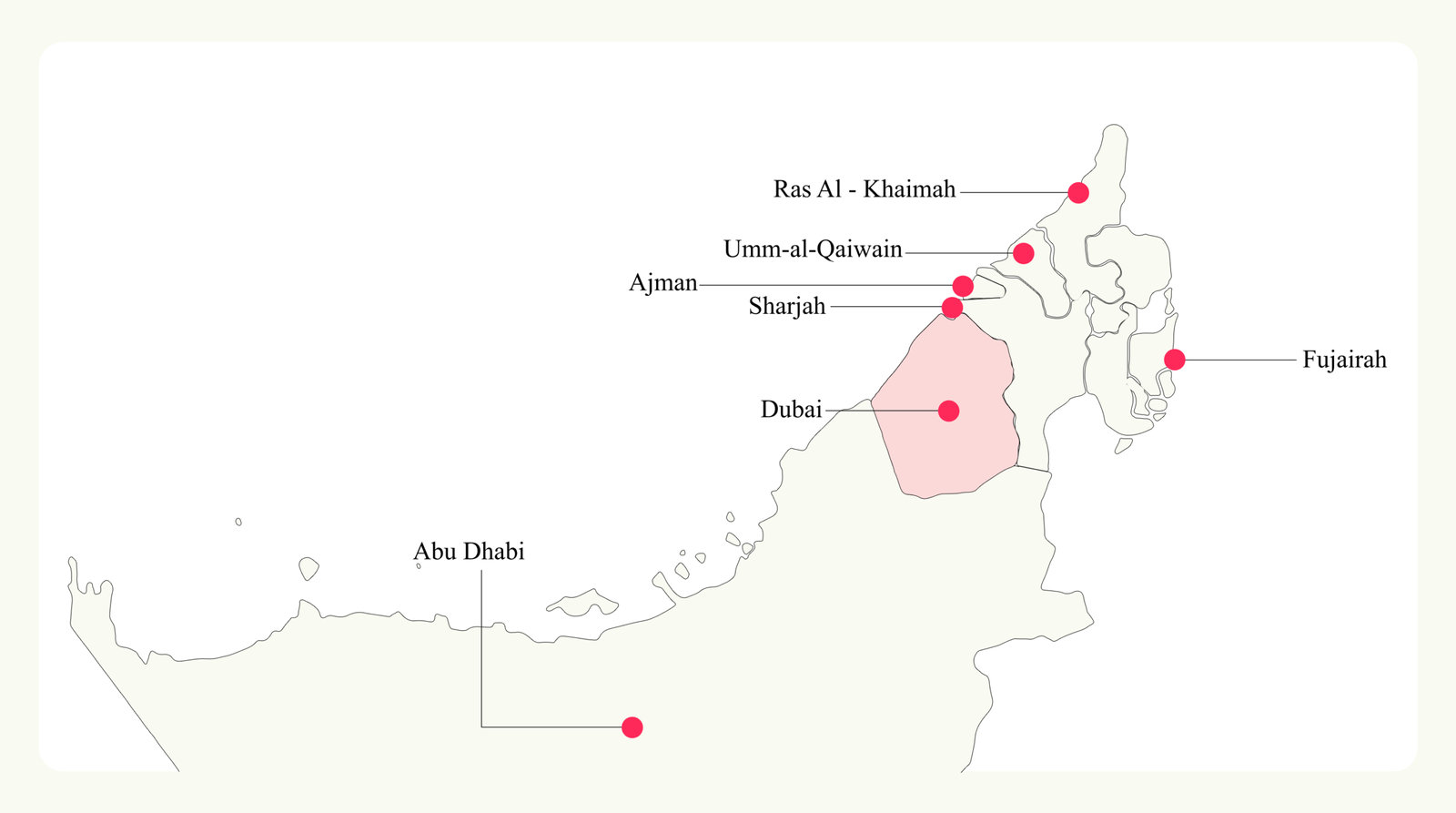
Start Your Mirror Cabinet Project
Transform your bathroom with mirror cabinets engineered specifically for UAE conditions and customized precisely for your storage needs. Our 35-year track record across 10,000+ UAE projects ensures you receive expert guidance, quality materials, professional installation, and long-term support that imported products and inexperienced competitors cannot match.
IF YOU HAVE ANY QUESTION? WE ARE GLAD TO
CONSULT YOU AS SOON AS POSSIBLE
Get Started
Immediate assistance from our team regarding your project details.
Form Submitted!
Thank you for contacting us. Our team will get back to you within 24 to 48 hours regarding your query.
Contact us on WhatsApp for Quick Response