Custom Wardrobes Dubai: Bespoke Storage Solutions Built for UAE Homes
Custom Wardrobes Dubai – UAE Transform your bedroom with precision-crafted wardrobes designed for Dubai’s climate and your exact specifications. Since 1988, we’ve created over 3,400 custom wardrobe solutions across all seven emirates.
When you commission custom wardrobes Dubai from Karnak Carpentry, you’re working with craftsmen who’ve solved the unique storage challenges of UAE properties for 35 years. We understand that Dubai apartments average 15-20% less closet space than Western equivalents, that coastal humidity demands specific material selection, and that your wardrobe needs to accommodate everything from winter coats to traditional thobes and abayas. Every wardrobe we design starts with your actual wardrobe contents, your daily routine, and your property’s specific architectural constraints.
The UAE residential market presents distinct challenges that generic wardrobe suppliers simply don’t account for. Properties in Dubai Marina face salt air corrosion that destroys standard hardware within 18 months. Villas in Arabian Ranches experience dramatic temperature swings between air-conditioned interiors and 50°C attics that cause inferior materials to warp. High-rise apartments in Business Bay require acoustic insulation in wardrobes sharing walls with neighboring units. We’ve engineered solutions for all these scenarios across 10,000+ UAE projects.
Since 1988, Karnak has fabricated custom storage solutions for everyone from young professionals in studio apartments to royal family members in palace residences. Our workshop has produced wardrobes ranging from compact 1.8-meter single walls to elaborate 45-square-meter dressing rooms with climate-controlled sections for delicate garments.
Understanding Custom Wardrobe Design for UAE Properties
Designing effective wardrobe systems for Dubai homes requires balancing aesthetic ambitions with practical realities that most international furniture companies never encounter. The climate alone eliminates roughly 40% of materials commonly used in European wardrobe manufacturing. Add the architectural diversity of UAE properties—from 1980s villa conversions to 2024 sustainable developments—and you need design expertise that extends far beyond selecting finishes from a catalog.
Space Planning That Reflects How You Actually Live
We begin every custom wardrobe project by analyzing your existing wardrobe contents with embarrassing specificity. How many hanging meters do your long dresses require? What percentage of your clothing lives folded versus hung? Do you rotate seasonal wardrobes or maintain year-round access to everything? How many pairs of shoes do you actually wear versus display? These questions might feel excessive, but they prevent the most common wardrobe design failure: beautiful systems that don’t accommodate your actual belongings.
During our initial consultation for a recent Downtown Dubai apartment, the client insisted she needed minimal hanging space and maximum shelving. We physically measured her current wardrobe distribution: 68% hanging, 22% folded, 10% shoes and accessories. Building what she thought she wanted would have created an unusable system within three months. Instead, we designed 3.6 meters of hanging rails with adjustable heights, convertible shelving that accommodates folded items or hanging as her needs change, and a dedicated shoe wall with angled shelves that display 47 pairs while using just 0.8 square meters of floor space.
The geometry of UAE bedrooms rarely follows Western conventions. We routinely work with rooms featuring angled walls (especially in curved tower apartments), columns interrupting wall runs, and ceiling heights that vary by 200mm across a single room. A four-meter wardrobe wall in Emirates Hills required seven different depth measurements to accommodate structural elements behind the drywall. The finished installation appears as one seamless unit, but incorporates 14 separate cabinet boxes engineered to precise measurements that account for every millimeter of available space.
Material Selection for Dubai’s Coastal Climate
Coastal Dubai properties face material challenges that landlocked cities never encounter. Salt-laden air penetrates even well-sealed apartments in towers near the Arabian Gulf. We’ve opened wardrobes in JBR apartments just three years old where the builder used standard European hardware—every hinge showed surface corrosion, drawer runners had seized, and the supposed “moisture-resistant” backing board had delaminated. The clients had spent AED 45,000 on wardrobes that were failing before their initial lease ended.
For cabinet boxes, we specify marine-grade plywood with phenolic resin bonding for any property within three kilometers of the coast. This costs 40% more than standard furniture-grade plywood, but we’ve tracked its performance in Dubai Marina apartments since 2006 with zero moisture-related failures. The interior gets sealed with water-based polyurethane that allows the wood to breathe while blocking humidity absorption. For clients concerned about formaldehyde emissions in enclosed bedroom spaces, we offer FSC-certified sustainable materials with E0 emission ratings—especially important in children’s rooms where the wardrobe might store toys and books alongside clothing.
Door materials require even more careful consideration. Solid wood doors look magnificent but move dramatically with humidity changes. A 2.4-meter solid oak door installed in July will bind against its frame by November as winter humidity rises, then develop gaps again in March. We engineer our solid wood doors with floating panel construction that allows the wood to expand and contract within a stable frame. For clients prioritizing budget over traditional aesthetics, we manufacture doors using moisture-stable MDF cores with real wood veneer faces that deliver 95% of the visual appeal at 60% of the cost with zero seasonal movement.
Glass elements in wardrobes require tempered safety glass rated for the additional stress of Dubai’s temperature extremes. Standard annealed glass can develop stress cracks when the wardrobe interior reaches 28°C while the bedroom maintains 22°C. Every glass panel we install—whether clear, frosted, or back-painted—carries Dubai Municipality approval and meets UAE building code requirements for bedroom furniture. The difference in material cost is AED 180 per square meter, but eliminates the safety risk of glass failure.
Hardware Engineering for Longevity
The hardware components of your wardrobe—hinges, drawer runners, hanging rails, shelf supports—determine whether your investment delivers 20 years of service or requires expensive repairs within five. We’ve repaired enough failing wardrobes to know exactly where builders and budget manufacturers cut corners. Standard zinc-plated hinges look identical to stainless steel at installation. Five years later, the zinc plating has corroded through and the hinge mechanism grinds against itself.
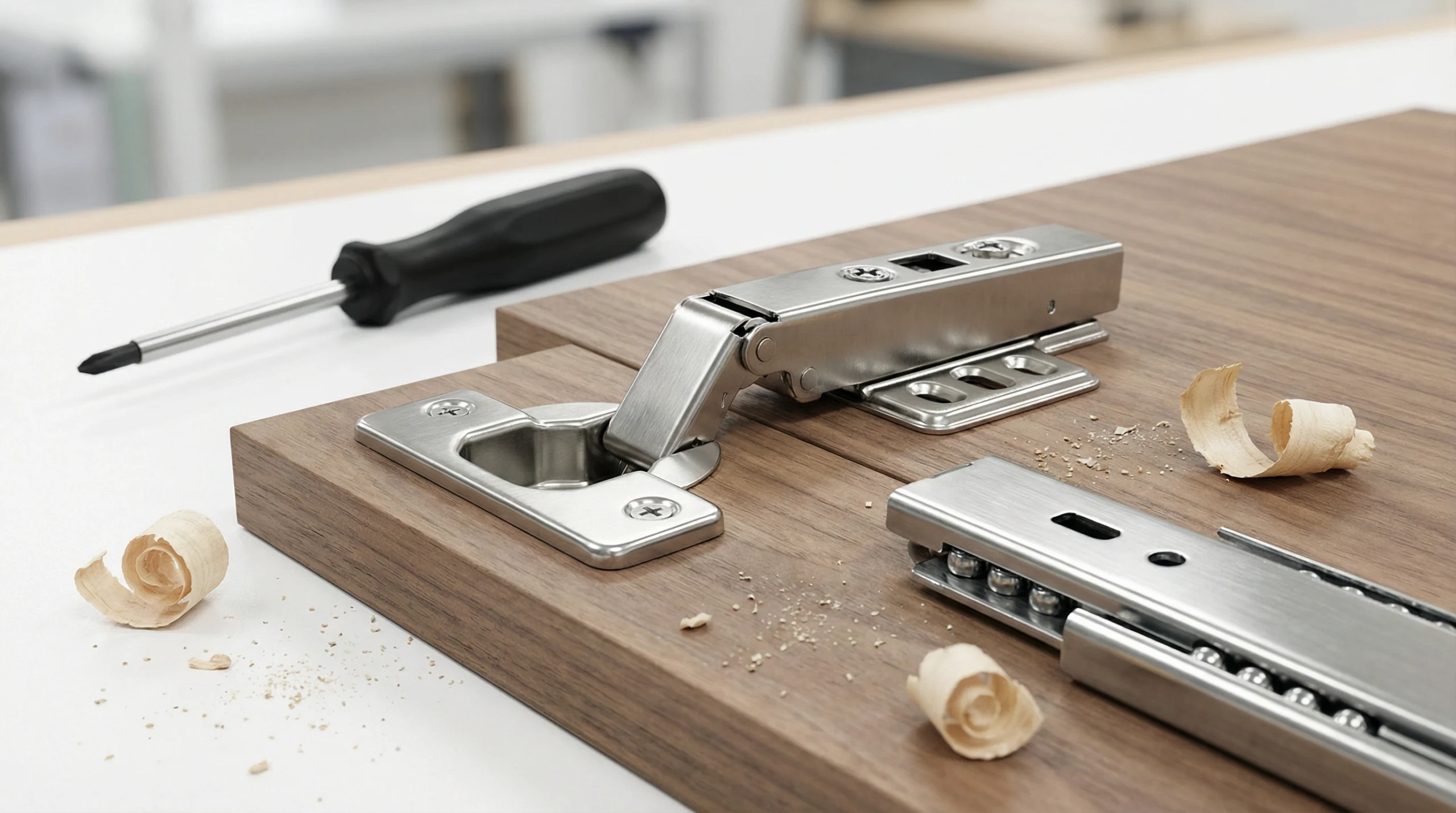
Our residential carpentry services specify Blum or Hettich soft-close hinges with stainless steel components rated for 200,000 cycles. That represents opening and closing your wardrobe doors 55 times daily for ten years. The hydraulic dampers that provide the soft-close action are sealed units filled with silicone fluid stable across temperature ranges from -20°C to +60°C—critical because wardrobe interiors in Dubai bedrooms can reach 40°C during summer afternoons even in air-conditioned properties.
Drawer systems carry even more stress than hinges. A typical wardrobe drawer storing folded clothing weighs 15-20 kilograms when loaded. Cheap drawer runners use plastic rollers on steel tracks. Within two years, the plastic wheels develop flat spots, the drawers stick and require forceful pulling, and eventually the plastic cracks completely. We install full-extension ball-bearing runners that support 45 kilograms per drawer, extend completely for access to items at the back, and include integrated soft-close mechanisms that prevent slamming.
Hanging rails need to support substantial distributed loads—a meter of hanging clothing typically weighs 25-30 kilograms. Standard 25mm chrome-plated tubes will sag in the middle within three years. We use 32mm oval hanging rails in solid stainless steel with support brackets every 900mm. For walk-in wardrobes where the rails span longer distances, we install commercial-grade rails with integrated support channels that prevent deflection across spans up to 2.4 meters.
Custom Wardrobes Dubai – UAE Styles and Configurations
The distinction between a functional wardrobe and an exceptional one often comes down to configuration choices that align with your specific storage requirements and bedroom architecture. We’ve designed wardrobes for properties ranging from 35-square-meter studio apartments to 800-square-meter penthouses, and the engineering principles remain consistent: maximize usable storage volume, ensure ergonomic access to all contents, and create a cohesive design that enhances the bedroom rather than dominating it.
Floor-to-Ceiling Built-In Wardrobes
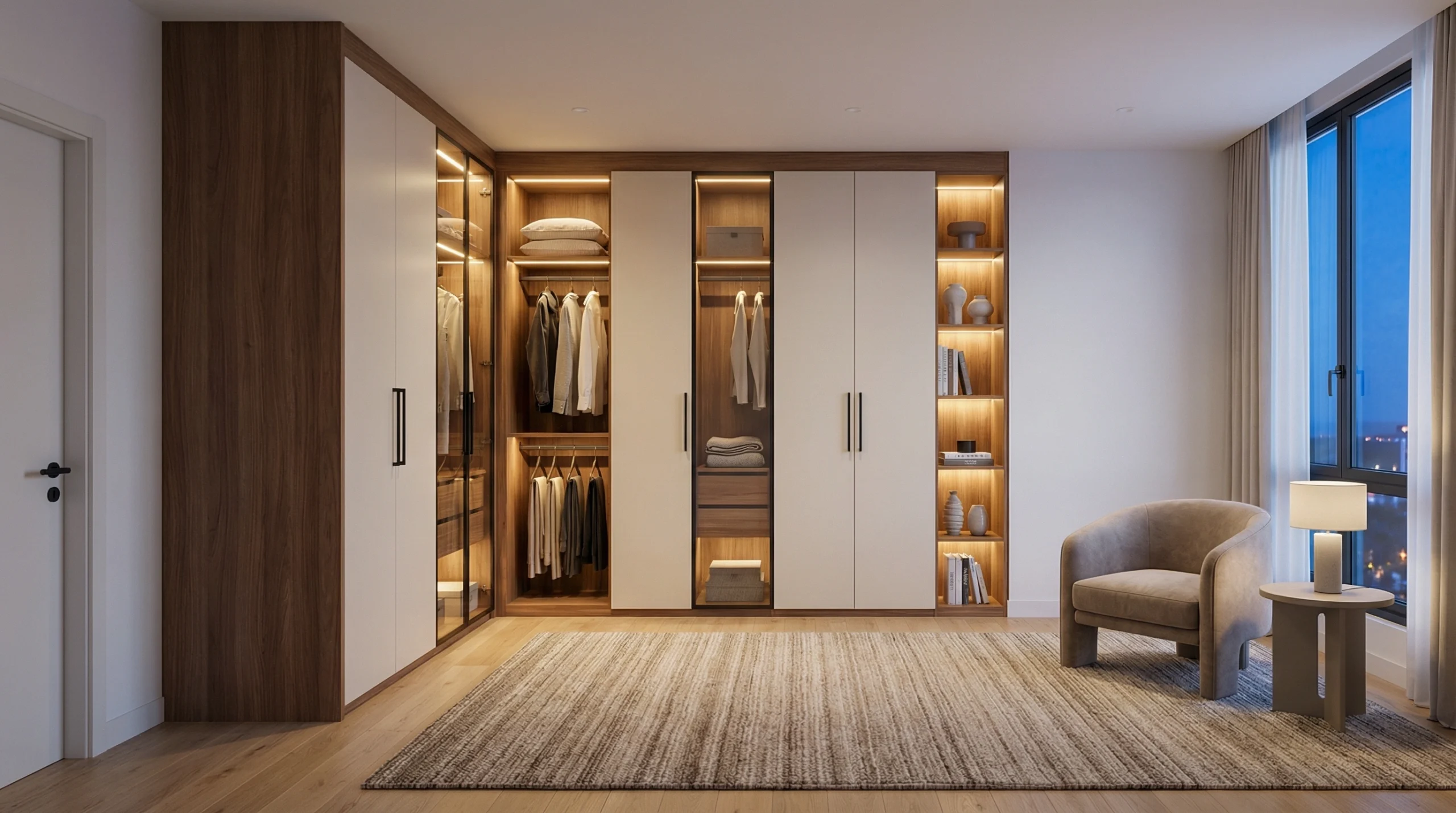
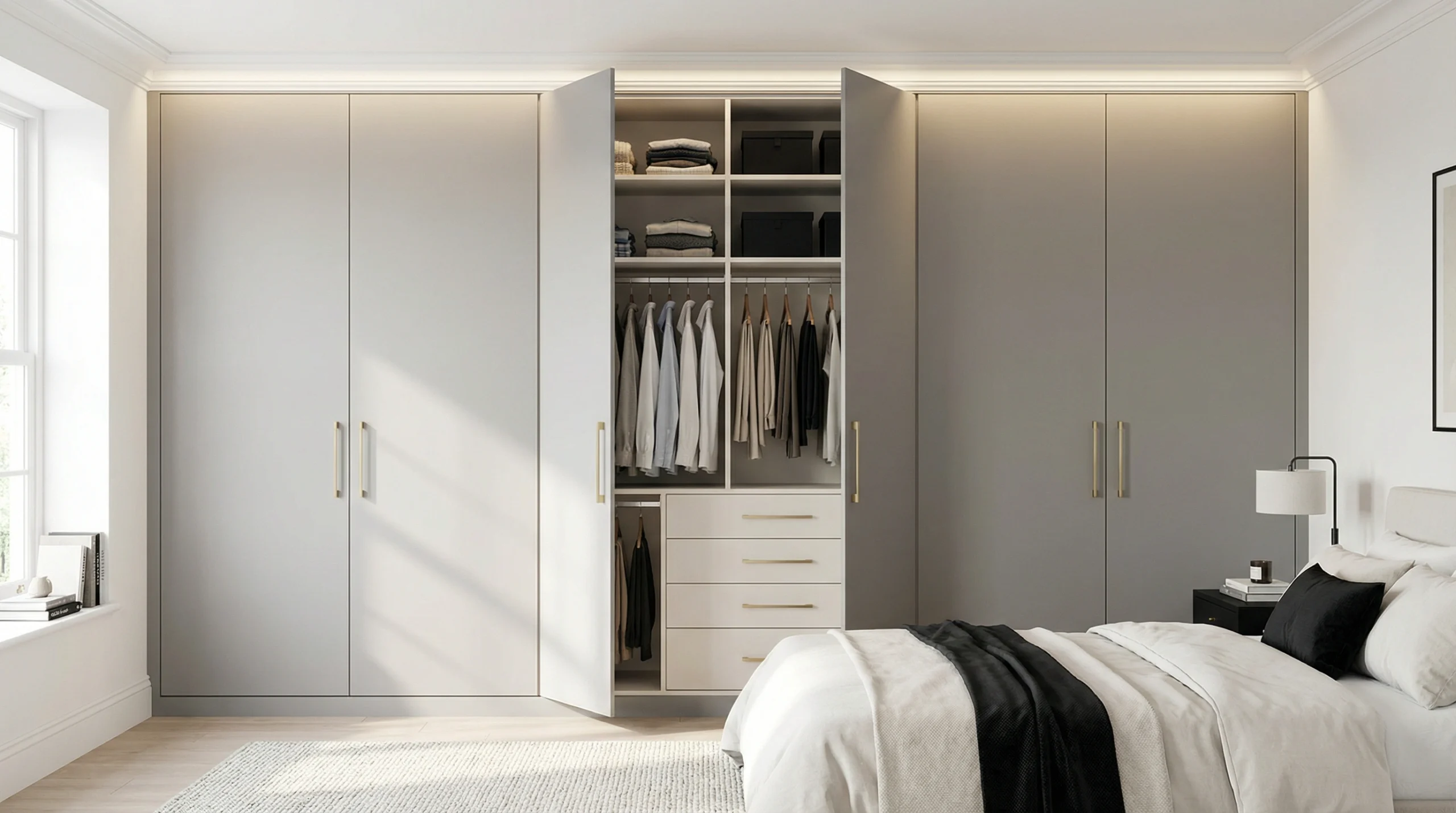
Floor-to-ceiling configurations maximize storage capacity while creating clean architectural lines that make bedrooms feel more spacious rather than cluttered. A standard 2.4-meter ceiling height in Dubai apartments allows us to install wardrobes with 2.35 meters of usable interior height—enough for full-length dresses with 150mm of clearance, plus additional storage above the hanging rail for seasonal items or luggage.
The top section typically sits 1.9 meters above the floor, accessible with a small step stool but high enough to discourage daily access. This zone works perfectly for items you need but don’t use frequently: winter coats, formal wear, stored luggage, extra bedding. We install full-depth shelving rather than the shallow compromise shelves many manufacturers use, so you can store actual suitcases rather than just small boxes. One client in The Springs stores her entire off-season wardrobe in vacuum-sealed bags on these upper shelves, rotating her closet contents twice annually and effectively doubling her usable wardrobe capacity.
The main storage zone between 400mm and 1.9 meters contains the systems you interact with daily. We typically divide this into three vertical sections: hanging at full height (1,500mm) for dresses and long items, double-hanging (two 750mm rails) for shirts and trousers, and a combination section with adjustable shelving, drawers, and specialized storage. This configuration accommodates approximately 80 hanging garments per linear meter while maintaining comfortable spacing that prevents clothing from crushing against itself.
The floor-level section below 400mm presents interesting opportunities. Many clients initially want shoe storage here, but bending to floor level to select shoes daily becomes tiresome. We’ve had better results installing pull-out drawers for folded items like t-shirts, exercise clothing, and casualwear. The drawers extend fully on ball-bearing runners, providing clear sight lines to contents without requiring you to crouch or kneel. For shoe storage, we recommend angled shelves between 800-1,400mm height where you can see and access shoes comfortably.
Walk-In Custom Wardrobes Dubai and Dressing Room Design – UAE
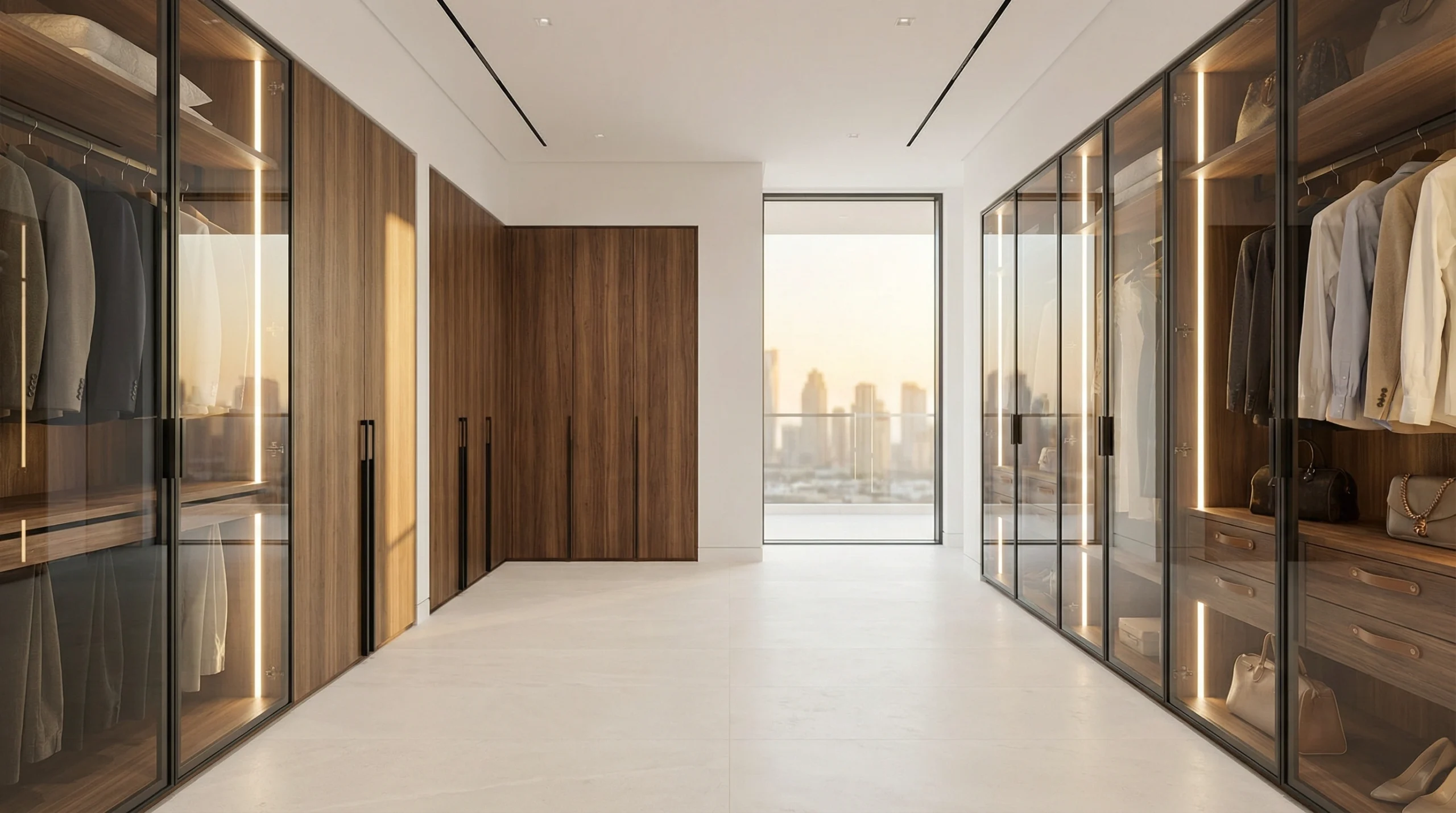
Walk-in wardrobes represent the most efficient storage configuration for properties with adequate space—typically requiring a minimum 2.0 x 2.5 meters to function properly. The advantages extend beyond storage capacity to include better organization, reduced clothing damage from overcrowding, and the psychological benefit of a dedicated dressing space separate from your sleeping area.
The fundamental principle of walk-in design is creating adequate circulation space while maximizing perimeter storage. We maintain a minimum 900mm clear width for the central walkway, with 1,100mm preferred for comfort. This allows you to stand in the center and access both sides without constant repositioning. The perimeter walls receive full-height storage systems with a depth of 550-600mm—shallow enough to see everything at a glance, deep enough to accommodate hangers properly.
A 3.5 x 2.5 meter walk-in in Jumeirah Lakes Towers demonstrates the optimal layout.
- The entry wall features a full-height mirror with jewelry storage behind it on motorized hinges.
- The left wall holds double-hanging rails for shirts and trousers with a drawer bank below.
- The right wall combines single-height hanging for dresses with shoe display shelving.
- The far wall includes a built-in dresser with a countertop surface for accessories, drawer units below, and glass-fronted upper cabinets for handbags.
- Total storage: 4.8 meters of hanging space, 18 drawers, shoe storage for 65 pairs, and specialized storage for 15 handbags.
Lighting in walk-in wardrobes requires more sophistication than a simple ceiling fixture. We install LED strip lighting along the underside of all hanging rails, providing direct illumination on clothing without shadows. Glass-fronted sections receive internal lighting that activates when doors open. The ceiling gets recessed LED panels on dimmer controls—bright for dressing, dimmed for evening selections. A recent Arabian Ranches dressing room includes a separate lighting circuit for the mirror area with color-temperature adjustable LEDs (3000K for evening makeup, 5000K for daylight-accurate color matching).
Climate control in walk-in wardrobes matters more than most clients initially realize. A 3-meter walk-in wardrobe contains roughly 7.5 cubic meters of air. Without proper ventilation, this space traps humidity, heat, and odors. We install dedicated AC vents sized to exchange the air volume every 20 minutes. For luxury installations, we offer cedar-lined sections with independent climate control maintaining 18°C and 45% humidity—ideal conditions for storing fine fabrics, leather goods, and fur.
Sliding Door Custom Wardrobes Dubai – UAE Systems
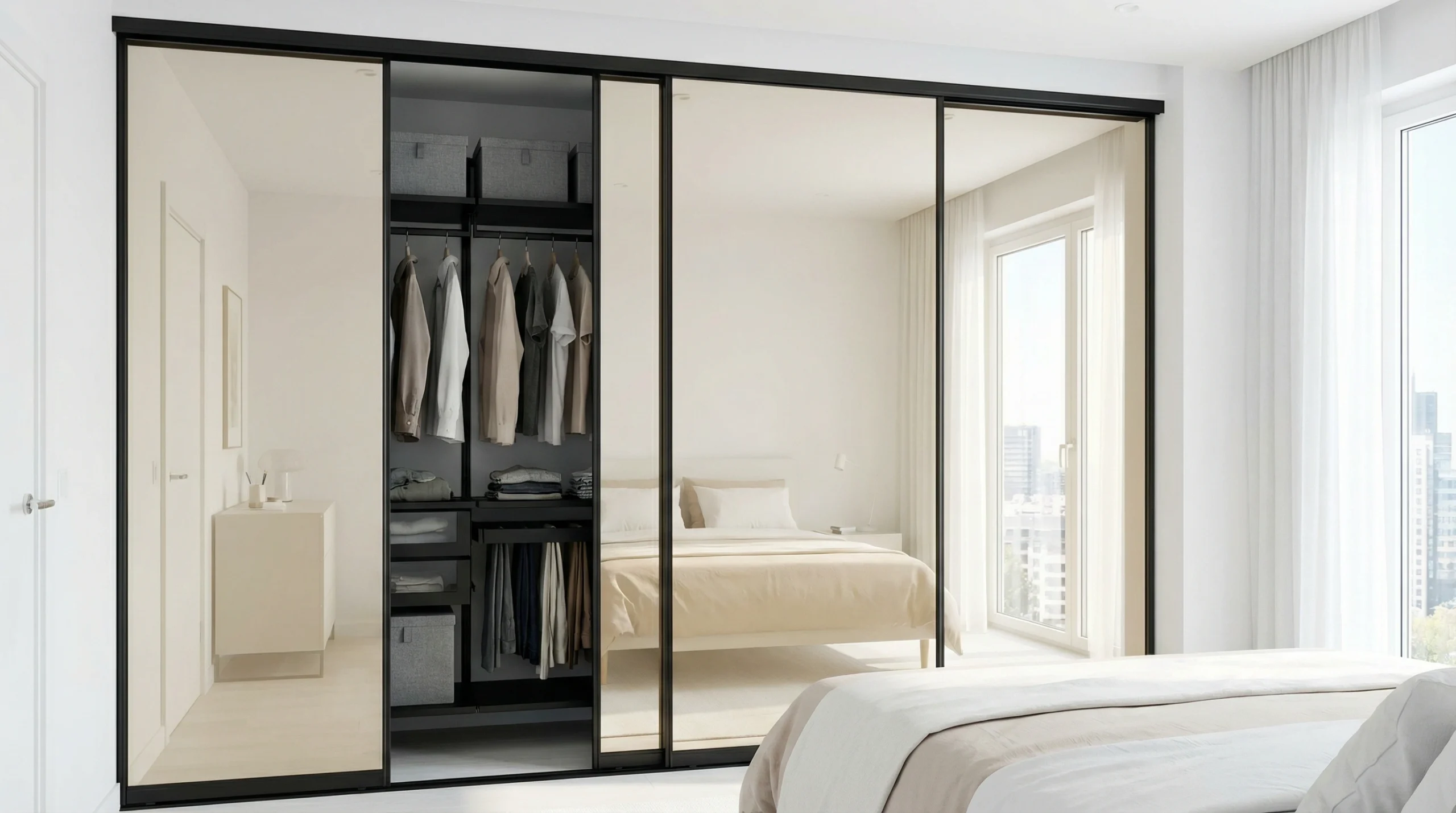
Sliding door systems solve the geometric challenges of bedrooms where hinged doors would swing into circulation paths or collide with beds, dressers, or other furniture. A 2.4-meter wardrobe with hinged doors requires 650mm of clear space in front for door swing. The same wardrobe with sliding doors requires just 100mm clearance for your body while accessing the interior—a difference that transforms cramped bedrooms into comfortable spaces.
The engineering challenge with sliding doors is preventing the rattle, wobble, and eventual derailment that plagues cheaper systems. We use commercial-grade aluminum track systems with stainless steel wheels rated for 80 kilograms per door. The top track mounts with heavy-duty fixings into concrete or directly into ceiling joists—never into drywall alone. The bottom guide prevents lateral movement without supporting weight, ensuring doors glide smoothly even after years of use.
For door widths beyond 1.2 meters, we recommend three or four door configurations rather than two wide panels. A two-door system across a 3-meter wardrobe means each door spans 1.5 meters and weighs 40-45 kilograms. Moving these heavy panels daily accelerates wear on the track system and creates a cumbersome user experience. Four 750mm doors weigh 18-20 kilograms each, move effortlessly, and provide better access to the wardrobe interior since you can open multiple panels simultaneously.
The overlap design of sliding doors creates a permanent 300-400mm section of the wardrobe interior that remains inaccessible regardless of which doors you slide open. We plan the interior layout to position this dead zone at the center of the wardrobe, using it for items accessed infrequently or for the internal structure that supports shelf systems. One client in Business Bay wanted sliding doors across a 4.2-meter bedroom wall but insisted she needed access to every centimeter. We designed a four-door system with offset overlaps and a clever track arrangement that allows positioning the doors to expose any section, though never the entire wardrobe simultaneously.
Modular and Freestanding Systems
Not every wardrobe project requires permanent built-in construction. Tenants in rental properties, clients planning to relocate, and homeowners who value flexibility increasingly request modular wardrobe systems that deliver custom quality while remaining relocatable. We’ve refined our modular offerings to provide 85% of the functionality of built-in systems while maintaining the ability to disassemble and reinstall in a different property.
Our modular systems use a proprietary cabinet connection method that creates seamless joins between units while allowing complete disassembly without damaging components. A typical 3-meter modular wardrobe comprises six separate cabinet boxes—each 500mm wide—that connect through precision-machined aluminum channels. The assembled wardrobe appears as one continuous unit with no visible gaps or misalignments. When you relocate, we disassemble the system in 90 minutes, transport it to your new property, and reinstall it (potentially in a different configuration) in a single day.
The financial case for modular systems becomes compelling for clients who relocate frequently. A fully custom built-in wardrobe for a 2.5-meter wall costs approximately AED 28,000. If you move after three years, that investment remains with the property. A modular system of equivalent quality costs AED 34,000 initially—20% more—but relocates with you. After two moves, you’ve recovered the premium through avoided replacement costs. We maintain a client database with floor plans and measurements for each installation, allowing us to reconfigure systems for new spaces without starting from scratch.
The quality distinction between our modular systems and flat-pack furniture from retail stores is significant. Retail modular wardrobes use particleboard construction with cam-lock fittings, pre-drilled holes, and laminate finishes. Maximum lifespan before deterioration: 5-7 years. Our modular systems use marine-grade plywood construction, professional wood finishes, commercial-grade hardware, and precision factory assembly. Expected lifespan: 20+ years with proper care.
Specialized Custom Wardrobes Dubai – UAE Interior Features
The interior organization of your wardrobe determines whether it becomes a functional daily tool or an expensive space where clothes get lost behind other clothes. We’ve analyzed how clients actually use their wardrobes across thousands of projects, identifying the specific features that genuinely improve daily life versus the ones that look impressive in showrooms but gather dust in real bedrooms.
Drawer Systems and Pull-Out Solutions
Drawer configuration requires balancing capacity, ergonomics, and cost. Deep drawers (250mm interior height) can hold more items but create stacks where bottom items get forgotten and neglected. Shallow drawers (100mm interior height) provide perfect visibility but consume more vertical space with duplicate hardware and structure. Our standard approach uses varied drawer heights based on storage purpose.
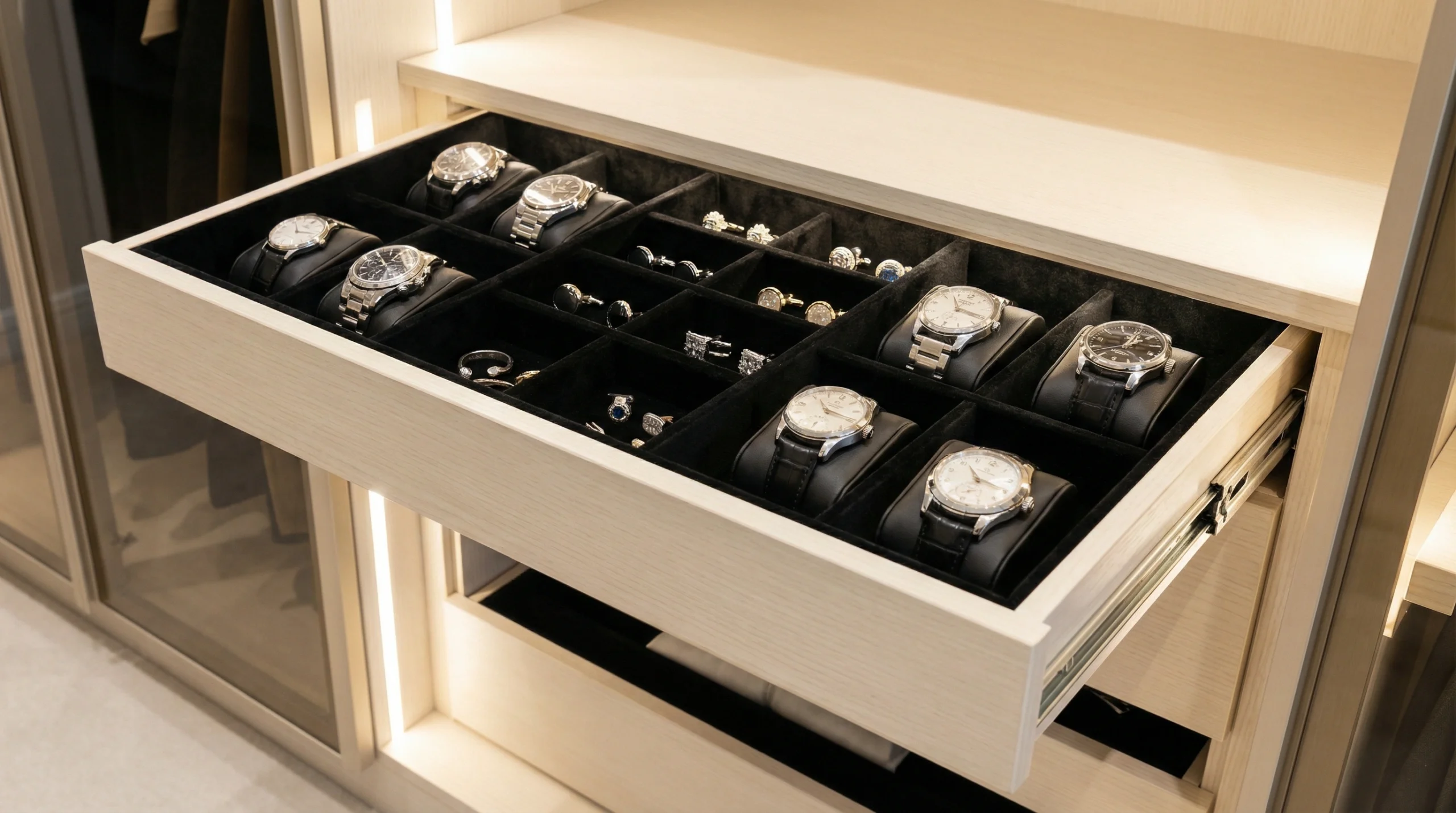
The top drawer at 100mm height stores accessories, watches, jewelry, and small items that would get lost in deeper drawers. We install velvet-lined divider systems that customize to your specific contents—one client’s drawer holds 14 watches on cushioned pillows, another’s organizes makeup by category with custom-sized compartments. The second and third drawers at 150mm height accommodate folded t-shirts, underwear, and lightweight clothing. Ball-bearing runners allow smooth operation even when packed full. The bottom drawer at 200mm height stores heavier items like jeans, sweaters, and exercise clothing.
Pull-out trouser racks present an elegant solution for clients with extensive business wardrobes. Each rack holds 8-10 pairs of trousers folded once and draped over individual rails. The entire rack extends on heavy-duty runners, presenting trousers at eye level for easy selection. The alternative—stacking trousers on shelves—creates wrinkles and makes finding specific items difficult. The cost premium for pull-out trouser racks is AED 1,400 per unit, but our commercial carpentry expertise shows these features reduce morning dressing time by an average of 4-5 minutes for professionals who wear suits daily.
Pull-out valet rods solve the common problem of planning tomorrow’s outfit. A small motorized rod extends from the wardrobe end panel, providing a temporary hanging location for clothes you’re considering or preparing to wear. The rod supports 15 kilograms and extends 450mm from the cabinet face. At the end of the day, you press a button and the rod retracts flush with the cabinet. This seemingly minor feature appeared in a luxury hotel renovation we completed in 2019. Guest feedback specifically mentioned it 47 times in the first six months—apparently nobody realized how useful it was until they experienced it.
Shoe Storage and Display Solutions
Shoe storage density varies dramatically based on design approach. Standard floor-level shoe racks hold shoes in horizontal rows, achieving approximately 8 pairs per linear meter. This wastes vertical space and requires bending to access shoes. We’ve developed angled shelf systems that mount at 800-1,600mm height, displaying shoes at 15-degree angles where you can see every pair simultaneously. This configuration achieves 18-20 pairs per linear meter while improving ergonomics.
The angled shelves require precise engineering. Too steep and shoes slide off; too shallow and you can’t see them properly. We’ve standardized on 15 degrees for women’s shoes and 12 degrees for men’s shoes, accounting for the different heel geometries. Each shelf includes a subtle front lip—just 8mm high—that prevents shoes from slipping while remaining invisible from normal viewing angles. The shelves mount on adjustable standards, allowing you to accommodate everything from flat sandals (requiring 120mm vertical clearance) to knee-high boots (requiring 600mm clearance).
A recent Palm Jumeirah villa included a dedicated 2.8-meter shoe wall in the lady’s walk-in wardrobe. The design featured backlit acrylic shelving in a graduated color spectrum from warm white at floor level to cool white at ceiling level, creating an almost ethereal display of 140 pairs of shoes. The lighting system used individually controllable LED strips, allowing the client to illuminate specific sections while leaving others dark—useful when selecting shoes without waking a sleeping partner. Installation required three days due to the complexity of the wiring and the precision needed to align all shelf elements perfectly.
For clients with boot collections, we design dedicated tall sections with full-depth shelving or hanging boot shapers attached to motorized rails. Quality boots collapse when stored folded, developing permanent creases in the leather. Proper boot storage maintains the original shape, extending the lifespan by years. One equestrian client in Dubai Hills required storage for 22 pairs of riding boots—each worth AED 3,000-8,000—along with boot trees and maintenance supplies. The solution involved climate-controlled cedar sections with integrated dehumidifiers maintaining 40% humidity.
Tie, Belt, and Accessory Organization
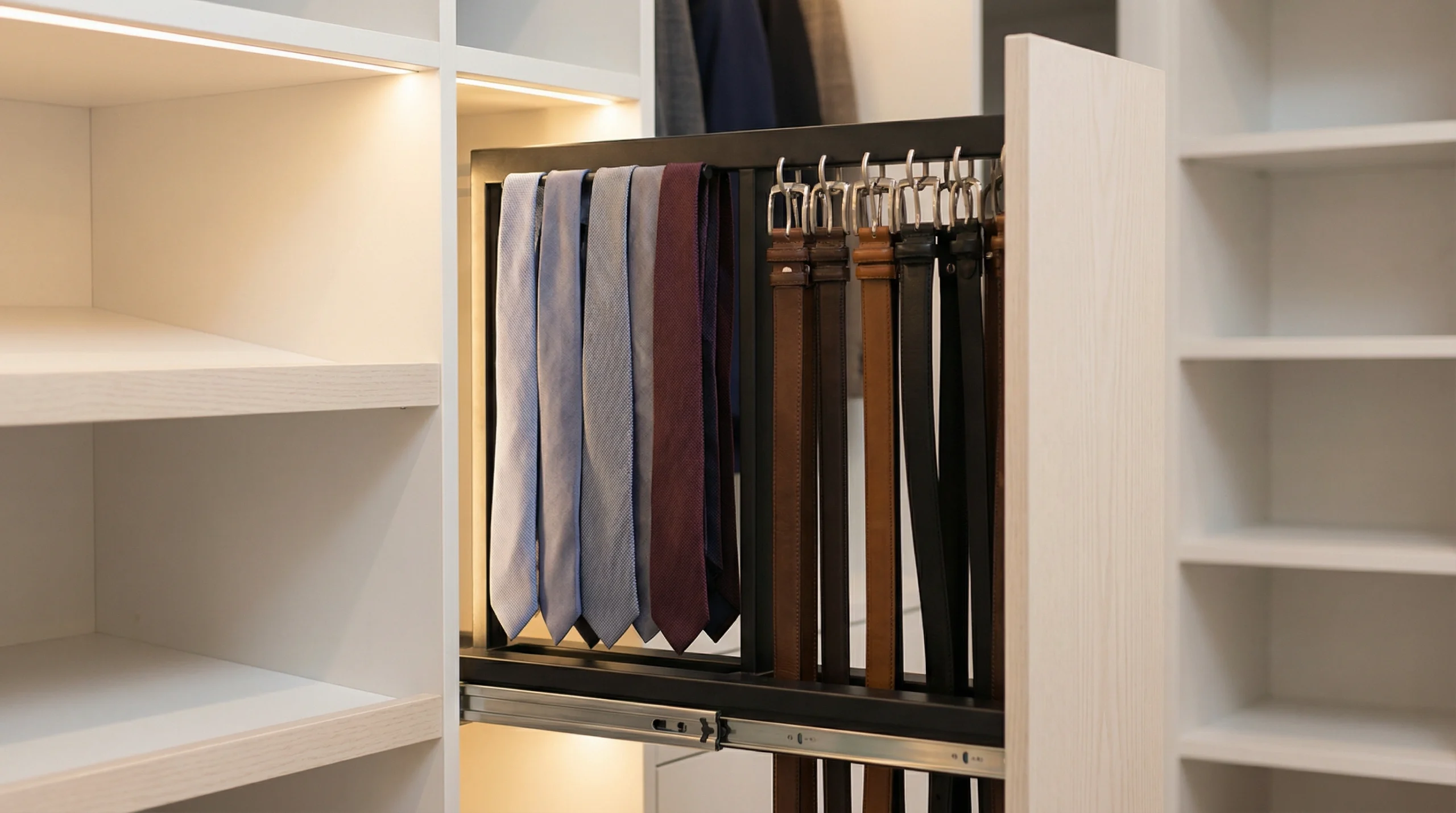
Small accessories present disproportionate organizational challenges. A tie rack holding 30 ties might seem straightforward, but improper design creates tangles, wrinkles, and frustration. We manufacture pull-out tie racks with individual hooks spaced 45mm apart on both sides of a central spine. The entire rack pulls out 380mm, presenting ties clearly without overlapping. When pushed closed, the ties hang freely without crushing against each other.
Belt storage works similarly but requires additional space. Belts need 35mm of clearance between loops to prevent leather scratches. Our belt racks extend further than tie racks—450mm versus 380mm—and use rounded hooks that maintain the belt’s curved shape rather than creating pressure points. One client’s 24-belt collection included several with elaborate buckles that wouldn’t fit standard hooks. We customized the rack with alternating hook depths to accommodate both simple and decorative buckles.
Scarf organization depends on quantity and value. Five casual scarves can hang on standard hooks. A collection of 40 silk scarves worth AED 800-2,000 each requires dedicated storage that prevents snagging and fading. We’ve designed pull-out scarf drawers with padded dividers creating individual compartments for each scarf. The drawer interior gets lined with acid-free tissue paper, and the drawer base incorporates aromatic cedar to deter insects. The top scarves remain visible through a glass panel in the drawer front, while the entire drawer depth allows storing scarves flat without folding.
Handbag storage generates surprising complexity. Bags need to maintain their shape while stored, requiring adequate space and support. Stacking bags damages handles and creates pressure points that permanently deform leather. Our handbag storage uses a combination of glass-fronted cabinets with adjustable shelving, pull-out shelves for daily-use bags, and high shelves for seasonal or special-occasion bags.
A client in Emirates Hills collects vintage designer handbags—23 bags worth approximately AED 480,000 total. Storage requirements included dust protection, shape maintenance, visibility for selection, and security. We designed a glass-fronted cabinet section with individual shelves sized to each bag’s dimensions, LED lighting on motion sensors, and a hidden security cable system that locked through each bag’s hardware when the cabinet was closed. The shelves used padded inserts shaped to support each bag’s specific structure. Excessive? Perhaps. But appropriate for a collection where a single bag cost more than many clients’ entire wardrobe installations.
Integrated Lighting Systems
Wardrobe interior lighting transforms functionality. Without proper lighting, you’re selecting clothing based on silhouettes and guesswork, discovering that the navy suit you selected is actually black only after you’ve reached the office. We install LED lighting systems that illuminate every section of the wardrobe with appropriate intensity and color temperature for accurate color matching.
The primary lighting consists of LED strips mounted under each shelf and along the underside of hanging rails. These produce 800-1,000 lumens per meter with a color rendering index (CRI) above 90—essential for distinguishing similar colors. The LED strips connect to motion sensors that activate lighting when doors open and deactivate 45 seconds after doors close. Battery backup systems ensure lighting continues functioning during power interruptions.
Color temperature selection impacts how you perceive clothing colors. Standard warm white LEDs (2700K) create a cozy atmosphere but shift colors toward yellow, making blues appear greenish and whites appear cream. Cool white LEDs (5000K) render colors accurately but feel harsh and clinical in bedroom spaces. We typically install 4000K neutral white LEDs that balance color accuracy with pleasant ambiance.
For clients who need absolutely accurate color matching—photographers, designers, fashion industry professionals—we offer adjustable color temperature systems. A discreet controller allows switching between 3000K, 4000K, and 5000K, or smoothly adjusting anywhere within that range. One fashion buyer for a luxury retail brand requires 5500K lighting in her wardrobe to match the color temperature of her office showroom, ensuring clothes look identical in both environments.
Specialized lighting applications include backlit glass shelves for dramatic display, internally lit glass cabinets for handbag and jewelry showcases, and focused spotlights for artwork or photographs incorporated into the wardrobe design. A client in Downtown Dubai included 12 small spotlights in his tie section, each individually aimed at a specific row of ties, creating a gallery-like presentation that impressed even visitors who normally wouldn’t notice wardrobe design.
The Karnak Process for Custom Wardrobe Projects
Understanding our process helps you plan your timeline, prepare for key decisions, and know what to expect at each stage. We’ve completed enough wardrobe projects to identify every potential complication, allowing us to deliver realistic timelines and manage expectations accurately from initial consultation through final installation.
Step 1: Initial Consultation and Needs Assessment
Every wardrobe project begins with a detailed consultation at your property. We need to see the actual space, measure properly, understand how you currently use your wardrobe, and identify storage challenges. This consultation typically requires 75-90 minutes and provides the foundation for everything that follows.
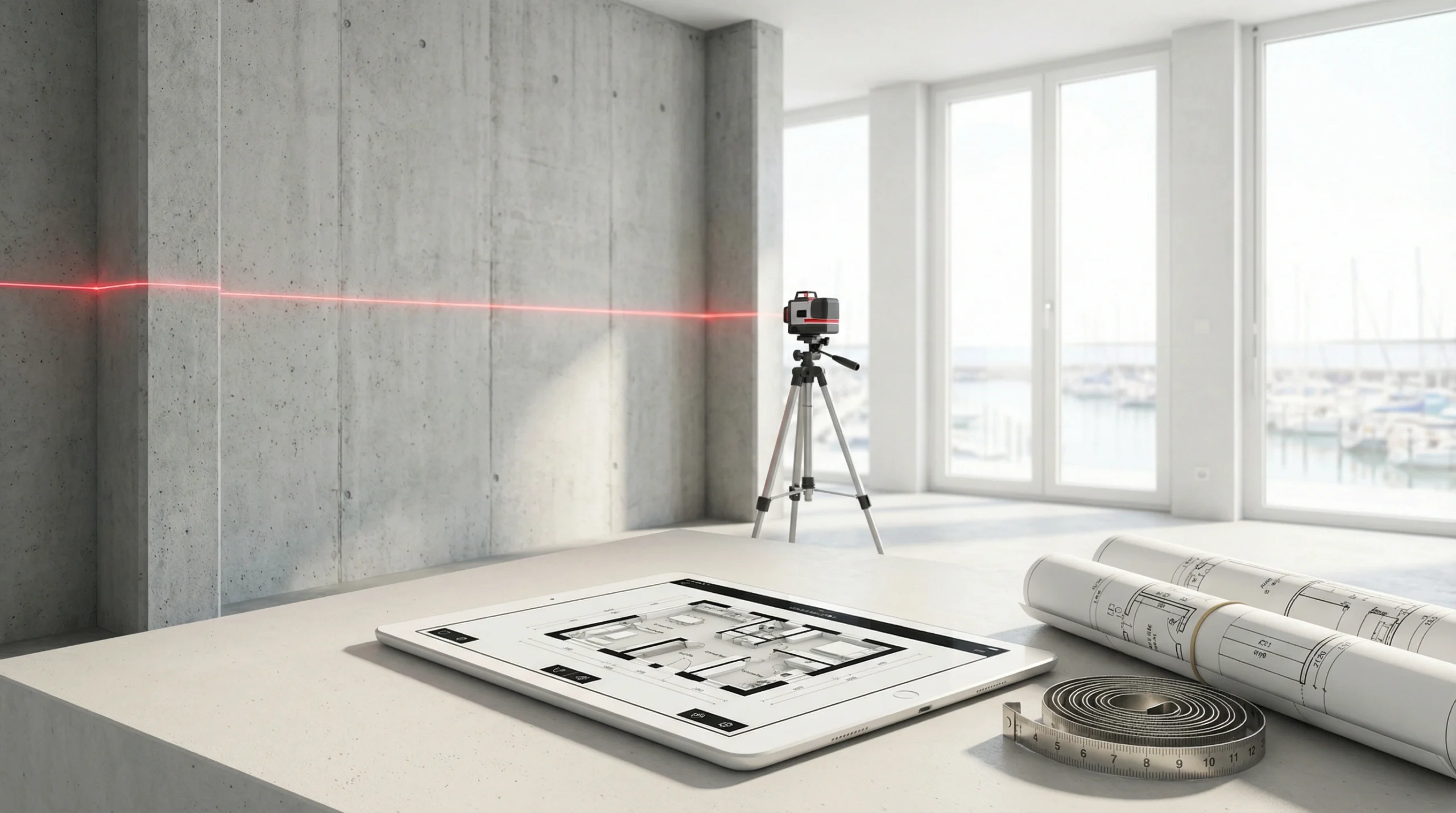
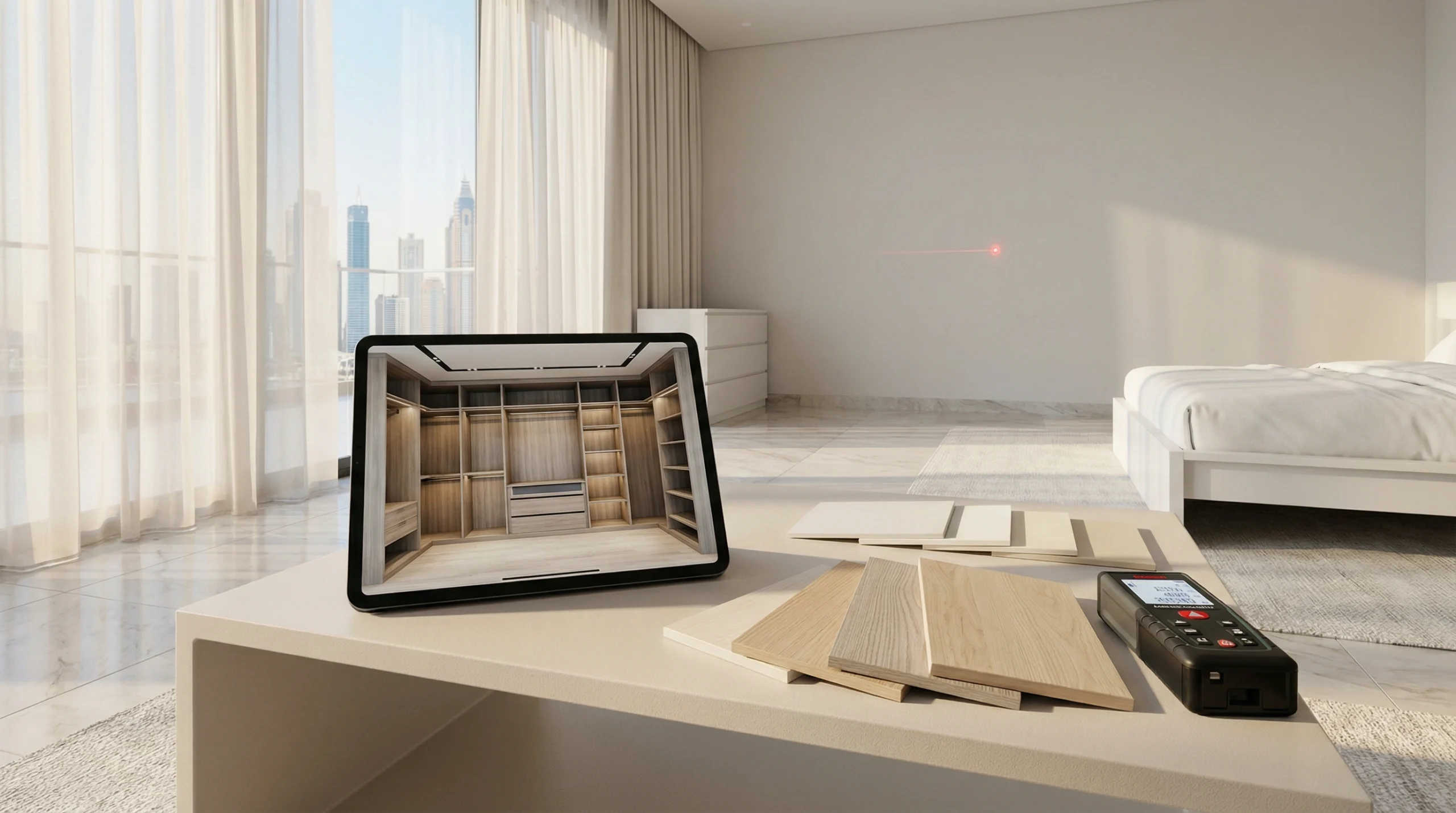
We start by measuring the physical space with laser precision—not just the obvious dimensions but every architectural detail that impacts installation. Column depths, ceiling heights at multiple points, baseboard profiles, electrical outlets, light switches, AC vents, window trim interference—anything that affects where cabinetry can physically fit. We document everything with photographs and precise measurements, creating a dimensional record that our workshop team uses for fabrication.
The wardrobe audit follows. We ask you to open your current wardrobes and storage areas, then we physically count and measure what you’re storing. How many meters of hanging clothing do you actually have? How many folded items? How many shoes? What percentage of your wardrobe do you access weekly versus seasonally? This analysis reveals whether you need more storage capacity or better organization of existing capacity. About 40% of clients discover they don’t need a larger wardrobe—they need a better-configured one.
We discuss your daily routines and frustrations. Getting dressed should take 5-10 minutes, not 20 minutes searching for matching shoes. You shouldn’t need to move six items to access the one you want. The morning chaos of a family household with multiple people accessing shared or adjacent wardrobes requires different solutions than a single professional with a capsule wardrobe. We document these patterns because they directly inform our design recommendations.
The consultation concludes with preliminary budget discussion and timeline expectations. We provide cost ranges for different quality levels and explain how choices about materials, hardware, and features impact final pricing. Most clients appreciate this transparency early in the process rather than after becoming emotionally invested in a design they can’t afford.
Step 2: Design Development and 3D Visualization
Following the consultation, our design team creates detailed wardrobe layouts using 3D CAD software that allows you to virtually walk through your new wardrobe before we build anything. This step typically requires 7-10 days and involves multiple design iterations as we refine the solution.
The initial design presents our professional recommendation based on your stated needs, budget parameters, and the physical space constraints. We show you exactly how we’ve allocated the available space, what storage capacity you’ll achieve, and how the design integrates with your bedroom architecture. The 3D renderings show realistic materials and finishes, proper lighting and shadows, and accurate proportions that help you visualize the completed installation.
Most clients request modifications after seeing the initial design. You might want additional drawer space in one section, different door styles, or adjustments to shelf heights based on specific items you need to store. We incorporate these changes, typically producing 2-3 design iterations before reaching a final approved design. Some projects require more extensive revision—the record is 11 iterations for a client who knew exactly what she wanted but needed to see multiple options before confirming which configuration felt right.
Material selection happens during design development. We provide physical samples of wood species, finishes, hardware options, and any specialty materials like glass or mirrors. The samples allow you to assess quality, feel the finish textures, test the hardware operation, and match colors to your existing bedroom décor. Comparing samples in your actual bedroom lighting is essential—a finish that looks perfect in our showroom under commercial lighting might appear completely different in your bedroom’s natural daylight or evening LED illumination.
The final design package includes detailed drawings showing every dimension, material specifications, hardware lists, and a comprehensive quote itemizing all costs. You’ll know exactly what you’re getting, what it costs, and how long fabrication and installation will require. This detailed documentation prevents the unpleasant surprises that occur when clients receive vague proposals and only discover additional costs or missing features after signing contracts.
Step 3: Material Procurement and Workshop Fabrication
Once you approve the design and we receive your deposit, material procurement begins. Lead times for premium materials vary from immediately available to 6-8 weeks for specialty items imported from European suppliers. We maintain inventory of commonly used materials to minimize delays, but specific wood species, unusual hardware, or custom-colored glass might require extended procurement periods.
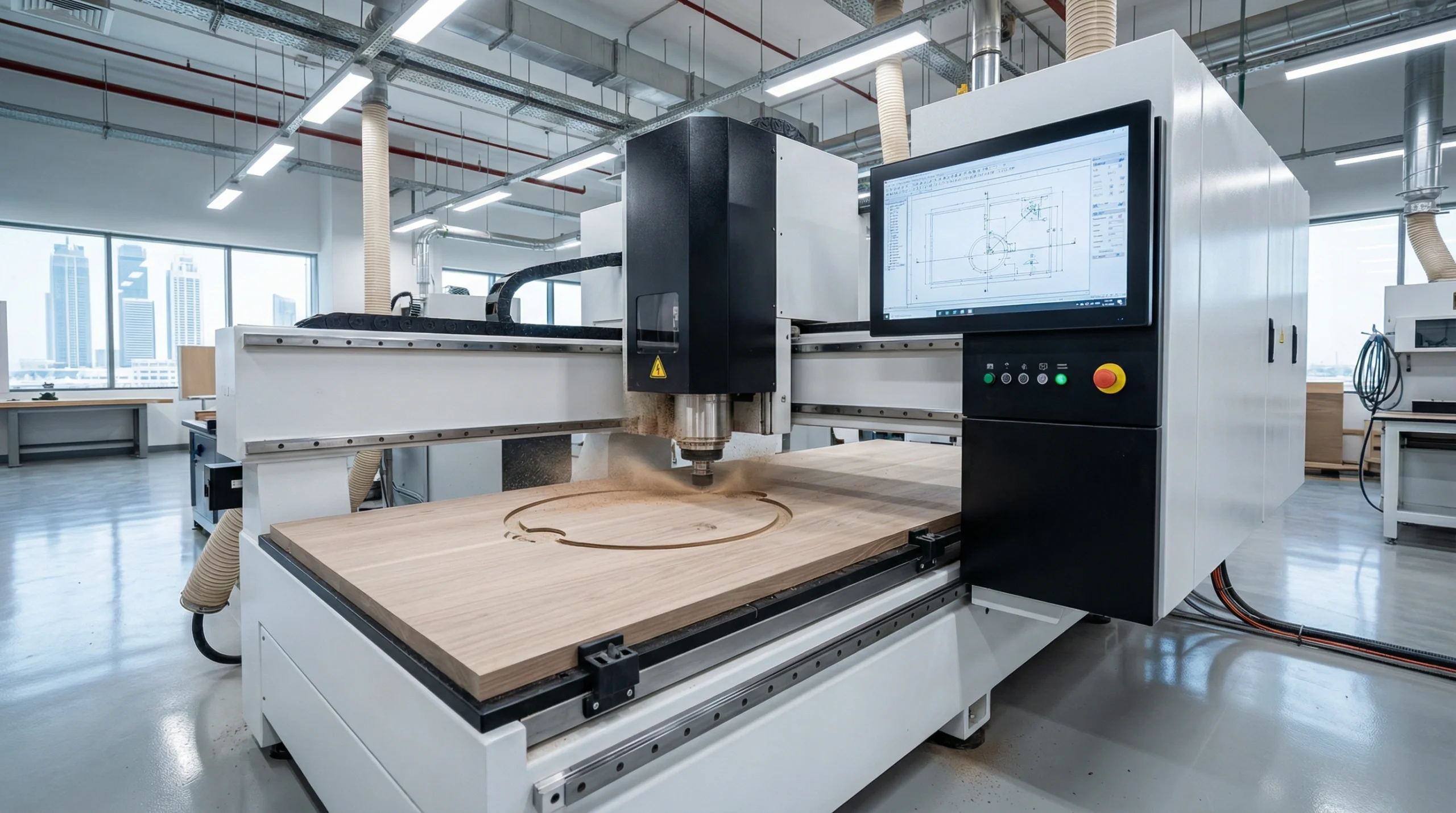
Our workshop fabrication follows precise manufacturing sequences that ensure quality and dimensional accuracy. Each cabinet box gets constructed using marine-grade plywood with reinforced corners and precision joinery. We cut dados and rabbets on CNC machines that achieve accuracy within 0.1mm—critical for ensuring drawer boxes slide smoothly and doors align properly. Hand tools finish details that machines can’t accomplish: easing sharp edges, perfecting joints, and achieving the surface quality our craftsmen demand.
The finishing process requires 5-7 days depending on the selected finish. Wood receives multiple coats of stain or paint, with sanding between coats to achieve glass-smooth surfaces. We apply water-based polyurethane finishes that cure harder than traditional oil-based products while producing zero VOC emissions—important for bedroom furniture where you’ll breathe near the surface for eight hours nightly. Each finish coat gets 24 hours to cure before we apply the next layer.
Hardware installation happens at the workshop rather than at your property. We pre-install all hinges, drawer runners, shelf supports, and mechanical components, then test everything for smooth operation. This catches any issues before our installation team arrives at your home, preventing delays and ensuring the first installation attempt succeeds. We mark all components with discreet codes indicating their position in the final assembly, allowing our installers to quickly identify which piece goes where.
Quality control inspection occurs before any components leave our workshop. Our senior craftsman examines every surface, tests every moving part, and verifies dimensions against the approved drawings. Components that don’t meet our standards get refinished or rebuilt—we don’t ship acceptable work, we ship excellent work.
Step 4: Site Preparation and Installation Planning
The week before installation, our project coordinator contacts you to confirm the installation schedule and discuss site preparation requirements. We provide a checklist of tasks to complete before our team arrives: removing all items from the installation area, relocating furniture that might interfere with access, protecting flooring in the path from your entrance to the bedroom, and ensuring adequate parking for our installation vehicle.
For wardrobes in occupied homes, we schedule installation to minimize disruption to your daily routine. Most installations occur over 2-3 consecutive days. We can work around your schedule—some clients prefer us to work while they’re at the office, others want to observe the installation process. We adapt to your preferences while maintaining our quality standards and realistic timelines.
Apartment installations in high-rise buildings require additional coordination. We arrange building access permits, elevator reservations, and security clearances days in advance. Dubai Marina, Downtown Dubai, and Business Bay properties often have strict building regulations about construction hours, elevator usage, and noise limitations. We’ve worked in virtually every major development in Dubai and maintain relationships with building management companies, streamlining the approval process.
Our installation teams receive detailed briefings before arriving at your property. They review the approved 3D designs, study the specific installation location through our site photographs, and understand any special requirements or challenges. Each installer carries documentation showing the final design, material specifications, and sequential installation steps, ensuring nothing gets overlooked during the multi-day installation process.
Step 5: Professional Installation and Integration
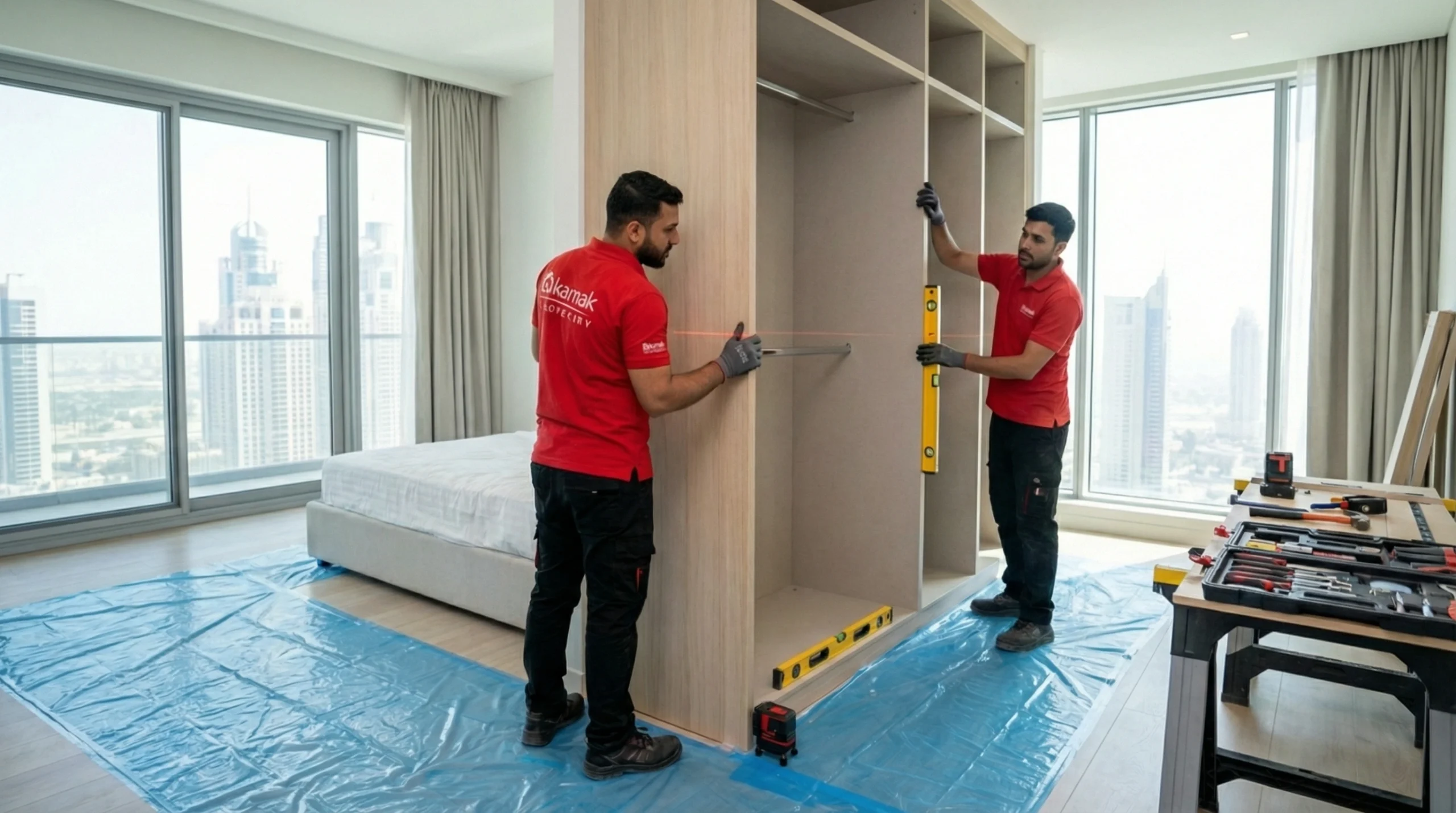
Installation day begins with our team leader conducting a final verification of site conditions against our measurements. Walls should be where we expected them, ceiling heights should match our records, and the space should be clear for installation. Discovering surprises at this stage is rare—our measurement process catches 99% of potential issues—but we verify everything before starting irreversible assembly.
The installation sequence follows a specific order designed to maximize efficiency and quality. Floor-standing cabinet boxes install first, leveled precisely and secured to walls at multiple points. Wall-mounted sections follow, with brackets anchored into concrete or studs rather than drywall. We use industrial-grade fixings rated well beyond the actual loads they’ll carry—the hardware securing a 40kg cabinet to a wall could support 200kg without failing.
Doors install after all cabinet boxes are secured and aligned. This prevents damage to door finishes during the cabinet installation work. Our installers check every door for smooth operation, proper alignment, and consistent gaps between panels. Soft-close mechanisms get adjusted to provide that satisfying gentle close without slamming but also without excessive resistance that makes doors difficult to open.
Drawer installation and adjustment happens last. Each drawer slides onto its pre-installed runners, and our installers verify smooth extension and retraction through the full travel range. We load drawers with representative weights—usually tools from our installation kit—to confirm they operate properly under load. Soft-close dampers get adjusted so drawers close gently but decisively.
The final day includes detailed finishing work: installing trim pieces that conceal gaps between cabinets and walls, touching up any minor finish damage that occurred during installation, installing lighting systems and testing all circuits, and conducting a comprehensive quality inspection. We clean the entire installation area, removing all packaging materials, wood dust, and installation debris. You should be able to start using your new wardrobe immediately after we leave.
Step 6: Final Inspection and Client Walkthrough
Before we consider any installation complete, we conduct a detailed client walkthrough where we demonstrate every feature, explain care requirements, and address any concerns. This typically requires 30-45 minutes and ensures you understand how to use your new wardrobe effectively.
We demonstrate the operation of all moving components: how to adjust shelf heights, what loads different sections can support, how to operate soft-close mechanisms properly, how to clean different materials without damaging finishes. Lighting systems get explained in detail—how to override motion sensors if desired, how to adjust brightness where applicable, when to expect LED replacement (typically 15-20 years under normal use).
We provide written care instructions specific to your selected materials and finishes. Different wood species and finish types require different maintenance approaches. Water-based polyurethane finishes need occasional cleaning with specific pH-balanced cleaners, avoiding harsh chemicals that degrade the finish over time. Hardware lubrication schedules, glass cleaning methods, and leather care recommendations get documented so you have reference information available when needed.
The warranty documentation explains what our guarantee covers and for how duration. Structural components carry a 10-year warranty. Hardware mechanisms carry manufacturer warranties ranging from 5-10 years depending on the specific brand. Finishes carry a 5-year warranty against defects but not against damage from improper cleaning products or excessive humidity exposure beyond design specifications. We photograph the completed installation from multiple angles, providing you with a digital record of the installation at completion. This documentation proves useful if you ever need to reference how something was originally configured, or if you want to replicate the design in a future property.
Step 7: Post-Installation Support and Adjustments
The first few weeks with a new wardrobe reveal optimization opportunities. Shelf heights that seemed appropriate in design might need adjustment once you’re actually using the space daily. We include one complimentary adjustment visit 4-6 weeks after installation when we return to make any modifications needed based on your real-world usage patterns.
Common adjustments include repositioning shelves to accommodate items that don’t quite fit the original configuration, fine-tuning door alignments as hardware settles into regular use patterns, and occasionally adding small accessories like hooks or dividers that you didn’t realize you needed until you started using the wardrobe. These refinements typically require 1-2 hours and perfect the installation based on actual experience rather than theoretical design.
Our client relationship continues long after installation. We maintain records of your specific installation—materials used, hardware brands, custom dimensions, finish formulations. If you need repairs, expansions, or modifications years later, we have complete documentation of your original installation, ensuring any work perfectly matches the existing wardrobe.
Why UAE Homeowners Choose Karnak for Custom Wardrobes Dubai
Selecting a carpentry company for a major wardrobe project involves trusting them with a significant investment in your home’s functionality and value. We’ve earned that trust from thousands of UAE clients by delivering consistently excellent results backed by decades of proven expertise.
Three Decades of UAE-Specific Expertise
Since 1988, we’ve completed over 3,400 custom wardrobe projects across all seven emirates. This extensive UAE experience means we’ve encountered and solved virtually every challenge that Dubai’s climate, architecture, and lifestyle present. We know which materials withstand coastal humidity because we’ve tracked performance data from installations in Dubai Marina towers for 15+ years. We understand Dubai Municipality requirements because we’ve obtained approvals for thousands of residential fit-outs. We know which configurations work in the oddly-proportioned bedrooms common in older Dubai villas because we’ve renovated hundreds of them.
Our long-term UAE presence provides continuity rare in Dubai’s transient business environment. We’ve installed wardrobes in buildings that didn’t exist when we started our company. We’ve served multiple generations of families—installing nursery wardrobes for children, then returning 25 years later to design walk-in dressing rooms for those same children’s first homes. We’ve completed wardrobes in properties that have changed hands multiple times, with new owners specifically requesting Karnak based on the quality of work they observed when viewing the property.
This depth of experience allows us to anticipate problems before they occur. When a client in Jumeirah Beach Residence requests wardrobes near floor-to-ceiling windows, we automatically specify UV-resistant finishes that won’t fade in the intense natural light. When designing wardrobes for a villa in The Sustainable City, we proactively recommend FSC-certified sustainable materials that align with the development’s environmental standards. These insights come from experience, not guesswork.
Full In-House Manufacturing Control
Unlike companies that outsource fabrication to third-party workshops, we manufacture every component of your wardrobe in our own Dubai facility. This vertical integration provides quality control, customization capabilities, and accountability that outsourced manufacturing simply cannot match. Our workshop equipment includes German-manufactured CNC machines that cut components with precision measured in tenths of millimeters. This accuracy ensures drawers slide smoothly without binding, doors align perfectly without gaps, and all components fit together exactly as designed.
The difference between machine precision and manual cutting becomes obvious when you use a wardrobe daily—precision-cut components simply work better over decades of use. In-house manufacturing allows us to accommodate custom requests that would be impossible or prohibitively expensive if we relied on external suppliers. A client needed specialized hanging sections for her collection of vintage kimonos—garments up to 1.8 meters long requiring specific spacing to prevent fabric overlap. We designed and fabricated custom tall sections with graduated hanging heights, something no standard wardrobe manufacturer could provide. The entire custom modification added just three days to our fabrication schedule and AED 2,800 to the project cost.
Quality problems get resolved immediately because the craftsmen who built your wardrobe work in our workshop, not in some distant country. If an adjustment is needed, we remake the component in our facility and deliver it within days. We don’t wait for international shipping or negotiate with suppliers about who’s responsible for errors. We take accountability and fix issues promptly.
Comprehensive Project Management
Wardrobe projects involve coordinating multiple trades, managing material procurement, scheduling fabrication and installation, and ensuring everything happens in the correct sequence. Our project management team handles this complexity, providing you with a single point of contact who coordinates all activities and keeps you informed throughout the process. Your project coordinator manages every detail from initial design approval through final installation.
They track material procurement, coordinate with our workshop on fabrication progress, schedule installation dates that align with your availability, and troubleshoot any complications. You receive regular updates at key milestones—when materials arrive, when fabrication begins, when components complete quality inspection, and 48 hours before installation teams arrive at your property. For projects involving multiple trades beyond carpentry—electrical work for sophisticated lighting systems, structural modifications to walls, or HVAC adjustments for climate-controlled sections—our project managers coordinate all contractors.
You don’t juggle multiple companies and hope they show up in the right sequence. We manage those relationships, ensuring electricians rough-in wiring before we install cabinets, that painters complete their work before our installation team arrives, and that all trades work harmoniously rather than each optimizing their own schedule without regard for others. This coordination extends to property management companies in apartment buildings. We handle building access permits, elevator reservations, parking arrangements, and compliance with building regulations. Most Dubai developments have specific requirements about construction hours, noise limitations, and common area usage. We know these requirements across hundreds of buildings and ensure our work complies with all regulations without requiring you to navigate bureaucratic approval processes.
Transparent Pricing and Written Warranties
Our quotes itemize every component of your project cost: materials specified by brand and grade, hardware listed by manufacturer and model, labor broken down by task, and any additional services like disposal of existing wardrobes or repair of walls after removal. This transparency allows you to understand exactly what you’re paying for and make informed decisions about where to invest versus where to economize.
We honor our quotes—the price we quote is the price you pay unless you request changes to the approved design. We’ve built enough wardrobes to estimate material requirements and labor hours accurately. We don’t lowball quotes to win projects then inflate costs with “unexpected” charges during installation. The detailed design and measurement process we conduct before quoting ensures we’ve accounted for all project requirements.
Written warranties cover both materials and workmanship. Structural components—cabinet boxes, shelving, hanging rails—carry our 10-year warranty. Hardware carries manufacturer warranties, typically 5-10 years depending on brand. We guarantee our installation workmanship for five years. These aren’t just marketing claims; we maintain a dedicated service department that handles warranty claims promptly and professionally.
We’ve honored warranties on installations completed 15+ years ago, even though the formal warranty period expired long ago. A client contacted us in 2023 about a drawer runner that had begun sticking in a wardrobe we installed in 2011. The runner was technically out of warranty, but we replaced it at no charge because maintaining client relationships matters more than refusing a AED 180 repair. That client has since referred three friends who commissioned new wardrobe projects totaling over AED 120,000 in revenue.
Portfolio Spanning All Design Styles
Whether you’re furnishing a contemporary apartment with minimalist aesthetics, restoring a traditional Arabic villa, or outfitting a luxury penthouse with statement-making design, we’ve successfully completed projects across every conceivable style. Our design team doesn’t impose a signature “Karnak style”—we adapt to your aesthetic preferences and architectural context.
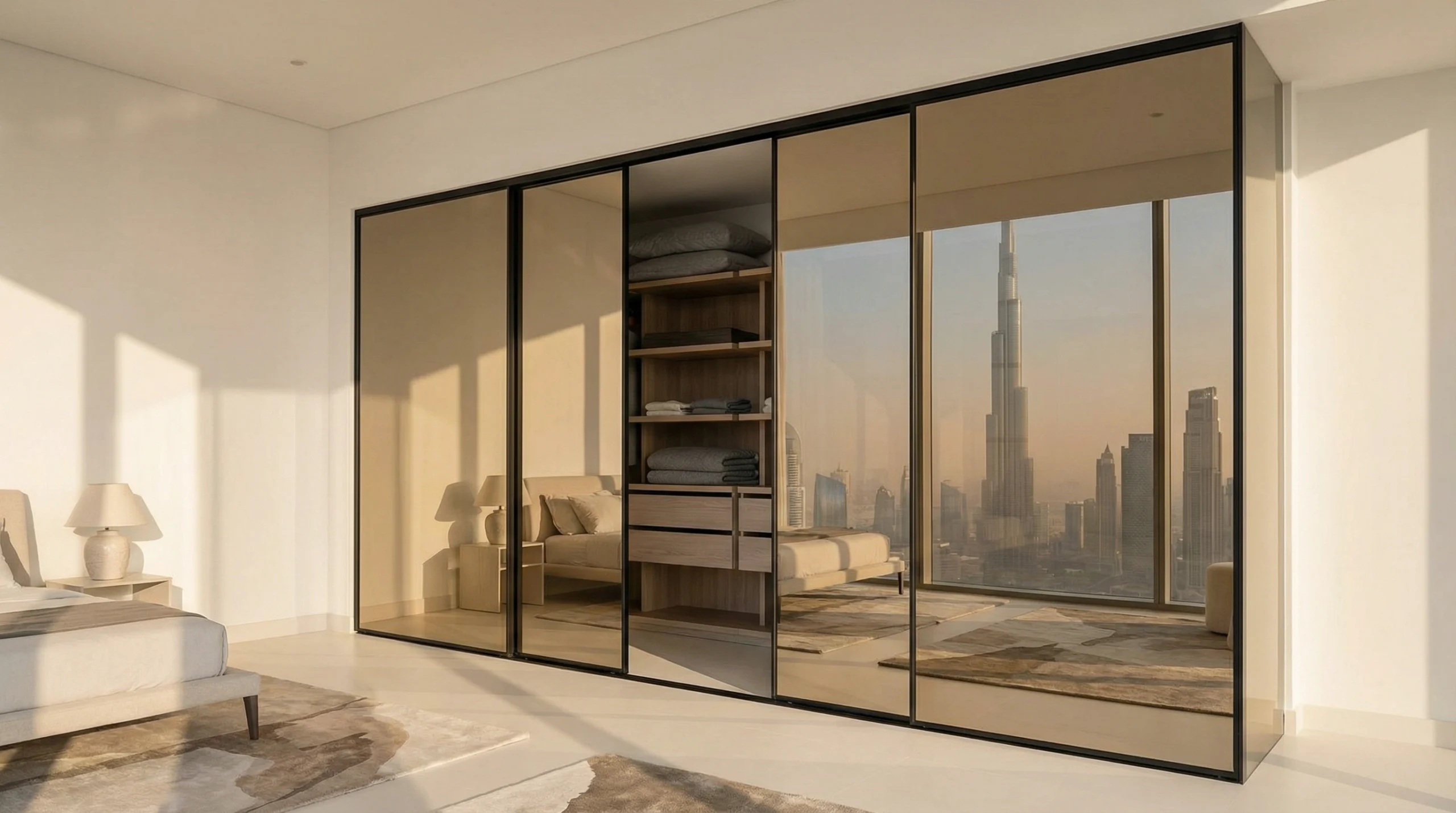
Our contemporary wardrobe designs emphasize clean lines, handleless doors, integrated LED lighting, and innovative materials like back-painted glass, metallic laminates, and high-gloss finishes. A recent Business Bay apartment featured floor-to-ceiling wardrobes in champagne-toned mirror with minimal visible hardware, creating an almost seamless wall of reflective surfaces that made the small bedroom feel twice its actual size.
Traditional and transitional designs incorporate raised-panel doors, crown molding details, decorative hardware, and classic wood finishes. A villa renovation in Jumeirah required wardrobes that complemented the home’s traditional English country house architecture. We designed wardrobes with inset panel doors, antique brass hardware, and hand-rubbed wood finishes that looked like fine furniture rather than built-in storage.
Arabic and Islamic design elements appear in projects where clients want cultural references in their private spaces. Geometric patterns inspired by traditional mashrabiya screens, arabesque carved details, calligraphy incorporation, and the color palettes of Islamic art inform these designs. One client requested wardrobe doors featuring laser-cut geometric patterns backed by colored glass panels, creating stunning light effects when the interior lighting activated.
Proven Track Record with Luxury Developers and Designers
Our commercial carpentry expertise includes long-term relationships with UAE’s leading property developers and interior design firms. We’ve completed wardrobe installations in projects by Emaar, Nakheel, Dubai Properties, and Meraas. Interior designers from firms like Godwin Austen Johnson, Perkins+Will, and LW Design Group specify Karnak for their residential and hospitality projects because they trust our ability to execute complex designs precisely.
These professional relationships validate our capabilities. Developers and designers can choose from dozens of carpentry companies; they select Karnak because we deliver consistent quality, meet deadlines, and solve problems collaboratively rather than defensively. A single poorly installed wardrobe in a AED 8 million apartment can generate complaint calls that persist for months. Developers avoid that risk by working with proven suppliers.
This experience benefits residential clients directly. The project management systems we developed for multi-unit developments ensure your single home project receives the same organizational rigor as a 40-unit building. The quality standards we maintain for luxury hotels carry through to your bedroom wardrobe. The problem-solving capabilities we’ve honed on technically challenging commercial projects help us navigate whatever complications your project presents.
Recent Custom Wardrobes Dubai Projects Across UAE
Our portfolio demonstrates the breadth of projects we successfully complete, from compact studio apartment solutions to elaborate multi-room dressing suites. These recent installations showcase different design approaches, materials, and configurations.
Luxury Walk-In Dressing Room – Emirates Hills Villa
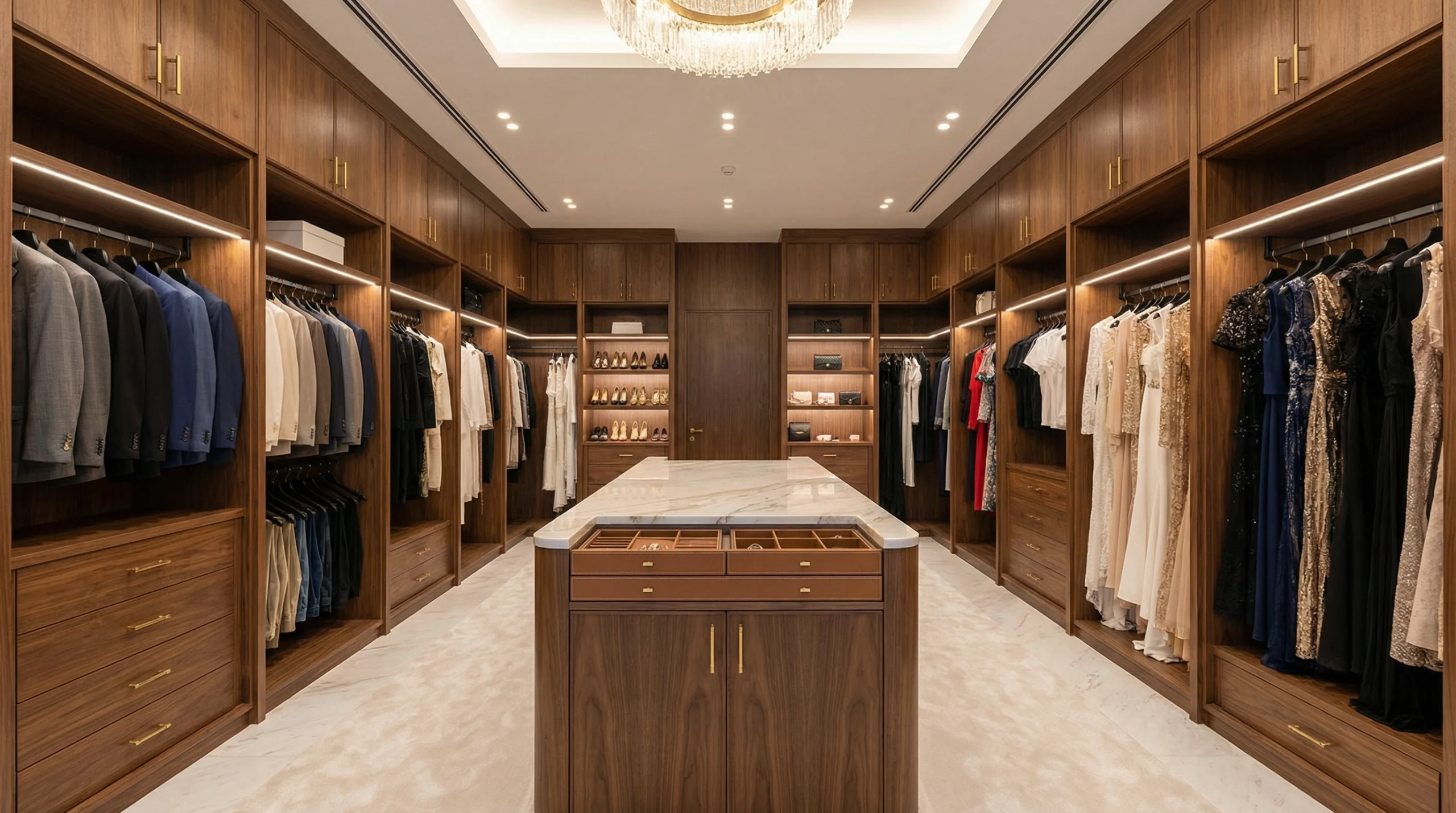
This 28-square-meter dressing suite serves a couple with extensive wardrobes and specific organizational needs. His section features 4.2 meters of suit hanging with motorized tie and belt racks, shoe storage for 45 pairs, and a dedicated section for watches and accessories. Her section includes 3.8 meters of dress hanging, specialized handbag display cabinets, shoe walls storing 120+ pairs, and a full-height mirror with hidden jewelry safe behind it. The center island includes drawer storage for folded items, a countertop in Calacatta marble for accessories, and integrated charging stations for electronics. Climate control maintains 19°C and 45% humidity year-round. Materials: American walnut with hand-rubbed oil finish, brass hardware, glass-fronted display sections with integrated LED lighting. Timeline: 11 weeks. Cost: AED 385,000.
Contemporary Bedroom Wardrobes – Downtown Dubai Apartment
A young professional couple needed maximum storage in their 3.2-meter bedroom wall. Floor-to-ceiling sliding door system in champagne mirror finish with soft-close mechanisms. Interior configuration includes double-hanging sections for work clothing, pull-out trouser racks, drawer banks with velvet-lined accessory organizers, and angled shoe shelving. Motion-sensor LED lighting activates when doors open. The mirror finish makes the bedroom feel significantly larger while hiding all storage behind elegant façades. Materials: engineered wood core with mirror laminate, aluminum sliding track system, Blum soft-close hardware. Timeline: 5 weeks. Cost: AED 42,000.
Traditional Built-In Wardrobes – Arabian Ranches Villa
Master bedroom wardrobes designed to complement the villa’s Mediterranean architecture. Raised-panel doors in painted ivory finish with antique brass hardware. Configuration includes hanging sections at multiple heights for varying garment lengths, cedar-lined drawers for delicate items, pull-out shelves for folded clothing, and built-in hamper compartment. Corner sections maximize the L-shaped wall arrangement, providing continuous storage around two walls totaling 6.8 meters. Materials: solid oak frame and rails, MDF panel inserts, hand-painted finish in Benjamin Moore Cloud White, cedar drawer lining. Timeline: 7 weeks. Cost: AED 68,000.
Compact Studio Apartment Solution – Dubai Marina
Maximum efficiency wardrobe for a 35-square-meter studio apartment where every centimeter matters. A 2.1-meter wall receives floor-to-ceiling treatment with sliding doors to minimize space requirements. Interior includes hanging section with two-level rails maximizing vertical space, pull-out wire baskets for folded items, mounted shoe rack storing 18 pairs, and upper storage compartment for luggage and seasonal items. The compact design accommodates the tenant’s entire wardrobe while consuming minimal floor space. Materials: melamine-coated panels in white, commercial-grade sliding hardware, wire basket systems. Timeline: 3 weeks. Cost: AED 18,500.
Executive Wardrobe Suite – Business Bay Tower
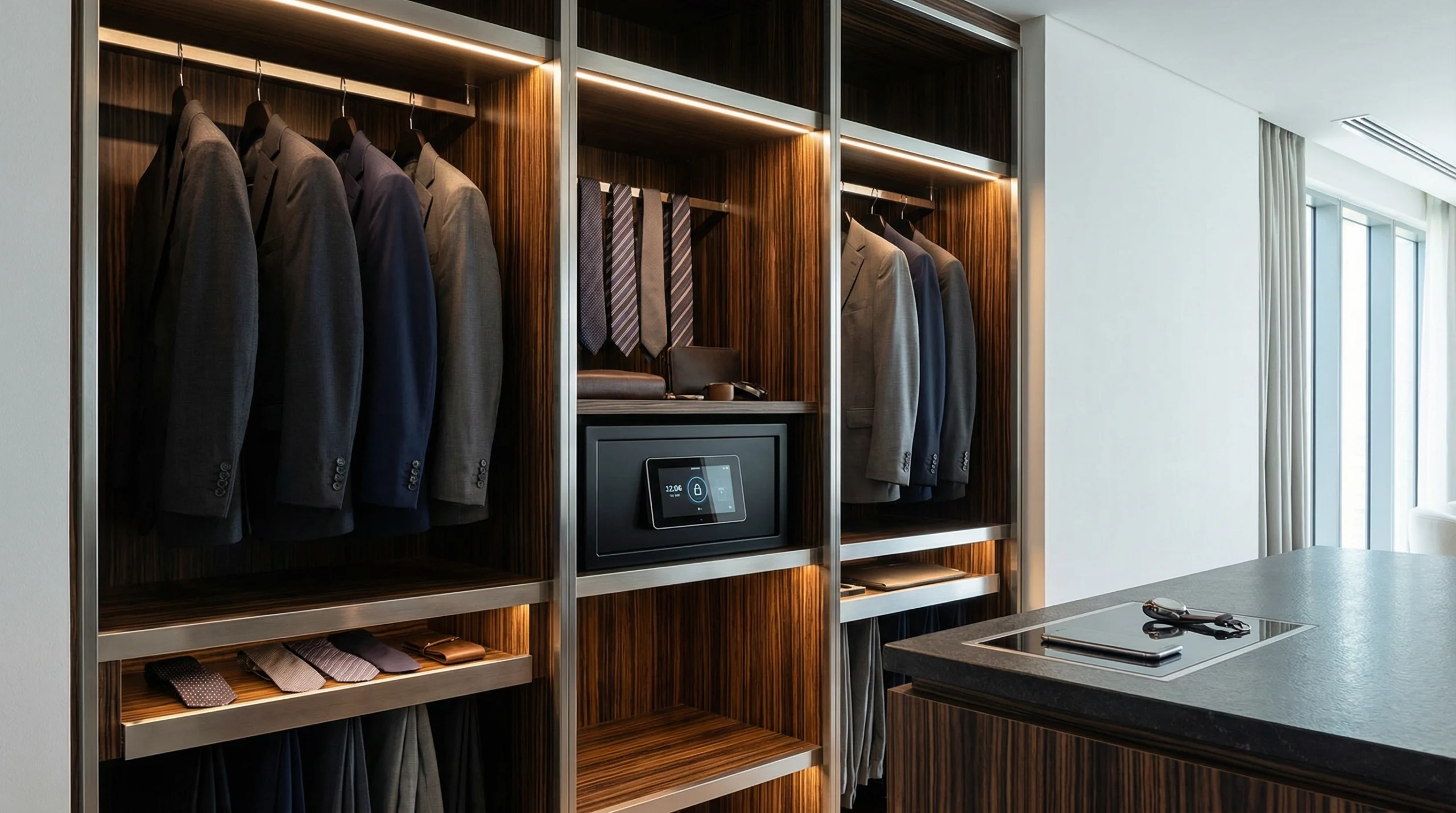
A senior executive required professional storage for extensive business wardrobe plus casual clothing. His wardrobe features specialized sections for 40+ suits with individual garment covers, automated trouser press compartment, tie and cufflink organization for 100+ pieces, and shoe storage for 35 pairs including a dedicated section for athletic shoes. Integrated technology includes wireless charging shelf, built-in safe with biometric access, and LED lighting on individual zone controls. Materials: zebrawood veneer on marine-grade plywood, motorized components for trouser press and organizational systems, stainless steel hardware. Timeline: 9 weeks. Cost: AED 156,000.
Family Home Bedroom Wardrobes – The Springs
Three connected bedrooms in a family villa each received custom wardrobes dubai designed to grow with the children. Master bedroom features 4.2 meters of built-in wardrobes with his-and-hers sections, adjustable shelving that reconfigures as storage needs change, and substantial drawer storage. Children’s rooms have wardrobes with lower hanging rails currently accessible to young children, but rails mount on adjustable standards allowing repositioning as children grow. Upper sections store items parents control—extra bedding, off-season clothing, toys rotated out of active use. Materials: white melamine with oak edge banding, adjustable metal standards for adaptability, soft-close doors and drawers. Total across three rooms: 11.4 meters of wardrobe installations. Timeline: 6 weeks. Cost: AED 94,000.
Modular System for Frequent Relocators – Dubai Sports City
A European couple on multi-year assignments needed quality wardrobes knowing they’d relocate internationally within 3-5 years. Our modular system provides custom quality with relocation capability. The 3.6-meter installation comprises six separate cabinet boxes that connect seamlessly but disassemble completely. Each box is independently functional, allowing reconfiguration for different room layouts in future homes. Interior organization includes hanging, shelving, and drawer options. The system has already relocated once—from their initial apartment to a larger unit in the same development—reinstalled in a different configuration in under one day. Materials: modular cabinet boxes in oak veneer, precision aluminum connection system, commercial hardware throughout. Timeline: 5 weeks. Cost: AED 51,000.
Luxury Penthouse Dressing Pavilion – Palm Jumeirah
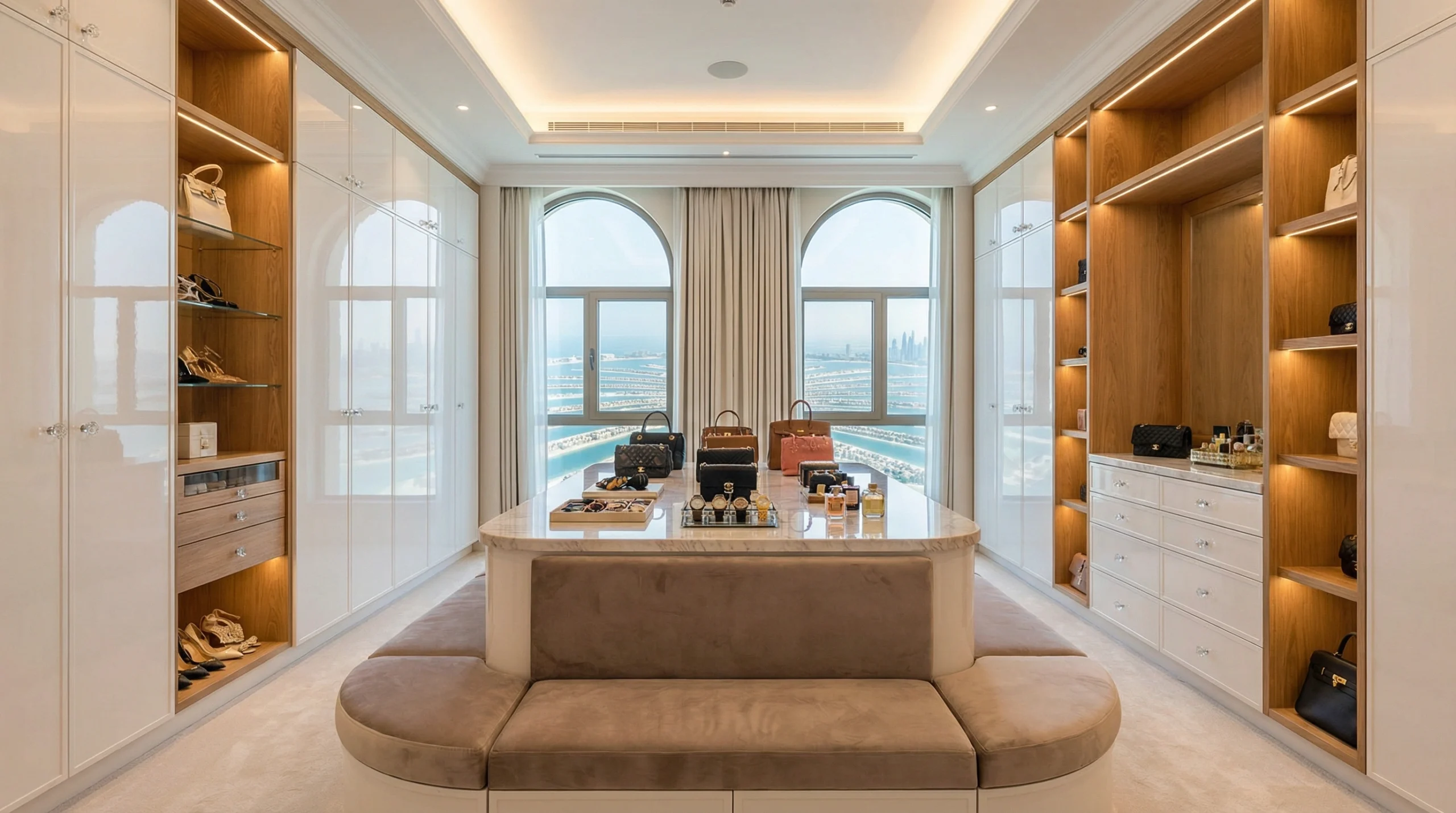
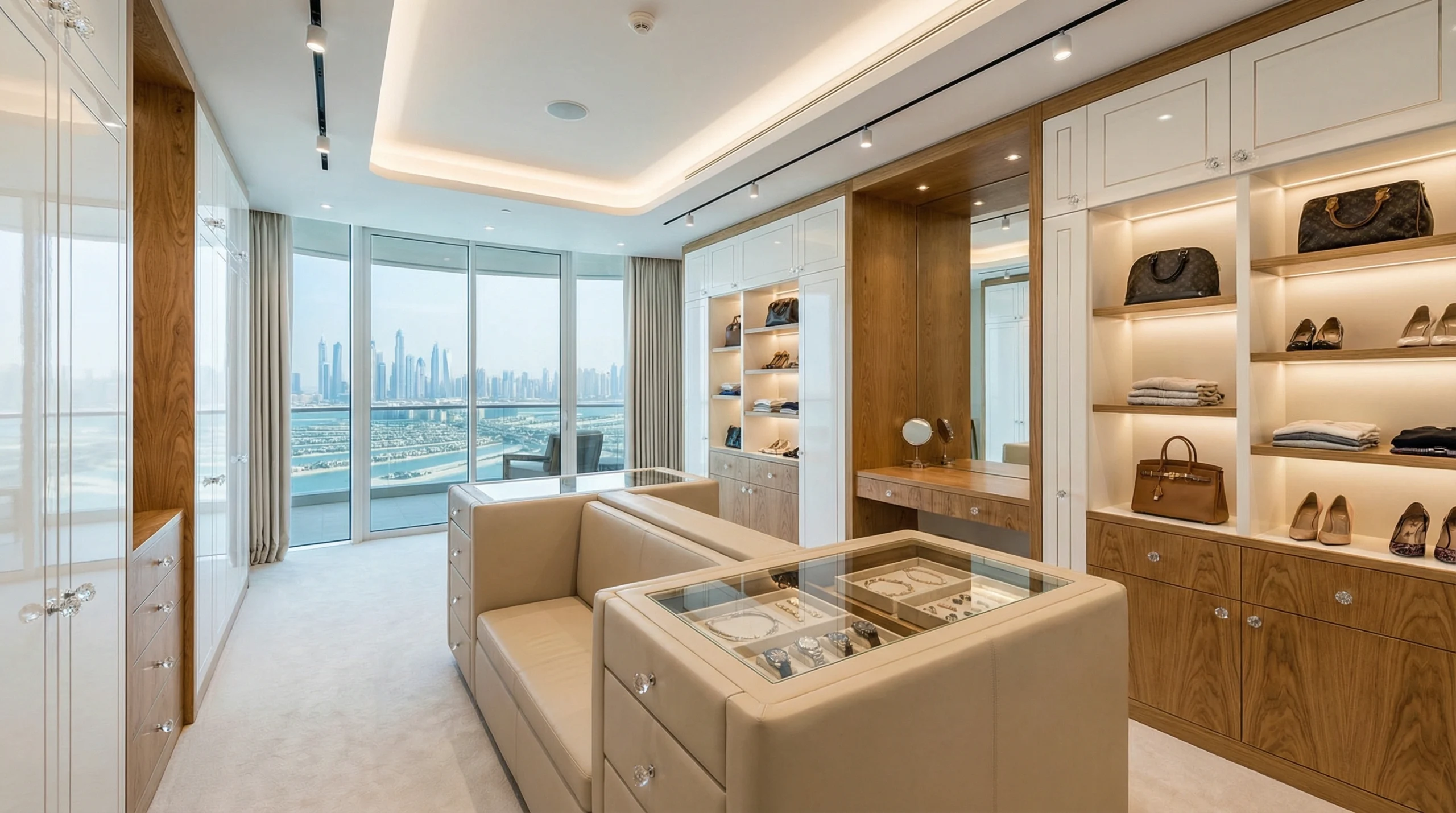
A standalone dressing pavilion within the master suite of a Palm Jumeirah penthouse showcases the ultimate in custom wardrobe design. The 42-square-meter space includes wardrobes on all four walls, central island with seating area, full-length three-way mirror, and adjacent bathroom connection. Her sections feature handbag display cabinets with museum-quality lighting, climate-controlled fur storage, automated revolving shoe carousel storing 200 pairs, and jewelry vault built into the floor with hydraulic lift mechanism. His sections include suit valet with automatic garment steamer, watch display for 30+ timepieces with individual winders, shirt storage with pull-out shelves, and dedicated sections for sports equipment and outdoor gear. Materials: combination of lacquered high-gloss white cabinetry and natural oak accents, Swarovski crystal hardware, marble flooring with radiant heating. Timeline: 16 weeks. Cost: AED 890,000.
Custom Wardrobe Questions - Expert Answers
Custom wardrobe costs vary significantly based on size, materials, configuration complexity, and hardware quality. For a standard 2.5-meter bedroom wardrobe wall with floor-to-ceiling configuration, hinged doors, and moderate complexity interior organization, expect costs between AED 18,000 and AED 35,000. This assumes mid-range materials like melamine or wood veneer exteriors, quality soft-close hardware, LED lighting, and professional installation.
Premium materials and features increase costs substantially. Solid wood construction, specialized hardware like motorized components, climate control systems, high-end finishes, and elaborate interior organization can bring costs to AED 50,000-80,000 for the same 2.5-meter wall. Luxury walk-in dressing rooms with extensive features, premium materials, and specialized storage solutions range from AED 150,000 to AED 500,000+ depending on size and specification.
Several factors beyond basic dimensions impact pricing. Sliding door systems cost 20-30% more than hinged doors due to the specialized track hardware and larger door panels required. Curved or angled walls require custom fabrication that increases costs by 15-25%. Mirrored surfaces add AED 800-1,200 per square meter. Integrated lighting systems add AED 2,500-6,000 depending on complexity. Specialized storage features like pull-out trouser racks, motorized components, or climate control add AED 1,500-8,000 per feature.
The most cost-effective approach involves selecting mid-range materials for cabinet boxes and invisible components while investing in quality hardware and finishes for elements you see and touch daily. Saving AED 3,000 by using cheap drawer runners means dealing with sticky, failing drawers within three years—a false economy. Saving AED 8,000 by choosing melamine over solid wood for cabinet interiors that nobody sees? Sensible budget management.
The complete process from initial consultation to final installation typically requires 6-10 weeks for standard residential projects. This breaks down into distinct phases: consultation and measurement (1 day), design development and client approval (7-14 days), material procurement (7-14 days), workshop fabrication (14-21 days), and installation (2-4 days). Projects with standard materials and straightforward configurations trend toward the shorter timeframes, while projects requiring specialty materials, complex engineering, or extensive customization require longer schedules.
Material availability significantly impacts timelines. Common materials like melamine, standard wood veneers, and widely-used hardware are typically in stock or available within days. Specialty wood species, custom-colored glass, imported hardware, or unusual finishes might require 4-8 weeks procurement from overseas suppliers. We inform you during design development if your material selections will extend the timeline, allowing you to decide whether the wait is worthwhile or if alternate materials would be acceptable.
Workshop fabrication duration depends on project complexity and current production queue. A simple two-door wardrobe with basic interior shelving might fabricate in 5-7 days. An elaborate walk-in dressing room with multiple specialized storage features, intricate joinery, and hand-applied finishes requires 3-4 weeks. We schedule fabrication start dates when you approve the final design, providing specific completion dates rather than vague estimates.
Installation duration varies with project scope. A single bedroom wardrobe wall up to 3 meters typically installs in 2 days—day one for cabinet assembly and mounting, day two for door installation, adjustments, and finishing details. Multi-room projects or elaborate walk-in installations require 3-5 days. We minimize disruption by working efficiently and cleaning thoroughly each day so your bedroom remains usable throughout the installation process.
Dubai's climate presents distinct challenges: high humidity especially near the coast, extreme temperature variations, and occasionally dramatic swings between air-conditioned interiors and ambient exterior conditions. Material selection should prioritize dimensional stability, moisture resistance, and durability under these specific stresses.
For cabinet box construction, marine-grade plywood with phenolic resin bonding provides optimal performance in coastal Dubai locations. This material costs approximately 40% more than standard furniture-grade plywood but resists moisture absorption and delamination even in high-humidity environments. We've tracked installations in Dubai Marina and JBR towers for over 15 years with zero moisture-related failures. For inland locations with lower humidity exposure, standard furniture-grade plywood with water-resistant bonding performs adequately at lower cost.
Door materials require careful consideration. Solid wood doors offer traditional beauty but must be engineered with floating panel construction to accommodate seasonal wood movement. Without this engineering, solid doors will bind in winter and develop gaps in summer as humidity changes cause expansion and contraction. We recommend solid wood primarily for clients who prioritize traditional aesthetics and understand the subtle seasonal variations. Engineered wood alternatives—MDF cores with real wood veneer faces—provide 95% of solid wood's visual appeal with virtually zero seasonal movement, at 50-60% of the cost.
For clients prioritizing budget without sacrificing durability, melamine-coated panels offer excellent moisture resistance and require minimal maintenance. The melamine surface resists staining, withstands cleaning with standard household products, and won't delaminate under normal use. The aesthetic is more contemporary than traditional, but modern melamine finishes include realistic wood grain patterns that satisfy most clients' appearance requirements.
Hardware selection matters as much as structural materials. Standard zinc-plated hinges and drawer runners corrode in Dubai's coastal environment within 2-3 years. We specify stainless steel or corrosion-resistant coated hardware exclusively. The material cost premium is AED 150-200 per linear meter of wardrobe, but eliminates premature hardware failure and expensive repairs.
Matching custom wardrobes to existing furniture requires careful attention to wood species, finish color, and style details. We bring material samples to your home during consultation, comparing them directly against your existing furniture under your actual lighting conditions. Even slight color variations become obvious when pieces sit adjacent to each other, so we invest time in achieving accurate matches.
For wood finishes, we can match virtually any species and stain color. The process involves comparing physical samples against your existing furniture, then creating test panels with matching stain formulations. We deliver these test panels to your home for approval before applying finish to actual wardrobe components. Wood has natural grain variation, so perfect matches are impossible, but we achieve results where new and existing pieces read as intentionally coordinated rather than obvious mismatches.
Paint finishes are generally easier to match precisely. We can color-match to any existing painted furniture or to specific paint colors you've selected for your bedroom. Gloss level matching matters as much as color—a perfect color match in the wrong sheen looks wrong. We confirm both color and gloss level before committing to final finishes.
Architectural integration requires understanding your property's construction and design language. Period villas might have crown molding, baseboards, window casings, and door trim that establish specific design vocabularies. We design wardrobes that respect these architectural elements—matching molding profiles, aligning with existing trim heights, and selecting appropriate door styles. Modern apartments with minimal trim and clean lines get wardrobe designs that emphasize simplicity and precise geometric relationships rather than decorative details.
Structural integration involves working around columns, beams, angled walls, and other architectural features. We've built wardrobes around structural columns in dozens of apartment towers, creating seamless appearances where the columns appear to be deliberate design elements rather than obstacles. Angled walls in curved towers require custom-cut cabinet backs and carefully calculated door alignments to maintain consistent reveals despite non-parallel walls.
We regularly complete wardrobe installations in both occupied homes and active renovation sites, adapting our approach to suit each situation's specific requirements. The key is clear communication about timing, access, and coordination with other trades if applicable.
For occupied homes, we minimize disruption through careful scheduling and efficient work practices. Most clients prefer us to work while they're at the office, giving us access from 8:00 AM to 5:00 PM. We arrive punctually, set up protective coverings for flooring and furniture, complete our work efficiently, clean thoroughly, and secure the space before leaving each day. You return home to see progress without experiencing the noise and activity of active installation. For clients who work from home or have young children, we can adjust schedules to quieter times or coordinate around nap schedules and video calls.
The bedroom where we're installing wardrobes becomes temporarily unusable during installation—typically 2-3 days. We recommend relocating clothing and personal items to another room before we arrive. We can work around beds and furniture if necessary, but clearing the room entirely makes installation faster and protects your belongings from construction dust. We provide plastic sheeting to protect any furniture that must remain in the room.
Renovation site installations require coordination with other trades to ensure correct sequencing. Wardrobes should install after plastering and painting complete but before final detailing like baseboards and switch plates. Electrical rough-ins for wardrobe lighting must complete before we install cabinet boxes, but final light fixture installation happens after cabinets are mounted. We've managed these coordination requirements on hundreds of renovation projects and work collaboratively with your other contractors to ensure smooth workflow.
For full home renovations where multiple rooms receive wardrobes, we sequence installations to minimize total disruption time. Rather than installing all wardrobes in one continuous period—leaving multiple bedrooms unusable simultaneously—we often stage the work across several sessions, completing one or two bedrooms at a time so the rest of your home remains functional.
Our warranty program covers both our workmanship and the materials we install, with different durations for different components based on their expected service life and typical stress levels. Understanding what's covered and for how long helps you plan maintenance and know what to expect from your investment.
Structural components—cabinet boxes, shelving, hanging rails, and installed framework—carry our 10-year workmanship warranty. This covers any failures resulting from construction defects, inadequate materials, or installation errors. If a shelf sags due to inadequate support, a joint fails due to poor construction technique, or a cabinet box delaminates due to moisture exposure beyond design specifications, we repair or replace the affected components at no charge. This warranty transfers to new owners if you sell your property, adding value to your home.
Hardware components carry manufacturer warranties that we pass through to you. Premium brands like Blum and Hettich offer 10-year warranties on hinges and drawer runners. We handle all warranty claims on your behalf, eliminating the need for you to navigate manufacturer claim processes. If a soft-close mechanism fails, you contact us, we assess the situation, and we handle parts procurement and installation of replacement components.
Finishes carry our 5-year warranty against defects including peeling, bubbling, cracking, or color fading beyond normal wear. This warranty specifically excludes damage from improper cleaning products, excessive moisture exposure, or physical damage. We provide detailed care instructions at installation, and following these instructions ensures your finish warranty remains valid. In practice, our finishes typically last far longer than 5 years—we see 15-year-old installations still looking excellent—but we warranty conservatively.
What the warranty doesn't cover: damage from misuse, accidents, or normal wear. If you overload a shelf beyond its rated capacity and it sags, that's not covered. If you strike a door with heavy luggage and chip the finish, that's not covered. If drawer interiors show wear after 10 years of daily use, that's expected and not covered. The warranty protects you from defects and failures, not from the gradual aging that affects all furniture over time.
We include one complimentary service visit 4-6 weeks after installation for any adjustments needed based on your real-world usage. This isn't a warranty claim—it's a standard part of our installation service. Many clients discover small optimization opportunities once they've used the wardrobe daily, and we return to make minor adjustments that perfect the installation.
Rental property wardrobes present unique challenges since most lease agreements prohibit permanent modifications to the property structure. We've developed several approaches that provide custom wardrobe functionality while maintaining removability and avoiding lease violations.
Freestanding modular systems offer the most straightforward solution. These wardrobes stand independently without wall mounting, allowing complete removal when your lease ends. The modularity means we can configure the system to fit your current bedroom perfectly, then reconfigure it differently when you relocate to a different property. Quality freestanding systems use the same materials and hardware as built-in installations—the only difference is the mounting method. Costs are comparable to built-in systems, typically within 10-15% for equivalent features and finishes.
For larger installations where freestanding configuration isn't practical, we can design systems that mount to walls using removable fixings. These installations attach to walls through repairable mounting points rather than permanent integration with wall structure. When you move, we remove the wardrobe and patch/paint the small mounting holes, leaving the wall in original condition per most lease agreements' requirements. This approach requires landlord approval before proceeding—some landlords welcome improvements even if temporary, others prohibit any wall mounting regardless of removability.
Some enlightened landlords agree to permanent wardrobe installations if they increase property value and you accept that the wardrobe remains with the property when you leave. This arrangement works best with landlords who own multiple properties and appreciate property improvements even if the improving tenant eventually departs. We can provide landlords with detailed specifications and cost documentation showing the value you're adding to their property. In several cases, landlords have offered to credit a portion of the installation cost against rent or have purchased the wardrobe from the departing tenant rather than lose the improvement.
Dubai's rental market includes fully furnished properties where existing wardrobes are inadequate but removing them violates lease terms. We occasionally supplement existing wardrobes with freestanding additions that provide needed storage without disturbing the original installations. A client in a furnished Dubai Marina apartment added a freestanding modular unit that doubled her available wardrobe space while leaving the builder's installed wardrobes untouched.
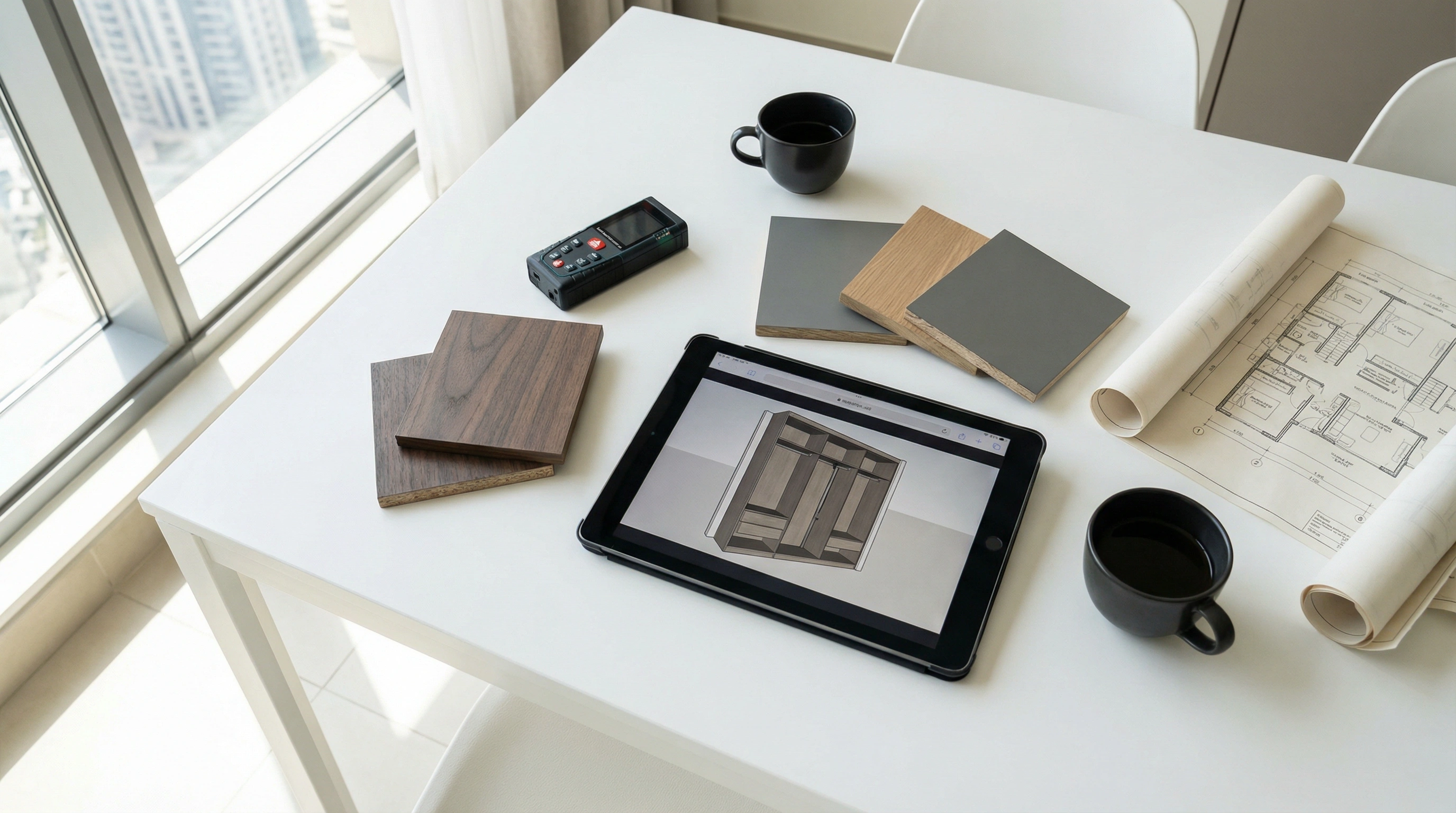
Non-standard room geometry appears in a substantial percentage of Dubai properties—curved walls in tower apartments, angled walls in architectural statement buildings, columns interrupting wall runs, and ceiling heights varying across single rooms all require creative solutions. Our extensive UAE project experience means we've encountered and solved virtually every geometric challenge Dubai architecture presents.
Curved walls in residential towers need wardrobes with curved backs to maximize usable depth across the full wall length. We create these curved profiles using flexible backing materials or by cutting cabinet backs to match the specific radius of the wall curve. A single wardrobe installation might incorporate six different depths across a 4-meter run, creating the appearance of consistent depth from the bedroom side while accommodating the curved wall behind. The additional fabrication complexity adds 15-20% to costs but delivers proper space utilization rather than the alternative of accepting a 150mm gap at each end of a straight wardrobe installed against a curved wall.
Structural columns present interesting integration opportunities. Rather than treating columns as obstacles to work around, we often incorporate them into the wardrobe design. A column can become the division point between hanging and shelving sections, or we can design cabinets that wrap around the column, turning it into a design feature rather than an awkward interruption. One Palm Jumeirah apartment had a substantial column interrupting what should have been a continuous wardrobe wall. We designed a floor-to-ceiling cabinet wrapping three sides of the column, creating a wine storage and display feature that became the bedroom's visual focal point.
Angled walls require precise measurement and careful planning. We use laser measuring devices that capture exact angles and dimensions, then translate these measurements into CAD drawings that account for every millimeter of variation. Cabinet backs get custom-cut to match wall angles exactly. Door installations on angled walls need careful planning to ensure adequate clearance for hinged doors swinging in non-perpendicular spaces. We often recommend sliding doors for severely angled walls since the door operation doesn't require swing clearance.
Ceiling height variations occur frequently in Dubai apartments, particularly in older buildings. A bedroom might have 2.6-meter ceilings at one end and 2.4-meter ceilings at the other, with gradual slope between. We design wardrobe top treatments that either follow the ceiling slope, creating a continuous but angled top, or step in discrete intervals matching the cabinet box heights. Both approaches work aesthetically—the choice depends on your preference and the severity of the slope.
Rooms with windows interrupting wardrobe walls require careful planning to maintain symmetry and proportion. We typically design wardrobes as flanking sections on both sides of the window, maintaining consistent height and depth across both sides even if one side has slightly more linear space than the other. Window trim integration ensures the wardrobes appear integrated with the architecture rather than added afterthoughts.
We design our wardrobe systems with future flexibility in mind, recognizing that your storage needs will likely evolve over time. Most modifications fall into three categories: interior reconfiguration, capacity expansion, and feature upgrades. Our approach to each depends on the specific change you need.
Interior reconfiguration represents the simplest modification category. Adjustable shelving systems allow you to reposition shelves without any carpentry work—you simply move the shelves to different positions on the mounted standards. Hanging rail heights can typically adjust by removing the rails and repositioning mounting hardware. Drawer units and other fixed components require more extensive modification, but our workshop can fabricate replacement components matching your original installation exactly since we maintain complete records of materials, finishes, and dimensions for every project we've completed.
Capacity expansion means adding additional wardrobe sections adjacent to your existing installation. This works straightforwardly when wall space is available and when you're expanding within 5-7 years of original installation. Beyond this timeframe, matching finishes becomes challenging because wood and finishes age, developing subtle color shifts that make new and old sections visually distinct even when we match materials exactly. We recommend planning expansion capability during initial design if you anticipate future needs—designing the original installation with expansion in mind makes future additions seamless.
Feature upgrades involve adding components not included in the original installation—converting standard shelving to pull-out trouser racks, adding interior lighting to wardrobes originally built without it, or upgrading basic hinges to soft-close mechanisms. Most upgrades are technically feasible, but cost-effectiveness varies. Adding lighting to existing wardrobes requires running new wiring, possibly modifying cabinet boxes to accommodate transformers and switches, and carefully coordinating with your electrical systems. This might cost 60-70% as much as including lighting in the original installation would have cost, since we're working around existing construction rather than integrating during fabrication.
We maintain detailed records for every installation: materials used including specific suppliers and product codes, finish formulations, hardware brands and models, and complete dimensional drawings. When you contact us about modifications years after original installation, we retrieve these records and can source matching materials or recommend appropriate substitutes if original materials are no longer available. This documentation proves invaluable for additions, repairs, or modifications that need to match existing work.
One client returned to us 11 years after we installed her original bedroom wardrobes, requesting expansion into an adjacent room being converted from an office to a walk-in dressing room. We matched the wood species and finish closely enough that the new installation reads as a deliberate addition rather than obvious replacement. The original hinges were no longer manufactured, but we sourced functionally identical replacements from the same manufacturer. The expansion project required four weeks and cost AED 67,000—delivering a seamless multi-room dressing suite that looks like it was always designed as one integrated system.
Environmental consciousness increasingly influences material selection for residential projects, and we offer several sustainable alternatives for clients prioritizing environmental impact. These options involve both material sourcing and manufacturing approaches that minimize environmental harm while delivering equivalent performance to conventional materials.
FSC-certified sustainable materials ensure the wood in your wardrobe comes from responsibly managed forests that maintain environmental and social standards. FSC certification tracks wood through the entire supply chain from forest to finished product, verifying sustainable harvesting practices, protecting workers' rights, and preserving forest ecosystems. We source FSC-certified plywood and solid wood from European suppliers, with material costs approximately 25-30% higher than conventional sources. The environmental benefit comes at premium cost, but for many clients the peace of mind justifies the investment.
Low-emission materials address indoor air quality concerns. Standard wood composites like MDF and particleboard use formaldehyde-based adhesives that release volatile organic compounds into your bedroom air. E0-rated materials use alternative adhesives that produce virtually zero formaldehyde emissions, making them particularly appropriate for bedroom furniture where you spend eight hours nightly breathing near the surfaces. We recommend E0 materials for children's wardrobes specifically, where developing bodies are more vulnerable to environmental contaminants. Cost premium: 15-20% over standard materials.
Water-based finishes eliminate the solvent emissions associated with traditional oil-based stains and polyurethane. Modern water-based products cure as hard and durable as oil-based equivalents while producing zero VOC emissions during application and curing. The finish odor dissipates within hours rather than days or weeks. We've used water-based finishes exclusively for the past six years and have encountered zero performance issues compared to traditional products. Cost impact is minimal—approximately 5% premium—making this one of the most cost-effective sustainable upgrades available.
Local sourcing reduces transportation emissions associated with importing materials from Europe or Asia. UAE-based suppliers can provide melamine panels, some hardware components, and basic materials without international shipping. However, locally-available specialty materials remain limited—exotic wood species, premium hardware, and sophisticated finishing materials still require importation. We balance local sourcing where practical against material quality and performance requirements.
Longevity represents perhaps the most significant environmental consideration. A wardrobe that lasts 20-30 years has far less environmental impact than one requiring replacement after 5-7 years regardless of whether the materials carry environmental certifications. We design for durability through material selection, engineering approach, and hardware quality—emphasizing longevity over short-term cost savings creates the most sustainable outcome.
One environmentally-conscious client in The Sustainable City wanted the most eco-friendly wardrobe possible. We designed using FSC-certified plywood construction, E0-rated core materials, water-based finishes, bamboo drawer interiors (rapidly renewable resource), and LED lighting (minimal energy consumption). Recycled aluminum hardware components and locally-sourced where possible completed the sustainable specification. The wardrobe performs identically to conventional construction while minimizing environmental impact. Cost premium: approximately 35% over standard materials and methods, which the client considered worthwhile given their values.
Specialized storage requirements appear frequently in our custom wardrobe projects—clients who need dedicated space for watch collections, handbag displays, jewelry organization, shoe collections, sports equipment, or hobby materials. Our design approach treats these specialized needs as primary design drivers rather than afterthoughts, creating storage solutions specifically engineered for the items being stored.
Watch collections require careful consideration of storage environment and security. For valuable watches, we design sections with individual watch cushions or automated winders for automatic movements. A recent client's 22-watch collection valued at approximately AED 380,000 received a dedicated climate-controlled cabinet with individual winders on programmable rotation schedules, LED lighting, tempered glass doors with locks, and humidity control maintaining 45-55% to prevent moisture damage to movements. For less valuable everyday watches, we create drawer inserts with shaped compartments that protect each watch individually while allowing easy visual selection.
Handbag storage presents display versus protection tradeoffs. Valuable designer handbags benefit from dust-free storage that maintains shape while allowing visibility for selection. We design glass-fronted cabinets with adjustable shelving sized to each bag's specific dimensions, integrated LED lighting that doesn't produce heat, and shaped shelf inserts that support bags' structures. One client's collection of 34 designer handbags required individualized storage solutions—each bag had specific support requirements based on its construction and materials. The resulting cabinet section resembles a boutique display more than typical wardrobe storage.
Shoe collections frequently drive wardrobe design, especially for clients with 50+ pairs. We create angled display walls that present every pair simultaneously for easy selection, grouped by category or color as preferred. Backlit shelving creates dramatic visual impact while providing functional illumination. For boots specifically, we design tall sections with hanging boot trees that maintain leather shape and prevent collapse. One equestrian client required storage for riding boots, showing boots, casual boots, and formal footwear—each category received dedicated sections with appropriate storage methods.
Tie collections beyond 20-30 pieces benefit from dedicated pull-out racks rather than standard hanging. We manufacture motorized pull-out systems that extend fully, present ties individually without overlapping, and retract smoothly. Each tie hangs from individual hooks spaced to prevent tangles. Similar systems work for belt collections, scarf collections, and pocket square organization.
Jewelry storage ranges from simple drawer inserts with velvet lining to elaborate safe-integrated systems. We've designed hidden jewelry safes behind full-height mirrors on motorized hinges, pull-out jewelry drawers with compartmentalized organization, and glass-topped display drawers for costume jewelry. Security requirements vary from basic organization to serious protection—some clients need convenient access and dust protection, others want biometric locks and security system integration.
Sports equipment presents interesting challenges since items like golf clubs, tennis rackets, ski equipment, or diving gear don't fit standard wardrobe proportions. We create dedicated sections sized appropriately: golf bag storage with space for clubs extending their full length, ski equipment storage with adequate height and width, bicycle storage with wall-mounting systems. One client with serious cycling hobby needed wardrobe storage for five bicycles plus associated equipment—helmets, shoes, clothing, maintenance supplies. We designed a section combining wall-mounted bicycle storage, drawer storage for accessories, and ventilated sections for clothing.
Door system selection significantly impacts both aesthetics and functionality, with each option offering distinct advantages for different situations. Understanding the tradeoffs helps you choose the system that best suits your bedroom layout, usage patterns, and design preferences.
Hinged doors provide the most traditional wardrobe appearance and allow complete access to the wardrobe interior with doors fully open. They require adequate clearance in front of the wardrobe—typically 600-700mm—for doors to swing fully open without colliding with beds, dressers, or other furniture. In bedrooms with sufficient circulation space, hinged doors deliver optimal functionality at the lowest cost per linear meter. They seal better than sliding systems, providing superior dust protection and allowing more effective containment if you include climate control. Soft-close hinges provide that premium furniture feel where doors close gently and securely without slamming.
The disadvantage of hinged doors appears in tight spaces where door swing interferes with furniture placement or circulation. A bedroom where the bed must position close to the wardrobe wall leaves insufficient clearance for hinged doors to open fully. Hinged doors also interrupt visual flow—when open, they project into the room creating temporary obstacles. For wardrobes longer than 3.5 meters, hinged door systems require multiple door panels, creating visible divisions in the façade rather than the seamless appearance sliding systems provide.
Sliding doors excel in space-constrained bedrooms where hinged door swing would create conflicts. They require just 100mm of clearance in front of the wardrobe—enough space for your body while accessing the interior. Sliding systems can span longer distances, creating uninterrupted façades across 4-6 meter walls. Mirror-faced sliding doors make excellent sense in bedrooms where floor space is limited, as the mirrors visually enlarge the space while the sliding operation preserves precious square meters.
The tradeoff with sliding doors is the permanent inaccessibility of sections hidden behind overlapping panels. A typical three-door sliding system across a 3-meter wardrobe means approximately 900mm of the wardrobe width remains inaccessible regardless of which doors you slide open. We plan interior layouts positioning this dead zone at the wardrobe center, using it for items accessed infrequently or for structural elements. Sliding doors also cost 25-30% more than hinged systems due to the specialized track hardware and larger door panel dimensions required.
Open wardrobes without doors create completely accessible storage with maximum visibility—you see every item simultaneously. This works well in walk-in dressing rooms or dedicated wardrobe alcoves where dust protection is less critical and where the wardrobe display contributes positively to the room's aesthetic. Open systems also cost less since we eliminate door materials and hardware entirely. The savings typically amount to 20-25% compared to hinged door systems.
Open wardrobes work poorly in most standard bedrooms. Dust accumulates on clothing and shelves, requiring more frequent cleaning. Visual clutter from exposed storage diminishes bedroom tranquility—even well-organized wardrobes create busy visual fields when completely exposed. Open systems also provide no privacy if you share your bedroom with others who have different tidiness standards. We recommend open configurations primarily for dedicated dressing rooms, walk-in wardrobes, or for clients with minimal wardrobes who maintain exceptional organization discipline.
Many clients benefit from combination approaches. A walk-in dressing room might use open storage on interior walls where items remain protected from bedroom dust, with hinged doors closing off the dressing room entry. A bedroom wardrobe might use sliding doors for the main wardrobe wall with open shelving in an adjacent alcove for display of accessories or shoes. We design these combination systems to create visual harmony while optimizing functionality for each section's specific purpose.
Existing wardrobe removal adds complexity to projects but we handle this routinely as part of comprehensive wardrobe replacement projects. The process involves careful assessment of existing installations, safe removal to avoid property damage, and appropriate disposal or donation of materials.
Assessment happens during our initial consultation when we examine your existing wardrobes to determine removal requirements. Builder-installed wardrobes in Dubai apartments typically mount directly to walls with screws through cabinet backs into concrete or studs. Removal involves unfastening these mounting points and carefully extracting the wardrobes without damaging wall surfaces. Freestanding wardrobes simply require disassembly and removal. Built-in custom wardrobes might integrate more extensively with wall structure, potentially requiring minor wall repairs after removal.
We provide removal cost estimates during the quotation phase based on existing wardrobe size, construction type, and installation method. Simple freestanding wardrobes might cost just AED 800-1,200 to remove and dispose of. Extensively integrated built-in systems requiring electrical disconnection, careful dismantling, and wall repairs afterward might cost AED 3,500-6,000 for removal. We itemize these costs separately from new wardrobe installation costs so you understand all project expenses clearly.
Disposal follows environmentally responsible practices where possible. Wardrobes in serviceable condition get donated to charitable organizations serving lower-income communities. We've partnered with several UAE charities that accept furniture donations and redistribute them to families in need. This keeps functional furniture out of landfills while benefiting people who couldn't otherwise afford decent storage. Damaged wardrobes requiring disposal go to licensed waste management facilities that separate materials for recycling where feasible.
We schedule removal to align appropriately with new wardrobe installation timing. Most clients prefer we remove existing wardrobes immediately before starting installation of new ones, minimizing the duration without functional wardrobe storage. We can remove old wardrobes weeks earlier if you need the space clear for other renovation work, though this leaves you temporarily without adequate storage. Some clients appreciate temporary storage solutions during the gap—we can provide basic wardrobe racks or portable storage options on a rental basis.
Wall conditions after removal occasionally require attention before installing new wardrobes. Builder wardrobes sometimes mounted over unpainted wall sections, leaving visible rectangles when removed. We coordinate with painters to touch up or fully repaint walls before our installation begins. Mounting points leave small holes requiring patching. Occasionally we discover wall damage hidden behind existing wardrobes—water stains, cracks, or substrate deterioration that needs repair before proceeding with new installation.
Technology integration in wardrobes has evolved substantially beyond basic LED lighting, with clients increasingly requesting features like automated systems, wireless charging, integrated safes with biometric access, climate control, and connectivity to smart home systems. We've implemented all these features across various projects, tailoring technology integration to each client's specific needs and budget.
Lighting represents the most common technology integration. Motion sensors activate interior LED lighting when doors open, providing hands-free illumination. More sophisticated systems include zones with individual controls, allowing you to illuminate specific sections independently. Color temperature adjustment lets you switch between warm ambient lighting for evening and cool daylight-balanced lighting for accurate color matching when selecting clothing. Voice control integration allows operation through Alexa or Google Home systems—"turn on closet lights" activates illumination without approaching the wardrobe.
Motorized components include automated pull-out racks, motorized hanging rails that descend from high storage positions to accessible height, and revolving shoe carousels that bring selected sections to the front for easy access. A client in Dubai Marina requested a motorized tie carousel holding 60 ties—pressing a button rotates the display, allowing him to browse his entire collection without manually sorting through racks. These motorized features cost AED 4,500-12,000 per component depending on complexity and capacity.
Wireless charging surfaces integrate into wardrobe countertops or shelf surfaces, allowing you to charge phones, watches, or other devices overnight without visible charging cables. We embed Qi charging pads beneath wood veneer or stone surfaces, creating clean aesthetics while maintaining full charging functionality. Cost: approximately AED 800-1,200 per charging location.
Biometric safes built into wardrobe structures provide secure storage for valuables, important documents, or medications. These integrate seamlessly into drawer banks or dedicated cabinet sections with fingerprint or facial recognition access. We've installed safes ranging from small jewelry boxes to units large enough for document storage and firearms. Biometric models eliminate key loss concerns while providing faster access than combination locks. Costs range from AED 2,500 for basic units to AED 18,000+ for large sophisticated systems with multiple user profiles and connectivity to home security systems.
Climate control for sensitive wardrobe contents includes dehumidification systems maintaining optimal conditions for leather, fur, or fine fabrics. These systems monitor interior humidity continuously and activate dehumidifiers when levels rise above setpoints, typically 45-50% relative humidity. Temperature control maintains constant temperatures regardless of bedroom conditions—particularly valuable for storing wine, medications, or delicate vintage garments. Complete climate control systems cost AED 8,000-25,000 depending on the volume being controlled and the precision required.
Smart home integration connects wardrobes to broader automation systems. Lighting synchronizes with home scenes—"good morning" routines might include automatic wardrobe illumination. Humidity monitors in climate-controlled sections send alerts to your phone if conditions drift outside acceptable ranges. Safe access logs create security records. These integrations require compatible smart home infrastructure and add approximately 15-20% to technology feature costs for the necessary connectivity hardware and programming.
A technology-focused installation we completed in 2023 included motion-sensor lighting with voice control, motorized pull-out racks, wireless charging shelf, biometric safe, climate-controlled fur storage section, and full integration with the client's Crestron home automation system. The technology package added AED 67,000 to the base wardrobe cost but delivered the sophisticated functionality the client required for their luxury penthouse.
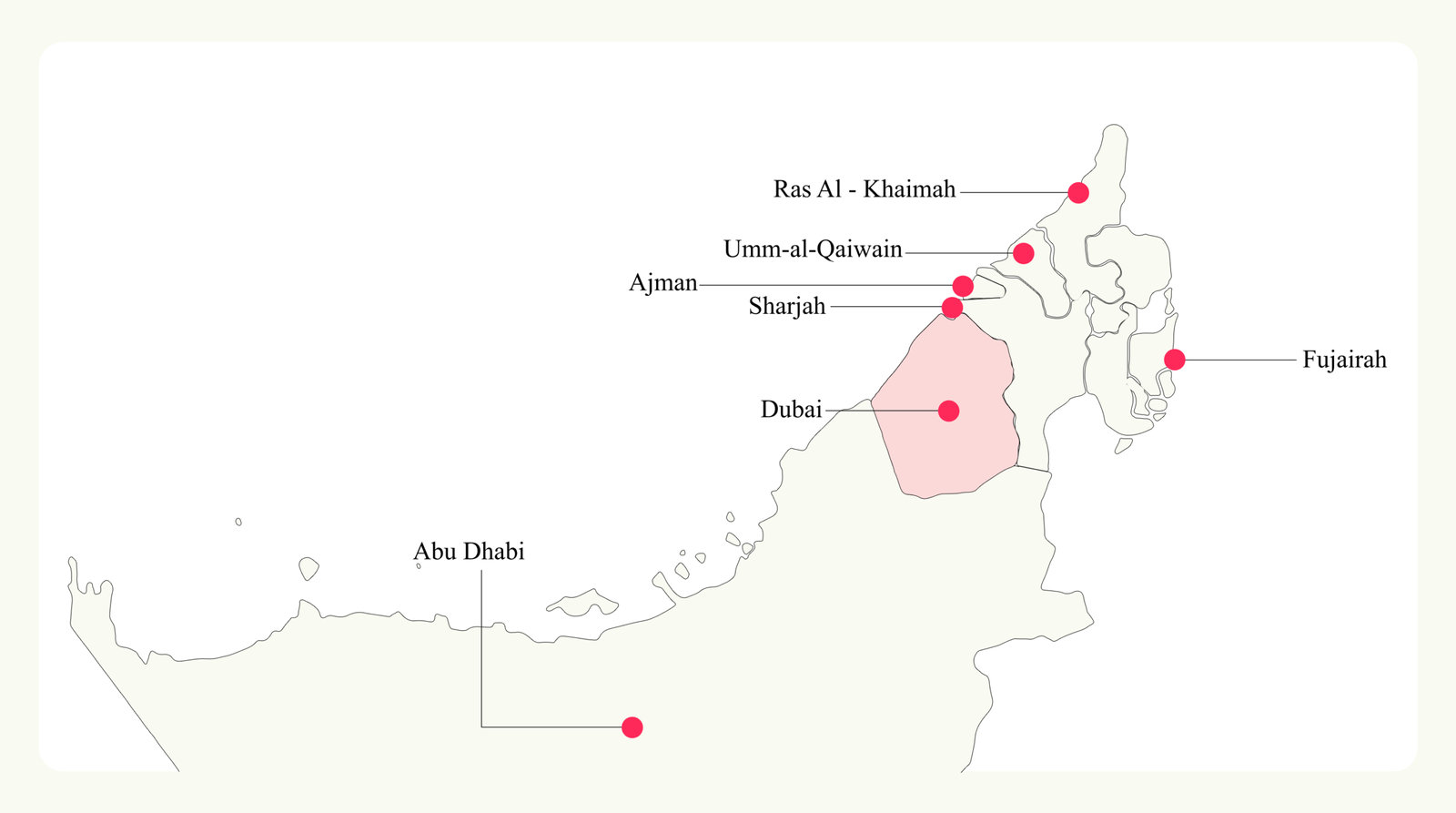
Custom Wardrobe Coverage Throughout UAE
Our wardrobe fabrication and installation services extend across all seven emirates, delivering consistent quality and expertise regardless of location. Since 1988, we’ve completed projects from Fujairah to the Saudi border, accumulating detailed knowledge of regional building practices, regulatory requirements, and client preferences throughout the UAE.
Dubai: We maintain our primary workshop and showroom in Dubai, completing 60-70% of our wardrobe projects across the emirate’s diverse communities. Our teams work regularly in Dubai Marina, JBR, Business Bay, Downtown Dubai, DIFC, Palm Jumeirah, Emirates Hills, Arabian Ranches, The Springs, The Meadows, Jumeirah, Jumeirah Lakes Towers, Dubai Silicon Oasis, Dubai Sports City, Motor City, Remraam, International City, and dozens of other developments. We understand the specific requirements of each community—building management approval processes, elevator access restrictions, parking limitations, and architectural characteristics that influence wardrobe design. Our extensive Dubai project history means we’ve likely completed multiple installations in your specific building or community, allowing us to anticipate logistical requirements and building-specific challenges before they arise.
Abu Dhabi: The capital emirate represents our second-largest market, with regular projects on Abu Dhabi Island, Yas Island, Saadiyat Island, Al Raha Beach, Khalifa City, Al Reef, and surrounding developments. Abu Dhabi’s building regulations differ subtly from Dubai’s, particularly regarding fire safety requirements and building code compliance. We maintain current knowledge of Abu Dhabi Municipality requirements and work with approved contractors for any electrical or structural modifications required. Our Abu Dhabi clients appreciate that we understand the emirate’s distinct architectural character—from traditional Arabic-influenced villas to contemporary statement towers.
Sharjah: Projects in Sharjah include both modern apartment towers and traditional family villas, with design preferences often leaning toward more conventional aesthetics than Dubai’s contemporary trends. We’ve completed wardrobes in Al Mamzar, Al Khan, Al Majaz, Al Nahda, Muwaileh, and university area properties. Sharjah’s proximity to Dubai allows us to serve the emirate efficiently with same-day site visits and quick response times.
Ajman, Ras Al Khaimah, Fujairah, Umm Al Quwain: The northern emirates receive full service with projects scheduled to optimize travel efficiency. We typically batch appointments and installations in these emirates, completing multiple projects during extended site visits rather than individual day trips. This approach delivers cost efficiencies we pass along to northern emirate clients while maintaining our quality standards. Ras Al Khaimah’s growing residential developments along the coast, Fujairah’s unique mountain and beach properties, and Ajman’s established residential communities all see regular Karnak wardrobe installations.
Our geographic coverage extends to remote locations and unusual properties. We’ve installed wardrobes in desert retreats, mountain properties, beach houses in Dibba, and agricultural properties in Al Ain. Project distance from our Dubai workshop affects logistics and timeline but not quality or capability. We provide the same materials, craftsmanship, and service whether installing in a Dubai Marina penthouse or a Fujairah beach villa.
Start Your Custom Wardrobe Project
Your ideal wardrobe begins with understanding exactly what you need, how you’ll use it, and what’s possible within your space and budget. We’ve guided thousands of UAE residents through this process, transforming frustrating storage situations into organizational systems that genuinely improve daily life.
The first step is a no-obligation consultation where we visit your property, assess your current storage, measure the available space, and discuss your requirements in detail. This consultation provides the foundation for everything that follows—accurate measurements, realistic understanding of what’s achievable, and clear expectations about costs and timelines. We invest 75-90 minutes in this initial meeting because proper groundwork prevents expensive mistakes and disappointing results.
IF YOU HAVE ANY QUESTION? WE ARE GLAD TO
CONSULT YOU AS SOON AS POSSIBLE
Get Started
Immediate assistance from our team regarding your project details.
Form Submitted!
Thank you for contacting us. Our team will get back to you within 24 to 48 hours regarding your query.
Contact us on WhatsApp for Quick ResponseAfter submitting your consultation request, we’ll contact you within 4-6 business hours to schedule your appointment at a time convenient for your schedule. The consultation involves no pressure and no obligation—just expert assessment, honest recommendations, and clear information about what we can accomplish together.