
Blog
Wood Types in Dubai: A Carpenter’s Complete Guide to What Actually Works in the UAE

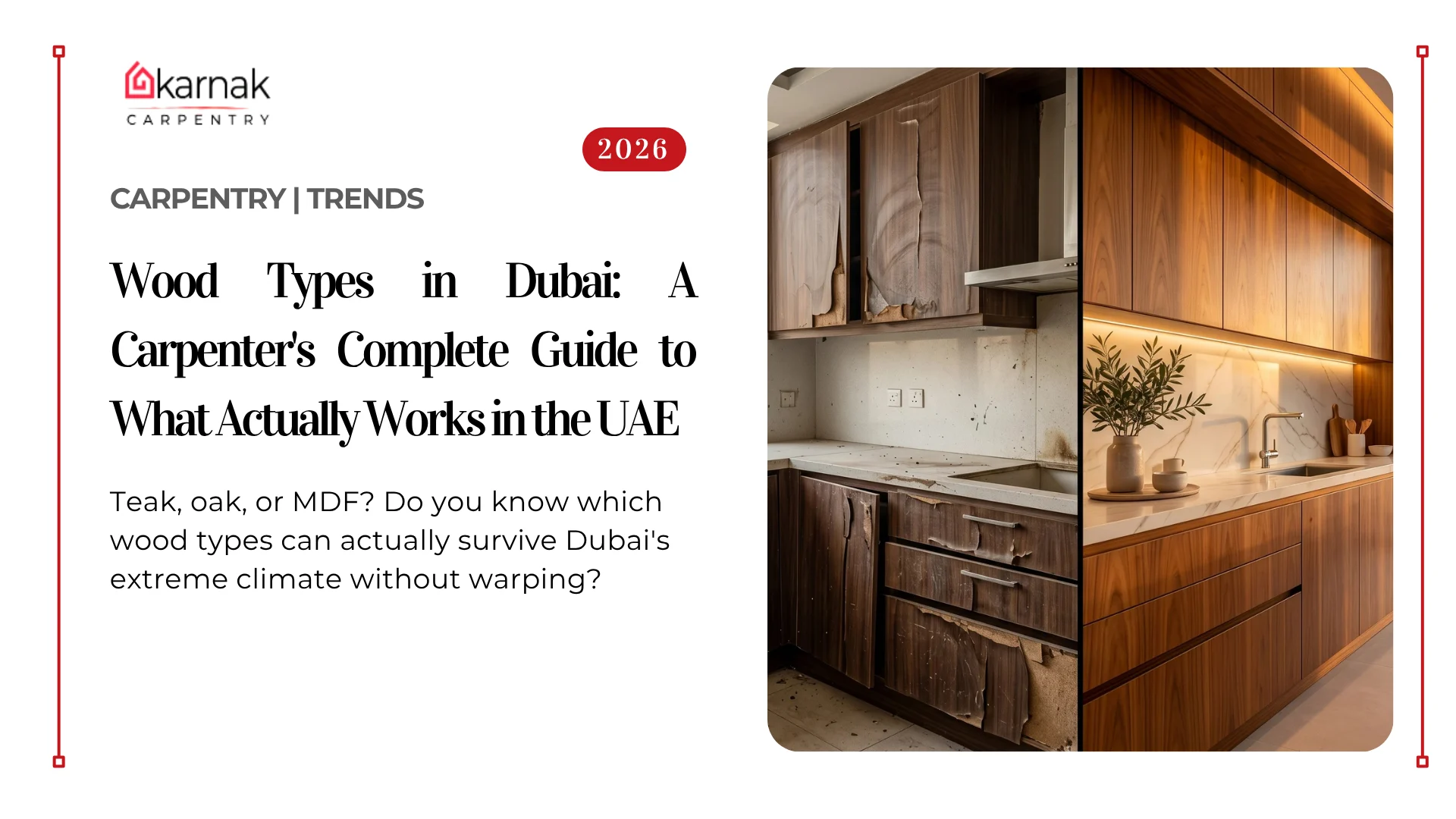
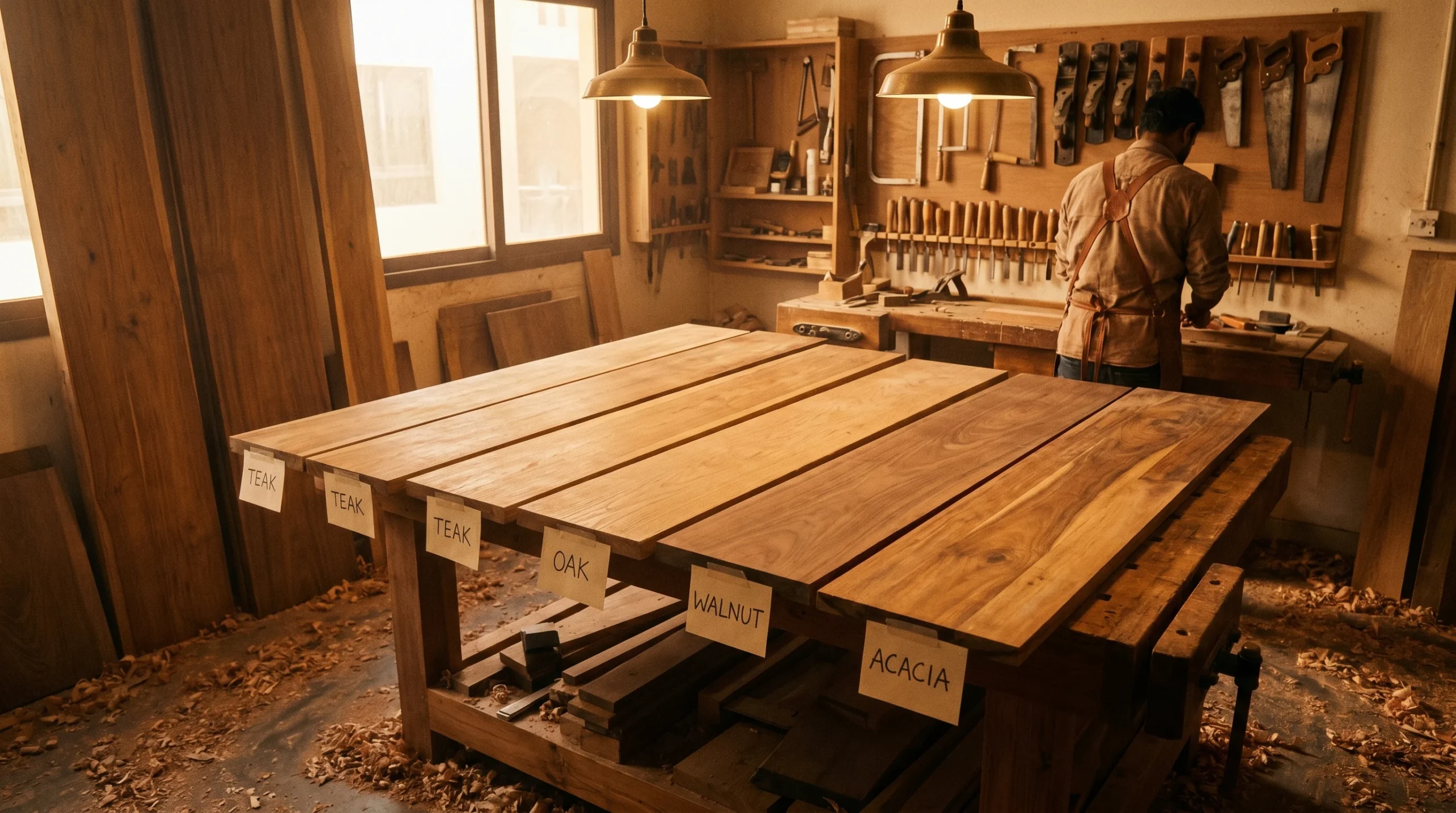
Walk into any timber supplier in Al Quoz and you will find dozens of wood species stacked floor to ceiling, each one labeled with a country of origin and a price per sheet or per cubic meter. It looks like plenty of choice. And it is. But after 35 years and more than 10,000 carpentry projects across Dubai and the wider UAE, our team at Karnak carpentry has learned one hard truth that most suppliers will never tell you: not all of that wood belongs in a Dubai home or office. Some of it will last you decades. Some of it will warp, crack, or delaminate within two summers.
This guide exists because we are tired of seeing clients spend serious money on the wrong materials. Whether you are planning a custom kitchen in Emirates Hills, a fitted wardrobe in Dubai Marina, or a full office fit-out in Business Bay, the wood you choose at the start will determine how that project looks and performs ten years from now. We are going to walk you through every major wood type available in the UAE market today, explain exactly how each one behaves in our climate, give you honest cost ranges for 2026, and share the lessons we have learned the expensive way so you do not have to.
Understanding Why Dubai’s Climate Changes Everything About Wood Selection
Before we get into specific species, you need to understand what Dubai’s environment actually does to wood. This is the context that shapes every recommendation we make.
Wood is hygroscopic.
That means it absorbs and releases moisture from the surrounding air constantly, expanding when humidity rises and contracting when it drops. In most temperate countries, this movement is modest and predictable. In Dubai, it is extreme. Outdoor humidity swings from around 30 percent in dry winter months to above 90 percent during the summer coastal haze. Your indoor environment is climate-controlled, yes, but the transition zones, delivery periods, storage conditions, and any spaces near windows or external walls create stress on wood that can cause real problems if the wrong species or grade is used.
Then there is the heat.
Surface temperatures on sun-exposed wood in Dubai can reach 70 to 80 degrees Celsius in summer. That is not the air temperature. That is what direct sunlight does to a dark-stained external door or a west-facing deck. Very few wood species handle that kind of thermal cycling without showing some movement or checking over time. For bedrooms and wardrobes, we often suggest moisture-resistant options that handle Dubai’s humidity swings beautifully. Explore our bedroom carpentry services
And then there is the air conditioning itself.
Most Dubai interiors are cooled to 20 to 22 degrees Celsius with relatively low humidity. That dry, cool air can actually pull moisture out of poorly acclimatized or low-grade timber, causing internal checking and surface cracking even in an indoor environment.
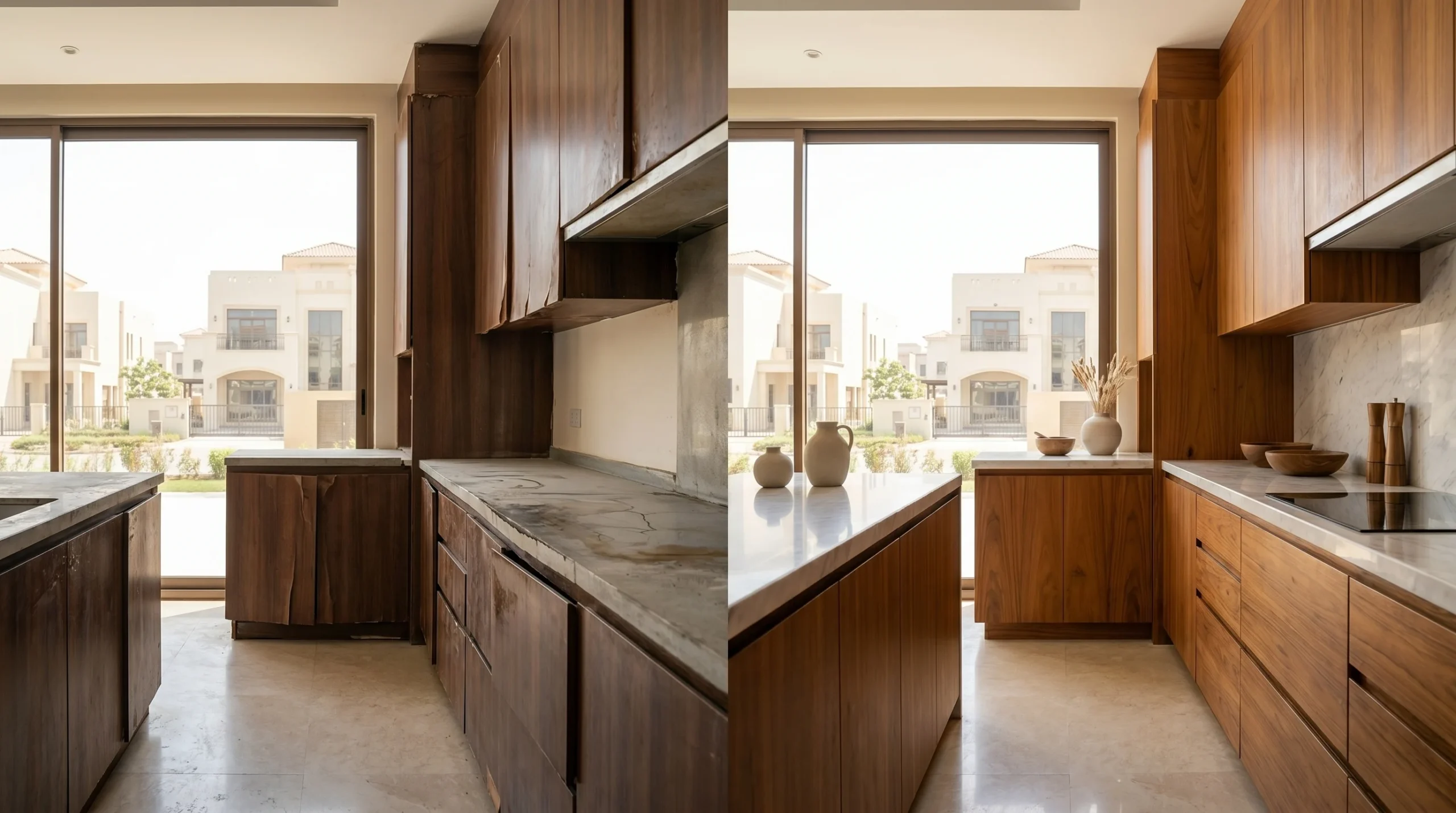
We have seen all of this firsthand. A villa in Jumeirah had beautiful solid oak cabinetry installed by another contractor. Within 14 months, three cabinet doors had warped badly enough that they would not close properly. The wood had not been acclimatized before installation, and the grade used was not suited for the humidity variation near that kitchen’s external wall. A problem that proper wood selection and preparation would have prevented entirely.
The Three Critical Factors We Assess for Every UAE Project
When our team evaluates which wood to specify for any project, three factors come first before anything else: dimensional stability, moisture resistance, and density. Dimensional stability tells us how much the wood will move with humidity changes. Moisture resistance tells us how it handles direct exposure or sustained high humidity. Density largely determines durability, workability, and how it takes finishes.
A fourth factor matters specifically in Dubai: UV resistance. For anything near windows or with any outdoor exposure, we need to know how the wood responds to intense sunlight. Some species bleach beautifully to a silver-grey patina. Others go blotchy, grey unevenly, or surface-check rapidly.
We assess all four before recommending any species. Now let us go through the wood types you will actually find in the UAE market.
Hardwoods Available in Dubai: The Workhorses of Quality Carpentry
Hardwoods come from slow-growing deciduous trees. As a category, they tend to be denser, more durable, and better suited to furniture and joinery work than softwoods. For elegant entryways and foyers, we frequently use premium hardwoods. See examples in our entryway carpentry projects. In Dubai, they represent the majority of premium carpentry work.
Teak: The Gold Standard for UAE Conditions
If you ask any experienced carpenter in the UAE which wood performs best in this climate, most will say teak without much hesitation. We certainly would. Teak and certain engineered woods shine when building custom furniture in Dubai. Teak contains natural oils that make it exceptionally resistant to moisture, insects, and dimensional movement. The grain is tight and interlocked, which contributes to its stability. And it is genuinely beautiful, with a warm golden-brown color that ages gracefully.
We have specified teak for outdoor furniture, decking, bathroom vanities, boat interior work, and premium kitchen cabinetry across hundreds of UAE projects. It handles the humidity swings better than almost any other species. It resists termites, which are a real concern in older UAE buildings and villa communities built on made-up ground near the coast. And it machines and finishes well, giving you clean edges and smooth surfaces that take oil or lacquer beautifully.
The honest downside is cost. Good quality Burmese or plantation teak runs between AED 900 and AED 1,800 per cubic meter in Dubai depending on grade, with finished joinery work pushing total project costs accordingly higher. There is also a significant amount of lower-grade teak in the market, sometimes labeled Grade B or C, that does not perform as reliably. We have seen plantation teak from some Indonesian sources that checks badly in the first dry season. Know your supplier and ask to see moisture content readings and certification.
For indoor furniture and joinery in premium residential projects, teak is frequently the right answer. For full room fits on a moderate budget, we often recommend it for specific elements like door frames, bathroom cabinetry, and window surrounds, with other species used for less demanding applications.
Oak: Beautiful but Needs Careful Management
Oak is arguably the most requested wood species from clients in Dubai right now. European and American white oak in particular has dominated interior design trends for the past decade, and the UAE is no exception. The grain is distinctive, the color range is broad depending on how it is cut and finished, and it takes stain and lacquer extremely well.
Our experience with oak in Dubai is nuanced. Properly selected, properly acclimatized, and properly finished oak performs very well in controlled interior environments. We have completed full kitchen installations in oak at properties in Arabian Ranches and The Lakes that still look excellent after six or seven years. The key words are properly selected, properly acclimatized, and properly finished. Cut any of those corners and you will have problems.
Oak is moderately hygroscopic. In stable indoor environments with consistent air conditioning, it behaves well. In spaces with significant humidity variation, near external walls, in beach-adjacent properties like JBR or Palm Jumeirah, or in any space where the air conditioning cycles off for extended periods, oak needs more careful specification. We typically use quartersawn or rift-sawn oak for critical applications because those cuts are significantly more dimensionally stable than plain-sawn oak.
Cost for solid European oak in Dubai sits between AED 650 and AED 1,200 per cubic meter for structural grades. Finished joinery costs vary widely based on complexity, but oak kitchen cabinetry in Dubai typically runs from AED 1,800 to AED 3,500 per linear meter for quality work including installation.
Walnut: Premium Choice for Furniture and Feature Elements
American black walnut is one of the most visually striking woods available in the Dubai market. The rich chocolate-brown heartwood with its subtle figure is instantly recognizable and commands serious premium pricing. We use it primarily for bespoke furniture, statement pieces, TV unit fronts, headboards, and feature wall paneling where the visual impact justifies the cost.
Walnut is moderately stable and machines beautifully. It does not have the natural oil content of teak, so it requires proper finishing for any application with moisture exposure. For dry interior environments, it performs reliably. We would not specify solid walnut for a bathroom vanity without very careful sealing and finishing protocols.
Pricing for American black walnut lumber in Dubai currently ranges from AED 1,400 to AED 2,800 per cubic meter depending on grade and figure. It is a wood we specify when a client wants something genuinely exceptional and budget is not the primary constraint.
Acacia: The Underrated Workhorse
Acacia, sometimes sold as Acacia Mangium or under various trade names, is one of the more underrated choices in the UAE market. It is dense, hard, and relatively dimensionally stable. The grain can be quite beautiful, with intertwined patterns and color variation that give it character. And it is significantly more affordable than teak or walnut.
We have specified acacia for dining tables, kitchen worktops, and heavy-use flooring in commercial projects where durability is paramount and budget is moderate. It handles foot traffic exceptionally well. It takes oil finishes beautifully, though it can be somewhat unpredictable with film lacquers due to its density.
The limitation is consistency. Acacia varies more between boards than species like oak or teak, so matching pieces for larger installations requires careful sorting. We factor extra time into acacia projects for this reason. Current pricing in Dubai sits between AED 400 and AED 750 per cubic meter, making it genuinely good value for the performance it delivers.
Mahogany: A Classic With Some Caveats
Genuine mahogany (Swietenia macrophylla) is less common in the Dubai market today than it was twenty years ago, but it is still available through specialist timber importers in Al Quoz. It was historically the premier furniture wood, prized for its straight grain, fine texture, and excellent workability.
For Dubai conditions, mahogany performs reasonably well in interiors. It is moderately stable, finishes beautifully to a deep reddish-brown, and has good natural durability. Our main caveat is around sourcing. A lot of what is sold as mahogany in the UAE is actually meranti or other Asian species labeled under the mahogany name. These can be fine materials in their own right, but they are not the same wood. If you are paying for genuine mahogany, verify the species with your supplier.
Softwoods in Dubai: What They Are Good For and Where They Fall Short
Softwoods come from coniferous trees and are generally lighter, less dense, and more affordable than hardwoods. They are widely used in construction, framing, and budget furniture work. In the UAE context, they have a specific and limited role.
Pine: Affordable but Needs Respect
Pine is the most common softwood in the Dubai market. Scandinavian and Russian pine in particular is imported in large quantities for construction framing, internal wall studwork, and budget joinery. It is affordable, readily available, and reasonably easy to work with.
For structural applications that are concealed within walls or ceilings, pine is perfectly adequate. For exposed joinery, furniture, or cabinetry in Dubai’s conditions, it requires careful consideration. Pine is relatively soft, which means it dents and scratches more easily than hardwoods. It is also more susceptible to humidity movement, particularly in solid form. Knotty pine can look charming in certain rustic design styles, but those knots are also potential weak points.
We use pine regularly for secondary framing in joinery work, concealed cabinet carcasses where cost is a priority, and any application where it will be fully sealed and painted. For painted kitchen cabinets, MDF actually outperforms solid pine in most respects. For natural-finish exposed joinery, we rarely specify pine unless the client has a specific rustic aesthetic in mind and understands the maintenance requirements.
Current pricing for structural pine lumber in Dubai ranges from AED 180 to AED 380 per cubic meter depending on grade and section size.
Cedar: Specific Uses Where It Excels
Western Red Cedar has two properties that make it genuinely useful in UAE projects: natural resistance to decay and insects, and exceptional lightness relative to its stability. It is also dimensionally stable, which is a notable characteristic for a softwood.
We specify cedar primarily for wardrobe interiors, linen storage, and any application where the aromatic properties are valued. Cedar-lined wardrobes are a genuine selling point in premium residential projects. Cedar is also a good choice for external cladding on shaded elevations, though direct sunlight exposure requires careful UV-protective finishing.
The softness of cedar means it is not suitable for applications with mechanical wear or heavy use. It also has a tendency to absorb stains unevenly, so finishing requires care. Pricing in Dubai runs from AED 350 to AED 650 per cubic meter.
Engineered Wood Products: The Practical Reality of Modern UAE Carpentry
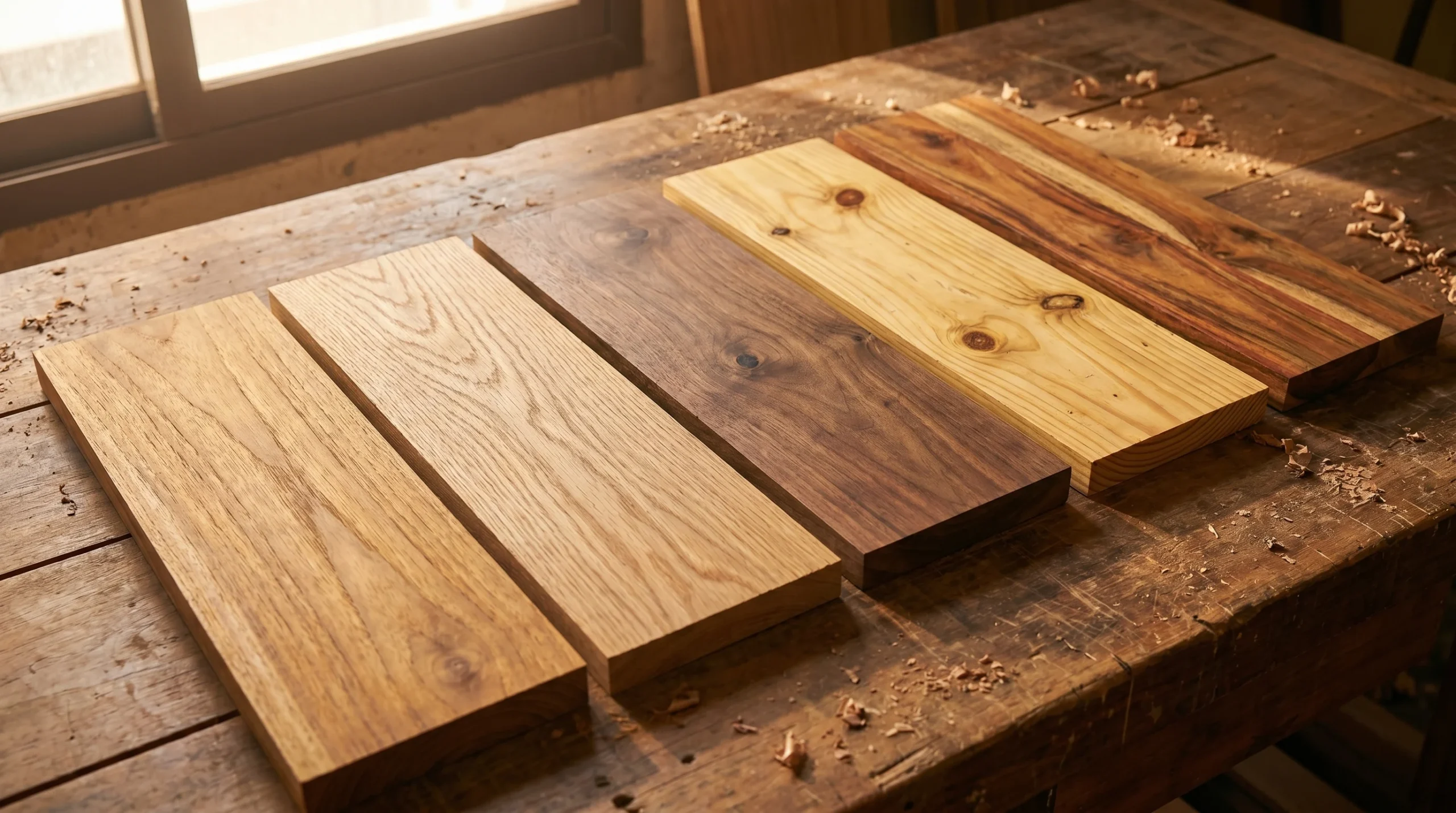
Solid wood gets most of the attention in design conversations, but the honest truth is that a significant proportion of even high-end joinery in Dubai uses engineered wood products for good reason. Understanding what these products are, where they perform well, and where they fail is essential knowledge.
MDF: The Right Tool for the Right Job
Medium Density Fiberboard gets a bad reputation that it partly deserves and partly does not. MDF is made from wood fibers bonded with resin under heat and pressure. It has no grain direction, which means it does not expand and contract anisotropically like solid wood. Edges can be profiled cleanly. Paint finish on MDF is genuinely superior to painted solid wood in many applications because the surface is so consistent.
For painted kitchen cabinetry, painted wardrobe doors, and interior joinery that will receive a painted finish, MDF is often the correct choice. It machines precisely, holds paint well, and behaves predictably in air-conditioned interiors. Our kitchen teams use moisture-resistant MDF (the green-core type) for all kitchen and bathroom cabinet carcasses as standard practice.
The weaknesses are real. Standard MDF is vulnerable to water. Any sustained moisture exposure causes it to swell, delaminate, and eventually disintegrate. Even the moisture-resistant grade is not waterproof. It is heavy, which affects structural design of large units. And it does not hold screws as well as solid wood, which means joinery details need to account for this in fixings and construction methods.
In Dubai specifically, we have seen problems with MDF installations near external walls or in poorly air-conditioned spaces like storage rooms, utility areas, and balcony-adjacent locations. The humidity that penetrates around window frames and external walls is enough to cause problems in standard MDF over time. Specify the right grade for the environment.
Plywood: Genuinely Underappreciated
Quality plywood is, in our view, significantly underused in Dubai residential projects. Cross-laminated construction makes plywood extremely dimensionally stable. Marine-grade plywood is genuinely water-resistant and far more robust than any MDF product for humid environments. Birch ply with a hardwood face veneer can produce furniture and cabinetry that is both beautiful and highly durable.
We use commercial-grade plywood for concealed structural elements in joinery, drawer bases and cabinet backs, and any structural application where strength-to-weight ratio matters. We use birch ply with face veneers for furniture where the edge detail is part of the aesthetic, a technique that has become increasingly popular in contemporary interior design.
The challenge in Dubai is sourcing consistent quality. Plywood grading is less standardized here than in European markets, and there is significant variation in glue quality and core construction between suppliers. We have developed relationships with specific importers whose products we trust. For any client specifying plywood work, understanding the grade and source matters.
Veneer: Getting the Best of Both Worlds
Wood veneer, typically 0.6mm to 2mm slices of real wood bonded to an engineered substrate, allows the visual beauty of premium species to be used more cost-effectively and in a more dimensionally stable way than solid wood. A walnut-veneered MDF panel will not move the way a solid walnut panel might. It also allows matched grain patterns across large surfaces that would be impossible or prohibitively expensive in solid wood.
For large furniture pieces, wardrobes, wall paneling, and kitchen cabinetry where the solid wood aesthetic is desired without the cost or movement concerns, veneer over a stable substrate is often the professional choice. Karnak has completed multiple large-scale residential projects at properties in Mohammed Bin Rashid City and Al Barari using premium veneer work that clients consistently describe as indistinguishable from solid wood at normal viewing distances.
Common Mistakes Dubai Homeowners Make When Choosing Wood
These are the errors we see repeatedly. Every single one of them was avoidable.
Mistake 1: Buying Wood That Has Not Been Properly Acclimatized
This is the single most common cause of problems we are called in to fix. Wood needs to adjust to the humidity and temperature of its final installation environment before it is worked and installed. Bring timber direct from a warehouse, cut and fit it the same week, and you are almost certainly building problems into your project. We hold timber in climate-controlled storage that matches installation conditions for a minimum of two weeks before any cutting begins. Some species require longer. Clients who buy wood from a supplier and immediately give it to a contractor for installation are taking a real risk.
Mistake 2: Specifying Indoor Wood for Outdoor or Semi-Outdoor Spaces
We regularly see teak alternatives, pine, and even MDF used in covered outdoor spaces, pool surrounds, and balconies in UAE properties. The logic is that the space is covered and therefore protected. It is not sufficient. Even covered outdoor spaces in Dubai experience humidity swings and temperature extremes that indoor-grade materials cannot handle reliably. For any outdoor or semi-outdoor application, you need to specify accordingly. Teak, iroko, or properly treated hardwoods with exterior-grade finishing. Not pine, not standard MDF, not interior-grade oak with a light lacquer.
Mistake 3: Choosing Wood Based on Color Alone
We understand why this happens. You see a beautiful piece of walnut or a striking figured maple, and you want it in your home. But color is the last thing to consider, not the first. Consider the application, the environment, the maintenance requirements, and the structural demands first. Then find the right species within those constraints. We have seen clients fall in love with white oak for a bathroom vanity, ignore the moisture concerns, and regret it within two years.
Mistake 4: Ignoring Wood Grade
Wood species names do not tell you everything. Grade matters enormously. First-grade teak behaves very differently from second or third grade. Select-grade oak is more dimensionally stable and visually consistent than number-one common grade. In Dubai’s market, grade labeling is not always consistent or well-understood, and price alone is not a reliable proxy. We have seen premium-priced timber of poor quality and good-value timber of excellent quality. Ask your contractor to specify grade explicitly and to show you moisture content readings.
Mistake 5: Under-Budgeting for Finishing
The wood itself is only part of the story. How it is finished determines how it performs over time, particularly in Dubai’s conditions. Proper preparation, appropriate primer, and quality topcoat are not places to save money. A solid teak cabinet with a poor lacquer job will not perform as well as a well-finished lower-cost species. We budget typically between 15 and 25 percent of material cost for finishing work, and we do not compromise on this regardless of project budget pressure.
Mistake 6: Using One Wood for Every Application in a Project
We see this in budget projects particularly. One wood type specified throughout a fit-out regardless of whether it suits each application. The right approach is to specify the appropriate wood for each use. Teak or marine ply for bathroom vanities. Moisture-resistant MDF or solid hardwood for kitchen carcasses. Premium veneer or solid wood for living area cabinetry. The total material cost difference is often smaller than clients expect, and the performance difference is significant.
Wood Costs in Dubai: Honest 2026 Pricing Ranges
Pricing in the UAE timber market fluctuates with import costs, exchange rates, and global supply. These figures reflect current market conditions as of early 2026 and should be treated as indicative ranges rather than fixed quotes.
Raw Timber and Sheet Material Pricing (per cubic meter or per sheet)
Teak, Grade A (Burmese or certified plantation): AED 900 to AED 1,800 per cubic meter. This remains the benchmark premium hardwood price in the UAE market.
European or American white oak: AED 650 to AED 1,200 per cubic meter. Wide range reflects grade variation. Quartersawn commands the higher end.
American black walnut: AED 1,400 to AED 2,800 per cubic meter. Premium pricing, limited availability.
Acacia (Mangium or similar): AED 400 to AED 750 per cubic meter. Good value at this price point.
Mahogany (genuine Swietenia): AED 800 to AED 1,500 per cubic meter. Availability is limited.
Pine (structural grades): AED 180 to AED 380 per cubic meter.
Western Red Cedar: AED 350 to AED 650 per cubic meter.
MDF (standard, 18mm sheet): AED 65 to AED 95 per sheet. Moisture-resistant grade adds approximately 20 to 30 percent.
Birch plywood (18mm, Baltic): AED 180 to AED 280 per sheet depending on grade.
Marine plywood (18mm): AED 220 to AED 380 per sheet.
Finished Joinery Cost Ranges
These are total project costs including materials, fabrication, and installation for typical Dubai projects.
Custom kitchen cabinetry in solid oak or teak: AED 1,800 to AED 4,500 per linear meter depending on complexity and hardware specification.
Fitted wardrobes in veneer or painted MDF: AED 900 to AED 2,200 per linear meter.
Solid wood flooring installation (including material and fitting): AED 150 to AED 380 per square meter depending on species and profile.
Bespoke furniture pieces: highly variable, but budget AED 8,000 to AED 35,000 for statement dining tables or custom sofas in premium hardwoods.
Expert Tips From 35 Years of UAE Wood Projects
These are things we wish we had known earlier or that we have learned from watching problems develop over decades.
Always request a moisture content reading.
Wood should arrive at 8 to 12 percent moisture content for UAE interior installation. Any higher and you are asking for shrinkage and cracking later. Any legitimate timber supplier should be able to provide this reading. If they cannot or will not, consider that a warning sign.
Visit Al Quoz to see and touch the wood before committing.
The UAE has a concentrated cluster of timber importers and joinery suppliers in the Al Quoz industrial area. Before specifying any significant material purchase, spend time there. See the actual stock. Compare grain quality between suppliers for the same species. Price differences between suppliers for nominally the same material can be significant, and so can quality differences.
Specify moisture-resistant adhesives and fixings for all UAE joinery work.
Even purely indoor installations in Dubai experience enough humidity variation that standard PVA adhesives can soften under sustained stress. We use cross-linking PVA or polyurethane adhesives as standard.
Budget for annual maintenance on natural wood finishes.
Oil-finished teak needs recoating annually for interior use and two to three times per year for any exterior or semi-exterior application. Lacquered surfaces in high-use areas need inspection and touch-up annually. Build this into your ownership cost calculation.
Consider the supply chain for future repairs.
Specifying a rare or unusual species is fine, but consider whether you will be able to source matching material in three or five years if a repair or extension is needed. Teak, oak, and acacia are reliably available in Dubai. Some of the more exotic species are not.
Match wood species to the client’s lifestyle and maintenance willingness.
We ask every client how much time they are willing to spend on maintenance. Someone who wants zero maintenance gets different recommendations than someone who enjoys caring for their home. Teak that is not maintained will still perform structurally but will grey and lose its original appearance. That is fine for some clients and unacceptable for others.
Understand that cheaper wood is not always worse value.
For concealed elements, for areas with no visual impact, and for applications where material performance requirements are modest, using a cost-effective material is smart specification, not corner-cutting. We use high-end hardwoods where they add value, and appropriate lower-cost materials where they do not.

How to Work With a Dubai Carpenter on Wood Selection
Most clients come to us with a design idea and a rough budget. They have seen something on Pinterest or Instagram and they want something similar. That is a perfectly good starting point. Here is how the wood selection conversation should actually go.
Start by describing the application and the space. Where in the property, what level of use, what ambient conditions, and what the rest of the interior design looks like. A good carpenter will start immediately narrowing down species that are suitable for those conditions. If they start with aesthetics before asking about the environment, that is worth noting.
Ask explicitly about moisture content certification and acclimatization practice. A carpenter who does not have a clear protocol here is taking shortcuts that will show up later.
Ask to see samples of their actual stock, not just catalog images. Grain varies enormously within species, and what you see in a sample should reflect what will be installed.
Get a written specification. Species, grade, thickness, finish type, and finish brand should all be documented. This protects you if there is a dispute later and ensures the contractor is accountable for what they deliver.
Ask about post-installation care. A professional will have specific guidance on how to care for the finished work. Generic advice or no advice at all is a warning sign.
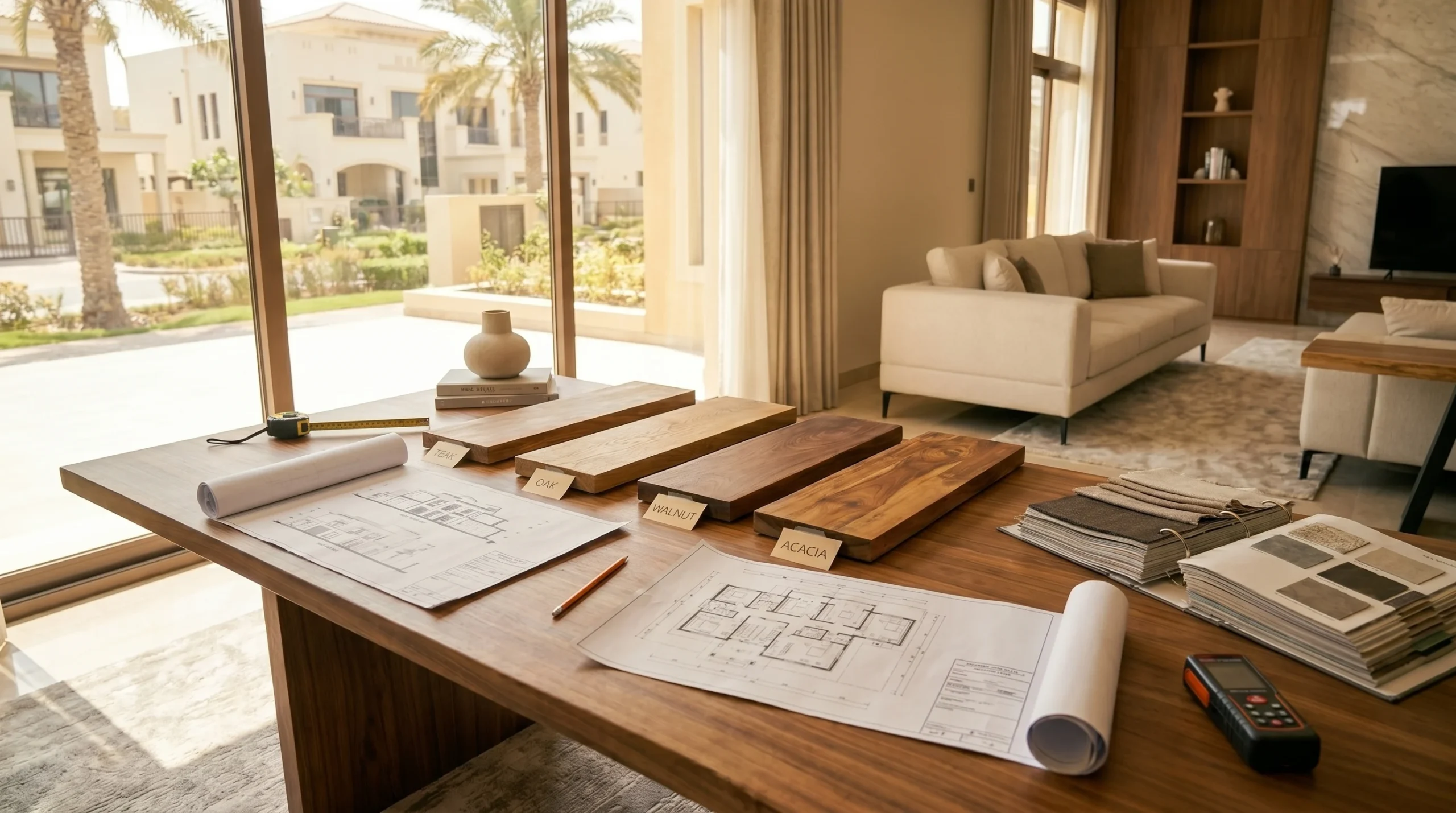
Conclusion: Choose Wood That Works, Not Just Wood That Looks Good
Dubai is one of the most challenging environments in the world for wood. It is also one of the most rewarding when the right materials are specified and properly installed. After 10,000-plus projects across the UAE since 1988, we have developed strong views on what works and what does not. Teak when durability and moisture resistance are priorities. Oak when the aesthetic is paramount and conditions are controlled. Acacia when value and hardness are the drivers. Engineered products where dimensional stability and finish quality matter more than solid wood character.
The most expensive mistake you can make in wood selection is not choosing a premium species. It is choosing the wrong species for the application. We have fixed hundreds of projects across Dubai where that fundamental error was made at the start.
Good wood, properly selected and properly installed, will outlast the building it sits in. We have seen teak joinery from our early projects in the 1990s that still looks excellent today. That is what the right decision at the start delivers.
Key Takeaways:
- Dubai’s climate extremes make wood species selection genuinely critical, not just aesthetic preference.
- Teak remains the benchmark hardwood for UAE conditions due to its natural oils and dimensional stability.
- Oak performs well in controlled interiors but needs careful grade selection and acclimatization.
- Engineered products like moisture-resistant MDF and marine ply are legitimate professional choices for the right applications.
- Acclimatization, moisture content certification, and proper finishing are non-negotiable regardless of species selected.
- Budget 15 to 25 percent of material cost for proper finishing and factor annual maintenance into total ownership cost.
Need Expert Guidance on Wood Selection for Your Project?
Karnak Carpentry has been specifying and installing wood across Dubai and the UAE since 1988. Our team has completed more than 10,000 projects covering everything from single custom furniture pieces to complete villa fit-outs in Emirates Hills, Dubai Hills, and Palm Jumeirah. Learn more about how we work on our About Karnak Carpentry page. We offer free consultations where we visit your space, assess the conditions, and give you honest recommendations based on your budget and requirements. No sales pressure, no catalog pushing. Just 35+ years of hard-won knowledge applied to your specific situation.
Contact: WhatsApp Us or Call Us at +971-52-5554207 | info@karnakcarpentry.com
Frequently Asked Questions About Wood Types in Dubai
What is the best type of wood for furniture in Dubai’s climate?
Marine plywood, teak, oak, and high-quality engineered wood perform exceptionally well in Dubai’s hot and humid climate. These materials resist warping, handle temperature changes better, and provide long-lasting durability for homes across the UAE.
Which wood handles humidity the best in the UAE?
Marine plywood, teak, and birch plywood handle humidity better than most wood materials. These options resist moisture, maintain their shape, and work well for kitchens, wardrobes, bathrooms, and laundry rooms.
Should I choose MDF for furniture in Dubai?
Choose moisture-resistant MDF if you want painted wardrobes, TV units, wall panels, or decorative furniture. It delivers a smooth finish and excellent value. Avoid standard MDF in areas with frequent moisture exposure.
What is the difference between plywood and MDF?
Plywood contains multiple layers of natural wood veneer, so it offers greater strength and better screw-holding power. MDF uses compressed wood fibers, so it creates a smoother surface for paint and decorative finishes. Choose plywood for structural furniture and MDF for painted designs.
Which wood works best for kitchen cabinets in Dubai?
Marine plywood offers the best combination of strength, moisture resistance, and durability for kitchen cabinets. Pair it with laminate, acrylic, veneer, or PU paint to create cabinets that withstand daily use.
Should I choose solid wood or engineered wood?
Choose solid wood if you want premium appearance and decades of durability. Choose engineered wood if you want better dimensional stability, lower cost, and easier maintenance. Many homeowners combine both materials to achieve the best balance of quality and value.
Which wood do professional carpenters in Dubai recommend?
Professional carpenters often recommend marine plywood for kitchens, moisture-resistant MDF for painted furniture, birch plywood for premium cabinetry, and hardwoods like teak or oak for luxury furniture. Your budget and furniture design determine the ideal choice.
Which wood lasts the longest in Dubai?
Teak and oak can last for several decades with proper care. Marine plywood also delivers excellent long-term performance when you protect it with quality finishes and keep it away from standing water.
Is marine plywood waterproof?
Marine plywood resists water extremely well, but it does not remain completely waterproof forever. Waterproof adhesives and dense veneers protect the panels against moisture, while proper sealing extends their lifespan.
Which wood should I choose for custom wardrobes?
Choose plywood for wardrobe frames because it delivers excellent strength and durability. Use moisture-resistant MDF for painted wardrobe doors and decorative panels if you prefer a smooth modern finish.
How can I identify high-quality wood furniture?
Inspect the core material, panel thickness, hardware, edge finishing, and joinery. High-quality furniture includes durable boards, premium hinges, smooth edges, and strong construction that withstands years of daily use.
What is the most affordable wood for furniture in Dubai?
Particle board costs the least, while MDF offers better quality at a moderate price. Plywood costs more but delivers significantly better durability. Solid hardwood sits at the premium end of the market.
Can Dubai’s weather damage wood furniture?
Yes. Heat and humidity can damage low-quality wood and poorly manufactured furniture. Choose kiln-dried timber, moisture-resistant engineered boards, and professional finishes to minimize warping, swelling, and cracking.
Which wood creates luxury furniture in the UAE?
Teak, American oak, walnut, ash, and premium natural veneers create luxurious furniture with outstanding durability and timeless style. These materials also increase the overall value of custom-made furniture.
What wood should I choose for long-lasting custom furniture in Dubai?
Choose marine plywood if you want the best combination of strength, moisture resistance, and value. Choose teak or oak if you want maximum longevity and a premium appearance. Match your choice to your budget, design, and everyday needs.
Related Articles
- How to Prepare Your Dubai Home for a Carpentry Installation (The Complete Homeowner Guide)
- How to Measure Your Space for Built-In Wardrobes (The Right Way)
- Wood Finishing Options Explained: Paint, Stain, Lacquer, and Oil in the UAE
- Engineered vs Solid Wood Flooring in UAE: The Climate Verdict After 35 Years