Blog
Best Moisture-Resistant Materials for Bathroom Vanities and Wardrobes in the UAE

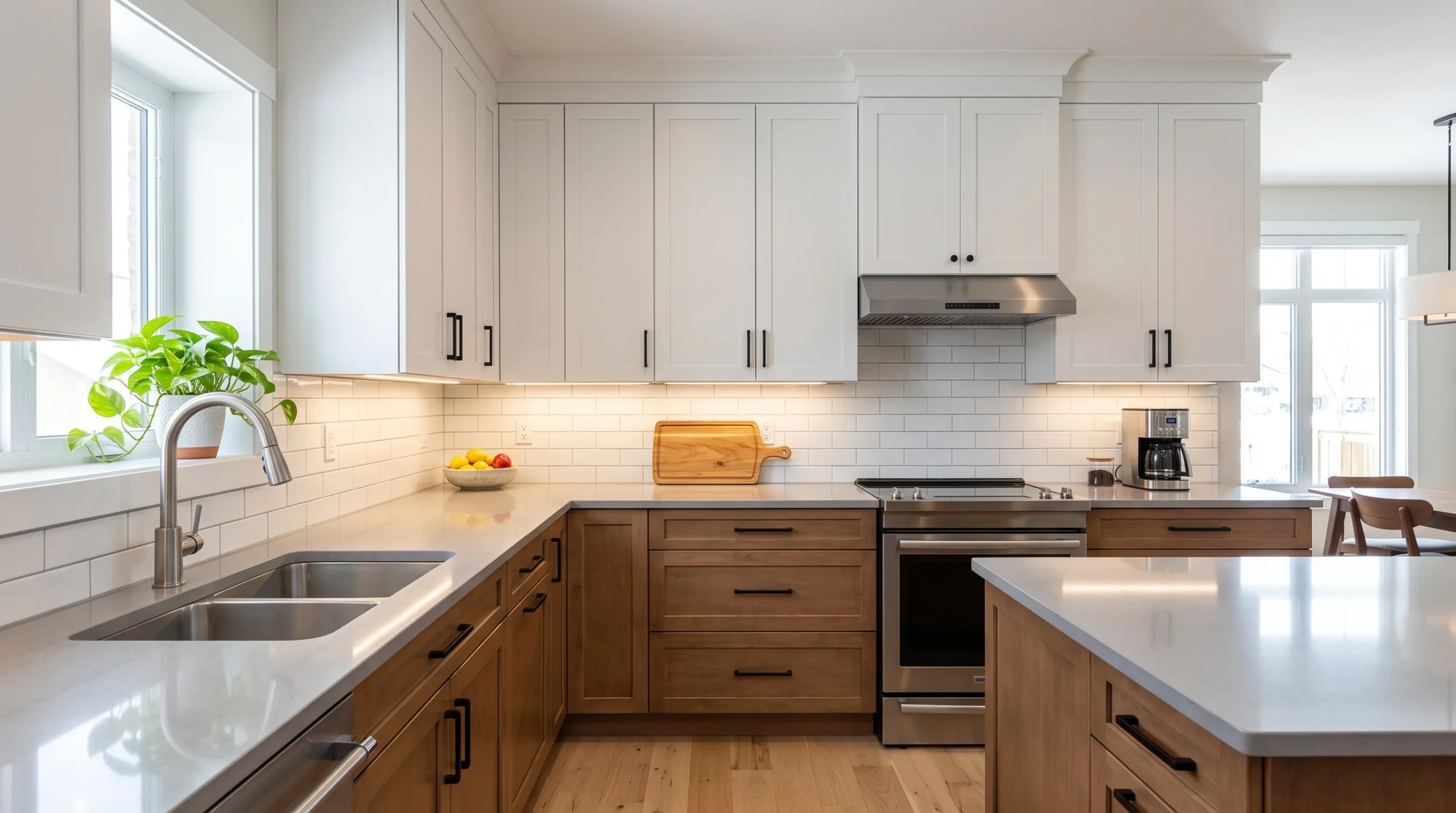
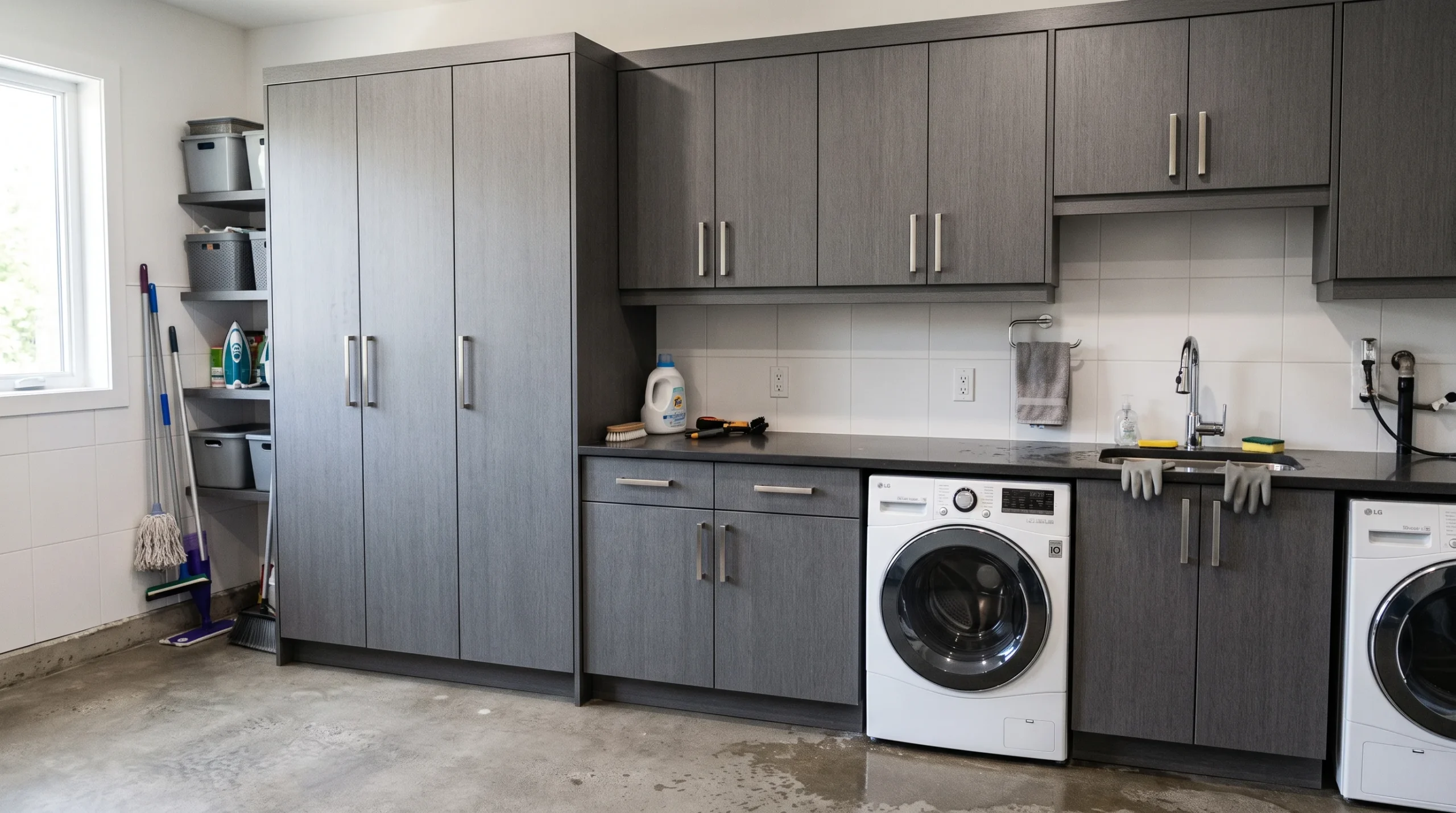
Choosing the right moisture resistant bathroom vanity UAE homeowners can trust is essential due to high humidity, steam, and AC condensation. The same challenges also affect wardrobes installed near bathrooms or under air-conditioning ducts. In this guide, we explain the best materials and construction methods for long-lasting bathroom vanities and wardrobes in the UAE climate.
Choosing the right material is essential. The best option depends on moisture exposure, location, desired finish, budget, and expected lifespan. At Karnak Carpentry, we look at the full construction system core material, surface finish, edge sealing, hardware, ventilation, and installation rather than focusing only on the board name.
Why Moisture Resistance Matters in the UAE
The UAE climate creates several moisture-related risks for interior cabinetry. Bathrooms produce steam and condensation, while overall humidity rises significantly during warmer months.
One often-overlooked problem is AC condensation. When cold air from an air-conditioning duct blows directly onto a wardrobe’s top panel, rear panel, or surrounding wall, condensation can form. Over time this can cause swelling, staining, delamination, or damage to board edges even if the wardrobe is not inside a bathroom.
For bathroom vanities, the highest-risk areas include:
- Sink and basin cut-outs
- Cabinet bases
- Plumbing openings
- Rear panels
- Exposed board edges
- Areas below leaking pipes
- Floor-level joints
- Poorly ventilated enclosed cabinets
For wardrobes, we also check the relationship between the cabinet and AC ducts, chilled walls, windows, exterior walls, and humid rooms.
Best Materials for Moisture-Resistant Bathroom Vanities
Several materials perform well when correctly specified. They are not interchangeable — each offers different levels of water resistance, strength, appearance, cost, and fabrication flexibility.
1. Moisture-Resistant MDF (MR-MDF)
MR-MDF is a practical choice for many residential bathroom vanities and wardrobes. Compared with standard MDF, it offers improved resistance to humid conditions and a smooth, consistent surface ideal for painted finishes, laminates, veneers, and decorative machining.
It works well when you need:
- Smooth painted vanity doors
- Contemporary cabinet profiles
- Routed decorative details
- Cost-effective custom cabinetry
Important: MR-MDF is not fully waterproof. Prolonged standing water or untreated edges can still cause damage. Proper edge sealing and protection of cut-outs are essential.
2. High-Quality Plywood
Plywood’s cross-laminated construction provides excellent structural stability and screw-holding strength. Quality plywood is particularly useful for vanity carcasses, drawer boxes, shelves, and heavy-duty wardrobes.
Performance depends heavily on grade, adhesive system, veneer quality, and finishing. For premium bathrooms, higher-grade plywood is often worth the extra cost.
3. Marine-Grade Plywood
Marine-grade plywood is designed for demanding moisture environments. It offers strong structural performance and improved water resistance, making it suitable for high-specification projects where durability matters more than the lowest material cost. Even marine plywood still requires proper surface protection and edge sealing.
4. Compact Laminate (Phenolic Board)
Compact laminate (also called phenolic board) is one of the strongest options for UAE wet areas. It is a dense, engineered panel made from kraft paper impregnated with thermosetting resins and compressed under high pressure. Unlike conventional laminate-faced boards, it does not rely on a moisture-sensitive timber core.
It is widely used for:
- Premium bathroom vanities
- Commercial and hotel washrooms
- Healthcare and institutional facilities
- Shower-area cabinetry
- High-traffic wet zones
Compact laminate offers excellent resistance to water, impact, abrasion, and frequent cleaning.
5. Compact Density Fiberboard (CDF)
CDF is a high-density fiberboard with greater dimensional stability and surface durability than standard MDF. It works well for premium vanity fronts, decorative panels, architectural detailing, and high-end wardrobes. Always check the manufacturer’s technical specifications, as performance varies between products.
6. HDF (High-Density Fiberboard)
HDF has higher density than standard MDF and provides a harder, more durable surface. It is useful for wardrobe doors and decorative panels where surface hardness and precision machining matter. Density alone does not make HDF waterproof — proper finishing and protection are still required in humid environments.
Material Comparison Table
| Material | Moisture Performance | Structural Strength | Finish Flexibility | Best Applications |
|---|---|---|---|---|
| MR-MDF | Good when properly sealed | Good | Excellent | Residential vanities & wardrobes |
| Standard MDF | Limited in humid conditions | Good | Excellent | Dry interior cabinetry |
| HDF | Good with proper protection | Very good | Very good | Wardrobe doors & high-density panels |
| Quality Plywood | Very good (depends on grade) | Excellent | Very good | Premium wardrobes & vanities |
| Marine-Grade Plywood | Excellent | Excellent | Very good | High-moisture applications |
| Compact Laminate | Excellent / waterproof | Excellent | Very good | Wet areas, hotels, commercial washrooms |
| CDF | Good to very good | Very good | Excellent | Premium architectural cabinetry |
Choosing Materials for Wardrobes
There is no single “best” material for every wardrobe.
- Plywood generally offers superior structural strength and screw-holding capacity — ideal for heavy-duty or large wardrobes.
- MDF / MR-MDF provides a smoother surface and is excellent for painted doors and decorative profiles.
- HDF offers greater surface hardness for high-wear panels.
- Many projects use a combination: plywood for structural parts and MDF/HDF for decorative elements.
Location is critical. A wardrobe in a dry bedroom has different needs from one installed beside a bathroom, under an AC duct, against an exterior wall, or in a poorly ventilated room.
Construction Matters as Much as Material
Even the best board will fail if construction and installation are poor. Key points we always address:
- Sealed edges on all vulnerable areas
- Accurate and sealed plumbing openings and sink cut-outs
- Cabinet bases designed to minimize contact with standing water
- Quality hinges, drawer runners, and hardware
- Adequate ventilation behind and around the cabinet
- Protection from AC condensation (clearances, airflow planning)
- Professional installation that avoids moisture traps
Final Recommendation
For a typical UAE bathroom vanity, MR-MDF, quality plywood, HDF, CDF, or compact laminate can all work depending on exposure and budget. Moreover, for premium wet areas and commercial washrooms, compact laminate is often the strongest choice.
For wardrobes, quality plywood delivers excellent durability, while MR-MDF and HDF provide outstanding finish quality when properly protected. The most important factor is treating moisture resistance as a complete system — material, edge sealing, finishing, ventilation, AC planning, and installation must work together.
If you are planning a bathroom vanity or custom wardrobe in Dubai or anywhere in the UAE, we can assess your specific conditions (humidity, AC layout, room ventilation) and recommend the most suitable materials and construction details.
Book a free site visit or message us on WhatsApp to discuss your project.