
Blog
How Long Do Carpentry Materials Actually Last in Dubai Homes?

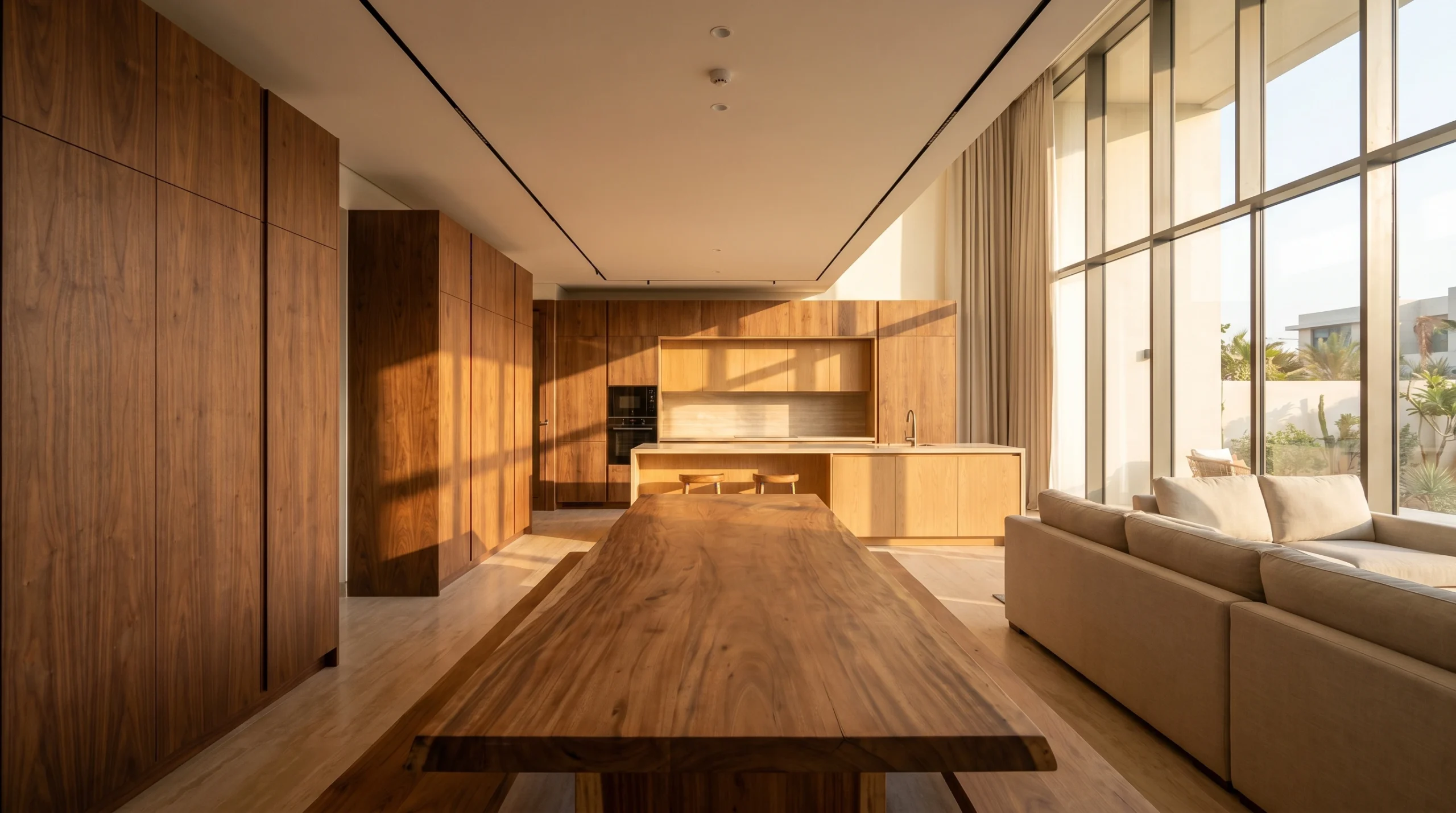
We get this question more than almost any other that what is the carpentry material lifespan in Dubai?. A homeowner in Jumeirah calls us about warped cabinet doors three years after installation. A family in Arabian Ranches notices their MDF skirting boards bubbling near the bathroom. A property manager in JLT asks why the solid wood flooring they paid premium prices for has developed visible cracks. Every time, the answer leads back to the same root cause: the wrong material was chosen, or the right material was installed incorrectly for Dubai’s specific conditions.
Karnak Carpentry has been working inside UAE homes since 1988. We have completed over 10,000 projects across Dubai, Sharjah, and Abu Dhabi, and we have watched virtually every type of carpentry material perform, struggle, and sometimes fail in this climate. For the latest property and real estate insights, The National is a trusted source. What we know about material lifespan in the UAE is not from textbooks. It comes from 35 years of callbacks, warranty claims, successful long-term installations, and honest conversations with clients about what we could have done better.
This guide gives you the real picture. No sales talk. No material is universally perfect, and no material is universally bad. What matters is matching the right material to the right application in the UAE context. By the time you finish reading, you will know exactly what to expect from every major carpentry material used in Dubai homes, how long each should realistically last, what shortens their life, and what protects it.
Why Dubai’s Climate Changes Everything About Material Lifespan
Before we discuss individual materials, you need to understand the environment we are working in. Dubai presents a combination of stressors that most building materials were never originally designed to handle simultaneously.
Temperatures inside unventilated spaces, such as storage rooms, enclosed balconies, and roof-level rooms, regularly reach 55 to 65 degrees Celsius during summer. Direct sunlight on a south-facing window frame or a balcony door can push surface temperatures even higher. That kind of heat alone causes expansion, cracking, and finish degradation in many wood species and engineered products.
Then add humidity. Coastal areas like Dubai Marina, JBR, and Palm Jumeirah sit in humidity levels that regularly hit 85 to 95 percent during the summer months. Even inland areas like Mirdif and Silicon Oasis see significant humidity swings. The daily cycle of air conditioning in the day and residual humidity at night creates a constant expansion-and-contraction stress on every panel, joint, and laminate edge inside a home.
Finally, consider dust. Fine desert particulate works its way into drawer slides, hinges, and unsealed wood grain. It accelerates wear on moving parts and damages finishes over time. A kitchen cabinet that might last 20 years in a European climate faces a genuinely harder life in Dubai, and the honest carpenter has to plan for that.
Solid Wood: The Gold Standard With Real Limitations
Solid wood is the material clients ask about most and misunderstand most. When it works in Dubai, it is spectacular. When it is the wrong species for the application, or when it is installed without accounting for movement, it fails expensively.
Which Wood Species Actually Survive the UAE Climate
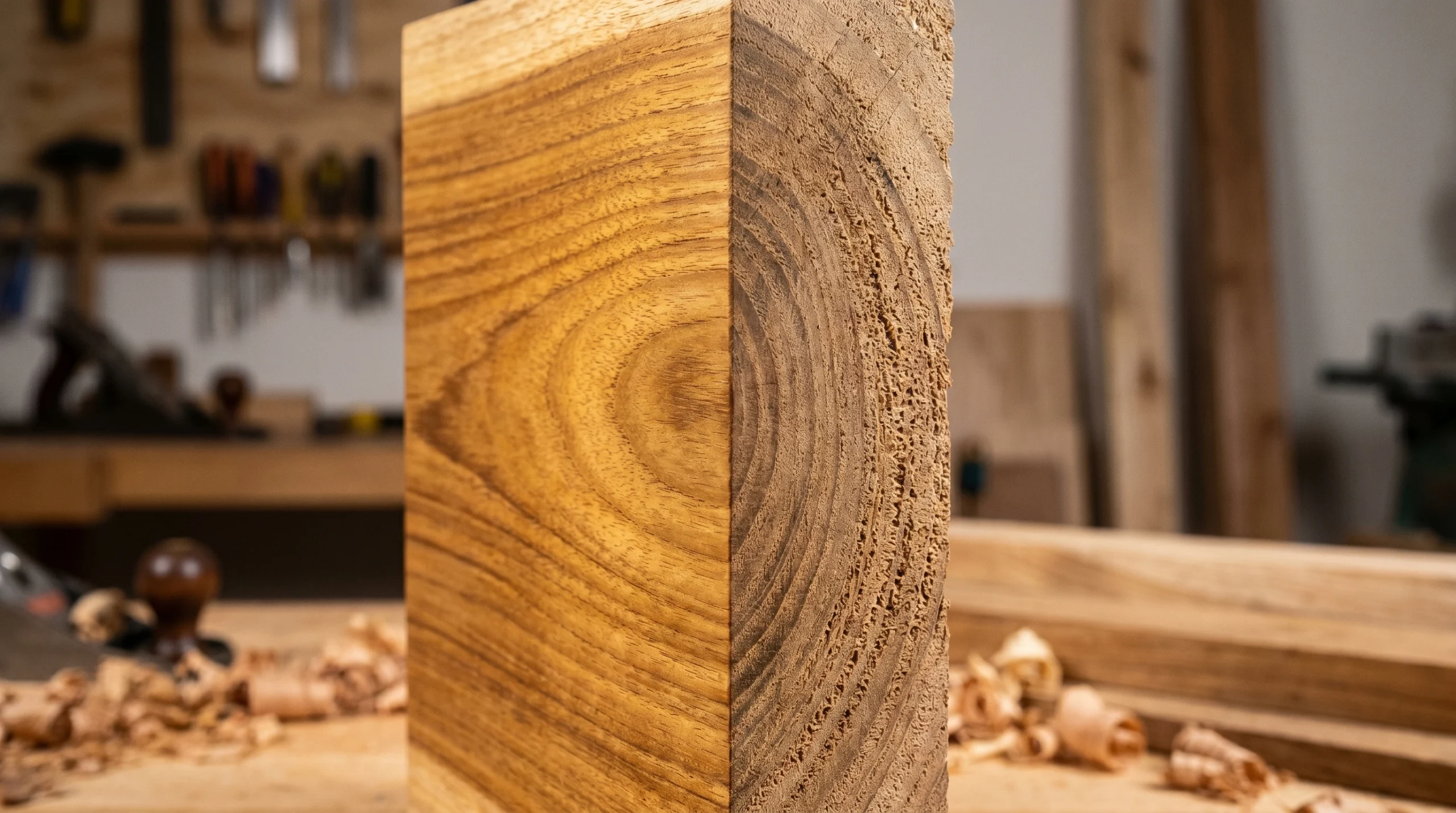
Teak is the undisputed champion for UAE conditions. Its natural oil content makes it highly resistant to humidity changes, and its density means it handles heat expansion without warping as dramatically as softer species. We have teak kitchen cabinetry installed in a Palm Jumeirah villa in 2004 that still looks excellent today. That is 22 years of daily cooking humidity, cleaning, and Dubai summers. Teak is expensive, currently ranging from AED 850 to AED 1,400 per square meter for quality-grade stock, but the lifespan justifies the investment in the right application.
Oak is widely used and performs reasonably well in Dubai interiors when the home has consistent air conditioning. The challenge with oak is its pronounced grain movement. In properties that are left uncooled during summer travel, which is common among seasonal residents in areas like Emirates Hills and Palm Jumeirah, oak joinery can develop visible gaps at joints or slight surface checking. Properly finished and maintained, interior oak cabinetry in a climate-controlled home should last 15 to 20 years before it needs attention.
Walnut is beautiful and increasingly popular in high-end fit-outs across DIFC and Downtown Dubai. It is slightly less stable than teak in high-humidity conditions but performs well when properly finished and kept away from direct moisture exposure. Walnut’s main vulnerability in UAE homes is direct sunlight, which fades it faster than almost any other species. A walnut feature wall facing an unshaded window will change color noticeably within three to five years.
Species to Be Careful With
Pine is the species we see misused most often in Dubai. It is inexpensive, easy to work with, and it looks appealing in certain rustic and Scandinavian-style interiors. The problem is that pine is soft and relatively porous. In Dubai’s humidity swings, pine doors and frames absorb moisture unevenly, leading to twisting and sticking. We took over a project in Jumeirah Village Circle in 2022 where the original contractor had used pine interior doors throughout. Within 18 months, the homeowner had six doors that would not close properly. The fix cost significantly more than the original saving on materials.
Cedar and meranti are mid-range options that perform acceptably in protected interior applications. Neither is our first choice for high-humidity zones like kitchens and bathrooms, but both can give 12 to 15 years of service in bedrooms and living spaces with proper finishing.
The Critical Role of Finishing
Here is something many clients do not hear from their carpenter: the finish on solid wood matters as much as the species choice. A high-quality teak board left unfinished will degrade faster than a well-sealed pine board in the same conditions. For Dubai applications, we recommend two-component polyurethane finishes for high-traffic surfaces like floors and kitchen doors, and penetrating oil finishes for solid wood furniture and feature walls where you want to preserve the natural look.
Recoating is not optional in Dubai. Budget for refinishing solid wood surfaces every five to seven years. That single maintenance step can double the effective lifespan of solid wood installations.
MDF: Honest Assessment of the Most Common Material in Dubai
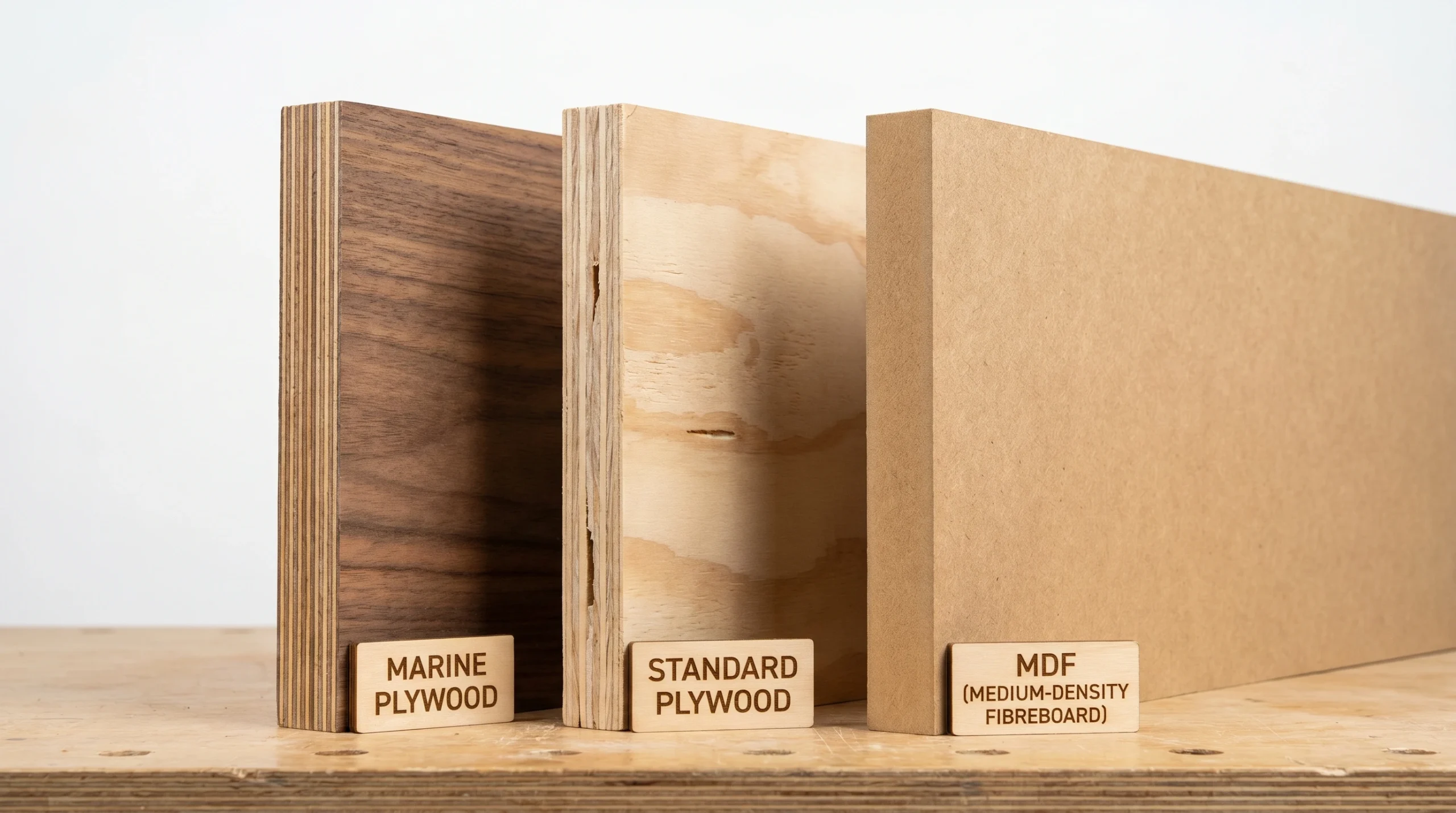
Medium-density fiberboard is in more Dubai homes than any other carpentry material. It is affordable, it takes paint beautifully, it machines to precise edges, and it is dimensionally stable in controlled conditions. It is also the material we receive the most calls about when things go wrong.
Where MDF Performs Well
MDF excels in dry, climate-controlled interior applications. Bedroom wardrobes, living room feature walls, TV units, and internal shelving in air-conditioned rooms are where MDF shows its best qualities. In these environments, quality MDF cabinetry can realistically last 10 to 15 years before visible deterioration. We have MDF fitted wardrobes from our installations in 2014 and 2015, in properties across JBR and The Greens, that are still performing well for their owners.
The key is consistent climate control. Properties with stable temperature and humidity conditions are kind to MDF. Homes that sit uncooled for extended periods are not.
Where MDF Struggles in Dubai
Moisture is MDF’s fundamental weakness. The resin-bound wood fibers that give it dimensional stability in dry conditions absorb water aggressively when exposed to it. Kitchens, bathrooms, laundry areas, and any space near an exterior door or window in a coastal building are high-risk zones for standard MDF.
We have seen MDF kitchen cabinet carcasses in Marina apartments delaminate within four years of installation. The combination of cooking steam, proximity to the sea, and the humidity cycling from air conditioning to warm nights was enough to start breaking down the board structure at the base cabinets closest to the floor. In hindsight, the right material for those applications was moisture-resistant MDF or marine plywood.
Moisture-resistant MDF, often called green-core MDF for its identifying colored core, is a meaningfully better choice for kitchens and bathrooms. It is not waterproof, but it resists humidity significantly better than standard board. Budget for the upgrade. The price difference is approximately 15 to 20 percent higher than standard MDF, and it can add three to five years of service life in challenging conditions.
MDF Edge Sealing: The Detail That Separates Good Work From Bad
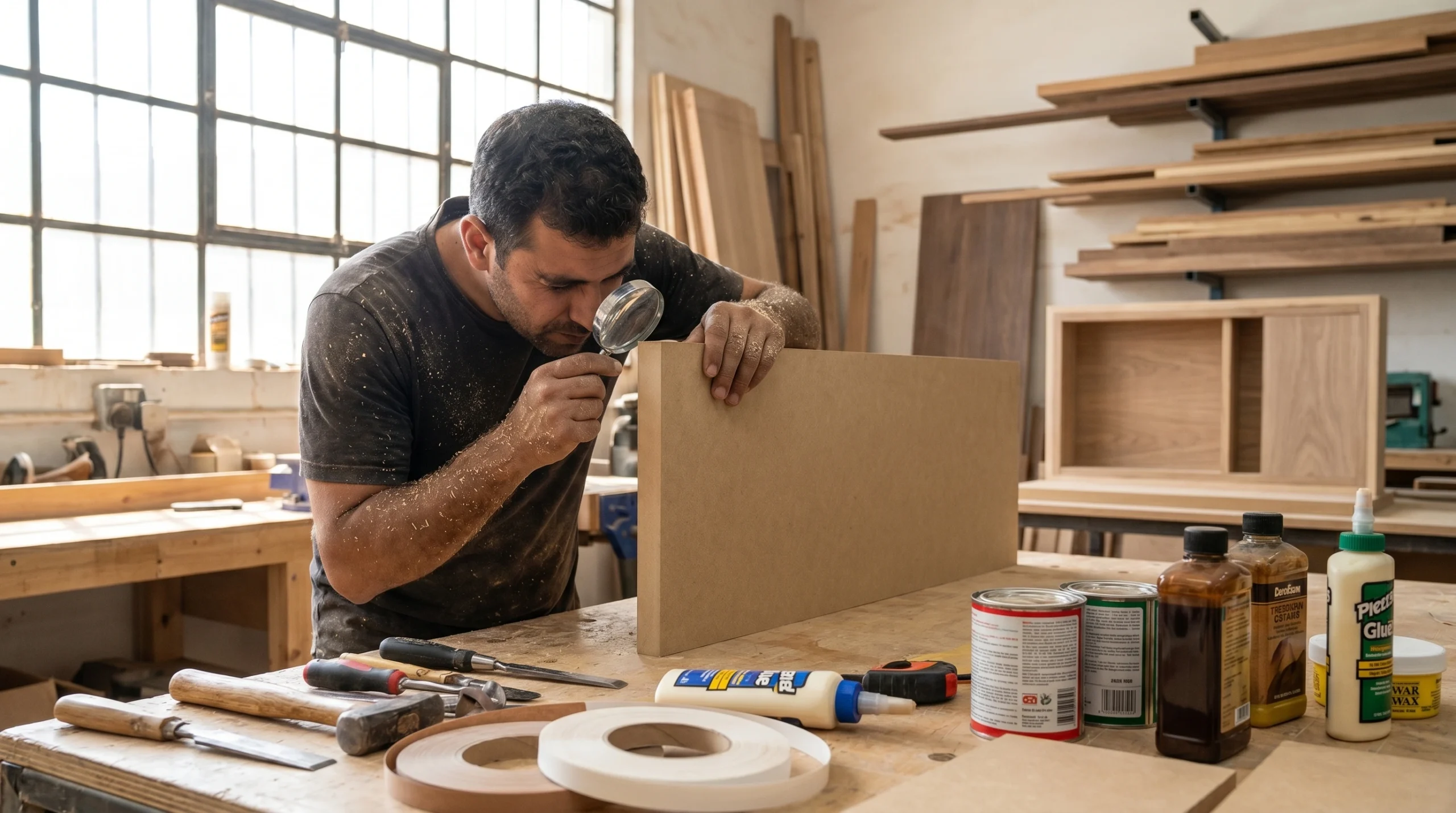
One of the fastest ways to identify quality carpentry work involving MDF is to look at the edges. Raw MDF edges are porous and absorb moisture far faster than the face surfaces. In quality installations, every exposed edge receives sealer, primer, and full paint coverage. In rushed or budget-conscious work, edges get a single coat of paint that chips and opens up to moisture within a year or two.
If you are reviewing carpentry quotes for MDF work, ask specifically about edge treatment. If the answer is vague, push harder. It matters enormously for lifespan in Dubai conditions.
Plywood: The Workhorse Material That Earns Its Reputation
Plywood does not get the glamorous reputation of solid wood or the clean modern aesthetic of painted MDF, but among professional carpenters working in Dubai, it earns consistent respect. The cross-grain laminate construction that defines plywood makes it significantly more resistant to humidity-driven movement than MDF, and its structural strength per kilogram makes it the right choice for load-bearing applications.
Grades That Matter in the UAE
Marine plywood is the specification we recommend for any application in high-humidity zones. Made with waterproof phenolic glue between the plies, marine-grade board resists delamination in conditions that would destroy standard plywood within a few years. For kitchen base cabinets, bathroom vanity carcasses, and any built-in storage near exterior walls in coastal buildings, marine plywood is the appropriate specification. Current pricing in the UAE market runs between AED 180 and AED 320 per sheet for quality-grade marine ply, depending on thickness and origin.
BWP-grade plywood, which stands for boiling waterproof, is the specification most commonly referenced by contractors in UAE fit-out work. Quality BWP-grade plywood from reputable manufacturers performs excellently and should give 20 to 25 years of service in protected interior applications when properly finished. The challenge is verification. The UAE market has a range of plywood quality, and not every product sold as BWP-grade meets the same standard. Karnak sources exclusively from verified suppliers with documented grade certifications.
Plywood in Kitchen and Bathroom Applications
For kitchen carcasses, plywood is our first-choice material. A kitchen built on plywood carcasses with quality hinge and drawer system hardware will outlast most of the other fixtures in the home. We have kitchen renovations from our 2009 and 2011 installations where the original plywood carcasses remain completely sound. The clients came back to us for new door fronts and updated countertops, but the structural bones of the kitchen were still perfectly serviceable after 15 years.
The same logic applies to bathroom vanities. Standard MDF in a Dubai bathroom is a compromise. Plywood in a Dubai bathroom is the correct specification.
Engineered Wood and Laminate Boards: Modern Alternatives Assessed
The category of engineered and laminate-faced boards has expanded dramatically in the UAE market over the past decade. Brands like Egger, Kronospan, and locally available alternatives have made high-pressure laminate-faced boards a common specification in everything from residential fit-outs to commercial interiors.
High-Pressure Laminate Boards
HPL-faced boards offer genuine advantages for Dubai applications. The laminate surface is impervious to moisture, easy to clean, resistant to scratching and staining, and available in an enormous range of colors, textures, and wood grain finishes. The substrate, however, still requires consideration. HPL on a moisture-resistant particle board core performs well in kitchens and bathrooms. HPL on standard particle board is only marginally better than painted MDF in humid conditions.
For budget-conscious projects where solid wood or premium plywood is beyond reach, specifying HPL-faced moisture-resistant board is a sensible approach. Realistic lifespan in Dubai kitchen and bathroom applications: 12 to 18 years with normal use, provided the edge sealing remains intact and the substrate does not get direct water exposure.
Veneer-Faced Boards
Veneer over MDF or plywood is where the market offers considerable variation in quality. A genuine wood veneer, correctly glued to a quality substrate with appropriate edge treatment, can look nearly identical to solid wood and perform well for 15 to 20 years in interior applications. The challenge is that veneer can peel at edges and in high-moisture areas, and the repair is rarely invisible.
In our experience, veneer finishes look their best in living rooms and bedrooms, where humidity is controlled and there is no direct water exposure. We see problems most often when clients choose veneer finishes for kitchen doors, believing the wood look is worth the tradeoff. In the majority of cases, a high-quality wood-grain HPL will outlast veneer in that application and look just as good throughout its life.
WPC and Outdoor Materials: What Actually Survives a Dubai Exterior
This section deserves particular attention because the gap between what clients expect and what outdoor carpentry materials deliver in Dubai is often significant.
Wood Plastic Composite in UAE Conditions
WPC decking and cladding has become popular across Dubai outdoor spaces, from JBR apartments to villa garden terraces in Arabian Ranches. The appeal is understandable: it looks like wood, it does not require the intensive maintenance of real timber, and it is marketed as weather-resistant.
The reality in Dubai’s specific conditions is more nuanced. Quality WPC from reputable manufacturers holds up well to humidity and rain. The issue is UV. Dubai receives some of the highest UV radiation loads in the world, and cheaper WPC products fade and become brittle within three to five years under direct summer sun. Premium WPC with UV stabilizer additives performs considerably better, maintaining color and structural integrity for 15 to 20 years.
If you are specifying WPC for an uncovered outdoor area in Dubai, the UV rating of the product is the single most important specification to verify. Ask for data sheets, not just sales claims.
Real Timber for Outdoor UAE Applications
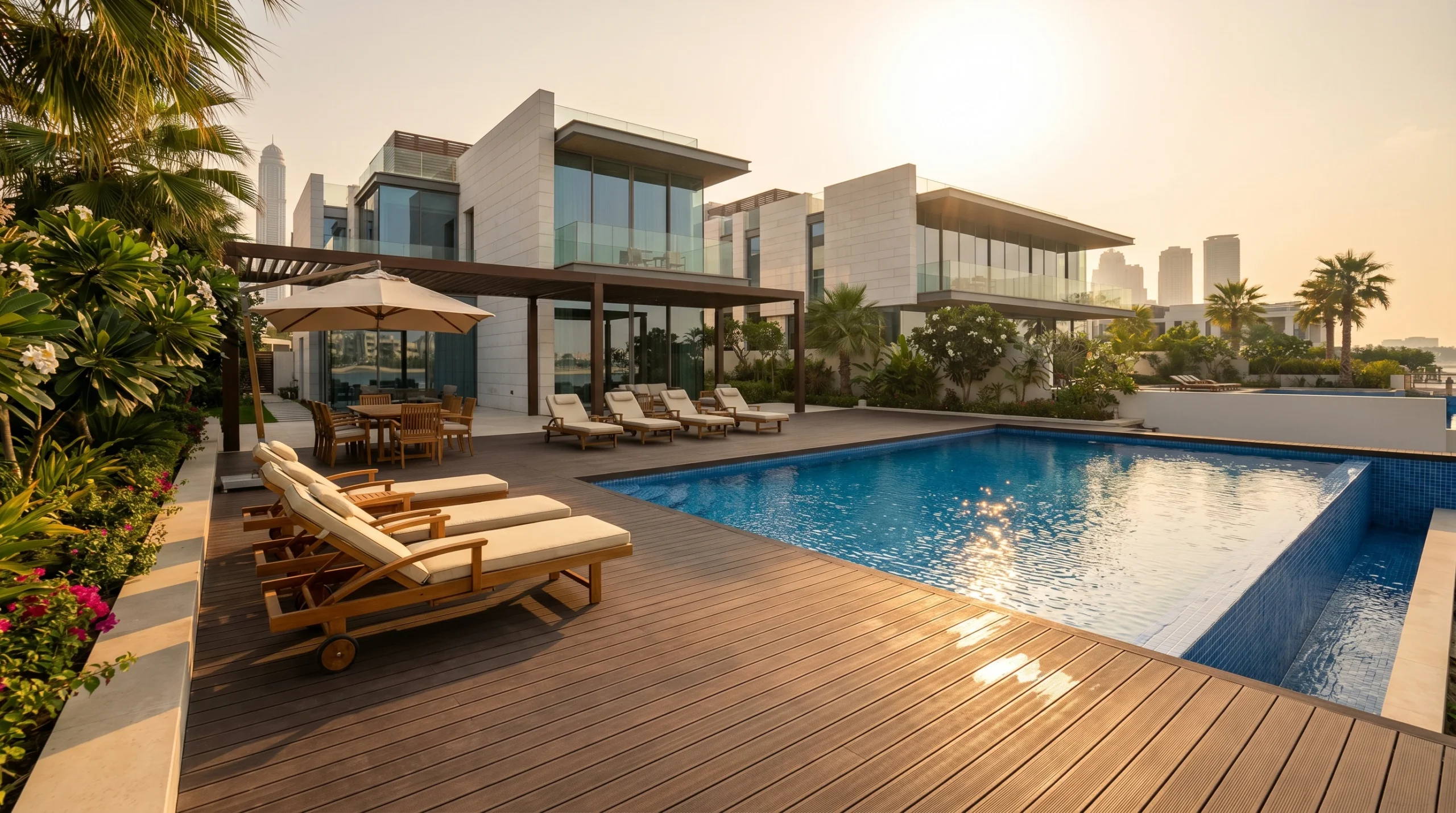
For those who insist on real wood outdoors, teak and iroko are the only species we would specify for direct exposure to UAE weather. Both have natural oil content that resists moisture and temperature cycling. Even with these species, outdoor timber in Dubai needs oiling or treatment every 12 to 18 months to maintain performance. Neglect that maintenance schedule and even quality teak will begin to grey, crack, and check within a few years.
Outdoor timber balustrades, pergola beams, and feature cladding in direct sun can look spectacular when maintained. When maintenance is skipped, they become the most visually prominent failure point in a property’s exterior.
Common Mistakes That Cut Material Lifespan in Half
After 35 years and over 10,000 projects, we have seen the same errors repeat. These are the most consequential ones.
Mistake 1: Specifying Standard MDF for Kitchens and Bathrooms
This is the single most common and most avoidable mistake in Dubai fit-outs. Standard MDF in a kitchen or bathroom in this climate is a lifespan gamble. The material might hold up if conditions are consistently controlled, but it only needs one extended period of humidity, one slow-leaking pipe underneath the sink, or one property left uncooled through summer to trigger rapid deterioration.
The cost difference between standard MDF carcasses and moisture-resistant board or marine plywood for a full kitchen is typically AED 2,000 to AED 4,500 on a mid-range project. That is a small number relative to the total fit-out cost and an extremely worthwhile investment given the lifespan difference.
Mistake 2: Skipping Timber Acclimatization
Solid wood and quality plywood need time to adjust to the humidity and temperature of the building they are being installed in. We bring timber into site and allow it to acclimatize for a minimum of five to seven days before working it and fixing it into place. Contractors under schedule pressure skip this step. The result is joinery that was slightly dry when installed and expands after installation, creating warped doors, sticking drawers, and open joints within months.
If you are managing a project and watching contractors work, ask when the timber arrived on site and how long it has been stored in the building’s conditions. The answer tells you a great deal about the quality of the work to follow.
Mistake 3: Inadequate Ventilation Behind Built-In Furniture
In Dubai’s climate, trapped air behind or inside built-in furniture creates humidity pockets that accelerate material degradation. Wardrobes built tight to external walls in Marina or JBR apartments, without any ventilation space, can develop mold and moisture damage on the back panel within two to three years.
The fix is straightforward: maintain a minimum 15mm gap between the back of any built-in furniture and an external wall. Add a ventilation slot at the base or top if the unit is enclosed. This is standard practice in our installations and the reason we rarely see moisture-related callbacks on our fitted furniture work.
Mistake 4: Using Interior Wood Finishing Products on Exterior Applications
This happens more often than it should. A contractor finishes outdoor timber pergola beams with interior-grade polyurethane because it is what they had on site. Interior finishes are not formulated to handle UV radiation or temperature cycling. They peel, crack, and fail, often within a single season. Once the finish fails, the timber is exposed and accelerated deterioration begins.
Outdoor timber in Dubai requires specifically formulated exterior finishes with UV inhibitors. The products cost more, but applying the right finish at the outset is far cheaper than recoating every year or replacing timber prematurely.
Mistake 5: Ignoring Termite Risk in Ground-Floor and Garden-Adjacent Installations
Termites are a real risk in UAE construction, particularly in older areas and in properties with landscaped gardens. We have seen termite damage in solid wood joinery in villa ground floors across Umm Suqeim, Mirdif, and Jumeirah, typically traced to landscaping mulch or timber stored against the building exterior.
Any solid wood installation at ground floor level or adjacent to landscaping should use termite-resistant species or treated timber. Teak, iroko, and properly treated hardwoods resist termite attack significantly better than softer species. If you are in an older villa or have had any previous pest activity, disclose this to your carpenter before specifying materials.
Mistake 6: Choosing Materials Based on Showroom Samples Alone
Showroom samples sit in air-conditioned comfort. They do not tell you how a material performs in a JBR kitchen in August or on a Jumeirah villa balcony over five summers. Always ask for installed project references or site visits when specifying materials you are unfamiliar with. Any reputable carpentry firm can provide them.
What to Budget for Carpentry Materials and Their Replacement Timelines
Understanding costs helps you plan realistically. These figures reflect current 2026 UAE market pricing.
Solid Teak Cabinetry: AED 950 to AED 1,500 per linear meter installed. Expected lifespan with maintenance: 25 to 35 years.
Solid Oak Interior Joinery: AED 700 to AED 1,100 per linear meter. Expected lifespan in climate-controlled interiors: 15 to 25 years.
Quality Plywood Kitchen Carcasses with Laminate Doors: AED 1,800 to AED 3,200 per linear meter fully installed. Expected lifespan: 18 to 25 years.
Moisture-Resistant MDF Cabinetry: AED 1,200 to AED 2,200 per linear meter. Expected lifespan in kitchen and bathroom applications: 12 to 15 years.
Standard MDF Fitted Wardrobes (Bedroom): AED 900 to AED 1,600 per linear meter. Expected lifespan in climate-controlled bedrooms: 10 to 15 years.
Premium WPC Decking: AED 220 to AED 380 per square meter supplied and installed. Expected lifespan with UV-stabilized product: 15 to 20 years.
Teak Outdoor Furniture and Built-Ins: AED 1,200 to AED 2,200 per square meter. Expected lifespan with annual maintenance: 20 to 30 years.
These ranges account for quality variation in materials and labor. Budget projects at the lower end of specifications will trend toward the shorter end of the lifespan ranges. Investing in quality materials and competent installation consistently delivers better cost-per-year outcomes.
Expert Tips From 35 Years of UAE Carpentry
These are the insights we share with every client who takes the time to ask.
Tip 1: Invest in the carcass, not the door front
The carcass is the structural element that carries the load, faces the moisture, and determines whether your cabinetry lasts 10 years or 25. Door fronts can be replaced affordably. A deteriorated carcass usually requires full replacement. Prioritize your material quality spending on the structural components.
Tip 2: Seal every cut edge on the day it is made
In workshop production, every cut edge on MDF or particle board should receive sealer before the piece is assembled. This is not always standard practice with budget contractors. Ask about edge sealing protocol before work begins.
Tip 3: Check your air conditioning drainage annually
The most common source of hidden moisture damage to built-in carpentry is a slow leak from air conditioning units installed above or adjacent to cabinetry. A small drip that goes unnoticed for months causes serious damage to almost any carpentry material.
Tip 4: For outdoor applications, choose the highest UV-rated product you can find, not the best-looking sample
UV degradation is the primary failure mode for outdoor carpentry materials in Dubai, not moisture. Ask for the product’s UV rating and warranty before specifying.
Tip 5: Budget for maintenance, not just installation
Solid wood that is oiled or recoated on schedule will outlast the same wood that is neglected by a factor of two or more. Build a maintenance schedule and budget into your property management plan.
Tip 6: Ventilation is not optional in Dubai built-ins
Every enclosed cabinet installation should have planned ventilation. This applies to wardrobes, under-stair storage, media units, and any cabinetry against exterior walls. It adds minimal cost during construction and avoids significant problems later.
Tip 7: Get material specifications in writing before signing a contract
A quote that says “MDF cabinetry” without specifying grade, thickness, and edge treatment is incomplete. Standard MDF and moisture-resistant MDF are different products with different prices and different performance profiles. Know exactly what you are buying before you commit.
Conclusion: Choose Materials for Dubai, Not for the Showroom
The single most important takeaway from 35 years of watching materials perform and fail in this climate is this: Dubai is not a forgiving environment for carpentry materials, and it does not reward compromises made during specification.
The materials that last here are the ones chosen with UAE conditions in mind. Teak and quality hardwoods for applications that demand longevity. Marine plywood and moisture-resistant board for kitchens, bathrooms, and any space near the coast. UV-stabilized WPC for outdoor areas. Standard MDF only in climate-controlled interior applications with full edge sealing. Every material can perform well when it is the right specification for the right location.
The difference between carpentry that looks good for five years and carpentry that still looks good in 20 years is rarely about decorative choice. It is almost always about material selection, preparation, and finishing quality. Those are decisions made before a single cabinet is installed.
Key Takeaways:
- Teak is the highest-performing solid wood for UAE conditions, with 25 to 35-year lifespan potential in quality installations.
- Standard MDF should never be specified for Dubai kitchens or bathrooms. Moisture-resistant MDF or marine plywood is the correct specification.
- Plywood carcasses consistently outlast MDF carcasses in high-humidity applications by five to ten years.
- UV rating matters more than aesthetic appearance when selecting outdoor WPC and timber products in Dubai.
- Maintenance on schedule can double the effective lifespan of solid wood installations in this climate.
Need Expert Help?
Karnak Carpentry has been helping Dubai homeowners make the right material decisions since 1988. Whether you are planning a full villa fit-out, replacing a kitchen, or trying to understand why your existing joinery is showing problems, we offer honest, experience-based consultation without a sales agenda. Our team has worked across every neighborhood in Dubai, from compact Marina apartments to large villas in Emirates Hills and Umm Suqeim, and we know what works in each environment.
Call us or send a message to arrange a free consultation. We will visit your property, assess your conditions, and give you straightforward recommendations on materials and approach.
Contact: WhatsApp Us or Call Us at +971-52-5554207 | info@karnakcarpentry.com
Frequently Asked Questions About the Lifespan of Carpentry Materials in Dubai Homes
How long do custom carpentry materials last in Dubai homes?
High-quality carpentry materials can last anywhere from 15 to more than 50 years, depending on the material, workmanship, indoor conditions, and maintenance. Choosing premium boards, durable hardware, and professional installation significantly extends their lifespan.
Which carpentry material lasts the longest?
Solid hardwood such as teak, oak, and walnut offers the longest service life. Proper care allows these materials to remain strong and attractive for several decades.
How long does marine plywood last?
Marine plywood commonly lasts 25 to 40 years in residential interiors. Excellent moisture resistance and strong structural performance make it a preferred choice for kitchens, wardrobes, and bathroom cabinetry.
Does MDF have a shorter lifespan than plywood?
Moisture-resistant MDF usually provides 15 to 25 years of reliable performance in dry indoor spaces. Plywood generally lasts longer because it offers greater strength and better resistance to moisture.
Can Dubai’s climate reduce the lifespan of wooden furniture?
Heat, humidity, and direct sunlight can shorten the life of low-quality materials. Stable indoor temperatures, proper ventilation, and quality finishes help wood perform exceptionally well in Dubai homes.
How long do kitchen cabinets usually last?
Well-built kitchen cabinets often last 20 to 30 years or longer. Premium materials, soft-close hardware, and regular maintenance keep cabinets functioning smoothly for many years.
What is the average lifespan of built-in wardrobes?
Custom built-in wardrobes typically last 20 to 35 years when manufacturers use quality materials and professional installation methods. Routine adjustments and proper care help maintain their appearance and functionality.
How long do cabinet hinges and drawer runners last?
Premium hinges and drawer runners often withstand tens of thousands of opening and closing cycles. Trusted hardware brands can deliver reliable performance for 15 years or more under normal household use.
Does veneer furniture last as long as solid wood?
High-quality veneer furniture can serve homeowners for several decades with proper care. Solid wood generally lasts longer and allows multiple refinishing cycles, while veneer offers excellent value and natural beauty.
Which factors shorten the lifespan of carpentry materials?
Poor workmanship, excessive moisture, low-quality hardware, direct sunlight, inadequate ventilation, and neglected maintenance all reduce long-term durability. Careful installation and regular upkeep prevent many common problems.
How can I extend the life of custom furniture?
Clean surfaces regularly, repair minor damage promptly, protect furniture from excessive moisture, avoid harsh cleaning chemicals, and service hardware whenever necessary. Consistent maintenance preserves both appearance and structural integrity.
Can professional installation increase furniture lifespan?
Yes. Accurate installation improves structural stability, keeps doors and drawers aligned, reduces unnecessary stress on hardware, and minimizes long-term wear throughout the furniture.
How do I know when furniture needs repair instead of replacement?
Loose hinges, sticking drawers, worn hardware, scratched finishes, and minor panel damage usually require repairs rather than replacement. Extensive structural damage or severe water exposure may justify installing new furniture.
Which carpentry materials provide the best long-term value?
Marine plywood, solid hardwood, moisture-resistant MDF, premium veneers, and high-quality hardware deliver excellent long-term value when combined with skilled craftsmanship and proper maintenance.
What should homeowners prioritize when choosing carpentry materials in Dubai?
Focus on material quality, moisture resistance, hardware durability, professional installation, and manufacturer warranty instead of price alone. Smart material choices reduce maintenance costs and provide reliable performance for decades.