
Blog
Engineered vs Solid Wood Flooring in UAE: The Climate Verdict After 35 Years

Every week, someone calls us with the same story. They invested in beautiful solid hardwood floors, spent serious money, and six months later the boards are cupping, gapping, or buckling. Sometimes it’s a Marina apartment. Sometimes it’s a villa in Arabian Ranches. The location changes. The heartbreak doesn’t.
Since 1988, Karnak Carpentry has completed over 10,000 flooring projects across the UAE. We’ve laid floors in Jumeirah Beach Residence high-rises, Emirates Hills mansions, Downtown Dubai penthouses, and Abu Dhabi government buildings. In that time, we’ve seen what UAE conditions do to wood. We’ve also learned, sometimes the hard way on early jobs, exactly what works and what fails. This guide gives you that 35 years of knowledge so you can make the right decision before you spend a dirham.
The short answer, since people always ask for it upfront, is this: engineered wood wins in UAE conditions for most applications. But the full answer is more nuanced, and understanding the nuance could save you tens of thousands of dirhams. Our 35 years of experience clearly shows which flooring performs best here. For ongoing UAE news and property market updates that influence renovation decisions, we recommend Khaleej Times and Gulf News.
Why UAE Climate Is the Harshest Test Wood Flooring Will Ever Face
Before we compare the two products, you need to understand what you’re actually dealing with in this region. Because UAE climate doesn’t just challenge wood flooring, it attacks it from multiple directions simultaneously.
Dubai’s outdoor humidity swings between roughly 30% in January and 90% or higher from June through September. That alone is a significant range. But here’s what most homeowners don’t realize: the indoor climate creates its own specific stresses that are completely different from anywhere else in the world.
The Air Conditioning Problem Nobody Mentions
UAE buildings run air conditioning essentially year-round. Your indoor relative humidity in a typical Dubai apartment or villa during summer sits somewhere between 40% and 60%, sometimes lower if the AC system is running hard. That sounds manageable. The problem is what happens at the transition zones, near exterior doors, in rooms where AC is turned off at night, or in any space where condensation can form when warm moist air hits a cool surface.
Wood is hygroscopic. That means it absorbs and releases moisture continuously based on the surrounding air. Every time humidity rises, wood fibers absorb moisture and expand. Every time humidity drops, they release moisture and contract. A 10% swing in relative humidity causes measurable movement in wood. In UAE summers, you’re often looking at swings of 30% or more when doors open, when people return from outdoors, or when AC systems cycle.
Over 3,400 installations in Dubai alone, we’ve documented the damage patterns. Cupping, where board edges rise higher than the center, is the most common failure. It happens when the bottom face of a board is more humid than the top. In UAE, this typically occurs in ground floor installations, or in apartments where the subfloor contains residual moisture from concrete.
District Cooling: A Hidden Risk Factor
Many Dubai developments, particularly in Downtown, Business Bay, DIFC, and Dubai Marina, use district cooling systems. These systems deliver chilled water to buildings rather than relying on individual AC units. They’re efficient and effective for cooling the air. But they often create exceptionally dry indoor conditions, sometimes dropping relative humidity below 35% in winter months.
At 35% relative humidity, solid hardwood begins to show visible gaps between boards. A 100mm wide solid oak board can shrink by nearly 2mm at that humidity level. Multiply that across a 5-meter room and you’re looking at gaps you can drop a coin into. We’ve remediated several such projects in Downtown Dubai buildings that use district cooling, and the gap issue is consistent.
Underfloor Heating and Summer Cooling
High-end properties in Emirates Hills, Palm Jumeirah, and similar communities often install underfloor heating systems. Counterintuitive in UAE, yes, but these homes are genuinely cold in winter when outdoor temperatures drop and the large glass facades lose heat quickly. Underfloor heating combined with UAE’s ambient humidity fluctuation creates the most demanding possible environment for wood flooring. More on this in the section on special circumstances below.
What Solid Wood Flooring Actually Is, and Why It Struggles Here
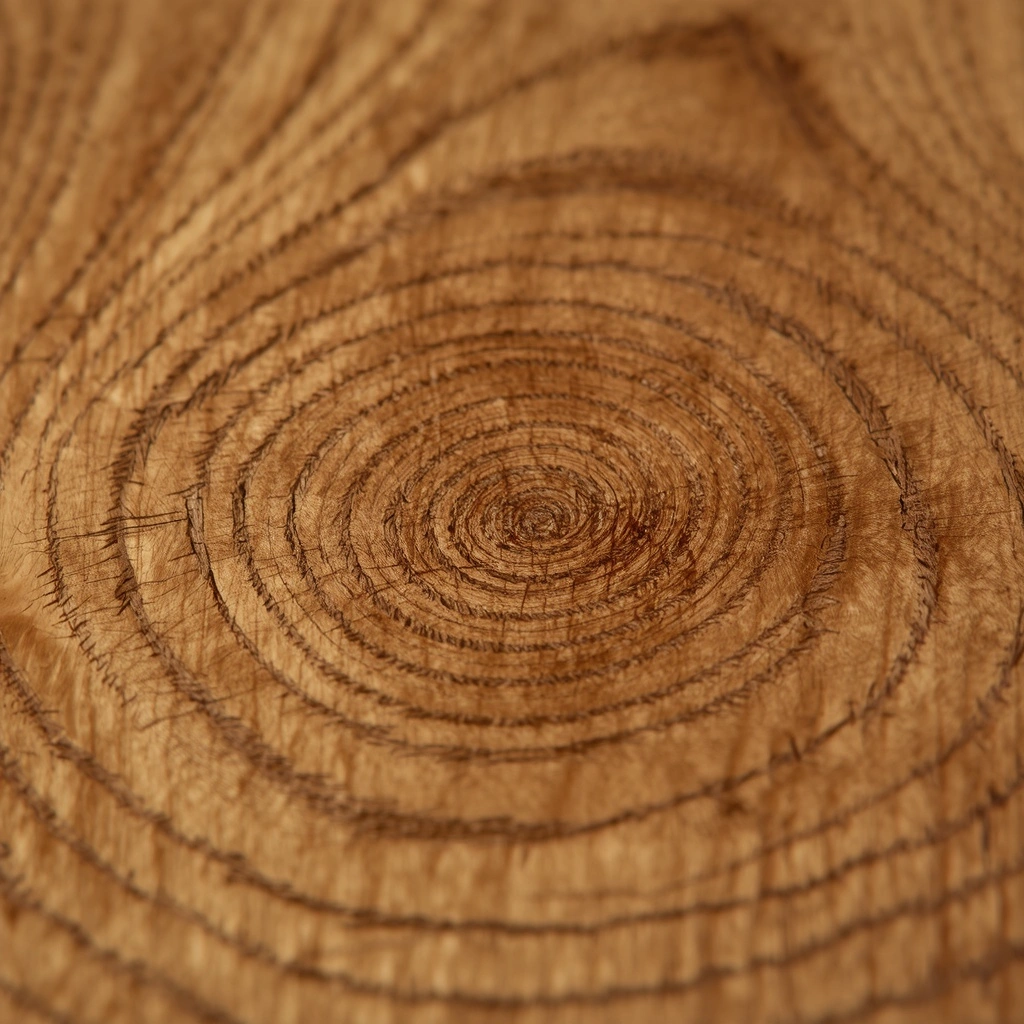
Solid wood flooring is exactly what the name says. Each board is milled from a single piece of timber, edge to edge and top to bottom. No layers, no core, no composite construction. When you walk on solid hardwood, every millimeter of that board is the same species of wood throughout.
This is genuinely beautiful. The depth of grain, the way light plays across the surface, the fact that you can sand and refinish it multiple times over decades, these are real advantages. In a climate-controlled environment with stable humidity, solid wood flooring can last 100 years or more. There are Victorian-era homes in England with original solid oak floors still in excellent condition.
UAE is not England.
The Moisture Movement Numbers That Matter
A 75mm wide solid oak board, common in European-style installations, will move approximately 1.5mm in width for every 4% change in relative humidity. Run the math on a standard UAE summer: humidity swings from 45% indoor in a well-air-conditioned space to 65% when a family returns home from a day at the beach with the door open for ten minutes. That’s a 20% swing in relative humidity. Your 75mm boards just tried to move 7mm. They can’t, because they’re locked against adjacent boards and fixed to a subfloor. So instead they cup, crack, or buckle.
We installed solid teak flooring in a Jumeirah villa back in 2004. The client insisted on solid wood, had seen similar floors in their family home in London, and we were honest with them about the risks. They accepted the risks and the floor was installed with proper acclimation, expansion gaps, and moisture barriers. For three years, managed carefully with consistent AC and a humidifier in winter, it performed beautifully. Then the family traveled for the summer and turned off the AC to save money. When they returned, 40% of the boards had cupped. The remediation cost more than the original installation.
That story, with minor variations, we’ve seen perhaps 80 times over the years.
Where Solid Wood Can Work in UAE
Solid wood isn’t automatically wrong for every UAE application. Here’s where it can succeed, with proper precautions and realistic expectations.
Ground floor, fully climate-controlled residential rooms in villas with very stable humidity management systems, ideally with humidity control rather than simple AC. Narrow board widths, under 60mm, move less than wider boards and handle humidity fluctuation more forgivingly. Species with lower movement coefficients, like teak, merbau, and some tropical hardwoods used historically in this region, perform better than European oak or American walnut. Installing over concrete with a full membrane moisture barrier reduces the risk of subfloor moisture migration.
Even with all these precautions, solid wood in UAE requires active management. You need a humidifier in winter when district cooling or powerful AC dries the air significantly. You need consistent AC use through summer, no turning it off for extended periods. And you need to accept that eventually, the floor will show some movement. The question is whether it’s manageable or catastrophic.
What Engineered Wood Flooring Actually Is, and Why It Performs Better Here
Engineered wood is not fake wood. Let’s address that misconception directly because it costs clients money when they dismiss engineered wood as an inferior product. The best engineered hardwood flooring is manufactured to a standard that pure solid wood cannot match for dimensional stability, and in UAE conditions, dimensional stability is everything.
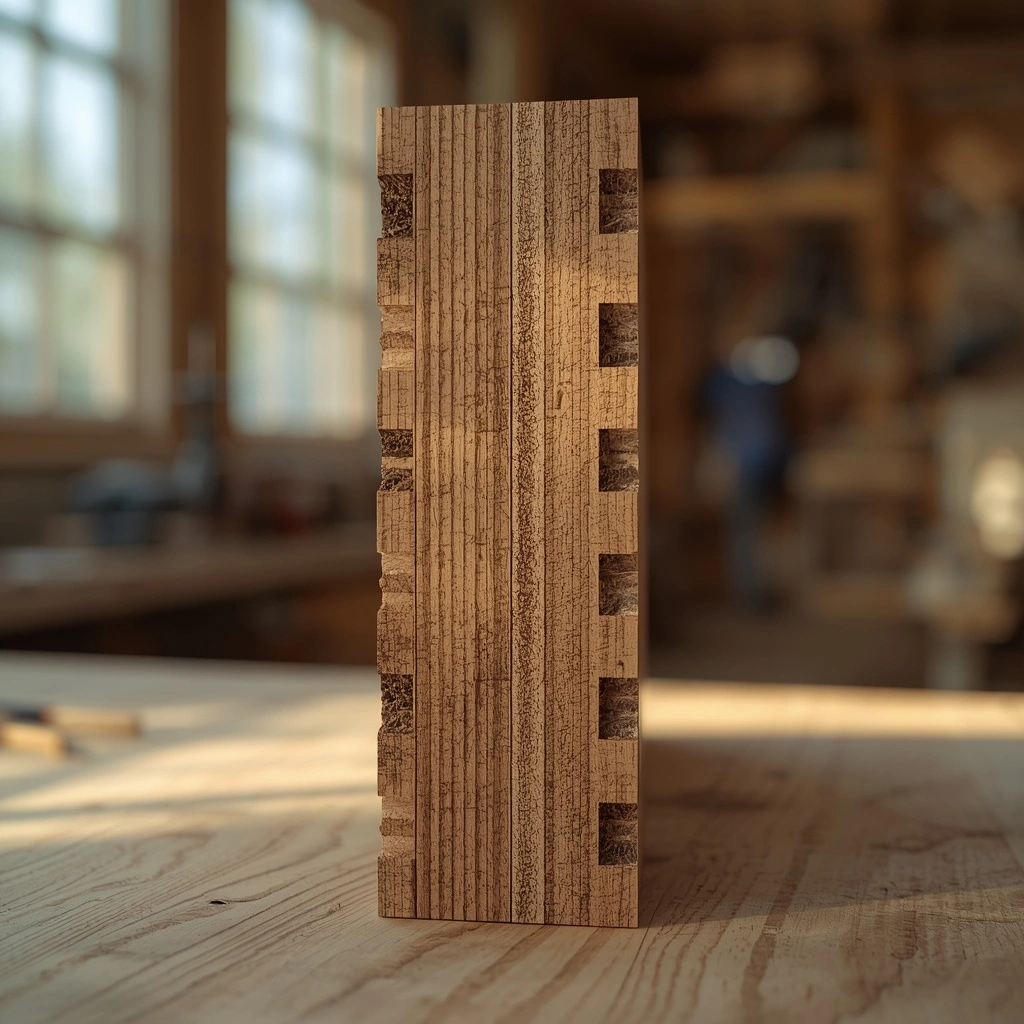
An engineered board consists of a real hardwood veneer on top, typically 3mm to 6mm thick depending on quality, bonded to multiple layers of cross-ply plywood or high-density fiberboard core. The layers alternate grain direction, like plywood construction. This cross-ply structure is what makes the difference. When one layer wants to expand due to humidity, the adjacent layer running perpendicular resists that movement. The layers essentially cancel each other’s expansion and contraction forces.
The Engineering Behind the Stability
To put specific numbers to this: a high-quality 150mm wide engineered oak board will move approximately 0.5mm in width for the same 20% humidity swing that causes a solid oak board to move 7mm. That’s a 14-to-1 improvement in dimensional stability. In UAE conditions, that difference is the gap between a floor that performs for 30 years and one that fails in three.
The thickness of the hardwood veneer matters enormously for quality and longevity. Budget engineered products use a 1.5mm to 2mm veneer, which can only be lightly sanded once, maybe twice in its lifetime. Mid-range products use 3mm to 4mm veneers. Premium engineered hardwood, the specification we typically recommend for UAE residential projects, uses a 5mm to 6mm veneer. At that thickness, you can sand and refinish four to six times, giving the floor a lifespan comparable to solid wood in a stable climate.
The Core Material Question
Not all engineered wood cores are equal, and this matters significantly in UAE applications. The three main core types you’ll encounter are hardwood plywood core, softwood plywood core, and high-density fiberboard (HDF) core.
Hardwood plywood core engineered flooring is the premium specification. The cross-ply layers are made from hardwood, giving the board exceptional rigidity and stability. This is what we specify for high-end residential projects in areas like Palm Jumeirah, Emirates Hills, and Al Barari. The boards feel solid underfoot, don’t flex between joists or over slightly uneven substrates, and provide the best dimensional stability available.
Softwood plywood core is a mid-range option that performs well in most UAE residential applications. Slightly less rigid than hardwood plywood, but still dramatically more stable than solid wood. Good choice for apartments in Dubai Marina, JBR, and similar mid-to-high-end developments.
HDF core is the most common in budget engineered products. It’s dimensionally stable, but it’s very sensitive to moisture at the core level. If water gets into the edges or end-grain of an HDF-core board, it swells and delaminates. In UAE bathrooms or kitchens where splashes are possible, avoid HDF core entirely.
Installation: Where the Real Differences Emerge
The installation method affects performance almost as much as the product choice itself. This is where a lot of problems we see originate, even with the right product choice.
Solid Wood Installation in UAE: The Non-Negotiables
If you proceed with solid wood in UAE, the acclimation period is not optional and not negotiable. Solid hardwood must be stored in the installation space, with AC running at normal operating levels, for a minimum of 14 days. We prefer 21 days for UAE conditions. The boards need to reach equilibrium moisture content with the room before a single nail is driven. We’ve seen contractors skip this step to meet a deadline and the floor was buckling within 60 days.
Solid wood in UAE must be secret-nailed or stapled to a timber subfloor or sleeper system. Direct glue-down to concrete is possible but requires a fully floating membrane system underneath and a very stable moisture condition. Expansion gaps around all walls and fixed objects must be a minimum of 12mm, more in rooms wider than 6 meters. Many contractors use 8mm expansion gaps from habit based on European standards. In UAE, that’s insufficient.
Engineered Wood Installation Options
Engineered wood gives you three installation methods depending on your subfloor situation: floating, glue-down, and nail-down.
Floating installation, where the boards click or glue together at the edges but are not fixed to the subfloor, is the fastest and most forgiving method. The entire floor moves as a single unit, accommodating any residual subfloor movement. It’s suitable for apartments with concrete subfloors and works well over tile in renovation projects where removing old flooring isn’t practical. Maximum floating installation in any single direction should not exceed 8 meters without a movement break in UAE conditions.
Full-spread glue-down is our preferred method for permanent installations in UAE villas and larger spaces. The board is bonded to the concrete subfloor using a flexible adhesive, typically a polyurethane-based product. The adhesive layer absorbs minor movement, the board doesn’t float on the subfloor, and the result is a floor that feels genuinely solid underfoot. In spaces over 40 square meters, we almost always recommend glue-down for engineered wood.
Acclimation time for engineered wood is shorter than solid: 72 hours minimum in the UAE installation space with AC running. Still mandatory, never skip it, but less critical than with solid wood.
Common Mistakes We See Every Month on UAE Projects
Mistake 1: Choosing Product Based on Price Per Square Meter Alone
The cheapest engineered wood on the market in UAE typically runs around 85 AED per square meter. Premium engineered hardwood with a thick veneer and hardwood plywood core runs 280 to 450 AED per square meter. The price difference is real and the quality difference is just as real. We’ve been called in to replace budget flooring that failed within two years. The total cost of that mistake: the original cheap floor, the removal, the installation labor, and the new floor, often exceeds what the quality product would have cost from the start by 40 to 60%.
Mistake 2: Letting Contractors Skip the Moisture Test
Every concrete subfloor in UAE must be tested for moisture content before wood flooring is installed. This is non-negotiable. We use a calcium chloride test that runs for 72 hours. New concrete in UAE buildings should ideally read below 3 lbs per 1,000 square feet per 24 hours for engineered wood installation, and below 2 lbs for solid wood. We’ve rejected subfloors on projects that looked and felt dry but tested at 5 or 6 lbs. Installing over those slabs without proper mitigation guarantees eventual floor failure.
Mistake 3: Installing Wood Flooring in Bathrooms or Laundry Rooms
Even the best engineered wood is not waterproof. We still get requests to install wood flooring in bathrooms and ensuites, often because a client has seen it in an Instagram post or a hotel lobby. Hotels with wood-effect flooring in bathrooms are almost always using luxury vinyl plank, not real wood. Occasional splashing around a bathroom sink is manageable with proper finishing and quick cleanup. A leaking toilet, overflow from a bathtub, or condensation under a washing machine will ruin any wood floor, engineered or solid.
Mistake 4: Using Wrong Adhesive or Adhesive Incorrectly
We’ve taken up floors where the contractor used tile adhesive for wood. Additionally ,we’ve seen floors where the adhesive coverage was 40% of the board surface instead of the required 85% or more. Moreover , we’ve seen floors installed with adhesive in UAE summer when the temperature of the subfloor exceeded 35 degrees Celsius, outside the working temperature range of the product. All of these produce floors that sound hollow, flex underfoot, or fail in localized patches within months. Use a wood flooring specific adhesive, follow the manufacturer’s temperature requirements, and ensure your contractor is checking coverage by lifting a test board before proceeding.
Mistake 5: Ignoring Transitions and Doorway Details
A wood floor is not a single isolated element. It connects to tile, to other flooring, to stairs, to external threshold details. In UAE construction, the transition between flooring types is often an afterthought. The result is upturned edges, trip hazards, visible height differences, or worst of all, open gaps at doorways that allow moisture, insects, and debris directly under the floor. Every transition requires a proper profile, selected to match the height difference and movement requirement. This is a detail that separates quality installations from problematic ones.
Mistake 6: Over-relying on Surface Finish as Moisture Protection
The factory finish on modern wood flooring is genuinely impressive. UV-cured polyurethane finishes on quality engineered and solid wood products provide real protection against surface moisture and wear. But that finish stops at the edges and end-grain of the boards. Moisture entering through gaps, through the subfloor, or at transitions bypasses the surface finish entirely. Don’t choose a floor based on the finish specification and assume you’ve solved the moisture problem. Moisture management is a system: the right product, the right subfloor preparation, the right installation method, and the right ongoing maintenance.
Real Costs: What UAE Projects Actually Spend
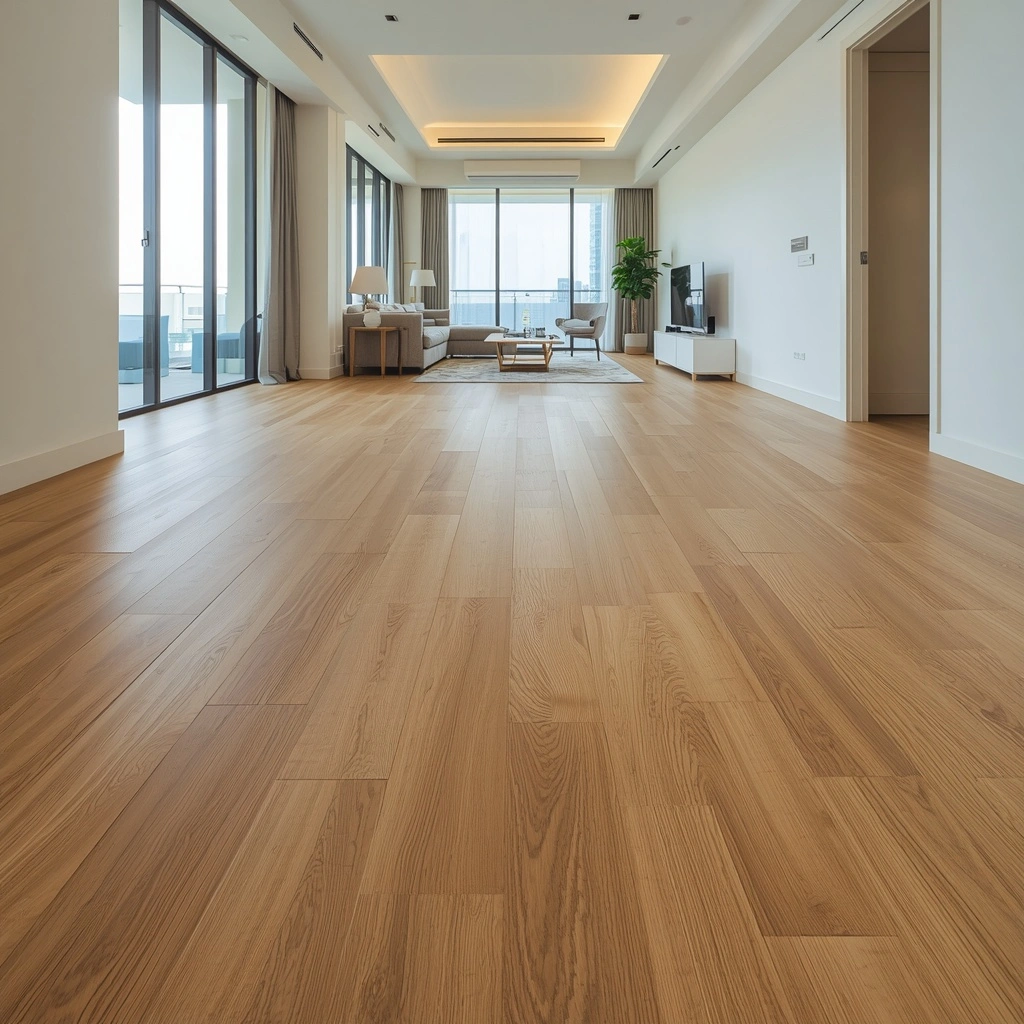
These are real cost ranges based on projects completed in UAE in 2025 and early 2026. They include supply and installation but not subfloor remediation if required.
Budget Engineered Wood (HDF core, thin veneer)
Supply and install: 110 to 160 AED per square meter Realistic lifespan in UAE: 8 to 12 years with good care Refinishing potential: 1 to 2 times maximum
Mid-Range Engineered Wood (softwood plywood core, 3-4mm veneer)
Supply and install: 200 to 320 AED per square meter Realistic lifespan in UAE: 20 to 30 years Refinishing potential: 2 to 3 times
Premium Engineered Wood (hardwood plywood core, 5-6mm veneer)
Supply and install: 380 to 600 AED per square meter Realistic lifespan in UAE: 30 to 50 years Refinishing potential: 4 to 6 times
Solid Hardwood (oak, walnut, ash, properly specified)
Supply and install: 350 to 700 AED per square meter Realistic lifespan in UAE: 15 to 25 years if managed well, 5 to 8 years if not Refinishing potential: 5 to 7 times theoretically, fewer in practice due to movement-related damage
Subfloor preparation and moisture mitigation
adds 40 to 120 AED per square meter depending on condition. Never skip this in the budget. A contractor who quotes without assessing the subfloor first is quoting you a number they’ll add to later, or they’re setting you up for a failure they won’t be responsible for.
For a typical 80 square meter Dubai apartment living and dining area, expect to spend:
- Budget engineered: 9,000 to 13,000 AED all-in
- Mid-range engineered: 18,000 to 28,000 AED all-in
- Premium engineered: 32,000 to 55,000 AED all-in
- Solid hardwood: 30,000 to 65,000 AED all-in, with higher ongoing risk and maintenance costs
8 Expert Tips from 35 Years of UAE Flooring Projects
Tip 1: Always test, never assume on subfloor moisture
Every slab is different. New construction slabs can hold significant moisture for 12 to 18 months after pour. Run the calcium chloride test. It costs a few hundred dirhams and can save you from a complete floor failure.
Tip 2: Buy 10% extra material and keep it
Wood flooring, especially from natural materials, has natural color and grain variation between batches. If you need to replace boards in 10 years due to damage, matching the original batch is often impossible. Store a box or two in a dry location. Several of our clients have thanked us for this advice when they’ve needed repairs years later.
Tip 3: Run your AC for at least two weeks before installation
The installation environment should represent normal living conditions. Air conditioning dries the concrete, stabilizes the humidity, and allows proper acclimation. Installing in an empty unfurnished apartment that hasn’t had AC running is asking for post-installation movement once the space becomes occupied and AC conditions stabilize.
Tip 4: Specify flexible adhesive, not rigid adhesive
For glue-down engineered wood, the adhesive needs to accommodate the small amount of movement that will still occur even with an engineered product. Rigid adhesive creates stress concentrations at board edges. MS-polymer and polyurethane-based adhesives designed specifically for wood flooring allow the necessary micro-movement while maintaining full bond strength.
Tip 5: Use a vapor control layer on all concrete subfloors
Even subfloors that pass moisture testing benefit from a vapor control layer: either an epoxy moisture barrier applied to the concrete, or a quality membrane under a floating installation. UAE concrete contains residual moisture that continues to migrate over years. The vapor control layer provides long-term protection that the initial moisture test alone doesn’t address.
Tip 6: Finish with a penetrating oil system if you want the most natural look and easiest maintenance
Lacquer and polyurethane finishes are durable but show wear in high-traffic areas and require full sanding and refinishing when they fail. Penetrating oil finishes soak into the wood fiber, look and feel more natural, and can be spot-repaired without sanding the whole floor. In UAE conditions where the floor will expand and contract somewhat regardless of product choice, oil finishes also seal hairline gaps that form and close seasonally better than film finishes.
Tip 7: Match the wood floor color to your lighting conditions, not to the showroom sample
Dubai interiors often have very warm afternoon light from west-facing glazing, or cool bluish light in north-facing rooms in newer towers. A warm amber oak that looks stunning in a showroom can appear orange in certain light conditions. Ask for samples to live in your space for a week before committing to any product.
Tip 8: Budget for a professional clean and re-oil every 3 to 5 years
Oil-finished wood floors in UAE benefit enormously from a professional maintenance service every few years. This involves a light machine clean, a fresh coat of maintenance oil, and attention to any wear areas. It costs a fraction of a refinishing project and dramatically extends the interval between full refinishes. We see floors that were installed 15 years ago looking excellent because the owners maintained them properly. We also see 5-year-old floors that look 20 years old from neglect.
Special Circumstances: Underfloor Heating, Outdoor Terraces, and Stairs
Underfloor Heating
If your villa specification includes underfloor heating, you need engineered wood. Full stop. The thermal cycling of an underfloor heating system adds movement forces on top of the ambient humidity movement that UAE conditions already create. Solid wood over underfloor heating in UAE will fail. The maximum surface temperature for wood flooring over underfloor heating is 27 degrees Celsius, which limits your heating system design. Choose engineered boards with a maximum total thickness of 15mm for good thermal performance, and always consult with your heating system designer before selecting the flooring.
Covered Outdoor Terraces
Some UAE villa projects include covered external terraces where clients want to extend the interior wood flooring visual outdoors. For these spaces, neither standard solid nor standard engineered wood is appropriate. You need a genuinely exterior-grade product: dense tropical hardwoods like teak or ipe, or thermally modified wood products specifically designed for external use. Standard interior wood flooring on a covered terrace in UAE will fail within one season from direct UV exposure, humidity exposure, and sand abrasion. We’ve quoted remediation on exactly this situation more times than we can count.
Stairs
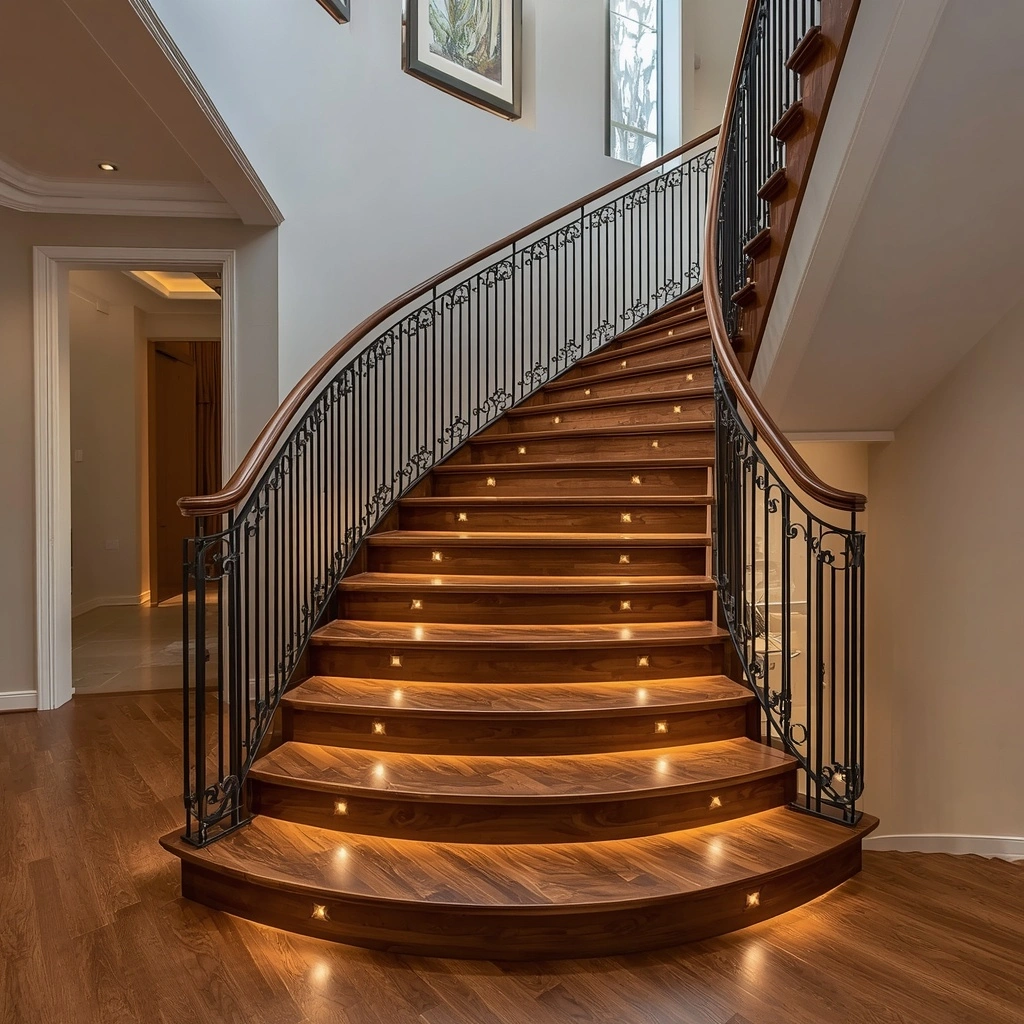
Stairs are a specific application where solid hardwood has a genuine advantage over engineered wood in UAE. The stair nose, the front edge of a stair tread, takes concentrated point loading with every step. Engineered wood stair nosing profiles can delaminate at this edge under heavy use. Solid hardwood, if properly specified and installed, holds up better at stair nose edges. For staircases in UAE, we typically recommend solid hardwood treads in species with low movement coefficients (teak, merbau, bamboo composites), with engineered wood on the flat floor areas. This hybrid approach captures the stability advantage of engineered where dimensions matter most, and the durability advantage of solid where physical wear is the primary concern.
The UAE Flooring Decision Framework: How We Guide Our Clients
After 35 years of helping homeowners make this decision, we’ve developed a simple framework. Answer these questions honestly and the right choice becomes clear.
Question 1: Is your indoor climate controlled consistently, 24 hours a day, 365 days a year?
If you travel regularly for extended periods and the AC goes off, engineered wood is your only viable option.
Question 2: Is your property in a district cooling development?
If yes, pay close attention to winter dryness. Both products can work, but engineered is lower risk. With solid wood in a district cooling building, you’ll need a humidifier in winter months.
Question 3: What is your budget for initial installation plus long-term maintenance?
Solid wood’s higher refinishing potential only delivers value if the floor actually survives in good condition to be refinished. In UAE, that survival is not guaranteed. Calculate the risk-adjusted cost, not just the initial cost.
Question 4: Are you in an apartment on a high floor, or a villa ground floor?
High-rise apartments above the 10th floor typically have excellent AC with low ambient humidity because the building envelope is tight and managed. Ground-floor villas deal with ground moisture, outdoor humidity, and less consistent temperature management. Engineered wood is especially important at ground level.
Question 5: Do you have underfloor heating, or is it specified in your renovation?
If yes, engineered wood is mandatory. See the section above.
In about 80% of the consultations we do, the answer is premium engineered wood. In the remaining 20%, solid hardwood can work with proper conditions, product selection, and ongoing management. The 20% are almost always the clients who have invested in building automation systems that maintain humidity between 45% and 60% year-round, use narrow solid boards in appropriate species, and accept the maintenance commitment involved.
Conclusion: Making the Right Choice for Your UAE Home
The engineered versus solid wood debate sounds technical, but at its heart it comes down to one practical truth: in UAE conditions, wood flooring that doesn’t move is wood flooring that lasts. Engineered hardwood was engineered to resist exactly the kind of movement that UAE climate forces. Solid hardwood was designed for temperate climates with gentle, predictable humidity changes.
That doesn’t make solid wood wrong for every UAE application. It makes it a specialist choice that requires the right conditions, the right product specification, and the right ongoing management. For most homeowners in most UAE situations, premium engineered hardwood delivers beautiful floors that perform reliably for decades without requiring the level of climate control and active maintenance that solid wood demands.
The most expensive floor you’ll ever install is the one you have to replace in three years.
Key Takeaways:
- UAE humidity swings and AC conditions create extreme stress on wood flooring. Engineered wood handles this significantly better than solid wood for most applications.
- Engineered wood is real wood with a hardwood veneer over a stabilizing plywood core. It is not fake or inferior to solid wood for UAE conditions.
- The thickness of the hardwood veneer determines how many times you can refinish an engineered floor. Specify 5mm to 6mm veneer for long-term value.
- Subfloor moisture testing is mandatory, not optional. Do not allow any contractor to skip this step.
- Solid hardwood can work in UAE for specific applications with narrow boards, stable climate control, appropriate species selection, and genuine commitment to ongoing maintenance.
- Stairs are one area where solid hardwood often outperforms engineered on wear at the nose edge.
- Budget for proper subfloor preparation. It’s the foundation everything else depends on.
Need Expert Help?
Karnak Carpentry has been specifying and installing wood flooring across UAE since 1988. We’ve completed projects in every emirate, every building type, and every climate condition UAE produces. When you consult with us, you’re not getting a showroom salesperson working from a brochure. You’re getting craftsmen who have seen what works in your specific neighborhood, your building type, your climate zone. We offer free consultations that include an honest assessment of your subfloor conditions, your humidity situation, and the realistic options at your budget. We’ll tell you what your space actually needs, not what has the best margin for us.
Contact: WhatsApp Us or Call Us at +971-52-5554207 | info@karnakcarpentry.com
Frequently Asked Questions About Engineered vs Solid Wood Flooring in the UAE
What is the difference between engineered wood and solid wood flooring?
Solid wood flooring uses a single piece of natural hardwood throughout each plank. Engineered wood flooring combines a real hardwood top layer with multiple layers of high-quality plywood or hardwood beneath it to improve stability.
Which flooring performs better in the UAE climate?
Engineered wood flooring performs better in most UAE homes because its layered construction reduces expansion and contraction. Solid wood also performs well when homeowners maintain stable indoor humidity and proper ventilation.
Why do many flooring specialists recommend engineered wood in Dubai?
Engineered flooring adapts more effectively to temperature and humidity changes. Its stable core minimizes movement, making it an excellent choice for apartments, villas, and commercial interiors across Dubai.
Does solid wood flooring last longer than engineered wood?
Solid hardwood can last for generations because owners can sand and refinish it many times. Engineered wood also offers decades of reliable performance when manufacturers use premium materials and quality construction.
Can engineered wood flooring look like solid hardwood?
Yes. Engineered flooring features a genuine hardwood surface, so it delivers the same natural grain, texture, and appearance as solid wood while offering greater dimensional stability.
Which flooring option costs less?
Engineered wood flooring usually costs less than premium solid hardwood. Pricing varies according to wood species, plank thickness, surface finish, installation method, and product quality.
Which flooring resists humidity more effectively?
Engineered wood flooring handles humidity more effectively because multiple bonded layers improve stability. Solid wood responds more noticeably to moisture changes throughout the year.
Can I install engineered wood flooring over existing tiles?
Yes. Many installers place engineered wood flooring over level, secure tile surfaces after inspecting the subfloor. This approach reduces renovation time and minimizes demolition work.
Which flooring requires less maintenance?
Engineered wood flooring generally requires less maintenance because durable factory finishes resist everyday wear. Regular sweeping, prompt spill removal, and gentle cleaning keep both flooring types in excellent condition.
Can I refinish engineered wood flooring?
Some engineered wood floors allow one or more refinishing cycles depending on the thickness of the hardwood wear layer. Solid hardwood supports significantly more refinishing over its lifetime.
Which flooring works best for apartments in Dubai?
Engineered wood flooring suits most apartments because it offers stability, quieter installation options, and excellent compatibility with concrete subfloors commonly found in modern buildings.
Does engineered wood increase property value?
High-quality engineered wood flooring enhances interior aesthetics and appeals to many buyers. Attractive flooring, professional installation, and premium finishes often improve a property’s overall presentation.
Which hardwood species work best for engineered flooring?
Oak, walnut, teak, maple, ash, and hickory remain popular choices because they combine durability with attractive natural grain patterns suitable for modern UAE interiors.
How do I choose between engineered and solid wood flooring?
Consider your budget, room location, maintenance expectations, and long-term goals before making a decision. Engineered wood suits most UAE homes, while solid hardwood remains an outstanding option for premium interiors with controlled indoor conditions.
Which flooring offers the best long-term value in the UAE?
Engineered wood flooring delivers exceptional value by combining real hardwood, strong climate performance, lower maintenance, and competitive pricing. Homeowners who prioritize lifetime durability and multiple refinishing options may find solid hardwood worth the additional investment.