
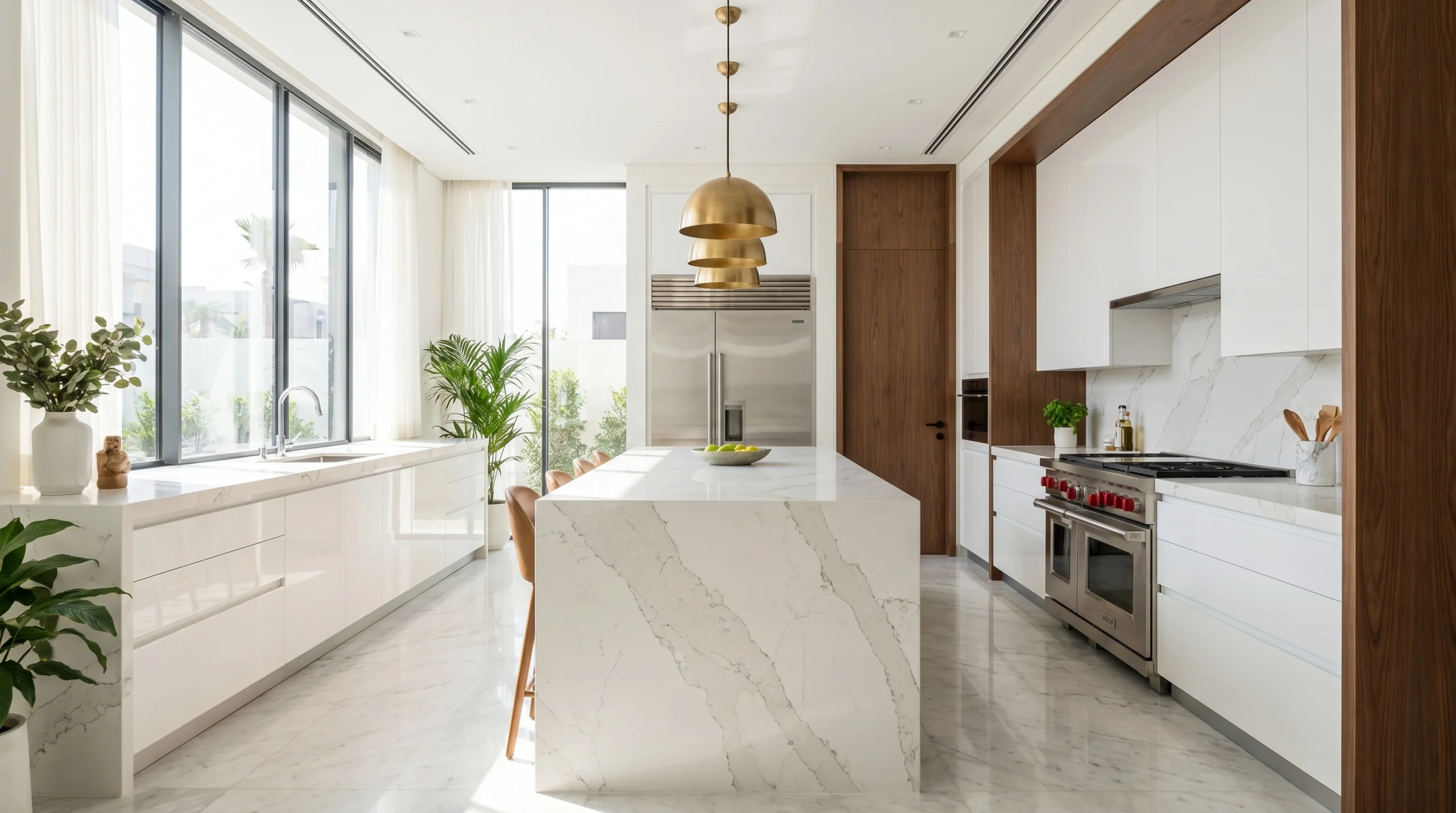
After 35 years and more than 10,000 kitchens installed across Dubai and the wider UAE, we have heard the same question more times than we can count: “What is this actually going to custom kitchen cost Dubai 2026 ?” It is a fair question, and frankly, it is one that most carpentry companies dodge. They give vague ranges, show you a stunning showroom, and then hit you with a number that bears no resemblance to what you expected. We are not going to do that. This guide gives you real numbers, honest breakdowns, and the specific factors that push a kitchen from AED 25,000 to AED 250,000 or more. By the time you finish reading, you will know exactly what you are paying for and why.
Dubai is not like any other market in the world. The climate alone, with its extreme summer heat and humidity, changes which materials hold up and which ones warp, crack, or delaminate within three years. The diversity of projects here is extraordinary too. One month we are fitting a compact kitchen in a JBR studio apartment. The next we are designing a chef-grade, double-island kitchen in an Emirates Hills mansion. The price difference between those two jobs is enormous, but the principles that drive quality are identical. Understanding those principles is how you spend your money wisely.
What You Are Actually Paying For in a Custom Kitchen
Before any numbers make sense, you need to understand what a custom kitchen actually is. Many homeowners use the word “custom” loosely when they mean modular or semi-custom. These are genuinely different things, and the distinction matters enormously for your budget and your result.
A modular kitchen uses pre-manufactured cabinet boxes in fixed sizes, typically 400mm, 600mm, 800mm wide increments. You choose doors, finishes, and worktops, but the underlying structure is factory-made in standard configurations. It is faster, it is cheaper, and for many apartments across Dubai Marina or Business Bay, it does the job perfectly well.
A semi-custom kitchen adjusts those standard boxes slightly, extends heights, modifies depths, or adds filler panels to deal with awkward corners and alcoves. Most mid-range projects fall into this category.
A true custom kitchen is built from scratch in a workshop to the exact millimeter of your space. Every cabinet is engineered specifically for your layout. The internal fittings, the structural thickness, the material choices, even the sequence of assembly, all of it is designed around your kitchen and nothing else. When you have an unusual footprint, a sloped ceiling, a structural column sitting in an awkward spot, or when you simply want a result that looks and functions like nothing else on the market, custom is the only answer.
At Karnak, we have built all three categories over 35 years. Knowing which one your project actually needs is the first step toward spending your money intelligently.
The Four Cost Pillars of Any Kitchen are following:
Every kitchen quote, no matter the size or complexity, comes down to four main cost pillars. Understanding each one lets you see exactly where your money goes and where you can flex your budget without sacrificing quality.
Materials
It cover your cabinet carcasses, door fronts, worktops, handles, and internal fittings. This is typically 40 to 55 percent of your total budget on most Dubai projects. Material quality is where you feel the difference every single day for the next 20 years.
Labor and installation
Covers workshop production time, site preparation, installation, and finishing. Skilled carpentry labor in Dubai runs higher than many homeowners expect. An experienced craftsman who can execute a flawless installation in a Marina high-rise or a Jumeirah villa costs more than an unskilled laborer, and that difference shows in the final result. Labor typically represents 25 to 35 percent of your total.
Design and engineering
Which includes space planning, technical drawings, 3D visualizations, and project management. On a straightforward apartment kitchen this might be minimal. On a complex villa project with multiple zones and integrated appliances, design work can represent a meaningful portion of the budget because getting it right at this stage prevents expensive mistakes later.
Appliances and accessories
They are often quoted separately but belong in your total budget conversation. Integrated appliances, specialty pull-out systems, lighting, and plumbing connections add up quickly and are frequently underestimated.
Real 2026 Pricing: What Custom Kitchens Cost in Dubai
Let us get to the numbers. These are actual price ranges from projects completed in Dubai in 2025 and early 2026, not estimates pulled from a spreadsheet. Every project is different, so treat these as calibration guides rather than fixed quotes.
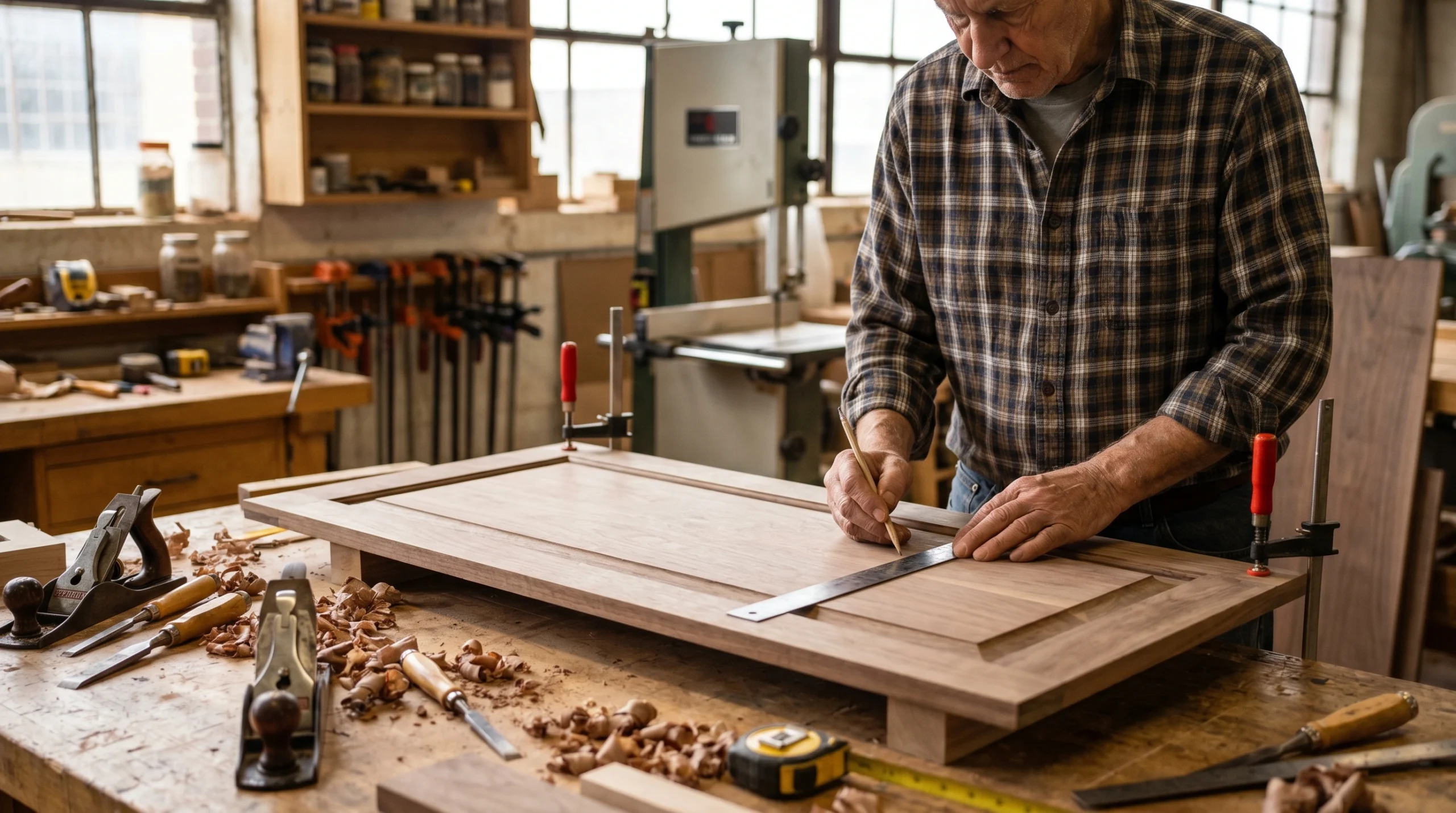
Entry Level: AED 25,000 to AED 55,000
This range covers compact apartment kitchens, typically under 8 to 10 linear meters, using mid-grade materials with clean, contemporary styling. Think lacquered MDF doors, a solid quartz or engineered stone worktop, standard soft-close hardware, and a practical but not extravagant layout.
A typical project in this range might be a two-bedroom apartment in Dubai Marina or JLT with a galley kitchen of roughly 6 to 7 linear meters. The result looks sharp and modern, functions well for everyday cooking, and holds up properly to Dubai’s climate with the right material specification. You are not getting hand-selected solid timber or bespoke internal storage systems at this price point, but you are getting genuine quality if you choose the right contractor.
Where this range goes wrong is when homeowners try to squeeze a large or complex kitchen into it. We have seen cases where clients pushed for a palatial result on a compact budget and ended up with thin carcasses, low-grade hinges, and doors that were noticeably warping within 18 months. The budget was not wrong for the scale of the job. The mismatch between expectation and budget was the problem.
Mid-Range: AED 55,000 to AED 130,000
This is the most active segment of the Dubai custom kitchen market, and for good reason. It covers the vast majority of villa and townhouse kitchens in areas like Arabian Ranches, The Meadows, Jumeirah Park, and Mirdif. At this level, you start accessing genuinely excellent materials, more sophisticated layouts, and meaningful customization.
At AED 55,000 to 80,000 you are looking at full-height cabinetry, quality European hardware from brands like Blum or Hettich, a choice of proper stone worktops, and a layout designed specifically for your space rather than adapted from a template. Island kitchens start becoming realistic in this range for mid-sized footprints.
Pushing into AED 80,000 to 130,000 brings you into solid wood doors, premium lacquer finishes, integrated LED lighting systems, and specialist internal fittings. Clients in Emirates Living communities, DAMAC Hills, and similar villa areas tend to invest at this level because the kitchen is a central feature of the home and a genuine investment in the property’s value.
One project that illustrates this range well: a family in Jumeirah Islands came to us for a full kitchen replacement in their four-bedroom villa. Total kitchen run was approximately 14 linear meters with an island. We used walnut veneer doors, a 30mm Calacatta quartz worktop, full-height storage either side of the cooking zone, and integrated appliance housing. Final cost was AED 112,000, including all installation but excluding appliances. The family had used that kitchen for four years at the time of writing and reported zero issues. That is what a proper mid-range budget achieves when spent correctly.
High End: AED 130,000 to AED 300,000+
At this level, the kitchen becomes a considered architectural statement. We are talking about projects in Palm Jumeirah villas, Emirates Hills mansions, and luxury penthouse apartments where the kitchen is a primary feature of the home’s design narrative.
Solid wood construction, bespoke furniture-grade paint finishes mixed specifically for the project, book-matched stone slabs for worktops and splash backs, motorized wall units, complex multi-zone layouts with separate prep, cooking, and entertaining areas; these are the distinguishing features of high-end custom kitchens in Dubai.
A double-island kitchen we completed recently in a Palm Jumeirah Signature Villa ran to AED 265,000 for cabinetry alone, with a separate appliance budget of around AED 95,000. The kitchen footprint was over 40 square metres and included a scullery behind the main cooking zone. The lead time from confirmed design to completed installation was 14 weeks.
At the very top of the market, specifically for landmark properties with complex briefs, projects can exceed AED 500,000. These are rare but they happen, and they represent the full expression of what a craftsman kitchen can be.
Materials That Matter in Dubai’s Climate
Dubai’s climate is not a footnote in a kitchen specification. It is one of the most important engineering considerations in the entire project. Temperatures outside exceed 45 degrees Celsius in summer. Air conditioning runs almost continuously indoors. Humidity spikes dramatically during certain periods. These conditions are genuinely hostile to many materials that perform perfectly well in European or North American climates.
Why Solid Wood Requires Careful Specification in the UAE
Solid wood is beautiful and there is nothing quite like it for the warmth and character it brings to a kitchen. We use it extensively at Karnak, but always with UAE conditions in mind. The problem is movement. Wood expands and contracts as humidity changes, and in Dubai’s environment, those fluctuations are significant. Poorly specified or poorly constructed solid wood kitchens will develop gaps in summer and tight-fitting doors in the more humid shoulder seasons.
The solution is proper species selection combined with engineered construction techniques. European oak and American walnut, properly dried and used in frame-and-panel construction rather than solid slabs, handle UAE conditions very well. We have kitchens over 15 years old in this market still performing perfectly. Poorly chosen tropical hardwoods or solid slab doors, by contrast, can cause problems within the first couple of years.
MDF and Lacquer: The Workhorse of Dubai Kitchens
Moisture-resistant MDF forms the carcass of the majority of quality kitchens we install in Dubai, and for good reason. It is dimensionally stable, it takes paint and lacquer beautifully, and when properly sealed it handles the UAE environment with no issues. A well-lacquered MDF kitchen door from a quality manufacturer will look flawless for 10 to 15 years with normal care.
The quality range within MDF and lacquer is significant, however. Budget manufacturers use thinner boards, lower-grade lacquer systems, and minimal sealing on edges and backs. In UAE conditions, these are the kitchens that start showing moisture-related swelling at door edges and base unit backs within a few years. Specifying 18mm moisture-resistant board with a minimum of three lacquer coats and sealed edges is not over-engineering. It is appropriate specification for this climate.
Worktop Materials and What They Actually Cost in Dubai are
Quartz engineered stone
It is the dominant worktop material in Dubai kitchen projects across all budget levels. It is non-porous, heat-resistant to a reasonable degree, available in a vast range of designs, and proven in UAE conditions. Expect to pay AED 450 to AED 750 per linear meter for 20mm thickness, AED 600 to AED 950 for 30mm, depending on the brand and pattern. Premium brands like Silestone and Caesarstone sit at the top of that range.
Natural marble and granite
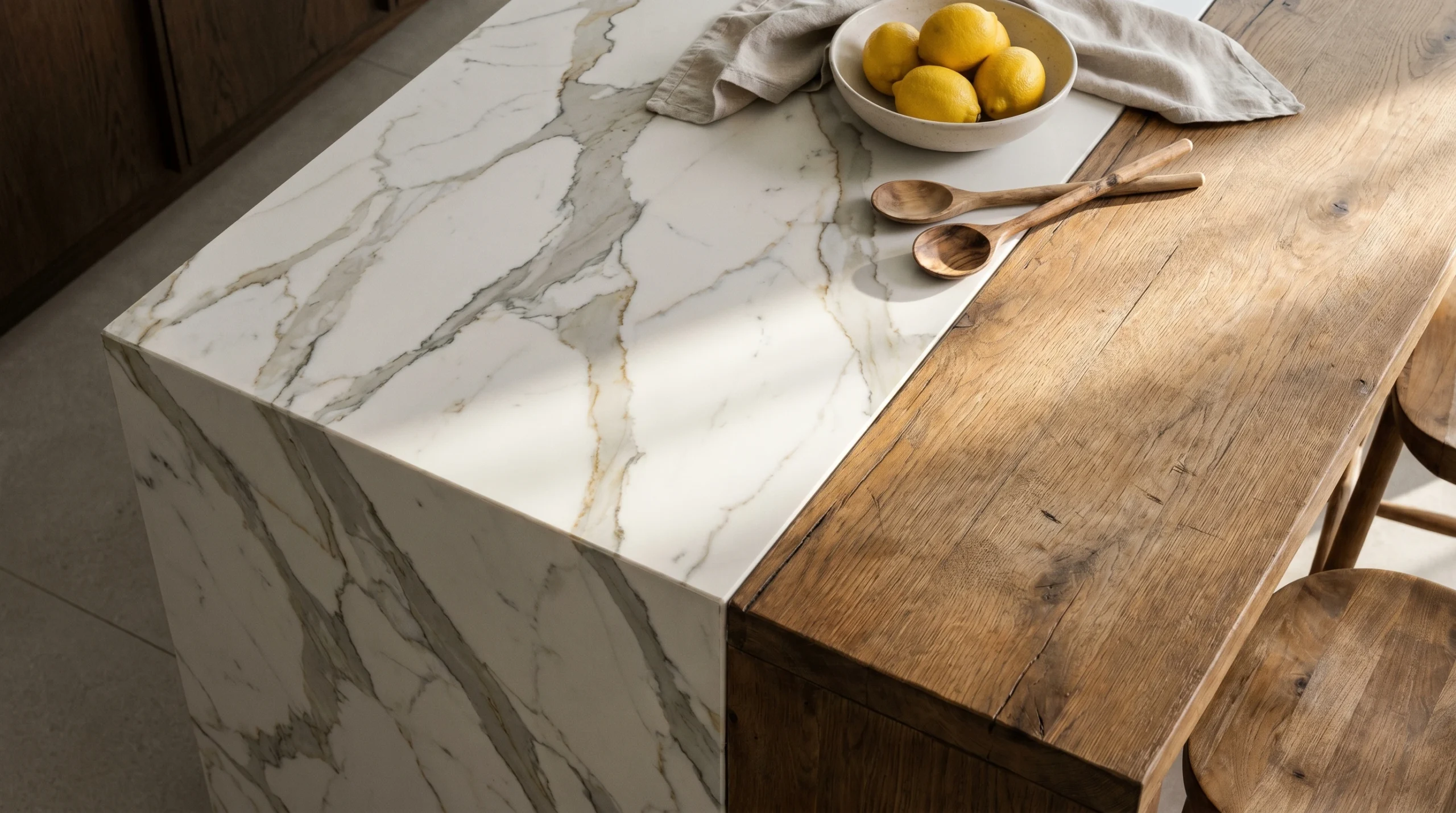
They remain popular in high-end projects, particularly in Emirates Hills and Palm Jumeirah. Pricing varies enormously based on origin and rarity. Calacatta marble from Italy can cost AED 1,200 to AED 2,500 per linear meter or more. It requires sealing and ongoing care, and it will stain if mistreated, but nothing else produces quite the same visual impact.
Porcelain slabs
They have gained significant traction in Dubai over the last three years. Large-format porcelain in 12mm or 20mm thickness, from manufacturers like Dekton or Neolith, offers exceptional durability, near-zero maintenance, and a crisp, contemporary look. Pricing is similar to premium quartz, AED 700 to AED 1,200 per linear meter installed.
Solid timber
Worktops work well in Dubai for non-wet areas, typically used as island surfaces away from the sink zone. Properly oiled hardwood worktops add warmth and contrast beautifully with stone or lacquer finishes elsewhere. Budget AED 800 to AED 1,400 per linear meter.
Kitchen Layout and Size: How These Drive Your Cost
The relationship between kitchen size, layout complexity, and final cost is not always linear. A poorly designed large kitchen can cost less and deliver less than a brilliantly designed compact one. Layout decisions made early in the design process have a disproportionate impact on both budget and everyday function.
Linear and Galley Layouts
A single-wall or galley layout is the most cost-efficient configuration because it minimizes the number of corner solutions, maximizes the use of standard cabinet runs, and simplifies installation. For apartments in Business Bay, DIFC, or Dubai Marina with long, narrow kitchen spaces, this layout often produces excellent results. A well-executed galley kitchen of 5 to 6 meters can be outstanding in both function and appearance.
L-Shape and U-Shape Kitchens
These are the dominant configurations in Dubai townhouses and villas. They make good use of corner space, create natural zones for different tasks, and allow for generous storage. Corner solutions, specifically the carousel systems, pull-out corner units, or blind corner optimizers, add cost but also add a meaningful amount of recovered storage. Budget AED 1,500 to AED 3,500 for a quality corner system depending on the mechanism.
Island Kitchens
Islands have become almost expected in Dubai villa kitchens of a certain size, and they add real value both functionally and to the property. The cost of an island depends heavily on its specification: a simple storage-only island is very different from an island with an integrated hob, extractor below, seating overhang, and waterfall stone edge.
A basic fixed island typically adds AED 8,000 to AED 18,000 to a kitchen project. A fully specified cooking island with integrated appliances and premium stone can easily add AED 35,000 to AED 60,000 or more to the total.
The Mistakes That Cost Dubai Homeowners the Most Money
After 35 years and 10,000-plus projects, we have seen every mistake in the book. Some are small and fixable. Others are expensive and occasionally irreversible. Here are the ones that come up most often.
Mistake 1: Choosing a Contractor Based on the Lowest Quote
This is the single most expensive mistake in the Dubai kitchen market. We say it directly because we have seen the consequences more times than we can count. A significantly lower quote, meaning 30 to 50 percent below competitors for an equivalent brief, almost always reflects one or more of the following: thinner materials, lower-grade hardware, unskilled labor, inadequate project management, or a plan to use substitutions mid-project that you have not approved.
A family in Mirdif signed with a contractor offering a kitchen at AED 38,000 when the next quote was AED 62,000 for an equivalent specification. Fourteen months later, they contacted us to repair multiple failing hinges, replace a warped base unit back, and deal with laminate door edges that had begun to peel at three points. The repair cost plus the cost of living through a second disruption was significant. The perceived saving evaporated completely.
Get three quotes, absolutely. But compare them on identical specification documents, not on headline numbers.
Mistake 2: Under-Specifying for Dubai’s Climate
This comes back to the climate issue raised earlier. Materials that seem perfectly reasonable in a UK or European kitchen context can underperform in Dubai. Standard MDF without moisture-resistant core used in base units near a sink zone, non-sealed worktop edges, and cabinet backs made from thin non-treated board are common specification shortcuts that show their weaknesses within a few years.
Ask any contractor specifically what board grade they are using, how the carcasses are sealed, and what edge treatment the worktops receive. If they cannot answer these questions precisely, that is a telling signal.
Mistake 3: Designing the Kitchen Before Confirming Appliance Specifications
This is an extremely common sequencing mistake and it causes expensive problems. Every integrated appliance, from your oven to your dishwasher to your fridge, has specific housing dimensions, ventilation requirements, and electrical load specifications. Designing a kitchen around assumed appliance sizes and then discovering your actual appliances require different dimensions means structural redesigns, additional cabinetry cost, or compromises in the final layout.
Confirm your appliance brand, model, and specifications before any cabinetry design is finalized. Lock the appliance spec first. Then design around it.
Mistake 4: Ignoring the Extraction System
Kitchen ventilation is under-specified more often than almost any other element. In Dubai’s apartment buildings especially, the constraints around ductwork routing are real and need to be addressed at the design stage, not during installation.
A proper extraction system for serious cooking requires a duct diameter of at least 150mm, ideally 200mm, and a clear run to an external vent. Recirculating extractors using carbon filters are used where ducting is impossible, but they handle cooking odors and moisture significantly less effectively. A client in a JBR apartment who loves to cook was using a recirculating extractor that was both too small and poorly specified. The kitchen cabinetry in the area around the hob had absorbed years of cooking moisture and grease and required complete replacement. Proper extraction from day one would have cost AED 3,500. The replacement cost ran to AED 28,000.
Mistake 5: Skipping the Workshop Visit
Every serious carpenter should be willing and proud to show you their workshop. It is where quality is made. A workshop visit tells you immediately whether a company uses quality materials, employs skilled craftsmen, and runs organized production. If a company has no workshop, or is unwilling to show you one, that tells you your kitchen is being produced in conditions and by people they would rather you did not see.
At Karnak, our workshop in Al Quoz has been operating since 1988. Every kitchen we build passes through the same facility, whether the budget is AED 40,000 or AED 400,000.
Mistake 6: Leaving Electrical and Plumbing Coordination Too Late
A kitchen installation involves electrical circuits, water supply, drainage, and in some cases gas. Coordinating these with your carpentry works is not optional, it is essential. In Dubai municipality-regulated projects, electrical work must be carried out by a licensed contractor, and modifications need to be completed before cabinetry installation can be signed off.
We have seen projects delayed by three to six weeks because the client assumed their carpenter would sort the electrical coordination, and the carpenter assumed the client would. Establish clearly and in writing who is coordinating licensed trades before work begins.
How Long Does a Custom Kitchen Take in Dubai?
Timelines are another area where unrealistic expectations create genuine frustration. Here is an honest breakdown based on project complexity.
Design and approval phase:
Two to four weeks for a standard project. Complex or large villa kitchens with multiple revision cycles can take six to eight weeks. Do not rush this phase. Errors caught on paper cost nothing to fix. Errors discovered during installation can cost thousands.
Workshop production:
Four to eight weeks depending on complexity and the current production schedule. Quality workshops do not have indefinite spare capacity. Booking well in advance, ideally two to three months ahead of your target move-in date, is advisable. This is particularly true in Dubai’s peak renovation periods, typically September to November and February to April.
Installation:
A standard apartment kitchen typically takes three to five working days for installation. A large villa kitchen with island and full-height pantry units can take two to three weeks.
Snag resolution and final finishes:
Allow one to two weeks for minor adjustments, door alignment, handle installation, and any touch-up work. A good contractor will have a formal snag list process rather than asking you to flag issues informally.
Total realistic timeline from first consultation to completed kitchen: ten to eighteen weeks
For the majority of Dubai projects. Anyone promising a high-quality custom kitchen in four weeks is either working from pre-manufactured stock or cutting corners in production.
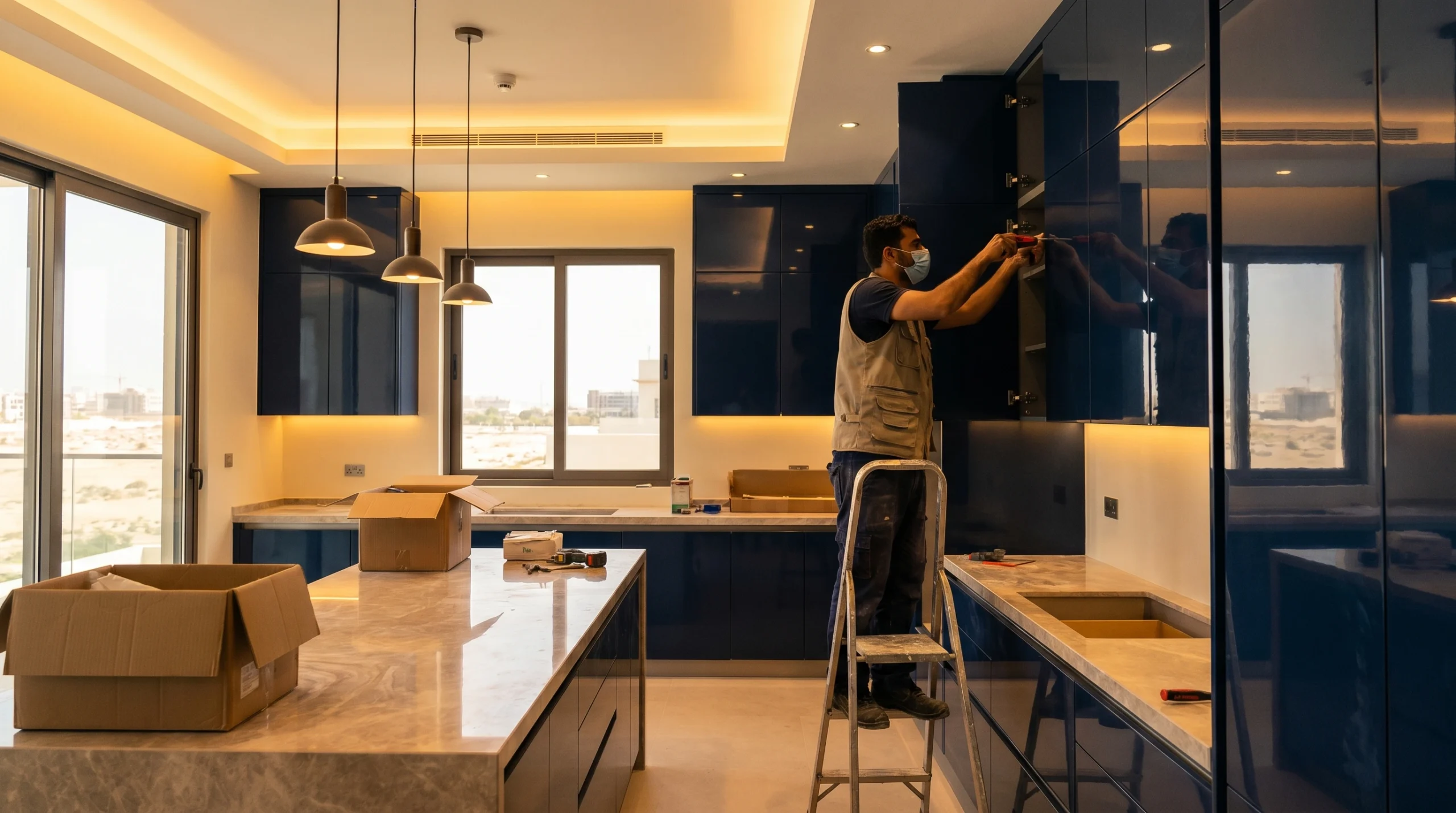
Expert Tips From 35 Years of Kitchen Projects in Dubai
These are specific, experience-derived recommendations. Not generic advice you could find anywhere.
1. Always add 10 percent to your worktop measurement for waste and templating
Stone worktops are templated on-site after cabinetry is installed. Cuts, joins, and the margin of error in any space mean your actual stone requirement is always greater than the bare linear measurement. Quoting without this allowance and then discovering the shortfall is an avoidable embarrassment.
2. Specify soft-close on every single hinge and runner, without exception
Dubai kitchens get heavy daily use. Soft-close hardware extends the life of every door and drawer significantly and eliminates the noise of constant cabinet slamming. The cost difference between standard and soft-close hardware on a full kitchen is typically AED 800 to AED 1,800. It is one of the best value-per-dirham investments in any kitchen specification.
3. Build your island at counter height for cooking, not bar height for seating
We see island height decisions made for the wrong reasons regularly. Counter height, around 900mm, is functionally superior for prep and cooking. Bar height stools are fine for a separate bar or seating area. Trying to combine both functions at one height creates a compromise that serves neither well. If you want both, design them as two separate elements.
4. Integrate your lighting in three layers: task, ambient, and accent
Under-cabinet LED strips for task lighting are non-negotiable in a quality kitchen. Ambient lighting in the ceiling or cornice handles general illumination. Accent lighting inside glass-fronted cabinets or above display areas completes the layering. Each layer is inexpensive to install correctly during construction. Retrofitting any one of them afterward is disruptive and costly.
5. Design your storage to match your actual cooking habits, not an aspirational version of them
We have clients who specified elaborate spice drawer systems because they looked beautiful in a showroom but rarely cook elaborately. We have others who cook seriously every day but specified minimal internal fittings because they seemed like a luxury. Think honestly about how you use your kitchen and design for that reality, not for a lifestyle photograph.
6. Leave a budget contingency of at least 10 to 15 percent
In 35 years of Dubai projects we have never managed a kitchen installation with zero surprises. Walls that are not square, pre-existing plumbing that needs rerouting, tiles that were not accounted for, a client who sees a better worktop three weeks into the project. Contingency is not pessimism. It is professional realism.
7. Ask for the production schedule in writing and visit the workshop at the midpoint of production
A midpoint workshop visit lets you see your actual kitchen, confirm finishes and colors in real materials rather than on a screen, and catch any misunderstandings before the job arrives on site. Every reputable kitchen company should welcome this. We encourage it actively.
How to Compare Kitchen Quotes in Dubai
Getting multiple quotes is sensible. Comparing them meaningfully requires a consistent framework. Here is how to do it properly.
Issue every contractor the same detailed brief. This means a scaled floor plan of the space, a list of required appliances with model numbers, a specification for materials where you have preferences, and the same timeline requirement. Without a consistent brief, you are comparing entirely different kitchens under the same budget heading.
When quotes come back, ask each contractor to break down their quote by component: carcasses, door fronts, worktops, hardware, internal fittings, design, and installation separately. This lets you see where the differences actually lie. A low overall number usually means a shortcut somewhere. Knowing exactly where the shortcut is lets you make an informed decision rather than discovering it after installation.
Check credentials specifically for Dubai. Has the company worked in your building type before? Apartment kitchens in Dubai Marina towers have specific logistics: lifts, floor protection, HOA approvals for noise and debris, and working-hours restrictions that add complexity versus an independent villa project. Ask whether they have experience in your specific community.
Ask for a physical reference you can visit. Not just photographs. An actual completed project where you can open the doors, pull out the drawers, look at the corner solutions, and ask the homeowner about their experience. Any quality kitchen company should be able to arrange this.
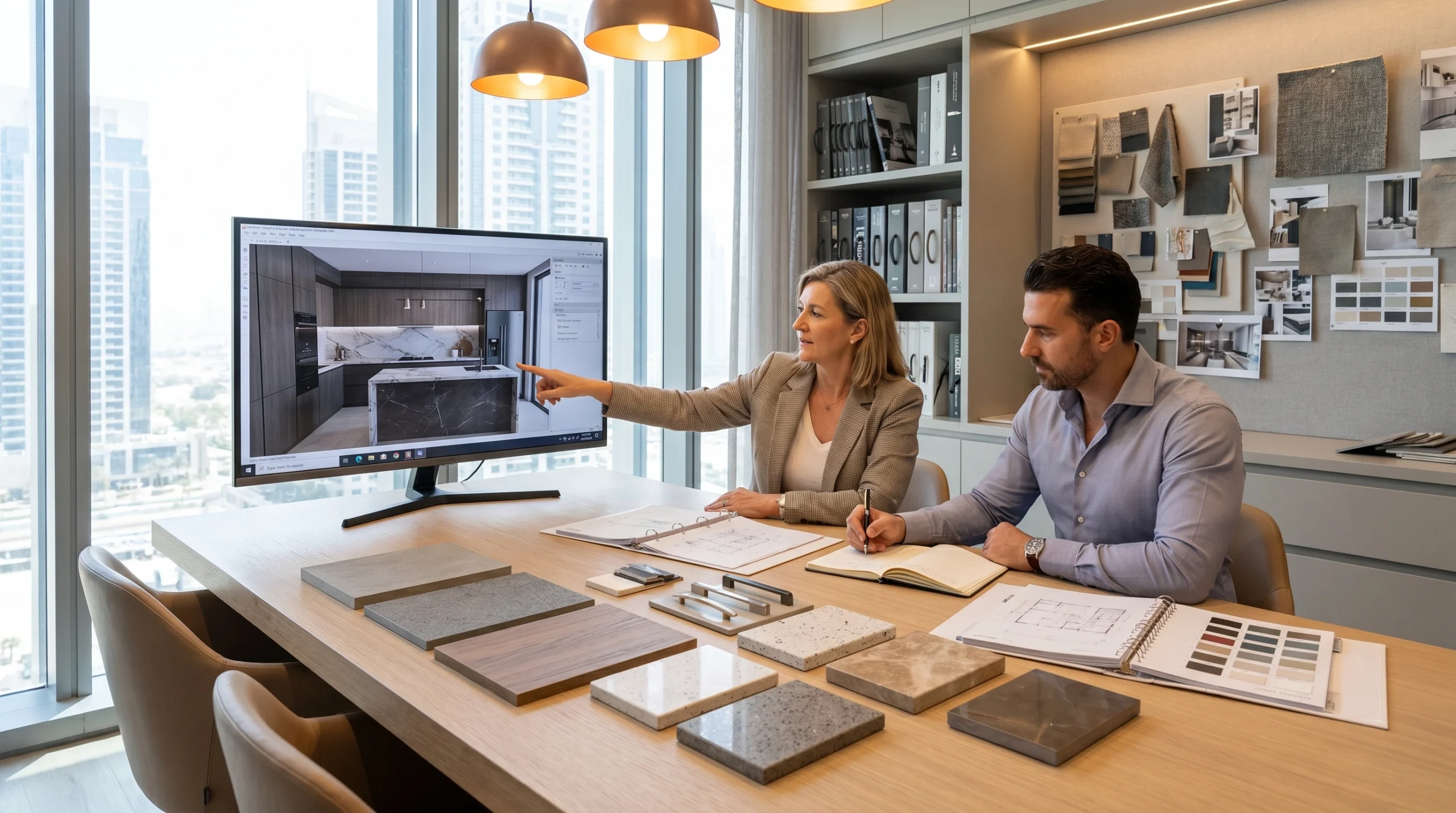
Summary: Building Your Budget With Confidence
Let us bring all of this together with a clear framework for planning your custom kitchen budget in Dubai in 2026.
For a compact apartment kitchen under 8 linear meters with mid-grade materials and a clean contemporary finish, plan for AED 25,000 to AED 55,000.
A standard villa or townhouse kitchen of 10 to 16 linear meters with quality materials, soft-close hardware, a stone worktop, and a practical island, plan for AED 60,000 to AED 130,000.
High-specification villa kitchen with premium finishes, complex layout, solid wood elements, and bespoke internal systems, plan for AED 130,000 to AED 300,000.
For a landmark luxury project with architectural-grade specification, allow for AED 300,000 and above, and expect a project timeline of four to six months from first consultation to completion.
In every case, the most important variable is not the budget itself. It is the clarity and specificity of the brief, the quality of the contractor relationship, and the time invested in getting the design right before production begins. A kitchen built properly in Dubai will look and function beautifully for 20 years or more. That is the real measure of value.
Conclusion: What Your Next Step Should Be
The number we have heard most from clients after their Karnak kitchen is complete is not the cost figure. It is the hours they spend in it. A well-designed, properly built kitchen changes how a home functions and how a family uses it. That is not marketing language. That is 35 years of feedback from people who commissioned us to build theirs.
If you are planning a kitchen project in Dubai and want an honest assessment of what it will cost, what it will involve, and what is realistic for your space and your brief, a consultation with our team costs you nothing and commits you to nothing.
Key Takeaways:
- Custom kitchen costs in Dubai in 2026 range from AED 25,000 for compact apartments to AED 300,000 or more for high-specification villa projects.
- Material quality and hardware specification are the two areas where cost cutting most visibly affects long-term performance in UAE conditions.
- Always confirm appliance specifications before finalizing any cabinetry design.
- A realistic timeline from first consultation to completed kitchen is ten to eighteen weeks for most Dubai projects.
- Compare quotes on identical specifications, visit the workshop, and ask for a physical reference you can inspect before committing.
Need Expert Help?
Karnak Carpentry has been designing and building custom kitchens in Dubai since 1988. Our team of designers, engineers, and craftsmen has completed over 10,000 projects across the UAE, from compact Marina apartments to landmark Palm Jumeirah villas. We offer a no-obligation design consultation at our Al Quoz studio, where you can view finished material samples, discuss your brief in detail, and get an honest, detailed quote broken down by component. There is no sales pressure, and there are no hidden costs. Just straightforward expertise from people who have been doing this longer than most of our competitors have existed.
Contact: +971-52-5554207 | info@karnakcarpentry.com
Frequently Asked Questions About Custom Kitchen Costs in Dubai (2026)
How much does a custom kitchen cost in Dubai in 2026?
Most custom kitchens in Dubai range from approximately AED 20,000 for smaller projects to more than AED 100,000 for premium luxury installations. Material quality, cabinet size, hardware, countertops, appliances, and customization determine the final investment.
What is the average price of custom kitchen cabinets?
Custom kitchen cabinetry generally starts around AED 15,000 for compact kitchens and often exceeds AED 50,000 for large kitchens with premium materials, luxury hardware, and fully customized storage solutions.
Which factors influence the cost of a custom kitchen?
Kitchen size, cabinet materials, countertop selection, hardware quality, storage accessories, appliances, lighting, plumbing changes, electrical work, and installation complexity all influence the final project cost.
Which cabinet material offers the best value?
Marine plywood delivers outstanding durability and moisture resistance for most Dubai kitchens. Moisture-resistant MDF provides a lower-cost alternative for painted finishes, while solid wood suits luxury kitchens with larger budgets.
How much do kitchen countertops cost?
Laminate countertops offer the most affordable option, while quartz, granite, marble, and sintered stone command higher prices because they provide greater durability, premium aesthetics, and longer service life.
Do custom kitchens increase property value?
Well-designed custom kitchens improve functionality, maximize storage, and enhance the overall appearance of a property. Buyers often view premium kitchens as one of the most valuable upgrades in Dubai homes.
How long does a custom kitchen project take?
Most custom kitchen projects require between three and eight weeks from design approval to final installation. Manufacturing schedules, imported materials, and project complexity affect the completion timeline.
Which hidden costs should homeowners expect?
Additional expenses may include demolition, waste removal, electrical upgrades, plumbing modifications, delivery, building approvals, temporary kitchen arrangements, and premium storage accessories. Planning for these costs helps prevent budget surprises.
Are custom kitchens more expensive than modular kitchens?
Yes. Custom kitchens usually cost more because designers tailor every cabinet, storage solution, and finish to your space. Modular kitchens reduce costs by using standardized cabinet sizes and factory-produced components.
Which hardware should I choose for a long-lasting kitchen?
Soft-close hinges, premium drawer runners, pull-out pantry systems, and high-quality organizers improve durability and everyday convenience. Better hardware also reduces maintenance over the life of the kitchen.
Can I build a high-quality kitchen on a moderate budget?
Yes. Marine plywood cabinets, quartz countertops, moisture-resistant finishes, and carefully selected hardware provide an excellent balance between cost, appearance, and long-term performance.
Should I replace appliances during a kitchen renovation?
Replacing older appliances during renovation improves efficiency, creates a consistent design, and avoids future modifications after installation. Many homeowners also choose integrated appliances for a cleaner appearance.
How can I reduce the cost of a custom kitchen without sacrificing quality?
Choose durable local materials, keep the existing plumbing layout, prioritize premium hardware over decorative upgrades, and simplify cabinet designs where possible. Smart planning often delivers significant savings without affecting long-term performance.
What should every custom kitchen quotation include?
A professional quotation should specify cabinet materials, board thickness, countertop type, hardware brands, finishes, dimensions, installation charges, delivery, warranty, project timeline, and payment schedule. Detailed quotations make it easier to compare different contractors fairly.
How do I choose the right custom kitchen company in Dubai?
Review completed projects, compare material specifications, inspect workmanship, verify warranty coverage, request transparent quotations, and discuss after-sales support before making your decision. Experienced companies explain every stage from design to installation and provide realistic pricing.