
Blog
What Is Veneer Wood and Should You Use It in Your Dubai Home?

Every week, at least a dozen homeowners walk into conversations with us carrying the same confusion. They’ve been quoted for veneer wood Dubai homes by one contractor, solid wood by another, and engineered wood by a third. The prices are completely different. The salespeople all swear their option is best. And nobody has explained what the differences actually mean for a Dubai home.
After 35 years and more than 10,000 joinery projects across the UAE, we’ve seen every version of this story. Veneer done brilliantly, lasting two decades and looking better with age. Veneer done badly, peeling off kitchen cabinet doors within eighteen months of installation. The difference isn’t the material. It’s the knowledge behind how it gets specified, sourced, and installed in this climate.
This guide will give you everything you need to make a genuinely informed decision. No sales pitch for any particular material. Just honest answers from craftsmen who have worked with all of them, in this heat, in this humidity, for a very long time. Veneer offers an excellent balance of beauty and practicality when used correctly. Expats navigating home choices in the UAE often benefit from community insights on InterNations and Expat Exchange.
What Veneer Wood Actually Is (And What It Isn’t)
There’s a lot of loose language around veneer wood in the Dubai market. Suppliers use the term to mean different things, which creates real confusion. Let’s clear that up first.
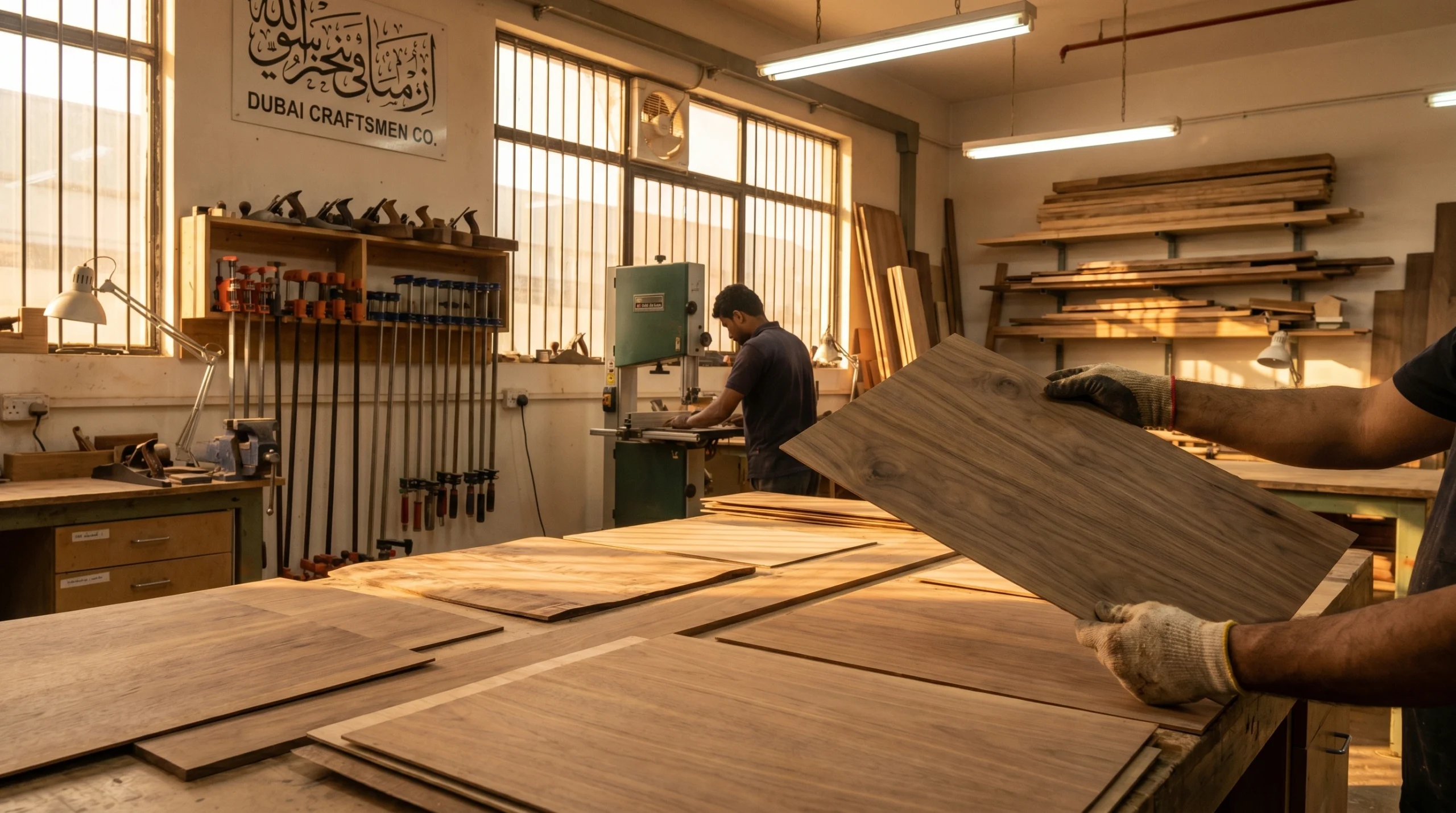
Veneer wood is a thin slice of real, natural wood. That’s the core definition. These slices, typically between 0.5mm and 3mm thick, are cut from actual timber logs and then bonded onto a substrate. That substrate is usually MDF, plywood, or particleboard. The result is a product that shows the authentic grain, texture, and visual character of real wood on its surface, while the structural core is a more dimensionally stable engineered material.
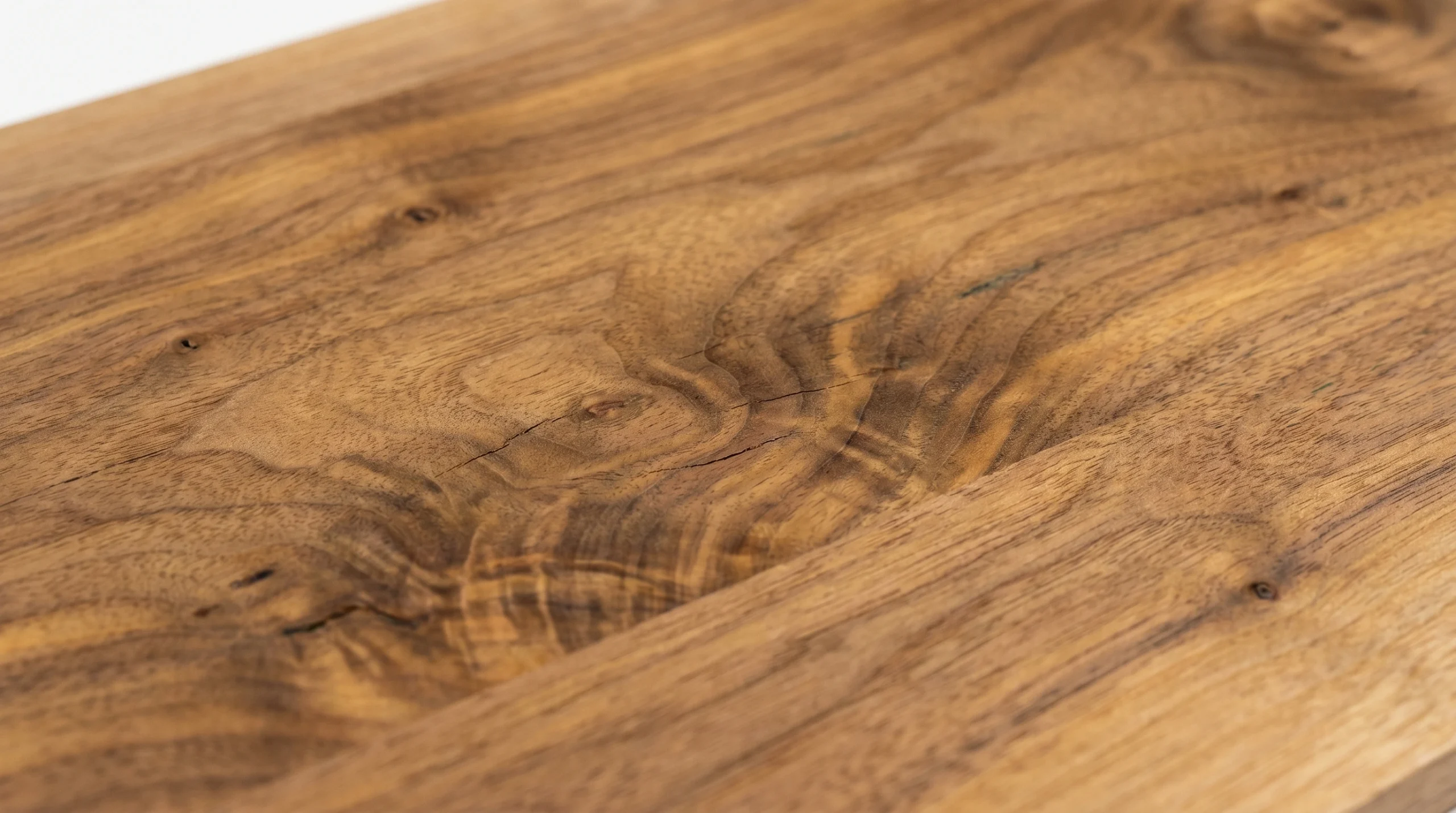
This is not fake wood. It is not a photograph of wood printed onto laminate. It is genuine timber, just sliced thin and applied as a surface layer. Run your finger across a quality veneer panel and you feel actual wood fiber, real grain, natural variation. Look closely and you see the same growth rings you’d find in a solid plank.
Where the confusion comes from is the word “engineered.” Veneer is technically an engineered wood product, because it combines natural wood with manufactured substrate materials. But so is plywood, and nobody argues that plywood isn’t real wood. The engineering is in the construction method, not a replacement of the natural material.
The Three Types of Veneer You’ll Encounter in UAE
Not all veneer is equivalent. When you’re comparing quotes from different joinery companies in Dubai, you may be comparing completely different products that happen to share the same name.
Rotary-cut veneer
It is the most common and most affordable. A log is mounted on a lathe and peeled in a continuous sheet, similar to unwinding a roll of paper. The grain pattern this produces is broad and slightly irregular. It’s used extensively in budget furniture and standard cabinetry. You’ll find it in most mid-range fitted wardrobes across developments in JVC, Motor City, and similar areas.
Flat-cut or crown-cut veneer
Sliced straight through the log, producing the classic cathedral grain pattern most people picture when they think of fine wood furniture. This is what you see on premium cabinetry and statement furniture pieces. Rift-cut and quarter-cut variations produce straighter, more architectural grain patterns often used in contemporary Emirates Hills and Palm Jumeirah interiors.
Reconstituted or engineered veneer
Made by slicing fast-growing plantation wood, dyeing it, and reassembling it to mimic the appearance of premium species. A reconstituted “wenge” veneer, for example, gives you the dark chocolate tones of real wenge at a fraction of the cost. Quality varies enormously between suppliers. We’ve seen reconstituted veneers that are genuinely impressive and others that look artificial within two years.
What the Substrate Tells You About Quality
The timber face is what you see. The substrate is what determines how the product performs in your home over time, especially in Dubai’s climate.
MDF substrate
Gives you the flattest possible surface and takes veneer adhesion extremely well. It’s dimensionally very stable in consistent indoor conditions. The weakness is that MDF is vulnerable to moisture penetration at edges and joins. In areas like JBR or Marina apartments where humidity fluctuates significantly with window-opening habits, MDF-substrate veneer needs proper sealing at every edge or you will eventually see swelling.
Plywood substrate
It is structurally superior. It handles moisture changes better than MDF, holds screws and fixings more reliably, and is significantly stronger in applications like shelving and kitchen carcass construction. The trade-off is that achieving a perfectly flat surface requires more skill, and cost is higher. For high-end villa projects in areas like Arabian Ranches or Jumeirah, we almost always specify plywood substrate for anything structural.
Particleboard
The cheapest option and also the weakest. Most budget flat-pack furniture uses particleboard cores. In UAE conditions, particleboard-core veneer furniture has a limited lifespan. We see failures regularly in properties that have been furnished with low-cost imports.
How Dubai’s Climate Actually Affects Veneer Wood
This is the section most articles skip. They’ll tell you veneer is “humidity resistant” or “suitable for warm climates” without explaining what that actually means in practice. Let us be direct about what we’ve observed across thousands of installations.
Dubai’s indoor climate isn’t just “hot.” It’s a combination of extremes. Outdoor temperatures reach 45 degrees Celsius in summer. Indoor air conditioning brings that down to 20 to 24 degrees. That temperature differential, experienced repeatedly across thousands of daily AC cycles, creates stress on wood products that most people from temperate climates don’t anticipate.
The Humidity Challenge That Matters Most
The relative humidity in Dubai swings between roughly 30% in winter and 90% in coastal summer conditions. Inside air-conditioned spaces it’s generally maintained between 40% and 60%, but that depends entirely on the building, the AC system, and the occupant’s habits.
Solid wood moves with these humidity changes. It expands when moisture rises and contracts when it drops. A 50mm-wide solid teak shelf will change dimension by 1 to 2mm across a full seasonal humidity cycle. That’s why traditional solid wood furniture is designed with joinery techniques, floating panels, and specific gap tolerances that accommodate movement.
Veneer on a stable substrate moves significantly less. The MDF or plywood core is far less reactive to humidity than solid timber. This is genuinely one of veneer’s real advantages in the UAE context. A well-made veneer panel installed correctly in Dubai will be more dimensionally stable than solid wood in the same location.
The problem occurs at the veneer edges and at the bond between veneer and substrate. If those edges aren’t properly sealed and if moisture gets underneath the veneer layer, delamination follows. We’ve removed veneer kitchen doors from a Dubai Marina apartment where the veneer had lifted across 60% of the surface because the installer used insufficient adhesive and left raw edges exposed.
What Happens Near Windows and External Walls
Properties facing west get direct afternoon sun through glass that can raise surface temperatures dramatically. We’ve measured veneer surfaces in west-facing Emirates Hills villas reaching 55 degrees Celsius in July when positioned near large windows, even with the AC running. At those temperatures, cheap adhesives can soften and veneer can begin to lift.
The fix isn’t to avoid veneer in these locations. It’s to specify the right adhesive, use UV-filtering glass or appropriate window treatments, and select veneer species that respond better to heat. Teak veneer and oak veneer handle thermal stress better than more delicate species. We’ve also had excellent results with properly finished veneer on external-facing cabinetry when correct preparation is done.
Kitchens and Bathrooms: The Real Story
Kitchens and bathrooms in UAE properties see the most severe conditions veneer faces. Steam from cooking and showering, cleaning chemicals, splashing water. Here’s our honest assessment after fitting joinery in hundreds of Dubai kitchens.
Veneer kitchen cabinets work well when installed correctly with proper sealing, adequate ventilation, and quality door edges. We’ve seen veneer kitchen installations from 2004 in Jumeirah villas that still look excellent today. We’ve also seen installations from 2019 that were deteriorating badly by 2022. The difference is almost entirely about specification and workmanship, not the material category.
For bathroom cabinetry specifically, we generally recommend that any veneer used is kept away from direct splash zones. Vanity units with veneer fronts are fine when the faces are properly lacquer-finished and the base units don’t sit directly on wet floor surfaces. In unsuited bathrooms in luxury projects on Palm Jumeirah, we regularly install veneer cabinetry that performs without issue for many years.
Veneer vs Solid Wood vs Laminate: An Honest Comparison for UAE Homes
This is the question at the core of most decisions. People want a simple answer: which is best? Our honest answer is that there isn’t one. There’s which is most appropriate for your specific situation.
Veneer Wood ; The Real Pros and Cons are :
What veneer does well in UAE homes:
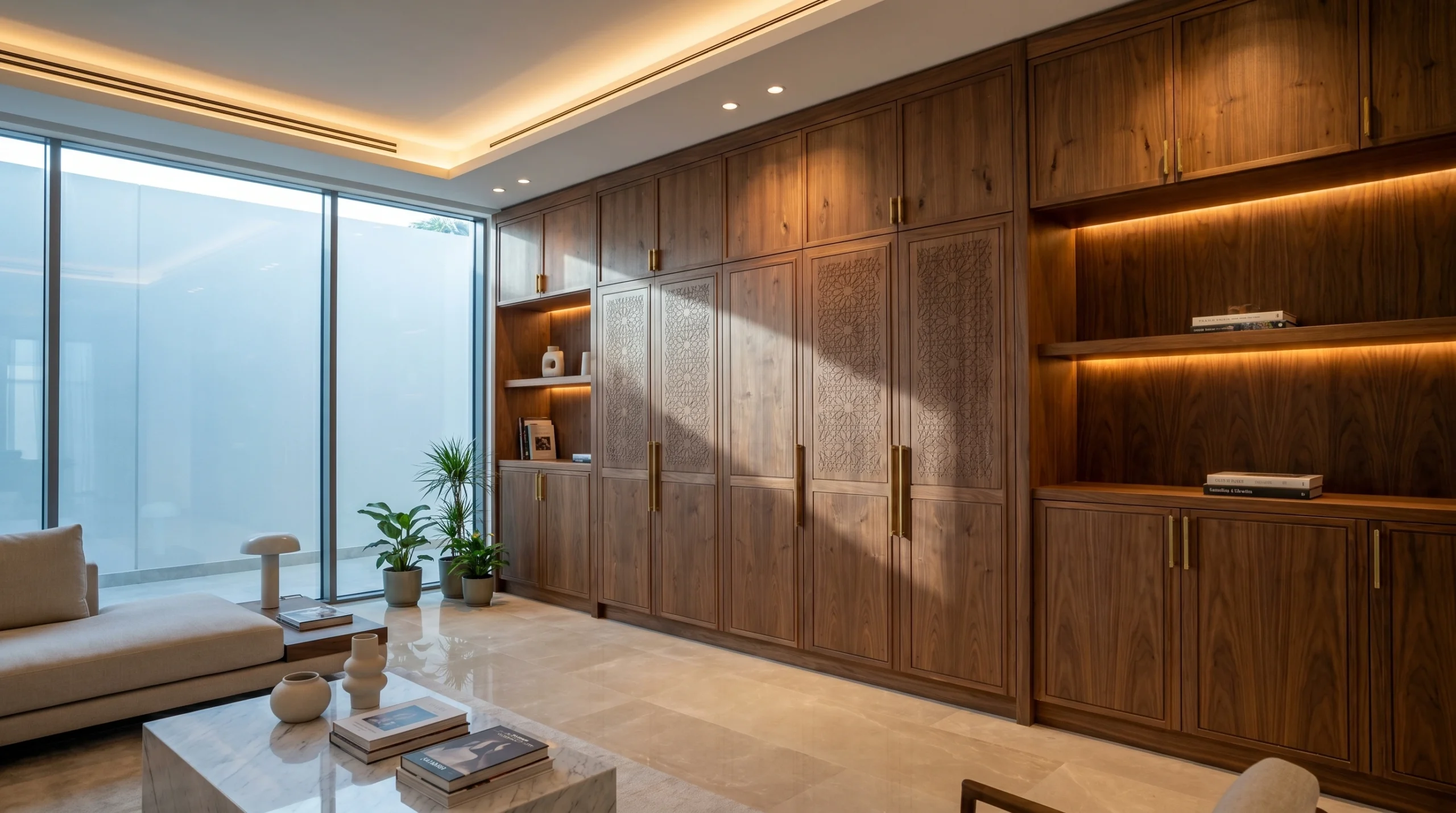
Veneer gives you authentic wood aesthetics at a price point that makes entire rooms financially viable. A walnut-veneer kitchen in a Dubai villa might cost 35,000 to 55,000 AED fully fitted. The same kitchen in solid walnut would cost 120,000 to 180,000 AED or more. For most families, the solid option simply isn’t on the table. Veneer makes real wood grain accessible.
Veneer also allows consistent grain matching across large surfaces. When you’re paneling an entire feature wall in a JBR penthouse, you can achieve continuous grain flow across 8 metres of surface with veneer in a way that’s impossible with solid wood planks. We do this regularly in high-end residential projects and the visual result is genuinely stunning.
Dimensional stability, as discussed, is a real advantage in our climate when the product is correctly made.
Where veneer has genuine limitations:
Veneer can’t be sanded and refinished as many times as solid wood. A 0.6mm face veneer has perhaps one very careful sanding in its lifespan. A 2mm thick veneer gives more tolerance. Solid wood furniture that gets scratched or worn can be brought back to near-original condition. Veneer has limits on how far restoration can go.
Edge vulnerability is real. This is the most common failure point. Corners, edges, and areas of frequent contact are where veneer shows age first. Proper edge banding and careful specification of thickness in high-contact areas addresses this, but it requires skill and attention to detail.
How Solid Wood Compares
Solid wood in UAE conditions requires careful species selection and proper acclimatization before installation. We’ve seen imported solid oak wardrobes warp visibly within six months when the timber wasn’t properly dried and acclimatized to Dubai’s indoor conditions. Proper acclimatization takes 4 to 6 weeks of stored exposure to the installation environment.
The premium species that handle UAE conditions well are teak, iroko, sapele, and properly treated oak and ash. These are beautiful, durable materials that improve with age. They’re also expensive, and the cost of quality solid wood joinery puts it beyond reach for many homeowners.
Solid wood is our recommendation for specific applications: dining tables that will see decades of use, statement pieces in primary reception rooms, custom beds in master bedrooms, and architectural elements that will define a home for 20 to 30 years. For fitted wardrobes, kitchen cabinetry, and secondary rooms, veneer is frequently the better financial decision.
Where Laminate Fits In
Laminate is not a wood product. It’s a photographic layer of wood grain printed onto a carrier and coated with a wear surface. Laminate is tougher than veneer in terms of scratch resistance and moisture exposure. It’s less expensive. But it reads as artificial to most trained eyes, and there’s no comparison in tactile feel or appearance depth.
Laminate has a clear role in utility spaces: laundry room cabinetry, staff accommodation joinery, secondary storage. Using laminate in a living room or master bedroom in a property above 2 million AED is a decision that affects resale appeal, in our experience.
Common Mistakes We See in Dubai Veneer Installations
After 35 years in this market, certain errors appear so often they deserve direct attention. These are the patterns we see when homeowners call us about joinery that’s failing.
Mistake 1: Choosing Veneer Thickness Based on Price Alone
The cheapest veneer available in Dubai markets is typically 0.5mm or even thinner. Some imported flat-pack furniture carries veneer so thin you can see the substrate texture bleeding through the surface. This material has almost no durability margin. One rough move during installation, one heavy contact point, one sanding attempt, and it fails.
For cabinetry and furniture you expect to use for ten or more years, specify 1mm minimum veneer thickness. For statement pieces and high-traffic areas, 2mm is worth the additional cost. We rarely install anything thinner than 0.8mm on client projects.
Mistake 2: Ignoring Edge Treatment
The most common veneer failure we’re called to assess is delamination starting from edges. Cabinet doors where the veneer is lifting from the top edge. Wardrobe panels where the sides are separating. Shelving where the front edge is peeling.
Proper edge banding, whether in solid wood edge strips or quality PVC edge tape, is not optional. It’s the seal that keeps moisture from working its way under the veneer face. On any quality installation, every exposed edge should be treated. Budget installations routinely skip this or use edge tape that doesn’t properly bond to the substrate.
Mistake 3: Using Inadequate Adhesive for UAE Temperatures
Standard cold-press adhesives used in cooler climates can have significantly reduced bond strength at sustained temperatures above 40 degrees Celsius. In west-facing rooms and on surfaces near windows, this is a real issue. We use heat-resistant adhesives rated for continuous temperatures well above what UAE summer conditions produce, plus appropriate bonding time and pressure.
When assessing joinery quotes, ask specifically what adhesive system the contractor uses. If they can’t answer clearly, that tells you something about their technical depth.
Mistake 4: Skipping Proper Surface Finishing
Veneer is real wood and needs appropriate surface protection. Bare veneer without finishing will absorb moisture, stain readily, and age badly within months in UAE conditions. A proper finishing schedule, whether oil, lacquer, or polyurethane, seals the surface and protects the wood fiber.
We see this mistake most often in low-cost supply-and-fit operations where cutting corners on finishing saves time on a tight contract. The homeowner accepts the work and notices problems within the first summer.
Mistake 5: Installing Without Substrate Acclimatization
MDF and plywood substrates should be acclimatized to the installation environment before veneer is applied or before veneered panels are installed. Moving materials from a cool warehouse directly into a hot construction site and immediately fitting them causes stress in the adhesive bond and can cause movement in the substrate itself.
We store materials in the installation environment for a minimum of 48 to 72 hours before working with them. On larger projects we extend that period further. This step is invisible in the finished product, but it matters enormously for long-term stability.
Mistake 6: Mismatching Veneer Species to Room Function
Some veneer species are simply better suited to certain conditions. Very open-grained woods like ash and oak need proper grain filler before lacquering or they trap dust and cooking residue in kitchen environments. Darker species like wenge and ebonized veneers show every fingerprint, which matters in family homes with young children.
We spend time with clients discussing exactly how spaces are used before specifying veneer species. A walnut veneer that looks incredible in a showroom may drive you to frustration in a heavily-used family kitchen if the surface finish doesn’t match your cleaning habits.
What Veneer Wood Costs in Dubai: Honest Numbers for 2026
Pricing for veneer work in Dubai varies more than almost any other joinery category. The range between the cheapest option and a quality installation can be three to four times the price for what looks like the same product. Understanding what drives cost helps you evaluate quotes intelligently.
Veneer Material Costs
Raw veneer sheets in Dubai range from approximately 15 AED per square meter for basic rotary-cut commercial veneer up to 200 AED or more per square meter for premium flat-cut figured timber like burr walnut or quilted maple. The species you choose affects cost significantly.
For reference, here are approximate veneer face material costs in the current 2026 market:
Oak veneer (flat cut): 45 to 75 AED per sqm Walnut veneer (crown cut): 65 to 110 AED per sqm Teak veneer (rift cut): 80 to 130 AED per sqm Wenge veneer (quarter cut): 90 to 140 AED per sqm Reconstituted veneer options: 25 to 60 AED per sqm
These are face material costs only, before substrate, adhesive, processing, and installation.
Fitted Joinery Pricing for complete fitted joinery projects using veneer finish, here are realistic budget ranges based on our current project pricing:
Fitted wardrobe, standard bedroom (3m x 2.4m):
8,000 to 18,000 AED depending on veneer species, internal fittings, and sliding vs hinged doors.
Kitchen cabinetry, standard apartment (8 to 12 linear meters):
22,000 to 55,000 AED. The range reflects cabinet construction quality, veneer species, hardware specification, and finishing.
Feature wall paneling (per sqm installed):
350 to 800 AED for veneer paneling with substrate, depending on complexity and species.
Home office joinery (desk, shelving, storage wall):
15,000 to 40,000 AED for a complete room.
What Separates a 22,000 AED Kitchen from a 55,000 AED Kitchen
Many suppliers label both options as a “veneer kitchen” when preparing quotations. The difference is in nearly every component: carcass construction (18mm plywood vs 15mm particleboard), veneer thickness and quality, edge treatment, hinge and drawer system quality (German hardware vs imported generic), finishing quality, and the level of skill and time invested in installation.
The 22,000 AED kitchen can be good quality work from a capable contractor watching costs carefully. The 55,000 AED kitchen represents genuinely premium execution across every component. Neither is inherently a wrong choice. They serve different priorities and budgets.
What should concern you is a 22,000 AED quote that uses the same language as a 55,000 AED quote without explaining the specification differences. Ask for a detailed bill of materials. Any contractor who can’t or won’t provide one clearly is not someone you should be working with.
Expert Tips From 35 Years of UAE Veneer Projects
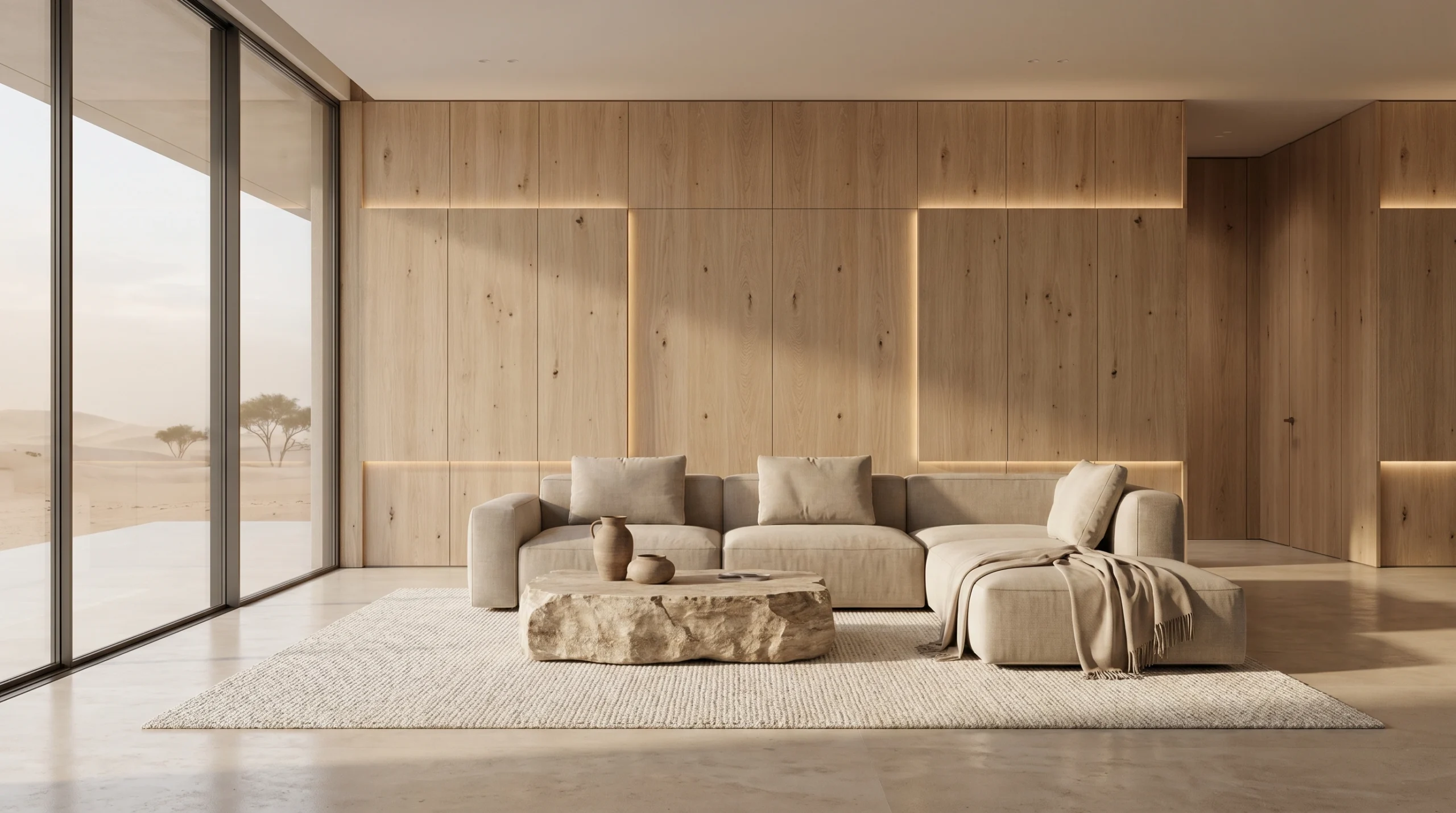
These are the things we wish every homeowner knew before starting a veneer project. Experienced craftsmen and designers develop most of this knowledge by seeing projects succeed or fail over many years.
Tip 1: Match your veneer species to your light conditions
Dark veneer species like wedge and smoked oak look spectacular in high-ceiling spaces with abundant natural light. In lower-ceiling apartments in areas like Business Bay or DIFC, these same species can make rooms feel heavy and compressed. Oak, ash, and lighter walnuts work better in tighter spaces. Visit your shortlisted species in conditions similar to your room before committing.
Tip 2: Request a sample panel, not just a chip
A 100mm veneer chip tells you very little. Ask your contractor for a 300mm x 300mm finished sample panel with the actual finish you’ve specified. That sized sample shows you how the grain flows, how the finish looks under your lighting conditions, and how the edge treatment will appear. This is not an unreasonable request from any quality joinery company.
Tip 3: Plan your grain direction intentionally
Vertical grain on tall cabinet doors makes a room feel taller. Horizontal grain creates a contemporary, expansive feel. Matching grain direction across adjacent panels creates visual continuity. These decisions affect how your finished joinery reads in the room. Discuss them explicitly with your designer or contractor, rather than leaving it to whoever is on site the day the panels go up.
Tip 4: Budget for finishing properly
Material and installation cost is one line item. Proper finishing is another. The finest veneer looks poor under inadequate finishing. A three-stage finishing process with proper sanding between coats costs more than a single spray application, but the result is incomparable. In high-visibility applications, finishing quality is what separates a project that looks professional from one that looks almost right.
Tip 5: Consider future refinishing before specifying thickness
If you’re installing a statement piece, something you might want to restore in fifteen years, specify thicker veneer from the beginning. Spending more on higher-specification materials during the planning stage costs far less than replacing veneer that has reached its refinishing limit.
Tip 6: Seal the backs of veneer panels in humid areas
This is a technical detail that many installers skip because it adds time. When a veneer panel is sealed on the face but not the back, moisture can enter through the rear and cause the substrate to expand unevenly, which stresses the veneer bond. In bathroom-adjacent walls and kitchen environments, back-sealing matters.
Tip 7: Allow for seasonal movement in installation gaps
Even stable veneer substrates move slightly with seasonal humidity changes. When fitting veneer panels into architectural frames, allow appropriate gaps and use appropriate fastening methods that don’t rigidly lock the panel. Panels that are over-fastened can buckle slightly in summer and show gaps in winter. This is basic joinery practice but it gets ignored when contractors are moving quickly.
Tip 8: Understand the maintenance commitment before you choose your species
Open-grained woods need periodic maintenance. Oiled finishes need reapplication. Lacquered surfaces need careful cleaning and occasional professional attention. Your veneer will perform for decades with appropriate maintenance and fail prematurely without it. Be realistic about your maintenance habits when choosing materials and finishes.
Conclusion: Is Veneer Wood Right for Your Dubai Home?
After everything above, the answer is probably yes, in many applications, when done properly. Veneer is not a compromise material. It’s a legitimate, time-tested product that forms the basis of some of the finest interior joinery in the world, including in UAE homes we’ve worked on for more than three decades.
The cases where veneer is genuinely the best choice are numerous: fitted wardrobes, kitchen cabinetry, wall paneling, study and office joinery, media walls, and custom furniture where budget needs to stretch across an entire home. In all of these applications, properly specified and professionally installed veneer delivers real wood aesthetics, reasonable durability, and genuine value.
Choose solid wood when you want statement dining or reception furniture that will define your home for generations, when your project requires primary structural architectural elements, or when you’re creating custom pieces where the depth and character of natural wood grain make a meaningful difference.
What never makes sense, in our experience, is cutting corners on either. Cheap veneer poorly installed in a space where you’ve spent serious money on everything else is a visible disappointment within a few years. Quality specification, quality substrate, quality adhesive, proper edge treatment, and skilled installation are what makes veneer wood perform as it should in Dubai’s demanding conditions.
Key Takeaways:
- Veneer wood is real timber, sliced thin and bonded to a stable substrate. It is not fake or imitation wood.
- The substrate material (MDF, plywood, or particleboard) matters as much as the veneer face for long-term performance in UAE conditions.
- Dubai’s temperature extremes and humidity swings require heat-resistant adhesives, proper edge sealing, and appropriate surface finishing.
- Quality veneer joinery costs 8,000 to 55,000+ AED depending on application, specification, and scope. Price differences reflect real differences in materials and workmanship.
- The most common failures come from thin veneer, poor edge treatment, inadequate finishing, and insufficient substrate preparation, not from veneer being unsuitable for the UAE climate.
Need Expert Help With Your Veneer Project?
Karnak Carpentry has been designing, manufacturing, and installing bespoke joinery across Dubai and the UAE since 1988. Our team has completed more than 10,000 projects, from fitted wardrobes in JBR apartments to complete custom joinery in Emirates Hills villas. We understand this climate, these conditions, and what it takes to deliver work that still looks exceptional twenty years later. If you’re planning a joinery project and want honest guidance before you commit, reach out for a no-pressure consultation.
Contact: WhatsApp Us or Call Us at +971-52-5554207 | info@karnakcarpentry.com
Frequently Asked Questions About Veneer Wood in Dubai
What is veneer wood?
Veneer wood consists of a thin layer of natural hardwood bonded to a stable core such as plywood, MDF, or particle board. This construction delivers the authentic appearance of solid wood while reducing material costs and improving dimensional stability.
Is veneer real wood?
Yes. Manufacturers slice veneer directly from natural timber such as oak, walnut, teak, ash, or maple. Although the surface contains genuine wood, the core uses an engineered material to improve strength and stability.
Should I choose veneer or solid wood for my Dubai home?
Choose veneer if you want the natural beauty of hardwood at a more affordable price. Select solid wood if you prefer maximum longevity, deeper grain patterns, and the ability to refinish the surface multiple times.
Does veneer perform well in Dubai’s climate?
Yes. High-quality veneer over marine plywood or moisture-resistant MDF handles Dubai’s indoor climate very well. Stable construction reduces expansion and contraction while preserving the natural wood appearance.
Where can I use veneer wood in my home?
Veneer works beautifully for wardrobes, kitchen cabinets, TV units, wall panels, office furniture, bedroom sets, dining tables, and custom cabinetry. Designers often choose veneer for luxury interiors because it combines elegance with practicality.
How long does veneer furniture last?
High-quality veneer furniture can last for decades with proper care. Durable core materials, professional craftsmanship, and regular maintenance all contribute to a longer lifespan.
Can veneer peel over time?
Poor-quality adhesives, excessive moisture, and improper installation can cause veneer to peel. Premium materials, skilled craftsmanship, and controlled indoor conditions greatly reduce this risk.
Is veneer more affordable than solid wood?
Yes. Veneer furniture usually costs significantly less than solid hardwood furniture because manufacturers use only a thin layer of natural timber instead of thick solid wood throughout the entire piece.
How do I clean veneer wood furniture?
Dust the surface regularly with a soft microfiber cloth and wipe spills immediately. Mild wood cleaners work well for routine maintenance, while abrasive pads and harsh chemicals can damage the finish.
Can veneer resist scratches?
Quality protective finishes improve scratch resistance, but sharp objects and heavy impacts can still damage the surface. Coasters, placemats, and furniture pads help preserve the finish for longer.
Which veneer species are most popular in Dubai?
Oak, walnut, teak, ash, maple, and smoked oak veneers remain popular choices for modern Dubai interiors. Each species offers unique grain patterns and complements a wide range of interior design styles.
Can veneer furniture increase property appeal?
Elegant veneer finishes create a premium appearance that enhances living spaces and custom interiors. Well-designed built-in furniture also improves functionality and attracts potential buyers or tenants.
What is the difference between veneer and laminate?
Veneer uses real wood with natural grain and texture, while laminate uses a printed decorative surface over engineered boards. Veneer offers an authentic timber appearance, whereas laminate provides greater stain resistance and lower maintenance.
Can professionals repair damaged veneer?
Skilled craftsmen can repair many veneer issues, including minor chips, loose edges, scratches, and surface damage. Early repairs restore the appearance and prevent more extensive deterioration.
Who should choose veneer wood for a Dubai home?
Homeowners who want the elegance of natural wood without the premium price often find veneer an excellent choice. It suits custom furniture, luxury interiors, modern apartments, villas, and office spaces where style, durability, and value matter equally.
Related Articles
- Wardrobe Installation Process Dubai: What Actually Happens From Measurement to Handover
- How to Care for Wooden Floors in the UAE Climate: A Master Craftsman’s Guide
- The Complete Guide to Hardwood Flooring Installation in Dubai Apartments
- How Custom Kitchen Cabinets Are Made: A Complete Behind-the-Scenes Look at the Dubai Process