
In 1992, four years after Karnak Carpentry opened its doors, we got a call from a homeowner in Jumeirah. He had spent a small fortune on solid teak floors, imported and installed beautifully. Six months later, the boards were cupping along every edge, gaps had opened between half the planks, and the finish looked like cracked porcelain. He was devastated. The floors were not defective. The wood was excellent. The installation had been fine. What failed was the aftercare, and the complete mismatch between European floor maintenance advice and what UAE conditions actually demand.
That call changed how we think about our work. It is not enough to install beautiful floors. We have to make sure the people living on them know how to keep them alive. Over the past 35 years and more than 10,000 projects across Dubai, Abu Dhabi, and the wider UAE, we have seen every possible way a wooden floor can deteriorate in this climate, and more importantly, we have learned exactly what prevents it. This guide shares what we know, without the generic advice you will find anywhere else. Regular maintenance extends the beauty and life of your floors significantly. Many residents also stay informed through Gulf News insights for practical living advice in the Emirates.
Why UAE Climate Is a Wooden Floor’s Most Difficult Challenge
Wood is a living material, even after it has been milled, dried, finished, and laid on your floor. It responds constantly to its environment, expanding when it absorbs moisture and contracting when moisture leaves. In most parts of the world, that movement is relatively predictable. In the UAE, the swings are extreme, they happen fast, and they repeat in cycles that punish wood more aggressively than almost any other climate on the planet.
Consider the numbers. Dubai outdoor humidity during July and August regularly sits between 80 and 95 percent. By January, that drops to 30 to 45 percent. That is a swing of 50 percentage points across the year. Compare that to London, where the annual swing is roughly 15 to 20 points, or New York, where it is around 25 points. The wood in your UAE home is working twice as hard as the same species would in most international climates.
Temperature adds another layer. Your air conditioning runs hard from May through October, and the temperature differential between outside and inside can exceed 20 degrees Celsius on a summer afternoon. That gradient creates moisture movement through walls, ceilings, and floors that constantly pulls at wood fibers. If you have ever noticed that your floor feels different underfoot in summer versus winter, you are feeling real, measurable dimensional change.
The Two Seasons That Define UAE Floor Health
We talk about summer and winter in UAE floor care, but not the way most people mean it. For wooden floors, summer means the AC season, roughly May to October. Winter means the humid transition months of November and December, plus February and March when the weather moderates and people open their homes to outside air.
Summer is when floors dry out and contract. Gaps appear between boards, particularly in solid hardwood installations. You may hear light creaking that was not there before. Floors can feel slightly hollow in spots. None of this necessarily signals damage. It is wood doing what wood does when the air moisture content drops.
The transition periods are actually more dangerous than peak summer. When you shift from heavy AC in October to opening windows and letting humid October air in, the sudden jump in moisture can cause rapid swelling. Boards push against each other. If there is no expansion gap at the perimeter, or if that gap was filled with rigid material during renovation, something buckles. We have seen beautiful floors destroyed in 72 hours during the October humidity spike simply because the homeowner turned off the AC and opened the house up too quickly after summer.
How AC Systems Interact With Your Floors
Your air conditioning does not just cool the air. It dehumidifies it significantly. A well-running split system in Dubai can pull indoor humidity down to 40 to 50 percent even when outside air is at 85 percent. That is good for human comfort. For wood floors, it means living in a permanently drier environment than the wood encountered during installation and acclimation.
The problem comes from AC positioning and airflow. We have replaced dozens of floors over the years where the primary damage was from a floor-level AC vent blowing cold, dry air directly across the surface. The wood in that stream dries faster than the wood a meter away. You get localized cracking, finish failure, and even checking (small splits along the grain) in the boards closest to the vent. If you have floor-level vents, redirect them slightly upward or use a diffuser. It is a simple fix that can add years to a floor’s life.
The Correct Humidity Range and How to Maintain It
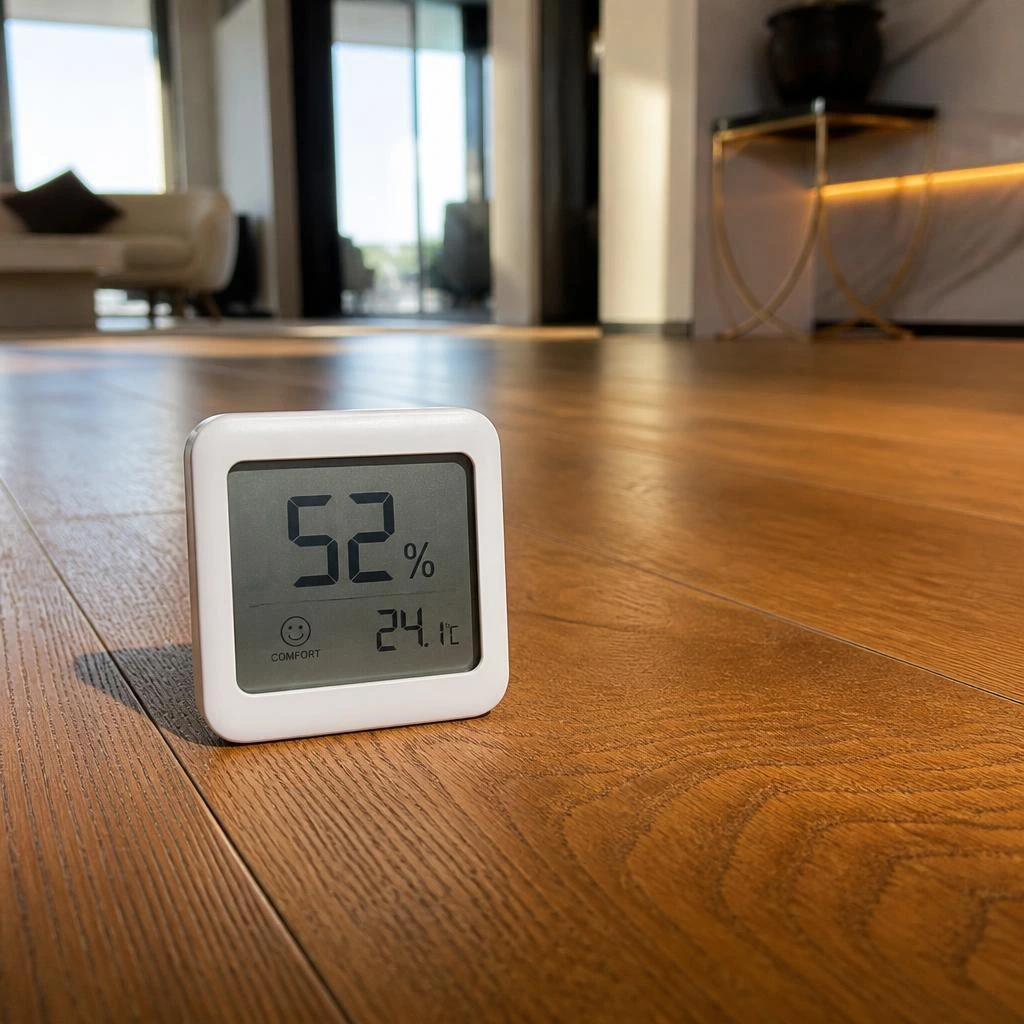
After 35 years of UAE floor work, the single most valuable piece of advice we give every client is this: buy a hygrometer and use it. A basic digital hygrometer costs 30 to 60 AED. It will tell you the relative humidity in your room at any time. The target range for wooden floors is 40 to 60 percent relative humidity. Everything else in floor maintenance flows from keeping your home in that range.
This is harder than it sounds in the UAE. In summer, your AC will typically hold you in that range or even drop you below 40 percent if the system is oversized or running constantly. In the humid transition months, outdoor air pushing in through gaps around windows and doors can spike your indoor humidity above 65 or 70 percent for days at a time.
Using Humidifiers and Dehumidifiers Strategically
Most UAE homeowners think about dehumidifiers. Fewer think about humidifiers, but both are relevant. During the summer AC season, if your hygrometer regularly reads below 35 percent, you need to add moisture to protect your floors. A room-sized ultrasonic humidifier costs 150 to 350 AED and can maintain an appropriate range in a standard bedroom or living room.
During the humid months, a portable dehumidifier running in your main living areas can keep humidity from spiking when outside conditions are adverse. A decent unit costs 400 to 800 AED. These are not luxury items for floor owners in the UAE. They are maintenance tools, like oil for a car engine.
We had a client in Arabian Ranches with 280 square meters of engineered oak floors, installed beautifully in 2019. By 2021, she was calling us about significant gapping in the living areas. When we visited, her hygrometer, which she had installed on our recommendation, showed her living room was running at 28 to 32 percent humidity through the summer. Her AC system was oversized for the villa after a layout change, and it was stripping too much moisture. We added two humidifiers to her main living areas and the gapping stabilized within two months. No replacement needed.
Zoning Your Home for Floor Protection
Not all rooms are equally vulnerable. Rooms with higher AC exposure, larger window areas, or more traffic need more attention. Ground floor areas in villas often have higher moisture levels than upper floors due to proximity to the slab. Rooms near kitchen or bathroom sources of steam and humidity are different from bedrooms.
Walk through your home with your hygrometer and take readings in each room at different times of day. You will quickly build a picture of where the stress points are. Prioritize monitoring and humidity control in the areas that show the widest swings.
Cleaning Wooden Floors in the UAE: What Actually Works
Cleaning wooden floors in the UAE requires a different approach from what most international guides recommend, for one primary reason. Dubai is a dusty environment. Saharan sand storms, construction activity across the city, and open desert geography mean that fine particulate matter finds its way into every home. This dust, combined with the grit tracked in from outdoor shoes, acts like very fine sandpaper on your floor finish if it is not removed correctly.
The rule we give every client is simple: dry clean first, wet clean second, and wet clean rarely.
Daily and Weekly Dry Cleaning
A microfiber dust mop is the single best tool for UAE wooden floors. Not a traditional broom, which pushes dust around and can drag grit across the surface. A microfiber mop with a flat head traps dust electrostatically and removes it. Run it daily in high-traffic areas, particularly entries, hallways, and kitchens. In summer months when the AC is recirculating air constantly and desert dust accumulates faster, daily dry mopping is not excessive. It takes three minutes and extends your finish life by years.
Vacuum cleaners can work, but only with a soft-brush floor attachment. Never use a hard beater-bar attachment on a wooden floor. The rotating brush will scratch even a tough polyurethane finish over time. If you have the choice, a dedicated wood-floor vacuum or a canister vacuum with a soft attachment is preferable to an upright vacuum with a beater bar.
Wet Cleaning: Less Is More
When you do wet clean, the cardinal rule is: almost dry. A mop that is damp enough to clean but dry enough that no standing water remains on the surface. Standing water is the enemy of every wooden floor. It seeps into micro-gaps in the finish, into joints between boards, and into any area where the finish has worn thin. Over time, that repeated moisture exposure raises the grain, softens the wood fibers, and causes finish adhesion failure.
For wet cleaning products, we recommend pH-neutral wood floor cleaners. In the UAE market, you will find products like Bona Hardwood Floor Cleaner (available at most hardware stores in Dubai, approximately 45 to 70 AED for a ready-to-use spray) or similar formulations. Avoid generic all-purpose cleaners, anything with vinegar or citrus, and any product marketed as producing a shine or leaving a coating. Those products build up residue that dulls the floor over time and makes professional refinishing more difficult later.
What Never to Use on UAE Wooden Floors
This list matters because UAE residents often turn to what is available locally and what local shops recommend, and the advice is not always correct for wood.
Avoid these completely:
- Steam mops. The heat and moisture combination destroys wood floor finishes and can cause significant swelling in the wood itself. We have seen beautiful engineered floors ruined by a single steam cleaning session.
- Bleach or ammonia-based cleaners. They strip finish and discolor the wood.
- Furniture polish or wax on factory-finished floors. These create a slippery, hazy buildup that is very difficult to remove.
- Wet Swiffer cloths on oil-finished floors. The cleaning solution is not formulated for penetrating oil finishes and can cause whitening.
- Any product that says it “restores shine.” These contain polymers that create a plastic-looking layer over your floor that traps dirt and scratches.
Protecting Floors From UAE-Specific Hazards
Sand and Grit Entry Points
In a study of our warranty callbacks over ten years, the most common cause of premature finish wear was grit entry from doorways. The sand and dust in UAE outdoor environments is extremely fine and abrasive. A few grams tracked across a wooden entry hall daily can dull a quality finish within two years when it should last five to seven.
The solution is layered entry matting. An outdoor mat to remove bulk debris, followed by a high-quality indoor absorbent mat at every external entry point. The indoor mat should be at least 80 centimeters deep so that a normal walking stride takes two full steps across it before reaching the wood floor. Do not use rubber-backed mats directly on wooden floors for extended periods. The rubber can react with finish and cause discoloration. Use felt-backed or rug-pad-on-bare-wood configurations instead.
In properties we have worked on in JBR, where sand from the beach is a constant presence, and in communities like Arabian Ranches or Mudon where unpaved areas are nearby, this entry matting protocol makes a dramatic difference. We have floors in JBR apartments that are now seven years old and still on their original finish because the owners are meticulous about entry mat use.
Furniture Feet and Castor Wheels
This is the area where we see the most avoidable damage. office furniture without proper felt pads will mark and dent a wooden floor even with normal use. In UAE homes, where heavy marble tables, large sectional sofas, and statement furniture pieces are common, this is a persistent issue.
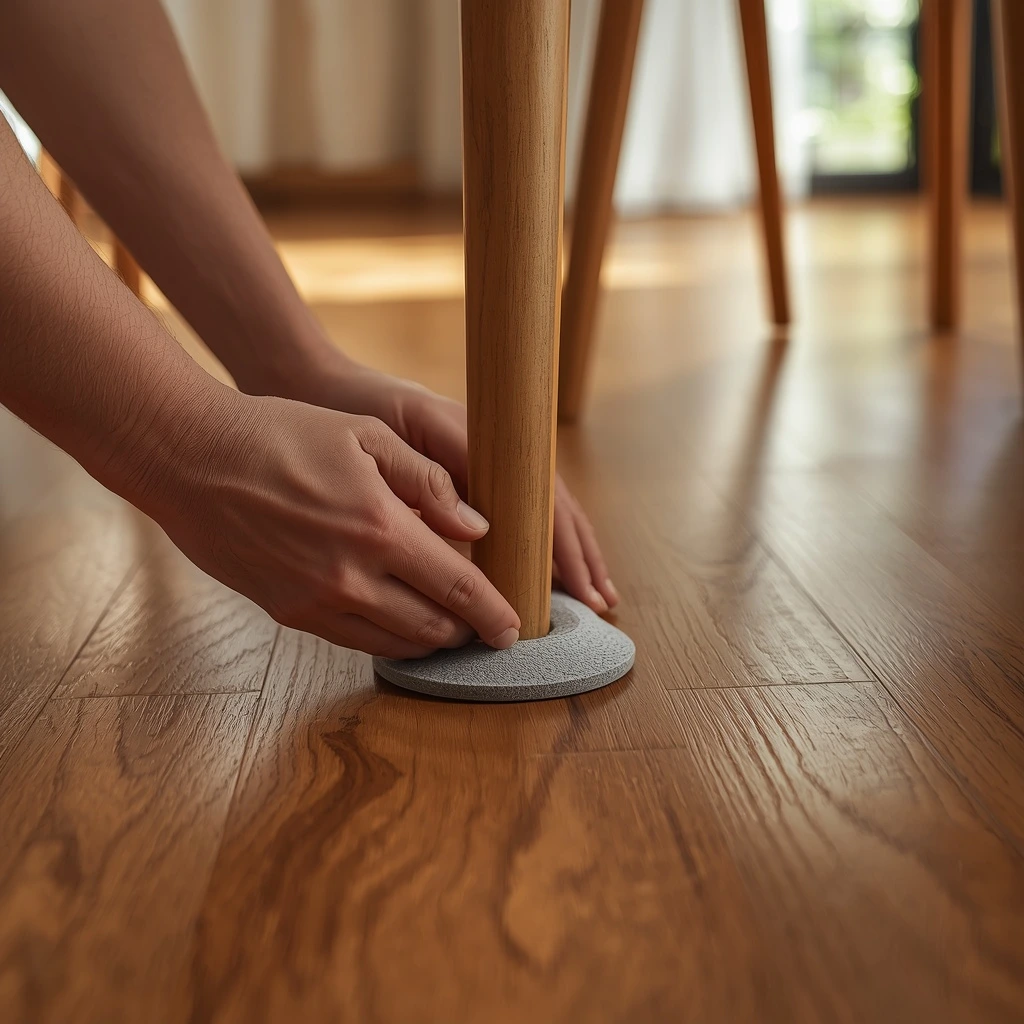
Every single furniture leg that contacts a wooden floor should have a quality felt pad attached. Replace these pads every six to twelve months because they collect grit, and a grit-embedded felt pad becomes its own abrading tool. For furniture that moves regularly, such as dining chairs, look for felt glides rather than stick-on pads. They last longer and stay attached better.
Castor wheels are more complicated. Hard plastic castors will damage any wood floor. Look for soft rubber or polyurethane castors rated for hard floors. If your office chair, bar stool, or rolling furniture piece has hard plastic castors, either replace them or use a proper chair mat beneath the piece.
Direct Sunlight Exposure in UAE
The UAE sun is intense in ways that matter deeply for wooden floors. UV radiation fades and discolors wood finishes, and solar heat through glass creates temperature differentials that stress the wood itself. West and south-facing rooms in Dubai villas are particularly vulnerable.
Quality UV-filtering window film costs between 35 and 80 AED per square meter installed, and it makes a measurable difference in floor fade prevention. In rooms with significant south or west exposure, consider installing solar shades or quality blinds for the peak afternoon hours of 1 pm to 5 pm. On older properties with standard glass, this is even more important.
We refinished floors in an Emirates Hills villa in 2022 where the south-facing formal sitting room had floors that were two to three shades lighter than the floors in the adjacent rooms. The rooms were adjacent, the same species and age, but the sun exposure over 8 years had faded the sitting room floors dramatically. The client had never used window covering in that room. New finish and pigmented treatment helped, but the wood itself had structural UV damage in the fibers. Consistent shading would have prevented the whole issue.
Seasonal Maintenance Calendar for UAE Wooden Floors
The UAE’s climate cycle creates a logical maintenance calendar that is different from seasonal guides written for temperate climates.
April to May: Pre-Summer Preparation
This is the time to inspect your floors carefully before the AC season begins in earnest. Look for any areas where the finish has worn thin, check expansion gaps at the perimeter to confirm they are clear and not filled with debris or sealant, and note any boards that feel loose or hollow underfoot.
If there is any area of finish wear that needs addressing, do it now before summer begins. Getting floor maintenance work done in summer is harder to schedule and harder to carry out because the AC must run during work, which affects product application and drying times. We recommend professional inspection every two years in UAE conditions, and pre-summer is the best timing.
Refresh your entry matting now. Check furniture pads and replace any that are worn or missing.
May to September: Active Summer Management
This is the vigilance period. Check your hygrometer readings weekly. If humidity drops below 35 percent consistently, deploy a humidifier. Clean more frequently because dust accumulation is higher when windows stay closed.
Do not let cleaning products or any liquids sit on the floor surface. AC condensation from units that are not draining properly can drip onto floors. Check that all your AC drain lines are clear and that no unit is causing water pooling near the floor surface.
Avoid placing wet items, such as post-pool towels, swimwear, or wet umbrellas directly on wooden floors or on rugs that sit on wooden floors. Water will transfer through most rugs to the wood underneath over time.
October to November: Transition Season Vigilance
This is the highest-risk period for rapid moisture damage. As the weather cools and people open windows and turn off AC systems, indoor humidity can spike dramatically within hours. Keep monitoring your hygrometer during this period. If humidity climbs above 65 percent, run your AC or a dehumidifier to moderate it.
If you are returning to the UAE after a summer away, do not simply open the villa and let it breathe. Turn on the AC first and let the interior stabilize over 24 to 48 hours before opening it to outside air. This gradual transition is much kinder to the wood than a sudden humidity change.
December to February: Winter Inspection and Treatment
UAE winters are mild and pleasant, with outdoor humidity typically in the 40 to 60 percent range, actually the most comfortable period for wooden floors. This is the best time for any professional maintenance work, light sanding and refinishing of worn areas, application of maintenance oil on oil-finished floors, or any repairs to damaged boards.
Common Mistakes We See on UAE Wooden Floors
Mistake 1: Using Wet Mops or Steam Cleaners
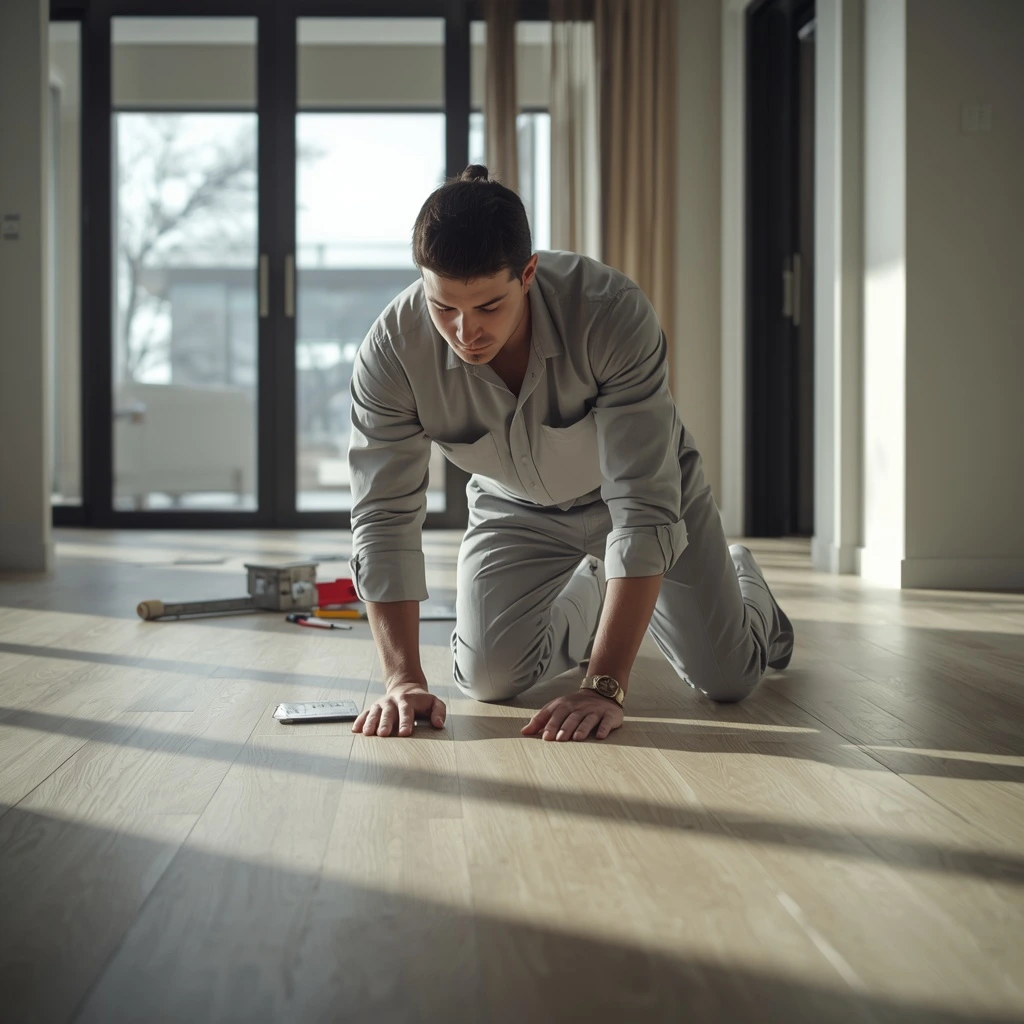
This is the most common and most damaging mistake we encounter. The instruction to mop floors is deeply ingrained from tile and stone maintenance, which most UAE homes had before wooden floors became popular. Water and steam destroy wooden floor finishes and, over time, the wood itself.
We surveyed 60 warranty inquiry visits in a single year and found that 41 of them involved some form of excess moisture application. One client in The Springs had been steam mopping her engineered walnut floors weekly for 14 months. The finish had completely delaminated in the high-traffic areas and the board edges were starting to lift. Complete replacement was the only option. The floors were 18 months old.
Use damp microfiber only. If you want the feeling of a clean, fresh floor, a properly used damp mop with the right cleaner delivers that. Steam is never necessary and always harmful.
Mistake 2: Ignoring the Acclimation Period Before Installation
This is not an aftercare mistake exactly, but it affects long-term maintenance. Wood that was not properly acclimated before installation will never perform as well as wood that was. Acclimation means storing the wood in the room where it will be installed for a minimum of 5 to 7 days in UAE conditions, sometimes up to 14 days for thicker solid boards, with the climate control set to the home’s typical operating conditions.
We have seen installations done by other contractors where the wood went from an air-conditioned warehouse directly to the floor in a day or two. Within three months, those floors showed gapping, cupping, or buckling because the wood had never been given the chance to normalize to the home environment. Proper acclimation is the foundation of long-term floor stability in the UAE. If you are having new floors installed by anyone, ask them specifically about their acclimation protocol.
Mistake 3: Sealing the Expansion Gap
Every wooden floor needs an expansion gap at the perimeter, typically 10 to 15 mm between the edge of the flooring and the wall. This gap allows the floor to expand during humid periods without buckling. It is normally covered by the baseboard or skirting trim.
The problem arises when homeowners or general maintenance workers, thinking the gap looks untidy or drafty, fill it with silicone sealant, grout, or caulk. We have had emergency calls from clients who did exactly this and then experienced an October humidity spike. With no room to expand, the boards push against each other and the only direction they can go is up. Dramatic buckling can destroy an entire floor in a matter of days.
Leave the expansion gap alone. If you feel it is drafty, address the draft through weather stripping at the door or window level, not at the floor perimeter.
Mistake 4: Using Wrong Cleaning Products
As mentioned earlier, the UAE market has a wide range of cleaning products, and the advice given at local shops is not always product-specific to wooden floors. We have seen clients use marble cleaner, tile cleaner, multi-surface wipes, vinegar-water solutions, and even diluted bleach on wooden floors, based on recommendations that made no sense for wood.
Invest in a product specifically formulated for your floor’s finish type, whether that is polyurethane, hardwax oil, lacquer, or UV-cured finish. Use nothing else for regular cleaning. If you are not sure what finish is on your floor, contact whoever installed it or bring in a professional to identify it. The wrong cleaner can cause permanent finish damage.
Mistake 5: Leaving Water Sources Unaddressed
Plant pots without proper waterproof saucers. Pet water bowls placed directly on wood without a mat underneath. Air conditioning units with slow drips that go unnoticed. All of these create chronic low-level moisture exposure that, over months and years, causes significant damage.
Use waterproof saucers under all indoor plants and check them regularly. Place pet water bowls on a waterproof mat. Inspect your AC units seasonally for condensation drips. Check under refrigerators and around dishwashers and washing machines for slow leaks if these are positioned near wooden flooring.
Mistake 6: Delaying Small Repairs
A small gouge in a wooden floor. A scratch through the finish. A single board that has started to cup slightly. These feel minor and easy to defer. In a UAE climate, small problems become large ones quickly because the conditions that caused the initial damage keep working at the vulnerable spot.
A scratched finish in one board allows moisture to enter the wood fiber directly. If that board is in a high-humidity area, it can swell, push its neighbors, and start a chain reaction. Addressing small repairs promptly, with the right touch-up products or a professional spot repair, is far cheaper than waiting until the problem has spread.
What Professional Floor Maintenance Costs in the UAE
Transparent pricing matters, so here is an honest breakdown of what you should expect to pay for professional wooden floor services in the UAE.
Professional Floor Inspection
A thorough professional inspection of your wooden floors, including moisture readings, finish assessment, and written report should cost between 150 and 350 AED for a standard villa. Some contractors offer this free as part of a maintenance package. It is worth paying for an independent inspection if you have concerns and want unbiased advice.
Floor Sanding and Refinishing
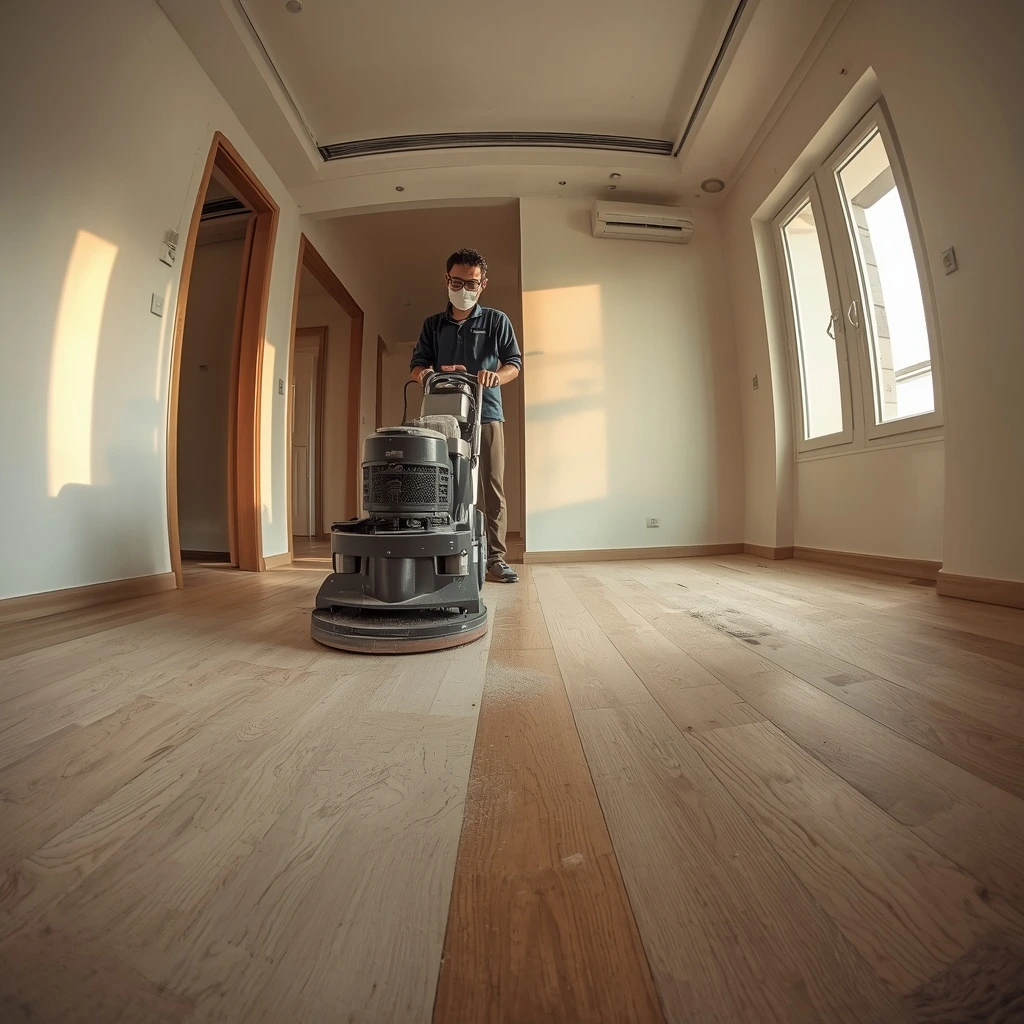
This is the most significant professional service your wooden floor will need over its lifetime. Sanding removes the existing finish and surface layer, and a new finish is applied. Pricing in Dubai currently ranges from 25 to 55 AED per square meter for standard solid or engineered hardwood floors, depending on the number of coats, finish type, and condition of the floor going in.
A typical 150 square meter Dubai apartment living area and hallway costs between 3,750 and 8,250 AED to sand and refinish. The job takes two to three days and requires the space to be vacated. It adds 10 to 15 years to the floor’s service life when done correctly.
Most UAE wooden floors should be professionally sanded and refinished every 8 to 12 years under normal conditions. With poor maintenance, that interval drops to 5 to 7 years. With excellent maintenance including the steps outlined in this guide, some floors can go 15 years between full refinishes.
Board Replacement
Individual board replacement for damaged or irreparable boards runs between 80 and 200 AED per board, including materials and labor, depending on the wood species, availability of matching stock, and complexity of access. Exotic species with difficult sourcing can push that higher.
We always recommend that clients keep 5 to 10 percent of their original flooring material in storage after installation for exactly this reason. If the floor was installed in 2018 and you need a board replaced in 2026, finding an exact match from the current market is sometimes impossible. Your stored boards are your insurance policy.
Maintenance Oil Application
Oil-finished floors require periodic re-oiling, typically every one to two years in UAE conditions. Professional re-oiling of a 100 square meter area costs approximately 800 to 1,500 AED, including materials. This can be done as a DIY task if you have the right product and confidence, but professional application ensures even coverage and correct product matching.
Expert Tips From 35 Years of UAE Floor Work
These are the specific insights that come from doing this work in this climate for a very long time. You will not find most of these in standard floor care guides.
1. Never put a rug down on a newly installed floor for at least 30 days.
The floor needs to breathe and complete its final dimensional stabilization. A rug traps moisture and prevents uniform acclimation of the surface.
2. The most dangerous time for a UAE wooden floor is the first 12 months.
The floor is still completing its long-term adjustment to your home environment. Be extra vigilant about humidity control and moisture exposure in the first year.
3. If you have underfloor heating, your floor must be engineered wood, not solid hardwood.
Solid hardwood and underfloor heating are incompatible in UAE conditions. The combination of heating from below and AC from above creates stresses that will destroy solid boards within a few years. This is non-negotiable.
4. Check the moisture content of concrete before laying wood floors.
A concrete slab in Dubai should read below 75 percent relative humidity in the slab before wood flooring is installed over it. Many contractors skip this step. If your contractor is not measuring slab moisture, ask them to. Skipping this step is why many UAE floors develop moisture problems from below within the first two years.
5. Gloss finishes show scratches more than matte finishes.
In a family home with children and pets, a satin or matte finish is more forgiving for everyday life. This is especially relevant in the UAE where the fine desert dust that settles on floors makes micro-scratches more visible on high-gloss surfaces.
6. The direction of your floor boards matters for visual room expansion.
Running boards parallel to the main light source and parallel to the longest wall of a room makes spaces feel larger. In typical UAE villa proportions, this usually means running parallel to the exterior wall. We think about this on every project because it affects how the floor reads in the room for its entire life.
7. Not all engineered floors are equal.
The wear layer thickness, which is the solid wood layer on top of the plywood core, varies from 2mm to 6mm in products on the UAE market. A 2mm wear layer cannot be sanded and refinished when it wears. A 4mm or 6mm layer can be refinished once or twice. Always ask for wear layer thickness before purchasing engineered flooring, and pay for at least 4mm if longevity matters to you.
8. A creaky floor is usually telling you something about moisture or fixing, not just age.
In our experience, floors that develop creaking in UAE homes are often responding to either inconsistent humidity causing movement at the board joints, or to a fixing that has come slightly loose due to movement cycles. Both are addressable. Creaking that develops after years of silence is worth investigating rather than tolerating.
Conclusion: Your Wooden Floor as a Long-Term Investment
A well-maintained wooden floor in a UAE home is a 30 to 50-year investment. We have floors we installed in the mid-1990s in Dubai villas that are still beautiful today, because the homeowners understood how to care for them in this specific climate. We also have clients who need complete floor replacement after five years of installation errors and maintenance mistakes.
The difference is knowledge and consistency. The UAE climate is demanding, but it is not unmanageable. Once you understand why wood behaves the way it does here, and you put in place the simple, consistent habits this guide describes, you are protecting a significant asset in your home.
Control your humidity. Clean dry first. Protect entry points. Address small problems immediately. Have a professional look at the floors every two years. Follow the seasonal calendar. These steps cost very little and return enormous value over the life of your floors.
Key Takeaways:
- Keep indoor humidity between 40 and 60 percent year-round. Buy a hygrometer. This single habit has more impact than everything else combined.
- Dry clean with a microfiber mop daily or near-daily in UAE conditions. Wet clean sparingly with a pH-neutral wood floor product only.
- The October to November transition period is the highest-risk season for UAE wooden floors. Monitor and moderate humidity carefully during this window.
- Never seal the expansion gap at the floor perimeter. It exists for a reason and must remain clear.
- Professional sanding and refinishing every 8 to 12 years, done well, extends floor life by a decade or more and costs a fraction of replacement.
Need Expert Help With Your Wooden Floors?
Karnak Carpentry has maintained, repaired, restored, and installed wooden floors across the UAE since 1988. We know this climate, we know how wood behaves in it, and we know how to solve the problems that are specific to Dubai and the wider UAE. If your floors need inspection, restoration, or if you are planning a new installation and want it done right from the start, our team is ready to help. We offer a no-pressure consultation and honest assessment. No job is too small for a conversation.
Contact: WhatsApp Us or Call Us at +971-52-5554207 | info@karnakcarpentry.com
Frequently Asked Questions About Caring for Wooden Floors in the UAE Climate
How do I keep wooden floors in excellent condition in the UAE?
Clean dust regularly, wipe spills immediately, maintain stable indoor humidity, and protect the surface from direct sunlight. Consistent care helps wooden floors retain their natural beauty and durability for many years.
Can Dubai’s heat damage wooden flooring?
Yes. Extreme heat and prolonged sun exposure can dry the wood, fade its color, and increase the risk of small cracks. Curtains, blinds, and UV-protective window films reduce direct sunlight and help preserve the finish.
Does humidity affect hardwood floors in the UAE?
High humidity allows wood to absorb moisture, which can cause expansion, cupping, or swelling. Air conditioning and proper ventilation keep indoor humidity at comfortable levels and reduce unnecessary movement in the flooring.
Which cleaning products work best for wooden floors?
Use pH-neutral cleaners designed specifically for hardwood flooring. Avoid bleach, ammonia, steam mops, and harsh chemicals because they can damage the protective finish and shorten the floor’s lifespan.
How often should I clean hardwood flooring?
Sweep or vacuum several times each week to remove sand and dust. Mop lightly with a damp microfiber mop whenever the surface needs deeper cleaning, but never leave standing water on the floor.
Why does sand damage wooden floors in Dubai?
Tiny sand particles act like sandpaper under shoes and furniture. Regular sweeping, entrance mats, and removing outdoor footwear prevent scratches and protect the floor’s finish.
Can air conditioning protect wooden flooring?
Air conditioning helps control indoor humidity and creates a stable environment for wood. Avoid directing strong airflow onto one section of the floor because excessive drying can increase stress within the timber.
How can I prevent scratches on hardwood floors?
Place felt pads under furniture, trim pet nails regularly, lift heavy furniture instead of dragging it, and keep grit away from the surface. These simple habits significantly reduce everyday wear.
Should I polish wooden floors regularly?
Follow the flooring manufacturer’s maintenance recommendations and polish only when the finish requires restoration. Excessive polishing can create buildup and reduce the floor’s natural appearance.
How do I remove stains from hardwood flooring?
Clean fresh spills immediately with a soft cloth and a hardwood-safe cleaner. For stubborn stains, follow the finish manufacturer’s instructions instead of using abrasive scrubbing tools or harsh chemicals.
When should I refinish wooden floors?
Refinish hardwood flooring when you notice deep scratches, dull finishes, fading, or visible wear across large areas. Timely refinishing restores the surface before significant damage develops.
Which type of wooden flooring requires the least maintenance?
Engineered hardwood with a durable factory finish requires less maintenance than many traditional solid wood floors. Strong protective coatings resist scratches, stains, and everyday household traffic.
Can rugs help protect wooden floors?
Area rugs reduce wear in high-traffic zones and protect hardwood from furniture movement. Choose rugs with breathable, non-staining underlays that allow proper airflow beneath the surface.
What mistakes should homeowners avoid when caring for wooden floors?
Avoid excessive water, harsh cleaning chemicals, steam cleaning, dragging heavy furniture, and prolonged exposure to direct sunlight. Smart maintenance habits prevent costly repairs and preserve the floor’s original finish.
How can I maximize the lifespan of wooden flooring in the UAE?
Maintain a consistent indoor environment, clean the surface frequently, protect high-traffic areas, repair minor damage early, and schedule professional maintenance whenever the finish begins to wear. Long-term care keeps wooden flooring attractive and durable for decades.
Related Articles
- How Humidity and Heat Destroy Wooden Furniture in the UAE (And How to Stop It)
- Wood Types in Dubai: A Carpenter’s Complete Guide to What Actually Works in the UAE
- Solid Wood vs. MDF vs. Plywood: Which Material Is Right for Your Dubai Home?
- How Custom Kitchen Cabinets Are Made: A Complete Behind-the-Scenes Look at the Dubai Process